Introduction
Shadow IT Discovery Tools are security and IT governance solutions that help organizations detect, monitor, and manage unauthorized software, apps, cloud services, and devices being used outside official IT approval. In simple terms, they reveal hidden technology usage across employees, departments, and cloud environments that IT teams may not be aware of. shadow IT is growing rapidly due to remote work, SaaS sprawl, AI tools adoption, and decentralized teams. Employees often adopt tools to improve productivity without waiting for IT approval, which creates security, compliance, and data leakage risks. Shadow IT Discovery Tools matter because they provide visibility, risk scoring, and control over unmanaged applications and services across an enterprise.
Real-world use cases include:
- Detecting unauthorized SaaS apps used by employees (file sharing, messaging, AI tools)
- Identifying risky browser extensions and unmanaged cloud services
- Monitoring API-based app usage across departments
- Reducing data leakage from unsanctioned tools
- Supporting SaaS governance and cost optimization
What buyers should evaluate:
- SaaS discovery depth (web, endpoint, network coverage)
- Cloud app visibility and API monitoring
- Risk scoring and policy enforcement
- Integration with SIEM, CASB, and IAM tools
- Endpoint coverage (Windows, macOS, mobile)
- Real-time vs periodic detection capability
- AI-based anomaly detection
- Compliance support (GDPR, SOC 2 alignment)
- Ease of deployment and scalability
- Reporting and governance dashboards
Best for:
IT security teams, CISOs, compliance officers, and enterprise IT administrators who need visibility into unmanaged SaaS, cloud apps, and endpoint software usage across large and distributed organizations.
Not ideal for:
Very small teams with minimal SaaS usage or organizations that already operate fully controlled, locked-down IT environments where all software is centrally managed.
Key Trends in Shadow IT Discovery Tools
- AI-driven SaaS discovery that automatically classifies unknown applications
- Real-time API traffic analysis replacing traditional log-based discovery
- Expansion beyond SaaS into GenAI tools and browser-based AI assistants
- Deep integration with CASB, SSE, and Zero Trust platforms
- Automated risk scoring using behavioral analytics
- Employee productivity vs security balancing dashboards
- Cloud-native discovery agents replacing legacy network monitoring
- SaaS sprawl management becoming a financial optimization function
- Increased focus on compliance automation for GDPR and enterprise audits
- Unified IT asset visibility combining endpoint, SaaS, and identity data
How We Selected These Tools (Methodology)
- Evaluated global market adoption across enterprise IT environments
- Assessed depth of SaaS, endpoint, and network visibility capabilities
- Prioritized tools with strong security governance features
- Included platforms with AI-driven anomaly detection capabilities
- Considered integration ecosystems with IAM, SIEM, and CASB tools
- Focused on tools supporting hybrid and cloud-native environments
- Reviewed scalability for SMB, mid-market, and enterprise segments
- Included both standalone discovery tools and integrated platforms
- Considered real-world deployment maturity and reliability signals
- Balanced vendor diversity across security, networking, and SaaS governance
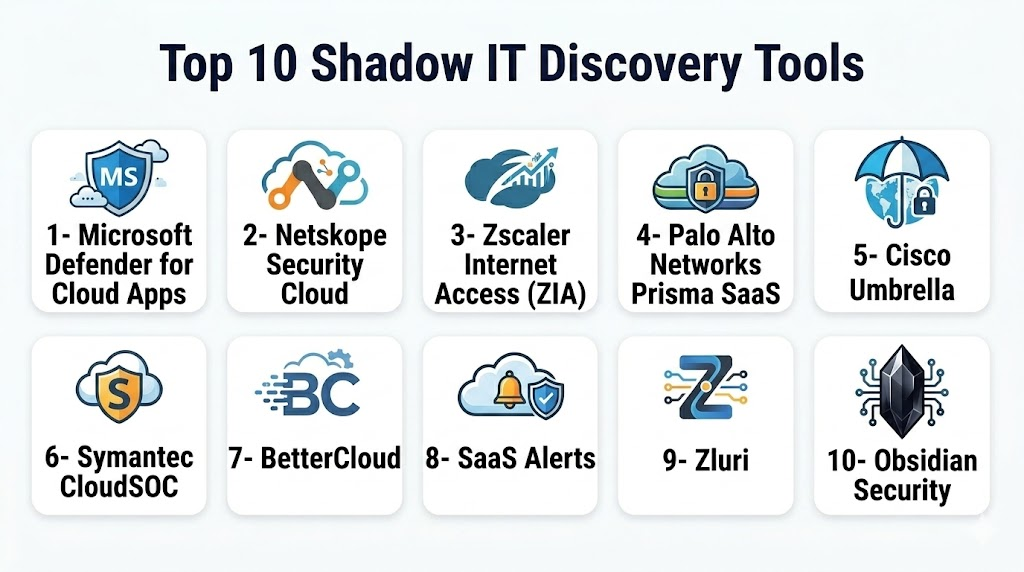
Top 10 Shadow IT Discovery Tools
1- Microsoft Defender for Cloud Apps
A widely used enterprise-grade cloud access security broker (CASB) that provides deep shadow IT discovery across SaaS applications, cloud services, and user activities. It is ideal for organizations heavily invested in Microsoft ecosystems.
Key Features
- SaaS app discovery via traffic analysis
- Risk scoring for cloud applications
- User behavior analytics and anomaly detection
- Integration with Microsoft Entra ID
- Conditional access policy enforcement
- Data loss prevention controls
- Real-time alerts for suspicious activity
Pros
- Strong enterprise integration with Microsoft ecosystem
- Comprehensive SaaS visibility and governance
- Advanced threat detection capabilities
Cons
- Complex configuration for non-Microsoft environments
- Best value primarily within Microsoft-heavy organizations
Platforms / Deployment
- Cloud / Hybrid
Security & Compliance
- SSO, MFA, RBAC
- SOC 2, ISO 27001 alignment varies by deployment
- GDPR support
Integrations & Ecosystem
Deep integration with Microsoft security stack including Entra ID, Defender XDR, and Sentinel
- SIEM tools
- Endpoint security tools
- Identity providers
- Cloud service APIs
Support & Community
Strong enterprise documentation and Microsoft support channels; large global enterprise user base
2- Netskope Security Cloud
A leading SSE platform offering strong shadow IT discovery through real-time cloud traffic inspection and SaaS governance.
Key Features
- Real-time SaaS application discovery
- Cloud usage risk scoring
- Inline traffic inspection
- Data classification and DLP controls
- User activity monitoring
- GenAI app usage tracking
- Policy-based access enforcement
Pros
- Excellent real-time visibility
- Strong AI-driven risk analytics
- Broad SaaS coverage
Cons
- Can be complex for small IT teams
- Premium pricing for full features
Platforms / Deployment
- Cloud / Hybrid
Security & Compliance
- SAML/SSO, MFA, RBAC
- GDPR, SOC 2 alignment commonly supported
Integrations & Ecosystem
- SIEM systems
- IAM platforms
- Endpoint security tools
- CASB and firewall integrations
Support & Community
Enterprise-grade support with strong documentation and onboarding programs
3- Zscaler Internet Access (ZIA)
A cloud-native security platform offering strong shadow IT visibility through inline traffic inspection and secure web gateway capabilities.
Key Features
- SaaS application discovery via traffic logs
- Web filtering and access control
- User behavior analytics
- Cloud app risk classification
- Data protection policies
- SSL inspection at scale
- Zero Trust policy enforcement
Pros
- Highly scalable cloud-native architecture
- Strong real-time traffic inspection
- Excellent enterprise adoption
Cons
- Limited depth in endpoint-level discovery
- Requires careful policy tuning
Platforms / Deployment
- Cloud
Security & Compliance
- SSO, MFA, encryption, RBAC
- SOC 2, ISO 27001 commonly supported
Integrations & Ecosystem
- SIEM platforms
- Identity providers
- Endpoint security tools
- API integrations for policy automation
Support & Community
Strong enterprise support ecosystem and global deployment expertise
4- Palo Alto Networks Prisma SaaS
A CASB solution designed to provide deep SaaS visibility, shadow IT discovery, and cloud governance.
Key Features
- SaaS application discovery
- Risk scoring and classification
- Data leakage prevention
- API-based cloud monitoring
- User activity tracking
- Shadow AI tool detection
- Compliance policy enforcement
Pros
- Strong security posture and enterprise trust
- Deep integration with Palo Alto ecosystem
- Advanced cloud governance features
Cons
- Complex deployment structure
- Requires experienced security teams
Platforms / Deployment
- Cloud / Hybrid
Security & Compliance
- Strong enterprise-grade security controls
- SOC 2, ISO 27001 commonly supported
Integrations & Ecosystem
- Palo Alto firewall ecosystem
- SIEM platforms
- IAM tools
- Cloud providers
Support & Community
Enterprise-focused support and global partner ecosystem
5- Cisco Umbrella
A DNS-layer security platform that helps detect shadow IT usage through internet traffic visibility and DNS logs.
Key Features
- DNS-based shadow IT detection
- Web usage analytics
- Cloud app discovery
- Threat intelligence integration
- Policy-based blocking
- Secure web gateway capabilities
- Roaming user protection
Pros
- Easy deployment at network level
- Strong DNS-layer visibility
- Scalable for large organizations
Cons
- Limited deep SaaS activity visibility
- Less granular user behavior insights
Platforms / Deployment
- Cloud
Security & Compliance
- SAML, MFA support
- SOC 2 alignment commonly available
Integrations & Ecosystem
- Cisco security suite
- SIEM tools
- Endpoint protection platforms
- Cloud access tools
Support & Community
Strong enterprise network support and documentation
6- Symantec CloudSOC
A CASB platform providing SaaS discovery, shadow IT visibility, and cloud governance.
Key Features
- SaaS app discovery
- Risk assessment and scoring
- Data loss prevention
- User activity tracking
- Shadow IT monitoring
- API-based SaaS analysis
- Policy enforcement engine
Pros
- Strong enterprise-grade governance
- Comprehensive SaaS monitoring
- Mature security controls
Cons
- UI complexity
- Slower innovation compared to newer tools
Platforms / Deployment
- Cloud / Hybrid
Security & Compliance
- Enterprise-grade encryption and RBAC
- SOC 2 and compliance alignment varies
Integrations & Ecosystem
- SIEM tools
- Endpoint protection systems
- Identity platforms
- Cloud providers
Support & Community
Enterprise support structure with global customer base
7- BetterCloud
A SaaS management platform focused on visibility, automation, and governance of cloud applications.
Key Features
- SaaS usage monitoring
- Automated lifecycle management
- Shadow IT detection
- User provisioning automation
- SaaS security policies
- App risk assessment
- Workflow automation engine
Pros
- Strong SaaS lifecycle automation
- Easy-to-use dashboard
- Good for SMB and mid-market
Cons
- Less deep network-level visibility
- Limited advanced threat analytics
Platforms / Deployment
- Cloud
Security & Compliance
- SSO, RBAC, MFA
- Compliance support varies by configuration
Integrations & Ecosystem
- Google Workspace
- Microsoft 365
- Slack and SaaS APIs
- Identity providers
Support & Community
Good onboarding support and mid-market customer success focus
8- SaaS Alerts
A lightweight SaaS monitoring tool focused on tracking SaaS usage and shadow IT detection for growing organizations.
Key Features
- SaaS app discovery
- User activity monitoring
- Security alerts for risky apps
- Integration monitoring
- License optimization insights
- Shadow IT reporting
- Automated notifications
Pros
- Simple setup and UI
- Good for SMBs
- Affordable compared to enterprise tools
Cons
- Limited enterprise-grade features
- Less advanced AI analytics
Platforms / Deployment
- Cloud
Security & Compliance
- Not publicly stated
Integrations & Ecosystem
- SaaS apps like Google Workspace
- Slack
- Microsoft 365
- API-based integrations
Support & Community
SMB-focused support and documentation
9- Zluri
A SaaS management and shadow IT discovery platform designed for modern IT teams managing SaaS sprawl.
Key Features
- SaaS discovery across organization
- App usage analytics
- Shadow IT identification
- License optimization
- Access control insights
- Workflow automation
- SaaS inventory management
Pros
- Strong SaaS lifecycle visibility
- Easy onboarding for IT teams
- Good balance of cost and capability
Cons
- Limited deep network traffic analysis
- Growing ecosystem compared to larger vendors
Platforms / Deployment
- Cloud
Security & Compliance
- SSO, RBAC
- Compliance features vary by plan
Integrations & Ecosystem
- SaaS apps
- IAM systems
- HR tools
- API integrations
Support & Community
Growing support ecosystem with strong SMB/mid-market focus
10- Obsidian Security
A modern SaaS security platform focusing on identity-driven shadow IT detection and SaaS risk monitoring.
Key Features
- Identity-based SaaS discovery
- Risk scoring for applications
- Behavioral anomaly detection
- SaaS misconfiguration detection
- Access governance controls
- Shadow IT monitoring
- Continuous SaaS security posture assessment
Pros
- Strong identity-centric approach
- Modern architecture
- Good AI-driven insights
Cons
- Not as widely adopted as legacy CASB tools
- Limited public documentation in some areas
Platforms / Deployment
- Cloud
Security & Compliance
- Not publicly stated (varies by deployment)
Integrations & Ecosystem
- IAM providers
- SaaS applications
- SIEM tools
- Cloud platforms
Support & Community
Varies / Not publicly stated
Comparison Table (Top 10)
| Tool Name | Best For | Platform(s) Supported | Deployment | Standout Feature | Public Rating |
|---|---|---|---|---|---|
| Microsoft Defender for Cloud Apps | Enterprise Microsoft ecosystems | Web | Cloud/Hybrid | Deep Microsoft integration | N/A |
| Netskope Security Cloud | Real-time SaaS governance | Web | Cloud/Hybrid | Inline cloud inspection | N/A |
| Zscaler Internet Access | Large-scale secure web access | Web | Cloud | DNS + inline security | N/A |
| Palo Alto Prisma SaaS | Enterprise security teams | Web | Cloud/Hybrid | Advanced CASB controls | N/A |
| Cisco Umbrella | Network-level visibility | Web | Cloud | DNS-based discovery | N/A |
| Symantec CloudSOC | Enterprise compliance | Web | Cloud/Hybrid | Mature CASB capabilities | N/A |
| BetterCloud | SaaS automation teams | Web | Cloud | SaaS lifecycle automation | N/A |
| SaaS Alerts | SMB SaaS monitoring | Web | Cloud | Simple SaaS tracking | N/A |
| Zluri | Mid-market IT teams | Web | Cloud | SaaS management + discovery | N/A |
| Obsidian Security | Identity-driven security | Web | Cloud | Identity-based detection | N/A |
Evaluation & Scoring of Shadow IT Discovery Tools
| Tool Name | Core (25%) | Ease (15%) | Integrations (15%) | Security (10%) | Performance (10%) | Support (10%) | Value (15%) | Weighted Total |
|---|---|---|---|---|---|---|---|---|
| Microsoft Defender for Cloud Apps | 9.5 | 7.5 | 9.5 | 9.5 | 9 | 9 | 8 | 9.1 |
| Netskope Security Cloud | 9.5 | 8 | 9 | 9 | 9 | 9 | 7.5 | 8.9 |
| Zscaler Internet Access | 9 | 7.5 | 9 | 9 | 9 | 9 | 8 | 8.8 |
| Palo Alto Prisma SaaS | 9 | 7 | 9 | 9 | 8.5 | 8.5 | 7.5 | 8.6 |
| Cisco Umbrella | 8.5 | 8.5 | 8.5 | 8.5 | 9 | 8.5 | 8.5 | 8.6 |
| Symantec CloudSOC | 8.5 | 7 | 8.5 | 9 | 8 | 8.5 | 7.5 | 8.3 |
| BetterCloud | 8 | 8.5 | 8.5 | 8 | 7.5 | 8 | 8.5 | 8.2 |
| SaaS Alerts | 7.5 | 9 | 7.5 | 7.5 | 7.5 | 7.5 | 9 | 8.0 |
| Zluri | 8 | 8.5 | 8 | 8 | 7.5 | 8 | 8.5 | 8.1 |
| Obsidian Security | 8.5 | 8 | 8 | 8.5 | 8 | 7.5 | 7.5 | 8.1 |
Which Shadow IT Discovery Tool Is Right for You?
Solo / Freelancer
- SaaS Alerts
- Zluri (light usage)
SMB
- SaaS Alerts
- BetterCloud
- Zluri
Mid-Market
- Netskope Security Cloud
- BetterCloud
- Zluri
Enterprise
- Microsoft Defender for Cloud Apps
- Zscaler Internet Access
- Palo Alto Prisma SaaS
- Cisco Umbrella
Budget vs Premium
- Budget-friendly: SaaS Alerts, Zluri
- Premium enterprise: Netskope, Microsoft Defender, Palo Alto
Feature Depth vs Ease of Use
- Deep feature set: Netskope, Palo Alto Prisma SaaS
- Easier adoption: BetterCloud, SaaS Alerts
Integrations & Scalability
- Best ecosystem: Microsoft Defender, Cisco Umbrella
- Strong SaaS integrations: BetterCloud, Zluri
Security & Compliance Needs
- Strong compliance alignment: Microsoft, Palo Alto, Netskope
- Lightweight governance: SaaS Alerts, Zluri
Frequently Asked Questions (FAQs)
1- What are Shadow IT Discovery Tools used for?
They help organizations identify unauthorized apps, SaaS usage, and cloud services used without IT approval. This improves security visibility and reduces risk of data leakage.
2- Why is shadow IT a problem for enterprises?
Shadow IT can lead to security vulnerabilities, compliance violations, and uncontrolled data exposure. It also increases SaaS costs and reduces IT governance visibility.
3- How do these tools detect unauthorized apps?
They analyze network traffic, DNS logs, endpoint activity, and API usage to identify unknown or unsanctioned applications being used within the organization.
4- Do Shadow IT tools slow down networks?
Modern cloud-based tools are optimized for minimal impact. However, inline inspection solutions may require careful tuning in high-traffic environments.
5- Can these tools detect AI tools like ChatGPT usage?
Yes, most modern platforms now detect GenAI tools, browser-based AI apps, and API-driven AI services used by employees.
6- Are Shadow IT tools suitable for SMBs?
Yes, SMB-focused tools like SaaS Alerts and Zluri provide lightweight discovery and SaaS monitoring without enterprise complexity.
7- What is the difference between CASB and Shadow IT tools?
CASB tools enforce security policies on cloud apps, while Shadow IT tools focus primarily on discovering and analyzing unauthorized application usage.
8- Do these tools require endpoint installation?
Some use agents on endpoints, while others rely on network traffic analysis or API integrations. Deployment depends on vendor architecture.
9- How long does implementation take?
Implementation can range from a few hours for SMB tools to several weeks for enterprise-grade platforms depending on integration complexity.
10- What are common mistakes when using these tools?
Common mistakes include ignoring SaaS governance policies, over-blocking applications, and failing to integrate with identity systems for full visibility.
Conclusion
Shadow IT Discovery Tools have become essential in modern enterprises where SaaS sprawl, remote work, and AI adoption are rapidly expanding. These tools provide critical visibility into unauthorized applications, helping organizations reduce security risks, improve compliance, and optimize software spending. The right solution depends on organizational size, security maturity, and integration needs. Enterprises often benefit from platforms like Microsoft Defender for Cloud Apps or Netskope, while SMBs may prefer lightweight tools like SaaS Alerts or Zluri. A practical next step is to shortlist 2–3 tools, run a controlled pilot, and validate integration with your identity, SIEM, and SaaS ecosystem before full-scale deployment.

Find Trusted Cardiac Hospitals
Compare heart hospitals by city and services — all in one place.
Explore Hospitals
Shadow IT discovery tools are only truly effective when they go beyond simple application detection and help organizations understand why employees are bypassing approved systems. Without addressing usability gaps in sanctioned tools, discovery alone often leads to visibility without meaningful risk reduction.