Introduction
SOAR Playbook Builders are platforms that help security teams design, automate, and execute incident response workflows through structured “playbooks.” These playbooks define step-by-step actions that security systems or analysts should take when a threat, alert, or incident is detected. Instead of relying on manual intervention, SOAR playbooks enable consistent, repeatable, and automated responses to cybersecurity events. SOAR playbook builders are becoming essential due to the increasing complexity of cyberattacks, high alert volumes, and shortage of skilled security analysts. Modern enterprises need faster response times and consistent decision-making, which manual workflows cannot deliver at scale.
Real-world use cases include:
- Automating ransomware containment workflows across endpoints
- Enriching and triaging security alerts from SIEM platforms
- Coordinating multi-step incident response across SOC teams
- Automating phishing email investigation and remediation
- Executing compliance-driven security response workflows
What buyers should evaluate:
- Playbook design flexibility and visual workflow builder quality
- Integration depth with SIEM, EDR, and threat intelligence tools
- Automation and orchestration capabilities across systems
- AI-assisted decision-making and alert prioritization
- Scalability for enterprise SOC environments
- Security controls such as RBAC, MFA, and audit logging
- Ease of use for analysts and non-technical users
- Execution speed and reliability of workflows
- Extensibility via APIs and custom scripts
- Reporting and compliance automation capabilities
Best for:
Security operations teams, SOC analysts, incident responders, MSSPs, and enterprises managing high-volume security alerts across hybrid and cloud environments.
Not ideal for:
Small organizations without structured security operations, teams without SIEM/EDR infrastructure, or businesses that only need basic alert monitoring tools.
Key Trends in SOAR Playbook Builders
- AI-assisted playbook generation using natural language prompts
- Autonomous SOAR systems that self-execute incident responses
- Low-code/no-code workflow builders for faster adoption
- Deep integration between SOAR, SIEM, and XDR platforms
- Real-time adaptive playbooks based on threat intelligence feeds
- Expansion of cross-domain automation (IT, cloud, identity security)
- Cloud-native SOAR platforms replacing legacy on-prem systems
- Standardization of playbooks across enterprise security frameworks
- Increased use of machine learning for alert prioritization
- Greater emphasis on compliance-driven automation and audit trails
How We Selected These Tools (Methodology)
- Market adoption in enterprise SOC environments
- Depth and flexibility of playbook builder capabilities
- Integration strength with SIEM, EDR, and threat intelligence tools
- Automation and orchestration maturity
- AI/ML capabilities for incident prioritization
- Ease of workflow design and usability
- Security architecture including RBAC and audit logs
- Scalability across large security operations centers
- Support ecosystem and enterprise readiness
- Ability to reduce MTTR (mean time to response)
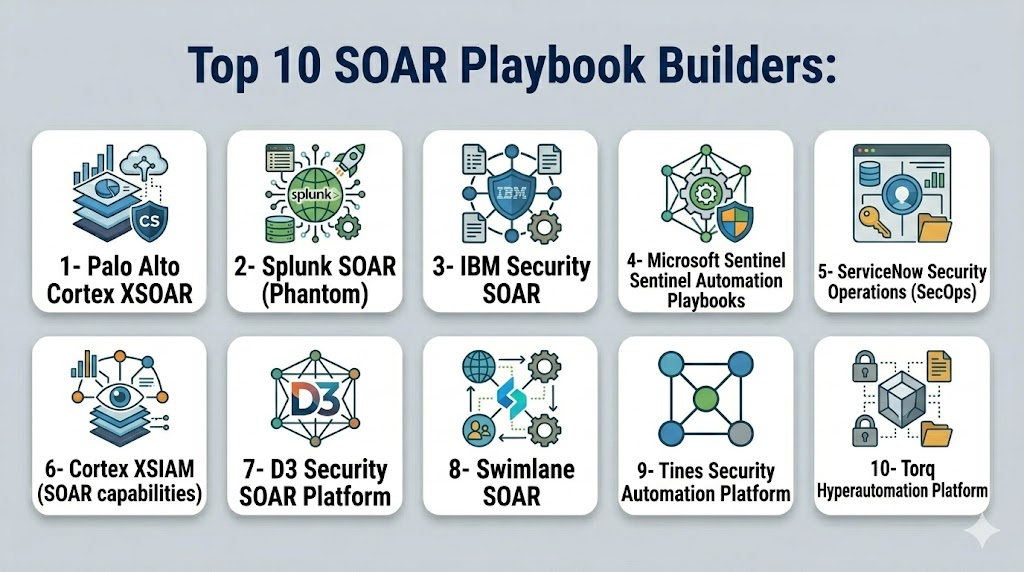
Top 10 SOAR Playbook Builders
1- Palo Alto Cortex XSOAR
Short description: A leading SOAR platform with a powerful visual playbook builder designed for full incident lifecycle automation across security operations.
Key Features
- Drag-and-drop playbook builder
- Extensive integration marketplace
- Incident lifecycle automation
- Threat intelligence orchestration
- Case management workflows
- Machine learning-based alert prioritization
- Multi-step conditional automation
Pros
- Extremely powerful automation engine
- Strong ecosystem of integrations
- Widely adopted in enterprise SOCs
Cons
- Complex for beginners
- Requires SOC maturity for full value
Platforms / Deployment
Cloud / Hybrid
Security & Compliance
- RBAC and SSO support
- Audit logging and encryption
- Not publicly stated certifications
Integrations & Ecosystem
Deep integrations with SIEM, EDR, and threat intelligence platforms.
- API-first architecture
- Security tool marketplace
- Custom automation scripts
Support & Community
Strong enterprise support and cybersecurity community adoption.
2- Splunk SOAR (Phantom)
Short description: Automation and orchestration platform built on Splunk ecosystem enabling security playbook design and incident response automation.
Key Features
- Visual playbook designer
- Automated incident response workflows
- Threat intelligence enrichment
- Case management system
- Extensive scripting support
- Security orchestration engine
- Real-time alert handling
Pros
- Strong SIEM integration with Splunk
- Highly customizable workflows
- Scalable enterprise automation
Cons
- Requires Splunk ecosystem dependency
- Steep learning curve
Platforms / Deployment
Cloud / Hybrid / Self-hosted
Security & Compliance
- RBAC and audit logs
- Encryption in transit and at rest
- Compliance varies by setup
Integrations & Ecosystem
- Splunk Enterprise Security
- Third-party security tools
- API-based integrations
Support & Community
Large enterprise user base with strong documentation.
3- IBM Security SOAR
Short description: Enterprise SOAR platform designed for orchestrating security operations, automating response workflows, and managing playbooks.
Key Features
- Playbook automation builder
- Incident lifecycle management
- Threat intelligence integration
- Case management workflows
- Security orchestration engine
- Compliance reporting tools
- Workflow templates
Pros
- Strong enterprise governance
- Deep SIEM integration
- Robust automation capabilities
Cons
- Complex implementation
- Less intuitive UI
Platforms / Deployment
Cloud / Hybrid
Security & Compliance
- Enterprise RBAC
- Audit trails and encryption
- Compliance frameworks supported
Integrations & Ecosystem
- IBM QRadar ecosystem
- Security APIs
- Enterprise IT tools
Support & Community
Strong IBM enterprise support ecosystem.
4- Microsoft Sentinel Automation Playbooks
Short description: Cloud-native SOAR capability integrated into Microsoft Sentinel for building automation workflows using Azure Logic Apps.
Key Features
- Logic Apps-based playbooks
- Automated incident response
- AI-assisted threat detection
- Cloud-native orchestration
- Integration with Microsoft Defender
- Incident correlation workflows
- Custom triggers and conditions
Pros
- Seamless Microsoft ecosystem integration
- Easy cloud deployment
- Strong AI capabilities
Cons
- Best suited for Azure environments
- Requires cloud expertise
Platforms / Deployment
Cloud
Security & Compliance
- Azure AD RBAC
- Encryption and logging
- Compliance varies
Integrations & Ecosystem
- Microsoft Defender suite
- Azure security tools
- API and Logic Apps ecosystem
Support & Community
Strong enterprise Microsoft support.
5- ServiceNow Security Operations (SecOps)
Short description: Enterprise platform combining security incident response and automation playbooks within the ServiceNow ecosystem.
Key Features
- Security orchestration workflows
- Playbook automation engine
- Incident response case management
- Threat intelligence integration
- Risk-based prioritization
- Workflow orchestration across IT and security
- Compliance automation
Pros
- Strong enterprise workflow integration
- Unified IT and security operations
- Highly scalable platform
Cons
- Complex deployment
- High cost structure
Platforms / Deployment
Cloud / Hybrid
Security & Compliance
- RBAC and SSO
- Audit logging
- Compliance varies
Integrations & Ecosystem
- ServiceNow ITSM ecosystem
- Security tools integrations
- API extensibility
Support & Community
Strong enterprise consulting and support ecosystem.
6- Cortex XSIAM (SOAR capabilities)
Short description: AI-driven security operations platform combining SOAR playbooks with autonomous incident response capabilities.
Key Features
- AI-driven automation engine
- Autonomous playbook execution
- Threat detection and response
- Cross-domain security correlation
- Incident lifecycle automation
- Behavioral analytics
- Real-time response workflows
Pros
- Advanced AI-driven automation
- Highly scalable SOC platform
- Strong threat detection capabilities
Cons
- Enterprise-focused complexity
- Requires mature SOC operations
Platforms / Deployment
Cloud / Hybrid
Security & Compliance
- RBAC and encryption
- Audit logging
- Not publicly stated certifications
Integrations & Ecosystem
- Palo Alto ecosystem tools
- SIEM and EDR integrations
- API-based automation
Support & Community
Strong enterprise cybersecurity support ecosystem.
7- D3 Security SOAR Platform
Short description: Flexible SOAR platform focused on playbook automation, incident orchestration, and security workflow customization.
Key Features
- Visual playbook builder
- Incident response automation
- Case management tools
- Threat intelligence integration
- Multi-step workflow orchestration
- API and scripting support
- Alert correlation engine
Pros
- Highly customizable workflows
- Strong integration flexibility
- Good enterprise scalability
Cons
- Requires technical expertise
- UI complexity for beginners
Platforms / Deployment
Cloud / Hybrid
Security & Compliance
- RBAC and audit logs
- Encryption support
- Compliance varies
Integrations & Ecosystem
- SIEM platforms
- Security APIs
- Third-party tools
Support & Community
Enterprise-level support with cybersecurity-focused documentation.
8- Swimlane SOAR
Short description: Low-code SOAR platform designed for building security automation playbooks with a strong visual interface.
Key Features
- Low-code playbook builder
- Security workflow automation
- Threat intelligence integration
- Incident case management
- Drag-and-drop workflow design
- API automation support
- Real-time alert processing
Pros
- Easy to use interface
- Fast playbook creation
- Strong automation capabilities
Cons
- Less powerful than enterprise SOAR leaders
- Limited deep customization
Platforms / Deployment
Cloud / Hybrid
Security & Compliance
- RBAC and encryption
- Audit logs
- Compliance varies
Integrations & Ecosystem
- SIEM tools
- Cloud security platforms
- API integrations
Support & Community
Good enterprise support and growing community.
9- Tines Security Automation Platform
Short description: No-code security automation platform focused on building modular workflows and playbooks for security operations.
Key Features
- No-code workflow builder
- Event-driven automation
- Security task orchestration
- API-first design
- Threat intelligence enrichment
- Incident response automation
- Modular workflow components
Pros
- Extremely easy to build workflows
- Strong API-driven architecture
- Fast deployment
Cons
- Limited advanced SIEM-like capabilities
- Smaller ecosystem than major vendors
Platforms / Deployment
Cloud
Security & Compliance
- RBAC support
- Encryption in transit and at rest
- Not publicly stated certifications
Integrations & Ecosystem
- Security APIs
- Cloud platforms
- SIEM integrations
Support & Community
Strong developer-focused community and documentation.
10- Torq Hyperautomation Platform
Short description: Modern hyperautomation platform designed for security teams to build scalable, event-driven SOAR playbooks.
Key Features
- Event-driven automation engine
- Low-code playbook design
- Security workflow orchestration
- Real-time incident response
- Multi-step automation pipelines
- Cloud-native architecture
- Threat intelligence integration
Pros
- Highly scalable automation engine
- Modern cloud-native design
- Strong performance at scale
Cons
- Newer in market compared to competitors
- Limited enterprise legacy integrations
Platforms / Deployment
Cloud
Security & Compliance
- RBAC and encryption
- Audit logging
- Not publicly stated certifications
Integrations & Ecosystem
- SIEM and EDR platforms
- API-based integrations
- Cloud security tools
Support & Community
Growing enterprise adoption and modern documentation.
Comparison Table (Top 10)
| Tool | Best For | Platforms | Deployment | Standout Feature | Public Rating |
|---|---|---|---|---|---|
| Cortex XSOAR | Enterprise SOAR | Web | Cloud/Hybrid | Visual playbooks | N/A |
| Splunk SOAR | SIEM-driven SOC | Web | Hybrid | Deep Splunk integration | N/A |
| IBM SOAR | Enterprise SOC | Web | Cloud/Hybrid | Incident orchestration | N/A |
| Microsoft Sentinel | Azure security | Web | Cloud | Logic Apps playbooks | N/A |
| ServiceNow SecOps | IT+Security ops | Web | Cloud/Hybrid | Workflow automation | N/A |
| Cortex XSIAM | AI SOC automation | Web | Cloud | Autonomous response | N/A |
| D3 Security | Custom workflows | Web | Hybrid | Flexible automation | N/A |
| Swimlane | Low-code SOAR | Web | Cloud/Hybrid | Drag-drop builder | N/A |
| Tines | No-code automation | Web | Cloud | API-first workflows | N/A |
| Torq | Hyperautomation | Web | Cloud | Event-driven playbooks | N/A |
Evaluation & Scoring of SOAR Playbook Builders
| Tool | Core (25%) | Ease (15%) | Integrations (15%) | Security (10%) | Performance (10%) | Support (10%) | Value (15%) | Total |
|---|---|---|---|---|---|---|---|---|
| Cortex XSOAR | 9 | 7 | 9 | 9 | 9 | 9 | 7 | 8.6 |
| Splunk SOAR | 9 | 7 | 9 | 9 | 9 | 8 | 6 | 8.3 |
| IBM SOAR | 9 | 6 | 8 | 9 | 8 | 9 | 6 | 8.0 |
| Sentinel Playbooks | 8 | 8 | 8 | 9 | 8 | 8 | 8 | 8.2 |
| ServiceNow SecOps | 9 | 6 | 9 | 9 | 8 | 9 | 6 | 8.1 |
| Cortex XSIAM | 9 | 7 | 9 | 9 | 9 | 8 | 7 | 8.4 |
| D3 Security | 8 | 7 | 8 | 8 | 8 | 8 | 8 | 8.0 |
| Swimlane | 8 | 8 | 8 | 8 | 8 | 8 | 8 | 8.1 |
| Tines | 8 | 9 | 8 | 8 | 8 | 8 | 8 | 8.2 |
| Torq | 8 | 8 | 8 | 8 | 9 | 8 | 8 | 8.3 |
Which SOAR Playbook Builder Is Right for You?
Solo / Freelancer
Tines, Swimlane
Best for lightweight automation and learning SOAR workflows.
SMB
Swimlane, Tines, Microsoft Sentinel
Balanced automation and ease of deployment.
Mid-Market
Cortex XSOAR, Splunk SOAR, Torq
Strong automation with scalable SOC capabilities.
Enterprise
IBM SOAR, ServiceNow SecOps, Cortex XSIAM
Best for large-scale security orchestration and governance.
Budget vs Premium
- Budget: Tines, Swimlane
- Premium: Cortex XSOAR, ServiceNow, IBM SOAR
Feature Depth vs Ease of Use
- Easy: Tines, Microsoft Sentinel
- Deep enterprise capability: Cortex XSOAR, IBM SOAR
Integrations & Scalability
- Strongest ecosystems: Splunk, ServiceNow, Cortex XSOAR
Security & Compliance Needs
- Enterprise leaders: IBM SOAR, ServiceNow SecOps, Cortex XSIAM
Frequently Asked Questions (FAQs)
1. What is a SOAR playbook?
It is an automated workflow that defines how security incidents should be handled step-by-step.
2. Why are SOAR playbooks important?
They reduce manual effort and improve incident response speed and consistency.
3. Do SOAR platforms use AI?
Yes, many modern platforms use AI for prioritization and automation.
4. What systems do they integrate with?
SIEM, EDR, threat intelligence, and cloud security tools.
5. Are SOAR tools cloud-based?
Most modern tools are cloud or hybrid deployments.
6. Who uses SOAR platforms?
SOC analysts, security engineers, and incident response teams.
7. Are they difficult to implement?
Enterprise tools can be complex, while low-code platforms are easier.
8. Do they replace SOC teams?
No, they enhance SOC efficiency rather than replace analysts.
9. What is a playbook builder?
It is a visual or code-based tool for designing automation workflows.
10. What is the biggest benefit?
Faster incident response and reduced operational workload.
Conclusion
SOAR Playbook Builders are transforming modern security operations by enabling automation, consistency, and scalability in incident response workflows. With AI-driven orchestration and deep integration across security ecosystems, they are becoming a critical part of every SOC. However, the best platform depends on your environment, automation maturity, and integration needs. A practical approach is to shortlist 2–3 tools, test real playbook workflows, and validate how well they integrate with your existing security stack before full deployment.

Find Trusted Cardiac Hospitals
Compare heart hospitals by city and services — all in one place.
Explore Hospitals
SOAR playbooks are most effective when they go beyond simple automation and actually account for decision branching based on incident context. In real SOC environments, rigid workflows often break down, so flexibility and human-in-the-loop checkpoints become just as important as automation speed.