Introduction
Security Analytics Platforms are advanced cybersecurity solutions that collect, correlate, and analyze security data from across an organization’s IT environment to detect threats, investigate incidents, and improve response times. Unlike traditional SIEM systems that mainly focus on log aggregation and alerting, security analytics platforms emphasize behavioral analysis, AI-driven detection, and contextual investigation across endpoints, networks, identities, and cloud systems. these platforms are becoming critical as cyber threats grow more sophisticated, distributed, and automated. Organizations are dealing with massive telemetry from cloud-native workloads, remote endpoints, SaaS applications, and IoT systems. Security analytics platforms help unify this data into actionable intelligence.
Real-world use cases include:
- Detecting advanced persistent threats across hybrid environments
- Investigating insider threats using behavioral analytics
- Correlating identity, endpoint, and network anomalies
- Automating threat detection with AI-driven analytics
- Supporting compliance audits with unified security visibility
What buyers should evaluate:
- Data ingestion and processing scalability
- AI/ML capabilities for anomaly detection
- Real-time vs batch analytics performance
- Integration with SIEM, SOAR, and XDR tools
- Behavioral analytics depth
- Cloud-native vs hybrid architecture support
- Data correlation and contextual investigation features
- Security controls like RBAC, encryption, and audit logging
- Ease of deployment and operational complexity
- Total cost of ownership at scale
Best for:
Security operations centers (SOCs), enterprise security teams, MSSPs, cloud security engineers, and organizations with complex multi-cloud environments.
Not ideal for:
Small businesses with minimal security infrastructure or teams that only need basic log monitoring without advanced analytics.
Key Trends in Security Analytics Platforms
- Shift toward AI-native security analytics engines
- Integration of SIEM, SOAR, and XDR into unified analytics platforms
- Behavioral analytics replacing rule-based detection models
- Real-time streaming analytics for faster threat detection
- Expansion of identity-centric security analytics
- Increased adoption of cloud-native security architectures
- Use of graph-based correlation for threat detection
- Automated incident triage using machine learning
- Convergence of observability and security analytics platforms
- Greater emphasis on privacy-preserving analytics models
How We Selected These Tools (Methodology)
- Market adoption across enterprise SOC environments
- Depth of security analytics and behavioral detection capabilities
- AI and machine learning maturity for threat detection
- Ability to handle large-scale telemetry ingestion
- Integration strength with SIEM, SOAR, and XDR ecosystems
- Real-time analytics and investigation performance
- Scalability across cloud, hybrid, and multi-cloud environments
- Security governance features including RBAC and encryption
- Flexibility of deployment and customization options
- Ecosystem maturity and extensibility via APIs
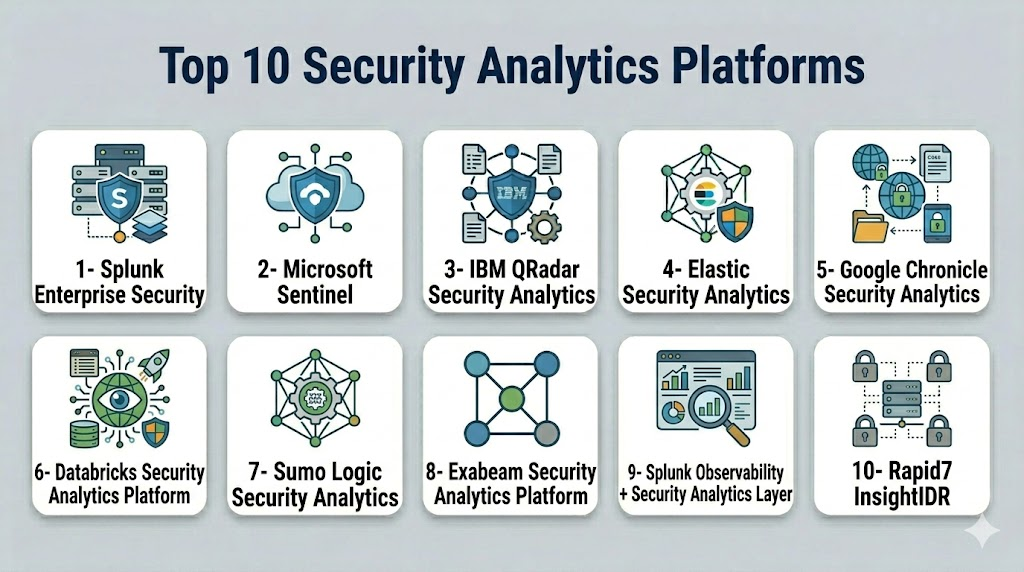
Top 10 Security Analytics Platforms
1- Splunk Enterprise Security
Short description: A leading security analytics platform widely used in enterprise SOC environments for threat detection, correlation, and investigation across massive datasets.
Key Features
- Real-time security event correlation
- Advanced search and analytics engine
- Machine learning toolkit for anomaly detection
- Custom dashboards and reporting
- Threat intelligence integration
- Security incident management workflows
- Scalable log processing architecture
Pros
- Extremely powerful analytics capabilities
- Mature enterprise adoption
- Strong ecosystem and extensibility
Cons
- High cost at scale
- Requires tuning for performance optimization
Platforms / Deployment
Cloud / Hybrid / Self-hosted
Security & Compliance
- RBAC and MFA support
- Encryption at rest and in transit
- Audit logging capabilities
- Compliance varies by deployment
Integrations & Ecosystem
Integrates with SIEM, SOAR, and cloud platforms.
- API-based integrations
- Security app marketplace
- Threat intelligence feeds
Support & Community
Very strong enterprise support and large global community.
2- Microsoft Sentinel
Short description: Cloud-native security analytics platform built on Azure, offering AI-driven threat detection and unified security monitoring.
Key Features
- Cloud-native SIEM and analytics
- AI-based threat detection
- Automated incident response workflows
- Data connectors for Microsoft ecosystem
- Advanced hunting queries
- Scalable log analytics
- Built-in security orchestration
Pros
- Deep Microsoft ecosystem integration
- Easy cloud deployment
- Strong AI-driven insights
Cons
- Best suited for Azure environments
- Pricing complexity at scale
Platforms / Deployment
Cloud
Security & Compliance
- Azure Active Directory RBAC
- Encryption and audit logs
- Compliance varies by setup
Integrations & Ecosystem
- Microsoft Defender suite
- Azure Security Center
- Third-party security tools
Support & Community
Strong enterprise Microsoft support ecosystem.
3- IBM QRadar Security Analytics
Short description: Enterprise-grade security analytics platform designed for event correlation, threat detection, and compliance reporting.
Key Features
- Advanced event correlation engine
- Security intelligence integration
- Log and flow data analysis
- Incident tracking workflows
- AI-assisted threat detection
- Compliance reporting tools
- Custom rule creation
Pros
- Strong enterprise governance
- Mature correlation engine
- Reliable large-scale performance
Cons
- Complex deployment process
- Less modern UI experience
Platforms / Deployment
Cloud / Hybrid
Security & Compliance
- RBAC and encryption
- Audit trails
- Enterprise compliance support
Integrations & Ecosystem
- IBM Security ecosystem
- SIEM and SOAR integrations
- API-based connectivity
Support & Community
Strong enterprise-level IBM support.
4- Elastic Security Analytics
Short description: Open and flexible security analytics platform built on Elasticsearch for real-time threat detection and investigation.
Key Features
- Full-text search for security data
- Real-time analytics dashboards
- Machine learning anomaly detection
- Scalable ingestion pipelines
- Security alert correlation
- Open data model support
- Visualization tools
Pros
- Highly flexible and customizable
- Strong search performance
- Open ecosystem
Cons
- Requires tuning and expertise
- Operational complexity at scale
Platforms / Deployment
Cloud / Self-hosted / Hybrid
Security & Compliance
- RBAC and encryption
- Audit logging
- Compliance varies
Integrations & Ecosystem
- SIEM and observability tools
- API integrations
- Cloud connectors
Support & Community
Large open-source community with enterprise support options.
5- Google Chronicle Security Analytics
Short description: Cloud-native security analytics platform designed for high-speed threat detection and massive-scale telemetry analysis.
Key Features
- Petabyte-scale data processing
- Fast security search capabilities
- AI-driven threat detection
- Built-in threat intelligence
- Log normalization engine
- Real-time analytics
- Long-term data retention
Pros
- Extremely fast search performance
- Strong AI detection capabilities
- Built for large-scale environments
Cons
- Google ecosystem dependency
- Limited customization flexibility
Platforms / Deployment
Cloud
Security & Compliance
- Identity-based access control
- Encryption and logging
- Compliance varies
Integrations & Ecosystem
- Google Cloud Security tools
- SIEM integrations
- API-based ingestion
Support & Community
Enterprise-grade Google support ecosystem.
6- Databricks Security Analytics Platform
Short description: Unified lakehouse platform enabling advanced security analytics and machine learning-based threat detection.
Key Features
- Lakehouse architecture for security data
- Real-time streaming analytics
- Machine learning pipelines
- Scalable data processing engine
- Unified workspace for analysts
- Security data correlation
- Notebook-based investigations
Pros
- Strong AI/ML capabilities
- Highly scalable architecture
- Unified analytics environment
Cons
- Requires technical expertise
- Complex setup for security teams
Platforms / Deployment
Cloud / Hybrid
Security & Compliance
- RBAC and encryption
- Audit logging
- Not publicly stated certifications
Integrations & Ecosystem
- Cloud security tools
- Data engineering pipelines
- SIEM integrations
Support & Community
Strong developer ecosystem and enterprise support.
7- Sumo Logic Security Analytics
Short description: Cloud-native security analytics platform designed for real-time monitoring, detection, and investigation.
Key Features
- Real-time log ingestion
- Cloud-native architecture
- Security dashboards
- Threat detection rules engine
- Machine learning insights
- Scalable analytics pipelines
- Compliance reporting
Pros
- Easy cloud deployment
- Strong real-time analytics
- Good usability
Cons
- Limited deep customization
- Cost increases with data volume
Platforms / Deployment
Cloud
Security & Compliance
- RBAC and encryption
- Audit logging
- Compliance varies
Integrations & Ecosystem
- Cloud platforms
- Security APIs
- SIEM integrations
Support & Community
Strong enterprise support and documentation.
8- Exabeam Security Analytics Platform
Short description: Behavioral analytics-driven security platform focused on detecting anomalies and investigating user activity patterns.
Key Features
- User behavior analytics (UBA)
- Security event correlation
- Automated threat detection
- Incident investigation workflows
- Machine learning models
- Log ingestion pipeline
- Case management tools
Pros
- Strong behavioral analytics
- Good threat detection accuracy
- SOC-focused design
Cons
- Limited outside security use cases
- Enterprise pricing structure
Platforms / Deployment
Cloud / Hybrid
Security & Compliance
- RBAC and encryption
- Audit logging
- Compliance varies
Integrations & Ecosystem
- SIEM platforms
- Identity systems
- Cloud security tools
Support & Community
Strong enterprise SOC adoption.
9- Splunk Observability + Security Analytics Layer
Short description: Security analytics capabilities integrated with Splunk’s observability ecosystem for unified detection and investigation.
Key Features
- Cross-domain analytics
- Security event correlation
- Machine learning models
- Unified dashboards
- Real-time data ingestion
- Threat intelligence feeds
- Custom analytics queries
Pros
- Unified observability and security
- Powerful analytics engine
- Strong ecosystem
Cons
- Expensive at scale
- Complex deployment
Platforms / Deployment
Cloud / Hybrid
Security & Compliance
- RBAC and encryption
- Audit logging
- Compliance varies
Integrations & Ecosystem
- Splunk ecosystem tools
- Cloud integrations
- API-based extensions
Support & Community
Very strong enterprise ecosystem support.
10- Rapid7 InsightIDR
Short description: Security analytics platform focused on user behavior analytics, detection, and incident investigation.
Key Features
- User behavior analytics
- Log search and correlation
- Incident detection workflows
- Endpoint telemetry integration
- Threat intelligence integration
- Investigation timelines
- Automated alerting
Pros
- Easy to deploy
- Strong detection capabilities
- Good usability for SOC teams
Cons
- Less scalable than top enterprise platforms
- Limited deep customization
Platforms / Deployment
Cloud
Security & Compliance
- RBAC and MFA
- Encryption support
- Compliance varies
Integrations & Ecosystem
- Endpoint security tools
- SIEM integrations
- Cloud APIs
Support & Community
Strong enterprise support with growing user base.
Comparison Table (Top 10)
| Tool | Best For | Platforms | Deployment | Standout Feature | Public Rating |
|---|---|---|---|---|---|
| Splunk | Enterprise SOC analytics | Web | Hybrid | Advanced correlation engine | N/A |
| Microsoft Sentinel | Azure security analytics | Web | Cloud | AI-driven detection | N/A |
| IBM QRadar | Enterprise compliance | Web | Hybrid | Event correlation | N/A |
| Elastic | Flexible security analytics | Web | Hybrid | Search-based analytics | N/A |
| Google Chronicle | Large-scale detection | Web | Cloud | Fast threat search | N/A |
| Databricks | AI-driven analytics | Web | Cloud/Hybrid | Lakehouse AI analytics | N/A |
| Sumo Logic | Cloud monitoring | Web | Cloud | Real-time analytics | N/A |
| Exabeam | Behavioral analytics | Web | Cloud/Hybrid | User behavior detection | N/A |
| Splunk Observability | Unified analytics | Web | Hybrid | Cross-domain insights | N/A |
| Rapid7 InsightIDR | SOC teams | Web | Cloud | Easy deployment | N/A |
Evaluation & Scoring of Security Analytics Platforms
| Tool | Core (25%) | Ease (15%) | Integrations (15%) | Security (10%) | Performance (10%) | Support (10%) | Value (15%) | Total |
|---|---|---|---|---|---|---|---|---|
| Splunk | 9 | 6 | 9 | 9 | 9 | 9 | 7 | 8.3 |
| Sentinel | 9 | 8 | 9 | 9 | 9 | 9 | 8 | 8.7 |
| QRadar | 9 | 6 | 8 | 9 | 8 | 9 | 7 | 8.0 |
| Elastic | 8 | 7 | 9 | 8 | 8 | 8 | 9 | 8.2 |
| Chronicle | 9 | 8 | 8 | 9 | 10 | 9 | 8 | 8.7 |
| Databricks | 9 | 7 | 9 | 9 | 9 | 8 | 8 | 8.5 |
| Sumo Logic | 8 | 8 | 8 | 8 | 8 | 8 | 8 | 8.0 |
| Exabeam | 8 | 7 | 8 | 8 | 8 | 8 | 7 | 7.8 |
| Splunk Obs | 9 | 6 | 9 | 9 | 9 | 9 | 7 | 8.3 |
| Rapid7 | 8 | 8 | 8 | 8 | 8 | 8 | 8 | 8.1 |
Which Security Analytics Platform Is Right for You?
Solo / Freelancer
Elastic Security, Rapid7 InsightIDR
SMB
Sumo Logic, Rapid7, Elastic
Mid-Market
Microsoft Sentinel, Databricks, Splunk
Enterprise
Splunk, IBM QRadar, Google Chronicle
Budget vs Premium
- Budget-friendly: Elastic, Rapid7
- Premium enterprise: Splunk, IBM, Chronicle
Feature Depth vs Ease of Use
- Easy: Rapid7, Sentinel
- Deep analytics: Splunk, Databricks, Elastic
Integrations & Scalability
- Strong ecosystems: Microsoft, AWS, Splunk
Security & Compliance Needs
- Enterprise-grade: IBM, Microsoft, Google Chronicle
Frequently Asked Questions (FAQs)
1. What is a security analytics platform?
It is a system that analyzes security data to detect and investigate threats.
2. How is it different from SIEM?
SIEM focuses on alerts; analytics platforms focus on deeper behavioral insights.
3. Do these platforms use AI?
Yes, most modern platforms use AI for anomaly detection and correlation.
4. Are they cloud-based?
Most are cloud-native or hybrid solutions.
5. What data do they analyze?
Logs, identity data, endpoint signals, network traffic, and cloud telemetry.
6. Who uses them?
SOC analysts, security engineers, and threat hunters.
7. Are they expensive?
Cost varies based on data volume and enterprise scale.
8. Do they replace SIEM?
Not always; they often complement SIEM tools.
9. What is the biggest benefit?
Improved detection and faster threat investigation.
10. Are they hard to implement?
Enterprise tools can be complex, but cloud-native platforms are easier.
Conclusion
Security Analytics Platforms are central to modern cybersecurity strategies, enabling organizations to detect, analyze, and respond to threats at scale. As cyber environments become more complex, these platforms provide the intelligence layer needed to correlate massive amounts of security data. The best platform depends on your infrastructure, scale, and security maturity. A practical approach is to shortlist 2–3 tools, test real-world detection scenarios, and validate integration with your existing security stack before full deployment.

Find Trusted Cardiac Hospitals
Compare heart hospitals by city and services — all in one place.
Explore Hospitals
Security analytics tools often look strong on paper, but their real effectiveness depends on how well they connect alerts into a clear attack narrative. If correlation between logs, endpoints, and network activity is weak, analysts still end up spending more time stitching context than actually responding to threats.