Introduction
Clear, vibrant vision allows us to connect fully with the world around us. From reading the fine print on a medicine bottle to enjoying a scenic sunset or safely navigating roads at night, our eyes are our primary gateway to experiencing life. However, as we age, the natural lens inside the eye can gradually become cloudy, making the world appear blurry, dim, or washed out. This condition, known as a cataract, is a natural part of the aging process and is incredibly common.In this educational guide, we will explore everything you need to know about cataracts, the various surgical options available, how to evaluate different eye hospitals, and what to expect during recovery. To help you navigate this decision with confidence, MYHOSPITALNOW provides an intuitive digital healthcare platform designed to simplify your search, allowing you to explore experienced eye care centers, learn about advanced surgical treatments, and make informed healthcare decisions for yourself or your loved ones.
What Are Cataracts?
To understand a cataract, it is helpful to think of the eye as a camera. In a healthy eye, light passes through a clear, flexible disc called the natural crystalline lens. This lens focuses light directly onto the retina at the back of the eye, which then sends clear visual signals to the brain.
Definition and Causes of Lens Clouding
A cataract is the gradual clouding of this natural lens. The lens is composed mostly of water and proteins arranged in a highly precise, organized pattern that keeps the lens perfectly clear. Over time, due to natural aging, environmental factors, or medical conditions, these proteins begin to break down, clump together, and accumulate on the lens. As these protein clumps grow larger, they scatter and block the light entering the eye, preventing it from focusing properly on the retina.
Symptoms and Visual Impact
As a cataract develops, patients often describe their vision as looking through a frosty, fogged-up window or a piece of dirty glass. Common symptoms include:
- Gradual, painless blurring or dimming of vision.
- Increased sensitivity to light and glare, especially from oncoming headlights during night driving or bright sunlight.
- Seeing “halos” or starbursts around light sources.
- Fading, yellowing, or dulling of colors, making it difficult to distinguish between shades of blue, purple, and black.
- Frequent changes in eyeglass or contact lens prescriptions.
- Double vision in a single eye.
Why Cataracts Become More Common with Age
While cataracts can develop due to eye trauma, certain medications (like long-term steroid use), genetics, or medical conditions such as diabetes, age is by far the most common risk factor. Almost everyone who lives long enough will eventually develop some degree of cataract formation. This is because the cells of our natural lens are never replaced; they are continuously packed into the lens over our lifetime, naturally becoming denser, less flexible, and more prone to protein clumping as the decades pass.
When Is Cataract Surgery Recommended?
Many patients ask if they need to undergo cataract surgery as soon as a cataract is diagnosed. The short answer is no. In its early stages, a mild cataract may not cause noticeable visual problems, and any minor blurriness can often be managed with a stronger pair of prescription eyeglasses or brighter reading lights.
However, because cataracts are typically progressive, they will eventually reach a point where non-surgical solutions are no longer sufficient. Cataract surgery is generally recommended when your vision has deteriorated to the point that it begins to interfere with your daily life, your independence, or your safety.
Assessing the Impact on Daily Life
You and your ophthalmologist might consider cataract surgery if you experience:
- Difficulty Reading and Performing Close-up Work: If text remains blurry or double despite having updated reading glasses, or if you require excessively bright light to read.
- Impaired Night Driving: When glare and halos around streetlights and oncoming headlights make driving at night feel unsafe or anxiety-inducing.
- Reduced Quality of Life and Loss of Independence: If you can no longer comfortably participate in hobbies you love, such as sewing, golf, painting, or watching television, due to poor visual quality.
- Increased Risk of Falls: For older adults, impaired depth perception and reduced contrast sensitivity caused by cataracts can significantly increase the risk of trips, slips, and fractures.
The Role of a Professional Evaluation
Ultimately, the decision to undergo surgery does not depend on a specific “ripeness” of the cataract—a common old myth—but rather on how much the cloudiness is affecting your lifestyle. A comprehensive examination by a qualified cataract specialist is essential. During this evaluation, the doctor will measure your visual acuity, assess glare sensitivity, check your overall eye health, and discuss whether surgical intervention is the most appropriate step for your individual visual goals.
Types of Cataract Surgery
Modern ophthalmology has turned cataract removal into a highly precise, microsurgical procedure. Depending on the density of the cataract, the physical anatomy of your eye, and your personal medical history, your surgeon will recommend the surgical technique best suited to your needs.
1. Phacoemulsification Surgery
Phacoemulsification, often referred to as “phaco,” is the standard and most widely performed method of cataract surgery today.
- How it Works: The surgeon makes a tiny, self-sealing incision (usually between 2.2 to 2.8 millimeters) on the side of the cornea. A microscopic probe is inserted into the eye. This probe emits ultrasonic energy (sound waves) that gently vibrates and breaks up (emulsifies) the cloudy cataract into tiny fragments. These microscopic pieces are then gently vacuumed out of the eye. Once the natural lens capsule is completely empty, the folded artificial intraocular lens (IOL) is inserted through the same tiny incision, where it gently unfolds and settles permanently into place.
- Advantages: Because the incision is incredibly small, it typically heals on its own without the need for stitches (sutures). This leads to a very fast recovery, minimal postoperative discomfort, and a rapid return to daily activities for many patients.
2. Manual Small Incision Cataract Surgery (MSICS)
MSICS is a highly effective, manual variation of cataract surgery that is often used in specific clinical situations.
- How it Works: The surgeon makes a slightly larger, tunnel-like incision on the sclera (the white part of the eye). Instead of using ultrasound energy to break the cataract apart inside the eye, the surgeon carefully removes the cloudy lens manually in one whole piece or in large segments. The artificial lens is then implanted.
- Advantages: MSICS does not require expensive high-tech ultrasound equipment, making it highly valuable in resource-limited areas. It is also an excellent option for patients who have extremely dense, hard, or mature cataracts that cannot be safely or easily broken up using phacoemulsification ultrasound energy.
3. Femtosecond Laser-Assisted Cataract Surgery (FLACS)
FLACS represents one of the latest technological milestones in refractive cataract surgery.
- How it Works: Instead of using hand-held manual surgical blades, the surgeon uses a highly advanced, computer-guided femtosecond laser to perform several of the critical steps of the procedure. The laser creates near-perfect corneal incisions, creates a circular opening in the thin membrane surrounding the lens (capsulotomy), and pre-softens or pre-segments the cataractous lens. The surgeon then completes the procedure using gentle phacoemulsification and inserts the IOL.
- Advantages: The use of a laser provides unparalleled precision, reproducibility, and customization based on 3D imaging of the patient’s eye. It can also help correct mild astigmatism by making precise laser incisions in the cornea, potentially reducing a patient’s reliance on glasses after surgery.
Cataract Surgery Comparison Table
The following table provides a high-level comparison of the primary cataract surgery methods offered at leading eye hospitals:
| Procedure | Common Features | Typical Benefits |
| Phacoemulsification | Microscopic incision; ultrasound energy to break up the cataract; foldable IOL. | Self-healing incision; no stitches required; rapid visual recovery for many patients. |
| MSICS (Manual Small Incision) | Slightly larger scleral tunnel incision; manual removal of the whole lens capsule. | Cost-effective; highly reliable for extremely dense, hard, or mature cataracts. |
| FLACS (Laser-Assisted) | Computer-guided femtosecond laser for corneal incisions and lens fragmentation. | Exceptional surgical precision; gentle on eye tissues; can address mild astigmatism. |
| Intraocular Lens Implantation | Placement of a clear, permanent artificial lens directly behind the iris. | Permanently replaces the cloudy natural lens; restores light-focusing capability. |
Types of Intraocular Lenses (IOLs)
Choosing the right eye hospital for cataract surgery is closely linked to the hospital’s ability to offer a wide range of state-of-the-art Intraocular Lenses (IOLs). When your natural lens is removed, it must be replaced with an artificial one to allow light to focus properly on your retina. The type of lens you choose will have a profound impact on how you see the world after your surgery and how dependent you will be on glasses.
Your ophthalmologist will help guide your selection based on your eye anatomy, overall eye health, daily activities, occupational needs, and budget.
                  [ Intraocular Lens (IOL) Options ]
                                  │
         ┌────────────────────────┼────────────────────────┐
         ▼                        ▼                        ▼
  [ Monofocal IOL ]       [ Multifocal IOL ]        [ Toric IOL ]
  Single focal point      Multiple focal points    Corrects corneal
  (usually distance;      (near, intermediate,        astigmatism
  requires reading            and distance)
      glasses)
                                  │
                                  ▼
                         [ EDOF IOL Options ]
                       Extended Depth of Focus
                        (seamless transition)
Monofocal IOLs
Monofocal lenses are the traditional, standard option. They are designed to provide clear, high-quality vision at one specific focal point—most commonly set for distance vision.
- What to Expect: With a distance-set monofocal lens, you will likely see very clearly when driving, watching television, or walking outdoors. However, you will still need to wear reading glasses or progressive lenses for near tasks like reading books, looking at a smartphone, sewing, or looking at a computer screen.
- Insurance Coverage: Standard monofocal lenses are typically covered by most health insurance plans and government programs.
Multifocal IOLs
Multifocal lenses are premium lenses designed to reduce or eliminate your reliance on glasses altogether.
- What to Expect: These lenses feature concentric rings on the optic surface that split light into multiple focal points, allowing you to see clearly at distance (driving), intermediate range (computer screens, car dashboards), and near range (reading print). While highly convenient, some patients may experience minor visual side effects, such as mild halos or glare around lights at night, which usually become less noticeable over time as the brain adapts.
Toric IOLs
If you have a pre-existing vision condition called astigmatism, your cornea is shaped more like a football than a round basketball. This uneven curvature causes blurred vision at all distances.
- What to Expect: Toric IOLs are specialized lenses engineered to correct astigmatism at the same time your cataract is treated. They must be precisely aligned inside the eye by the surgeon. By correcting your astigmatism, toric lenses can dramatically improve your uncorrected distance vision, though you may still need standard reading glasses for close-up work if a monofocal toric lens is selected.
Extended Depth of Focus (EDOF) IOLs
EDOF lenses are another advanced category of premium lenses designed to offer a more continuous, elongated range of vision.
- What to Expect: Unlike multifocal lenses, which split light into distinct points, EDOF lenses create a single, elongated focal point. This provides excellent distance and intermediate vision (computer and dashboard range) with a very smooth transition between distances, while minimizing the glare and halos sometimes associated with traditional multifocal lenses. You may still need light reading glasses for very small, close-up print in dim lighting.
Services Offered by Leading Eye Hospitals
The best ophthalmology hospitals do not simply perform surgeries; they provide comprehensive, end-to-end clinical care designed to protect your vision at every stage of your life. When looking at reputable cataract care centers, you should expect to see a full spectrum of integrated services:
- Comprehensive Eye Examination: Detailed evaluations to check your general visual health, screen for other conditions like glaucoma, macular degeneration, or diabetic retinopathy, and establish a baseline of your visual performance.
- Cataract Evaluation: Specialized assessments where the eye care team determines the size, location, and density of your cataract, and evaluates how much it is impacting your daily visual function.
- Biometry and Eye Measurements: Advanced, non-contact measurements of your eye’s length, corneal curvature, and internal structures. These highly precise calculations are critical for determining the exact power of the intraocular lens needed for your eye.
- Advanced Diagnostic Imaging: Utilizing state-of-the-art diagnostic devices to map the corneal surface, scan the layers of your retina, and ensure that your eye’s internal structures are healthy enough to support a premium lens implant.
- Cataract Surgery: Offering modern, sterile, and fully equipped surgical suites utilizing phacoemulsification, MSICS, or femtosecond laser-assisted surgery.
- Premium Lens Consultation: Dedicated counseling sessions where trained clinical advisors walk you through your lifestyle requirements, visual goals, and the pros and cons of different IOL options.
- Postoperative Follow-Up: A structured series of follow-up visits (typically the next day, after one week, and at one month) to monitor healing, check eye pressure, track visual progress, and adjust postoperative eye drops.
- Vision Rehabilitation: Support services for patients who may require low-vision aids, specialized glasses, or additional visual therapy to achieve their absolute best visual potential.
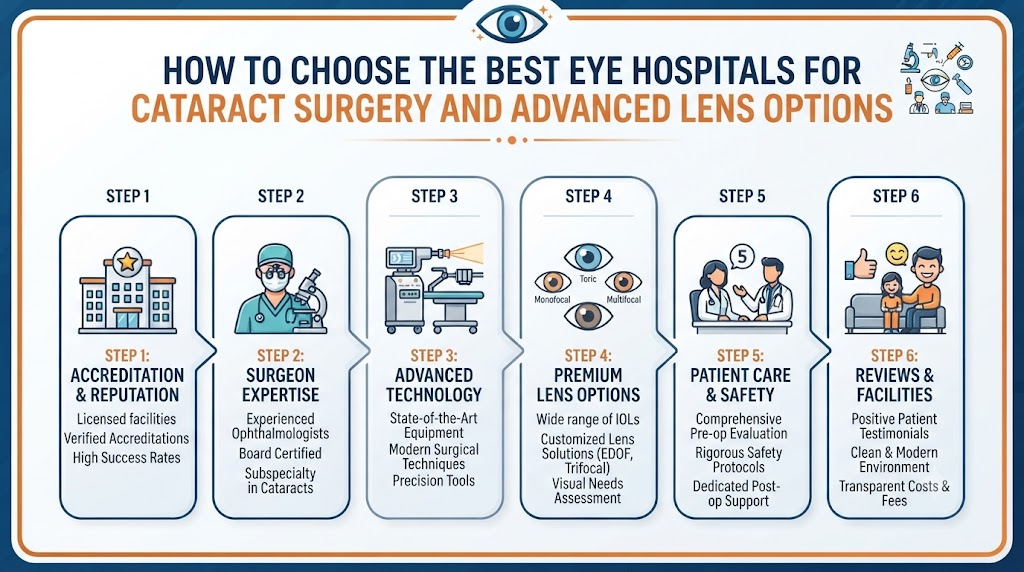
How to Choose the Best Eye Hospital for Cataract Surgery
Selecting where to have your cataract surgery is a deeply personal and important decision. Because cataract surgery is highly sophisticated, the quality of your hospital, the experience of your surgeon, and the technology available can significantly influence your overall comfort and surgical journey.
When evaluating eye care centers, keep the following critical pillars in mind:
1. Highly Experienced Ophthalmologists
A hospital’s reputation is built on its medical staff. Look for hospitals that employ board-certified, fellowship-trained ophthalmologists who specialize in cataract and refractive surgery. Experienced cataract specialists perform hundreds, if not thousands, of these procedures every year, allowing them to hone their skills and handle complex anatomical cases with exceptional care and precision.
2. High Cataract Surgery Volume
In medicine, volume is often a reliable indicator of clinical proficiency and safety. Hospitals that perform a high volume of cataract surgeries typically have highly streamlined clinical processes, well-trained nursing staff, and specialized surgical technicians who are intimately familiar with every detail of the procedure and postoperative care.
3. Advanced Diagnostic and Surgical Technology
The field of ophthalmology is heavily driven by technological innovation. The best eye hospitals invest in advanced diagnostic tools (such as optical biometers and corneal topographers) and modern surgical platforms (like femtosecond lasers and high-definition surgical microscopes). These tools enable surgeons to plan and execute procedures with sub-millimeter precision.
4. Robust Infection Control and Safety Standards
Because the eye is highly delicate, operating room sterility is paramount. Inquire about the hospital’s infection control policies, sterilization protocols, and safety certifications. A premium eye hospital prioritizes strict sanitary measures to minimize the risk of post-surgical eye infections.
5. Transparent Patient Counseling and Education
A trustworthy hospital will never rush you into a decision. They should offer transparent, detailed counseling sessions where they explain your surgical options, the costs of different premium lenses, what your insurance covers, and any potential risks.
A Helpful Resource: Navigating the healthcare system can feel overwhelming. To make this process easier, MYHOSPITALNOW serves as a digital platform designed to help patients explore hospital options, compare medical providers, read patient resources, and make informed healthcare decisions with confidence.
Hospital Selection Checklist
To help you or your family members organize your search, use this quick checklist to compare different eye hospitals:
| Feature | Why It Matters |
| Experienced Cataract Surgeons | Supports highly precise surgical care and can manage complex eye conditions. |
| Advanced Diagnostic Equipment | Crucial for accurate eye measurements, ensuring the correct IOL power is selected. |
| Modern Operating Facilities | Ensures high sterilization standards, advanced microscopes, and patient safety. |
| Premium IOL Options | Provides access to multifocal, toric, and EDOF lenses tailored to your lifestyle. |
| Structured Follow-Up Care | Essential for tracking corneal healing, monitoring eye pressure, and preventing complications. |
| Patient Education | Empowers you with clear, unbiased information to make informed visual decisions. |
How Cataract Surgery Is Performed: Step-by-Step
Understanding what happens on the day of your surgery can significantly ease any pre-procedure anxiety. Cataract surgery is almost always performed as a same-day outpatient procedure, meaning you will go home shortly after it is completed.
[ Pre-Op Care ] ──► [ Local Anesthesia ] ──► [ Microscopic Incision ]
                                                     │
                                                     ▼
[ Recovery & Go Home ] ◄── [ Implant New IOL ] ◄── [ Remove Cloudy Lens ]
Step 1: Preoperative Preparation and Measurements
When you arrive at the surgical center, the nursing staff will confirm your details, check your vital signs, and administer several rounds of eye drops. These drops dilate (widen) your pupil, prevent infection, and minimize inflammation.
Step 2: Local Anesthesia
To ensure you do not feel any pain, the team will apply numbing eye drops directly to your eye. In some cases, a gentle, localized anesthetic block or a mild sedative may be administered to help you feel completely relaxed and comfortable throughout the short procedure. You will remain awake, but your vision will be blurry, and you will not see the surgical instruments.
Step 3: Making the Micro-Incision
Once the eye is completely numb and clean, the surgeon uses a microscope to make a microscopic, self-sealing incision at the edge of your cornea. Because this incision is so tiny and designed at a precise angle, it will naturally seal itself shut under the eye’s normal pressure once the surgery is over.
Step 4: Breaking and Removing the Cloudy Lens
The surgeon accesses the natural lens capsule. Utilizing phacoemulsification, the surgeon uses gentle ultrasound waves to break up the cloudy cataract into microscopic pieces. These fragments are then meticulously vacuumed out, leaving the clear back portion of the natural lens capsule (the “bag”) intact.
Step 5: Implanting the New Intraocular Lens (IOL)
Through the same microscopic incision, the surgeon inserts a highly flexible, folded artificial IOL. Once inside the empty lens capsule, the lens gently unfolds, centers itself, and takes over the job of focusing light. The surgeon then verifies that the lens is perfectly positioned and that the corneal incision is fully sealed.
Step 6: Immediate Recovery and Same-Day Discharge
The entire surgical procedure typically takes only 15 to 30 minutes. Afterward, you will be moved to a comfortable recovery area, where a nurse will monitor you for a short period. A protective shield or patch is often placed over your eye to protect it from accidental rubbing or dust. Once the team is satisfied with your early recovery, you will be discharged to go home. Because your vision will be blurry and you may feel slightly drowsy, you must have a trusted family member or friend drive you home.
Recovery After Cataract Surgery
While the surgery itself is highly advanced, the healing process depends heavily on how well you care for your eye at home. For most patients, recovery is remarkably fast, and many notice a significant improvement in their vision within just a few days. However, individual healing rates always vary.
The First 24 Hours
- Expect some mild, temporary grittiness, watering, or slight soreness, which is completely normal as the cornea heals.
- Keep your protective eye shield in place, especially when sleeping or napping, to prevent accidental rubbing.
- Rest quietly and avoid any strenuous physical activity.
Administering Prescribed Eye Drops
Your surgeon will prescribe a regimen of eye drops, which usually include antibiotic drops to prevent infection and anti-inflammatory drops to support healing. It is vital to use these drops exactly as directed by your surgeon. Always wash your hands thoroughly before applying your drops, and never skip a dose.
Activity Restrictions to Keep in Mind
To protect your healing eye, you should follow these precautions for the first 1 to 2 weeks:
- Do Not Rub Your Eye: This is the most important rule. Even gentle rubbing can disrupt the self-sealing incision or shift the newly implanted IOL.
- Avoid Heavy Lifting and Strenuous Exercise: Refrain from bending over from the waist or lifting heavy items (typically anything over 10-15 pounds), as this can temporarily increase pressure inside your head and eye.
- Keep Water Out of Your Eye: When showering or washing your face, be careful to keep water, soap, and shampoo out of the operated eye. Avoid swimming pools, hot tubs, and saunas for at least two weeks to minimize infection risk.
- Avoid Dusty Environments: Protect your eye from dust, wind, and debris by wearing your protective glasses or sunglasses outdoors.
Follow-Up Visits
Your recovery will be closely monitored through scheduled follow-up visits with your ophthalmologist. These visits are essential to ensure the eye is healing beautifully, that your eye pressure is stable, and to determine when it is safe to resume all your normal activities or get a prescription for reading glasses if needed.
Possible Risks and Complications
Cataract surgery is widely considered one of the safest and most successful procedures in all of modern medicine, with extremely high success rates. However, like any surgical procedure, it carries some level of risk. It is important to be aware of these potential complications so you can seek prompt medical attention if necessary.
- Infection (Endophthalmitis): A rare but serious complication where bacteria enter the inside of the eye. This is why using antibiotic eye drops as prescribed is so critical.
- Bleeding: Minor bleeding can sometimes occur, which usually resolves on its own. Major bleeding inside the eye is extremely rare.
- Inflammation: Some post-surgical inflammation is normal and expected, but excessive inflammation requires adjusting your anti-inflammatory eye drops.
- Retinal Detachment: A rare condition where the light-sensitive tissue at the back of the eye pulls away from its normal position. This is a medical emergency that requires prompt surgical treatment.
- Posterior Capsule Opacification (PCO): Sometimes referred to as a “second cataract,” PCO occurs when the back of the natural lens capsule (which holds the new IOL) becomes cloudy months or years after surgery. This is easily and painlessly treated in a few minutes using a simple, in-office laser procedure called a YAG capsulotomy.
- Elevated Eye Pressure: Some patients experience a temporary spike in pressure inside the eye shortly after surgery, which can be managed with temporary pressure-lowering drops.
When to Contact Your Surgeon Immediately: If you experience a sudden decrease in vision, worsening eye pain that does not respond to mild over-the-counter pain relievers, severe redness, or a sudden increase in floaters or flashes of light, contact your eye care provider immediately.
Advanced Technologies Used in Modern Eye Hospitals
The rapid evolution of ophthalmic technology has made cataract surgery safer, more precise, and highly customizable. Leading eye hospitals invest heavily in advanced diagnostic and surgical systems to optimize visual outcomes for their patients.
1. Optical Biometry
Before surgery, the eye must be measured to calculate the precise power of the new IOL. Traditional ultrasound measurements required touching the eye. Modern eye hospitals utilize advanced optical biometers, which use non-contact laser technology to measure the eye’s length, corneal shape, and chamber depth with micron-level accuracy, significantly reducing the margin of error for IOL calculations.
2. Optical Coherence Tomography (OCT)
An OCT scan is like a high-resolution ultrasound that uses light waves instead of sound. It provides cross-sectional, 3D images of your retina and optic nerve. Performing an OCT before cataract surgery allows the surgeon to verify that your retina is completely healthy, ruling out underlying conditions like macular degeneration that could limit your visual potential after surgery.
3. Corneal Topography
This advanced diagnostic test creates a highly detailed, 3D color map of the surface curvature of your cornea. It is an invaluable tool for identifying corneal irregularities, measuring astigmatism, and planning the precise placement of toric or premium multifocal lenses.
4. Digital Surgical Microscopes and Guided Systems
Modern operating rooms utilize high-definition digital microscopes that provide surgeons with incredible depth perception, clarity, and real-time overlays. Some systems can project digital templates directly onto the surgeon’s view of the eye, guiding them where to make incisions and how to perfectly align toric lenses to correct astigmatism.
How MYHOSPITALNOW Helps Patients Find Eye Hospitals
Navigating the healthcare landscape to find the right hospital for cataract surgery can feel daunting. There are many providers, technologies, and lens options to consider, and finding reliable, easy-to-understand information is essential.
This is where MYHOSPITALNOW can assist you on your journey. As an advanced digital healthcare platform, MYHOSPITALNOW is designed to bridge the gap between patients and high-quality medical providers:
- Hospital Discovery Platform: Easily explore and locate reputable eye care centers and specialized ophthalmology hospitals in your region.
- Specialist Search: Find experienced, board-certified cataract surgeons and ophthalmologists who specialize in modern surgical techniques and premium lens implantations.
- Transparent Information and Resources: Access highly informative, patient-friendly articles, educational guides, and clinical checklists to help you prepare for your consultations.
- Treatment Quote Requests: Connect with hospital representatives to understand estimated procedure costs, lens upgrade fees, and clinical timelines.
- Empowering Informed Decisions: By providing clear, structured information, MYHOSPITALNOW helps you compare your options and make choices that align with your unique visual goals, lifestyle, and budget.
Common Mistakes Patients Make
When preparing for cataract surgery, avoiding common pitfalls can lead to a much smoother, safer experience:
- Delaying Surgery Too Long: Some patients wait until their cataracts are completely “ripe” or dense before seeking help. While cataracts do not damage the eye by simply being there, extremely dense, hard cataracts are more difficult to remove, which can slightly increase the risk of surgical complications and prolong your recovery time.
- Choosing a Provider Solely on Cost: While budget is an important factor, opting for the cheapest option without considering the hospital’s safety standards, surgeon experience, or diagnostic technology can lead to subpar visual outcomes or higher complication rates.
- Ignoring Postoperative Drop Schedules: Skipping your prescribed eye drops or stopping them early because your eye “feels fine” can lead to hidden inflammation or serious infections that can threaten your vision.
- Rubbing the Operated Eye: It is natural to feel a slight itch or grittiness as your eye heals, but rubbing your eye in the first few weeks can open the microscopic corneal incision or displace the intraocular lens.
- Not Discussing Your Lifestyle with Your Surgeon: Many patients assume all lenses are the same. If you do not discuss your daily hobbies, work environment, and desire to go without glasses with your doctor, you might miss out on a premium lens option (like a multifocal or EDOF lens) that could have significantly enhanced your daily lifestyle.
Common Myths vs. Facts
Here are some of the most common misconceptions about cataracts and cataract surgery, clarified with accurate medical facts:
| Myth | Fact |
| Cataracts can be cured with eye drops or lifestyle changes. | There are no eye drops, medications, exercises, or dietary supplements proven to reverse or cure cataracts. Surgery is the only effective treatment when vision is significantly affected. |
| Cataract surgery is painful and requires a long hospital stay. | The procedure is virtually painless thanks to local numbing drops and mild sedation. It is performed as a fast, same-day outpatient procedure, and most patients go home within hours. |
| Cataracts can grow back after surgery. | A cataract cannot return because your natural lens is completely removed. However, some patients may develop a cloudy membrane behind the new lens (PCO) months or years later, which is easily treated with a quick laser. |
| Recovery takes several months for everyone. | While full corneal healing can take up to a month, many patients experience noticeably clearer, brighter vision within just a few days of their procedure. |
Real-Life Educational Scenarios
To help illustrate how these clinical principles apply in daily life, let’s look at a few common educational scenarios:
Scenario 1: Reclaiming Independence
An active, older adult who loved knitting, reading, and evening walks began to notice that the colors of her yarn looked dull and that she could no longer see her sewing needles clearly, even with reading glasses. She found driving at night increasingly scary due to blinding glare from streetlights. After a thorough evaluation at a leading eye hospital, she opted for standard phacoemulsification with monofocal lenses set for distance vision. Today, she drives confidently at night and uses a simple, stylish pair of reading glasses for her knitting, feeling she has reclaimed her active lifestyle.
Scenario 2: Choosing a Premium Lens for a Dynamic Career
A professional graphic designer in his late 50s was diagnosed with cataracts in both eyes. Because his work required constant use of computer screens, checking print layouts, and driving to meet clients, he wanted to minimize his need for glasses. After consulting with an experienced ophthalmologist and exploring hospital options, he chose to receive Extended Depth of Focus (EDOF) lenses. The lenses allowed him to work seamlessly on his dual monitors and drive without glasses, only requiring lightweight reading glasses for reading very small print in dim restaurants.
Scenario 3: The Importance of Postoperative Care
A patient underwent successful cataract surgery but felt an irritating, scratchy sensation in her eye on the second day. Remembering her surgeon’s strict advice about the delicate healing process, she resisted the strong urge to rub her eye. Instead, she kept her protective eye shield in place, diligently applied her prescribed lubricating and anti-inflammatory eye drops, and contacted her clinic. The clinical team reassured her that the mild irritation was a normal part of early corneal healing. By following her recovery instructions, her eye healed beautifully, and she achieved excellent visual clarity.
Frequently Asked Questions (FAQs)
1. What are cataracts?
A cataract is the gradual clouding of the natural crystalline lens inside the eye. This clouding is usually caused by proteins within the lens breaking down and clumping together over time, which blocks and scatters light, resulting in blurry, dim, or hazy vision.
2. When is cataract surgery recommended?
Cataract surgery is recommended when visual impairment begins to interfere with your daily life, safety, or independence—such as difficulty reading, trouble driving at night, or an increased risk of falls. The decision is based on your symptoms, lifestyle needs, and a comprehensive evaluation by an ophthalmologist.
3. How long does cataract surgery take?
The actual surgical procedure is remarkably fast, typically taking only 15 to 30 minutes. However, you should plan to spend a few hours at the surgical center to allow time for preoperative preparation (dilating your eyes, administering anesthesia) and a brief postoperative monitoring period.
4. Is cataract surgery painful?
No, cataract surgery is generally not painful. Prior to the procedure, your eye is completely numbed using local anesthetic drops. You may also receive a mild sedative to help you feel relaxed. You might feel a light sensation of pressure or water around your eye during the procedure, but you should not feel pain.
5. What is an intraocular lens (IOL)?
An intraocular lens (IOL) is a clear, medical-grade artificial lens that is permanently implanted inside your eye during cataract surgery to replace your cloudy natural lens. It requires no maintenance and cannot be felt or seen by others.
6. What are premium lenses?
Premium lenses are advanced types of IOLs—such as multifocal, toric, and Extended Depth of Focus (EDOF) lenses. Unlike standard monofocal lenses (which focus at only one distance), premium lenses are designed to correct astigmatism, provide multiple focal points, and significantly reduce or eliminate your daily reliance on eyeglasses.
7. How long is recovery?
Many patients notice a significant improvement in their vision within 24 to 48 hours after surgery. However, complete healing of the microscopic incision and stabilization of your vision typically takes about 4 to 6 weeks.
8. Can both eyes be operated on at the same time?
Generally, surgeons prefer to operate on one eye at a time, spacing the procedures 1 to 2 weeks apart. This approach allows the first eye to heal and your vision to stabilize before proceeding with the second eye, ensuring optimal safety.
9. What activities should I avoid after surgery?
For the first 1 to 2 weeks, you should avoid rubbing your operated eye, bending over from the waist, lifting heavy objects, strenuous exercise, getting water or soap directly in your eye, and swimming or using hot tubs.
10. What risks are associated with cataract surgery?
While cataract surgery is highly safe, potential risks include infection, bleeding, persistent inflammation, temporary spikes in eye pressure, and retinal detachment. Most complications are rare and can be treated successfully if caught early.
11. How do I choose the right eye hospital?
Look for eye hospitals that feature board-certified, experienced cataract surgeons, perform a high volume of surgeries, possess advanced diagnostic and surgical technology, maintain strict infection control standards, and offer clear, transparent patient counseling.
12. What technologies improve cataract surgery outcomes?
Key advanced technologies include Optical Biometry for highly accurate lens calculations, Optical Coherence Tomography (OCT) to verify retinal health, Corneal Topography to map astigmatism, and Femtosecond Laser-Assisted Surgery (FLACS) for computer-guided precision.
13. How often are follow-up visits required?
While schedules may vary depending on your surgeon, typical follow-up visits are scheduled for the day after surgery, one week after surgery, and approximately one month after surgery to monitor your healing progress.
14. Can cataracts come back?
No, cataracts cannot return because your natural lens has been permanently removed. However, some patients may experience a gradual clouding of the membrane behind the new artificial lens months or years later. This is called Posterior Capsule Opacification (PCO) and is easily treated with a quick, painless, in-office laser procedure.
15. How does MYHOSPITALNOW help patients find the best eye hospitals for cataract surgery?
MYHOSPITALNOW provides a digital discovery platform that allows you to search for reputable eye care centers and experienced ophthalmologists, access trusted educational resources, compare providers, and request treatment quotes, helping you make informed decisions about your eye care.
Final Thoughts
Cataracts are a highly common, natural part of aging, but they do not have to limit your vision, your passions, or your independence. Thanks to decades of clinical innovation, modern cataract surgery has transformed into a highly precise, comfortable, same-day outpatient procedure that offers excellent safety profiles and rapid recovery times.By choosing an eye hospital that combines experienced surgeons, state-of-the-art diagnostic imaging, and advanced lens technologies, you are investing in the long-term health and clarity of your vision. Remember that your choice of surgery and lens will depend entirely on your unique eye health, lifestyle preferences, and the thorough evaluation of your ophthalmologist.Always prioritize consultations with qualified eye care professionals to discuss your personalized treatment plan. As you embark on this journey toward clearer, brighter vision, explore MYHOSPITALNOW to find trusted eye hospitals, search for skilled cataract specialists, and access the resources you need to make confident, informed decisions for your eye care.

Find Trusted Cardiac Hospitals
Compare heart hospitals by city and services — all in one place.
Explore Hospitals