Introduction
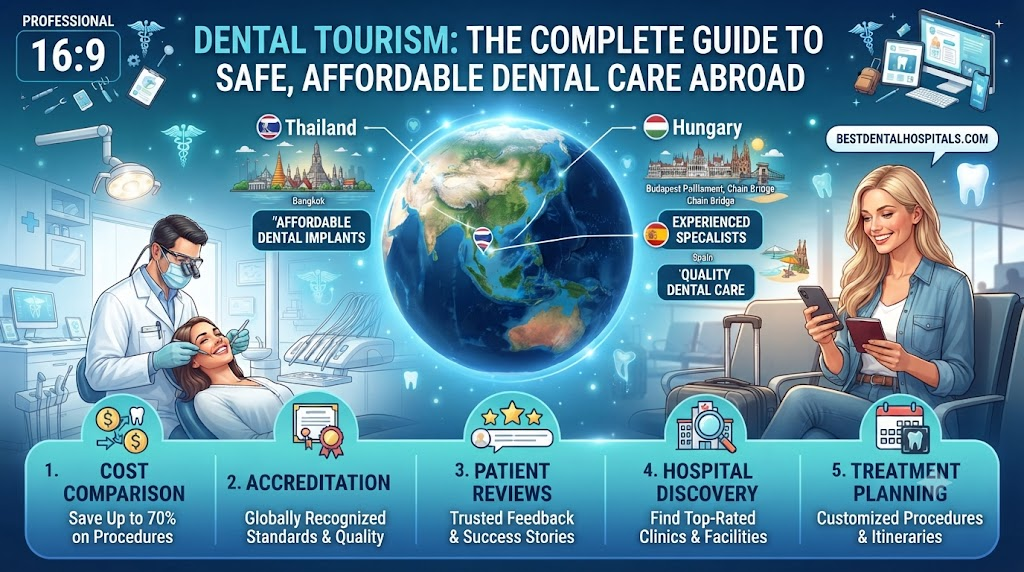
Global healthcare mobility has transformed how patients approach major dental procedures. Rising treatment expenses, high insurance copays, and long domestic waiting lists in countries like the US, UK, Canada, and Australia have led millions of individuals to explore international healthcare markets. Dental tourism—the practice of traveling across international borders specifically to receive dental care—has evolved from a niche alternative into a multi-billion-dollar global industry characterized by advanced clinical infrastructure, internationally trained specialists, and sophisticated patient-support networks.This comprehensive guide explores every facet of dental tourism. It examines popular global destinations, breaks down implant costs and procedures, provides structured hospital evaluation checklists, highlights potential risks, and outlines a step-by-step framework to help patients make safe, well-informed clinical decisions.
What Is Dental Tourism?
Dental tourism refers to the intentional travel of patients to another country to access professional dental services. While some travelers combine routine cleanings or minor fillings with a vacation, the vast majority of medical travelers cross borders for high-cost, specialized procedures that are either uninsured or prohibitively expensive in their home countries.
Classifications of Dental Travel
- Routine Dental Travel: Traveling for basic restorative or preventative care, usually practical only when living near international borders.
- Cosmetic Dental Tourism: Focused on aesthetic enhancements such as porcelain veneers, crowns, teeth whitening, and smile makeovers.
- Implant Tourism: Specifically targeting single or multiple missing teeth replacements using titanium or zirconia dental fixtures.
- Full-Mouth Rehabilitation & Complex Restorative Treatment: Comprehensive surgical and prosthetic interventions involving multi-unit extractions, bone grafting, sinus lifts, and fixed full-arch prostheses.
While international travel offers substantial financial relief and access to world-class clinicians, it also introduces distinct logistical hurdles, including language barriers, travel fatigue, unfamiliar regulatory environments, and the challenge of managing post-operative complications remotely.
Why Do People Seek Dental Treatment Abroad?
Patients choose to pursue international care for several compelling clinical, financial, and practical reasons. Understanding these drivers helps patients set realistic expectations.
- Significant Cost Reductions: Lower operating overheads, competitive local markets, and favorable exchange rates allow international clinics to offer treatments at 40% to 70% lower costs than domestic rates.
- Access to Specialists: Many international hospitals feature multi-disciplinary dental teams with specialists in periodontics, prosthodontics, oral surgery, and maxillo-facial surgery practicing under one roof.
- Elimination of Waiting Periods: Public healthcare systems in regions like the UK or Canada often involve extensive queues for specialist consultations or restorative work. Private international clinics typically accommodate immediate scheduling.
- Advanced Digital Technology: Top-tier global destinations feature state-of-the-art diagnostic imaging, computer-guided implant surgery, in-house CAD/CAM milling laboratories, and 3D CBCT scanners.
- All-Inclusive Patient Packages: Many destination hospitals provide comprehensive care packages that bundle airport transfers, local transportation, luxury accommodation, and dedicated medical coordinators alongside clinical fees.
How to Choose the Best Dental Hospital
Identifying the best dental hospitals requires a systematic, objective evaluation framework. Patients should never rely solely on glossy marketing brochures, social media advertisements, or unverified star ratings.
Patient Evaluation Checklist
- Dentist Qualifications: Verify where the treating clinicians completed their dental degrees, post-graduate residencies, and specialized fellowships. Look for active memberships in international organizations such as the International Congress of Oral Implantologists (ICOI) or the American Academy of Cosmetic Dentistry (AACD).
- Hospital Experience & Specialization: Assess how many years the institution has operated and whether it specializes in complex restorative cases rather than just basic cleanings.
- Global Accreditations: Check for recognized international healthcare standards, such as Joint Commission International (JCI) accreditation or national hospital quality board certifications.
- Infection Control Standards: Ensure the facility maintains rigorous sterilization protocols, utilizing hospital-grade autoclaves and strict cross-contamination prevention procedures.
- Diagnostic Technology: Confirm the availability of advanced imaging tools like 3D Cone Beam Computed Tomography (CBCT) scanners for precise implant placement.
- Implant Systems & Materials: Demand transparency regarding the specific global implant brands used (e.g., Straumann, Nobel Biocare, Zimmer Biomet) to ensure replacement parts remain universally compatible if needed back home.
- Emergency Support: Verify that the facility is fully equipped to handle medical or surgical emergencies during procedures.
- Patient Reviews: Read verified long-term patient experiences on independent medical tourism platforms rather than curated website testimonials.
- Transparent Pricing: Ensure quotes detail every phase of treatment without hidden administrative fees.
- Treatment Warranties: Review the written policy regarding guarantees on implant fixtures, crowns, and prosthetics.
- Communication & Language Support: Ensure fluent English-speaking coordinators and medical staff are assigned to your care.
- International Patient Services: Check for dedicated concierge teams that assist with itinerary planning, visa support, and local lodging.
Best Countries for Dental Tourism
Evaluating the best countries for dental tourism requires examining clinical standards, regulatory oversight, geographic proximity, and overall healthcare infrastructure. No single country is universally superior for every patient; the right destination depends on individual treatment needs and travel preferences.
| Country | Popular Treatments | Cost Considerations | Specialist Availability | Travel Convenience | Important Considerations |
| Turkey | Implants, All-on-4, Cosmetic Makeovers | Highly competitive pricing | High concentration of aesthetic & implant specialists | Excellent flight connectivity from Europe & Middle East | Verify clinic accreditation and ensure treatment timelines are not rushed for vacation schedules. |
| Hungary | Restorative Dentistry, Implants, Crowns | Moderate to high savings | Long-standing tradition in dental excellence (European standards) | Centrally located in Europe with easy rail/air travel | Excellent for European patients seeking EU-regulated clinical standards. |
| India | Complex Full-Mouth Rehab, Implants, Maxillofacial Surgery | Substantial savings across complex care | High-tier multi-specialty hospitals with university-trained professors | Major international aviation hubs in Delhi, Mumbai, and Bangalore | Long-haul flight times for Western patients; requires adequate post-op recovery stay. |
| Thailand | Cosmetic Dentistry, Implants, General Surgery | Moderate pricing with premium hospital standards | Internationally accredited medical tourism hubs | Excellent tourism infrastructure and hospitality | High standards of hospital cleanliness and patient care coordination. |
| Mexico | Implants, Crowns, Routine Restorative | Highly favorable for North American travelers | Border-adjacent clinics with US-trained practitioners | Exceptional driving distance or short flights from the US | Research specific border-town clinics carefully to ensure strict sterilization compliance. |
Dental Implants Abroad
Dental implants abroad represent the gold standard for replacing missing teeth, offering a permanent, structurally sound alternative to traditional bridges and removable dentures. An implant consists of a titanium or zirconia fixture surgically embedded into the jawbone, acting as an artificial tooth root.
The Standard Treatment Lifecycle
- Initial Consultation & 3D Imaging: Comprehensive diagnostic evaluation using CBCT scans to assess bone density, nerve paths, and sinus cavity locations.
- Preparatory Procedures (If Required): Extractions, bone grafting, or sinus augmentations to establish a stable foundation for the fixture.
- Implant Fixture Placement: Surgical placement of the titanium screw into the jawbone under local anesthesia (or sedation).
- Osseointegration (Healing Period): A crucial biological phase lasting 3 to 6 months where bone cells fuse directly to the implant surface.
- Abutment Placement: Attachment of a connector post to the integrated fixture, protruding just above the gum line.
- Crown Customization & Placement: Fitting the final custom-milled porcelain or zirconia crown matching natural tooth shade and bite alignment.
Dental Implant Cost Comparison
A realistic dental implant cost comparison illustrates why international care attracts budget-conscious patients, while also clarifying variable expense factors.
| Country | Typical Implant Cost Range (USD) | What May Be Included | Additional Costs |
| United States / UK | $3,500 – $6,000+ | Initial exam, surgery, abutment, standard crown | 3D scans, bone grafting, extractions, sedation |
| Turkey | $600 – $1,500 | Consultation, implant fixture, abutment, crown | Bone grafts, sinus lifts, specialized brands |
| Hungary | $800 – $1,800 | Implant placement, standard healing cap, crown | Diagnostics, preparatory bone work, temporary teeth |
| India | $500 – $1,200 | Surgery, standard fixture, prosthetic crown | CBCT scans, extractions, grafting materials |
| Thailand | $1,200 – $2,500 | Surgeon fees, implant placement, basic crown | Advanced diagnostics, sinus augmentation |
How to Compare Dental Implant Quotes
When reviewing international estimates, patients must request itemized quotations to prevent unexpected expenses upon arrival. A transparent quote should separately outline:
- Initial diagnostic consultation and CBCT imaging fees
- Tooth extractions and site preservation costs
- Bone grafting materials and surgical placement fees
- Specific implant brand and model specification
- Abutment and connector costs
- Temporary prostheses during healing
- Final permanent crown or bridge fabrication
- Anesthesia or sedation charges
- Prescribed post-operative medications
- Follow-up checkups and adjustments
Best Dental Implant Hospitals
Identifying the best dental implant hospitals requires looking beyond general dental practices to specialized surgical centers equipped with advanced technology and dedicated implantology departments.
Key Assessment Criteria
- Dedicated Implantology Suites: Clean-room surgical environments specifically designed for sterile implant placement.
- Digital Workflow Integration: Utilization of 3D computer-guided surgical software for precise flapless or minimally invasive implant insertion.
- Global Brand Partnerships: Direct procurement from internationally certified implant manufacturers with global warranty support.
- Prosthodontic Laboratories: In-house dental labs staffed by master ceramists to enable rapid adjustments and precise color-matching.
- Documented Success Rates: Transparent clinical audits demonstrating high osseointegration success rates and low complication metrics.
All-on-4 Dental Implants Abroad
All-on-4 dental implants abroad offer a revolutionary full-arch restoration technique designed for patients missing most or all of their teeth in an upper or lower jaw.
Procedure Overview
- Concept: An entire arch of replacement teeth is securely anchored onto just four strategically placed titanium implants. The posterior implants are tilted at a 45-degree angle to maximize bone contact and avoid anatomical structures like nerve canals or sinus cavities.
- Immediate Function: In many qualifying cases, a fixed temporary bridge can be attached on the same day as surgery, allowing patients to walk out with functional, natural-looking teeth (“Teeth in a Day”).
- Final Restoration: After 4 to 6 months of complete healing and osseointegration, the temporary acrylic bridge is replaced with a permanent, highly durable zirconia or porcelain hybrid prosthesis.
Considerations
- Rigorous Patient Selection: Requires adequate underlying bone density and good overall systemic health (e.g., well-controlled diabetes, non-smokers).
- Maintenance Requirements: Demands meticulous daily hygiene using specialized water flossers and routine professional maintenance.
Full Mouth Dental Implants Abroad
Full mouth dental implants abroad involve comprehensive rehabilitation for patients suffering from severe periodontal disease, extensive tooth decay, or total tooth loss across both arches.
Treatment Phases
- Comprehensive Assessment: Full-mouth clinical examination, panoramic imaging, and 3D bone mapping.
- Extractions & Site Cleansing: Removal of non-restorable teeth and deep debridement of infected gum tissue.
- Grafting & Foundation Build-Up: Extensive bone augmentation or sinus lifts if jawbone atrophy is severe.
- Implant Placement: Strategic placement of 6 to 8 implants per arch (depending on structural requirements).
- Temporary Load Restoration: Fitting temporary fixed arches during the primary bone integration phase.
- Definitive Prosthesis Delivery: Final seating of customized porcelain-fused-to-zirconia bridges designed for optimal bite force distribution.
Cosmetic Dentistry Abroad
Aesthetic treatments such as porcelain veneers, composite bonding, crowns, and smile makeovers attract international patients seeking dramatic cosmetic transformations. Finding the best cosmetic dentistry hospitals involves reviewing clinician portfolios of actual long-term cases rather than heavily filtered promotional imagery.
Key Considerations
- Conservative Preparation: Ethical cosmetic dentists prioritize preserving natural tooth enamel whenever possible, avoiding aggressive over-shaving (“shark teeth” prep).
- Material Quality: Use of high-grade lithium disilicate (e.g., E-max) or multilayered zirconia for lifelike translucency and fracture resistance.
- Occlusal Harmony: Ensuring aesthetic enhancements do not compromise jaw function, bite alignment, or temporomandibular joint (TMJ) health.
Dental Treatment Abroad: Complete Process
A structured, step-by-step roadmap ensures a smooth, stress-free international medical journey.
Step 1 – Identify Your Dental Problem
Clarify your symptoms, dental history, and primary treatment goals.
Step 2 – Collect Dental Records
Obtain recent panoramic X-rays, 3D scans, and current dentist notes from your home provider.
Step 3 – Research Destinations
Evaluate global destinations based on clinical standards, travel distance, and budget.
Step 4 – Shortlist Hospitals
Select 3 to 4 accredited hospitals specializing in your required procedure.
Step 5 – Request Online Consultation
Submit your dental records for remote evaluation and preliminary treatment planning.
Step 6 – Compare Treatment Plans
Review proposed timelines, implant brands, surgical approaches, and itemized cost breakdowns.
Step 7 – Compare Total Costs
Calculate overall expenses including flights, lodging, and secondary procedures.
Step 8 – Verify Credentials
Cross-check doctor certifications, hospital licenses, and patient reviews.
Step 9 – Plan Travel
Book flights, arrange international patient concierge services, and secure travel insurance.
Step 10 – Receive Treatment
Undergo clinical evaluation, preparatory work, and surgical execution under professional supervision.
Step 11 – Complete Follow-Up
Attend mandatory post-op checks before departure and establish a maintenance plan with a local dentist.
Risks of Dental Tourism
Transparency regarding potential clinical and logistical complications is vital for patient safety.
- Surgical Complications: Infection, implant failure, nerve irritation, or sinus membrane perforation.
- Communication Barriers: Misunderstandings regarding clinical instructions, medication schedules, or treatment scope.
- Inadequate Aftercare: Difficulty managing post-operative emergencies once back home if local dentists are unfamiliar with foreign implant systems.
- Travel Fatigue: Long flights immediately following invasive oral surgery can exacerbate swelling, discomfort, and bleeding risks.
- Regulatory Recourse: Navigating international legal systems if medical malpractice or unsatisfactory outcomes occur.
Aftercare After Dental Treatment Abroad
Recovery does not end when the patient boards the return flight. Proper aftercare is critical for long-term clinical success.
- Local Continuity: Establish contact with a local domestic dentist before traveling abroad who is willing to manage routine cleanings and post-op checks.
- Medication Compliance: Strictly follow prescribed antibiotic and analgesic regimens to prevent localized bacterial infections.
- Dietary Modifications: Stick to soft foods during initial osseointegration phases to avoid putting excessive stress on healing surgical sites.
- Oral Hygiene Protocols: Utilize interdental brushes, oral irrigators, and antimicrobial rinses as instructed by the surgical team.
- Red-Flag Symptoms: Seek immediate professional attention if experiencing persistent severe pain, unyielding bleeding, pus discharge, or loose implant fixtures.
Dental Tourism Travel Checklist
- Valid passport and required travel visas
- Comprehensive dental records, X-rays, and medical history
- Itemized, signed treatment plan and hospital contract
- International travel insurance covering medical/surgical evacuation
- Prescribed medications and written dosage instructions
- Contact details for hospital coordinator and local emergency services
- Pre-booked, accessible accommodation near the clinic
- Payment documentation (credit cards accepted internationally or local currency arrangements)
- Soft-food dietary preparation for the immediate post-op return journey
Dental Tourism Cost Checklist
Total expenses extend far beyond the clinic invoice. Calculate your budget using this formula:
$$\text{Total Cost} = \text{Treatment} + \text{Diagnostics} + \text{Travel} + \text{Accommodation} + \text{Additional Procedures} + \text{Follow-Up}$$
- Treatment Fees: Surgical and prosthetic invoices.
- Diagnostics: CBCT scans, blood work, and consultation fees.
- Travel Expenses: Round-trip international airfare and airport transfers.
- Lodging: Hotel or serviced apartment stays during the recovery window.
- Companion Costs: Expenses for a travel partner assisting with post-op care.
- Contingency Fund: Set aside 20% to 30% of the total budget for unexpected medication, extra days of stay, or follow-up adjustments.
Dental Tourism: Price vs Quality
The foundational rule of medical travel is that lowest price does not equal best treatment. Clinics offering steeply discounted implants often cut corners by using uncertified generic implant components, rushing multi-stage surgical healing times, employing inexperienced junior dentists, or skimping on sterilization protocols. Prioritizing clinical excellence, verifiable credentials, and premium material quality over rock-bottom pricing safeguards long-term oral health and prevents costly revision surgeries down the road.
Section 18 – Comparison Table
| Factor | What to Check | Why It Matters |
| Dentist | Qualifications & fellowships | Ensures advanced surgical expertise |
| Hospital | International accreditation | Guarantees rigorous safety standards |
| Technology | 3D CBCT & digital planning | Enables precise, predictable implant placement |
| Materials | Certified global implant brands | Ensures universal replacement compatibility |
| Price | Itemized written quotes | Prevents hidden fees and billing surprises |
| Reviews | Independent patient experiences | Provides authentic insight into clinical care |
| Aftercare | Structured follow-up plan | Protects long-term surgical investment |
How to Identify a Trustworthy Dental Provider
Positive Signals
- Provides a comprehensive, multi-disciplinary treatment plan after reviewing diagnostics.
- Employs board-certified specialists with transparent educational backgrounds.
- Uses universally recognized, FDA-approved or CE-marked implant systems.
- Maintains open, transparent communication regarding risks, limitations, and timelines.
- Offers written guarantees on prosthetic crowns and implant fixtures.
Warning Signs
- Advertises unbelievable “all-inclusive vacation packages” with guaranteed same-day results for complex cases.
- Pressures patients to wire full payment upfront before a formal consultation.
- Refuses to disclose the specific manufacturer brand of the implant fixtures being used.
- Lacks physical clinic infrastructure or operates out of unverified facilities.
- Guarantees 100% success rates without acknowledging biological healing variables.
Dental Tourism for Different Patient Needs
- Single Missing Tooth: Ideal for efficient single-visit or two-visit implant placement using localized surgical protocols.
- Multiple Missing Teeth: Requires structured bridge or multi-implant planning to ensure balanced bite distribution.
- Full-Mouth Rehabilitation: Demands extensive multi-specialty coordination, advanced bone grafting, and extended recovery stays.
- Cosmetic Dentistry: Focuses on aesthetic preservation, conservative enamel preparation, and high-grade ceramic craftsmanship.
Common Mistakes to Avoid
- Choosing Solely on Price: Selecting the cheapest clinic without verifying credentials or material quality.
- Booking Without Remote Consultation: Arriving abroad without a pre-approved, structured treatment plan.
- Ignoring Travel Recovery Windows: Booking return flights the day after major surgical extractions and implant placement.
- Failing to Secure Aftercare: Not arranging a domestic dentist to handle post-operative maintenance.
- Accepting Vague Quotations: Failing to demand an itemized breakdown of every clinical component.
Expert Tips for Dental Tourists
- Get an accurate local diagnosis first to establish a baseline before seeking international opinions.
- Obtain at least two or three treatment plans from different international hospitals to compare approaches.
- Always ask for the exact implant passport detailing the serial number, model, and manufacturer brand upon completion.
- Build extra recovery days into your travel itinerary to allow for initial healing checks before flying home.
- Keep physical and digital copies of all medical records, X-rays, invoices, and prescriptions.
Frequently Asked Questions
1. What is dental tourism?
Dental tourism involves traveling across international borders to receive professional dental care, typically driven by cost savings, access to advanced specialists, and reduced waiting times.
2. Is dental treatment abroad safe?
Yes, when patients thoroughly vet hospital accreditation, clinician credentials, sterilization protocols, and material quality. However, unverified low-cost clinics carry significant clinical risks.
3. Which countries are popular for dental tourism?
Popular destinations include Turkey, Hungary, India, Thailand, and Mexico, each offering distinct advantages in cost, travel convenience, and clinical expertise.
4. How much can dental implants abroad cost?
Depending on the country and implant system, dental implants abroad typically range from $500 to $2,000 per tooth, compared to $3,500+ in the US or UK.
5. Are dental implants abroad worth considering?
For patients requiring major restorative work or multiple implants, the substantial cost savings paired with top-tier care make international treatment highly worthwhile.
6. How do I choose the best dental hospital?
Look for international accreditations (like JCI), experienced implant specialists, transparent pricing, advanced 3D diagnostic technology, and verified patient reviews.
7. What should I check before choosing an implant hospital?
Verify the implant brand manufacturers used, the surgeon’s post-graduate qualifications, hospital infection control standards, and written warranty policies.
8. What are All-on-4 dental implants?
All-on-4 is a surgical technique where an entire arch of teeth is supported by four strategically placed implants, often allowing for same-day temporary teeth.
9. Can I get full-mouth dental implants abroad?
Yes, full-mouth rehabilitation is one of the most common procedures sought abroad, though it requires meticulous planning and adequate healing time.
10. How long does dental implant treatment take?
Standard implant treatment involves two trips: the initial surgery and fixture placement, followed by a 3-to-6-month healing period before the final crown is attached.
11. What does a dental implant quote usually include?
A comprehensive quote covers diagnostics, surgical placement, the implant fixture, abutment, and final crown. Always check for itemized exclusions like bone grafting.
12. What risks are associated with dental tourism?
Risks include surgical complications, infection, poor communication, inadequate post-operative aftercare, and travel fatigue following invasive procedures.
13. How should I plan dental treatment abroad?
Collect your dental records, request virtual consultations, compare itemized treatment plans, verify credentials, and book adequate recovery time.
14. What documents should I take?
Take your passport, travel insurance policy, complete medical history, dental X-rays, 3D scans, and signed hospital treatment contracts.
15. How do I arrange aftercare after returning home?
Establish contact with a local domestic dentist prior to travel who is willing to perform routine maintenance checks and monitor your recovery.
Conclusion
Dental tourism offers a viable, cost-effective pathway for patients seeking high-quality restorative, implant, and cosmetic dentistry. By prioritizing clinical excellence, rigorous hospital accreditation, transparent itemized pricing, and comprehensive aftercare planning over mere financial discounts, international patients can achieve exceptional clinical outcomes safely and successfully. Always consult a qualified dental professional before committing to any international treatment plan.

Find Trusted Cardiac Hospitals
Compare heart hospitals by city and services — all in one place.
Explore Hospitals