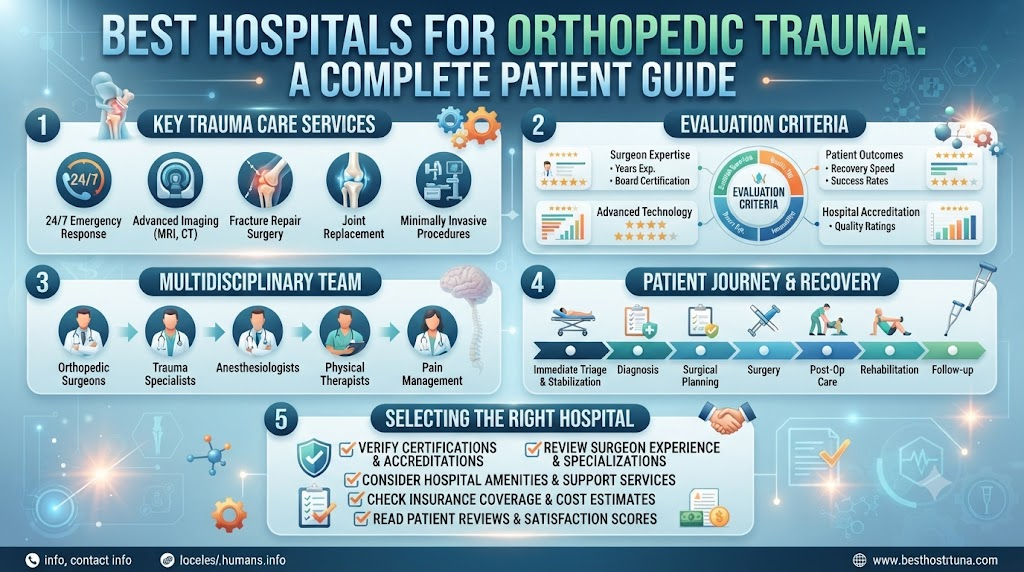
Introduction
Road accidents, severe falls, workplace incidents, and sports mishaps can strike without warning, resulting in serious musculoskeletal damage that alters lives in an instant. When bones shatter, joints dislocate, or multiple traumatic injuries occur, standard medical care is often insufficient. These critical situations demand immediate, highly coordinated intervention to stabilize the patient, prevent permanent disability, and preserve limb function.The urgency of timely diagnosis and stabilization cannot be overstated. In the critical moments following a severe traumatic event, rapid medical assessment ensures that life-threatening bleeding is controlled, fractures are immobilized, and vital organ systems are protected. However, managing complex bone injuries requires more than general emergency care; it demands specialized expertise found in dedicated trauma centers. For patients and families navigating these challenging circumstances, finding reliable guidance and comprehensive information is a vital first step. Platforms like MyHospitalNow provide valuable resources to help individuals explore healthcare options and understand complex medical services.
Understanding Orthopedic Trauma
What Is Orthopedic Trauma?
Orthopedic trauma refers to severe, acute injuries to the musculoskeletal system—encompassing bones, joints, ligaments, tendons, and surrounding soft tissues—typically caused by external physical force. Unlike routine orthopedic conditions such as degenerative arthritis or chronic back pain, orthopedic trauma involves sudden, high-impact damage that requires urgent or emergent medical attention.
How Orthopedic Trauma Happens
These injuries arise from various high-energy or low-energy mechanisms. High-energy trauma includes motor vehicle collisions, motorcycle accidents, pedestrian strikes, and high falls. Low-energy trauma, frequently seen in older adults with compromised bone density, can result from simple ground-level falls. Workplace mishaps, heavy machinery accidents, and high-intensity sports collisions also contribute significantly to the spectrum of traumatic bone injuries.
Difference Between Routine Orthopedic Care and Orthopedic Trauma Care
Routine orthopedic care typically addresses elective procedures, chronic degenerative conditions, sports-related minor sprains, or scheduled joint replacements. In contrast, orthopedic trauma care operates on an urgent or emergent basis. It requires immediate multidisciplinary response, specialized surgical instrumentation, advanced imaging capabilities, and continuous intensive care monitoring to manage life- or limb-threatening injuries effectively.
Why Serious Musculoskeletal Injuries Need Specialized Care
Severe musculoskeletal injuries often involve compromised blood supply, extensive soft-tissue damage, and a high risk of infection or permanent deformity. Specialized trauma care ensures rapid assessment, accurate diagnostic imaging, expert surgical intervention by fellowship-trained trauma surgeons, and structured rehabilitation protocols designed to maximize functional recovery and prevent long-term disability.
Common Types of Orthopedic Trauma
Orthopedic trauma encompasses a wide variety of injuries, each presenting unique clinical challenges and requiring tailored treatment approaches:
- Simple and Complex Bone Fractures: Breaks ranging from clean, single-line fractures to comminuted fractures where the bone shatters into multiple pieces.
- Open Fractures: Severe injuries where the broken bone punctures the skin, creating a high risk of bacterial contamination and bone infection.
- Multiple Fractures: Instances where a patient sustains fractures in multiple bones simultaneously, requiring prioritized surgical planning.
- Joint Dislocations: Complete displacement of bones forming a joint, often accompanied by severe ligamentous tearing and neurovascular compromise.
- Pelvic and Acetabular Fractures: High-impact injuries to the pelvic ring or hip socket that often involve significant internal bleeding and complex surgical reconstruction.
- Hip Fractures: Common in elderly individuals, requiring prompt surgical stabilization to maintain mobility and reduce mortality risks associated with prolonged immobility.
- Severe Limb Injuries: Massive crush injuries or skeletal trauma threatening the viability of an arm or leg.
- Ligament and Tendon Injuries: Acute, complete ruptures of supporting structures around major joints like the knee, shoulder, or ankle.
- Crush Injuries: Prolonged or severe compression of tissue leading to muscle breakdown, compartment syndrome, and systemic complications.
- Multiple Trauma Injuries: Complex cases where orthopedic injuries occur alongside traumatic brain injuries, chest trauma, or abdominal trauma.
Essential Features to Look for in the Best Hospitals for Orthopedic Trauma
| Hospital Feature | Why It Matters | What Patients and Families Should Look For |
| 24/7 Emergency Services | Immediate evaluation prevents secondary tissue damage and saves lives. | Round-the-clock trauma bays, dedicated emergency staff, and rapid triage protocols. |
| Orthopedic Trauma Specialists | Expertise in complex reconstruction ensures optimal functional outcomes. | Fellowship-trained orthopedic trauma surgeons on-site or on-call at all times. |
| Advanced Imaging Facilities | Accurate diagnosis guides precise surgical planning and intervention. | On-site CT scanners, MRI, digital X-rays, and portable imaging units. |
| Emergency Operating Rooms | Urgent surgical stabilization for open fractures and vascular compromise. | Dedicated trauma ORs available immediately without elective surgery delays. |
| Complex Fracture Treatment | Capability to manage fragmented, multi-fragment, and intra-articular breaks. | Access to specialized plates, screws, external fixators, and bone grafting options. |
| Intensive Care Support | Close monitoring for patients with multiple trauma and systemic complications. | Multidisciplinary ICU with specialized trauma intensivists and respiratory support. |
| Multidisciplinary Trauma Team | Coordinated care for patients with injuries across multiple organ systems. | Collaborative teams including general surgeons, neurosurgeons, and physicians. |
| Rehabilitation Services | Early mobilization and physical therapy restore strength and joint mobility. | Inpatient and outpatient physical and occupational therapy departments. |
| Infection Control Services | Minimizes the severe risk of osteomyelitis and surgical site infections. | Rigorous sterilization protocols and dedicated infectious disease specialists. |
| Follow-Up Care | Monitors long-term healing, bone union, and functional rehabilitation progress. | Structured outpatient clinics and remote monitoring capabilities. |
The right hospital choice depends heavily on the specific injury type, severity, and the patient’s underlying health status. When evaluating healthcare facilities, patients and families should look beyond basic medical care and assess whether the institution possesses dedicated trauma infrastructure, specialized surgical talent, and robust critical care support. Choosing a center equipped for complex trauma significantly influences the trajectory of healing and long-term mobility.
Furthermore, geographic accessibility and rapid transfer capabilities are critical considerations. In major trauma events, minutes matter. Ensuring that a chosen facility maintains seamless coordination with emergency medical services guarantees that patients receive uninterrupted, high-level care from the accident scene through post-discharge rehabilitation.
Why Specialized Orthopedic Trauma Hospitals Matter
Specialized orthopedic trauma hospitals provide an environment engineered specifically to handle high-acuity musculoskeletal injuries. Unlike general community hospitals, specialized centers maintain continuous readiness across multiple departments.
Round-the-clock emergency care ensures that patients arriving at any hour receive immediate triage and diagnostic workups. Experienced orthopedic trauma surgeons bring advanced training in managing complex reconstruction, nonunions, and multi-fragmentary breaks that general orthopedists may rarely encounter. Rapid diagnostic services, immediate operating room access, and comprehensive intensive care support work in unison to stabilize patients quickly.
Additionally, multidisciplinary trauma teams coordinate seamlessly. Because severe trauma frequently impacts multiple body systems, orthopedic surgeons collaborate closely with general surgeons, vascular specialists, and critical care physicians to address life-threatening complications before focusing on definitive skeletal reconstruction.
Essential Services Offered by Orthopedic Trauma Hospitals
Comprehensive orthopedic trauma centers provide an extensive continuum of care, spanning initial resuscitation to final functional rehabilitation:
- Emergency Department Services: Rapid triage, advanced life support, and immediate stabilization of vital signs.
- Orthopedic Trauma Surgery: Emergency and scheduled surgical procedures to realign and stabilize broken bones.
- Advanced Fracture Fixation: Utilization of internal plates, nails, and external frames to hold fractured bones in correct alignment.
- Complex Joint Reconstruction: Restoring the smooth articular surfaces of damaged joints following severe intra-articular fractures.
- Limb Reconstruction and Salvage: Advanced procedures to save severely damaged limbs from amputation through bone transport and tissue transfer.
- Emergency Blood and Transfusion Support: Immediate access to blood products for patients experiencing severe hemorrhage.
- Intensive Care Services: Advanced hemodynamic monitoring and organ support for critically injured patients.
- Infection Management: Aggressive antibiotic therapy and surgical debridement to prevent deep bone infections.
- Pain Management: Multimodal pain control strategies to ensure patient comfort during healing.
- Physical Therapy and Rehabilitation: Early mobilization programs initiated during hospital stay to prevent joint stiffness and muscle atrophy.
How Orthopedic Trauma Is Diagnosed
Accurate diagnosis is the foundation of effective orthopedic trauma management. Upon arrival at the emergency department, medical teams initiate a systematic evaluation.
Emergency medical assessment follows established protocols such as Advanced Trauma Life Support (ATLS) to identify and prioritize life-threatening conditions. A thorough physical examination assesses neurovascular status, checking pulse, sensation, and motor function distal to the injury site.
Diagnostic imaging plays a pivotal role. Digital X-rays provide initial visualization of bone alignment and fracture patterns. Computed Tomography (CT) scans offer detailed, cross-sectional views essential for complex fractures involving joints or the pelvis. Magnetic Resonance Imaging (MRI) is utilized to evaluate soft tissue, ligament, and tendon integrity. Ultrasound may be employed for rapid point-of-care assessment of vascular flow or joint effusions, while comprehensive blood tests help monitor organ function, blood loss, and systemic inflammatory responses.
Common Orthopedic Trauma Injuries and Treatment Approaches
| Type of Injury | Common Cause | Possible Treatment Approach | Recovery Considerations |
| Simple Fracture | Falls, minor impacts | Casting, splinting, or closed reduction | Immobilization for 6–8 weeks; gradual physical therapy. |
| Complex Fracture | High-impact collisions | Open reduction and internal fixation (plates/screws) | Prolonged healing time; intensive joint mobilization. |
| Open Fracture | Severe accidents, crush injuries | Emergency debridement, antibiotics, external fixation | High infection surveillance; secondary reconstructive surgery. |
| Joint Dislocation | Sports injuries, falls | Closed reduction under sedation, immobilization | Restoring ligament stability; strengthening surrounding muscles. |
| Pelvic Fracture | Motor vehicle crashes, high falls | Pelvic binder, external fixation, or complex surgery | Strict bed rest initially; prolonged multidisciplinary rehabilitation. |
| Hip Fracture | Falls in elderly individuals | Surgical hemiarthroplasty, total hip replacement, or pinning | Early mobilization within 24–48 hours; fall prevention strategies. |
| Severe Limb Injury | Crush accidents, machinery trauma | Vascular repair, limb salvage procedures, or reconstruction | Extensive wound care; multi-stage surgical reconstruction. |
| Ligament or Tendon Injury | Twisting forces, athletic trauma | Surgical repair or reconstruction, bracing | Gradual range-of-motion exercises; structured sports therapy. |
Treatment and recovery pathways vary significantly based on injury severity, anatomical location, the patient’s age, overall baseline health, and any associated injuries. No two trauma cases are identical, necessitating personalized treatment plans formulated by experienced surgical teams.
Following definitive surgical or conservative management, recovery requires strict adherence to medical guidance, balanced nutrition, and structured rehabilitation. Patient engagement and realistic expectation setting are vital components of successful long-term recovery.
Emergency Management of Orthopedic Trauma
The immediate management of orthopedic trauma focuses on stabilizing the patient and protecting injured tissues from further harm. Initial stabilization involves securing the airway, breathing, and circulation, followed by prompt control of external and internal bleeding.Pain management is initiated promptly using appropriate pharmacological agents to alleviate suffering and reduce physiological stress. Protecting the injured area through temporary splinting or traction prevents sharp bone fragments from damaging adjacent nerves, blood vessels, and skin.Emergency imaging helps clinicians determine whether surgical intervention is required. Throughout this phase, medical teams continuously monitor for complications such as compartment syndrome or fat embolism syndrome. When necessary, arrangements are made for safe inter-facility transfer to a specialized trauma center.
Advanced Treatments for Orthopedic Trauma
Modern orthopedic trauma care utilizes a wide array of advanced surgical and non-surgical modalities tailored to the specific nature of the injury:
- Casts and Splints: Traditional non-operative methods used for stable, non-displaced fractures to maintain anatomical alignment during healing.
- Closed Reduction: Manual realignment of displaced bone fragments without making a surgical incision, typically performed under sedation.
- Open Reduction and Internal Fixation (ORIF): Surgical exposure of the fracture site to directly align bones, secured using specialized implants.
- Plates and Screws: Metal implants attached to the bone surface to provide rigid internal stabilization.
- Intramedullary Nails: Metal rods inserted down the center cavity of long bones like the femur or tibia to share mechanical load.
- External Fixation: A stabilizing frame placed outside the skin with pins inserted into the bone, often used for severe open fractures or unstable pelvic rings.
- Joint Reconstruction: Rebuilding damaged articular surfaces using grafts or prosthetic components.
- Minimally Invasive Trauma Surgery: Specialized techniques using smaller incisions to reduce soft tissue disruption and accelerate recovery.
- Bone Grafting: Utilizing autograft or allograft bone material to stimulate healing in large bone defects or nonunions.
- Limb Reconstruction: Advanced multi-stage surgical techniques to correct limb length discrepancies, angular deformities, and bone loss.
The Role of Orthopedic Trauma Surgeons
Orthopedic trauma surgeons undergo rigorous fellowship training focused exclusively on managing complex fractures, pelvic trauma, and failed fracture fixations. Their expertise extends beyond technical surgical execution into rapid decision-making during high-stress emergency scenarios.
These specialists coordinate closely with emergency physicians, anesthesiologists, intensive care specialists, and physical therapists. By leading the surgical team, orthopedic trauma surgeons ensure that anatomical reduction is achieved, biomechanical stability is restored, and future joint function is optimized.
The Importance of Multidisciplinary Trauma Care
Severe orthopedic trauma rarely occurs in isolation. High-energy accidents frequently cause polytrauma, requiring coordinated care from a broad spectrum of medical specialists.
Emergency medicine specialists initiate resuscitation; trauma surgeons manage life-threatening torso injuries; neurosurgeons address head and spinal trauma; plastic surgeons handle complex soft tissue coverage and microvascular repairs; anesthesiologists maintain hemodynamic stability; and intensive care specialists manage physiological support in the ICU. Once acute stabilization is achieved, physical therapists and rehabilitation specialists assume a central role in guiding functional recovery.
How to Choose the Best Hospitals for Orthopedic Trauma
Selecting an appropriate medical facility during a planned evaluation or emergency situation involves examining several critical operational parameters:
- Availability of 24-hour dedicated emergency trauma care.
- Demonstrated clinical experience in managing complex orthopedic injuries.
- On-staff fellowship-trained orthopedic trauma specialists.
- Advanced diagnostic imaging technology available around the clock.
- Dedicated emergency operating rooms with immediate availability.
- Comprehensive intensive care facilities equipped for polytrauma.
- Seamless access to multidisciplinary specialist consultations.
- Robust inpatient and outpatient physical therapy and rehabilitation programs.
- Stringent infection prevention and patient safety protocols.
- Structured long-term follow-up and monitoring pathways.
- Geographic location and accessibility for emergency transport services.
Recovery After Orthopedic Trauma
Recovery following orthopedic trauma is a gradual, multi-phase journey. The early recovery period focuses on pain and swelling management, meticulous wound care, and gentle movement to prevent stiffness.
As bone healing progresses, physical therapy intensifies to restore muscle strength, joint range of motion, and balance. Patients gradually transition from assistive devices like crutches or walkers to independent walking, eventually returning to daily activities, work, and recreational pursuits under medical supervision.
Rehabilitation After Serious Orthopedic Injuries
Rehabilitation is an indispensable pillar of orthopedic trauma recovery. Without structured physical and occupational therapy, even perfectly healed bones can result in long-term disability due to joint contractures and muscle atrophy.
Rehabilitation programs are customized to each patient, focusing on restoring mobility, rebuilding core and limb strength, improving proprioception, and training patients in the safe use of assistive devices to facilitate a confident return to independence.
Common Complications After Orthopedic Trauma
While modern medical care achieves excellent outcomes, severe orthopedic trauma carries inherent risks of complications. It is important to note that not every patient experiences these issues:
- Infection: Bacterial contamination of the surgical site or deep bone (osteomyelitis).
- Delayed Bone Healing: Fractures taking longer than the expected timeline to unite.
- Nonunion: Permanent failure of bone ends to knit together without secondary intervention.
- Malunion: Healing of a fracture in an angulated, rotated, or shortened anatomical position.
- Joint Stiffness: Loss of normal range of motion due to scar tissue formation.
- Chronic Pain: Persistent discomfort or aching at the injury site.
- Reduced Mobility: Temporary or permanent limitations in physical activity.
- Blood Clots: Deep vein thrombosis (DVT) or pulmonary embolism resulting from prolonged immobility.
- Post-Traumatic Arthritis: Degenerative joint changes developing years after intra-articular trauma.
Who Should Seek Immediate Medical Care?
Recognizing the warning signs of serious injury following an accident or fall ensures timely medical intervention. Seek immediate emergency medical assistance if you observe:
- Severe, unmanageable pain after an accident or fall.
- A visibly deformed, angulated, or misaligned limb or joint.
- An open wound near a suspected fracture site exposing bone or tissue.
- Complete inability to move the affected limb or bear weight.
- Numbness, tingling, or loss of sensation in the fingers or toes.
- Heavy or uncontrolled bleeding from an injury site.
- Rapid, pronounced swelling developing around a joint or bone.
- A cold, pale, or bluish limb indicating compromised blood flow.
- Loss of consciousness, confusion, or head trauma accompanying bone injuries.
- Multiple severe injuries sustained in a major high-energy accident.
Common Mistakes Patients and Families Should Avoid
Navigating trauma recovery can be daunting. Avoiding common pitfalls supports a smoother healing process:
- Delaying emergency medical evaluation after a significant injury.
- Attempting to manually straighten, pull, or realign a serious injury at home.
- Ignoring severe, persistent pain or rapid progressive swelling.
- Continuing to walk or bear weight on a suspected fractured limb.
- Missing scheduled post-surgical or follow-up medical appointments.
- Starting high-impact exercise or heavy lifting prematurely before bone healing is confirmed.
- Ignoring prescribed rehabilitation and physical therapy regimens.
- Relying on unverified medical advice from non-professionals or unverified online sources.
- Failing to follow strict post-surgical wound care and medication instructions.
Benefits of Specialized Orthopedic Trauma Care
Receiving care at a dedicated orthopedic trauma center offers distinct clinical advantages:
- Faster access to specialized emergency evaluation and stabilization.
- Comprehensive injury assessment covering all skeletal and soft tissue structures.
- Access to advanced surgical options and specialized internal fixation implants.
- Coordinated specialist care for complex polytrauma cases.
- Structured, professional rehabilitation planning from day one.
- Long-term monitoring to detect and manage delayed healing or complications early.
- Optimized recovery pathways designed to restore maximum functional independence.
Real-Life Patient Scenarios
Disclaimer: The following patient scenarios are hypothetical examples illustrating typical clinical pathways in orthopedic trauma care.
Scenario 1: Complex Leg Fracture After a Road Accident
A 32-year-old individual involved in a motorcycle collision sustained a severe, open tibia fracture with significant soft tissue contamination. Rushed to a trauma center, the emergency team initiated protocols, administered broad-spectrum intravenous antibiotics, and performed emergency surgical debridement paired with an external fixator to stabilize the leg. After soft tissue swelling subsided, an orthopedic trauma surgeon performed definitive internal fixation using an intramedullary nail. Following months of dedicated physical therapy and partial weight-bearing progression, the patient achieved complete bone healing and successfully returned to work.
Scenario 2: Hip Fracture After a Serious Fall
An 78-year-old patient experienced a fall at home, resulting in a displaced femoral neck hip fracture. Evaluated promptly in the emergency department, pain was managed effectively, and medical clearance was obtained. Within 24 hours, an orthopedic surgeon performed a successful partial hip replacement. Physical therapy began the very next day, focusing on assisted sitting, standing, and gentle walking. Transferred to a specialized rehabilitation unit, the patient regained mobility and returned home with assistive devices within two weeks.
Scenario 3: Multiple Injuries After a Major Accident
A 45-year-old car crash victim arrived with multiple trauma, including a fractured pelvis, bilateral rib fractures, and a comminuted wrist fracture. A multidisciplinary trauma team immediately secured airway and hemodynamic stability. General surgeons addressed internal bleeding, while orthopedic trauma surgeons placed a temporary pelvic binder and subsequently performed surgical fixation of the pelvis and wrist. Coordinated intensive care management followed by inpatient rehabilitation enabled a steady recovery over several months.
Scenario 4: Poorly Healed Previous Fracture
A 50-year-old patient presented with chronic pain and persistent functional limitation in the forearm following a poorly healed distal radius fracture sustained months earlier. Orthopedic specialists diagnosed a symptomatic malunion with restricted rotational movement. The surgical team planned an osteotomy to re-align the bone accurately, secured with a contoured locking plate and bone graft substitution. Post-operative occupational therapy successfully restored forearm rotation and relieved chronic discomfort.
Technology and Innovation in Orthopedic Trauma Care
Technological advancements continue to refine the precision and effectiveness of orthopedic trauma care. Advanced digital imaging provides sub-millimeter visualization of complex fracture patterns, aiding preoperative planning. Computer-assisted surgical planning and 3D modeling allow surgeons to simulate complex reconstructions before entering the operating room.
Minimally invasive techniques and modern locked plating systems minimize soft tissue stripping, preserving blood supply to healing bone. Furthermore, advanced rehabilitation technologies, digital follow-up tools, and remote patient monitoring allow care teams to track healing progress and detect potential issues early.
Future of Orthopedic Trauma Care
The future of orthopedic trauma care points toward greater personalization and enhanced biomaterials. Researchers are exploring advanced bioresorbable implants that gradually dissolve as natural bone heals, eliminating the need for secondary removal surgeries.
Artificial intelligence is increasingly integrated into diagnostic imaging analysis and clinical decision support, assisting surgeons in predicting fracture healing trajectories. Robotic-assisted navigation systems and regenerative medicine approaches, including growth factor therapies and stem cell applications, hold promise for accelerating bone repair in complex nonunions and massive bone defects.
Frequently Asked Questions (FAQ)
1. What is orthopedic trauma?
Orthopedic trauma refers to acute, severe injuries to the musculoskeletal system, including broken bones, joint dislocations, and extensive soft-tissue damage, typically resulting from high-energy or low-energy physical trauma. Unlike chronic degenerative conditions, these injuries require urgent medical evaluation, expert diagnosis, and often specialized surgical intervention to restore anatomical alignment, stability, and function. Prompt treatment is crucial to prevent long-term complications and permanent physical disability.
2. What types of injuries require an orthopedic trauma specialist?
Injuries that involve complex, multi-fragmentary, or open fractures, severe joint dislocations, pelvic and acetabular disruptions, or fractures extending into major joints typically require fellowship-trained orthopedic trauma specialists. These experts possess advanced training in managing difficult reconstructions, failed prior surgeries, and polytrauma cases where general orthopedic approaches may be insufficient to achieve proper bone healing and functional recovery.
3. When should I go to the emergency department for a bone injury?
You should seek immediate emergency department care if you experience severe pain, visible limb deformity, an open wound near a bone injury, heavy bleeding, numbness or tingling in the extremities, complete inability to bear weight, or multiple injuries following a major accident. Prompt emergency evaluation ensures that life-threatening conditions are addressed, bleeding is controlled, and fractures are properly immobilized to prevent secondary damage.
4. What is the difference between a fracture and orthopedic trauma?
While all fractures represent broken bones, orthopedic trauma is a broader medical specialty encompassing all severe acute musculoskeletal injuries resulting from external force. Orthopedic trauma includes not only simple fractures but also complex open fractures, multiple simultaneous bone breaks, severe joint dislocations, pelvic trauma, and extensive crushing injuries that demand specialized emergency surgical care and multidisciplinary medical support.
5. Do all serious fractures require surgery?
Not all fractures require surgical intervention. Stable fractures that maintain proper alignment can often be successfully treated non-operatively using casts, splints, or functional braces. However, fractures that are displaced, unstable, open, or involve joint surfaces typically require surgical stabilization using plates, screws, nails, or external fixators to ensure proper anatomical healing and restore long-term joint function.
6. What is external fixation?
External fixation is a temporary or definitive surgical stabilization method where metal pins or wires are inserted through the skin into the fractured bone segments above and below the break. These pins are connected to an external metal frame outside the body. This technique is frequently utilized in severe open fractures or polytrauma cases to stabilize bone fragments, protect damaged soft tissues, and allow swelling to subside before definitive internal surgery.
7. How long does recovery from orthopedic trauma take?
Recovery timelines vary widely depending on the specific injury, its location and severity, the patient’s age, overall health, and the chosen treatment plan. While basic bone healing often occurs within six to twelve weeks, complete functional recovery, rebuilding muscle strength, and regaining full joint mobility can take several months to a year or more. Consistent adherence to rehabilitation protocols is essential for achieving the best possible outcome.
8. What happens if a broken bone does not heal properly?
If a broken bone fails to unite within the expected timeframe, it is termed a delayed union or nonunion. If it heals in an incorrect anatomical position, it is called a malunion. These complications can result in persistent pain, deformity, and functional limitation. Treatment typically involves secondary surgical procedures such as bone grafting, revision internal fixation, or osteotomy to correct alignment and stimulate bone healing.
9. Why is physical therapy important after a serious injury?
Physical therapy is vital because prolonged immobilization following a fracture leads to muscle atrophy, joint stiffness, and loss of flexibility. Structured rehabilitation programs help restore normal joint range of motion, strengthen supporting musculature, improve balance, and retrain proper movement patterns. Guided physical therapy significantly accelerates the patient’s return to independence, daily activities, and work.
10. What should I look for when choosing an orthopedic trauma hospital?
When evaluating hospitals for orthopedic trauma, look for 24/7 emergency services, on-site fellowship-trained orthopedic trauma surgeons, advanced diagnostic imaging, dedicated trauma operating rooms, intensive care unit support, multidisciplinary specialist availability, robust physical therapy departments, and high standards of infection control. These capabilities ensure comprehensive, high-quality care for complex musculoskeletal injuries.
11. Can orthopedic trauma lead to long-term complications?
Yes, while many patients recover fully, orthopedic trauma can sometimes lead to long-term complications such as chronic pain, joint stiffness, post-traumatic arthritis, delayed bone healing, nonunion, malunion, or blood clots. The risk of these complications depends on the initial severity of the injury, soft tissue damage, and individual healing factors. Regular follow-up care helps detect and manage these issues early.
12. When can I return to work after a serious fracture?
The timeline for returning to work depends heavily on the nature of your injury, the specific demands of your job, and your surgeon’s clinical assessment of your healing progress. Sedentary office work may resume relatively early with accommodations, whereas physical labor requiring heavy lifting or strenuous activity may necessitate several months of healing and rehabilitation before safe clearance is granted.
13. Can a complex fracture heal completely?
In many cases, complex fractures heal successfully, restoring structural integrity and function, particularly when treated promptly by skilled orthopedic trauma specialists using modern fixation techniques. However, complete recovery depends on factors such as the extent of initial bone fragmentation, soft tissue damage, blood supply, patient compliance with rehabilitation, and individual biological healing capacity.
14. What is limb reconstruction?
Limb reconstruction involves advanced surgical procedures designed to restore form and function to severely damaged, deformed, or shortened arms or legs. This specialized field utilizes techniques such as bone transport, tissue transfers, deformity correction frames, and complex microvascular surgery to salvage limbs that might otherwise face amputation due to severe trauma, infection, or massive bone loss.
15. Why is follow-up care important after orthopedic trauma surgery?
Follow-up care is essential because it allows the orthopedic surgeon to monitor bone healing progress through serial imaging, evaluate hardware stability, assess functional recovery, and identify any early signs of infection, delayed union, or other complications. Regular follow-up visits ensure that your rehabilitation plan is adjusted appropriately as your healing advances toward full recovery.
Final Thoughts
Navigating the aftermath of a severe musculoskeletal injury is undeniably challenging for patients and their families. Prompt evaluation following serious trauma is the cornerstone of effective medical management, ensuring that life-threatening conditions are stabilized and delicate tissues are protected from further harm. For complex cases involving shattered bones, severe joint disruptions, or polytrauma, specialized orthopedic trauma care makes a profound difference in long-term functional outcomes.The value of experienced multidisciplinary teams cannot be overstated. When emergency physicians, orthopedic trauma surgeons, critical care specialists, and rehabilitation professionals collaborate seamlessly, patients receive comprehensive care that addresses every facet of their injury. Beyond acute surgical intervention, structured rehabilitation and diligent follow-up care provide the framework necessary to rebuild strength, restore mobility, and regain independence.

Find Trusted Cardiac Hospitals
Compare heart hospitals by city and services — all in one place.
Explore Hospitals