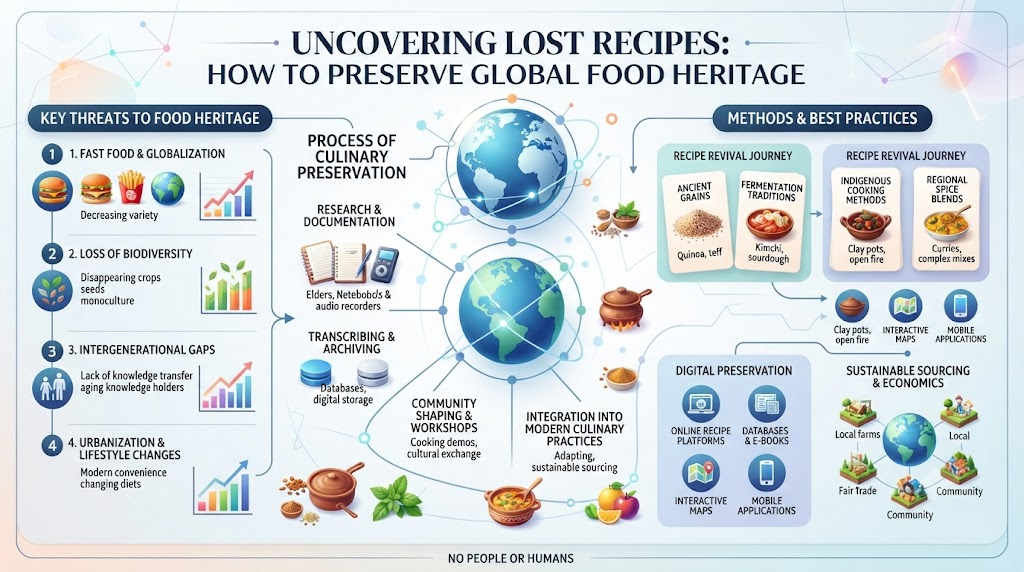
Food has a unique ability to trigger memories that time often tries to erase. A single whiff of roasted spices, slow-simmered broth, or freshly baked flatbread can immediately transport us back to a bustling family kitchen. Yet, across the globe, thousands of traditional dishes are quietly fading from daily life. When a home cook passes away without recording their techniques, a piece of our collective history vanishes with them. These disappearing culinary traditions are what we refer to as lost recipes—dishes that were once central to daily survival, seasonal celebrations, and family identity, but are now at risk of being forgotten entirely.Preserving traditional food knowledge is not merely about replicating tastes from the past; it is about keeping cultural stories, local agricultural practices, and ancestral wisdom alive. Organizations and platforms like Blendz are dedicated to documenting this irreplaceable heritage, ensuring that historical cooking methods, rare ingredients, and family food traditions remain accessible to future generations. In this article, we will explore why traditional recipes disappear, how food shapes regional identity, and practical steps you can take to research, document, and preserve your own family’s culinary legacy.
What Are Lost Recipes?
In simple terms, a lost recipe is a traditional dish or culinary preparation that has fallen out of common use, risk disappearing, or lacks written documentation. While some of these dishes remain preserved in dusty handwritten journals or obscure community archives, many survive only in the fragile memories of older home cooks.
What Makes a Recipe Become Lost?
A recipe rarely disappears overnight. Instead, it fades gradually across generations. This process usually begins when an intricate dish becomes reserved only for rare special occasions, then transitions into an occasional memory, and eventually ceases to be prepared altogether as cooking habits change.
How Recipes Are Passed Between Generations
Historically, culinary knowledge was transferred through direct observation and hands-on practice. Younger family members stood alongside elders, learning how to gauge doneness by aroma, texture, and visual cues rather than precise weight or strict timer counts. When family structures shift or younger generations move away from traditional environments, this chain of direct transmission breaks.
Why Traditional Recipes Disappear
Several factors contribute to the fading of classic dishes:
- Convenience Culture: The rise of pre-packaged, ultra-processed, and quick-cooking foods has replaced labor-intensive traditional preparations.
- Loss of Regional Ingredients: As wild foods, heritage grains, and native produce are replaced by commercial monoculture, the essential components of traditional dishes become difficult to find.
- Oral Tradition Vulnerability: When recipes are never written down, they depend entirely on living memory.
The Difference Between Lost, Forgotten, and Rare Recipes
It is helpful to distinguish between distinct categories of culinary history:
- Lost Recipes: Dishes where complete preparation methods or key components have been largely lost to history, requiring careful research or oral history to reconstruct.
- Forgotten Recipes: Dishes that remain fully documented in historical texts or old cookbooks but have simply fallen out of public culinary awareness.
- Rare Recipes: Dishes that are actively prepared, but only within isolated geographic regions, specific indigenous communities, or tight family circles.
A dish can fade from mainstream consciousness while still surviving in small, localized pockets. Acknowledging these nuances helps culinary researchers approach food history with accuracy and respect.
Why Preserving Traditional Recipes Matters
Food is far more than physical sustenance; it serves as a living record of human movement, adaptation, and creativity. When we preserve traditional recipes, we protect an invaluable form of intangible cultural heritage that touches many aspects of life:
- Family History: Preparing an ancestor’s staple dish creates a tangible, sensory link to past generations.
- Community Identity: Regional dishes foster a shared sense of belonging and cultural pride across local communities.
- Seasonal Food Knowledge: Older cooking styles reflect a deep harmony with local ecological systems, utilizing ingredients precisely at their seasonal peak.
- Agricultural Diversity: Traditional foodways rely on diverse crop varieties, encouraging the conservation of heirloom seeds and wild plants.
- Traditional Cooking Methods: Techniques such as clay-pot simmering, underground roasting, natural fermentation, and stone grinding preserve unique flavor profiles that modern appliances cannot fully replicate.
Deep culinary knowledge preserves context, community history, and ecological awareness long after individual cooks have passed on.
Forgotten Recipes and Grandmother Recipes
Family kitchens have historically served as the primary laboratories for culinary development. When people reflect on nostalgia, they often think of forgotten recipes and treasured grandmother recipes that defined their childhoods.
Why Grandmother Recipes Often Carry Unique Knowledge
Home cooks across generations developed an intuitive mastery over their local environments. Unbound by commercial kitchen constraints, they perfected techniques designed to maximize flavor while avoiding waste. These recipes frequently feature subtle adjustments that make a dish truly exceptional.
Oral Cooking Traditions
In many global cultures, written cookbooks were historically non-existent. Culinary mastery was communicated entirely through song, storytelling, and direct visual demonstration. Measurements were communicated using intuitive physical markers—a palmful of salt, a pinch of dried herbs, or enough water to submerge a thumb joint.
Handwritten Recipe Books
For families that did record their meals, worn notebooks filled with faded handwriting represent priceless historical artifacts. These journals often contain shorthand notes, ingredient substitutions made during lean years, and personal adjustments that reflect changing family circumstances.
Recipes Without Exact Measurements
Recreating older family dishes requires transitioning from rigid scales to sensory observation. A recipe might instruct the cook to work the dough “until it feels like an earlobe” or boil a sauce “until it coats the back of a wooden spoon.” Learning to interpret these qualitative cues is crucial when recovering older culinary traditions.
Family Adaptations Over Generations
It is important to remember that family traditions are never completely static. As families migrated, encountered new ingredients, or acquired modern kitchen tools, their core preparations naturally evolved. An authentic family recipe is not an unchanging relic, but a living tradition that reflects a family’s journey over time.
Traditional Food Recipes and Cultural Identity
Every culture maintains a unique culinary language shaped by its geography, climate, and history. Traditional food recipes serve as edible historical records, capturing stories of trade routes, agricultural developments, and community resilience.
For instance, the heavy use of warm spices in coastal trading ports reflects centuries of maritime commerce. Similarly, long-term preservation techniques like salting, drying, smoking, and fermenting speak to a community’s historical need to survive harsh winters or arid dry seasons.
Furthermore, traditional dishes vary considerably from one valley, village, or household to another. A classic dish like regional stew, filled pasta, or spiced flatbread can have dozens of local iterations across a single region. This rich variation highlights the danger of assuming a single “correct” version of any historic preparation exists.
Ancient Recipes and Historical Cooking Traditions
The term ancient recipes often evokes images of dishes cooked in bronze-age cauldrons or written on clay tablets. While true ancient foods are rarely reproduced in modern kitchens without modification, studying historical culinary practices offers valuable insight into human development.
When analyzing culinary history, it helps to categorize dishes into distinct historical categories:
- Historically Documented Recipes: Dishes recorded in ancient manuscripts, court records, or early printed texts (such as Roman culinary manuals or medieval banquet archives).
- Traditional Family Recipes: Dishes handed down orally or through personal notebooks across several generations.
- Modern Recreations: Contemporary culinary interpretations inspired by ancient ingredient lists, designed to suit modern palates and cooking facilities.
Recreating historical dishes requires recognizing that ingredients themselves have changed. Ancient grains, heritage fruits, and wild game possessed vastly different flavors and textures compared to today’s standardized agricultural products.
Rare Ingredients and Disappearing Food Knowledge
A major challenge in reproducing lost dishes is the vanishing availability of rare ingredients. Across the world, specialized plant varieties, wild herbs, and artisanal food products are disappearing at an alarming rate.
Agricultural Industrialization ──► Uniform Crop Varieties ──► Loss of Heirloom Plants
                                                                    │
                                                                    ▼
Modern Kitchen Convenience ◄── Loss of Foraging Habits ◄── Disappearing Food Knowledge
Several interconnected factors contribute to this loss:
- Agricultural Standardization: Industrial farming prioritizes crop varieties that offer high yields, uniform appearance, and long shelf life, sidelining delicate heirloom varieties rich in flavor.
- Urbanization: As communities transition to urban centers, ancestral knowledge regarding wild foraging, seasonal harvesting, and traditional crop cultivation fades.
- Changing Food Preferences: Convenience-driven food production favors easily transportable ingredients over specialized local produce that requires careful preparation.
When a unique plant strain or traditional processing technique disappears, the dishes that relied upon it are often lost as well. Preserving agricultural diversity is therefore directly tied to preserving global culinary heritage.
Food Heritage: More Than Recipes
True food heritage encompasses far more than a written list of components and step-by-step cooking instructions. It represents an integrated system of cultural knowledge, social practices, and environmental stewardship.
                      ┌──────────────────────────┐
                      │    TOTAL FOOD HERITAGE   │
                      └────────────┬─────────────┘
                                   │
      ┌────────────────────┬───────┴───────┬────────────────────┐
      │                    │               │                    │
┌─────┴──────┐      ┌──────┴─────┐  ┌──────┴──────┐      ┌──────┴──────┐
│  Physical  │      │ Special    │  │ Cultural    │      │ Material    │
│ Ingredients│      │ Techniques │  │ Context     │      │ Tools       │
└────────────┘      └────────────┘  └─────────────┘      └─────────────┘
A complete understanding of culinary heritage includes:
- Physical Ingredients: Heritage grains, wild forage, heirloom vegetables, and native livestock breeds.
- Specialized Techniques: Slow fermentation, pit roasting, sun-drying, stone grinding, and wood-fire control.
- Material Culture: Traditional clay pots, cast-iron vessels, hand-woven baskets, and carved wooden tools.
- Seasonal Practices: Harvesting rituals, seasonal fasting customs, and preservation periods.
- Cultural Context: The specific stories, songs, proverbs, and social gatherings associated with preparing and sharing meals.
Focusing exclusively on ingredient quantities ignores the human contexts that give these meals their true cultural meaning.
Festival Food Recipes and Cultural Celebrations
Throughout human history, special occasions have been marked by extraordinary meals. Festival food recipes represent some of our most carefully preserved culinary traditions, as communities assemble to celebrate harvests, religious holidays, and seasonal shifts.
Festive cooking often utilizes rich ingredients, complex preparation steps, and communal labor that daily life does not permit. Consider these diverse examples from around the world:
- Pongal (India): A harvest dish of freshly harvested rice boiled with milk and jaggery in decorated clay pots, symbolizing abundance and gratitude.
- Mooncakes (East Asia): Intricately molded pastries filled with rich lotus seed paste or sweet bean paste, shared during mid-autumn harvest celebrations.
- Mochi (Japan): Glutinous rice laboriously pounded with wooden mallets in a communal ceremony to welcome the New Year.
- Baklava (Middle East & Mediterranean): Paper-thin layers of pastry filled with chopped nuts and sweetened with syrup or honey, prepared for major cultural and religious celebrations.
Because festival foods are deeply tied to community identity and annual rituals, they often survive long after everyday home recipes have been forgotten.
Traditional Recipes From Around the World
Exploring traditional recipes from around the world reveals a remarkable diversity of flavors, techniques, and culinary philosophies. Every continent hosts an extraordinary range of distinct foodways:
- South Asia: Complex spice tempering, slow-simmered lentils, fermented batter flatbreads, and regional clay-oven baking.
- East & Southeast Asia: Masterful stir-frying, intricate steaming methods, deep fermentation techniques (such as soy pastes, kimchi, and fish sauces), and delicate herb balancing.
- Latin America: Ancient nixtamalization of corn, complex mole sauces built from dried chiles and seeds, and earthen pit roasting.
- Africa: Nutrient-dense groundnut stews, slow-cooked greens, fermented grain porridges, and aromatic spice pastes like harissa and berbere.
- Europe: Artisanal cheese making, slow-cured meats, wood-fired hearth breads, and rich wine-braised stews.
- Middle East: Aromatic rice pilafs, roasted meat skewers, herb-packed salads, and intricate nut-filled pastries.
It is vital to avoid broad generalizations. A single country can encompass dozens of distinct micro-cuisines, each shaped by local geography, microclimates, and cultural history.
How Lost Recipes Can Be Preserved
Rescuing disappearing culinary knowledge requires deliberate action from researchers, home cooks, and digital communities alike.
       DOCUMENTATION PROCESS
  ┌──────────────────────────────┐
  │ 1. Record Oral Histories     │
  └──────────────┬───────────────┘
                 │
                 ▼
  ┌──────────────────────────────┐
  │ 2. Standardize & Test Methods│
  └──────────────┬───────────────┘
                 │
                 ▼
  ┌──────────────────────────────┐
  │ 3. Capture Cultural Context  │
  └──────────────┬───────────────┘
                 │
                 ▼
  ┌──────────────────────────────┐
  │ 4. Digital Archiving         │
  └──────────────────────────────┘
Practical steps to preserve food heritage include:
- Recording Oral Histories: Interviewing elderly family members about their childhood meals, cooking habits, and ingredient sourcing.
- Documenting Unmeasured Recipes: Standing alongside home cooks to weigh ingredients as they add them by hand, converting intuitive measurements into precise metrics.
- Photographing and Filming: Capturing video footage of hand movements, dough textures, and visual indicators that written words struggle to convey.
- Preserving Contextual Stories: Recording who taught the cook the dish, when it was served, and what made it special.
- Building Digital Archives: Uploading verified recipes, videos, and stories to centralized platforms to ensure long-term public access.
- Teaching Younger Generations: Involving children and young adults in traditional kitchen preparation to maintain the chain of oral transmission.
Thorough documentation preserves not just ingredient ratios, but the essential spirit and human story behind every meal.
Challenges in Preserving Food Heritage
Despite growing interest in culinary preservation, researchers face significant obstacles:
- Loss of Living Memory: As older generations pass away, unrecorded recipes disappear forever.
- Imprecise Measurement Systems: Converting informal measurements (“a pinch,” “a small bowl”) into reproducible standards requires extensive testing.
- Missing or Extinct Ingredients: Substitute ingredients often fail to replicate the authentic flavor profile or structural properties of the original dish.
- Migration and Language Barriers: Relocating across borders can disconnect communities from native ingredients, while translated recipe terms often lose subtle nuances.
- Modern Lifestyle Pressures: Fast-paced contemporary lifestyles leave little time for multi-day fermentations or slow-simmered meals.
Addressing these challenges requires patience, cultural respect, and systematic documentation methods.
How to Research a Forgotten or Traditional Recipe
If you are attempting to reconstruct a half-forgotten family meal or an obscure regional dish, structured research is essential.
Research Framework for Culinary Heritage
- Step 1: Identify the Specific Region: Pinpoint the exact village, province, or cultural group where the dish originated.
- Step 2: Gather Oral Accounts: Speak to multiple family members or local community elders to compile various recollections of the dish.
- Step 3: Consult Historical Records: Examine old community cookbooks, local history archives, regional food blogs, and university library resources like the UNESCO Intangible Cultural Heritage Database.
- Step 4: Analyze Variations: Compare several versions of the dish to identify core ingredients versus modern or local adaptations.
- Step 5: Test and Refine: Conduct test runs in your kitchen, making incremental adjustments based on taste, texture, and visual memory.
- Step 6: Document and Share: Record your final tested version along with its cultural story, making it accessible to family members and broader digital archives.
Resist the urge to label one single variation as the absolute “authentic” standard. Acknowledging natural variations honours the real, dynamic way human beings cook.
Blendz and the Preservation of Food Heritage
Global platforms play a critical role in safeguarding disappearing food traditions. Blendz serves as a global food heritage archive focused on discovering, documenting, and preserving culinary traditions that might otherwise be lost.
By bringing together stories, regional practices, and historical techniques, Blendz helps bridge the gap between past and present. Readers can explore an expansive range of culinary history on the platform, including:
- lost recipes recovered from living memory and historical records
- traditional recipes passed down through generations
- forgotten recipes awaiting rediscovery by modern cooks
- grandmother recipes preserved through family oral traditions
- traditional food recipes that define regional culinary identities
- ancient recipes and historical preparation styles
- Comprehensive guides on global food heritage and culture
- Profiles on rare ingredients and traditional farming practices
- Seasonal festival food recipes from diverse cultural celebrations
- Curated collections of traditional recipes from around the world
Through detailed archives, digital documentation, and community engagement, platforms like Blendz ensure that valuable cooking wisdom remains alive, celebrated, and accessible to home cooks everywhere.
Benefits of Documenting Lost Recipes
Taking the time to research and document disappearing food traditions offers profound rewards for individuals and society:
- Preserving Personal Heritage: Creates an enduring record of your family’s personal story and migration history.
- Promoting Culinary Diversity: Counteracts the homogenization of global diets by keeping unique local flavors active.
- Fostering Intergenerational Connection: Bridges generational gaps by encouraging young adults to learn directly from family elders.
- Expanding Culinary Skills: Introduces modern home cooks to novel flavor pairings, fermentation styles, and eco-friendly nose-to-tail techniques.
- Supporting Food History Education: Provides researchers and future generations with rich primary source data on how humans cooked across different eras.
Preserving a recipe keeps an irreplaceable piece of human culture vibrant and accessible for years to come.
Lost Recipes vs Modern Recipes
Understanding how traditional dishes differ from contemporary cooking helps highlight their unique place in our kitchens.
| Factor | Lost or Traditional Recipes | Modern Recipes |
| Source | Family, community, historical archives, or oral knowledge | Modern chefs, bloggers, and food publications |
| Measurements | Often qualitative or approximate (“to taste,” “handful”) | Standardized in grams, ounces, cups, or teaspoons |
| Ingredients | Highly regional, hyper-seasonal, or wild-foraged | Widely available in standard commercial supermarkets |
| Preparation | Often labor-intensive, utilizing slow traditional techniques | Streamlined for quick preparation using modern kitchen appliances |
| Cultural Context | Deeply connected to heritage, rituals, and local history | Designed primarily for convenience, trends, or dietary preferences |
| Variations | Varies organically between families, villages, and regions | Standardized to produce consistent results across kitchens |
Neither style is inherently superior. While modern recipes prioritize accessibility and speed, traditional recipes offer rich flavor complexity and deep cultural connections that are well worth preserving.
Frequently Asked Questions
- What are lost recipes?
Lost recipes are traditional dishes, preparation techniques, or culinary methods that have fallen out of regular use, lack written documentation, or are at risk of disappearing entirely as generations pass. They often survive only in personal memories, old family notebooks, or isolated regional communities. - Why do traditional recipes disappear over time?
Traditional recipes fade due to fast-paced modern lifestyles, the convenience of processed foods, urbanization, and the loss of heirloom ingredients. Additionally, when recipes are passed down solely through word-of-mouth without written records, they are easily lost when younger generations do not learn them. - How can I preserve my family’s forgotten recipes?
You can preserve forgotten recipes by interviewing older relatives, cooking alongside them to record exact measurements, photographing key steps, and writing down the personal stories behind each meal. Storing these records digitally or in a dedicated family archive ensures future generations can enjoy them. - Why are grandmother recipes considered so valuable?
Grandmother recipes carry decades of practical kitchen wisdom, intuitive cooking techniques, and regional adaptations. They represent a direct link to family heritage, offering time-tested flavor profiles and seasonal preparation methods that standardized modern cookbooks rarely capture. - Where can I find authentic traditional food recipes?
Authentic traditional food recipes can be found in community-written cookbooks, historical archives, cultural heritage organizations, and digital platforms like Blendz. Engaging with local home cooks and regional culinary historians also offers authentic insight into traditional cooking. - Are ancient recipes safe and practical to cook today?
Many ancient recipes can be safely cooked today, though some require minor adjustments. Historical ingredients, such as ancient grain varieties or wild herbs, may need modern substitutions, and old preservation techniques (like long-term pit curing) must be approached with careful food safety awareness. - How does food heritage connect to cultural identity?
Food heritage shapes cultural identity by preserving shared memories, agricultural traditions, and community rituals. The ingredients, flavors, and cooking methods unique to a region reflect its history, climate, and values, serving as a tangible symbol of cultural pride across generations. - Why is it difficult to find certain rare ingredients today?
Rare ingredients are hard to find due to industrial agriculture, which favors fast-growing, uniform crops over delicate heirloom varieties. Environmental changes, urban development, and shifting consumer demands have also caused many wild plants and traditional regional ingredients to decline. - What role do festival food recipes play in culinary history?
Festival food recipes preserve significant cultural traditions because they are tied to annual celebrations, harvests, and religious holidays. Because these dishes are prepared regularly during meaningful community events, they tend to survive longer than everyday household recipes. - Are traditional recipes from around the world difficult to recreate at home?
While some traditional recipes require specialized tools or lengthy preparation steps, many are simple once you understand the basic techniques. Exploring global traditional foodways allows home cooks to master fundamental methods that elevate everyday cooking. - How do researchers verify the history of a traditional recipe?
Researchers verify recipes by comparing oral stories with historical documents, old diaries, travel logs, regional agricultural records, and community cookbooks. Cross-referencing multiple sources helps distinguish authentic historic practices from modern additions. - What is the difference between a traditional recipe and an authentic recipe?
A traditional recipe reflects methods and ingredients handed down within a community over time, naturally evolving across generations. “Authenticity” is subjective, as a single traditional dish can have dozens of valid, authentic variations depending on the family or region making it.
Conclusion
Food is an irreplaceable vessel for human memory, cultural pride, and community connection. Behind every traditional dish lies a rich tapestry of history—stories of seasonal harvests, family celebrations, adaptation through difficult times, and ancestral wisdom passed down through generations. As modern life continues to accelerate, taking deliberate steps to document, prepare, and share lost recipes becomes essential to keeping global food heritage vibrant.Preserving these traditions involves far more than simply collecting ingredient lists; it requires capturing the human context, intuitive techniques, and rich cultural stories that give food its true meaning. By interviewing family members, recording unwritten preparations, supporting agricultural diversity, and engaging with dedicated digital archives like Blendz, we ensure that priceless culinary knowledge is preserved for generations to come.

Find Trusted Cardiac Hospitals
Compare heart hospitals by city and services — all in one place.
Explore Hospitals