Introduction
Heart bypass surgery can feel overwhelming for patients and their families, especially when they are unsure what will happen before, during, and after the operation. Also called coronary artery bypass grafting, or CABG, the procedure creates a new route for blood to reach the heart muscle when coronary arteries are narrowed or blocked. People often have questions about preparation, the operation itself, intensive care, hospital recovery, and returning to everyday activities. Knowing what to expect can make the recovery process easier to understand and help families prepare for the weeks ahead. MyHospitalNow provides general healthcare information for patients and families seeking to understand medical care.
What Is Heart Bypass Surgery?
Heart bypass surgery, also called coronary artery bypass surgery, creates a new pathway for blood to flow around a narrowed or blocked coronary artery.
During CABG surgery, a surgeon uses a healthy blood vessel from another part of the body to create the bypass. Depending on which arteries need treatment, the vessel may come from the chest, arm, or leg. The number of bypass grafts depends on the coronary arteries involved.
The exact surgical approach varies from person to person. Your heart condition, overall health, test results, and other medical factors help the surgical team decide what approach is appropriate.
Why Might Someone Need Heart Bypass Surgery?
Coronary artery disease develops when the blood vessels supplying the heart become narrowed or blocked. In some patients, CABG may be considered when several coronary arteries are significantly affected or when certain areas, such as the left main coronary artery, have serious disease.
CABG may also be considered when coronary disease cannot be adequately treated with other procedures. The decision is based on the patient’s heart condition, test results, overall health, and the assessment of the cardiac team.
What to Expect Before Heart Bypass Surgery
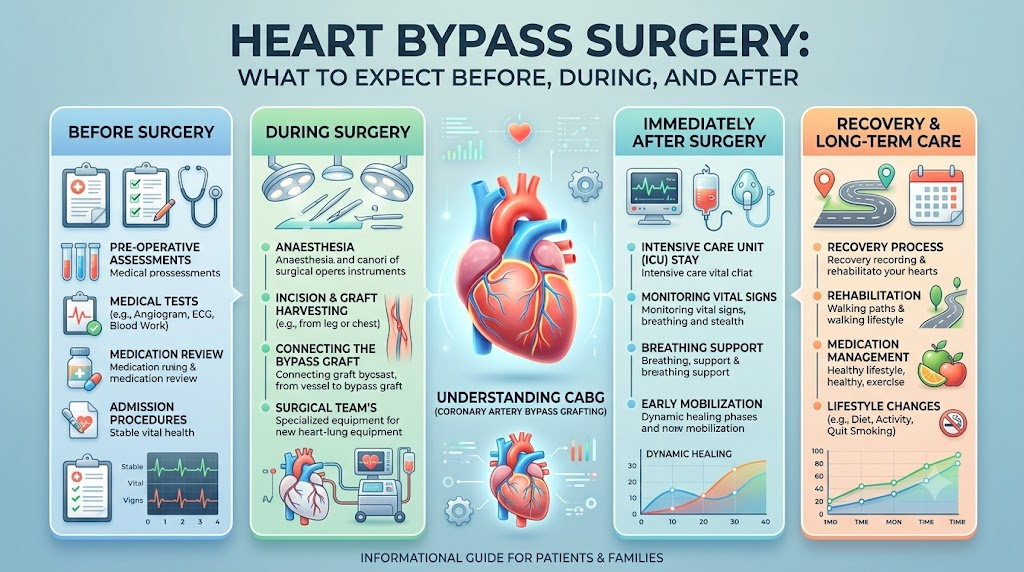
Preparation usually begins with a review of your medical history and current health. Your healthcare team may arrange heart tests, blood tests, imaging, or other assessments to understand your condition and prepare safely for surgery.
You will receive instructions about medicines, eating and drinking before surgery, and when to arrive at the hospital. Tell your healthcare team about every medicine, vitamin, supplement, allergy, and existing health condition you have.
Do not stop or change prescribed medicines unless your healthcare team tells you to do so.
It can also help to prepare for recovery at home. Arrange support with household tasks, transportation, meals, and other activities that may be difficult immediately after surgery.
What Happens During Heart Bypass Surgery?
CABG is performed under general anesthesia, so you will be asleep during the operation. A surgical team works together to create one or more new routes for blood flow around the affected coronary arteries.
Traditional CABG may use a heart-lung bypass machine to support circulation while the heart is temporarily stopped. Selected patients may instead have an off-pump or minimally invasive approach.
There is no single surgical method that is suitable for everyone. The operation’s length also varies according to the number of arteries being bypassed and the surgical approach.
What to Expect Immediately After Surgery
After the operation, you will be closely monitored. Many patients initially spend time in an intensive care unit where the medical team can closely watch heart rhythm, breathing, blood pressure, and other important functions.
Breathing support may be needed for a period after surgery. You may also have drainage tubes, intravenous medicines or fluids, and monitoring equipment.
As you become more alert and stable, the team will gradually reduce supportive equipment when appropriate. Pain control and gentle movement are also part of early recovery.
Hospital Recovery After Heart Bypass Surgery
Once intensive monitoring is no longer needed, you will usually move to a regular hospital room. Activity is gradually increased, and the healthcare team may guide you through breathing exercises and gentle movement.
Incisions will be checked, medicines will be reviewed, and nutrition and activity will be discussed. Before discharge, the team should explain how to care for your wounds and what warning signs to watch for.
Many people stay in hospital for around a week after CABG when recovery is uncomplicated, but the length of stay varies.
Recovery at Home After Bypass Surgery
Heart bypass surgery recovery takes time. During the first weeks at home, tiredness, sleep difficulties, changes in appetite, mood changes, chest discomfort, muscle soreness, or swelling near the area where a graft vessel was taken may occur.
Traditional CABG recovery can commonly take several weeks, with complete recovery often taking around 6–12 weeks. However, recovery differs between individuals, and minimally invasive procedures may have different timelines.
Follow your team’s instructions about gradually increasing activity. Take prescribed medicines as directed, attend follow-up appointments, care for your incisions, follow heart-healthy eating advice, avoid smoking, and work with your healthcare team on managing risk factors.
Cardiac Rehabilitation After Bypass Surgery
Cardiac rehabilitation is a medically supervised program designed to support recovery and help patients safely return to activity.
It may include monitored exercise, education about heart-healthy habits, and support for making long-term lifestyle changes. Your healthcare team can advise whether cardiac rehabilitation is appropriate and when you should begin.
Possible Risks and Complications
Heart bypass surgery is a major operation, and complications can occur. Possible problems include bleeding, infection, abnormal heart rhythms, blood clots or stroke, kidney problems, breathing problems, and other complications.
Risk varies according to the type of surgery, whether the operation is planned or urgent, and the person’s overall health and other medical conditions. Your surgical team can explain the risks that are most relevant to your situation.
Warning Signs After Heart Bypass Surgery
Follow your hospital’s discharge instructions carefully. Contact your healthcare team if you develop symptoms they have told you to report, such as signs of infection, worsening swelling, significant bleeding, or concerning changes around an incision.
Severe chest symptoms, serious breathing difficulty, fainting, heavy bleeding, or other emergency symptoms require urgent medical attention. If you are unsure whether a symptom is serious, it is safer to contact your healthcare team for guidance.
How Long Does It Take to Return to Normal Activities?
There is no single CABG recovery time that applies to everyone. Recovery depends on the type of surgery, general health, complications, physical condition, and how recovery progresses.
Returning to work, driving, exercise, household activities, and other routines should follow your healthcare team’s instructions. Trying to do too much too quickly can make recovery more difficult, so gradual progress is usually part of the process.
Recovery Stages at a Glance
| Recovery Stage | What You May Experience | What Usually Happens Next |
|---|---|---|
| Immediately after surgery | Close monitoring, breathing support, tubes, and discomfort | Medical team gradually reduces intensive support |
| Hospital recovery | Increasing movement, wound care, medicine review | Preparation for safe discharge |
| Early home recovery | Tiredness, soreness, sleep or appetite changes | Gradual return to daily activities |
| Ongoing recovery | Increasing strength and activity | Follow-up care and cardiac rehabilitation when recommended |
Frequently Asked Questions
1. What is heart bypass surgery?
Heart bypass surgery creates a new route for blood to flow around narrowed or blocked coronary arteries. A healthy blood vessel from another part of the body is used to create the bypass.
2. Why might CABG be recommended?
CABG may be recommended for certain patterns of coronary artery disease, including disease affecting several arteries or situations where other treatments may not provide an appropriate solution. The decision depends on individual medical findings.
3. How do patients prepare for bypass surgery?
Preparation may include medical history review, heart tests, blood tests, medication instructions, and fasting instructions. Patients should tell their healthcare team about all medicines, supplements, allergies, and health conditions.
4. What happens during bypass surgery?
The patient receives general anesthesia while the surgical team creates new blood-flow pathways around affected coronary arteries. Traditional, off-pump, and minimally invasive approaches may be used for selected patients.
5. How long might hospital recovery take?
Many people remain in hospital for around a week when recovery is uncomplicated, but the stay can be shorter or longer. The timing depends on the person’s condition and recovery.
6. What is the ICU period like?
Patients are closely monitored in intensive care after surgery. Heart rhythm, breathing, blood pressure, and other important functions are watched, and supportive equipment may be used temporarily.
7. How long does recovery at home take?
Recovery after bypass surgery commonly takes several weeks. Traditional CABG may take around 6–12 weeks for complete recovery, but individual timelines vary.
8. Are pain and tiredness normal after surgery?
Soreness and tiredness can occur during recovery from major heart surgery. However, severe, worsening, or unusual symptoms should be discussed with the healthcare team.
9. When may cardiac rehabilitation begin?
The timing depends on the patient’s condition and recovery. The healthcare team can recommend when cardiac rehabilitation is appropriate and how the program should fit the recovery process.
10. When should patients contact their healthcare team after surgery?
Patients should follow their discharge instructions and contact the healthcare team about symptoms they were told to report, including concerning wound changes, significant bleeding, or worsening symptoms. Severe chest symptoms, serious breathing difficulty, fainting, or other emergency symptoms require urgent medical attention.
Conclusion
Knowing what to expect after heart bypass surgery can help patients and families prepare for the recovery journey. CABG involves creating new blood-flow pathways around blocked or narrowed coronary arteries, followed by close hospital monitoring and gradual recovery at home. Tiredness and discomfort may take time to improve, and recovery is different for every person. Following cardiac team instructions, taking prescribed medicines, attending follow-up appointments, participating in cardiac rehabilitation when recommended, and allowing enough time for healing can support a safer and more organized recovery.

Find Trusted Cardiac Hospitals
Compare heart hospitals by city and services — all in one place.
Explore Hospitals