Introduction
Spine surgery may help with some serious spine problems. It is not needed for every back or neck problem. Doctors first look at symptoms, scans, and other treatments.If you are learning about spine care, MyHospitalNow can help you explore doctors, hospitals, and health care information. Good research can help you ask better questions during a visit.
What Is Spine Surgery?
Spine surgery treats some problems in the spine. The spine is made of bones, discs, joints, and nerves. These parts work together to support the body and protect nerves.Surgery may remove damaged tissue or bone. It may also create more space for nerves. Some procedures join spine bones to make the spine more stable.The right surgery depends on the spine problem. It also depends on your health and scan results. A spine surgeon will explain the choices before treatment.
When Might Spine Surgery Be Considered?
Doctors may consider surgery for some spine problems. This may happen when pain lasts or other care does not help. Nerve pressure can also make surgery an option.Some people have weakness or numbness from nerve pressure. Others may have spine instability or certain injuries. Some disc problems may also need surgery.Surgery is a medical choice, not a simple fix. Your doctor will review your symptoms and test results. They will also discuss other care options with you.
Common Spine Surgery Procedures
Spine surgery includes several different procedures. Each one has a different goal. Your surgeon will choose an approach based on your condition.
Discectomy
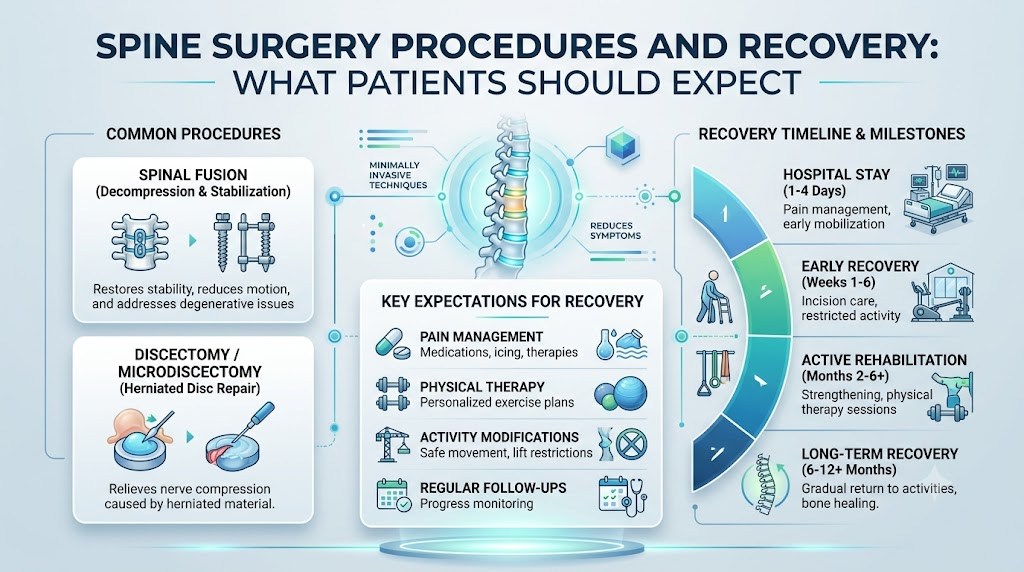
A discectomy removes part of a damaged disc. A disc is a soft cushion between spine bones. A damaged disc can press on a nearby nerve.This pressure may cause pain, numbness, or weakness. Removing the problem part may reduce pressure on the nerve. Recovery depends on the surgery and the patient’s health.
Laminectomy
A laminectomy removes part of a spine bone. This can create more room around a nerve. It may help when bone or tissue causes nerve pressure.Recovery can include rest and safe movement. Some people may also need physical therapy. Your surgeon will give advice based on your surgery.
Spinal Fusion
Spinal fusion joins two or more spine bones. The goal is to improve stability in a certain part of the spine.Fusion can need a longer healing process. The exact recovery can differ from person to person. Your surgeon will explain what to expect before surgery.
Spinal Decompression
Spinal decompression means taking pressure off a nerve. The surgeon may remove bone, disc tissue, or other tissue.The method depends on where the pressure occurs. The goal is to give the nerve more space. It does not mean every patient will have the same result.
Minimally Invasive Spine Surgery
Minimally invasive surgery uses smaller openings in some cases. Special tools help the surgeon reach the spine through these openings.This approach may reduce damage to nearby tissue. However, it is not right for every patient. The best approach depends on the problem and the surgeon’s assessment.
How To Prepare For Spine Surgery
Good preparation can make the process easier. Your medical team will review your health history. They may also review scans and blood test results.Tell your team about all medicines and allergies. Include medicines that you buy without a prescription. Never stop a medicine unless your health team tells you to.Plan for your return home before surgery. You may need help with meals and daily tasks. Also plan your follow-up visits and transport.
What Happens After Spine Surgery?
After surgery, your team will watch your recovery. They may check your pain, movement, wound, and other signs. The length of a hospital stay can vary.Some patients start moving soon after surgery. Safe movement can help prevent some problems. Your care team will tell you what movements are safe.Pain control is also part of early care. Wound care is important too. Follow the instructions given by your surgical team.
Spine Surgery Recovery
Recovery after spine surgery can take time. The process differs from one person to another. The surgery type is one important factor.Your age and general health can also affect healing. The reason for surgery also matters. Your surgical approach and healing progress can affect recovery.Physical therapy may be part of recovery for some patients. It can help improve movement and strength. It may also help with daily tasks.Do not rush back to normal activities. Your surgeon will guide your return to work and exercise. Follow your care plan even when you feel better.
| Procedure | Main purpose |
|---|---|
| Discectomy | Removes part of a damaged disc |
| Laminectomy | Creates more space around nerves |
| Spinal fusion | Joins spine bones for stability |
| Decompression | Reduces pressure around nerves |
| Minimally invasive surgery | Uses smaller openings in some cases |
Possible Risks and Complications
Spine surgery can have risks. The risks depend on the procedure and the patient. Your surgeon should explain your personal risks before surgery.Possible problems include infection and bleeding. Blood clots can also happen after some surgeries. Nerve problems and lasting pain are other possible concerns.Anesthesia can also cause problems in some patients. Some people may need more treatment later. Ask your surgeon which risks matter most for your procedure.
Warning Signs During Recovery
Some symptoms need quick medical attention. Contact your health team if symptoms become severe or worse.Watch for new weakness or severe pain. Fever or changes around the wound may also need review. Trouble breathing needs urgent medical care.Loss of bladder or bowel control is also serious. Seek urgent care when this happens. Do not wait if a symptom feels sudden or concerning.
Choosing a Spine Surgeon
Choosing a spine surgeon takes careful research. Look at the surgeon’s medical training and spine surgery experience. Check if their work matches your type of spine problem.Hospital affiliation can also matter. Ask about consultation and follow-up care. Clear communication is important because surgery can bring many questions.You can use MyHospitalNow to explore information about doctors and health care providers. This can support your research before a medical visit. Your final choice should come from careful discussion with qualified professionals.
Choosing A Spine Hospital
A spine hospital should offer care that matches your needs. Look at spine services and specialist availability. Diagnostic testing can also be important.Check for operating room and anesthesia support. Emergency care and infection control also matter. Rehabilitation and follow-up services can support recovery.MyHospitalNow can help readers explore hospital information during their research. It can also help people learn about different health care options. Always confirm hospital details directly before making care plans.
Recovery And Physical Therapy
Physical therapy may help some people after spine surgery. It can support safe movement and muscle strength. It may also help with flexibility and daily activities.The timing of therapy can vary. Some patients start therapy early, while others need more rest. Your surgeon or therapist will decide what fits your recovery.Do not copy exercises from another patient’s plan. Your spine problem may be different. Follow the program given by your health care team.
Frequently Asked Questions About Spine Surgery
1. What is spine surgery?
Spine surgery treats some problems in the spine. The procedure depends on the patient’s condition.
2. What are the common types of spine surgery?
Common types include discectomy and laminectomy. Spinal fusion and decompression are also used.
3. Why might someone need spine surgery?
Surgery may help some serious spine problems. It may be considered when other care does not help.
4. How long does spine surgery recovery take?
Recovery time can vary widely. It depends on the surgery, health, and healing progress.
5. Is minimally invasive spine surgery right for everyone?
No, it is not right for every patient. The surgeon chooses an approach based on the spine problem.
6. Can physical therapy help after spine surgery?
Physical therapy may help some patients. It can support movement, strength, and daily activities.
7. What risks can happen after spine surgery?
Possible risks include infection and bleeding. Nerve problems, pain, and anesthesia problems can also occur.
8. When should I seek help after spine surgery?
Seek help for severe or worsening symptoms. Trouble breathing or new weakness needs quick medical care.
9. How do I choose a spine surgeon or hospital?
Check training, experience, services, and follow-up care. Ask clear questions during your medical consultation.
10. How can MyHospitalNow help patients find spine care?
MyHospitalNow can help readers explore doctors and hospitals. It can also provide health care information for research.
Final Thoughts
Spine surgery includes several types of procedures. Each procedure has a different purpose. Recovery can also differ from patient to patient.Good preparation can make recovery easier. Follow your surgeon’s advice during healing. Contact your health team when new or serious symptoms appear.MyHospitalNow can support your search for health care information. It can help you explore doctors, hospitals, and spine care options. Always discuss your treatment choices with a qualified health professional.

Find Trusted Cardiac Hospitals
Compare heart hospitals by city and services — all in one place.
Explore Hospitals