Introduction
Virtualization Platforms allow organizations to run multiple virtual machines (VMs) on a single physical server, effectively abstracting hardware resources and improving efficiency. These platforms provide centralized management, better resource utilization, and flexibility in deploying applications, operating systems, and development environments. In with hybrid cloud adoption and distributed teams, virtualization has become a cornerstone for scalable IT infrastructure, enabling enterprises to optimize costs and ensure high availability.
Real-world use cases include: hosting development and test environments without dedicated hardware, running legacy applications alongside modern systems, supporting remote work with centralized desktops, consolidating servers to reduce data center footprint, and implementing disaster recovery strategies. Buyers evaluating virtualization platforms should consider performance, scalability, security, integration with cloud services, management tools, support, cost, licensing flexibility, multi-OS support, and AI-driven optimization capabilities.
Best for: IT administrators, DevOps teams, enterprises of all sizes, cloud architects, and organizations seeking efficient infrastructure management.
Not ideal for: Companies with minimal IT needs, single-server deployments, or those fully dependent on SaaS without control over infrastructure.
Key Trends in Virtualization Platforms
- AI-driven workload optimization for efficient VM allocation
- Integration with hybrid and multi-cloud environments
- Automated provisioning and lifecycle management
- Enhanced security with micro-segmentation and RBAC
- GPU virtualization for high-performance applications
- Container support alongside traditional VM infrastructure
- Subscription-based and consumption-based pricing models
- Low-latency network optimizations for global operations
- Improved interoperability with orchestration and CI/CD pipelines
- Compliance monitoring integrated into the platform
How We Selected These Tools (Methodology)
- Market adoption and brand recognition
- Completeness of virtualization features
- Performance benchmarks and reliability reports
- Security certifications and compliance posture
- Integration capabilities with cloud services and DevOps tools
- Fit across enterprise, SMB, and developer segments
- Support and community engagement
- AI and automation feature availability
- Flexibility in deployment (cloud, on-premises, hybrid)
- Total cost of ownership and licensing options
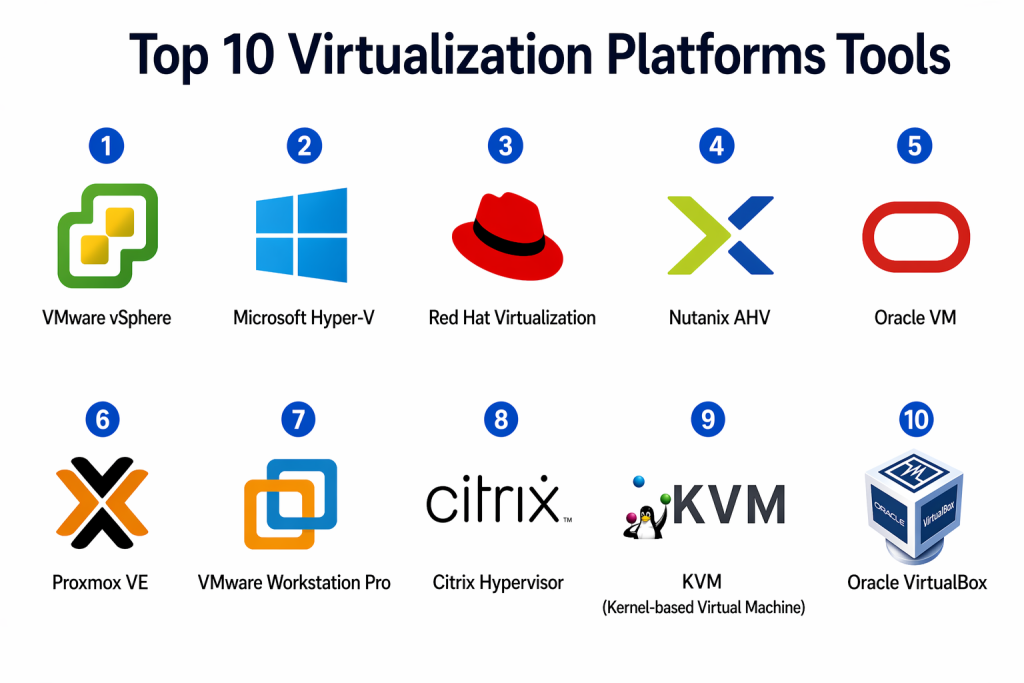
Top 10 Virtualization Platforms Tools
#1 — VMware vSphere
Short description: VMware vSphere is an enterprise-grade virtualization platform that provides robust VM management and high-performance infrastructure for data centers. Ideal for large enterprises with complex IT needs.
Key Features
- Advanced VM management and automation
- vMotion for live migration without downtime
- Distributed Resource Scheduler (DRS)
- High availability and fault tolerance
- Integrated GPU support for high-performance workloads
- Extensive API and SDK support
- Centralized monitoring and analytics
Pros
- Highly reliable and scalable
- Strong ecosystem and support
Cons
- Complex licensing
- Requires VMware-specific expertise
Platforms / Deployment
- Windows, Linux
- On-premises / Hybrid
Security & Compliance
- RBAC, encryption, audit logs
- SOC 2, ISO 27001
Integrations & Ecosystem
Supports integrations with:
- vCenter, NSX, vSAN
- Cloud providers via VMware Cloud
- Automation tools like Ansible, Terraform
Support & Community
- Comprehensive documentation
- Professional support tiers
- Large global community
#2 — Microsoft Hyper-V
Short description: Microsoft Hyper-V offers server and desktop virtualization for Windows-centric environments, enabling efficient resource management and cloud integration.
Key Features
- Nested virtualization and live migration
- Dynamic memory allocation
- Integration with Windows Server and Azure
- Checkpoints and disaster recovery
- Clustered shared volumes support
- Remote management and PowerShell automation
Pros
- Tight Windows ecosystem integration
- Cost-effective licensing options
Cons
- Limited Linux support
- Advanced features require Windows Server expertise
Platforms / Deployment
- Windows
- On-premises / Hybrid / Cloud
Security & Compliance
- SSO, RBAC, encryption
- Not publicly stated
Integrations & Ecosystem
- Microsoft Azure and System Center
- Active Directory
- PowerShell scripting for automation
Support & Community
- Microsoft support channels
- Active online forums
#3 — Red Hat Virtualization
Short description: Red Hat Virtualization is an open-source platform using KVM for enterprise workloads. Suitable for Linux-focused environments needing flexibility and control.
Key Features
- KVM-based hypervisor
- High-availability clusters and live migration
- Centralized management with Red Hat Manager
- Multi-OS guest support
- GPU passthrough
- Integrated monitoring and analytics
Pros
- Open-source flexibility
- Enterprise-level performance
Cons
- Requires Linux expertise
- Smaller community than VMware
Platforms / Deployment
- Linux, Windows
- On-premises / Hybrid
Security & Compliance
- RBAC, encryption
- Not publicly stated
Integrations & Ecosystem
- Red Hat OpenShift and Ansible
- LDAP/AD integration
- APIs for automation
Support & Community
- Red Hat subscription support
- Strong open-source community
#4 — Nutanix AHV
Short description: Nutanix AHV is a hypervisor designed for HCI (hyper-converged infrastructure), providing simplicity, scalability, and multi-cloud integration for enterprise workloads.
Key Features
- Integrated with Nutanix HCI
- Automated VM provisioning
- Simplified management console
- Multi-cloud support (AWS, Azure, GCP)
- GPU virtualization support
- High availability and disaster recovery
Pros
- Easy to deploy and manage
- Scales efficiently for growing enterprises
Cons
- Smaller ecosystem than VMware
- Learning curve for non-Nutanix environments
Platforms / Deployment
- Windows, Linux
- On-premises / Hybrid
Security & Compliance
- Encryption in transit and at rest
- SSO/SAML, MFA
Integrations & Ecosystem
- Nutanix Calm for orchestration
- Cloud integrations: AWS, Azure, GCP
- APIs for DevOps automation
Support & Community
- Nutanix support tiers
- Growing community forums
#5 — Oracle VM
Short description: Oracle VM offers enterprise virtualization for Oracle workloads, emphasizing integration with Oracle Cloud and applications for high availability and performance.
Key Features
- Xen-based virtualization
- Oracle Cloud integration
- Multi-OS support
- Live migration and high availability
- GPU and resource optimization
- Centralized management tools
Pros
- Optimized for Oracle applications
- Enterprise reliability
Cons
- Limited popularity outside Oracle ecosystem
- Requires Oracle infrastructure knowledge
Platforms / Deployment
- Windows, Linux
- On-premises / Cloud
Security & Compliance
- RBAC, encryption
- Not publicly stated
Integrations & Ecosystem
- Oracle Cloud services
- Oracle Database and apps
- APIs for management
Support & Community
- Oracle support tiers
- Moderate community presence
#6 — Proxmox VE
Short description: Proxmox Virtual Environment is an open-source virtualization platform using KVM and LXC containers, ideal for SMBs and developers seeking flexible, cost-effective solutions.
Key Features
- KVM and LXC support
- Web-based management interface
- High availability clustering
- Backup and snapshot support
- Integrated firewall and security
- Multi-node support
Pros
- Free and open-source
- Lightweight and flexible
Cons
- Limited enterprise support
- Smaller ecosystem than commercial vendors
Platforms / Deployment
- Linux
- On-premises / Hybrid
Security & Compliance
- RBAC, firewall
- Not publicly stated
Integrations & Ecosystem
- APIs for automation
- Cloud storage integration
- Community-contributed modules
Support & Community
- Proxmox subscription support
- Active open-source community
#7 — VMware Workstation Pro
Short description: VMware Workstation Pro is desktop virtualization software for developers and IT professionals, enabling multiple VMs on a single physical machine.
Key Features
- Multi-OS VM support
- Snapshot and cloning capabilities
- Network simulation and configuration
- USB and peripheral support
- GPU passthrough for graphics workloads
Pros
- Ideal for development and testing
- Rich feature set
Cons
- Desktop-based, not server-grade
- Limited scalability for large deployments
Platforms / Deployment
- Windows, Linux
- Self-hosted
Security & Compliance
- Encryption for VMs
- RBAC support
- Not publicly stated
Integrations & Ecosystem
- VMware vSphere integration
- APIs for automation
- Third-party tools for development
Support & Community
- VMware support tiers
- Large developer community
#8 — Citrix Hypervisor
Short description: Citrix Hypervisor is a Xen-based virtualization platform for enterprise workloads, focusing on performance, scalability, and GPU-intensive applications.
Key Features
- Xen-based hypervisor
- GPU virtualization
- High availability and live migration
- Centralized management console
- Integration with Citrix workspace solutions
Pros
- Optimized for high-performance workloads
- Enterprise-grade reliability
Cons
- Smaller adoption than VMware
- Requires Citrix ecosystem knowledge
Platforms / Deployment
- Windows, Linux
- On-premises / Hybrid
Security & Compliance
- Encryption, RBAC
- Not publicly stated
Integrations & Ecosystem
- Citrix workspace and apps
- Cloud and storage providers
- APIs for automation
Support & Community
- Citrix support tiers
- Community forums
#9 — KVM (Kernel-based Virtual Machine)
Short description: KVM is an open-source Linux hypervisor for running multiple virtual machines with high performance and flexibility, widely used in data centers.
Key Features
- Integrated into Linux kernel
- Supports multiple OS types
- Live migration and snapshots
- GPU passthrough
- Strong networking capabilities
Pros
- Free and open-source
- High performance and flexibility
Cons
- Requires Linux expertise
- Limited enterprise support
Platforms / Deployment
- Linux
- On-premises / Cloud
Security & Compliance
- RBAC and encryption via Linux tools
- Not publicly stated
Integrations & Ecosystem
- Works with OpenStack, Proxmox
- APIs for automation
- Cloud integrations
Support & Community
- Community-driven support
- Active forums and documentation
#10 — Oracle VirtualBox
Short description: Oracle VirtualBox is a free, cross-platform desktop virtualization solution, suitable for developers, testers, and educational environments.
Key Features
- Cross-platform VM support
- Snapshot and clone functionality
- Virtual networking
- USB and peripheral passthrough
- Guest additions for seamless integration
Pros
- Free and lightweight
- Easy to use for development/test purposes
Cons
- Not designed for enterprise-scale workloads
- Limited performance for GPU-intensive tasks
Platforms / Deployment
- Windows, macOS, Linux
- Self-hosted
Security & Compliance
- VM encryption
- Not publicly stated
Integrations & Ecosystem
- APIs for automation
- Works with cloud storage and CI/CD pipelines
- Community-contributed extensions
Support & Community
- Community-driven support
- Extensive documentation
Comparison Table (Top 10)
| Tool Name | Best For | Platform(s) Supported | Deployment | Standout Feature | Public Rating |
|---|---|---|---|---|---|
| VMware vSphere | Large enterprises | Windows, Linux | On-prem / Hybrid | Advanced VM management | N/A |
| Microsoft Hyper-V | Windows-centric IT | Windows | On-prem / Cloud / Hybrid | Tight Windows integration | N/A |
| Red Hat Virtualization | Linux-focused enterprises | Linux, Windows | On-prem / Hybrid | Open-source flexibility | N/A |
| Nutanix AHV | HCI environments | Windows, Linux | On-prem / Hybrid | Simplified HCI integration | N/A |
| Oracle VM | Oracle workloads | Windows, Linux | On-prem / Cloud | Oracle application optimization | N/A |
| Proxmox VE | SMBs, developers | Linux | On-prem / Hybrid | Open-source KVM + LXC | N/A |
| VMware Workstation Pro | Developers / IT professionals | Windows, Linux | Self-hosted | Desktop virtualization | N/A |
| Citrix Hypervisor | Enterprise GPU workloads | Windows, Linux | On-prem / Hybrid | GPU virtualization | N/A |
| KVM | Linux data centers | Linux | On-prem / Cloud | High performance & flexibility | N/A |
| Oracle VirtualBox | Developers / testers | Windows, macOS, Linux | Self-hosted | Cross-platform desktop virtualization | N/A |
Evaluation & Scoring of Virtualization Platforms
| Tool Name | Core (25%) | Ease (15%) | Integrations (15%) | Security (10%) | Performance (10%) | Support (10%) | Value (15%) | Weighted Total (0–10) |
|---|---|---|---|---|---|---|---|---|
| VMware vSphere | 9 | 7 | 8 | 9 | 9 | 8 | 7 | 8.3 |
| Microsoft Hyper-V | 8 | 8 | 8 | 8 | 8 | 8 | 8 | 8.0 |
| Red Hat Virtualization | 8 | 6 | 7 | 7 | 8 | 6 | 7 | 7.3 |
| Nutanix AHV | 8 | 8 | 8 | 7 | 8 | 7 | 8 | 7.9 |
| Oracle VM | 7 | 6 | 7 | 7 | 7 | 6 | 7 | 6.9 |
| Proxmox VE | 7 | 8 | 7 | 7 | 7 | 6 | 8 | 7.3 |
| VMware Workstation Pro | 7 | 8 | 7 | 7 | 7 | 7 | 7 | 7.3 |
| Citrix Hypervisor | 8 | 7 | 7 | 8 | 8 | 7 | 7 | 7.6 |
| KVM | 8 | 6 | 7 | 7 | 8 | 6 | 8 | 7.2 |
| Oracle VirtualBox | 6 | 9 | 7 | 6 | 6 | 6 | 9 | 7.1 |
Interpretation: Weighted scores provide a comparative snapshot. Higher scores indicate better overall capability, performance, and value relative to peers.
Which Virtualization Platforms Tool Is Right for You?
Solo / Freelancer
VirtualBox or VMware Workstation Pro provide cost-effective, desktop-level virtualization without the need for large infrastructure.
SMB
Proxmox VE or Nutanix AHV offer simplicity, manageability, and flexibility while supporting multi-OS environments.
Mid-Market
Microsoft Hyper-V or Citrix Hypervisor deliver enterprise-grade features and performance suitable for growing IT teams.
Enterprise
VMware vSphere, Red Hat Virtualization, and Nutanix AHV excel for large-scale deployments requiring high reliability, scalability, and integration with hybrid/multi-cloud environments.
Budget vs Premium
- Budget: VirtualBox, Proxmox VE
- Premium: VMware vSphere, Nutanix AHV, Citrix Hypervisor
Feature Depth vs Ease of Use
- Feature-rich: VMware vSphere, Citrix Hypervisor
- Easy to use: Proxmox VE, VirtualBox
Integrations & Scalability
- Complex IT environments: VMware vSphere, Nutanix AHV, Red Hat Virtualization
- Simple environments: VirtualBox, Proxmox VE
Security & Compliance Needs
Organizations needing compliance should prioritize VMware vSphere, Red Hat Virtualization, or Citrix Hypervisor for advanced access controls and auditing.
Frequently Asked Questions (FAQs)
1. How are virtualization platforms priced?
Pricing varies by vendor, licensing model, and deployment type. Options include subscription, perpetual licenses, and pay-as-you-go cloud consumption.
2. How quickly can I deploy a virtualization platform?
Cloud-native and pre-configured platforms can deploy in hours, whereas on-premises setups may take days or weeks.
3. What are common mistakes in implementation?
Overlooking resource allocation, ignoring backup strategies, and neglecting security policies are frequent mistakes.
4. How secure are virtualization platforms?
Security depends on encryption, RBAC, MFA, and network isolation. Enterprise vendors typically provide robust security features.
5. Can these platforms scale for large deployments?
Yes, most enterprise virtualization platforms scale horizontally and integrate with cloud resources.
6. Which OS platforms are supported?
Support varies by tool; Windows, Linux, macOS, and mobile OSes are common, with differences in feature parity.
7. How do integrations work?
Virtualization platforms connect with cloud providers, management tools, identity systems, and DevOps pipelines to streamline operations.
8. Can I migrate VMs between platforms?
Migration is possible but requires careful planning, compatible formats, and sometimes third-party tools.
9. Are virtualization platforms suitable for GPU workloads?
Yes, platforms like VMware vSphere, Citrix Hypervisor, and Nutanix AHV provide GPU virtualization for high-performance applications.
10. What alternatives exist to virtualization platforms?
Alternatives include containerization (Docker, Kubernetes), cloud-native VMs, and desktop-as-a-service (DaaS) solutions depending on workload and scale.
Conclusion
Virtualization platforms remain a cornerstone of modern IT infrastructure, providing flexibility, scalability, and efficient resource management. The optimal choice depends on organizational size, workload type, compliance requirements, and budget. Enterprises benefit from feature-rich solutions like VMware vSphere or Citrix Hypervisor, while SMBs and developers may prefer open-source or desktop-based options like Proxmox VE and VirtualBox. Evaluating deployment models, security, integrations, and total cost ensures the platform aligns with strategic IT goals. Organizations should shortlist suitable tools, run pilots, and validate performance, security, and ease of management before full deployment to maximize the benefits of virtualization.

Find Trusted Cardiac Hospitals
Compare heart hospitals by city and services — all in one place.
Explore Hospitals
Virtualization makes it easy to run many workloads on shared infrastructure, but resource contention can become a problem as usage grows. One busy VM can affect the performance of others on the same host. Monitoring resource usage across hosts can help teams spot these bottlenecks before users notice slow performance.