Introduction
Device Certificate Provisioning Tools are specialized platforms that automate the issuance, management, and lifecycle of digital certificates for connected devices. In plain English, these tools help organizations ensure that every IoT device, endpoint, or embedded system can securely authenticate and communicate over networks. With the proliferation of connected devices in smart factories, healthcare, automotive, and consumer electronics, ensuring device identity and secure communication is critical. the importance of certificate provisioning has grown due to increasing cybersecurity threats, stricter compliance requirements, and the adoption of large-scale IoT deployments. Organizations now demand automated, scalable, and reliable certificate management to reduce manual errors, prevent device impersonation, and maintain regulatory adherence.
Real-world use cases include:
- Automating certificate issuance for thousands of IoT sensors in industrial automation.
- Securing connected medical devices with end-to-end encryption.
- Enabling authenticated communications for smart city infrastructure.
- Provisioning certificates for automotive ECUs (Electronic Control Units) to prevent tampering.
- Managing lifecycle and revocation of certificates in distributed retail environments.
When evaluating these tools, buyers should consider criteria such as:
- Scalability and device onboarding speed
- Lifecycle management capabilities (issuance, renewal, revocation)
- Security features (encryption, MFA, audit logging)
- Compliance adherence (ISO 27001, GDPR, HIPAA)
- Integration with PKI, IoT platforms, and MDM solutions
- Automation and API support
- Cloud vs on-prem deployment options
- Support and community resources
- Cost and licensing models
- Reporting and analytics features
Best for: IT security teams, IoT architects, and enterprises deploying large fleets of devices across industrial, healthcare, automotive, or smart city environments. Particularly useful for organizations with strict compliance or security standards.
Not ideal for: Small deployments with limited devices, organizations without in-house IT security expertise, or scenarios where simple certificate generation via PKI tools suffices.
Key Trends in Device Certificate Provisioning Tools
- Increasing automation of certificate lifecycle management through AI-driven monitoring.
- Integration with zero-trust security frameworks for IoT environments.
- Cloud-native certificate provisioning platforms reducing on-prem overhead.
- Support for multi-protocol IoT communication, including MQTT, CoAP, and HTTP/S.
- Enhanced interoperability with popular PKI solutions and MDM platforms.
- AI-assisted anomaly detection for compromised certificates or endpoints.
- Standardization of certificate templates for automotive and industrial IoT.
- Subscription-based and usage-based pricing models gaining traction.
- Strong focus on compliance with global privacy and security regulations.
- Expansion of edge provisioning capabilities for low-bandwidth or offline devices.
How We Selected These Tools (Methodology)
- Evaluated market adoption and vendor mindshare in IoT security.
- Assessed feature completeness including lifecycle automation, revocation, and analytics.
- Reviewed reliability and performance in large-scale deployments.
- Considered security posture with encryption standards, SSO/MFA, and audit logging.
- Analyzed integration capabilities with PKI, MDM, and IoT platforms.
- Compared suitability across enterprise, SMB, and developer-focused deployments.
- Checked support ecosystem, documentation quality, and community engagement.
- Considered compliance coverage for ISO, SOC, HIPAA, and GDPR where known.
- Reviewed deployment flexibility: cloud, on-prem, and hybrid.
- Assessed pricing transparency and value relative to features.
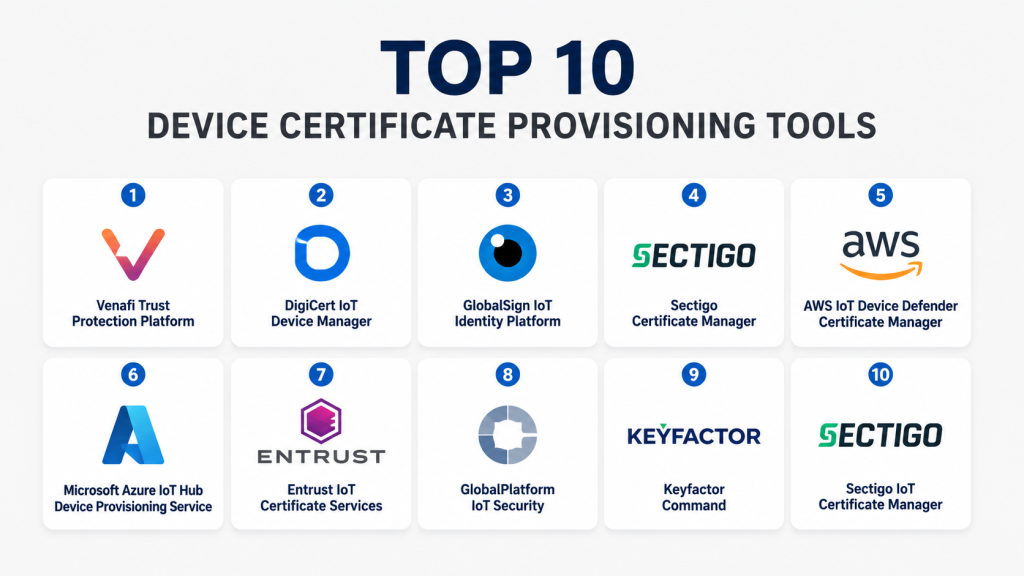
Top 10 Device Certificate Provisioning Tools
1- Venafi Trust Protection Platform
Short description: Enterprise-grade solution for managing device certificates and securing machine identities across large IoT networks and cloud environments.
Key Features
- Automated certificate lifecycle management
- Integration with leading PKI systems
- Real-time monitoring of certificate expiration
- Centralized dashboard and reporting
- Policy enforcement for certificate issuance
- AI-driven risk detection for compromised certificates
- Support for IoT and cloud device fleets
Pros
- Strong enterprise security features
- Scalable for thousands of devices
- Comprehensive audit and reporting
Cons
- Complex setup for small teams
- Licensing cost can be high
- Steeper learning curve
Platforms / Deployment
- Web
- Cloud / Hybrid
Security & Compliance
- RBAC, SSO/SAML, MFA, audit logs
- SOC 2, ISO 27001
Integrations & Ecosystem
Integrates with PKI vendors, IoT platforms, cloud services, and MDM solutions.
- Microsoft Azure, AWS IoT
- Cisco IoT platforms
- REST APIs for custom workflows
- SIEM integration
Support & Community
Varies / Not publicly stated
2- DigiCert IoT Device Manager
Short description: Simplified device certificate management platform tailored for IoT device provisioning and lifecycle automation.
Key Features
- Bulk certificate issuance and renewal
- Device onboarding automation
- Cloud-based certificate storage
- Integration with device firmware and provisioning tools
- Alerts for expiring or compromised certificates
- API-first architecture
Pros
- Easy to deploy for IoT projects
- Scales with device growth
- Strong cloud-native capabilities
Cons
- Limited on-premise deployment
- Some advanced features require enterprise tier
- Learning curve for API automation
Platforms / Deployment
- Web
- Cloud
Security & Compliance
Not publicly stated
Integrations & Ecosystem
Supports PKI solutions, MDM platforms, and firmware integration.
- REST APIs
- AWS IoT Core
- Microsoft Azure IoT Hub
Support & Community
Varies / Not publicly stated
3- GlobalSign IoT Identity Platform
Short description: Provides certificate provisioning and management for industrial and consumer IoT devices with strong identity verification features.
Key Features
- Device identity verification
- Automated certificate issuance
- Lifecycle and revocation management
- Cloud and on-prem deployment options
- Reporting dashboards
- PKI integration
Pros
- Reliable identity assurance
- Scales across multiple industries
- Strong compliance support
Cons
- Configuration complexity for smaller deployments
- Enterprise-oriented pricing
- Limited support for legacy protocols
Platforms / Deployment
- Web
- Cloud / Hybrid
Security & Compliance
- Encryption, audit logs, RBAC
- ISO 27001, SOC 2
Integrations & Ecosystem
Integrates with MDMs, IoT platforms, and enterprise PKIs.
- APIs for automation
- AWS, Azure integrations
- Firmware provisioning tools
Support & Community
Varies / Not publicly stated
4- Sectigo Certificate Manager
Short description: Centralized solution for device certificate issuance, automation, and management across IoT fleets and enterprise devices.
Key Features
- Multi-device provisioning
- Automated renewal and revocation
- Policy-based certificate issuance
- Integration with enterprise PKI
- Monitoring and analytics
- API-driven workflows
Pros
- Easy to scale for large fleets
- Strong reporting features
- Compatible with multiple PKI environments
Cons
- Limited advanced analytics
- UI can be overwhelming for small teams
- Requires knowledge of PKI standards
Platforms / Deployment
- Web
- Cloud / Hybrid
Security & Compliance
Not publicly stated
Integrations & Ecosystem
- Enterprise PKI integration
- IoT management platforms
- REST APIs
Support & Community
Varies / Not publicly stated
5- AWS IoT Device Defender Certificate Manager
Short description: AWS-native certificate provisioning and lifecycle management for IoT devices within AWS ecosystems.
Key Features
- Automated certificate issuance and renewal
- Integration with AWS IoT Core
- Device identity monitoring
- Revocation and replacement workflows
- Policy-based access control
- Event logging for security audit
Pros
- Deep AWS ecosystem integration
- Simplifies cloud IoT security
- Scales with IoT deployments
Cons
- AWS-centric; less suitable for multi-cloud
- Learning curve for non-AWS teams
- Limited UI customization
Platforms / Deployment
- Web
- Cloud
Security & Compliance
Not publicly stated
Integrations & Ecosystem
- AWS IoT Core
- AWS Lambda
- CloudWatch logging
- API access for automation
Support & Community
Varies / Not publicly stated
6- Microsoft Azure IoT Hub Device Provisioning Service
Short description: Provides certificate-based device provisioning for Azure IoT deployments with secure onboarding and identity management.
Key Features
- X.509 certificate onboarding
- Device identity lifecycle management
- Group enrollment and individual provisioning
- Integration with Azure PKI and IoT services
- Automated certificate rotation
- Security monitoring
Pros
- Native Azure integration
- Automates large-scale device onboarding
- Supports enterprise compliance requirements
Cons
- Azure dependency may limit multi-cloud use
- Documentation can be complex
- Less suitable for very small deployments
Platforms / Deployment
- Web
- Cloud
Security & Compliance
- RBAC, encryption
- Not publicly stated for certifications
Integrations & Ecosystem
- Azure IoT Hub
- Azure Key Vault
- APIs for provisioning and automation
Support & Community
Varies / Not publicly stated
7- Entrust IoT Certificate Services
Short description: Enterprise-focused tool for managing device certificates with strong security and compliance capabilities.
Key Features
- Device identity management
- Automated lifecycle workflows
- Certificate monitoring and reporting
- Integration with PKI and MDM platforms
- Policy enforcement
- Bulk issuance and revocation
Pros
- High compliance standards
- Scalable for enterprise IoT
- Reliable security infrastructure
Cons
- Complex setup
- Premium pricing
- Limited cloud-only flexibility
Platforms / Deployment
- Web
- Cloud / Hybrid
Security & Compliance
- SOC 2, ISO 27001
- MFA, audit logs
Integrations & Ecosystem
- Enterprise PKI
- IoT device management platforms
- REST APIs
Support & Community
Varies / Not publicly stated
8- GlobalPlatform IoT Security
Short description: Provides certificate provisioning for secure IoT device onboarding, focusing on standard-compliant identity management.
Key Features
- Standardized certificate issuance
- Device lifecycle management
- Secure communication enforcement
- Integration with IoT and cloud platforms
- Analytics and reporting dashboards
Pros
- Standard compliance-focused
- Suitable for industrial and consumer IoT
- Streamlined onboarding
Cons
- Limited advanced automation features
- Less suitable for small teams
- May require PKI expertise
Platforms / Deployment
- Web
- Cloud / Hybrid
Security & Compliance
Not publicly stated
Integrations & Ecosystem
- IoT platforms
- Cloud services
- APIs for integration
Support & Community
Varies / Not publicly stated
9- Keyfactor Command
Short description: Centralized device certificate and key management for enterprises, emphasizing automation and PKI integration.
Key Features
- Full lifecycle certificate management
- Automated issuance, renewal, revocation
- Key management and rotation
- Analytics and reporting
- API-driven provisioning
- Integration with IoT and enterprise systems
Pros
- Strong automation capabilities
- Supports large device fleets
- Enterprise-ready compliance
Cons
- Premium pricing for full features
- Complex configuration
- Onboarding requires training
Platforms / Deployment
- Web
- Cloud / Hybrid
Security & Compliance
- RBAC, audit logs
- Not publicly stated
Integrations & Ecosystem
- PKI platforms
- IoT device management
- APIs and SDKs
Support & Community
Varies / Not publicly stated
10- Sectigo IoT Certificate Manager
Short description: Provides end-to-end certificate provisioning and management for IoT devices, focusing on automation and cloud deployments.
Key Features
- Automated certificate issuance and renewal
- IoT device onboarding workflows
- Revocation and monitoring
- API access for integration
- Cloud-based dashboard
Pros
- Simplifies IoT security
- Cloud-native approach
- Scales with device growth
Cons
- Advanced analytics limited
- Enterprise-tier required for full features
- Some configuration complexity
Platforms / Deployment
- Web
- Cloud
Security & Compliance
Not publicly stated
Integrations & Ecosystem
- IoT platforms
- PKI integration
- APIs for custom workflows
Support & Community
Varies / Not publicly stated
Comparison Table (Top 10)
| Tool Name | Best For | Platform(s) Supported | Deployment | Standout Feature | Public Rating |
|---|---|---|---|---|---|
| Venafi Trust Protection Platform | Enterprise IoT fleets | Web | Cloud / Hybrid | AI-driven certificate risk detection | N/A |
| DigiCert IoT Device Manager | Cloud IoT projects | Web | Cloud | API-first automation | N/A |
| GlobalSign IoT Identity Platform | Industrial & consumer IoT | Web | Cloud / Hybrid | Device identity verification | N/A |
| Sectigo Certificate Manager | Enterprise IoT | Web | Cloud / Hybrid | Policy-based issuance | N/A |
| AWS IoT Device Defender | AWS IoT deployments | Web | Cloud | Deep AWS integration | N/A |
| Azure IoT Hub DPS | Azure-based IoT | Web | Cloud | X.509 onboarding | N/A |
| Entrust IoT Certificate Services | Enterprise compliance | Web | Cloud / Hybrid | High compliance standards | N/A |
| GlobalPlatform IoT Security | Standard-compliant IoT | Web | Cloud / Hybrid | Standard-focused provisioning | N/A |
| Keyfactor Command | Enterprise certificate/key management | Web | Cloud / Hybrid | Automation + PKI integration | N/A |
| Sectigo IoT Certificate Manager | Cloud-native IoT provisioning | Web | Cloud | End-to-end automation | N/A |
Evaluation & Scoring of Device Certificate Provisioning Tools
| Tool Name | Core (25%) | Ease (15%) | Integrations (15%) | Security (10%) | Performance (10%) | Support (10%) | Value (15%) | Weighted Total (0–10) |
|---|---|---|---|---|---|---|---|---|
| Venafi | 9 | 7 | 8 | 9 | 9 | 8 | 6 | 8.25 |
| DigiCert | 8 | 8 | 7 | 7 | 8 | 7 | 7 | 7.7 |
| GlobalSign | 8 | 7 | 7 | 8 | 8 | 7 | 6 | 7.5 |
| Sectigo CM | 7 | 7 | 6 | 7 | 7 | 7 | 7 | 7.0 |
| AWS IoT | 7 | 8 | 6 | 7 | 7 | 6 | 7 | 7.0 |
| Azure DPS | 7 | 7 | 6 | 7 | 7 | 6 | 7 | 6.95 |
| Entrust | 8 | 6 | 7 | 8 | 8 | 7 | 6 | 7.5 |
| GlobalPlatform | 6 | 7 | 6 | 7 | 7 | 6 | 6 | 6.7 |
| Keyfactor | 8 | 7 | 7 | 8 | 8 | 7 | 6 | 7.6 |
| Sectigo IoT CM | 7 | 7 | 6 | 7 | 7 | 6 | 7 | 7.0 |
Which Device Certificate Provisioning Tool Is Right for You?
Solo / Freelancer
Consider cloud-native tools with simple automation like DigiCert IoT Device Manager for small IoT or developer projects.
SMB
Platforms like AWS IoT Device Defender or Sectigo IoT Certificate Manager balance affordability with automation and cloud integration.
Mid-Market
Venafi or Keyfactor provide strong lifecycle management and compliance support suitable for growing fleets.
Enterprise
Venafi, GlobalSign, or Entrust provide high-scale, enterprise-grade provisioning with advanced compliance and security features.
Budget vs Premium
Budget-conscious deployments can leverage AWS or Azure provisioning tools. Premium options like Venafi and Entrust offer richer compliance, reporting, and automation features.
Feature Depth vs Ease of Use
Enterprise platforms provide depth but require expertise. Smaller teams benefit from simpler, cloud-first tools with straightforward onboarding.
Integrations & Scalability
Evaluate tools that integrate with your existing PKI, MDM, and IoT platforms while supporting your projected fleet growth.
Security & Compliance Needs
For strict regulatory environments, select tools with audit logs, RBAC, MFA, and known certifications like ISO 27001 or SOC 2. Less regulated scenarios can tolerate lighter security.
Frequently Asked Questions (FAQs)
1- What is a device certificate provisioning tool?
It’s a platform that automates issuing, managing, and revoking digital certificates for devices to ensure secure communication and authentication.
2- How does automation help in device certificate management?
Automation reduces human errors, ensures timely renewals, and scales certificate deployment across thousands of devices efficiently.
3- Can these tools integrate with IoT platforms?
Yes, most support integration with IoT hubs, MDM solutions, and cloud platforms via APIs or native connectors.
4- Are these tools suitable for small deployments?
Some cloud-native tools are suitable, but large enterprise-focused platforms may be overkill for small-scale projects.
5- How is security ensured?
By using encryption, MFA, audit logs, RBAC, and integration with PKI solutions, these tools enforce secure certificate lifecycle management.
6- What are the common deployment models?
Options include cloud, on-premises, or hybrid deployments depending on organizational needs and compliance requirements.
7- How much do these tools cost?
Pricing varies from subscription-based cloud services to enterprise licensing; detailed quotes are vendor-specific.
8- Can certificates be revoked if a device is compromised?
Yes, revocation and re-issuance is a core feature of these platforms to maintain trust and prevent misuse.
9- How scalable are these tools?
Most enterprise solutions support thousands to millions of devices; cloud-native tools scale with infrastructure.
10- Are there open-source alternatives?
Some exist for smaller projects, but large-scale, enterprise-grade provisioning typically relies on commercial platforms.
Conclusion
Device certificate provisioning tools have become essential for securing IoT and connected device ecosystems. By automating certificate issuance, renewal, and revocation, these platforms reduce operational risk and enhance compliance. Choosing the right tool depends on deployment scale, integration needs, security requirements, and budget. Organizations should shortlist 2–3 platforms, run pilot projects, and validate integration, security, and lifecycle automation before scaling across devices.

Find Trusted Cardiac Hospitals
Compare heart hospitals by city and services — all in one place.
Explore Hospitals
Device certificate provisioning is often overlooked until organizations need to manage thousands of devices at scale. The ability to automate certificate renewal and replacement without disrupting operations can have a major impact on both security and maintenance costs.