Introduction
OTA (Over-the-Air) Firmware Update Platforms are specialized solutions designed to remotely manage, update, and maintain firmware on connected devices. These platforms allow organizations to deliver software patches, security updates, and feature upgrades to IoT devices, embedded systems, and industrial endpoints without physical access. OTA updates reduce operational costs, minimize device downtime, and ensure security and compliance across large fleets of devices. OTA platforms are critical for enterprises deploying IoT, automotive, industrial automation, and consumer electronics at scale. Modern OTA solutions now leverage AI-driven deployment strategies, differential updates to minimize bandwidth, and secure update pipelines to prevent unauthorized access. Efficient OTA platforms also integrate with device lifecycle management and analytics, enabling proactive maintenance and performance monitoring.
Real-world use cases:
- Automotive: Updating infotainment systems and ECU firmware remotely.
- Industrial IoT: Pushing updates to factory sensors and PLCs to enhance operations.
- Consumer Electronics: Upgrading smart home devices, wearables, and appliances.
- Healthcare: Ensuring connected medical devices remain compliant and secure.
- Telecommunications: Managing firmware across networking equipment and gateways.
Evaluation criteria for buyers:
- Secure update delivery with rollback support
- Bandwidth-efficient differential updates
- Device compatibility and fleet management
- Integration with cloud and on-prem device management systems
- Analytics and reporting on update performance
- Scalability for thousands or millions of devices
- Deployment flexibility (cloud, hybrid, on-prem)
- AI-driven scheduling and rollout strategies
- Cost and licensing structure
- Support and documentation quality
Best for: Enterprises, IoT device manufacturers, automotive OEMs, industrial operators, and healthcare technology companies.
Not ideal for: Small-scale deployments where vendor-native OTA tools may suffice or for single-device update needs.
Key Trends in OTA Firmware Update Platforms
- AI-driven update scheduling for optimized rollout and minimal downtime.
- Differential and delta firmware updates to reduce bandwidth usage.
- Enhanced security with signed updates, encryption, and device authentication.
- Integration with device lifecycle and edge management platforms.
- Cloud-native OTA with hybrid deployment options for offline or low-connectivity devices.
- Real-time monitoring and analytics on update success/failure rates.
- Automated rollback and remediation workflows for failed updates.
- Support for multi-vendor and multi-platform device fleets.
- Regulatory compliance support for GDPR, HIPAA, ISO 27001, and other standards.
- Subscription-based and usage-based pricing models to scale with fleet size.
How We Selected These Tools (Methodology)
- Evaluated global adoption and mindshare across IoT and industrial markets.
- Reviewed feature completeness, including secure delivery, differential updates, and rollback.
- Analyzed reliability and performance signals from enterprise deployments.
- Verified security posture including encryption, device authentication, and compliance support.
- Assessed integration capabilities with cloud, edge, and device management systems.
- Considered scalability across diverse device types and fleet sizes.
- Accounted for AI/ML-assisted deployment and analytics features.
- Balanced offerings across cloud-native, hybrid, and self-hosted platforms.
- Examined vendor support quality and community resources.
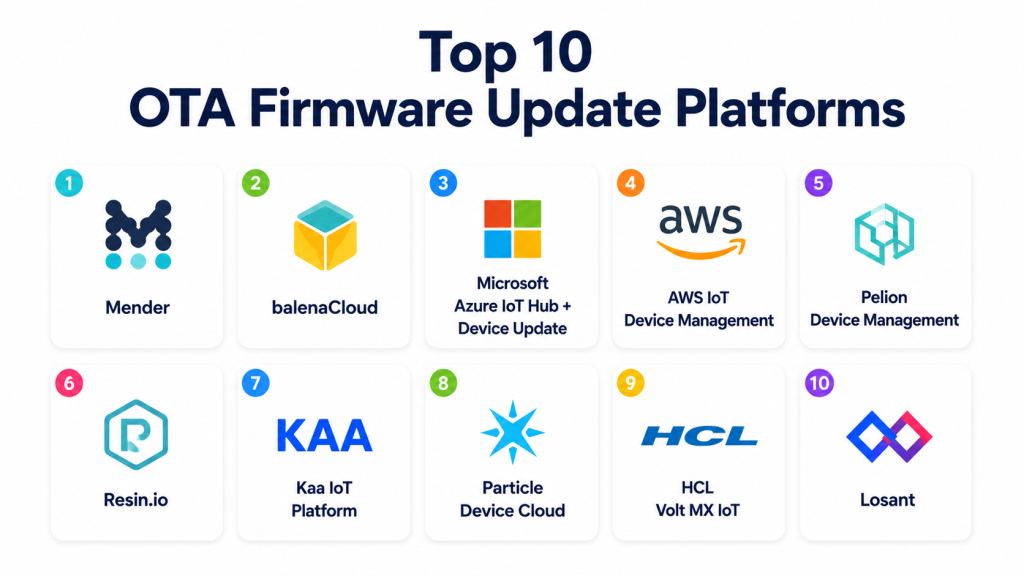
Top 10 OTA Firmware Update Platforms
1- Mender
Short description : Mender is an open-source OTA update platform focused on secure and reliable firmware deployment for Linux-based embedded devices. Ideal for industrial IoT and edge devices.
Key Features
- Secure OTA updates with rollback
- Full or delta updates to save bandwidth
- Device grouping and phased rollouts
- Open-source server and client options
- REST API for integration
- Enterprise-grade hosting and support
Pros
- Open-source flexibility with commercial support available
- Strong security and rollback mechanisms
- Supports large fleets efficiently
Cons
- May require setup expertise for on-prem deployments
- Limited GUI analytics compared to enterprise alternatives
Platforms / Deployment
- Linux / ARM / x86
- Cloud / Self-hosted / Hybrid
Security & Compliance
- Signed updates, encryption, RBAC
- Not publicly stated for specific certifications
Integrations & Ecosystem
Integrates with cloud services and custom device management:
- REST APIs for automation
- MQTT support for communication
- CI/CD pipelines for firmware packaging
Support & Community
- Active open-source community
- Enterprise support plans available
2- balenaCloud
Short description : balenaCloud provides container-based OTA updates for IoT devices, focusing on scalable, developer-friendly deployment across fleets of embedded systems.
Key Features
- Containerized application updates
- Delta updates to minimize bandwidth
- Device monitoring and fleet management
- Automatic rollback for failed updates
- Multi-platform support including ARM and x86
Pros
- Developer-friendly and container-native
- Lightweight deployment
- Scalable across thousands of devices
Cons
- Less focus on industrial-specific features
- Cloud-only for most advanced functionality
Platforms / Deployment
- Linux / ARM / Windows
- Cloud
Security & Compliance
- Device authentication, TLS encryption
- Not publicly stated for certifications
Integrations & Ecosystem
- Docker-based applications
- APIs for custom automation
- Integrates with cloud analytics platforms
Support & Community
- Developer documentation and community forums
- Paid support for enterprises
3- Microsoft Azure IoT Hub + Device Update
Short description : Microsoft offers OTA firmware updates integrated into Azure IoT Hub, allowing enterprises to manage secure deployments across diverse devices.
Key Features
- Phased OTA updates with scheduling
- Integration with Azure AI and analytics
- Secure update delivery with signed packages
- Rollback support and monitoring dashboards
- Multi-platform device support
Pros
- Tight integration with Azure ecosystem
- Scalable and reliable
- AI-assisted update insights
Cons
- Heavy dependence on Azure cloud services
- Complexity for small deployments
Platforms / Deployment
- Windows / Linux / ARM
- Cloud / Hybrid
Security & Compliance
- TLS, RBAC, MFA
- ISO 27001, GDPR
Integrations & Ecosystem
- Azure IoT Suite
- Azure DevOps and CI/CD pipelines
- REST APIs and SDKs
Support & Community
- Enterprise-grade Microsoft support
- Developer community and documentation
4- AWS IoT Device Management
Short description : AWS IoT Device Management provides secure OTA updates and fleet management with integration into AWS cloud services, ideal for large-scale IoT deployments.
Key Features
- OTA updates with rollback
- Group-based deployments and phased rollouts
- Device shadowing and monitoring
- Integration with AWS analytics and AI services
- Multi-platform device support
Pros
- Robust scalability and cloud integration
- Strong security controls
- Centralized fleet monitoring
Cons
- AWS-centric ecosystem may limit flexibility
- Cost can scale with large device numbers
Platforms / Deployment
- Linux / Windows / ARM
- Cloud / Hybrid
Security & Compliance
- TLS, IAM, audit logging
- SOC 2, ISO 27001
Integrations & Ecosystem
- AWS Lambda, IoT Analytics, SageMaker
- MQTT and REST APIs
- Third-party dashboards
Support & Community
- AWS enterprise support tiers
- Active IoT developer forums
5- Pelion Device Management
Short description : Pelion enables OTA firmware updates and full device lifecycle management for industrial and enterprise IoT devices, supporting secure deployments at scale.
Key Features
- Secure OTA and delta updates
- Device provisioning and lifecycle management
- Analytics and reporting dashboards
- Multi-tenant support
- Integration with cloud and on-prem systems
Pros
- Strong industrial IoT support
- Scalable and secure
- Real-time monitoring
Cons
- May be complex for small-scale deployments
- Licensing costs not publicly stated
Platforms / Deployment
- Linux / ARM / x86
- Cloud / Hybrid
Security & Compliance
- Encryption, SSO, audit logs
- SOC 2, ISO 27001
Integrations & Ecosystem
- REST APIs
- Integration with analytics platforms
- CI/CD pipeline support
Support & Community
- Professional enterprise support
- Documentation and developer resources
6- Resin.io (balena predecessor)
Short description : Resin.io provides container-based OTA updates for IoT fleets, enabling efficient software distribution and device monitoring.
Key Features
- Containerized deployments
- Delta updates
- Device grouping and fleet monitoring
- Automatic rollback for failures
- Multi-platform support
Pros
- Lightweight and scalable
- Developer-friendly workflow
- Efficient bandwidth usage
Cons
- Limited industrial analytics
- Cloud dependency
Platforms / Deployment
- Linux / ARM
- Cloud
Security & Compliance
- TLS, device authentication
- Not publicly stated
Integrations & Ecosystem
- Docker support
- REST APIs for custom automation
- Compatible with analytics dashboards
Support & Community
- Developer documentation
- Community-based support
7- Kaa IoT Platform
Short description : Kaa IoT is an open-source OTA update platform for embedded and IoT devices, providing flexible deployment and device management capabilities.
Key Features
- OTA updates and rollback
- Device provisioning and grouping
- Multi-tenant architecture
- Analytics and reporting
- Integration with third-party systems
Pros
- Open-source and highly flexible
- Supports custom workflows
- Scalable for large fleets
Cons
- Requires technical expertise for setup
- Community support only for advanced features
Platforms / Deployment
- Linux / Windows / ARM
- Cloud / Self-hosted
Security & Compliance
- Device authentication, encryption
- Not publicly stated
Integrations & Ecosystem
- REST APIs
- MQTT and CoAP protocols
- Cloud integration (AWS, Azure)
Support & Community
- Community-driven support
- Documentation available
8- Particle Device Cloud
Short description : Particle provides OTA firmware updates and device management for consumer and industrial IoT devices, with strong cloud integration and device monitoring.
Key Features
- OTA firmware delivery
- Device health monitoring
- Phased rollout and rollback
- Analytics and reporting dashboards
- Multi-platform support
Pros
- Easy setup for SMB and enterprise fleets
- Cloud integration
- Scalable device monitoring
Cons
- Limited on-prem deployment
- Less advanced AI capabilities
Platforms / Deployment
- Linux / ARM / Windows
- Cloud
Security & Compliance
- TLS, device authentication
- Not publicly stated
Integrations & Ecosystem
- REST APIs
- Particle IoT cloud services
- Webhooks and analytics integration
Support & Community
- Documentation and developer support
- Community forum
9- HCL Volt MX IoT
Short description : HCL Volt MX IoT enables secure OTA firmware updates and device lifecycle management for enterprise-scale deployments.
Key Features
- Secure OTA updates with rollback
- Device grouping and management
- Analytics dashboards
- Integration with enterprise apps
- Multi-platform support
Pros
- Enterprise-focused features
- Strong fleet management
- Scalable and secure
Cons
- Complex setup
- Licensing not publicly disclosed
Platforms / Deployment
- Linux / ARM / Windows
- Cloud / Hybrid
Security & Compliance
- Encryption, SSO
- Not publicly stated
Integrations & Ecosystem
- REST APIs and SDKs
- Enterprise system integration
- Analytics tools
Support & Community
- Professional support tiers
- Documentation
10- Losant
Short description : Losant provides OTA firmware updates, workflow automation, and analytics for connected devices, supporting hybrid IoT deployments.
Key Features
- OTA updates with rollback
- Workflow automation
- Real-time analytics dashboards
- Device grouping and monitoring
- Cloud and hybrid deployment support
Pros
- Flexible workflow design
- Multi-cloud support
- Scalable for large fleets
Cons
- SaaS pricing increases with scale
- Less industrial focus
Platforms / Deployment
- Linux / Windows / ARM / IoT gateways
- Cloud / Hybrid
Security & Compliance
- Encryption, RBAC
- Not publicly stated
Integrations & Ecosystem
- REST APIs and MQTT
- Integration with analytics platforms
- Node-RED support
Support & Community
- Enterprise support plans
- Active developer community
Comparison Table (Top 10)
| Tool Name | Best For | Platform(s) Supported | Deployment | Standout Feature | Public Rating |
|---|---|---|---|---|---|
| Mender | Industrial IoT | Linux / ARM / x86 | Cloud / Self-hosted / Hybrid | Secure OTA with rollback | N/A |
| balenaCloud | Developer IoT | Linux / ARM / Windows | Cloud | Container-based updates | N/A |
| Azure IoT Hub + Device Update | Enterprise IoT | Windows / Linux / ARM | Cloud / Hybrid | Phased updates + analytics | N/A |
| AWS IoT Device Management | Industrial & Enterprise | Linux / Windows / ARM | Cloud / Hybrid | Scalable OTA and fleet monitoring | N/A |
| Pelion Device Management | Industrial IoT | Linux / ARM / x86 | Cloud / Hybrid | Device lifecycle & OTA | N/A |
| Resin.io | Developer IoT | Linux / ARM | Cloud | Containerized OTA updates | N/A |
| Kaa IoT Platform | Custom IoT | Linux / Windows / ARM | Cloud / Self-hosted | Open-source OTA flexibility | N/A |
| Particle Device Cloud | Consumer & Industrial IoT | Linux / ARM / Windows | Cloud | Easy setup OTA & monitoring | N/A |
| HCL Volt MX IoT | Enterprise IoT | Linux / ARM / Windows | Cloud / Hybrid | Secure enterprise OTA | N/A |
| Losant | Hybrid IoT | Linux / Windows / ARM | Cloud / Hybrid | Workflow automation + OTA | N/A |
Evaluation & Scoring of OTA Firmware Update Platforms
| Tool Name | Core (25%) | Ease (15%) | Integrations (15%) | Security (10%) | Performance (10%) | Support (10%) | Value (15%) | Weighted Total |
|---|---|---|---|---|---|---|---|---|
| Mender | 9 | 7 | 8 | 8 | 8 | 7 | 8 | 8.1 |
| balenaCloud | 8 | 8 | 7 | 7 | 7 | 6 | 8 | 7.6 |
| Azure IoT Hub + Device Update | 8 | 7 | 9 | 8 | 8 | 7 | 7 | 7.9 |
| AWS IoT Device Management | 8 | 7 | 8 | 8 | 8 | 7 | 7 | 7.9 |
| Pelion Device Management | 8 | 6 | 7 | 8 | 8 | 6 | 7 | 7.4 |
| Resin.io | 7 | 8 | 7 | 7 | 7 | 6 | 7 | 7.1 |
| Kaa IoT Platform | 7 | 6 | 7 | 6 | 7 | 6 | 7 | 6.8 |
| Particle Device Cloud | 7 | 8 | 7 | 6 | 7 | 6 | 7 | 7.0 |
| HCL Volt MX IoT | 7 | 6 | 7 | 6 | 7 | 6 | 7 | 6.8 |
| Losant | 7 | 7 | 7 | 6 | 7 | 6 | 7 | 6.9 |
Which OTA Firmware Update Platform Is Right for You?
Solo / Freelancer
- balenaCloud or Resin.io for lightweight, containerized updates on small fleets.
SMB
- Particle Device Cloud or Mender for SaaS simplicity and secure OTA management.
Mid-Market
- Azure IoT Hub or AWS IoT Device Management for scalable OTA with analytics.
Enterprise
- Pelion Device Management, Losant, or HCL Volt MX for industrial-grade, secure OTA across diverse fleets.
Budget vs Premium
- Open-source Mender or Kaa IoT for cost-conscious deployments.
- Premium options like Pelion and Azure provide enterprise support and compliance.
Feature Depth vs Ease of Use
- Industrial and AI capabilities: Pelion, Mender, Azure IoT
- Ease and simplicity: balenaCloud, Particle Device Cloud
Integrations & Scalability
- Azure, AWS, and Pelion scale across thousands of devices.
- Open-source tools offer custom integrations and flexibility.
Security & Compliance Needs
- Enterprise deployments benefit from Pelion, Azure, and AWS for encryption, signed updates, and compliance.
- Small fleets may rely on open-source security measures and best practices.
Frequently Asked Questions (FAQs)
1- What pricing models do OTA platforms follow?
Most platforms offer subscription-based or per-device pricing; open-source tools may only require hosting and support costs.
2- How easy is it to onboard new devices?
SaaS platforms provide guided onboarding, while open-source or enterprise-grade platforms may require more setup.
3- Can these tools manage thousands of devices?
Yes, Azure, AWS, Pelion, and Mender scale to large fleets with centralized monitoring.
4- How are updates delivered securely?
OTA platforms use signed packages, encryption, and device authentication to prevent unauthorized updates.
5- Can updates be rolled back if they fail?
Yes, all leading OTA platforms support automatic rollback to previous firmware versions.
6- Are OTA platforms suitable for industrial IoT?
Yes, platforms like Pelion, Mender, and Azure are designed for industrial-grade devices and compliance needs.
7- What common mistakes should buyers avoid?
Avoid ignoring security, scalability, and integration with existing device management systems.
8- How do I switch from one OTA platform to another?
Plan migration carefully, export firmware packages and device configs, and test updates on a small pilot fleet.
9- Can AI assist in OTA deployments?
Yes, AI can optimize rollout schedules, predict failures, and manage bandwidth-efficient updates.
10- Are cloud-only OTA platforms sufficient?
Cloud-only solutions work for SMBs; hybrid or on-prem platforms may be required for low-connectivity or industrial environments.
Conclusion
OTA Firmware Update Platforms are critical for ensuring secure, efficient, and scalable device management in modern IoT and industrial environments. Choosing the right platform depends on fleet size, deployment scale, security needs, and integration requirements. Developers and SMBs may favor container-based or open-source options like balenaCloud, Resin.io, or Mender, while enterprise-scale deployments benefit from Azure IoT Hub, AWS IoT Device Management, Pelion, or HCL Volt MX for advanced analytics, AI-assisted rollouts, and compliance support.The recommended next steps are to shortlist 2–3 OTA platforms that align with your device ecosystem, run pilot deployments to validate update processes and rollback capabilities, evaluate integration with existing IT and OT systems, and confirm security and compliance features before scaling across the fleet. This approach ensures minimal downtime, enhanced device security, and long-term operational efficiency.

Find Trusted Cardiac Hospitals
Compare heart hospitals by city and services — all in one place.
Explore Hospitals
OTA firmware update platforms become especially valuable when they support phased rollouts and automatic rollback mechanisms. A faulty update pushed to thousands of devices can create widespread operational issues, so the ability to test, monitor, and reverse deployments safely is often more important than update speed alone.