Introduction
Fraud Detection Platforms are advanced software systems designed to identify, prevent, and analyze fraudulent activities across digital transactions, financial systems, user accounts, and enterprise operations. These platforms use a combination of artificial intelligence, machine learning, behavioral analytics, and rule-based engines to detect suspicious patterns in real time. In today’s digital economy, fraud has become more sophisticated and automated. From payment fraud and identity theft to account takeovers and synthetic identities, organizations face continuous threats that can lead to financial loss and reputational damage. Fraud detection platforms help businesses proactively identify risks before they escalate into major incidents. Modern fraud detection systems go beyond static rule-based checks. They now leverage real-time streaming analytics, AI-driven anomaly detection, device fingerprinting, and cross-channel intelligence to deliver high-accuracy fraud prevention.
Common Real-world use cases include:
- Payment fraud detection in banking and fintech
- E-commerce transaction monitoring
- Account takeover prevention
- Identity verification and authentication
- Insurance claim fraud detection
- AML (Anti-Money Laundering) monitoring
Buyers should Evaluate:
- Real-time detection accuracy
- AI and machine learning capabilities
- Scalability for high transaction volumes
- Integration with payment gateways and APIs
- Behavioral analytics and anomaly detection
- False positive reduction mechanisms
- Compliance support (PCI DSS, GDPR, AML)
- Reporting and investigation tools
- Ease of deployment and configuration
- Data security and privacy controls
Best for: Banks, fintech companies, insurance providers, e-commerce platforms, and any organization handling high-value digital transactions.
Not ideal for: Small businesses with very low transaction volumes or non-digital operations.
Key Trends in Fraud Detection Platforms
- AI-driven real-time fraud scoring and decisioning
- Behavioral biometrics for identity verification
- Graph-based fraud detection networks
- Cross-channel fraud intelligence sharing
- Automated AML compliance monitoring
- Cloud-native fraud detection architectures
- Explainable AI for fraud decision transparency
- Integration with digital identity systems
- Adaptive machine learning models that self-improve
- API-first fraud prevention ecosystems
How We Selected These Tools (Methodology)
- Market adoption in banking, fintech, and enterprise sectors
- Strength of AI and machine learning models
- Real-time detection capabilities
- Scalability for large transaction volumes
- Integration ecosystem with financial systems
- Accuracy and false-positive reduction
- Security and compliance readiness
- Vendor maturity and enterprise trust
- Reporting and investigation capabilities
- Ease of deployment and operational efficiency
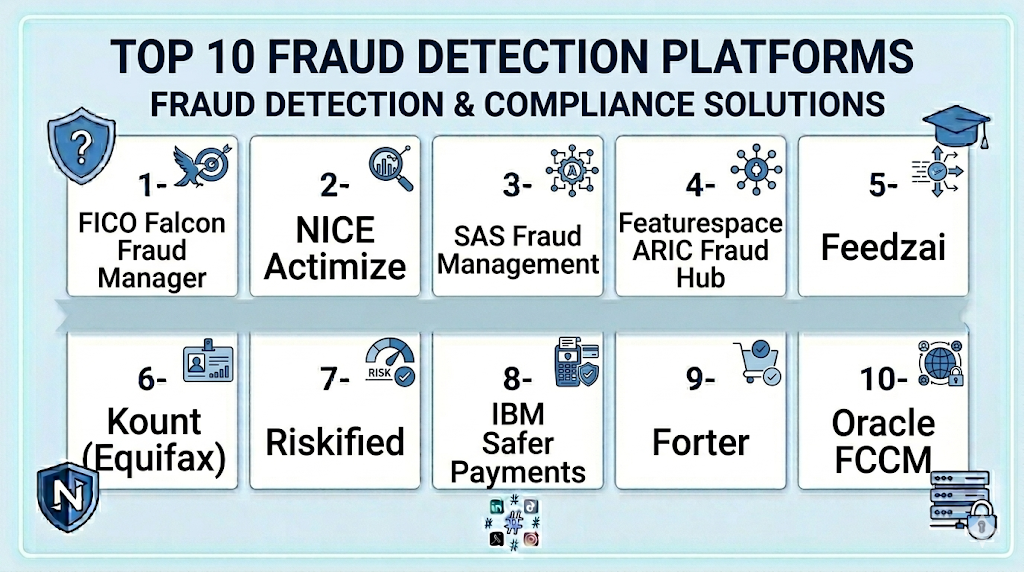
Top 10 Fraud Detection Platforms
1- FICO Falcon Fraud Manager
Short description: FICO Falcon is one of the most widely used fraud detection systems in banking, known for its AI-driven transaction monitoring.
Key Features
- Real-time transaction monitoring
- AI-based fraud scoring
- Behavioral analytics engine
- Card and payment fraud detection
- Adaptive machine learning models
- Case management system
- Risk-based authentication
Pros
- Extremely high detection accuracy
- Widely adopted in global banking
- Strong AI models
Cons
- Expensive enterprise solution
- Complex implementation
- Requires specialized expertise
Platforms / Deployment
Cloud / Hybrid
Security & Compliance
RBAC, encryption, audit logs (PCI DSS support not publicly detailed)
Integrations & Ecosystem
- Banking systems
- Payment processors
- Core banking APIs
- Fraud intelligence networks
- Enterprise data systems
Support & Community
Strong enterprise banking support
2- NICE Actimize
Short description: NICE Actimize provides enterprise-grade fraud prevention and financial crime detection solutions.
Key Features
- AML and fraud detection
- Real-time monitoring
- Case management workflows
- Risk scoring engine
- Behavioral analytics
- Regulatory reporting
- Entity resolution
Pros
- Strong financial crime focus
- Highly scalable platform
- Deep analytics capabilities
Cons
- Complex setup
- High cost
- Requires training
Platforms / Deployment
Cloud / Hybrid
Security & Compliance
RBAC, encryption, audit logs
Integrations & Ecosystem
- Banking systems
- Compliance tools
- Data warehouses
- APIs
Support & Community
Enterprise-grade global support
3- SAS Fraud Management
Short description: SAS Fraud Management offers advanced analytics-driven fraud detection for financial institutions.
Key Features
- Real-time fraud detection
- Machine learning models
- Case management tools
- Behavioral analytics
- Alert prioritization
- Risk scoring engine
- Reporting dashboards
Pros
- Strong analytics engine
- Reliable enterprise performance
- Good scalability
Cons
- Expensive
- Complex configuration
- Steep learning curve
Platforms / Deployment
Cloud / Hybrid
Security & Compliance
SSO, encryption, audit logs
Integrations & Ecosystem
- Banking systems
- Data platforms
- Payment gateways
- APIs
Support & Community
Strong enterprise analytics support
4- Featurespace ARIC Fraud Hub
Short description: Featurespace ARIC uses adaptive behavioral analytics to detect anomalies in real time.
Key Features
- Adaptive behavioral models
- Real-time fraud scoring
- Anomaly detection engine
- Customer behavior profiling
- Machine learning automation
- Risk-based alerts
- Case management system
Pros
- Strong behavioral AI
- Reduces false positives
- Highly adaptive system
Cons
- Premium pricing
- Requires tuning period
- Limited SMB suitability
Platforms / Deployment
Cloud
Security & Compliance
RBAC, encryption, audit logs (compliance details not fully public)
Integrations & Ecosystem
- Banking APIs
- Payment systems
- Data lakes
- Security tools
Support & Community
Strong enterprise support
5- Feedzai
Short description: Feedzai is a leading AI-powered risk management platform for fraud prevention and financial crime detection.
Key Features
- Real-time risk scoring
- AI-driven fraud detection
- Transaction monitoring
- Customer behavior analysis
- Case management tools
- AML compliance support
- API-based architecture
Pros
- Strong AI capabilities
- Scalable cloud architecture
- Fast detection speed
Cons
- Enterprise-focused pricing
- Requires integration effort
- Complex setup
Platforms / Deployment
Cloud
Security & Compliance
SSO, encryption, RBAC
Integrations & Ecosystem
- Payment processors
- Banking systems
- Cloud platforms
- APIs
Support & Community
Strong fintech ecosystem support
6- Kount (Equifax)
Short description: Kount specializes in digital identity trust and fraud prevention for e-commerce businesses.
Key Features
- Identity trust scoring
- Device fingerprinting
- Fraud prevention APIs
- Chargeback protection
- Behavioral analytics
- Automated decision engine
- Risk profiling
Pros
- Strong e-commerce focus
- Easy API integration
- Good real-time detection
Cons
- Limited banking depth
- Pricing varies
- Less advanced AI than enterprise tools
Platforms / Deployment
Cloud
Security & Compliance
RBAC, encryption (PCI support not fully detailed)
Integrations & Ecosystem
- E-commerce platforms
- Payment gateways
- APIs
- CRM systems
Support & Community
Good commercial support
7- Riskified
Short description: Riskified focuses on e-commerce fraud prevention with chargeback guarantee models.
Key Features
- Chargeback protection
- Fraud decision automation
- AI risk engine
- Order approval system
- Behavioral analytics
- Merchant fraud insights
- API-first integration
Pros
- Strong e-commerce specialization
- Reduces chargeback losses
- Easy integration
Cons
- Limited beyond e-commerce
- Pricing model based on volume
- Less enterprise financial coverage
Platforms / Deployment
Cloud
Security & Compliance
Encryption, RBAC
Integrations & Ecosystem
- Shopify
- Magento
- Payment gateways
- APIs
Support & Community
Strong merchant support
8- IBM Safer Payments
Short description: IBM Safer Payments provides high-performance fraud detection for real-time payment environments.
Key Features
- Real-time fraud detection
- Machine learning models
- Rule-based engine
- Payment monitoring
- Risk scoring
- Case management
- High-speed transaction processing
Pros
- Extremely fast processing
- Strong enterprise reliability
- Good scalability
Cons
- Complex deployment
- High cost
- Requires technical expertise
Platforms / Deployment
Cloud / On-prem / Hybrid
Security & Compliance
RBAC, encryption, audit logs
Integrations & Ecosystem
- Banking systems
- Payment networks
- IBM ecosystem tools
- APIs
Support & Community
Strong enterprise IBM support
9- Forter
Short description: Forter offers identity-based fraud prevention for digital commerce platforms.
Key Features
- Identity-based fraud detection
- Real-time decisioning
- Behavioral analytics
- Chargeback protection
- Fraud prevention automation
- Global identity network
- Risk scoring engine
Pros
- Strong identity focus
- High approval rates
- Fast decisioning
Cons
- E-commerce focused
- Limited enterprise banking features
- Pricing varies
Platforms / Deployment
Cloud
Security & Compliance
SSO, encryption
Integrations & Ecosystem
- E-commerce platforms
- Payment systems
- APIs
- Fraud networks
Support & Community
Strong digital commerce support
10- Oracle Financial Crime and Compliance Management
Short description: Oracle provides integrated fraud detection and financial crime management within its enterprise ecosystem.
Key Features
- Fraud detection analytics
- AML monitoring tools
- Risk scoring engine
- Case management system
- Transaction monitoring
- Regulatory reporting
- Entity analysis
Pros
- Strong enterprise integration
- Broad compliance coverage
- Scalable architecture
Cons
- Complex deployment
- High cost
- Oracle ecosystem dependency
Platforms / Deployment
Cloud / Hybrid
Security & Compliance
RBAC, encryption, audit logs
Integrations & Ecosystem
- Oracle Financial Suite
- Banking systems
- ERP platforms
- APIs
Support & Community
Strong enterprise support
Comparison Table
| Tool | Best For | Platform | Deployment | Standout Feature | Rating |
|---|---|---|---|---|---|
| FICO Falcon | Banking fraud | Web | Cloud/Hybrid | AI fraud scoring | N/A |
| NICE Actimize | Financial crime | Web | Cloud/Hybrid | AML + fraud suite | N/A |
| SAS Fraud Mgmt | Analytics-heavy orgs | Web | Cloud/Hybrid | Advanced analytics | N/A |
| Featurespace | Behavioral fraud | Web | Cloud | Adaptive AI models | N/A |
| Feedzai | Fintech | Web | Cloud | Real-time AI risk | N/A |
| Kount | E-commerce | Web | Cloud | Identity trust scoring | N/A |
| Riskified | E-commerce | Web | Cloud | Chargeback guarantee | N/A |
| IBM Safer Payments | Banking | Web | Hybrid | High-speed processing | N/A |
| Forter | Digital commerce | Web | Cloud | Identity-based fraud | N/A |
| Oracle FCCM | Enterprise finance | Web | Cloud/Hybrid | Compliance suite | N/A |
Evaluation & Scoring of Fraud Detection Platforms
| Tool | Core (25%) | Ease (15%) | Integrations (15%) | Security (10%) | Performance (10%) | Support (10%) | Value (15%) | Total |
|---|---|---|---|---|---|---|---|---|
| FICO Falcon | 9.5 | 8.5 | 9 | 9 | 9 | 9 | 7.5 | 8.8 |
| NICE Actimize | 9.5 | 8 | 9 | 9.5 | 9 | 9 | 7.5 | 8.8 |
| SAS Fraud Management | 9 | 8 | 9 | 9 | 9 | 8.5 | 7.5 | 8.6 |
| Featurespace | 9 | 8.5 | 8.5 | 9 | 9 | 8.5 | 8 | 8.7 |
| Feedzai | 9 | 9 | 9 | 9 | 9 | 8.5 | 8 | 8.9 |
| Kount | 8.5 | 9 | 8.5 | 8.5 | 8.5 | 8 | 8.5 | 8.5 |
| Riskified | 8.5 | 9 | 8.5 | 8.5 | 8.5 | 8 | 8.5 | 8.5 |
| IBM Safer Payments | 9 | 7.5 | 9 | 9 | 9.5 | 8.5 | 7.5 | 8.6 |
| Forter | 8.8 | 9 | 8.5 | 8.5 | 9 | 8.5 | 8.5 | 8.7 |
| Oracle FCCM | 9 | 8 | 9 | 9 | 9 | 8.5 | 7.5 | 8.6 |
Frequently Asked Questions FAQs
1. What are Fraud Detection Platforms?
Fraud Detection Platforms are software systems that identify and prevent fraudulent activities in digital transactions.
They use AI, machine learning, and behavioral analytics to detect suspicious patterns.
They are widely used in banking, fintech, and e-commerce industries.
2. Why are fraud detection systems important?
They help prevent financial losses caused by fraudulent transactions and cyberattacks.
They also protect customer identities and business reputation.
Without them, organizations are highly vulnerable to digital fraud.
3. How do fraud detection platforms work?
They analyze transaction data in real time using rules and AI models.
They detect anomalies such as unusual behavior or location mismatches.
If risk is detected, they trigger alerts or block transactions.
4. What technologies are used in fraud detection?
They use artificial intelligence, machine learning, behavioral analytics, and big data processing.
Some also use device fingerprinting and graph analysis.
These technologies help improve detection accuracy.
5. Who uses fraud detection tools?
Banks, fintech companies, insurance providers, and e-commerce platforms use them.
Any business handling digital payments or sensitive data can benefit.
They are essential for high-risk transaction environments.
6. Do fraud detection platforms reduce false positives?
Yes, modern platforms are designed to reduce false alarms using AI models.
They continuously learn from user behavior to improve accuracy.
However, some manual review is still required.
7. Are fraud detection platforms real-time?
Yes, most modern solutions operate in real time.
They analyze transactions instantly before approval or rejection.
This helps stop fraud before it happens.
8. Are these tools cloud-based?
Most fraud detection platforms are cloud-based or hybrid.
Cloud systems offer scalability and faster processing.
Some banks still use on-premise systems for security reasons.
9. What is behavioral analytics in fraud detection?
Behavioral analytics studies how users normally behave.
It detects unusual actions like login from new devices or locations.
This helps identify account takeovers and identity fraud.
10. How to choose the right fraud detection platform?
You should evaluate accuracy, scalability, integrations, and AI capabilities.
Also consider cost, compliance support, and ease of deployment.
The best choice depends on your industry and transaction volume.
Conclusion
Fraud Detection Platforms are essential for modern financial ecosystems where transactions happen in real time and fraud techniques are increasingly AI-driven. These platforms help organizations detect suspicious activity, prevent financial losses, and ensure regulatory compliance. Enterprise leaders like FICO, NICE Actimize, and SAS dominate banking and financial crime prevention, while Feedzai, Featurespace, and IBM offer advanced AI-driven detection capabilities. E-commerce-focused platforms like Riskified, Forter, and Kount provide strong identity-based fraud protection. Choosing the right platform depends on transaction volume, industry type, and integration needs. A pilot testing phase is highly recommended before full deployment.

Find Trusted Cardiac Hospitals
Compare heart hospitals by city and services — all in one place.
Explore Hospitals
I am trying to learn more about fraud detection platforms, and this article helped me understand how these tools identify suspicious activity and protect users from online fraud in a simple way.
This article explains fraud detection platforms in a simple way. The comparison helps understand their features, pros, and cons for identifying and preventing fraudulent activities.