Introduction
GRC (Governance, Risk & Compliance) Platforms are enterprise software solutions designed to help organizations manage governance structures, identify and mitigate risks, and ensure compliance with regulatory requirements. These platforms unify policies, controls, audits, risk assessments, and compliance workflows into a centralized system, making it easier for organizations to maintain visibility and control across complex business environments. In today’s highly regulated and digitally transformed business landscape, organizations face increasing pressure from global regulations, cybersecurity risks, and operational complexity. GRC platforms help streamline compliance processes, reduce manual effort, and improve decision-making by providing real-time risk insights and automated governance workflows. Modern GRC systems are evolving beyond static compliance tracking. They now integrate AI-driven risk analytics, automated control testing, continuous monitoring, and cross-platform integrations with cloud, security, and IT systems.
Common Real-world use cases include:
- Enterprise risk management and risk scoring
- Regulatory compliance tracking (SOX, GDPR, ISO, HIPAA)
- Internal and external audits management
- Policy lifecycle management and enforcement
- Vendor and third-party risk assessments
Buyers should Evaluate:
- Risk assessment and scoring capabilities
- Automation of compliance workflows
- Integration with IT, security, and cloud systems
- Audit management and reporting features
- Scalability across enterprise environments
- Policy and control management depth
- Real-time monitoring and alerts
- Ease of configuration and usability
- AI-driven risk analytics capabilities
- Multi-framework compliance support
Best for: Large enterprises, regulated industries (finance, healthcare, insurance, government), and organizations with complex compliance requirements.
Not ideal for: Small businesses with minimal compliance requirements or startups without formal governance structures.
Key Trends in GRC Platforms
- AI-powered risk detection and predictive compliance analytics
- Continuous controls monitoring replacing periodic audits
- Integration of cybersecurity and GRC into unified platforms
- Automation of regulatory reporting and evidence collection
- Cloud-native GRC platforms replacing legacy on-prem systems
- Expansion of third-party risk management capabilities
- Real-time dashboards for enterprise risk visibility
- Low-code/no-code workflow automation in GRC systems
- Increased regulatory complexity driving unified compliance systems
- Integration with DevSecOps and ITSM platforms
How We Selected These Tools (Methodology)
- Market adoption across enterprise and regulated industries
- Depth of risk, compliance, and audit management features
- Support for multiple regulatory frameworks
- Integration ecosystem with enterprise IT and security tools
- Scalability for global organizations
- Automation and workflow capabilities
- Reporting and analytics strength
- Vendor maturity and enterprise trust
- Security and governance capabilities
- Ease of implementation and user experience
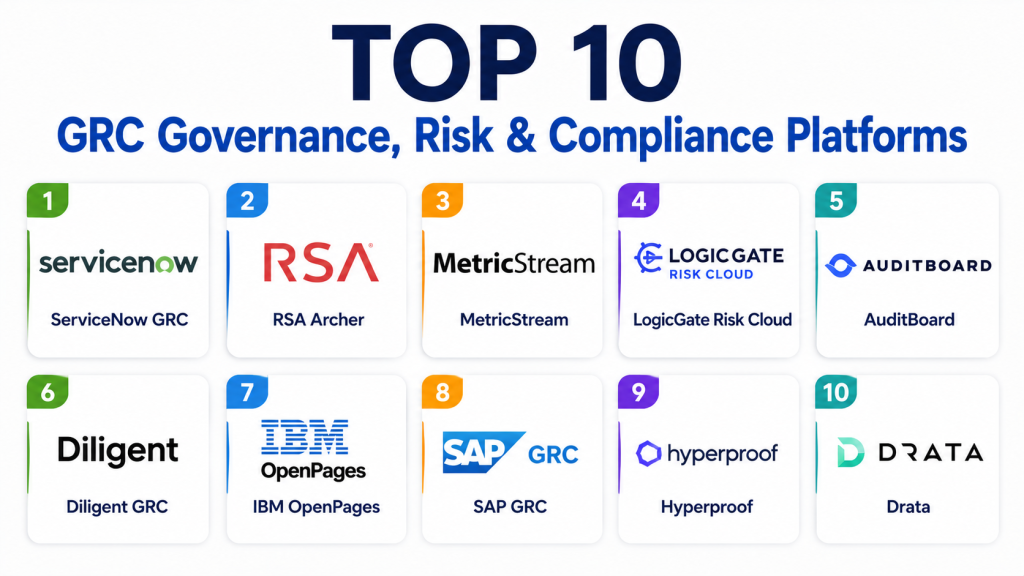
Top 10 GRC Platforms
1- ServiceNow GRC
Short description: ServiceNow GRC is a leading enterprise platform that integrates governance, risk, and compliance into IT workflows and digital operations.
Key Features
- Risk management and scoring engine
- Compliance workflow automation
- Audit management system
- Policy lifecycle management
- Control testing automation
- Incident and issue tracking
- Real-time dashboards and reporting
Pros
- Strong enterprise integration
- Highly scalable platform
- Excellent workflow automation
Cons
- Expensive licensing
- Complex configuration
- Requires ServiceNow ecosystem familiarity
Platforms / Deployment
Cloud / Hybrid
Security & Compliance
SSO, MFA, RBAC, audit logs (SOC certifications not publicly detailed)
Integrations & Ecosystem
- ITSM systems
- Security platforms
- Cloud providers
- Enterprise data systems
- APIs and automation tools
Support & Community
Strong enterprise support and global ecosystem
2- RSA Archer
Short description: RSA Archer is a widely adopted GRC platform focused on risk management, compliance, and audit automation.
Key Features
- Enterprise risk management
- Compliance tracking workflows
- Audit management tools
- Vendor risk assessments
- Policy lifecycle management
- Regulatory mapping
- Reporting dashboards
Pros
- Mature and widely trusted platform
- Strong compliance capabilities
- Highly configurable
Cons
- Outdated UI compared to modern tools
- Complex setup and maintenance
- Requires expert administration
Platforms / Deployment
Cloud / On-prem
Security & Compliance
RBAC, encryption, audit logging
Integrations & Ecosystem
- ERP systems
- Security tools
- SIEM platforms
- APIs
Support & Community
Strong enterprise support
3- MetricStream
Short description: MetricStream is a comprehensive GRC platform offering risk, compliance, audit, and cybersecurity governance solutions.
Key Features
- Integrated risk management
- Compliance automation
- Audit workflow management
- Third-party risk tracking
- Policy and document management
- Regulatory change tracking
- Advanced analytics
Pros
- Strong enterprise coverage
- Good scalability
- Broad GRC functionality
Cons
- Complex implementation
- High cost
- Requires training
Platforms / Deployment
Cloud / Hybrid
Security & Compliance
SSO, MFA, encryption, audit logs
Integrations & Ecosystem
- Cloud platforms
- ERP systems
- Security tools
- APIs
Support & Community
Enterprise-grade support
4- LogicGate Risk Cloud
Short description: LogicGate is a flexible GRC platform known for its low-code workflow automation and usability.
Key Features
- Low-code workflow builder
- Risk assessment tools
- Compliance automation
- Audit management
- Vendor risk tracking
- Reporting dashboards
- Policy management
Pros
- Easy to configure workflows
- User-friendly interface
- Fast deployment
Cons
- Limited deep enterprise customization
- Smaller ecosystem than legacy vendors
- Pricing scales with usage
Platforms / Deployment
Cloud
Security & Compliance
RBAC, encryption, audit trails
Integrations & Ecosystem
- SaaS tools
- Cloud platforms
- APIs
- ITSM systems
Support & Community
Good customer support and onboarding
5- AuditBoard
Short description: AuditBoard is a modern audit and compliance management platform designed for enterprise risk and audit teams.
Key Features
- Audit management workflows
- SOX compliance tracking
- Risk assessment tools
- Control testing automation
- Collaboration dashboards
- Reporting and analytics
- Documentation management
Pros
- Modern UI and UX
- Strong audit capabilities
- Easy collaboration
Cons
- Focused mainly on audit use cases
- Limited deep risk modeling
- Enterprise pricing
Platforms / Deployment
Cloud
Security & Compliance
SSO, encryption, RBAC
Integrations & Ecosystem
- ERP systems
- Cloud storage
- Compliance tools
- APIs
Support & Community
Strong enterprise support
6- Diligent GRC
Short description: Diligent GRC provides board-level governance and enterprise risk management solutions.
Key Features
- Board reporting tools
- Risk dashboards
- Compliance tracking
- Audit workflows
- Policy management
- ESG reporting support
- Document collaboration
Pros
- Strong governance focus
- Good executive reporting
- Easy board-level visibility
Cons
- Less technical depth in automation
- Enterprise-focused pricing
- Limited developer flexibility
Platforms / Deployment
Cloud
Security & Compliance
RBAC, encryption, audit logs
Integrations & Ecosystem
- Enterprise systems
- Financial tools
- Cloud platforms
- APIs
Support & Community
Strong enterprise governance support
7- IBM OpenPages
Short description: IBM OpenPages is an AI-powered GRC platform designed for large enterprises with complex regulatory environments.
Key Features
- AI-driven risk analytics
- Compliance management
- Audit tracking system
- Operational risk management
- Policy lifecycle tools
- Workflow automation
- Advanced reporting
Pros
- Strong AI capabilities
- Highly scalable
- Enterprise-grade security
Cons
- Complex implementation
- Expensive licensing
- Requires technical expertise
Platforms / Deployment
Cloud / Hybrid
Security & Compliance
SSO, encryption, RBAC, audit logs
Integrations & Ecosystem
- IBM ecosystem tools
- Cloud platforms
- Security systems
- APIs
Support & Community
Strong enterprise IBM support
8- SAP GRC
Short description: SAP GRC is designed for enterprises using SAP ecosystems to manage compliance and risk.
Key Features
- Access control management
- Risk analysis tools
- Compliance reporting
- Audit management
- Segregation of duties controls
- Workflow automation
- Identity governance
Pros
- Strong SAP integration
- Reliable enterprise controls
- Deep compliance features
Cons
- SAP ecosystem dependency
- Complex configuration
- Expensive
Platforms / Deployment
Cloud / Hybrid
Security & Compliance
RBAC, encryption, audit logging
Integrations & Ecosystem
- SAP ERP
- SAP cloud suite
- Enterprise systems
- APIs
Support & Community
Strong SAP enterprise support
9- Hyperproof
Short description: Hyperproof is a modern compliance operations platform focused on automation and audit readiness.
Key Features
- Compliance tracking automation
- Audit evidence collection
- Risk management tools
- Control mapping
- Policy management
- Continuous monitoring
- Reporting dashboards
Pros
- Easy to use
- Strong automation features
- Fast implementation
Cons
- Less deep enterprise customization
- Smaller ecosystem
- Limited advanced analytics
Platforms / Deployment
Cloud
Security & Compliance
SSO, encryption, audit logs
Integrations & Ecosystem
- Cloud tools
- SaaS platforms
- APIs
- Compliance frameworks
Support & Community
Good customer support
10- Drata
Short description: Drata is a compliance automation platform focused on continuous monitoring and security certification readiness.
Key Features
- Continuous compliance monitoring
- Automated evidence collection
- SOC 2 readiness tracking
- Risk management dashboards
- Access control monitoring
- Policy management
- Integration monitoring
Pros
- Very fast compliance automation
- Easy onboarding
- Strong DevSecOps alignment
Cons
- More compliance-focused than full GRC
- Limited deep risk modeling
- SaaS-oriented
Platforms / Deployment
Cloud
Security & Compliance
SSO, encryption, audit logs
Integrations & Ecosystem
- Cloud providers
- DevOps tools
- SaaS platforms
- APIs
Support & Community
Strong startup and SMB support
Comparison Table
| Tool | Best For | Platform | Deployment | Standout Feature | Rating |
|---|---|---|---|---|---|
| ServiceNow GRC | Enterprise IT GRC | Web | Cloud/Hybrid | Workflow automation | N/A |
| RSA Archer | Traditional GRC | Web | Hybrid | Compliance depth | N/A |
| MetricStream | Enterprise risk | Web | Cloud/Hybrid | Broad GRC suite | N/A |
| LogicGate | Mid-market teams | Web | Cloud | Low-code workflows | N/A |
| AuditBoard | Audit teams | Web | Cloud | SOX automation | N/A |
| Diligent | Board governance | Web | Cloud | Executive reporting | N/A |
| IBM OpenPages | Large enterprises | Web | Cloud/Hybrid | AI risk analytics | N/A |
| SAP GRC | SAP users | Web | Hybrid | SAP integration | N/A |
| Hyperproof | Compliance teams | Web | Cloud | Automation speed | N/A |
| Drata | SaaS companies | Web | Cloud | Continuous compliance | N/A |
Evaluation & Scoring
| Tool | Core | Ease | Integrations | Security | Performance | Support | Value | Total |
|---|---|---|---|---|---|---|---|---|
| ServiceNow | 9.5 | 8 | 9 | 9 | 9 | 9 | 7.5 | 8.7 |
| RSA Archer | 9 | 7.5 | 8.5 | 9 | 8.5 | 8.5 | 7.5 | 8.3 |
| MetricStream | 9 | 8 | 9 | 9 | 8.5 | 8.5 | 7.5 | 8.5 |
| LogicGate | 8.8 | 9 | 8.5 | 8.5 | 8.5 | 8 | 8.5 | 8.6 |
| AuditBoard | 8.8 | 9 | 8.5 | 9 | 8.5 | 8.5 | 8 | 8.6 |
| Diligent | 8.5 | 8.5 | 8 | 9 | 8 | 8.5 | 8 | 8.4 |
| IBM OpenPages | 9 | 7.5 | 9 | 9 | 9 | 8.5 | 7.5 | 8.6 |
| SAP GRC | 9 | 7.5 | 9 | 9 | 8.5 | 8.5 | 7.5 | 8.5 |
| Hyperproof | 8.5 | 9 | 8.5 | 8.5 | 8.5 | 8 | 9 | 8.6 |
| Drata | 8.8 | 9 | 8.5 | 8.5 | 8.5 | 8 | 9 | 8.6 |
Frequently Asked Questions FAQs
1. What is a GRC Platform?
A GRC Platform is a software solution that helps organizations manage governance, risk, and compliance in one system.
It centralizes policies, audits, and risk data for better decision-making.
It is widely used in regulated industries like finance and healthcare.
2. Why are GRC Platforms important?
They help organizations stay compliant with laws and regulations.
They reduce operational risk and improve internal controls.
They also provide visibility into enterprise-wide risks.
3. Who uses GRC Platforms?
They are used by compliance teams, risk managers, auditors, and IT governance teams.
Large enterprises and regulated organizations rely on them heavily.
Executives also use them for risk reporting and decision-making.
4. What problems do GRC tools solve?
They solve issues related to compliance tracking, risk visibility, and audit management.
They also automate manual governance processes.
This reduces errors and improves efficiency.
5. Are GRC Platforms cloud-based?
Yes, most modern GRC platforms are cloud-based or hybrid.
Some legacy tools still support on-prem deployments.
Cloud-based systems offer better scalability and automation.
6. What is risk management in GRC?
Risk management involves identifying, analyzing, and mitigating business risks.
GRC tools help assign risk scores and track mitigation actions.
This improves enterprise resilience.
7. Do GRC tools support compliance frameworks?
Yes, they support frameworks like ISO 27001, SOC 2, GDPR, and SOX.
They map controls to regulatory requirements automatically.
This simplifies audits and reporting.
8. Can small businesses use GRC platforms?
Yes, but many GRC tools are designed for enterprises.
SMBs can use simplified platforms like Hyperproof or Drata.
Complex tools may be too advanced for small teams.
9. What is the difference between GRC and compliance software?
GRC platforms cover governance, risk, and compliance together.
Compliance software focuses only on meeting regulatory requirements.
GRC is broader and more strategic.
10. How should companies choose a GRC platform?
Companies should evaluate scalability, integrations, and compliance coverage.
They should also consider ease of use and automation capabilities.
The best choice depends on industry and regulatory needs.
Conclusion
GRC Platforms are essential for modern enterprises that need structured governance, risk visibility, and regulatory compliance across complex environments. As organizations adopt cloud, AI, and multi-regulation frameworks, GRC tools have evolved into intelligent platforms that automate compliance and unify risk management. Enterprise-grade platforms like ServiceNow GRC, IBM OpenPages, and MetricStream offer deep capabilities for large organizations, while tools like LogicGate, Hyperproof, and Drata focus on usability and automation for modern teams. SAP GRC and RSA Archer remain strong in traditional enterprise environments. The right GRC platform depends on organizational complexity, regulatory exposure, and integration needs. A phased pilot approach is recommended before full-scale deployment.

Find Trusted Cardiac Hospitals
Compare heart hospitals by city and services — all in one place.
Explore Hospitals
GRC platforms play an important role in helping organizations manage governance, risk, and compliance in a structured way, making it easier to handle policies, audits, and regulatory requirements efficiently.