Introduction
Email Security Tools are cybersecurity platforms designed to protect organizations from phishing attacks, malware, business email compromise, spam, account takeover attempts, and data leakage that originate through email communication channels. Since email remains the most widely used business communication tool, it is also one of the most targeted entry points for cybercriminals. In modern enterprise environments, email threats have become more sophisticated due to AI-generated phishing, deepfake impersonation, credential harvesting campaigns, and advanced social engineering attacks. Traditional spam filters are no longer sufficient. Modern email security platforms now combine AI-driven threat detection, behavioral analysis, sandboxing, real-time URL inspection, and identity protection to secure communication channels effectively.
Common Real-world use cases include:
- Blocking phishing and spoofing attacks
- Detecting business email compromise (BEC) attempts
- Preventing malware delivery via email attachments
- Protecting sensitive data shared through email
- Securing cloud email platforms like Microsoft 365 and Google Workspace
Buyers should Evaluate:
- Phishing detection accuracy
- AI-based threat intelligence
- Integration with Microsoft 365 / Google Workspace
- Data loss prevention capabilities
- Real-time URL and attachment scanning
- Incident response automation
- Ease of deployment and management
- Scalability across enterprise environments
- Reporting and compliance features
- Identity protection capabilities
Best for: Enterprises, SMBs with cloud email usage, financial institutions, healthcare organizations, government agencies, and security-focused IT teams.
Not ideal for: Organizations with minimal email usage or those relying purely on internal offline communication systems.
Key Trends in Email Security Tools
- AI-powered phishing detection is becoming the standard baseline capability
- Business Email Compromise attacks are driving identity-centric security models
- Email security is merging with identity protection platforms
- Real-time sandboxing and URL analysis is becoming more advanced
- Cloud-native email security adoption is replacing on-premise gateways
- Integration with SIEM and SOAR platforms is increasing rapidly
- Automated response and remediation is reducing manual SOC workload
- Deepfake and impersonation detection is emerging in enterprise email security
- Zero Trust email access models are being implemented widely
- API-based email security controls are replacing legacy gateway filters
How We Selected These Tools
- Market adoption and enterprise usage
- Email threat detection accuracy
- AI and machine learning capabilities
- Integration with major email platforms
- Incident response automation features
- Cloud and hybrid deployment support
- Phishing and BEC protection effectiveness
- Security analytics and reporting depth
- Scalability across enterprise environments
- Ecosystem maturity and support quality
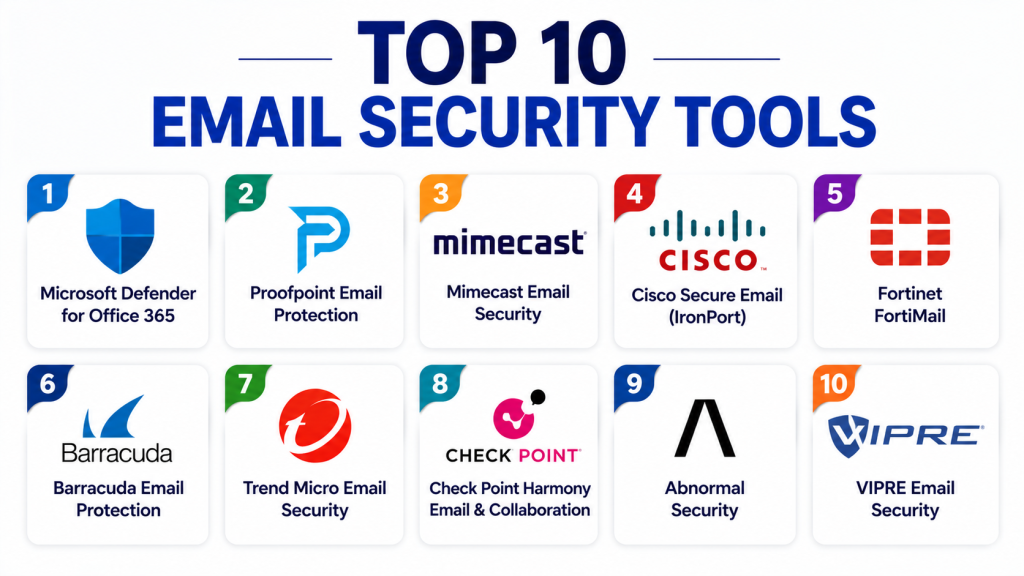
Top 10 Email Security Tools
1- Microsoft Defender for Office 365
Short description: Microsoft Defender for Office 365 provides advanced email threat protection integrated deeply into Microsoft 365 environments, focusing on phishing, malware, and business email compromise prevention.
Key Features
- Anti-phishing protection
- Safe links and safe attachments
- Real-time threat detection
- AI-based email filtering
- Attack simulation training
- Threat intelligence integration
- Automated remediation
Pros
- Deep Microsoft ecosystem integration
- Strong AI-based detection
- Unified security management
Cons
- Best suited for Microsoft environments
- Complex configuration for advanced policies
- Licensing can be complex
Platforms / Deployment
Cloud
Security & Compliance
SSO, MFA, RBAC, encryption, audit logs
Integrations & Ecosystem
- Microsoft 365
- Microsoft Defender XDR
- Microsoft Sentinel
- SIEM platforms
- Third-party security tools
Support & Community
Strong enterprise support and documentation ecosystem
2- Proofpoint Email Protection
Short description: Proofpoint is a leading enterprise email security platform focused on phishing prevention, BEC protection, and advanced threat intelligence.
Key Features
- Advanced phishing detection
- Business email compromise protection
- Email encryption
- URL rewriting and analysis
- Malware detection
- Threat intelligence feeds
- Data loss prevention
Pros
- Excellent phishing protection
- Strong enterprise reputation
- Advanced threat intelligence
Cons
- Premium pricing
- Complex setup for small teams
- UI can feel complex
Platforms / Deployment
Cloud / Hybrid
Security & Compliance
SSO, MFA, RBAC, encryption, audit logging
Integrations & Ecosystem
- Microsoft 365
- Google Workspace
- SIEM tools
- SOAR platforms
- Identity providers
Support & Community
Strong global enterprise support
3- Mimecast Email Security
Short description: Mimecast provides cloud-based email security with strong focus on continuity, archiving, and phishing protection.
Key Features
- Anti-phishing protection
- Secure email gateway
- Email continuity services
- URL protection
- Attachment sandboxing
- Archiving and compliance
- Threat intelligence
Pros
- Strong email continuity features
- Good phishing protection
- Easy cloud deployment
Cons
- Advanced configuration needed
- Premium enterprise pricing
- Some latency in filtering
Platforms / Deployment
Cloud
Security & Compliance
SSO, MFA, encryption, audit logs
Integrations & Ecosystem
- Microsoft 365
- Google Workspace
- SIEM platforms
- Endpoint security tools
Support & Community
Strong enterprise-grade support
4- Cisco Secure Email (IronPort)
Short description: Cisco Secure Email provides enterprise-grade email gateway protection with strong spam filtering and malware detection.
Key Features
- Spam filtering
- Malware detection
- Advanced threat defense
- Email encryption
- URL filtering
- Policy enforcement
- Reporting dashboards
Pros
- Highly reliable enterprise solution
- Strong Cisco ecosystem integration
- Good scalability
Cons
- Complex deployment
- Requires expertise to manage
- Traditional interface experience
Platforms / Deployment
Cloud / On-prem / Hybrid
Security & Compliance
RBAC, encryption, audit logs
Integrations & Ecosystem
- Cisco SecureX
- SIEM platforms
- Endpoint security tools
- Cloud email services
Support & Community
Strong enterprise support
5- Fortinet FortiMail
Short description: FortiMail provides secure email gateway protection with strong integration into Fortinet security ecosystem.
Key Features
- Anti-spam and anti-phishing
- Malware detection
- Email encryption
- Threat intelligence
- Data loss prevention
- Sandbox analysis
- Policy enforcement
Pros
- Strong Fortinet ecosystem integration
- Good threat prevention capabilities
- Flexible deployment options
Cons
- Requires Fortinet ecosystem familiarity
- Complex configuration
- Enterprise-focused
Platforms / Deployment
Cloud / On-prem / Hybrid
Security & Compliance
SSO, MFA, encryption, RBAC
Integrations & Ecosystem
- Fortinet Security Fabric
- SIEM platforms
- Endpoint tools
- Cloud services
Support & Community
Strong enterprise ecosystem support
6- Barracuda Email Protection
Short description: Barracuda Email Protection provides cloud-based phishing and spam protection with easy deployment and strong usability.
Key Features
- Phishing protection
- Spam filtering
- Malware detection
- Email encryption
- URL protection
- Backup and recovery
- Threat intelligence
Pros
- Easy deployment
- Strong usability
- Good SMB and enterprise fit
Cons
- Limited advanced analytics
- Premium features require upgrades
- Less customization
Platforms / Deployment
Cloud
Security & Compliance
SSO, MFA, encryption
Integrations & Ecosystem
- Microsoft 365
- Google Workspace
- SIEM platforms
- Cloud storage tools
Support & Community
Good support for SMB and enterprise
7- Trend Micro Email Security
Short description: Trend Micro provides AI-powered email security focused on phishing detection and cloud email protection.
Key Features
- AI-based phishing detection
- Malware protection
- URL filtering
- Email encryption
- Sandbox analysis
- Data loss prevention
- Threat intelligence
Pros
- Strong AI detection
- Good cloud protection
- Reliable filtering
Cons
- Enterprise pricing
- Configuration complexity
- Less intuitive UI
Platforms / Deployment
Cloud / Hybrid
Security & Compliance
SSO, MFA, encryption, audit logs
Integrations & Ecosystem
- Microsoft 365
- Google Workspace
- SIEM tools
- Endpoint security systems
Support & Community
Strong global enterprise support
8- Check Point Harmony Email & Collaboration
Short description: Check Point Harmony Email & Collaboration provides advanced email threat prevention integrated with Check Point security ecosystem.
Key Features
- Anti-phishing protection
- BEC detection
- Malware scanning
- URL protection
- Cloud email security
- Threat intelligence
- Incident response
Pros
- Strong threat intelligence
- Good enterprise integration
- Unified security platform
Cons
- Complex setup
- Requires ecosystem adoption
- Enterprise pricing
Platforms / Deployment
Cloud
Security & Compliance
SSO, MFA, RBAC, encryption
Integrations & Ecosystem
- Microsoft 365
- Google Workspace
- SIEM tools
- Check Point Infinity
Support & Community
Strong enterprise security support
9- Abnormal Security
Short description: Abnormal Security uses behavioral AI to detect email-based threats like phishing and business email compromise.
Key Features
- Behavioral AI detection
- BEC protection
- Phishing prevention
- Identity-based risk analysis
- Email anomaly detection
- Automated response
- Threat intelligence
Pros
- Strong AI-driven detection
- Excellent BEC prevention
- Minimal configuration needed
Cons
- Premium pricing
- Cloud-first only
- Limited traditional controls
Platforms / Deployment
Cloud
Security & Compliance
SSO, MFA, encryption
Integrations & Ecosystem
- Microsoft 365
- Google Workspace
- SIEM platforms
- SOAR tools
Support & Community
Strong enterprise AI security support
10- VIPRE Email Security
Short description: VIPRE provides email security with strong spam filtering and phishing protection for SMB and mid-market organizations.
Key Features
- Spam filtering
- Phishing protection
- Malware detection
- Email encryption
- Threat intelligence
- Policy enforcement
- Reporting tools
Pros
- Easy deployment
- Good SMB fit
- Affordable compared to enterprise tools
Cons
- Limited advanced AI features
- Smaller enterprise adoption
- Basic analytics
Platforms / Deployment
Cloud / Hybrid
Security & Compliance
SSO, encryption, RBAC
Integrations & Ecosystem
- Microsoft 365
- Google Workspace
- Endpoint tools
- SIEM systems
Support & Community
Good SMB and mid-market support
Comparison Table
| Tool | Best For | Platform | Deployment | Standout Feature | Rating |
|---|---|---|---|---|---|
| Microsoft Defender | Microsoft ecosystems | Web | Cloud | Native M365 protection | N/A |
| Proofpoint | Enterprise security | Web | Hybrid | Advanced phishing defense | N/A |
| Mimecast | Email continuity | Web | Cloud | Continuity + archiving | N/A |
| Cisco Secure Email | Enterprise gateways | Web | Hybrid | Secure email gateway | N/A |
| Fortinet FortiMail | Fortinet users | Web | Hybrid | Security fabric integration | N/A |
| Barracuda | SMB & enterprise | Web | Cloud | Easy deployment | N/A |
| Trend Micro | AI email security | Web | Cloud | AI threat detection | N/A |
| Check Point Harmony | Enterprise ecosystems | Web | Cloud | Unified security platform | N/A |
| Abnormal Security | AI-driven protection | Web | Cloud | Behavioral detection | N/A |
| VIPRE | SMB security | Web | Cloud | Affordable protection | N/A |
Evaluation & Scoring
| Tool | Core | Ease | Integrations | Security | Performance | Support | Value | Total |
|---|---|---|---|---|---|---|---|---|
| Microsoft Defender | 9.5 | 8.5 | 9 | 9 | 9 | 9 | 8 | 8.8 |
| Proofpoint | 9 | 8 | 8.5 | 9 | 8.5 | 9 | 7.5 | 8.5 |
| Mimecast | 8.8 | 8.5 | 8.5 | 8.5 | 8.5 | 8.5 | 8 | 8.5 |
| Cisco Secure Email | 8.5 | 7.5 | 8.5 | 9 | 8.5 | 9 | 7.5 | 8.3 |
| Fortinet FortiMail | 8.5 | 7.5 | 8.5 | 9 | 8.5 | 8.5 | 7.5 | 8.2 |
| Barracuda | 8.5 | 8.5 | 8 | 8.5 | 8 | 8.5 | 8 | 8.3 |
| Trend Micro | 8.8 | 8 | 8.5 | 9 | 8.5 | 8.5 | 7.5 | 8.4 |
| Check Point | 8.8 | 8 | 8.5 | 9 | 8.5 | 8.5 | 7.5 | 8.4 |
| Abnormal Security | 9 | 8.5 | 8.5 | 9 | 9 | 8.5 | 7.5 | 8.6 |
| VIPRE | 8 | 8.5 | 7.5 | 8 | 8 | 8 | 8.5 | 8.1 |
Frequently Asked Questions FAQs
1. What are Email Security Tools?
Email Security Tools are platforms that protect email systems from phishing, spam, malware, and business email compromise attacks.
They analyze incoming and outgoing emails for threats and block malicious content.
They are essential for securing enterprise communication.
2. Why are Email Security Tools important?
Email is the most common attack vector for cybercriminals.
These tools help prevent data breaches, credential theft, and financial fraud.
They also ensure secure business communication.
3. What types of threats do email security tools detect?
They detect phishing emails, malware attachments, spam, spoofing, and ransomware.
They also identify business email compromise (BEC) attempts.
Advanced tools use AI to detect new and unknown threats.
4. How do Email Security Tools work?
They scan emails using AI, threat intelligence, and rule-based filters.
Suspicious emails are blocked, quarantined, or flagged for review.
Some tools also sandbox attachments and analyze URLs in real time.
5. Do Email Security Tools work with Microsoft 365 and Google Workspace?
Yes, most modern email security tools integrate directly with Microsoft 365 and Google Workspace.
They provide real-time protection inside cloud email platforms.
This ensures seamless enterprise email security.
6. What is the difference between spam filters and email security tools?
Spam filters only block unwanted emails.
Email security tools provide advanced protection against phishing, malware, and identity-based attacks.
They offer deeper threat detection and response capabilities.
7. Can Email Security Tools stop phishing attacks?
Yes, they are specifically designed to detect and block phishing attempts.
They analyze sender behavior, links, and content patterns.
AI-based tools can also detect zero-day phishing attacks.
8. Are Email Security Tools suitable for small businesses?
Yes, SMBs can use lightweight email security tools for basic protection.
However, enterprises need advanced solutions for large-scale threat defense.
The choice depends on business size and risk level.
9. Do Email Security Tools use AI?
Yes, modern tools use AI and machine learning for threat detection.
AI helps identify unknown threats and behavioral anomalies.
It improves detection accuracy and reduces false positives.
10. What should buyers consider before choosing a tool?
Buyers should evaluate threat detection accuracy, integration support, and ease of deployment.
Scalability, compliance features, and automation capabilities are also important.
Choosing the right tool depends on email ecosystem and security needs.
Conclusion
Email Security Tools are essential in modern cybersecurity because email remains the primary attack vector for phishing, ransomware, and business email compromise attacks. With the rise of AI-generated phishing and identity-based attacks, organizations need advanced protection that goes beyond traditional spam filters. Enterprise leaders like Microsoft Defender, Proofpoint, and Mimecast dominate large-scale environments, while AI-driven solutions like Abnormal Security are rapidly gaining adoption. SMB-focused tools like VIPRE and Barracuda offer simpler deployment and affordability. Ultimately, the best solution depends on your email ecosystem, security maturity, compliance requirements, and integration needs. A pilot-based evaluation approach is recommended before full deployment.

Find Trusted Cardiac Hospitals
Compare heart hospitals by city and services — all in one place.
Explore Hospitals
This article explains very well how email security tools help protect organizations from threats like phishing, spam, and malware while keeping communication safer and more reliable.