Introduction
IP Address Management IPAM tools help organizations centrally manage, track, allocate, monitor, and automate IP address usage across enterprise networks, cloud environments, data centers, and distributed infrastructure. These platforms improve visibility into IP allocations while reducing conflicts, downtime, and manual administration complexity. As hybrid infrastructure, IoT deployments, cloud networking, edge computing, and containerized environments continue expanding, IP address management has become increasingly important for operational stability and security. Modern IPAM platforms now integrate DNS, DHCP, automation, AI-assisted analytics, compliance monitoring, and Infrastructure-as-Code workflows to support large-scale enterprise networking operations.
Common Real-world use cases include:
- Managing enterprise IPv4 and IPv6 address spaces
- Automating IP allocation across hybrid cloud infrastructure
- Integrating DNS, DHCP, and IP management workflows
- Monitoring network utilization and address conflicts
- Supporting compliance and audit requirements
Key Evaluation criteria buyers should consider include:
- IP tracking and visibility capabilities
- DNS and DHCP integration support
- IPv6 readiness
- Automation and API functionality
- Cloud and hybrid infrastructure compatibility
- Security controls and access management
- Scalability for distributed networks
- Reporting and analytics
- Ease of administration
- Vendor ecosystem integrations
Best for: Enterprises, telecom providers, cloud-native organizations, managed service providers, educational institutions, healthcare systems, and businesses operating large or distributed networks.
Not ideal for: Very small organizations managing only a few static IP ranges without automation, scalability, or compliance requirements.
Key Trends in IP Address Management IPAM Tools
- AI-assisted network analytics and capacity planning are becoming standard features.
- IPv6 adoption is accelerating enterprise IPAM modernization projects.
- Hybrid cloud IP management is increasingly important for multi-cloud operations.
- Infrastructure-as-Code integrations are simplifying network automation workflows.
- Unified DDI platforms combining DNS, DHCP, and IPAM continue gaining adoption.
- Security-focused IP visibility is becoming critical for Zero Trust networking.
- Container and Kubernetes networking support is rapidly expanding.
- Real-time network observability integrations are improving troubleshooting.
- API-first IPAM architectures are replacing legacy manual tracking processes.
- Compliance automation and audit visibility are becoming key enterprise priorities.
How We Selected These Tools Methodology
The tools below were selected using practical enterprise networking evaluation criteria including:
- Market adoption and enterprise reputation
- IPAM feature completeness
- DNS and DHCP integration capabilities
- Automation and API maturity
- Scalability across distributed environments
- Security and governance functionality
- Cloud and hybrid networking support
- Reporting and operational visibility
- Vendor ecosystem integrations
- Support quality and operational maturity
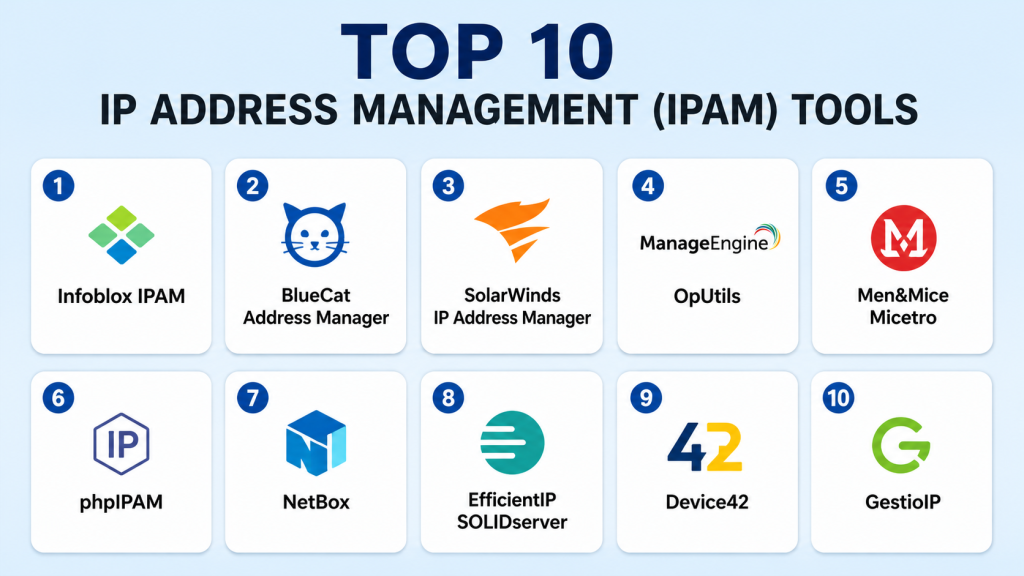
Top 10 IP Address Management IPAM Tools
1- Infoblox IPAM
Short description: Infoblox IPAM is an enterprise-grade DDI platform combining DNS, DHCP, and IP address management for large-scale infrastructure operations.
Key Features
- Centralized IP address management
- Integrated DNS and DHCP services
- IPv6 support
- Network automation workflows
- IP conflict detection
- Compliance reporting
- Cloud network visibility
Pros
- Strong enterprise scalability
- Excellent DDI integration
- Advanced operational visibility
Cons
- Premium enterprise pricing
- Complex deployment planning
- Requires experienced administrators
Platforms / Deployment
- Cloud
- Self-hosted
- Hybrid
Security & Compliance
- RBAC
- Audit logging
- MFA support
- Encryption capabilities
Integrations & Ecosystem
Infoblox integrates with enterprise networking, cloud infrastructure, and security ecosystems.
- APIs
- SIEM integrations
- Cloud providers
- Network automation tools
- VMware integrations
Support & Community
Strong enterprise support with mature documentation and partner ecosystem.
2- BlueCat Address Manager
Short description: BlueCat Address Manager delivers enterprise IPAM and DDI management focused on hybrid cloud networking and operational automation.
Key Features
- IP address tracking
- DNS and DHCP integration
- Hybrid cloud visibility
- Network automation
- API-driven workflows
- IPv6 support
- Compliance monitoring
Pros
- Strong hybrid cloud support
- Good automation flexibility
- Enterprise governance capabilities
Cons
- Enterprise-focused pricing
- Advanced deployment complexity
- Smaller ecosystem than hyperscale vendors
Platforms / Deployment
- Cloud
- Hybrid
- Self-hosted
Security & Compliance
- RBAC
- Audit trails
- Encryption support
- Access controls
Integrations & Ecosystem
BlueCat integrates with cloud, automation, and enterprise networking platforms.
- Terraform
- APIs
- SIEM platforms
- Cloud providers
- Automation frameworks
Support & Community
Enterprise-focused support model with onboarding assistance and technical consulting.
3- SolarWinds IP Address Manager
Short description: SolarWinds IP Address Manager provides centralized IP visibility, subnet tracking, and DHCP/DNS monitoring for SMB and enterprise networks.
Key Features
- IP conflict detection
- Automated IP scanning
- DHCP and DNS monitoring
- IPv6 management
- Alerting and reporting
- Subnet management
- Capacity tracking
Pros
- User-friendly interface
- Strong network monitoring integration
- Good operational visibility
Cons
- Best suited for Windows-centric environments
- Large-scale deployments may require tuning
- Advanced automation is limited compared to enterprise DDI platforms
Platforms / Deployment
- Windows
- Self-hosted
Security & Compliance
- RBAC
- Audit logging
- Encryption support
Integrations & Ecosystem
SolarWinds integrates with network monitoring and infrastructure management ecosystems.
- APIs
- Active Directory
- Monitoring platforms
- SNMP integrations
Support & Community
Large networking administrator community and extensive technical documentation.
4- ManageEngine OpUtils
Short description: ManageEngine OpUtils combines IP address management and switch port management for SMB and mid-market infrastructure operations.
Key Features
- IP address scanning
- Switch port management
- DNS monitoring
- IPv6 support
- IP conflict alerts
- Network diagnostics
- Address utilization reporting
Pros
- Affordable pricing
- Easy deployment
- Good SMB usability
Cons
- Limited advanced enterprise automation
- Reporting depth varies
- Large-scale deployments may require optimization
Platforms / Deployment
- Windows
- Linux
- Self-hosted
Security & Compliance
- RBAC
- Audit logging
- Secure authentication support
Integrations & Ecosystem
ManageEngine integrates with IT management and network monitoring ecosystems.
- APIs
- Active Directory
- SIEM integrations
- Monitoring tools
Support & Community
Strong SMB-to-mid-market support ecosystem and broad documentation coverage.
5- Men&Mice Micetro
Short description: Men&Mice Micetro provides centralized DDI management and IPAM automation across hybrid and multi-vendor network environments.
Key Features
- Multi-vendor DDI management
- Centralized IP visibility
- Automation APIs
- DNS and DHCP orchestration
- Cloud integration
- IPv6 management
- Delegated administration
Pros
- Excellent multi-vendor support
- Flexible deployment options
- Strong automation capabilities
Cons
- Advanced configuration complexity
- Smaller market visibility
- Enterprise deployment planning required
Platforms / Deployment
- Cloud
- Hybrid
- Self-hosted
Security & Compliance
- RBAC
- Audit logging
- Secure access controls
Integrations & Ecosystem
Micetro integrates with enterprise DNS, DHCP, and cloud networking ecosystems.
- APIs
- AWS
- Azure
- Infoblox integrations
- Automation frameworks
Support & Community
Good enterprise onboarding support and growing networking community adoption.
6- phpIPAM
Short description: phpIPAM is an open-source IP address management platform focused on flexible subnet tracking and lightweight network administration.
Key Features
- Open-source IPAM
- IPv4 and IPv6 management
- Subnet hierarchy tracking
- VLAN management
- API support
- User permissions
- Custom fields
Pros
- Cost-effective deployment
- Flexible customization
- Active open-source community
Cons
- Requires self-management
- Enterprise automation capabilities are limited
- UI modernization could improve
Platforms / Deployment
- Linux
- Self-hosted
Security & Compliance
- RBAC
- Encryption support varies
- Audit capabilities depend on deployment
Integrations & Ecosystem
phpIPAM integrates with lightweight automation and infrastructure management workflows.
- APIs
- Database integrations
- Monitoring tools
- Automation scripts
Support & Community
Strong open-source community support and extensive administrator documentation.
7- NetBox
Short description: NetBox is a widely adopted open-source infrastructure resource modeling and IPAM platform used by DevOps and network engineering teams.
Key Features
- IP address management
- Rack and device inventory
- API-first architecture
- Infrastructure modeling
- VLAN and VRF management
- Automation integrations
- Multi-tenant support
Pros
- Excellent automation ecosystem
- Strong DevOps adoption
- Highly customizable
Cons
- Requires operational expertise
- Native DNS/DHCP functionality is limited
- Setup complexity for beginners
Platforms / Deployment
- Linux
- Self-hosted
Security & Compliance
- RBAC
- API authentication
- Encryption support varies
Integrations & Ecosystem
NetBox integrates deeply with automation and Infrastructure-as-Code ecosystems.
- Ansible
- Terraform
- APIs
- Automation tooling
- Monitoring platforms
Support & Community
Large and active open-source networking community with strong ecosystem growth.
8- EfficientIP SOLIDserver
Short description: EfficientIP SOLIDserver delivers enterprise DDI and IPAM management with a strong focus on automation, security, and hybrid cloud visibility.
Key Features
- Unified DDI management
- DNS security analytics
- Hybrid cloud automation
- IP lifecycle management
- IPv6 support
- Real-time visibility
- API automation
Pros
- Strong security-focused features
- Good hybrid cloud support
- Advanced automation capabilities
Cons
- Enterprise-focused pricing
- Smaller ecosystem than larger competitors
- Advanced implementation complexity
Platforms / Deployment
- Cloud
- Hybrid
- Self-hosted
Security & Compliance
- RBAC
- DNS security monitoring
- Audit logging
- Encryption support
Integrations & Ecosystem
EfficientIP integrates with cloud networking, automation, and security ecosystems.
- APIs
- SIEM tools
- Cloud providers
- Automation frameworks
Support & Community
Enterprise support programs with strong implementation assistance.
9- Device42
Short description: Device42 combines IPAM with infrastructure discovery, dependency mapping, and hybrid IT asset visibility.
Key Features
- IP address discovery
- Infrastructure dependency mapping
- Hybrid cloud visibility
- Rack management
- Asset tracking
- API integrations
- Network discovery
Pros
- Excellent infrastructure visibility
- Good CMDB integration
- Hybrid environment support
Cons
- Not purely focused on IPAM
- Advanced networking features are limited
- Enterprise scaling may require planning
Platforms / Deployment
- Cloud
- Hybrid
- Self-hosted
Security & Compliance
- RBAC
- Audit logging
- SSO support
- Encryption capabilities
Integrations & Ecosystem
Device42 integrates with ITSM, monitoring, and infrastructure management ecosystems.
- ServiceNow
- APIs
- VMware
- Monitoring platforms
- Cloud integrations
Support & Community
Strong documentation and enterprise onboarding support.
10- GestioIP
Short description: GestioIP is an open-source IPAM platform designed for network administrators seeking lightweight IP tracking and subnet management.
Key Features
- IPv4 and IPv6 management
- Automated network discovery
- Subnet administration
- VLAN management
- DNS integration
- Reporting capabilities
- Open-source flexibility
Pros
- Free open-source deployment
- Lightweight infrastructure requirements
- Flexible subnet management
Cons
- Smaller community ecosystem
- Limited enterprise automation
- Interface feels outdated
Platforms / Deployment
- Linux
- Self-hosted
Security & Compliance
- RBAC
- Basic audit functionality
- Encryption support varies
Integrations & Ecosystem
GestioIP supports lightweight infrastructure and automation integrations.
- APIs
- Monitoring tools
- Database integrations
- Automation scripts
Support & Community
Community-driven support with smaller but active open-source adoption.
Comparison Table
| Tool Name | Best For | Platform(s) Supported | Deployment | Standout Feature | Public Rating |
|---|---|---|---|---|---|
| Infoblox IPAM | Enterprise DDI operations | Hybrid | Hybrid | Unified DDI platform | N/A |
| BlueCat Address Manager | Hybrid cloud networking | Hybrid | Hybrid | Enterprise automation | N/A |
| SolarWinds IPAM | Network visibility | Windows | Self-hosted | IP conflict detection | N/A |
| ManageEngine OpUtils | SMB IP management | Windows, Linux | Self-hosted | Switch port integration | N/A |
| Men&Mice Micetro | Multi-vendor DDI | Hybrid | Hybrid | Vendor-neutral management | N/A |
| phpIPAM | Open-source IP tracking | Linux | Self-hosted | Open-source flexibility | N/A |
| NetBox | DevOps infrastructure modeling | Linux | Self-hosted | API-first architecture | N/A |
| EfficientIP SOLIDserver | Security-focused DDI | Hybrid | Hybrid | DNS security analytics | N/A |
| Device42 | Hybrid IT visibility | Hybrid | Hybrid | Dependency mapping | N/A |
| GestioIP | Lightweight IP management | Linux | Self-hosted | Free subnet management | N/A |
Evaluation & Scoring of IP Address Management IPAM Tools
| Tool Name | Core | Ease | Integrations | Security | Performance | Support | Value | Weighted Total |
|---|---|---|---|---|---|---|---|---|
| Infoblox IPAM | 9 | 7 | 9 | 9 | 9 | 8 | 6 | 8.2 |
| BlueCat Address Manager | 9 | 7 | 8 | 8 | 8 | 8 | 7 | 8.0 |
| SolarWinds IPAM | 8 | 8 | 7 | 7 | 8 | 8 | 8 | 7.8 |
| ManageEngine OpUtils | 7 | 8 | 7 | 7 | 7 | 8 | 9 | 7.6 |
| Men&Mice Micetro | 8 | 7 | 8 | 8 | 8 | 7 | 7 | 7.7 |
| phpIPAM | 7 | 7 | 6 | 6 | 7 | 7 | 9 | 7.0 |
| NetBox | 8 | 6 | 9 | 7 | 8 | 8 | 9 | 8.0 |
| EfficientIP SOLIDserver | 9 | 6 | 8 | 9 | 8 | 8 | 6 | 7.9 |
| Device42 | 7 | 7 | 8 | 8 | 7 | 7 | 7 | 7.3 |
| GestioIP | 6 | 7 | 5 | 6 | 6 | 6 | 9 | 6.5 |
These scores are comparative and designed to help organizations evaluate IPAM platforms across operational priorities. Higher-scoring platforms generally provide stronger automation, scalability, governance, and integration ecosystems. Organizations should balance enterprise-grade capabilities with operational complexity, staffing expertise, and infrastructure scale requirements before selecting a platform.
Which IP Address Management IPAM Tool Is Right for You?
Solo / Freelancer
Open-source tools like phpIPAM and GestioIP are often sufficient for lightweight IP tracking and subnet administration.
SMB
ManageEngine OpUtils and SolarWinds IPAM provide a strong balance of usability, visibility, and operational simplicity for growing networks.
Mid-Market
Men&Mice Micetro and Device42 work well for organizations seeking hybrid visibility and automation without excessive complexity.
Enterprise
Infoblox IPAM, BlueCat Address Manager, and EfficientIP SOLIDserver are best suited for large-scale DDI operations and compliance-focused networking.
Budget vs Premium
Open-source platforms reduce licensing costs but require greater operational management. Premium enterprise platforms provide stronger automation and governance capabilities.
Feature Depth vs Ease of Use
Highly advanced DDI platforms offer deeper functionality but may introduce more deployment and operational complexity.
Integrations & Scalability
Organizations operating hybrid and multi-cloud environments should prioritize API-first IPAM solutions with strong automation ecosystem support.
Security & Compliance Needs
Regulated industries should prioritize platforms with audit logging, RBAC, encryption, DNS security analytics, and governance controls.
Frequently Asked Questions FAQs
1. What is an IPAM tool?
An IPAM tool helps organizations track, allocate, monitor, and manage IP addresses across enterprise networks and infrastructure environments.
2. Why is IP address management important?
IPAM reduces address conflicts, improves network visibility, simplifies troubleshooting, and supports scalable infrastructure operations.
3. What is DDI in networking?
DDI stands for DNS, DHCP, and IP Address Management — a unified approach to enterprise network infrastructure management.
4. Can IPAM tools support cloud environments?
Yes. Most modern IPAM platforms support hybrid and multi-cloud networking environments.
5. Are IPAM tools useful for IPv6 adoption?
Yes. IPAM platforms simplify IPv6 address planning, allocation, tracking, and governance.
6. What security capabilities should organizations look for?
Organizations should prioritize RBAC, audit logging, encryption, secure APIs, and DNS security monitoring.
7. Are open-source IPAM tools reliable?
Open-source tools can be highly reliable when managed properly, though enterprise support and advanced automation may be limited.
8. How difficult is IPAM implementation?
Implementation complexity depends on infrastructure size, DNS/DHCP integration requirements, and automation goals.
9. Can IPAM integrate with DevOps workflows?
Many modern IPAM platforms integrate with APIs, Terraform, Ansible, and Infrastructure-as-Code pipelines.
10. How should organizations evaluate IPAM vendors?
Organizations should evaluate scalability, automation capabilities, security controls, hybrid cloud support, integrations, and operational usability.
Conclusion
IP Address Management IPAM tools have evolved into critical infrastructure management platforms supporting enterprise networking, automation, cloud operations, and security governance. As organizations continue expanding hybrid environments, IPv6 adoption, edge computing, and Infrastructure-as-Code practices, centralized IP visibility and automation are becoming increasingly important. The best IPAM platform depends heavily on infrastructure scale, operational maturity, automation requirements, and compliance obligations. Some organizations prioritize lightweight open-source flexibility, while others require advanced DDI governance and hybrid cloud orchestration. Enterprises should shortlist a few platforms aligned with their operational goals, validate integration compatibility with DNS, DHCP, cloud, and automation ecosystems, and conduct pilot testing before full deployment. Careful evaluation can significantly improve operational visibility, scalability, and long-term network reliability.

Find Trusted Cardiac Hospitals
Compare heart hospitals by city and services — all in one place.
Explore Hospitals
I am exploring networking tools, and this blog taught me why IPAM is important for avoiding IP conflicts and improving visibility.