Introduction
Mobile Device Management (MDM) tools provide centralized management of mobile devices, including smartphones, tablets, and laptops, across an organization. They help IT teams enforce security policies, manage apps, monitor device health, and ensure compliance with organizational standards.
In with hybrid work models and remote teams growing, MDM has become crucial to secure endpoints while maintaining productivity. These tools simplify device onboarding, patch management, and real-time monitoring, reducing IT overhead and mitigating security risks.
Real-world use cases include:
- Remote device provisioning for new employees
- Enforcing encryption and password policies across all devices
- Deploying and updating corporate apps on employee devices
- Tracking device inventory and compliance for audits
- Enabling secure access to corporate resources from personal and BYOD devices
When evaluating MDM solutions, buyers should consider:
- Platform coverage (iOS, Android, Windows, macOS)
- App deployment and patch management
- Security and compliance enforcement
- Device enrollment and lifecycle management
- Integration with ITSM and endpoint management platforms
- Reporting and analytics capabilities
- Automation and AI features
- Cloud, on-prem, or hybrid deployment flexibility
- Scalability for enterprise or SMB environments
- Vendor support and community
Best for: IT administrators, security teams, enterprises, and SMBs with large or distributed mobile fleets.
Not ideal for: Very small organizations with limited mobile endpoints or minimal BYOD requirements; simple mobile management solutions may suffice.
Key Trends in Mobile Device Management (MDM)
- AI-assisted threat detection and anomaly monitoring
- Automation of app deployment, configuration, and patching
- Unified endpoint management combining mobile and desktop devices
- Cloud-native and hybrid deployment options
- Integration with identity and access management (IAM) systems
- Zero-trust security enforcement and role-based access controls
- Predictive analytics for device performance and lifecycle
- Enhanced compliance monitoring for GDPR, HIPAA, and industry-specific regulations
- Usage-based and subscription pricing models
- Improved BYOD and remote workforce management features
How We Selected These Tools (Methodology)
- Evaluated market adoption and vendor recognition
- Assessed completeness of features including security, app deployment, and device monitoring
- Reviewed performance, reliability, and scalability
- Analyzed security posture and compliance readiness
- Examined integration capabilities with ITSM, endpoint management, and security platforms
- Considered suitability across SMB, mid-market, and enterprise segments
- Factored in automation and AI-assisted features
- Assessed ease of use and onboarding experience
- Evaluated pricing models and total cost of ownership
- Balanced cross-platform coverage with management depth
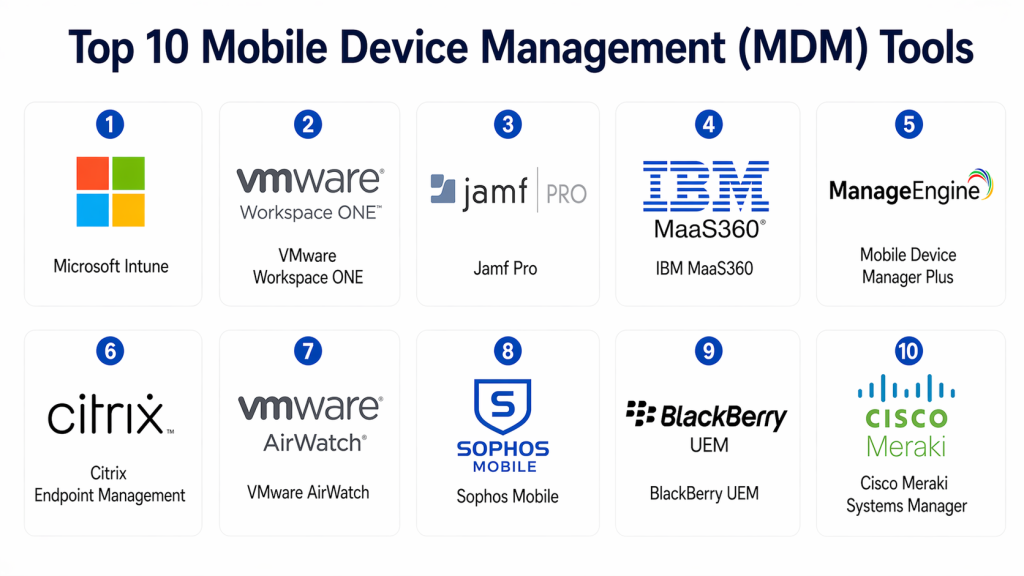
Top 10 Mobile Device Management (MDM) Tools
#1 — Microsoft Intune
Short description : Microsoft Intune provides cloud-based MDM for Windows, iOS, Android, and macOS. It enables centralized security, app deployment, and policy enforcement. Ideal for enterprises using Microsoft 365 and Azure environments.
Key Features
- Cross-platform device management
- App deployment and updates
- Security policy enforcement
- BYOD support
- Integration with Microsoft 365 and Azure AD
- Compliance reporting and analytics
Pros
- Deep integration with Microsoft ecosystem
- Scalable for large enterprises
Cons
- Complex for multi-vendor environments
- Licensing can be expensive
Platforms / Deployment
- Windows / macOS / iOS / Android / Web
- Cloud
Security & Compliance
- SSO/SAML, MFA, RBAC, encryption
- SOC 2, ISO 27001, GDPR
Integrations & Ecosystem
- Azure AD, Microsoft 365
- ITSM platforms
- Security monitoring tools
- API extensibility
Support & Community
Comprehensive documentation, enterprise support, active forums.
#2 — VMware Workspace ONE
Short description : Workspace ONE offers unified endpoint management with MDM, mobile app management, and AI-driven insights. It supports diverse device types and is suitable for large enterprises managing hybrid mobile environments.
Key Features
- Cross-platform MDM and unified endpoint management
- Mobile app deployment and updates
- Security compliance and policy enforcement
- AI-driven device insights
- Integration with ITSM and security platforms
Pros
- Strong cross-platform coverage
- Advanced analytics and automation
Cons
- Higher learning curve
- Pricing complexity
Platforms / Deployment
- Windows / macOS / iOS / Android / Web
- Cloud / Hybrid
Security & Compliance
- RBAC, encryption, audit logs
- Not publicly stated
Integrations & Ecosystem
- ITSM and monitoring integrations
- API support
- Security platforms
Support & Community
Enterprise-level support with training and documentation.
#3 — Jamf Pro
Short description :Jamf Pro specializes in Apple device management, offering MDM for macOS and iOS devices. It provides automated enrollment, app management, and security enforcement, ideal for organizations with Apple-heavy fleets.
Key Features
- Apple device onboarding and enrollment
- Security compliance and policy enforcement
- App deployment and updates
- Patch management
- Device inventory tracking
Pros
- Best-in-class Apple support
- Intuitive interface
Cons
- Limited non-Apple device support
- Can be costly for SMBs
Platforms / Deployment
- macOS / iOS / Web
- Cloud / On-prem
Security & Compliance
- RBAC, encryption, audit logs
- Not publicly stated
Integrations & Ecosystem
- Apple Business Manager
- ITSM integration
- APIs for automation
Support & Community
Comprehensive documentation, training, and active user community.
#4 — IBM MaaS360
Short description : IBM MaaS360 provides MDM with AI-powered insights for security, compliance, and lifecycle management. Suitable for enterprises with mobile-first or BYOD environments.
Key Features
- Mobile device management (iOS/Android)
- AI-driven threat detection and analytics
- Security compliance policies
- App and patch management
- Cloud and hybrid support
Pros
- Strong AI analytics
- Good for BYOD management
Cons
- Desktop management less comprehensive
- Complex configuration
Platforms / Deployment
- Windows / macOS / iOS / Android / Web
- Cloud / Hybrid
Security & Compliance
- RBAC, encryption, SSO/SAML
- Not publicly stated
Integrations & Ecosystem
- ITSM tools
- Security platforms
- APIs for automation
Support & Community
Enterprise support with documentation.
#5 — ManageEngine Mobile Device Manager Plus
Short description :ManageEngine MDM Plus manages smartphones, tablets, and laptops with device enrollment, app management, and security enforcement. It is ideal for SMBs and mid-market enterprises.
Key Features
- Device enrollment and configuration
- App deployment and updates
- Security and compliance policies
- Patch management
- Remote monitoring and reporting
Pros
- Affordable and easy to deploy
- Cloud and on-prem options
Cons
- Limited advanced analytics
- Less suitable for very large enterprises
Platforms / Deployment
- Windows / macOS / iOS / Android / Web
- Cloud / On-prem
Security & Compliance
- RBAC, audit logs
- Not publicly stated
Integrations & Ecosystem
- ITSM integration
- Monitoring platforms
- APIs for automation
Support & Community
Documentation, online support, active user community.
#6 — Citrix Endpoint Management
Short description : Citrix Endpoint Management provides MDM, app management, and security enforcement for mobile and desktop devices. Suitable for enterprises with hybrid workforces requiring secure access.
Key Features
- MDM and unified endpoint management
- App deployment and updates
- Security policy enforcement
- BYOD and corporate device management
- Reporting dashboards
Pros
- Strong hybrid workforce support
- Cross-platform coverage
Cons
- Can be complex to configure
- Pricing may be high
Platforms / Deployment
- Windows / macOS / iOS / Android / Web
- Cloud / Hybrid
Security & Compliance
- RBAC, encryption, SSO/SAML
- Not publicly stated
Integrations & Ecosystem
- ITSM integration
- Security platforms
- APIs
Support & Community
Enterprise-level support and documentation.
#7 — VMware AirWatch
Short description : AirWatch by VMware offers MDM for mobile devices with centralized app management, security, and policy enforcement. Ideal for enterprises seeking robust mobile device security.
Key Features
- Device enrollment and provisioning
- App and patch management
- Policy compliance and security
- BYOD management
- Reporting and analytics
Pros
- Enterprise-grade security
- Strong automation features
Cons
- Less cost-effective for SMBs
- Requires training for complex setups
Platforms / Deployment
- Windows / macOS / iOS / Android / Web
- Cloud / Hybrid
Security & Compliance
- RBAC, encryption, audit logs
- Not publicly stated
Integrations & Ecosystem
- ITSM platforms
- Security tools
- APIs
Support & Community
Documentation and enterprise support.
#8 — Sophos Mobile
Short description : Sophos Mobile provides MDM with security, patch management, and app deployment for mobile devices. Suitable for security-conscious SMBs and enterprises.
Key Features
- Device management and security
- App deployment and updates
- Patch management
- Compliance enforcement
- Reporting dashboards
Pros
- Strong security focus
- Easy to deploy
Cons
- Limited desktop support
- Advanced analytics less comprehensive
Platforms / Deployment
- Windows / macOS / iOS / Android / Web
- Cloud / Hybrid
Security & Compliance
- RBAC, encryption, audit logs
- Not publicly stated
Integrations & Ecosystem
- ITSM integration
- Security platforms
- APIs
Support & Community
Documentation and vendor support.
#9 — BlackBerry UEM
Short description : BlackBerry Unified Endpoint Management offers MDM with security-first approach for mobile devices. Ideal for highly regulated industries requiring strict compliance.
Key Features
- Mobile device management
- App deployment
- Security and compliance policies
- BYOD support
- Reporting and analytics
Pros
- Strong regulatory compliance
- Secure architecture
Cons
- Less suitable for small organizations
- Limited non-mobile support
Platforms / Deployment
- Windows / macOS / iOS / Android / Web
- Cloud / On-prem / Hybrid
Security & Compliance
- RBAC, encryption, audit logs
- Not publicly stated
Integrations & Ecosystem
- ITSM tools
- Security platforms
- APIs
Support & Community
Enterprise support and documentation.
#10 — Cisco Meraki Systems Manager
Short description :Cisco Meraki Systems Manager provides cloud-based MDM with app management, device compliance, and reporting dashboards. Suitable for SMBs and distributed enterprises.
Key Features
- Device enrollment and provisioning
- App deployment and patching
- Security and compliance enforcement
- BYOD and corporate device management
- Cloud-based dashboards
Pros
- Cloud-native and simple to deploy
- Scalable for SMBs
Cons
- Limited advanced analytics
- Less suitable for very large enterprises
Platforms / Deployment
- Windows / macOS / iOS / Android / Web
- Cloud
Security & Compliance
- RBAC, audit logs, encryption
- Not publicly stated
Integrations & Ecosystem
- ITSM and security platform integrations
- API support
- Cloud service connectors
Support & Community
Documentation and online support.
Comparison Table (Top 10)
| Tool Name | Best For | Platform(s) Supported | Deployment | Standout Feature | Public Rating |
|---|---|---|---|---|---|
| Microsoft Intune | Microsoft-heavy enterprise | Windows / macOS / iOS / Android | Cloud | Unified management | N/A |
| VMware Workspace ONE | Large cross-platform | Windows / macOS / iOS / Android | Cloud / Hybrid | AI insights | N/A |
| Jamf Pro | Apple device-heavy environments | macOS / iOS | Cloud / On-prem | Apple support | N/A |
| IBM MaaS360 | Mobile-first enterprises | Windows / macOS / iOS / Android | Cloud / Hybrid | AI insights | N/A |
| ManageEngine MDM Plus | SMBs / Mid-market | Windows / macOS / iOS / Android | Cloud / On-prem | Cost-effective | N/A |
| Citrix Endpoint Management | Hybrid workforce | Windows / macOS / iOS / Android | Cloud / Hybrid | Cross-platform security | N/A |
| VMware AirWatch | Enterprise mobile | Windows / macOS / iOS / Android | Cloud / Hybrid | Enterprise-grade security | N/A |
| Sophos Mobile | Security-focused SMB/Enterprise | Windows / macOS / iOS / Android | Cloud / Hybrid | Security focus | N/A |
| BlackBerry UEM | Highly regulated industries | Windows / macOS / iOS / Android | Cloud / On-prem / Hybrid | Regulatory compliance | N/A |
| Cisco Meraki Systems Manager | SMBs / distributed enterprises | Windows / macOS / iOS / Android | Cloud | Cloud-native simplicity | N/A |
Evaluation & Scoring of Mobile Device Management Tools
| Tool Name | Core (25%) | Ease (15%) | Integrations (15%) | Security (10%) | Performance (10%) | Support (10%) | Value (15%) | Weighted Total |
|---|---|---|---|---|---|---|---|---|
| Microsoft Intune | 10 | 7 | 9 | 9 | 9 | 8 | 6 | 8.55 |
| VMware Workspace ONE | 9 | 6 | 8 | 8 | 8 | 7 | 6 | 7.80 |
| Jamf Pro | 8 | 9 | 6 | 8 | 7 | 7 | 6 | 7.40 |
| IBM MaaS360 | 9 | 6 | 8 | 8 | 8 | 7 | 7 | 7.95 |
| ManageEngine MDM Plus | 8 | 9 | 7 | 7 | 7 | 7 | 8 | 7.75 |
| Citrix Endpoint Management | 8 | 7 | 7 | 8 | 7 | 7 | 7 | 7.45 |
| VMware AirWatch | 9 | 6 | 8 | 8 | 8 | 7 | 7 | 7.95 |
| Sophos Mobile | 8 | 8 | 7 | 7 | 7 | 7 | 7 | 7.50 |
| BlackBerry UEM | 8 | 6 | 7 | 9 | 7 | 7 | 7 | 7.50 |
| Cisco Meraki Systems Manager | 7 | 9 | 6 | 7 | 7 | 7 | 8 | 7.50 |
Interpretation: Weighted totals compare tools across functionality, usability, integrations, security, reliability, support, and value. Higher scores indicate enterprise suitability, mid-range scores are more SMB-focused.
Which Mobile Device Management (MDM) Tool Is Right for You?
Solo / Freelancer
Cloud-native tools like Meraki Systems Manager or Jamf Pro offer simple deployment and minimal IT overhead.
SMB
ManageEngine MDM Plus, Sophos Mobile, and Cisco Meraki Systems Manager provide cost-effective, easy-to-use solutions.
Mid-Market
IBM MaaS360, VMware Workspace ONE, and Citrix Endpoint Management offer advanced security, cross-platform support, and analytics for growing teams.
Enterprise
Microsoft Intune, VMware AirWatch, and Jamf Pro provide scalability, integration, and automation for complex, large-scale environments.
Budget vs Premium
SMBs prioritize affordability and ease of use; enterprises prioritize automation, compliance, and security.
Feature Depth vs Ease of Use
Enterprise-grade tools provide comprehensive management but require more training; SMB tools emphasize simplicity.
Integrations & Scalability
Ensure selected MDM integrates with ITSM, security platforms, cloud services, and scales with growth.
Security & Compliance Needs
Regulated industries should prioritize MDM with strong audit, encryption, and policy enforcement capabilities.
Frequently Asked Questions (FAQs)
1. What pricing models do MDM tools offer?
Most tools offer subscription pricing per device, with variations for cloud, on-prem, or hybrid deployments.
2. How long does implementation take?
Small teams can deploy cloud MDMs within days; enterprise deployments may take several weeks.
3. Can MDM tools integrate with ITSM platforms?
Yes, integration with ITSM, security, and monitoring platforms is standard.
4. Do MDM solutions support BYOD devices?
Yes, most tools provide BYOD management with separate compliance and security policies.
5. Can MDM handle patch management?
Yes, automated patching is a core feature to reduce vulnerabilities.
6. Are MDM tools secure?
Enterprise MDMs provide RBAC, encryption, SSO/MFA, and audit logs.
7. What are common mistakes in adoption?
Incomplete enrollment, lack of policy configuration, and ignoring cross-platform needs are frequent issues.
8. Can MDM tools scale with enterprise growth?
Yes, enterprise-grade MDMs can manage thousands of endpoints across geographies and device types.
9. Are there open-source MDM options?
Open-source MDMs exist but may lack enterprise support and automation features.
10. How do MDM tools improve productivity?
By automating device configuration, patching, app deployment, and policy enforcement, MDMs reduce IT workload and security risks.
Conclusion
Mobile Device Management tools are essential for organizations managing diverse and distributed mobile endpoints. SMBs can benefit from ManageEngine MDM Plus or Cisco Meraki for simplicity and cost-effectiveness, while enterprises gain value from Microsoft Intune, VMware AirWatch, and IBM MaaS360 for scalability, automation, and cross-platform security. Selecting the right MDM depends on organizational size, endpoint diversity, compliance requirements, and integration needs. To implement effectively, shortlist suitable tools, conduct pilot deployments, and validate security, automation, and integration capabilities to ensure comprehensive mobile device management.

Find Trusted Cardiac Hospitals
Compare heart hospitals by city and services — all in one place.
Explore Hospitals
MDM features and use cases are clearly explained, especially remote control and security aspects are quite helpful.