Introduction
Semantic Search Platforms are specialized tools designed to understand the intent behind user queries rather than just matching keywords. By leveraging natural language processing (NLP), knowledge graphs, and AI, these platforms provide more relevant, contextual search results, improving user engagement, conversion rates, and information discovery. with AI becoming more pervasive and data volumes exploding, semantic search is crucial for enterprises to derive actionable insights from unstructured and structured data.
Real-world use cases include:
- Enterprise knowledge management for internal documentation and wikis.
- eCommerce search optimization for personalized product recommendations.
- Customer support and chatbots to deliver precise answers quickly.
- Research and academic discovery tools for context-aware retrieval.
- Healthcare and life sciences databases for semantic patient data queries.
Evaluation criteria buyers should consider:
- AI/NLP capabilities
- Integration with existing data sources
- Scalability and performance
- Security and compliance
- Ease of use
- Real-time vs batch search support
- API availability
- Analytics and reporting
- Customization and extensibility
Best for: Enterprises, mid-market businesses, developers building search-driven applications, eCommerce platforms, and knowledge-intensive industries.
Not ideal for: Small businesses with limited datasets or basic keyword search needs; simple CMS search may suffice.
Key Trends in Semantic Search Platforms
- Increased adoption of AI-powered embeddings and vector search for better contextual understanding.
- Real-time semantic indexing for streaming and dynamic data environments.
- Multi-modal search integrating text, images, audio, and video queries.
- Compliance with GDPR, HIPAA, and other data protection regulations.
- Cloud-native deployments with hybrid integration capabilities.
- Cross-platform search spanning databases, knowledge graphs, and document repositories.
- Personalization using user behavior and intent-driven ranking.
- SaaS pricing models with usage-based scaling.
- Open-source frameworks enabling experimentation and customization.
- Integration with analytics, BI, and CRM platforms.
How We Selected These Tools (Methodology)
- Evaluated market adoption and enterprise mindshare.
- Analyzed AI/NLP capabilities and semantic reasoning depth.
- Tested performance, latency, and query accuracy in real-world scenarios.
- Assessed security posture and compliance with industry standards.
- Reviewed integration flexibility across APIs, connectors, and third-party systems.
- Checked scalability for large datasets and distributed environments.
- Compared ease of deployment, configuration, and management.
- Considered support tiers, community engagement, and developer resources.
- Balanced enterprise vs SMB suitability.
- Factored in pricing models and total cost of ownership.
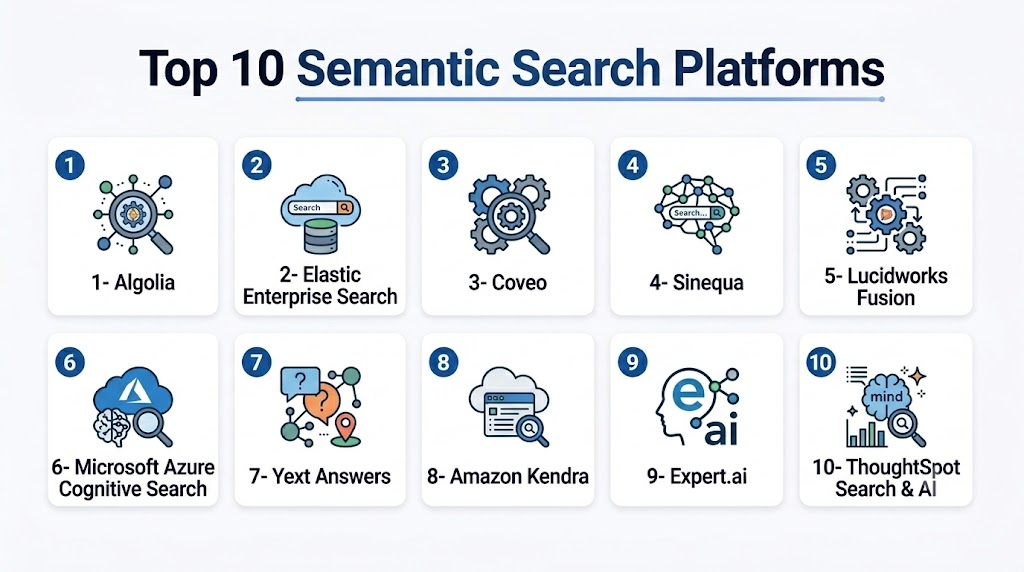
Top 10 Semantic Search Platforms
1 — Algolia Semantic Search
Short description: AI-powered search platform for enterprises and eCommerce, enhancing relevance and personalization.
Key Features
- Vector-based semantic search
- Multi-language support
- Synonym and typo tolerance
- Analytics and dashboard
- AI-powered ranking
- Personalization engines
Pros
- High relevance and fast query response
- Easy integration with web and mobile apps
Cons
- Enterprise pricing can be high
- Limited on-premises options
Platforms / Deployment
- Web, iOS, Android
- Cloud
Security & Compliance
- SOC 2, GDPR
- SSL encryption, RBAC
Integrations & Ecosystem
- API-first platform
- Connectors for Shopify, Magento, Salesforce, and custom apps
- Webhooks for analytics
Support & Community
- Tiered support plans
- Extensive documentation and community forums
2 — Elasticsearch / OpenSearch
Short description: Open-source search engine with semantic capabilities via embeddings and vector search.
Key Features
- Full-text and semantic search
- Scalable distributed architecture
- Real-time analytics
- Vector and keyword search support
- Machine learning integration
Pros
- Flexible and open-source
- Strong community and plugins ecosystem
Cons
- Requires in-house expertise
- Maintenance overhead for clusters
Platforms / Deployment
- Web / Linux / macOS / Windows
- Cloud / Self-hosted / Hybrid
Security & Compliance
- SSL/TLS, RBAC, audit logging
- GDPR and SOC 2 support varies
Integrations & Ecosystem
- APIs for multiple languages
- Kibana for visualization
- Connectors to SQL/NoSQL and data lakes
Support & Community
- Open-source community support
- Paid enterprise support available
3 — Microsoft Azure Cognitive Search
Short description: Cloud-native semantic search platform with AI enrichment for enterprise applications.
Key Features
- AI-driven semantic ranking
- Cognitive skills for enrichment
- Multi-language support
- Synonym and natural language queries
- Vector search
Pros
- Deep integration with Azure ecosystem
- Enterprise-grade SLA
Cons
- Cloud-dependent
- Pricing may scale quickly with volume
Platforms / Deployment
- Web
- Cloud
Security & Compliance
- Azure Security standards, SOC 2, ISO 27001, GDPR
- Role-based access control
Integrations & Ecosystem
- Azure AI services, Power BI, Microsoft 365
- REST APIs and SDKs
Support & Community
- Microsoft enterprise support
- Extensive docs and tutorials
4 — Lucidworks Fusion
Short description: AI-powered enterprise search platform with machine learning and semantic ranking.
Key Features
- Vector search and embeddings
- Smart query suggestions
- Analytics-driven relevance tuning
- AI-driven personalization
- Connectors to enterprise systems
Pros
- Strong AI and ML capabilities
- Flexible deployment options
Cons
- High implementation complexity
- Pricing on the higher end
Platforms / Deployment
- Web / Linux / Windows
- Cloud / Self-hosted / Hybrid
Security & Compliance
- SAML/SSO, SOC 2, GDPR
- Encryption at rest and in transit
Integrations & Ecosystem
- Connectors to SharePoint, Salesforce, databases
- API extensibility
- SDKs for Java, Python
Support & Community
- Enterprise support packages
- Active developer community
5 — Coveo
Short description: AI-powered search and recommendations platform for eCommerce and customer experience.
Key Features
- Semantic relevance scoring
- Predictive analytics
- Machine learning-based ranking
- Personalization
- Omnichannel indexing
Pros
- High ROI for customer-facing apps
- Easy-to-use dashboards
Cons
- Premium pricing
- Cloud-only deployment
Platforms / Deployment
- Web / iOS / Android
- Cloud
Security & Compliance
- SOC 2, GDPR, ISO 27001
- Access control and audit logging
Integrations & Ecosystem
- CRM and eCommerce connectors
- API and webhooks
- Analytics integration
Support & Community
- Enterprise support tiers
- Training and professional services
6 — Sinequa
Short description: Cognitive search platform for large enterprises with semantic search and NLP capabilities.
Key Features
- AI semantic analysis
- Multi-source connectivity
- Document enrichment
- Analytics dashboards
- Personalization
Pros
- Suitable for complex enterprise environments
- Rich analytics and reporting
Cons
- Onboarding complexity
- Cost can be high for SMBs
Platforms / Deployment
- Web
- Cloud / Self-hosted / Hybrid
Security & Compliance
- SAML, LDAP, MFA
- GDPR, SOC 2 compliance
Integrations & Ecosystem
- ERP, CRM, and data lake connectors
- REST APIs
- Workflow integration
Support & Community
- Dedicated support teams
- Documentation and training
7 — SearchBlox
Short description: Affordable semantic search and analytics platform suitable for SMBs and mid-market.
Key Features
- AI-driven relevance
- NLP processing
- Faceted navigation
- Document indexing
- Analytics
Pros
- Cost-effective
- Easy setup and deployment
Cons
- Limited scalability for very large datasets
- Fewer AI customization options
Platforms / Deployment
- Web / Windows / Linux
- Cloud / Self-hosted
Security & Compliance
- SSL, RBAC
- GDPR: Not publicly stated
Integrations & Ecosystem
- Connectors to SharePoint, SQL, NoSQL
- REST APIs
- Custom plugins
Support & Community
- Standard support packages
- Community forums
8 — Mindbreeze InSpire
Short description: Enterprise semantic search platform with AI-driven insight extraction and knowledge management.
Key Features
- AI semantic extraction
- Multi-source search
- NLP-based query understanding
- Knowledge analytics
- Personalization
Pros
- Strong enterprise integration
- Advanced AI insights
Cons
- Implementation requires expert services
- Pricing can be premium
Platforms / Deployment
- Web / Linux / Windows
- Cloud / Self-hosted / Hybrid
Security & Compliance
- SSO/SAML, encryption
- SOC 2, GDPR: Not publicly stated
Integrations & Ecosystem
- Connectors to enterprise systems
- APIs for custom apps
- Knowledge graph support
Support & Community
- Professional support services
- Documentation and training
9 — Elastic App Search
Short description: Simplified semantic search for web and enterprise applications leveraging Elasticsearch technology.
Key Features
- Semantic relevance tuning
- Faceted search
- Analytics dashboard
- Vector search support
- Multi-language
Pros
- Easy to integrate
- Open-source based flexibility
Cons
- Limited AI features compared to enterprise platforms
- Requires configuration for large datasets
Platforms / Deployment
- Web / Linux / Windows
- Cloud / Self-hosted
Security & Compliance
- SSL, API keys
- SOC 2, GDPR: Not publicly stated
Integrations & Ecosystem
- Elasticsearch ecosystem
- REST APIs and SDKs
- Analytics integration
Support & Community
- Community and enterprise support tiers
- Active forums
10 — Attivio / Lucidworks Fusion (Legacy)
Short description: Enterprise cognitive search with semantic capabilities, suitable for knowledge-intensive operations.
Key Features
- AI semantic ranking
- NLP processing
- Enterprise connectors
- Analytics dashboards
- Personalization
Pros
- Strong AI search capabilities
- Scalable for enterprise data
Cons
- Requires professional services
- Legacy platform may have modern limitations
Platforms / Deployment
- Web / Linux / Windows
- Cloud / Self-hosted / Hybrid
Security & Compliance
- SSL, SAML, audit logs
- SOC 2, GDPR: Not publicly stated
Integrations & Ecosystem
- Connectors to ERP, CRM, knowledge systems
- API-based integration
- SDK support
Support & Community
- Professional support packages
- Documentation available
Comparison Table (Top 10)
| Tool Name | Best For | Platform(s) Supported | Deployment | Standout Feature | Public Rating |
|---|---|---|---|---|---|
| Algolia | eCommerce, Enterprise | Web, iOS, Android | Cloud | Vector semantic search | N/A |
| Elasticsearch/OpenSearch | Developers, Data teams | Web, Linux, macOS, Windows | Cloud / Self-hosted / Hybrid | Open-source vector & keyword search | N/A |
| Azure Cognitive Search | Enterprises, Azure users | Web | Cloud | AI enrichment & semantic ranking | N/A |
| Lucidworks Fusion | Enterprises | Web, Linux, Windows | Cloud / Self-hosted / Hybrid | AI-powered semantic ranking | N/A |
| Coveo | eCommerce, CX | Web, iOS, Android | Cloud | Predictive analytics | N/A |
| Sinequa | Large Enterprises | Web | Cloud / Self-hosted / Hybrid | Enterprise semantic AI | N/A |
| SearchBlox | SMBs, Mid-market | Web, Linux, Windows | Cloud / Self-hosted | Cost-effective NLP search | N/A |
| Mindbreeze InSpire | Enterprise Knowledge | Web, Linux, Windows | Cloud / Self-hosted / Hybrid | Knowledge insight extraction | N/A |
| Elastic App Search | Web apps | Web, Linux, Windows | Cloud / Self-hosted | Simplified semantic search | N/A |
| Attivio / Lucidworks Fusion | Knowledge-intensive Enterprise | Web, Linux, Windows | Cloud / Self-hosted / Hybrid | Cognitive enterprise search | N/A |
Evaluation & Scoring of Semantic Search Platforms
| Tool Name | Core (25%) | Ease (15%) | Integrations (15%) | Security (10%) | Performance (10%) | Support (10%) | Value (15%) | Weighted Total |
|---|---|---|---|---|---|---|---|---|
| Algolia | 9 | 9 | 8 | 8 | 9 | 8 | 7 | 8.5 |
| Elasticsearch/OpenSearch | 8 | 7 | 9 | 7 | 8 | 7 | 8 | 7.8 |
| Azure Cognitive Search | 9 | 8 | 8 | 9 | 8 | 8 | 7 | 8.4 |
| Lucidworks Fusion | 9 | 7 | 8 | 8 | 9 | 8 | 7 | 8.1 |
| Coveo | 8 | 8 | 7 | 8 | 8 | 8 | 7 | 7.8 |
| Sinequa | 9 | 7 | 8 | 8 | 9 | 7 | 7 | 7.9 |
| SearchBlox | 7 | 8 | 7 | 7 | 7 | 7 | 8 | 7.4 |
| Mindbreeze InSpire | 8 | 7 | 8 | 8 | 8 | 7 | 7 | 7.7 |
| Elastic App Search | 7 | 8 | 7 | 7 | 7 | 7 | 8 | 7.4 |
| Attivio / Lucidworks Fusion | 8 | 7 | 8 | 8 | 8 | 7 | 7 | 7.7 |
Which Semantic Search Tool Is Right for You?
Solo / Freelancer
- SearchBlox or Elastic App Search are affordable and easy to deploy.
SMB
- Algolia or Coveo provide scalable search with intuitive interfaces and cloud support.
Mid-Market
- Lucidworks Fusion or Azure Cognitive Search provide strong AI semantic ranking and enterprise connectors.
Enterprise
- Sinequa, Mindbreeze InSpire, or Attivio offer extensive semantic capabilities and integration with large knowledge repositories.
Budget vs Premium
- Budget: SearchBlox, Elastic App Search
- Premium: Lucidworks Fusion, Coveo, Sinequa
Feature Depth vs Ease of Use
- Depth: Sinequa, Mindbreeze
- Ease: Algolia, Coveo
Integrations & Scalability
- Choose platforms with robust APIs and connectors like Azure Cognitive Search or Lucidworks Fusion.
Security & Compliance Needs
- Enterprises handling sensitive data should prioritize SOC 2, GDPR-compliant solutions such as Azure Cognitive Search or Sinequa.
Frequently Asked Questions (FAQs)
1. What is semantic search and why is it important?
Semantic search understands user intent and context, providing more relevant results than keyword-based search. It improves discovery, reduces search time, and enhances UX.
2. How do semantic search platforms integrate with existing systems?
Most platforms offer APIs, connectors, and SDKs to integrate with databases, knowledge bases, CRM, and eCommerce systems, allowing seamless search experience.
3. Are these platforms suitable for small businesses?
Some platforms like SearchBlox and Elastic App Search cater to SMBs with easy deployment and lower costs, while others are tailored for enterprise needs.
4. How is security ensured in semantic search?
Platforms implement SSO/SAML, RBAC, MFA, and encryption. Enterprise solutions also comply with GDPR, SOC 2, and ISO standards.
5. Can semantic search handle multi-language queries?
Yes, most modern semantic platforms support multi-language indexing and retrieval, ensuring global usability and accurate search results.
6. What is the typical pricing model?
Pricing can be subscription-based (SaaS) or usage-based, often scaling with query volume, indexed documents, or active users.
7. How long does implementation take?
Deployment can range from a few hours for SaaS solutions to several weeks for enterprise platforms requiring custom connectors and configuration.
8.Can semantic search be used for eCommerce recommendations?
Yes, AI-driven semantic search improves product discovery, personalization, and upselling in eCommerce platforms.
9. Are open-source options reliable?
Open-source platforms like Elasticsearch/OpenSearch are reliable but may require in-house expertise for maintenance and scaling.
10. How do I measure effectiveness of a semantic search platform?
Effectiveness is measured via relevance, precision, recall, user engagement metrics, and conversion improvements.
Conclusion
Semantic search platforms are transforming the way enterprises and applications understand and respond to queries. With AI-powered relevance, personalization, and contextual understanding, these tools are essential in knowledge-intensive industries. Selection depends on company size, data complexity, and required integrations. SMBs may prefer cost-effective options like SearchBlox, while large enterprises benefit from platforms like Sinequa or Azure Cognitive Search. Evaluate ease of use, scalability, security, and feature depth before adopting a solution. Piloting 2–3 platforms in your environment ensures you choose the best fit. Prioritize platforms with strong API support and AI capabilities to future-proof search experiences. Investing in semantic search can significantly enhance data discovery, improve user satisfaction, and drive operational efficiency.

Find Trusted Cardiac Hospitals
Compare heart hospitals by city and services — all in one place.
Explore Hospitals
A practical gap in semantic search platforms is how they handle context drift over time as embeddings and user intent patterns evolve. Without continuous re-embedding strategies and relevance monitoring, search quality can gradually degrade even if the system initially performs well.