Introduction
Site Search Tools are software solutions designed to enhance search functionality on websites, helping users quickly find relevant products, services, or content. They improve user experience, increase engagement, and can directly impact conversions. with the growing complexity of web content and e-commerce catalogs, having a robust site search solution is critical for businesses aiming to improve navigation and deliver personalized experiences.
Real-world use cases include:
- E-commerce sites improving product discovery and upselling.
- Media websites providing fast access to articles and videos.
- SaaS platforms offering contextual search across dashboards.
- Large corporate websites indexing documents, resources, and knowledge bases.
- Educational platforms enabling students to find courses, materials, or references efficiently.
Evaluation criteria for buyers:
- AI-powered search and personalization
- Relevance tuning and ranking
- Autocomplete and query suggestions
- Analytics and insights on user behavior
- Multi-language support and localization
- Integration with CMS, e-commerce, and analytics platforms
- Deployment flexibility (cloud, hybrid, on-prem)
- Security and compliance
- Ease of management and customization
- Cost-effectiveness and ROI
Best for: e-commerce, media, SaaS, and enterprise websites with complex content and user needs.
Not ideal for: small websites with minimal content or simple navigation requirements.
Key Trends in Site Search Tools
- AI-powered semantic and natural language search.
- Personalized search experiences based on user behavior.
- Autocomplete, typo correction, and predictive search.
- Multi-source content indexing, including product catalogs, blogs, and PDFs.
- Real-time search analytics for optimizing relevance and conversions.
- Integration with chatbots and virtual assistants for search-driven recommendations.
- Cloud-native solutions with scalable infrastructure.
- Headless search APIs for omnichannel delivery.
- Multi-language support for global audiences.
- Low-code or no-code configuration for business users.
How We Selected These Tools (Methodology)
- Market adoption and brand awareness.
- Feature coverage including relevance, AI, analytics, and integrations.
- Reliability and performance indicators.
- Security and compliance posture.
- Integration capabilities with CMS, e-commerce, and analytics tools.
- Scalability for large websites and catalogs.
- AI or ML capabilities for personalized results.
- Ease of use and learning curve for administrators.
- Support and documentation quality.
- Pricing and total value delivered.
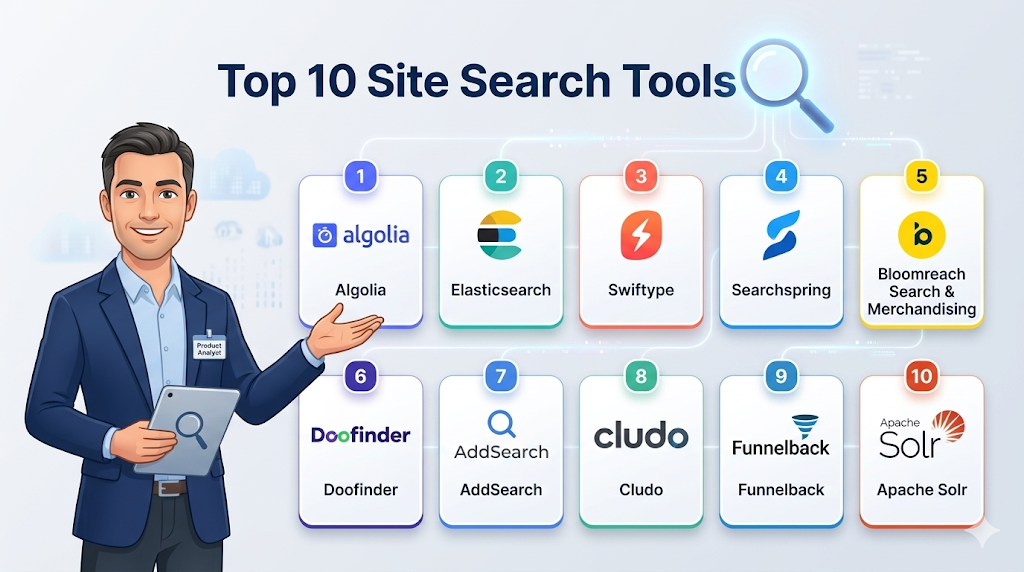
Top 10 Site Search Tools
1 — Algolia
Short description (2–3 lines): Fast, hosted search API enabling instant and relevant search results for websites and apps, widely used for e-commerce and SaaS platforms.
Key Features
- Instant search and autocomplete
- AI-driven ranking and personalization
- Multi-language and typo-tolerant search
- Analytics dashboard
- API-first architecture for developers
Pros
- Extremely fast search performance
- Flexible API integration
- Highly scalable
Cons
- Pricing can grow for large catalogs
- Requires developer configuration for advanced features
- Limited internal knowledge base indexing
Platforms / Deployment
Web, Cloud
Security & Compliance
SOC 2, GDPR, SSO
Integrations & Ecosystem
- Shopify, Magento, WordPress
- CRM and analytics integrations
- SDKs for web and mobile
Support & Community
Enterprise support tiers, active developer community, comprehensive documentation
2 — Elasticsearch (Elastic Site Search)
Short description: Open-source, scalable search engine that enables customizable site search across large datasets and web content.
Key Features
- Full-text search with advanced query DSL
- Real-time indexing
- AI-powered relevance scoring
- Analytics dashboards
- Multi-source connectors
Pros
- Highly flexible and customizable
- Open-source with enterprise support
- Scalable for large catalogs
Cons
- Requires technical expertise for setup
- Maintenance can be complex
- Advanced features need Elastic subscription
Platforms / Deployment
Web, Cloud, Self-hosted
Security & Compliance
SOC 2, GDPR, SSO
Integrations & Ecosystem
- CMS, e-commerce platforms
- REST APIs and SDKs
- Analytics and reporting tools
Support & Community
Elastic enterprise support, extensive documentation, active community
3 — Swiftype
Short description: Hosted search platform offering relevance tuning and analytics, focused on easy deployment for websites and internal search.
Key Features
- Custom relevance tuning
- Real-time indexing
- Analytics on search queries
- Multi-language support
- API and SDK integrations
Pros
- Easy to deploy
- Fast search performance
- Flexible configuration
Cons
- Limited AI personalization
- Less suitable for massive catalogs
- Integration ecosystem smaller than competitors
Platforms / Deployment
Web, Cloud
Security & Compliance
SOC 2, GDPR, SSO
Integrations & Ecosystem
- CMS and e-commerce platforms
- Analytics and CRM connectors
- APIs and SDKs
Support & Community
Documentation, email support, developer forum
4 — Searchspring
Short description: Site search and merchandising platform for e-commerce, combining search, filtering, and AI-driven recommendations.
Key Features
- Faceted and filterable search
- AI-powered product recommendations
- Analytics and insights
- Merchandising tools
- API and integration support
Pros
- Strong e-commerce focus
- Personalization and merchandising combined
- Analytics for search optimization
Cons
- Primarily for e-commerce
- Enterprise features require premium plan
- Limited content search for non-product pages
Platforms / Deployment
Web, Cloud
Security & Compliance
SOC 2, GDPR
Integrations & Ecosystem
- Shopify, Magento, BigCommerce
- Analytics and CRM connectors
- API access
Support & Community
Enterprise support, documentation, customer success
5 — Bloomreach Search & Merchandising
Short description: AI-driven site search platform combining search, merchandising, and analytics for e-commerce and digital experiences.
Key Features
- AI relevance and personalization
- Product recommendation engine
- Analytics dashboards
- Multi-language and multi-catalog support
- API-first integration
Pros
- Strong AI and personalization
- Multi-channel commerce support
- Scalable for large e-commerce sites
Cons
- Premium pricing
- Setup complexity
- Limited CMS-native features
Platforms / Deployment
Web, Cloud
Security & Compliance
SOC 2, GDPR, ISO 27001
Integrations & Ecosystem
- E-commerce platforms
- Analytics and personalization connectors
- API and SDK support
Support & Community
Enterprise support, technical documentation, customer success
6 — Doofinder
Short description: Hosted site search for e-commerce and content-heavy websites with AI-driven relevance and filtering.
Key Features
- Typo-tolerant search
- Faceted navigation
- Real-time indexing
- Analytics and insights
- API integration
Pros
- Quick deployment
- Good e-commerce support
- Easy customization
Cons
- Limited enterprise features
- Smaller integration ecosystem
- Mostly cloud-only
Platforms / Deployment
Web, Cloud
Security & Compliance
SOC 2, GDPR
Integrations & Ecosystem
- Shopify, WooCommerce, Magento
- Analytics platforms
- REST API
Support & Community
Documentation, email support, community forum
7 — AddSearch
Short description: Simple and fast hosted search solution for small to mid-size websites and digital experiences.
Key Features
- Instant search and autocomplete
- Real-time indexing
- Analytics dashboard
- Custom relevance tuning
- Multi-language support
Pros
- Easy setup for small sites
- Affordable pricing
- Fast search performance
Cons
- Limited enterprise capabilities
- Fewer integrations
- Advanced AI features limited
Platforms / Deployment
Web, Cloud
Security & Compliance
Not publicly stated
Integrations & Ecosystem
- CMS and website platforms
- API access
- Analytics integrations
Support & Community
Documentation, email support, limited community
8 — Cludo
Short description: Cloud-based site search platform with analytics, personalization, and relevance tuning for websites and intranets.
Key Features
- AI-powered relevance
- Analytics and reporting
- Personalization
- Multi-language support
- API and integration support
Pros
- Good analytics and reporting
- Personalization support
- Cloud-based and scalable
Cons
- Enterprise features require premium plan
- Setup may require configuration
- Limited open-source flexibility
Platforms / Deployment
Web, Cloud
Security & Compliance
SOC 2, GDPR
Integrations & Ecosystem
- CMS platforms, e-commerce
- CRM and analytics connectors
- API access
Support & Community
Documentation, support portal, email support
9 — Funnelback
Short description: Enterprise site search and analytics platform with content crawling, AI-based ranking, and advanced search capabilities.
Key Features
- Full content crawling and indexing
- AI and ML relevance
- Analytics dashboards
- Personalization support
- API integration
Pros
- Enterprise-grade search
- Strong analytics and reporting
- Scalable and customizable
Cons
- Complex setup
- Premium pricing
- Limited cloud-only flexibility
Platforms / Deployment
Web, Cloud, Hybrid
Security & Compliance
SOC 2, GDPR
Integrations & Ecosystem
- CMS and e-commerce platforms
- API and SDK support
- Analytics integration
Support & Community
Enterprise support, documentation, professional services
10 — Apache Solr
Short description: Open-source enterprise search platform enabling highly customizable site search and analytics capabilities.
Key Features
- Full-text and faceted search
- Multi-source indexing
- Real-time search
- Custom ranking and scoring
- API integration
Pros
- Open-source and highly flexible
- Scalable for large websites
- Strong developer community
Cons
- Requires technical expertise
- Setup and maintenance complexity
- UI is not modern out-of-the-box
Platforms / Deployment
Web, Cloud, Self-hosted
Security & Compliance
Not publicly stated
Integrations & Ecosystem
- CMS and e-commerce platforms
- APIs and SDKs
- Analytics integration
Support & Community
Developer community, forums, documentation
Comparison Table (Top 10)
| Tool Name | Best For | Platform(s) Supported | Deployment | Standout Feature | Public Rating |
|---|---|---|---|---|---|
| Algolia | E-commerce and SaaS | Web | Cloud | Instant search and autocomplete | N/A |
| Elasticsearch | Enterprise web content | Web | Cloud / Self-hosted | Full-text and multi-source indexing | N/A |
| Swiftype | Websites and internal search | Web | Cloud | Relevance tuning | N/A |
| Searchspring | E-commerce search & merchandising | Web | Cloud | AI-driven recommendations | N/A |
| Bloomreach | AI-driven e-commerce search | Web | Cloud | Personalization & analytics | N/A |
| Doofinder | E-commerce & content-heavy sites | Web | Cloud | Faceted and typo-tolerant search | N/A |
| AddSearch | Small to mid-size websites | Web | Cloud | Simple setup and fast search | N/A |
| Cludo | Website and intranet search | Web | Cloud | Analytics and personalization | N/A |
| Funnelback | Enterprise content search | Web | Cloud / Hybrid | Content crawling & AI ranking | N/A |
| Apache Solr | Developer-focused, customizable | Web | Cloud / Self-hosted | Highly configurable search engine | N/A |
Evaluation & Scoring of Site Search Tools
| Tool Name | Core (25%) | Ease (15%) | Integrations (15%) | Security (10%) | Performance (10%) | Support (10%) | Value (15%) | Weighted Total (0–10) |
|---|---|---|---|---|---|---|---|---|
| Algolia | 10 | 9 | 9 | 9 | 10 | 8 | 7 | 9.0 |
| Elasticsearch | 9 | 7 | 9 | 9 | 9 | 8 | 8 | 8.4 |
| Swiftype | 8 | 8 | 7 | 8 | 8 | 7 | 7 | 7.7 |
| Searchspring | 9 | 7 | 8 | 8 | 9 | 7 | 7 | 8.1 |
| Bloomreach | 9 | 7 | 8 | 9 | 9 | 8 | 7 | 8.4 |
| Doofinder | 8 | 8 | 7 | 8 | 8 | 7 | 7 | 7.7 |
| AddSearch | 7 | 9 | 6 | 7 | 7 | 6 | 8 | 7.3 |
| Cludo | 8 | 8 | 7 | 8 | 8 | 7 | 7 | 7.7 |
| Funnelback | 9 | 7 | 8 | 9 | 9 | 8 | 7 | 8.3 |
| Apache Solr | 8 | 7 | 8 | 8 | 8 | 7 | 8 | 7.9 |
Interpretation: Weighted totals reflect how each tool balances search relevance, AI, integration, scalability, and value. Organizations should compare according to catalog size, site complexity, and deployment needs.
Which Site Search Tool Is Right for You?
Solo / Freelancer
AddSearch or Algolia for quick integration with small websites and minimal maintenance.
SMB
Swiftype or Doofinder for easy deployment, analytics, and relevance tuning.
Mid-Market
Searchspring or Cludo for personalization, analytics, and e-commerce focus.
Enterprise
Elastic, Bloomreach, and Funnelback for large catalogs, multi-source indexing, and AI-driven results.
Budget vs Premium
Open-source (Solr, Elasticsearch) for cost-effectiveness; premium tools offer AI personalization and analytics.
Feature Depth vs Ease of Use
Algolia and AddSearch prioritize speed and simplicity; Bloomreach and Searchspring offer deeper AI-driven capabilities.
Integrations & Scalability
Enterprises require connectors for CMS, CRM, e-commerce, and analytics platforms.
Security & Compliance Needs
SOC 2, GDPR, SSO/MFA, and role-based access are critical for enterprise deployment.
Frequently Asked Questions (FAQs)
- What is a site search tool?
A solution that enables users to quickly find content, products, or resources on a website with relevance and speed. - How does AI improve site search?
AI enhances relevance, autocomplete, personalization, and semantic understanding for more accurate results. - Are site search tools suitable for SMBs?
Yes, cloud-hosted tools like Swiftype or Doofinder provide easy setup and scalable performance. - Can they integrate with other systems?
Most tools provide APIs, plugins, or SDKs to connect with CMS, e-commerce, and analytics platforms. - Do site search tools support multiple languages?
Yes, many offer multi-language indexing and query handling for global audiences. - How do I measure search effectiveness?
Analytics track search queries, click-through rates, zero-result rates, and conversion metrics. - Can these tools handle large catalogs?
Yes, platforms like Algolia, Elasticsearch, and Bloomreach are built for high-volume data. - Are these tools secure?
Enterprise-grade tools offer encryption, SOC 2 compliance, GDPR, SSO, and role-based access. - What is the difference between hosted and self-hosted solutions?
Hosted solutions are cloud-managed for convenience; self-hosted gives more control but requires internal maintenance. - What should I prioritize when choosing a tool?
Consider catalog size, AI relevance, integrations, deployment flexibility, security, and cost.
Conclusion
Site Search Tools are critical for enhancing website navigation, improving engagement, and increasing conversions. SMBs can leverage AddSearch or Swiftype for ease and affordability, while enterprises benefit from Algolia, Elastic, or Bloomreach for AI-driven, scalable search experiences. Evaluate integration, AI relevance, analytics, and compliance before deployment. Shortlist 2–3 tools, run pilots, and verify relevance tuning and analytics capabilities. Regular monitoring ensures search remains accurate and actionable. The right solution improves user experience, drives revenue, and enables data-driven optimization.

Find Trusted Cardiac Hospitals
Compare heart hospitals by city and services — all in one place.
Explore Hospitals
Nice article 👍 I didn’t know much about site search tools before, but now I understand how they help improve user experience and make content easier to find. I’d like to learn more about how these tools are implemented in real websites.