Introduction
Email marketing software enables businesses to design, deliver, and optimize campaigns to engage customers, nurture leads, and drive conversions. Modern platforms offer automation, AI-driven personalization, multi-channel integration, and advanced analytics to support measurable ROI.
Businesses use email marketing to onboard new users, re-engage dormant customers, promote new products, nurture leads, and track campaign performance. Choosing the right software depends on multiple factors, including company size, integration needs, and desired automation sophistication.
Best for: Marketing teams, SMBs, enterprises, e-commerce businesses, SaaS companies, and agencies seeking automated, data-driven engagement.
Not ideal for: Organizations with minimal email campaigns or relying solely on transactional messages, where lightweight SMTP tools suffice.
Real-World Case Examples
Case 1 — E-Commerce Brand Boosting Sales:
An online apparel retailer integrated an AI-powered email marketing platform to segment customers by purchase behavior. Automated campaigns targeting abandoned carts increased recovery rates by 25%, while personalized product recommendations boosted repeat purchases by 18%.
Case 2 — SaaS Company Improving Onboarding:
A B2B SaaS provider implemented automated onboarding sequences using triggered emails based on user activity. This reduced churn by 15% and increased trial-to-paid conversions by 22% within three months.
Case 3 — Creator Growing Subscriber Base:
A digital content creator leveraged a platform focused on creators to automate newsletters and segment subscribers by interest. Engagement rates doubled, and premium subscription sign-ups increased by 35%.
Evaluation Criteria for Buyers
When selecting an email marketing platform, buyers should evaluate:
- Ease of Use: Intuitive interfaces and campaign builder flexibility.
- Automation Capabilities: Support for multi-step workflows, triggers, and AI-driven personalization.
- Integration Options: Ability to connect with CRM, e-commerce, analytics, and other marketing tools.
- Deliverability & Compliance: SPF/DKIM setup, GDPR, SOC 2, and other regulations.
- Segmentation & Targeting: Support for behavioral, transactional, and demographic segmentation.
- Analytics & Reporting: Real-time dashboards, A/B testing, and ROI tracking.
- Scalability: Capacity to manage growing subscriber lists efficiently.
- AI Features: Predictive segmentation, content optimization, subject line suggestions.
- Cost & Value: Transparent pricing relative to features and subscriber volume.
- Support & Community: Onboarding resources, documentation, and active user community.
Key Trends in Email Marketing Software
- AI-driven personalization and predictive engagement scoring
- Multi-channel automation workflows (email, SMS, push)
- Advanced segmentation based on behavioral and transactional data
- Privacy-focused analytics and GDPR compliance
- Native integrations with CRM, e-commerce, and analytics platforms
- Deliverability monitoring and anti-spam compliance
- Responsive design and accessibility-first templates
- AI-generated subject lines and copy optimization
- Flexible subscription models including pay-per-email
- Real-time dashboards with actionable insights
How We Selected These Tools
- Market adoption and recognition among marketers
- Feature completeness, including automation, personalization, and analytics
- Reliability and performance based on uptime and deliverability
- Security posture: encryption, compliance certifications, access control
- Integration breadth with major CRMs, e-commerce, analytics tools
- User fit across company sizes and industries
- Ease of onboarding and deployment
- Support responsiveness and community engagement
- AI and automation readiness
- Pricing transparency and cost-effectiveness
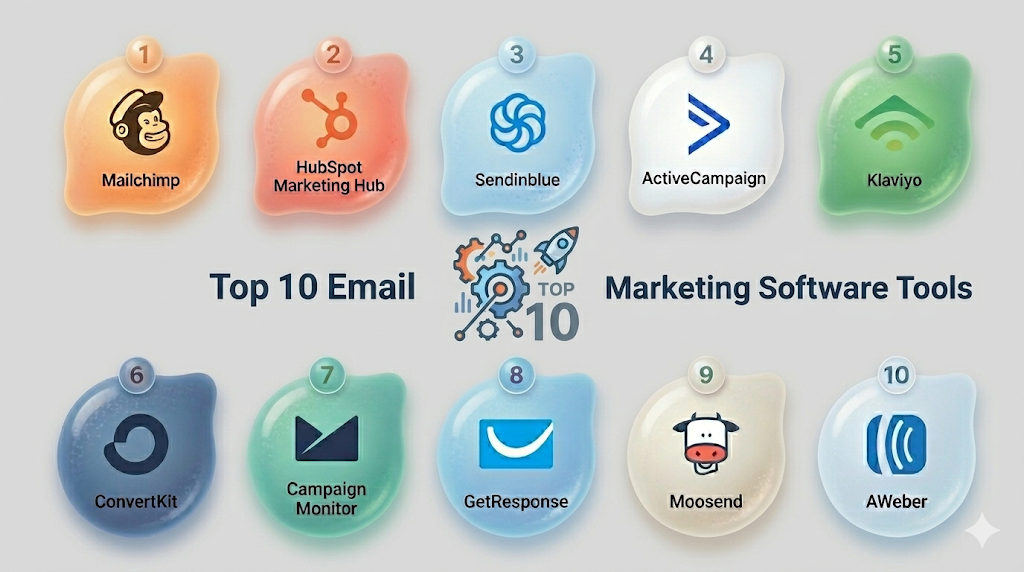
Top 10 Email Marketing Software Tools
1- Mailchimp
Key Features
- Drag-and-drop campaign builder
- Pre-built automation workflows
- AI-powered segmentation and recommendations
- Multi-channel marketing integrations
- Detailed analytics and A/B testing
- Predictive engagement scoring
- Responsive email templates
Pros
- Intuitive for beginners
- Strong integration ecosystem
- AI insights enhance campaign performance
Cons
- Advanced features can be costly
- Some reports limited in free plan
- Template flexibility constrained
Platforms / Deployment
- Web, iOS, Android
- Cloud
Security & Compliance
- SOC 2, GDPR, TLS encryption, MFA
Integrations & Ecosystem
- Shopify, WooCommerce, Salesforce, Zapier, Google Analytics, API access
Support & Community
- Tutorials, email and chat support, active forums
2- HubSpot Marketing Hub
Key Features
- Automated campaigns with behavioral triggers
- Dynamic content personalization
- Lead scoring and lifecycle tracking
- A/B testing
- CRM-driven segmentation
- AI subject line suggestions
Pros
- Comprehensive solution
- Seamless CRM integration
- Advanced reporting dashboards
Cons
- Higher cost
- Complexity for small teams
- Learning curve for advanced workflows
Platforms / Deployment
- Web, iOS, Android
- Cloud
Security & Compliance
- SOC 2, GDPR, SAML SSO, MFA
Integrations & Ecosystem
- Salesforce, Shopify, WordPress, analytics connectors, APIs
Support & Community
- Dedicated support tiers, training resources, community forums
3- Sendinblue
Key Features
- Email and SMS campaigns
- Automation workflow editor
- Transactional email API
- Real-time reporting
- Segmentation and personalization
- Template library
Pros
- Affordable for SMBs
- Multi-channel capabilities
- Easy interface
Cons
- Limited advanced analytics
- Less robust automation
- Moderate template flexibility
Platforms / Deployment
- Web, iOS, Android
- Cloud
Security & Compliance
- GDPR, TLS encryption
Integrations & Ecosystem
- Shopify, WooCommerce, WordPress, API access, CRM connectors
Support & Community
- Email and chat support, tutorials, community forum
4- ActiveCampaign
Key Features
- Advanced automation builder
- Conditional content personalization
- Lead scoring and tagging
- Split testing
- CRM integration
- SMS and chat messaging
Pros
- Powerful automation
- Good mid-market fit
- Multi-channel integration
Cons
- Can overwhelm beginners
- UI complexity
- Reporting dashboards could improve
Platforms / Deployment
- Web, iOS, Android
- Cloud
Security & Compliance
- GDPR, SOC 2, MFA
Integrations & Ecosystem
- Shopify, Salesforce, Zapier, WooCommerce, API access
Support & Community
- Email and chat support, knowledge base, online community
5- Klaviyo
Key Features
- Advanced segmentation
- Personalized product recommendations
- Multi-channel automation
- Deep e-commerce integrations
- Predictive analytics
- Template library
Pros
- Strong e-commerce ROI analytics
- AI-based product recommendations
- Workflow customization
Cons
- Cost scales with subscribers
- Learning curve
- Limited non-e-commerce templates
Platforms / Deployment
- Web
- Cloud
Security & Compliance
- GDPR, SOC 2, TLS encryption
Integrations & Ecosystem
- Shopify, Magento, WooCommerce, API support, analytics
Support & Community
- Email support, onboarding, guides, active community
6- ConvertKit
Key Features
- Visual automation builder
- Subscriber tagging and segmentation
- Landing page builder
- Newsletter campaigns
- Creator tool integrations
- Reporting dashboards
Pros
- Easy for creators and small teams
- Content-driven engagement
- Simple automation
Cons
- Limited advanced analytics
- Not enterprise-suited
- Minimal templates
Platforms / Deployment
- Web, iOS, Android
- Cloud
Security & Compliance
- GDPR, TLS encryption
Integrations & Ecosystem
- Shopify, WordPress, Teachable, Zapier, API
Support & Community
- Email support, tutorials, creator forums, webinars
7- Campaign Monitor
Key Features
- Drag-and-drop designer
- Automated workflows
- Segmentation and personalization
- Analytics dashboards
- A/B testing
- Subscriber management
Pros
- Excellent templates
- Reliable deliverability
- Easy interface
Cons
- Limited advanced automation
- Pricing rises with list size
- Fewer integrations
Platforms / Deployment
- Web
- Cloud
Security & Compliance
- GDPR, TLS encryption
Integrations & Ecosystem
- Shopify, Salesforce, WordPress, API access, automation tools
Support & Community
- Email support, tutorials, forums
8- GetResponse
Key Features
- Automation workflows
- Landing page builder
- Webinars and lead generation
- A/B testing and analytics
- E-commerce integrations
- AI-driven optimization
Pros
- Multi-channel marketing
- SMB and mid-market fit
- AI features enhance targeting
Cons
- UI complexity
- Higher-tier plans required for some features
- Learning curve
Platforms / Deployment
- Web, iOS, Android
- Cloud
Security & Compliance
- GDPR, TLS encryption
Integrations & Ecosystem
- Shopify, Magento, WooCommerce, CRM connectors, API
Support & Community
- Email and chat support, tutorials, webinars, online community
9- Moosend
Key Features
- Drag-and-drop editor
- AI personalization
- Automation workflows
- Segmentation and targeting
- Analytics and reporting
- E-commerce integrations
Pros
- Cost-effective
- Easy automation
- Intuitive UI
Cons
- Limited analytics
- Smaller integration ecosystem
- Not for large enterprises
Platforms / Deployment
- Web
- Cloud
Security & Compliance
- GDPR, TLS encryption
Integrations & Ecosystem
- Shopify, WooCommerce, Zapier, APIs, CRM
Support & Community
- Email support, tutorials, community forums
10- AWeber
Key Features
- Automation and drip campaigns
- Segmentation and tagging
- Drag-and-drop editor
- Analytics dashboards
- Template library
- Platform integrations
Pros
- Simple use
- Reliable deliverability
- Good for SMBs and creators
Cons
- Limited advanced automation
- Fewer AI features
- Basic reporting
Platforms / Deployment
- Web, iOS, Android
- Cloud
Security & Compliance
- GDPR, TLS encryption
Integrations & Ecosystem
- Shopify, WordPress, PayPal, API support, third-party integrations
Support & Community
- Email support, knowledge base, community forums
Comparison Table (Top 10)
| Tool Name | Best For | Platform(s) Supported | Deployment | Standout Feature | Public Rating |
|---|---|---|---|---|---|
| Mailchimp | SMBs, Agencies | Web, iOS, Android | Cloud | AI-driven insights | N/A |
| HubSpot Marketing Hub | Enterprise marketing | Web, iOS, Android | Cloud | CRM integration + automation | N/A |
| Sendinblue | SMBs, Multi-channel | Web, iOS, Android | Cloud | Email + SMS | N/A |
| ActiveCampaign | SMBs, Mid-market | Web, iOS, Android | Cloud | Advanced automation | N/A |
| Klaviyo | E-commerce | Web | Cloud | Predictive analytics | N/A |
| ConvertKit | Creators, Bloggers | Web, iOS, Android | Cloud | Visual automation | N/A |
| Campaign Monitor | SMBs, Agencies | Web | Cloud | Design-focused templates | N/A |
| GetResponse | SMBs, Mid-market | Web, iOS, Android | Cloud | Webinars + landing pages | N/A |
| Moosend | SMBs | Web | Cloud | AI personalization | N/A |
| AWeber | Creators, SMBs | Web, iOS, Android | Cloud | Ease-of-use | N/A |
Evaluation & Scoring
| Tool Name | Core | Ease | Integrations | Security | Performance | Support | Value | Weighted Total |
|---|---|---|---|---|---|---|---|---|
| Mailchimp | 9 | 9 | 8 | 8 | 9 | 8 | 8 | 8.7 |
| HubSpot Marketing Hub | 10 | 7 | 9 | 9 | 9 | 9 | 7 | 8.5 |
| Sendinblue | 8 | 8 | 7 | 8 | 8 | 8 | 9 | 8.0 |
| ActiveCampaign | 9 | 7 | 8 | 8 | 8 | 8 | 8 | 8.1 |
| Klaviyo | 9 | 8 | 7 | 8 | 8 | 8 | 7 | 7.9 |
| ConvertKit | 7 | 9 | 7 | 8 | 7 | 7 | 8 | 7.6 |
| Campaign Monitor | 7 | 8 | 6 | 8 | 7 | 7 | 7 | 7.3 |
| GetResponse | 8 | 7 | 8 | 8 | 8 | 8 | 7 | 7.9 |
| Moosend | 7 | 8 | 6 | 8 | 7 | 7 | 9 | 7.5 |
| AWeber | 7 | 8 | 6 | 8 | 7 | 7 | 8 | 7.5 |
Interpretation: Weighted totals highlight comparative strengths. Core features and automation drive higher scores, while ease-of-use and integration breadth differentiate SMB-friendly tools.
Which Email Marketing Tool Is Right for You?
Solo / Freelancer
- ConvertKit or AWeber for simple campaigns and automation
- Low cost, easy to learn
SMB
- Mailchimp or Sendinblue for multi-channel campaigns
- Balanced cost and feature set
Mid-Market
- ActiveCampaign or GetResponse for advanced workflows and analytics
Enterprise
- HubSpot Marketing Hub or Klaviyo for deep automation, AI, and multi-channel campaigns
Budget vs Premium
- Budget: Moosend, ConvertKit, AWeber
- Premium: HubSpot, Klaviyo, ActiveCampaign
Feature Depth vs Ease of Use
- Creators: ConvertKit, AWeber
- E-commerce: Klaviyo, HubSpot
Integrations & Scalability
- SMB to mid-market: Mailchimp, Sendinblue
- Enterprise: HubSpot, ActiveCampaign
Security & Compliance Needs
- HubSpot, Mailchimp, ActiveCampaign for higher standards
- SMB-focused tools sufficient for GDPR, TLS, basic audit needs
Frequently Asked Questions
1. What pricing models do email marketing tools use?
Most platforms offer tiered subscriptions based on the number of subscribers or emails sent. Some include pay-per-email or enterprise pricing. Costs can vary based on automation and AI features.
2. How quickly can I start sending campaigns?
Cloud-based platforms allow onboarding in just a few hours. Pre-built templates and automation wizards make it possible to launch your first campaigns immediately.
3. Can these tools integrate with my CRM?
Yes, most tools provide native CRM integrations or API access. This ensures seamless syncing of contacts, lead data, and campaign metrics across systems.
4. How do I ensure high deliverability?
Ensure SPF/DKIM records are correctly configured. AI-driven send-time optimization, spam compliance checks, and regular list cleaning help maintain deliverability rates.
5. Are automation workflows difficult to set up?
Drag-and-drop editors simplify automation setup for most users. Advanced workflows may require planning, but platforms provide templates and tutorials for guidance.
6. Can these tools handle large subscriber lists?
Yes, enterprise-grade platforms can manage millions of contacts efficiently. Performance scales with proper segmentation and optimized sending schedules.
7. Are AI features worth using?
AI helps with personalization, subject line optimization, and predictive segmentation. Using AI can increase engagement rates and improve ROI for campaigns.
8. How secure is subscriber data?
Leading tools use TLS encryption, GDPR compliance, and optional MFA/SSO. Regular audits and access controls protect sensitive subscriber information.
9. Can I switch platforms easily?
Most platforms allow list export and import. Migration may require rebuilding automation and templates, so planning ahead is recommended.
10. Are multi-channel campaigns supported?
Many platforms now include SMS, push, and social integrations alongside email. This enables cohesive, cross-channel marketing campaigns from a single interface.
Conclusion
Email marketing software is a core tool for driving customer engagement, nurturing leads, and increasing conversions across industries. SMBs benefit from easy-to-use, cost-effective platforms, while enterprises gain advanced automation, AI-driven personalization, and deep analytics. Real-world cases show measurable improvements in sales, onboarding, and subscriber growth. Choosing the right tool depends on business size, integration needs, and marketing complexity. Buyers should shortlist 2–3 platforms, run pilot campaigns to test features and deliverability, and validate security and compliance before full-scale deployment. With the right solution, organizations can maximize ROI, enhance customer experiences, and scale their marketing operations effectively.

Find Trusted Cardiac Hospitals
Compare heart hospitals by city and services — all in one place.
Explore Hospitals
Email marketing software is most valuable when it helps businesses create, automate, personalize, and measure email campaigns through a centralized platform. By providing email campaign creation, templates, contact segmentation, automation workflows, personalization, A/B testing, scheduling, analytics, deliverability monitoring, list management, and integration with CRM, e-commerce, and marketing systems, these platforms enable organizations to improve audience engagement, nurture leads, increase conversions, streamline marketing operations, and make more informed campaign decisions.