Introduction
Privacy Management Tools are software solutions that help organizations collect, manage, protect, and govern personal data in compliance with global privacy regulations like GDPR, CCPA, and other data protection laws. These tools enable businesses to understand what personal data they hold, where it is stored, how it is used, and how it should be protected. In today’s data-driven world, organizations process massive amounts of user information across cloud platforms, SaaS applications, and internal systems. This increases privacy risks, regulatory pressure, and the complexity of managing sensitive data responsibly. Modern privacy management platforms use automation, AI, and data mapping to simplify compliance and reduce manual effort. They help organizations avoid fines, improve trust, and strengthen data governance.
Common Real-world use cases include:
- GDPR and CCPA compliance management
- Data mapping and data discovery across systems
- Automating user data subject requests (DSARs)
- Consent management across websites and apps
- Vendor risk and third-party data tracking
Buyers should Evaluate:
- Data discovery and classification accuracy
- Automation of compliance workflows
- Integration with cloud and SaaS systems
- DSAR handling efficiency
- Policy management capabilities
- Reporting and audit readiness
- Scalability across global systems
- Ease of deployment and usability
- Security controls and encryption
- Multi-jurisdiction compliance support
Best for: Enterprises, SaaS companies, fintech, healthcare, e-commerce, and organizations handling large volumes of personal data.
Not ideal for: Very small businesses with minimal user data processing or organizations without regulatory compliance requirements.
Key Trends in Privacy Management Tools
- AI-powered data discovery and classification
- Automated compliance workflows for global regulations
- Real-time privacy risk monitoring
- Expansion of consent and preference management systems
- Integration with cybersecurity and data governance platforms
- Privacy-by-design adoption in software development
- Cross-border data transfer compliance automation
- Increased regulatory enforcement worldwide
- Unified data governance + privacy platforms
- API-first privacy automation systems
How We Selected These Tools (Methodology)
- Global adoption across regulated industries
- Strength of privacy compliance automation
- Data discovery and classification accuracy
- Integration with cloud and enterprise systems
- Support for GDPR, CCPA, and similar laws
- Workflow automation capabilities
- Scalability for enterprise environments
- Security and encryption standards
- Vendor reliability and maturity
- Ease of implementation and usability
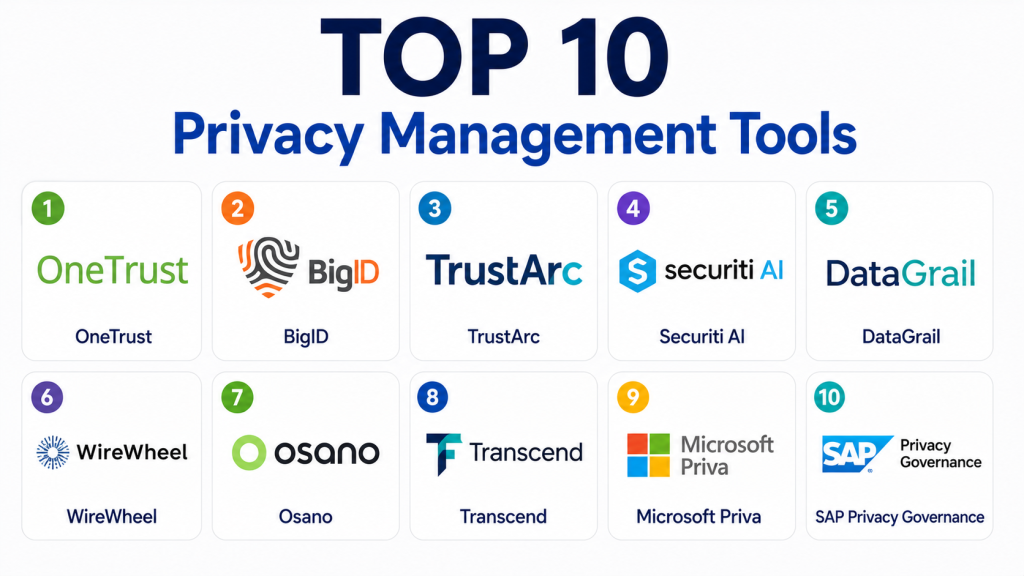
Top 10 Privacy Management Tools
1- OneTrust
Short description: OneTrust is one of the most widely used privacy management platforms offering end-to-end compliance, consent management, and data governance tools for enterprises.
Key Features
- Data mapping and inventory management
- Consent management platform
- DSAR automation workflows
- Vendor risk management
- Compliance reporting dashboards
- Policy management tools
- Privacy impact assessments
Pros
- Very comprehensive privacy suite
- Strong enterprise adoption
- Highly configurable workflows
Cons
- Complex setup and configuration
- High cost for small companies
- Requires training
Platforms / Deployment
Cloud / Hybrid
Security & Compliance
SSO, MFA, encryption, audit logs
Integrations & Ecosystem
- Cloud platforms
- SaaS applications
- SIEM tools
- APIs for enterprise systems
Support & Community
Strong enterprise support and documentation
2- BigID
Short description: BigID focuses on AI-driven data discovery and privacy intelligence across structured and unstructured data.
Key Features
- AI-based data classification
- Sensitive data discovery
- Privacy risk scoring
- DSAR automation
- Data lineage tracking
- Cloud data visibility
- Compliance reporting
Pros
- Strong AI-based discovery
- Excellent data visibility
- High scalability
Cons
- Complex implementation
- Enterprise-focused pricing
- Requires tuning for accuracy
Platforms / Deployment
Cloud / Hybrid
Security & Compliance
RBAC, encryption, audit logging
Integrations & Ecosystem
- AWS, Azure, GCP
- Data warehouses
- Security platforms
- API integrations
Support & Community
Strong enterprise-level support
3- TrustArc
Short description: TrustArc provides privacy compliance and risk management solutions for global regulatory requirements.
Key Features
- Privacy assessment tools
- Compliance automation
- Data inventory mapping
- Risk management dashboards
- Cookie consent management
- Regulatory reporting
- Vendor risk tracking
Pros
- Strong compliance coverage
- Good usability
- Established vendor
Cons
- UI complexity in large setups
- Limited deep customization
- Enterprise pricing
Platforms / Deployment
Cloud
Security & Compliance
Encryption, RBAC, audit trails
Integrations & Ecosystem
- SaaS platforms
- Cloud services
- Legal compliance tools
- APIs
Support & Community
Good enterprise support
4- Securiti AI
Short description: Securiti AI provides privacy, governance, and security automation using AI-driven data intelligence.
Key Features
- AI-based data discovery
- Automated DSAR handling
- Data access governance
- Risk monitoring
- Policy enforcement
- Cloud data mapping
- Compliance automation
Pros
- Strong AI capabilities
- Unified privacy + security model
- Fast automation
Cons
- Enterprise-focused pricing
- Complex onboarding
- Requires technical setup
Platforms / Deployment
Cloud / Hybrid
Security & Compliance
SSO, MFA, encryption, audit logs
Integrations & Ecosystem
- Cloud platforms
- Security tools
- Data governance systems
- APIs
Support & Community
Strong enterprise support
5- DataGrail
Short description: DataGrail focuses on privacy request automation and real-time data mapping across enterprise systems.
Key Features
- DSAR automation
- Real-time data discovery
- Consent management
- Privacy request workflows
- Data mapping tools
- Compliance tracking
- Integration connectors
Pros
- Easy to deploy
- Strong DSAR automation
- Real-time visibility
Cons
- Limited advanced governance features
- Smaller enterprise ecosystem
- Focused scope
Platforms / Deployment
Cloud
Security & Compliance
Encryption, RBAC
Integrations & Ecosystem
- SaaS applications
- CRM systems
- Cloud storage
- APIs
Support & Community
Good enterprise support
6- WireWheel
Short description: WireWheel offers privacy management automation focused on compliance workflows and data governance.
Key Features
- Privacy program management
- DSAR workflows
- Data mapping tools
- Consent tracking
- Policy management
- Risk assessments
- Reporting dashboards
Pros
- Strong compliance features
- Easy workflow automation
- Good enterprise adoption
Cons
- Less advanced AI features
- Limited customization
- Enterprise pricing
Platforms / Deployment
Cloud
Security & Compliance
SSO, encryption, RBAC
Integrations & Ecosystem
- Enterprise SaaS
- Cloud platforms
- APIs
- Legal systems
Support & Community
Good enterprise support
7- Osano
Short description: Osano provides simple privacy compliance tools with strong cookie consent and data request management.
Key Features
- Cookie consent management
- DSAR automation
- Compliance monitoring
- Vendor risk tracking
- Data mapping tools
- Privacy policy management
- Website compliance tools
Pros
- Easy to use
- Fast deployment
- Good for SMBs
Cons
- Limited enterprise depth
- Less advanced analytics
- Smaller feature set
Platforms / Deployment
Cloud
Security & Compliance
Encryption, RBAC
Integrations & Ecosystem
- Websites
- SaaS tools
- CMS platforms
- APIs
Support & Community
Good SMB-focused support
8- Transcend
Short description: Transcend automates privacy requests and data controls across systems in real time.
Key Features
- Automated DSAR handling
- Real-time data mapping
- Consent management
- API-based architecture
- Privacy workflows
- Data deletion automation
- Compliance tracking
Pros
- Strong automation
- Developer-friendly
- Fast integrations
Cons
- Requires technical setup
- Limited UI for non-technical users
- Smaller vendor ecosystem
Platforms / Deployment
Cloud
Security & Compliance
Encryption, RBAC
Integrations & Ecosystem
- SaaS platforms
- APIs
- Cloud services
- Data systems
Support & Community
Moderate enterprise support
9- Microsoft Priva
Short description: Microsoft Priva provides privacy risk management and data lifecycle governance within the Microsoft ecosystem.
Key Features
- Data lifecycle management
- Privacy risk detection
- DSAR workflows
- Data classification tools
- Compliance reporting
- Microsoft 365 integration
- Policy automation
Pros
- Strong Microsoft integration
- Easy adoption for M365 users
- Good compliance tools
Cons
- Limited outside Microsoft ecosystem
- Less flexible than standalone tools
- Newer platform
Platforms / Deployment
Cloud
Security & Compliance
SSO, encryption, RBAC
Integrations & Ecosystem
- Microsoft 365
- Azure services
- Compliance center
- APIs
Support & Community
Strong Microsoft support
10- SAP Privacy Governance
Short description: SAP Privacy Governance offers privacy compliance and data protection tools for enterprise SAP environments.
Key Features
- Data protection controls
- Consent management
- Compliance reporting
- Data lifecycle governance
- Risk assessments
- Policy enforcement
- SAP system integration
Pros
- Strong SAP ecosystem integration
- Good enterprise governance
- Reliable compliance tools
Cons
- SAP ecosystem dependent
- Complex setup
- Limited external flexibility
Platforms / Deployment
Cloud / Hybrid
Security & Compliance
RBAC, encryption, audit logs
Integrations & Ecosystem
- SAP systems
- Enterprise ERP
- Cloud services
- APIs
Support & Community
Strong enterprise SAP support
Comparison Table
| Tool | Best For | Platform | Deployment | Standout Feature | Rating |
|---|---|---|---|---|---|
| OneTrust | Enterprise privacy | Web | Cloud | Full privacy suite | N/A |
| BigID | Data discovery | Web | Cloud | AI classification | N/A |
| TrustArc | Compliance teams | Web | Cloud | Risk management | N/A |
| Securiti AI | AI privacy automation | Web | Hybrid | AI governance | N/A |
| DataGrail | DSAR automation | Web | Cloud | Real-time mapping | N/A |
| WireWheel | Compliance workflows | Web | Cloud | Privacy program mgmt | N/A |
| Osano | SMB compliance | Web | Cloud | Cookie consent tools | N/A |
| Transcend | Automation-first teams | Web | Cloud | API-first privacy | N/A |
| Microsoft Priva | Microsoft users | Web | Cloud | M365 integration | N/A |
| SAP Privacy | SAP enterprises | Web | Hybrid | ERP integration | N/A |
Evaluation & Scoring
| Tool | Core | Ease | Integrations | Security | Performance | Support | Value | Total |
|---|---|---|---|---|---|---|---|---|
| OneTrust | 9.5 | 8 | 9 | 9 | 9 | 9 | 7.5 | 8.7 |
| BigID | 9.5 | 7.5 | 9 | 9 | 9 | 8.5 | 7.5 | 8.5 |
| TrustArc | 8.8 | 8 | 8.5 | 9 | 8.5 | 8.5 | 8 | 8.4 |
| Securiti AI | 9 | 8 | 9 | 9 | 9 | 8.5 | 7.5 | 8.6 |
| DataGrail | 8.5 | 9 | 8.5 | 8.5 | 8.5 | 8 | 8.5 | 8.5 |
| WireWheel | 8.5 | 8 | 8 | 8.5 | 8 | 8 | 8 | 8.2 |
| Osano | 8 | 9 | 8 | 8 | 8 | 8 | 9 | 8.3 |
| Transcend | 8.8 | 8 | 8.5 | 8.5 | 9 | 8 | 8 | 8.4 |
| Microsoft Priva | 8.5 | 9 | 9 | 9 | 8.5 | 9 | 9 | 8.7 |
| SAP Privacy | 8.5 | 7.5 | 8.5 | 9 | 8.5 | 8.5 | 7.5 | 8.3 |
Frequently Asked Questions FAQs
1. What are Privacy Management Tools?
Privacy Management Tools are software platforms that help organizations manage personal data and ensure compliance with privacy laws.
They track, classify, and protect user data across systems.
They also automate privacy workflows like consent and data requests.
2. Why are Privacy Management Tools important?
They help organizations comply with regulations like GDPR and CCPA.
They reduce the risk of data breaches and legal penalties.
They also improve customer trust by ensuring responsible data handling.
3. Who uses Privacy Management Tools?
They are used by privacy officers, compliance teams, legal departments, and IT security teams.
Large enterprises and SaaS companies use them most frequently.
Any organization handling personal data benefits from them.
4. What is data mapping in privacy management?
Data mapping is the process of identifying where personal data is stored and how it flows across systems.
It helps organizations understand their data ecosystem.
This is essential for compliance and audits.
5. What is DSAR in privacy tools?
DSAR stands for Data Subject Access Request.
It allows users to request access, deletion, or correction of their personal data.
Privacy tools automate this process to save time and ensure compliance.
6. Do Privacy Management Tools support cloud platforms?
Yes, most modern tools integrate with cloud systems like AWS, Azure, and Google Cloud.
They also connect with SaaS applications like CRM and HR systems.
This helps centralize data visibility.
7. Are Privacy Management Tools AI-based?
Yes, many tools now use AI for data discovery and classification.
AI helps identify sensitive data faster and more accurately.
It also improves automation of compliance tasks.
8. Can small businesses use Privacy Management Tools?
Yes, but simpler tools like Osano are more suitable for SMBs.
Enterprise tools may be too complex and expensive for small teams.
Choice depends on data volume and compliance needs.
9. What is consent management?
Consent management is the process of collecting and managing user permissions for data usage.
Privacy tools track consent across websites and applications.
This ensures compliance with privacy regulations.
10. How should companies choose a Privacy Management Tool?
Companies should evaluate scalability, automation, integrations, and compliance support.
Ease of use and cost are also important factors.
The best tool depends on business size and regulatory requirements.
Conclusion
Privacy Management Tools are essential for modern organizations dealing with increasing data privacy regulations and large-scale personal data processing. These platforms help automate compliance, reduce risk, and ensure transparency in how user data is handled. Enterprise leaders like OneTrust, BigID, and Securiti AI dominate due to their depth of capabilities, while tools like Osano and DataGrail provide simpler and faster solutions for SMBs. Microsoft Priva and SAP Privacy Governance are best suited for organizations already invested in their respective ecosystems. The right choice depends on scale, regulatory needs, and existing infrastructure. A pilot-based evaluation is the best approach before full adoption.

Find Trusted Cardiac Hospitals
Compare heart hospitals by city and services — all in one place.
Explore Hospitals
This article helped me understand how privacy management tools are becoming important for handling user data safely, ensuring compliance with regulations, and giving organizations better control over sensitive information.