Introduction
Audit Management Software refers to digital platforms designed to plan, execute, track, and manage internal and external audits within an organization. These tools help businesses ensure compliance with regulatory frameworks, identify operational risks, and maintain transparency across financial and operational processes. In today’s complex regulatory environment, organizations face increasing pressure from compliance standards such as ISO, SOX, GDPR, and industry-specific regulations. Manual audit processes are no longer efficient due to growing data volumes, distributed teams, and cloud-based systems. Audit management platforms solve this by automating workflows, centralizing audit data, and improving collaboration between audit teams. Modern audit tools now integrate AI-powered risk detection, continuous monitoring, and real-time reporting. They also connect with enterprise systems like ERP, ITSM, and GRC platforms to provide a unified governance ecosystem.
Common Real-world use cases include:
- Internal compliance audits and reporting
- Financial audits and SOX compliance tracking
- Risk assessment and control testing
- Vendor and third-party audits
- Regulatory compliance documentation and reporting
Buyers should Evaluate:
- Workflow automation capabilities
- Audit planning and scheduling features
- Integration with enterprise systems
- Risk and control mapping accuracy
- Reporting and analytics capabilities
- Ease of collaboration across teams
- Security and access control features
- Scalability for enterprise audits
- Compliance framework support
- User experience and deployment flexibility
Best for: Enterprises, financial institutions, healthcare organizations, IT governance teams, and compliance-driven industries.
Not ideal for: Very small businesses with minimal audit requirements or startups without formal compliance obligations.
Key Trends in Audit Management Software
- AI-driven audit risk detection and anomaly identification
- Continuous auditing replacing periodic audit cycles
- Deep integration with GRC and cybersecurity platforms
- Cloud-native audit platforms replacing legacy systems
- Automated evidence collection from enterprise systems
- Real-time dashboards for audit visibility
- Increased regulatory complexity driving automation demand
- Low-code workflow customization for audit processes
- Integration with ERP, ITSM, and cloud environments
- Stronger focus on audit traceability and digital evidence
How We Selected These Tools (Methodology)
- Market adoption across enterprise audit environments
- Depth of audit workflow automation capabilities
- Integration with GRC, ERP, and compliance tools
- Scalability for enterprise-wide audit programs
- Reporting and analytics strength
- Security and governance features
- Support for multiple regulatory frameworks
- Ease of implementation and usability
- Vendor maturity and reliability
- Real-world enterprise usage patterns
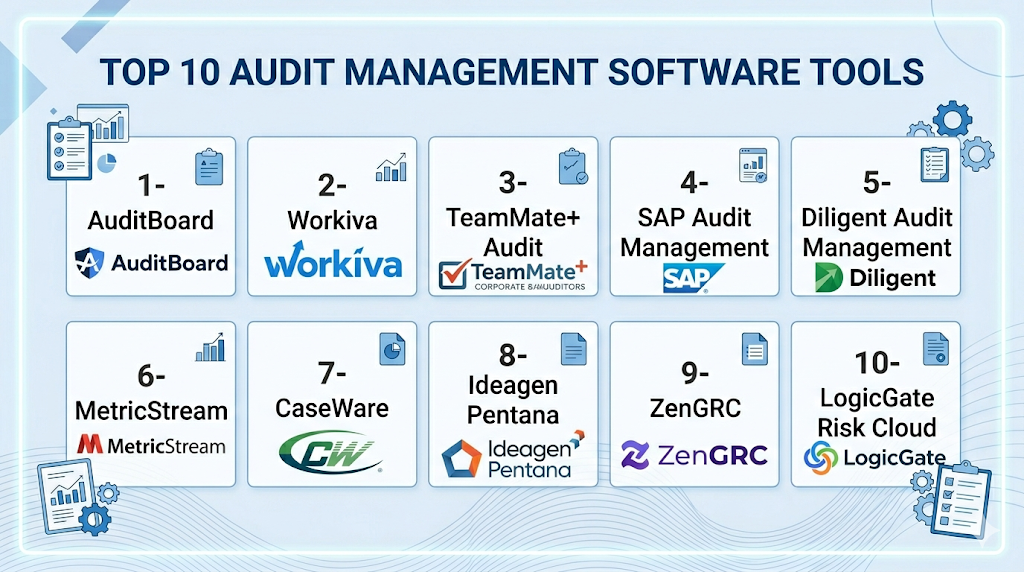
Top 10 Audit Management Software Tools
1- AuditBoard
Short description: AuditBoard is a leading cloud-based audit management platform designed for internal audit, SOX compliance, and risk management workflows.
Key Features
- End-to-end audit lifecycle management
- SOX compliance tracking
- Risk and control mapping
- Automated audit workflows
- Collaboration dashboards
- Reporting and analytics
- Documentation management
Pros
- Modern and easy-to-use interface
- Strong enterprise adoption
- Excellent collaboration features
Cons
- Premium pricing
- Limited deep customization
- Focused mainly on audit use cases
Platforms / Deployment
Cloud
Security & Compliance
SSO, RBAC, encryption, audit logs
Integrations & Ecosystem
Integrates with ERP systems, cloud platforms, and compliance tools
- SAP
- Oracle
- Microsoft 365
- APIs
Support & Community
Strong enterprise support and onboarding
2- Workiva
Short description: Workiva provides a connected reporting and audit management platform for financial and compliance reporting.
Key Features
- Financial audit tracking
- Connected data reporting
- Compliance documentation
- Workflow automation
- Audit trail management
- Collaboration tools
- Data linking across reports
Pros
- Strong financial reporting integration
- Highly collaborative platform
- Reliable compliance tracking
Cons
- High cost for smaller teams
- Learning curve for advanced features
- Enterprise-focused
Platforms / Deployment
Cloud
Security & Compliance
RBAC, encryption, audit logging
Integrations & Ecosystem
ERP systems, accounting tools, and enterprise data platforms
- SAP
- Oracle
- Microsoft tools
- APIs
Support & Community
Strong enterprise-grade support
3- TeamMate+ Audit
Short description: TeamMate+ is a widely used audit management solution focused on internal audit efficiency and governance.
Key Features
- Audit planning and scheduling
- Risk-based audit management
- Workflow automation
- Issue tracking and resolution
- Reporting dashboards
- Compliance mapping
- Resource management
Pros
- Strong audit-specific design
- Trusted enterprise solution
- Good reporting capabilities
Cons
- Outdated interface in some modules
- Complex configuration
- High enterprise pricing
Platforms / Deployment
Cloud / Hybrid
Security & Compliance
SSO, RBAC, encryption
Integrations & Ecosystem
ERP systems, GRC platforms, and reporting tools
- SAP
- Oracle
- Microsoft systems
- APIs
Support & Community
Strong enterprise support
4- SAP Audit Management
Short description: SAP Audit Management is built for enterprises already using SAP ecosystems for governance and compliance.
Key Features
- Audit planning and execution
- Risk control integration
- Workflow automation
- Compliance reporting
- Document management
- Issue tracking
- SAP system integration
Pros
- Strong SAP ecosystem integration
- Reliable enterprise governance
- Good compliance alignment
Cons
- SAP dependency
- Complex implementation
- Limited flexibility outside SAP
Platforms / Deployment
Cloud / Hybrid
Security & Compliance
RBAC, encryption, audit logs
Integrations & Ecosystem
SAP ERP, SAP GRC, and enterprise systems
- SAP S/4HANA
- SAP GRC
- APIs
Support & Community
Strong SAP enterprise support
5- Diligent Audit Management
Short description: Diligent provides governance and audit management tools focused on board-level visibility and enterprise risk oversight.
Key Features
- Audit workflow automation
- Risk tracking dashboards
- Compliance reporting
- Board reporting tools
- Policy management
- Document control
- Collaboration tools
Pros
- Strong governance focus
- Good executive reporting
- Easy visibility into risk
Cons
- Less technical depth
- Enterprise pricing
- Limited customization
Platforms / Deployment
Cloud
Security & Compliance
RBAC, encryption, audit logs
Integrations & Ecosystem
Enterprise systems, financial tools, and APIs
Support & Community
Strong enterprise governance support
6- MetricStream
Short description: MetricStream is a comprehensive GRC platform with strong audit management capabilities for large enterprises.
Key Features
- Audit lifecycle management
- Risk and compliance tracking
- Control testing automation
- Regulatory mapping
- Advanced analytics
- Vendor risk integration
- Workflow automation
Pros
- Broad GRC coverage
- Strong enterprise scalability
- Good analytics capabilities
Cons
- Complex setup
- High cost
- Requires training
Platforms / Deployment
Cloud / Hybrid
Security & Compliance
SSO, encryption, RBAC
Integrations & Ecosystem
ERP systems, cloud platforms, APIs
Support & Community
Enterprise-level support
7- CaseWare
Short description: CaseWare provides audit, assurance, and financial reporting tools widely used by accounting firms.
Key Features
- Financial audit workflows
- Working paper management
- Data analytics tools
- Compliance reporting
- Engagement management
- Document automation
- Risk assessment tools
Pros
- Strong accounting focus
- Widely used in audit firms
- Reliable reporting tools
Cons
- Limited enterprise scalability
- Outdated interface in some modules
- Accounting-centric
Platforms / Deployment
Cloud / Desktop
Security & Compliance
Encryption, audit logs
Integrations & Ecosystem
Accounting systems, ERP platforms, APIs
Support & Community
Strong accounting community support
8- Ideagen Pentana Audit
Short description: Ideagen Pentana Audit is a risk-based audit management platform designed for internal audit teams.
Key Features
- Risk-based audit planning
- Workflow automation
- Issue tracking
- Audit reporting dashboards
- Compliance mapping
- Document management
- Resource planning
Pros
- Strong audit workflow design
- Good risk alignment
- Easy reporting
Cons
- Less modern UI
- Limited integrations
- Enterprise focus
Platforms / Deployment
Cloud / On-prem
Security & Compliance
RBAC, encryption
Integrations & Ecosystem
ERP systems, audit tools, APIs
Support & Community
Good enterprise support
9- ZenGRC
Short description: ZenGRC offers a modern, automated audit and compliance management platform for mid-market and enterprise teams.
Key Features
- Audit workflow automation
- Risk management dashboards
- Compliance tracking
- Control testing tools
- Vendor risk management
- Reporting tools
- Policy management
Pros
- Easy to deploy
- Strong automation features
- Good usability
Cons
- Limited deep enterprise customization
- Smaller ecosystem
- Pricing scales with usage
Platforms / Deployment
Cloud
Security & Compliance
SSO, encryption, RBAC
Integrations & Ecosystem
Cloud tools, SaaS platforms, APIs
Support & Community
Good mid-market support
10- LogicGate Risk Cloud
Short description: LogicGate provides a flexible, low-code audit and risk management platform for modern enterprises.
Key Features
- Low-code workflow builder
- Audit automation
- Risk management tools
- Compliance dashboards
- Vendor tracking
- Reporting and analytics
- Policy workflows
Pros
- Highly flexible workflows
- Easy customization
- Fast deployment
Cons
- Limited deep audit specialization
- Learning curve for advanced setup
- Pricing varies
Platforms / Deployment
Cloud
Security & Compliance
RBAC, encryption, audit logs
Integrations & Ecosystem
ERP systems, SaaS tools, APIs
Support & Community
Comparison Table (Top 10)
| Tool | Best For | Platform | Deployment | Standout Feature | Rating |
|---|---|---|---|---|---|
| AuditBoard | Internal audit teams | Web | Cloud | Audit automation | N/A |
| Workiva | Financial reporting | Web | Cloud | Connected reporting | N/A |
| TeamMate+ | Enterprise audit | Web | Hybrid | Audit planning | N/A |
| SAP Audit | SAP users | Web | Hybrid | SAP integration | N/A |
| Diligent | Governance teams | Web | Cloud | Board reporting | N/A |
| MetricStream | GRC enterprises | Web | Hybrid | GRC suite | N/A |
| CaseWare | Audit firms | Desktop/Web | Cloud | Financial audits | N/A |
| Pentana | Internal audit | Web | Hybrid | Risk-based audits | N/A |
| ZenGRC | Mid-market | Web | Cloud | Automation workflows | N/A |
| LogicGate | Flexible workflows | Web | Cloud | Low-code builder | N/A |
Evaluation & Scoring Table
| Tool | Core (25%) | Ease (15%) | Integrations (15%) | Security (10%) | Performance (10%) | Support (10%) | Value (15%) | Weighted Total |
|---|---|---|---|---|---|---|---|---|
| AuditBoard | 9.5 | 9 | 9 | 9 | 9 | 9 | 8 | 8.9 |
| Workiva | 9 | 8.5 | 9 | 9 | 9 | 9 | 7.5 | 8.6 |
| TeamMate+ | 9 | 8 | 8.5 | 9 | 8.5 | 8.5 | 7.5 | 8.4 |
| SAP Audit | 9 | 7.5 | 9 | 9 | 8.5 | 8.5 | 7.5 | 8.3 |
| Diligent | 8.8 | 8.5 | 8 | 9 | 8 | 8.5 | 8 | 8.4 |
| MetricStream | 9 | 8 | 9 | 9 | 8.5 | 8.5 | 7.5 | 8.5 |
| CaseWare | 8.5 | 8.5 | 8 | 8.5 | 8 | 8 | 8.5 | 8.3 |
| Pentana Audit | 8.5 | 8 | 8 | 8.5 | 8 | 8 | 8 | 8.2 |
| ZenGRC | 8.8 | 9 | 8.5 | 8.5 | 8.5 | 8 | 8.5 | 8.6 |
| LogicGate | 8.8 | 9 | 8.5 | 8.5 | 8.5 | 8 | 8.5 | 8.6 |
Frequently Asked Questions FAQs
1. What is audit management software?
Audit management software is a digital tool used to plan, execute, and manage internal and external audits.
It helps organizations track compliance, risks, and audit findings in a structured way.
It replaces manual spreadsheets and improves audit accuracy and efficiency.
2. Why is audit management software important?
It helps organizations maintain regulatory compliance and reduce audit risks.
It improves transparency and accountability in business operations.
It also speeds up audit processes through automation.
3. Who uses audit management software?
It is used by internal auditors, compliance officers, risk managers, and finance teams.
Large enterprises and regulated industries rely on it heavily.
External auditors also use it for reporting and verification.
4. What are the main features of audit management tools?
Key features include audit planning, risk assessment, workflow automation, and reporting.
They also support issue tracking and document management.
Many tools include dashboards for real-time monitoring.
5. How does audit management software work?
It centralizes audit data and automates audit workflows.
Users can create audit plans, assign tasks, and track progress in real time.
It also generates reports for compliance and decision-making.
6. Is audit management software cloud-based?
Yes, most modern audit management tools are cloud-based or hybrid.
Some older enterprise systems still support on-prem deployment.
Cloud solutions offer better scalability and accessibility.
7. What industries use audit management software?
It is widely used in finance, healthcare, IT, manufacturing, and government sectors.
Any regulated industry benefits from audit automation.
It ensures compliance with industry standards and regulations.
8. Can audit management tools integrate with other systems?
Yes, most tools integrate with ERP, GRC, and compliance systems.
They also connect with cloud platforms and enterprise applications.
This helps unify audit and business data.
9. What is the difference between audit software and GRC platforms?
Audit software focuses specifically on audit planning and execution.
GRC platforms cover governance, risk, and compliance in a broader scope.
Audit tools are often a component of GRC systems.
10. How should companies choose audit management software?
Companies should evaluate scalability, ease of use, and integration capabilities.
They should also consider compliance support and reporting features.
The best choice depends on industry needs and organization size.
Conclusion
Audit Management Software plays a critical role in ensuring transparency, compliance, and risk control across modern enterprises. As organizations face growing regulatory pressure and digital transformation challenges, audit platforms are evolving into intelligent systems that automate workflows and improve decision-making. Enterprise leaders like AuditBoard, Workiva, and MetricStream dominate large-scale audit environments, while tools like ZenGRC and LogicGate offer flexibility and ease of use for mid-market teams. SAP Audit and TeamMate+ remain strong choices for traditional enterprise ecosystems. The best audit management tool depends on organizational size, compliance needs, and integration requirements. A pilot-based evaluation is always recommended before full-scale adoption.

Find Trusted Cardiac Hospitals
Compare heart hospitals by city and services — all in one place.
Explore Hospitals
Audit management software helps organizations keep audits organized, improve compliance tracking, reduce manual errors, and ensure better control over reporting and documentation processes.