Introduction
Database Monitoring Tools help organizations track the health, availability, performance, security, and operational efficiency of databases across cloud, on-premises, and hybrid environments. These platforms provide visibility into query performance, resource utilization, replication status, downtime risks, storage bottlenecks, and abnormal database activity. database monitoring has become increasingly important as businesses rely heavily on real-time analytics, AI-driven applications, cloud-native services, microservices, and distributed databases. Modern organizations manage databases across multiple environments including Kubernetes clusters, SaaS applications, data lakes, and multi-cloud infrastructure. Database outages or performance degradation can directly affect customer experience, revenue, compliance, and operational continuity.
Common Real-world use cases include:
- Monitoring database performance and uptime
- Detecting slow queries and bottlenecks
- Managing cloud database infrastructure
- Identifying abnormal database behavior
- Supporting compliance and operational reporting
Buyers Evaluating database monitoring tools should consider:
- Real-time monitoring capabilities
- Multi-database support
- AI-driven anomaly detection
- Query performance analysis
- Cloud-native monitoring support
- Alerting and automation
- Scalability
- Visualization and dashboards
- Integration ecosystem
- Ease of deployment and administration
Best for: Database administrators, DevOps teams, cloud architects, enterprises, SaaS providers, financial organizations, healthcare systems, telecom companies, and businesses operating mission-critical applications.
Not ideal for: Very small organizations with minimal database workloads or teams relying entirely on managed cloud monitoring services with limited customization needs.
Key Trends in Database Monitoring Tools
- AI-driven anomaly detection is becoming standard for proactive issue identification.
- Cloud-native database observability is replacing traditional infrastructure-centric monitoring.
- Multi-cloud database visibility is increasingly important for enterprise operations.
- Database monitoring platforms are integrating security and compliance analytics.
- Predictive performance analytics are helping reduce downtime risks.
- Kubernetes and container database monitoring demand is growing rapidly.
- Real-time telemetry and observability integrations are becoming more advanced.
- Unified monitoring across SQL and NoSQL databases is expanding.
- Automated remediation and self-healing workflows are becoming more common.
- FinOps and resource optimization analytics are being integrated into monitoring platforms.
How We Selected These Tools Methodology
The tools in this list were selected using a combination of market adoption, technical maturity, cloud readiness, operational usability, and database observability capabilities.
- Evaluated enterprise adoption and industry reputation
- Prioritized real-time monitoring and analytics capabilities
- Assessed SQL and NoSQL database support
- Reviewed cloud-native and hybrid deployment flexibility
- Considered scalability and enterprise readiness
- Evaluated alerting and automation features
- Assessed AI-driven analytics and observability maturity
- Included both enterprise-grade and SMB-friendly solutions
- Reviewed ecosystem integrations and API support
- Considered support quality and community adoption
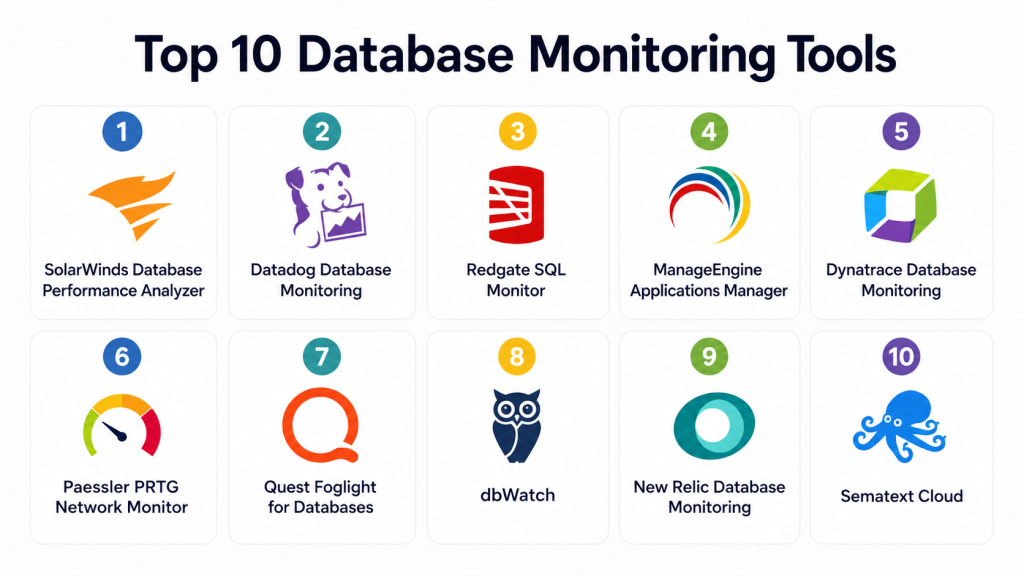
Top 10 Database Monitoring Tools
1- SolarWinds Database Performance Analyzer
Short description: SolarWinds Database Performance Analyzer is a widely used monitoring platform focused on query analysis, database performance optimization, and cross-platform visibility.
Key Features
- Query performance monitoring
- Real-time database analytics
- Historical trend analysis
- Multi-platform database support
- Resource utilization tracking
- AI-assisted performance insights
- Alert automation
Pros
- Strong query analysis capabilities
- Broad database compatibility
- Mature enterprise reporting
Cons
- Enterprise licensing can become expensive
- Advanced deployments may require tuning
- UI complexity for new users
Platforms / Deployment
- Windows / Linux
- Cloud / Self-hosted / Hybrid
Security & Compliance
- RBAC
- Audit logging
- Access controls
- Monitoring governance features
Integrations & Ecosystem
SolarWinds integrates broadly with IT operations, observability, and infrastructure monitoring ecosystems.
- SQL Server
- Oracle Database
- MySQL
- PostgreSQL
- AWS
- Azure
Support & Community
Large enterprise user community with mature support documentation and training resources.
2- Datadog Database Monitoring
Short description: Datadog Database Monitoring provides cloud-native observability for databases, infrastructure, and applications using AI-driven analytics and unified dashboards.
Key Features
- Cloud-native database monitoring
- Query analytics
- AI-driven anomaly detection
- Unified observability dashboards
- Real-time alerts
- Infrastructure correlation
- Kubernetes integrations
Pros
- Excellent cloud-native visibility
- Strong observability ecosystem
- Modern UI and dashboards
Cons
- Pricing can scale quickly
- Complex environments may require tuning
- Learning curve for advanced workflows
Platforms / Deployment
- Cloud
Security & Compliance
- RBAC
- Audit logging
- SSO integrations
- Enterprise access management
Integrations & Ecosystem
Datadog integrates extensively with cloud, infrastructure, and DevOps ecosystems.
- AWS
- Azure
- Google Cloud
- Kubernetes
- PostgreSQL
- MongoDB
Support & Community
Strong cloud-native ecosystem with active community adoption and enterprise support.
3- Redgate SQL Monitor
Short description: Redgate SQL Monitor focuses on Microsoft SQL Server monitoring and performance diagnostics for enterprise and mid-sized organizations.
Key Features
- SQL Server performance monitoring
- Query analysis
- Alert management
- Historical performance tracking
- Wait statistics analysis
- Dashboard visualization
- Reporting automation
Pros
- Strong SQL Server specialization
- Good usability
- Efficient troubleshooting workflows
Cons
- Primarily Microsoft-focused
- Limited non-SQL Server support
- Advanced enterprise scalability may vary
Platforms / Deployment
- Windows
- Self-hosted / Hybrid
Security & Compliance
- RBAC
- Audit logging
- Access management controls
Integrations & Ecosystem
Redgate integrates primarily within Microsoft database and operations ecosystems.
- SQL Server
- Azure SQL
- Power BI
- Microsoft environments
Support & Community
Strong DBA-focused documentation and highly regarded SQL Server community presence.
4- ManageEngine Applications Manager
Short description: ManageEngine Applications Manager provides database monitoring alongside application and infrastructure observability for SMB and enterprise environments.
Key Features
- Database monitoring
- Application performance management
- Multi-database support
- Cloud monitoring
- Alert automation
- Resource utilization analytics
- Custom dashboards
Pros
- Good all-in-one monitoring approach
- Affordable SMB pricing
- Broad platform coverage
Cons
- UI may feel dated
- Enterprise analytics depth varies
- Some advanced workflows require customization
Platforms / Deployment
- Windows / Linux
- Cloud / Self-hosted
Security & Compliance
- RBAC
- Audit logging
- Monitoring governance controls
Integrations & Ecosystem
ManageEngine integrates broadly with IT operations and infrastructure management ecosystems.
- Oracle Database
- MySQL
- SQL Server
- AWS
- Azure
Support & Community
Strong SMB adoption with accessible support and administrator-focused resources.
5- Dynatrace Database Monitoring
Short description: Dynatrace provides AI-powered observability and database monitoring for enterprise cloud-native environments and distributed applications.
Key Features
- AI-driven anomaly detection
- Full-stack observability
- Database query analytics
- Root cause analysis
- Real-time telemetry
- Kubernetes observability
- Automated alerting
Pros
- Advanced AI analytics
- Excellent enterprise observability
- Strong automation capabilities
Cons
- Premium enterprise pricing
- Complex implementation
- May exceed SMB requirements
Platforms / Deployment
- Cloud / Hybrid
Security & Compliance
- RBAC
- Audit logging
- Enterprise observability controls
- SSO support
Integrations & Ecosystem
Dynatrace integrates deeply with cloud-native infrastructure and enterprise monitoring ecosystems.
- AWS
- Azure
- Google Cloud
- Kubernetes
- OpenTelemetry
Support & Community
Strong enterprise support organization with mature observability expertise.
6- Paessler PRTG Network Monitor
Short description: PRTG provides database monitoring alongside network and infrastructure observability for organizations needing centralized IT visibility.
Key Features
- Database monitoring sensors
- SQL query monitoring
- Resource tracking
- Alerting automation
- Dashboard visualization
- Multi-platform support
- Performance analytics
Pros
- Easy deployment
- Broad infrastructure visibility
- Flexible monitoring setup
Cons
- Less advanced database analytics
- Enterprise scalability limitations
- Database specialization is narrower
Platforms / Deployment
- Windows
- Self-hosted
Security & Compliance
- RBAC
- Audit logging
- Monitoring access controls
Integrations & Ecosystem
PRTG integrates with infrastructure, networking, and database monitoring environments.
- SQL Server
- Oracle Database
- PostgreSQL
- VMware
- Cloud services
Support & Community
Strong administrator community with accessible deployment documentation.
7- Quest Foglight for Databases
Short description: Quest Foglight delivers enterprise-grade database performance monitoring, diagnostics, and workload analysis across multiple database environments.
Key Features
- Real-time database monitoring
- Workload analytics
- Query optimization
- Resource tracking
- Multi-database visibility
- Predictive diagnostics
- Alert management
Pros
- Strong enterprise analytics
- Broad database support
- Detailed workload visibility
Cons
- Enterprise deployment complexity
- Higher licensing costs
- Requires DBA expertise
Platforms / Deployment
- Windows / Linux
- Self-hosted / Hybrid
Security & Compliance
- RBAC
- Audit logging
- Access governance controls
Integrations & Ecosystem
Foglight integrates with enterprise infrastructure and database ecosystems.
- Oracle Database
- SQL Server
- PostgreSQL
- VMware
- Enterprise monitoring tools
Support & Community
Strong enterprise DBA support ecosystem with mature deployment guidance.
8- dbWatch
Short description: dbWatch is a cross-platform database monitoring and management platform focused on centralized operational visibility.
Key Features
- Cross-platform database monitoring
- Real-time alerting
- Automation workflows
- Dashboard reporting
- Performance optimization
- Multi-database support
- Capacity planning
Pros
- Broad database compatibility
- Centralized operational visibility
- Good automation support
Cons
- Smaller ecosystem visibility
- UI modernization could improve
- Enterprise feature depth varies
Platforms / Deployment
- Windows / Linux
- Cloud / Self-hosted / Hybrid
Security & Compliance
- RBAC
- Audit logging
- Access management controls
Integrations & Ecosystem
dbWatch integrates with operational monitoring and enterprise infrastructure systems.
- Oracle Database
- PostgreSQL
- SQL Server
- MySQL
- Cloud platforms
Support & Community
Growing enterprise adoption with responsive vendor support services.
9- New Relic Database Monitoring
Short description: New Relic provides database observability and application performance monitoring for modern cloud-native and distributed application environments.
Key Features
- Database query analytics
- Real-time telemetry
- AI-assisted anomaly detection
- Full-stack observability
- Cloud-native monitoring
- Alert automation
- Performance dashboards
Pros
- Strong developer experience
- Excellent cloud-native observability
- Unified telemetry visibility
Cons
- Pricing can increase rapidly
- Advanced customization may require expertise
- Enterprise governance varies by deployment
Platforms / Deployment
- Cloud
Security & Compliance
- RBAC
- Audit logging
- SSO support
- Enterprise access controls
Integrations & Ecosystem
New Relic integrates extensively with developer, cloud, and observability ecosystems.
- Kubernetes
- AWS
- Azure
- PostgreSQL
- MongoDB
- OpenTelemetry
Support & Community
Large observability-focused community with strong cloud-native adoption.
10- Sematext Cloud
Short description: Sematext Cloud delivers lightweight observability and database monitoring for cloud-native applications and infrastructure environments.
Key Features
- Database monitoring
- Log management
- Alert automation
- Real-time dashboards
- Cloud-native observability
- Resource analytics
- Multi-platform support
Pros
- Lightweight deployment
- Good pricing flexibility
- Strong cloud-native usability
Cons
- Smaller enterprise ecosystem
- Limited advanced analytics depth
- Fewer enterprise governance features
Platforms / Deployment
- Cloud
Security & Compliance
- RBAC
- Audit logging
- Access management features
Integrations & Ecosystem
Sematext integrates with cloud-native infrastructure and observability ecosystems.
- AWS
- Kubernetes
- Elasticsearch
- PostgreSQL
- Docker
Support & Community
Growing observability community with accessible onboarding resources.
Comparison Table Top 10
| Tool Name | Best For | Platform(s) Supported | Deployment | Standout Feature | Public Rating |
|---|---|---|---|---|---|
| SolarWinds Database Performance Analyzer | Enterprise DB monitoring | Multi-platform | Hybrid | Advanced query analytics | N/A |
| Datadog Database Monitoring | Cloud-native observability | Cloud | Cloud | Unified observability dashboards | N/A |
| Redgate SQL Monitor | SQL Server environments | Windows | Hybrid | SQL Server specialization | N/A |
| ManageEngine Applications Manager | SMB operations monitoring | Multi-platform | Self-hosted | Affordable all-in-one visibility | N/A |
| Dynatrace Database Monitoring | Enterprise observability | Multi-platform | Hybrid | AI-driven root cause analysis | N/A |
| PRTG Network Monitor | Infrastructure monitoring | Windows | Self-hosted | Flexible monitoring sensors | N/A |
| Quest Foglight for Databases | Enterprise diagnostics | Multi-platform | Hybrid | Workload analytics | N/A |
| dbWatch | Multi-database operations | Multi-platform | Hybrid | Centralized database visibility | N/A |
| New Relic Database Monitoring | Developer observability | Cloud | Cloud | Full-stack telemetry analytics | N/A |
| Sematext Cloud | Lightweight observability | Cloud | Cloud | Lightweight cloud monitoring | N/A |
Evaluation & Scoring of Database Monitoring Tools
| Tool Name | Core 25% | Ease 15% | Integrations 15% | Security 10% | Performance 10% | Support 10% | Value 15% | Weighted Total |
|---|---|---|---|---|---|---|---|---|
| SolarWinds Database Performance Analyzer | 9 | 8 | 9 | 8 | 9 | 8 | 7 | 8.3 |
| Datadog Database Monitoring | 9 | 8 | 10 | 8 | 9 | 8 | 7 | 8.4 |
| Redgate SQL Monitor | 8 | 9 | 7 | 8 | 8 | 8 | 8 | 8.0 |
| ManageEngine Applications Manager | 8 | 8 | 7 | 7 | 8 | 8 | 9 | 8.0 |
| Dynatrace Database Monitoring | 10 | 7 | 10 | 9 | 10 | 9 | 6 | 8.8 |
| PRTG Network Monitor | 7 | 8 | 7 | 7 | 7 | 8 | 8 | 7.5 |
| Quest Foglight for Databases | 9 | 7 | 8 | 8 | 9 | 8 | 7 | 8.1 |
| dbWatch | 8 | 7 | 8 | 7 | 8 | 7 | 8 | 7.7 |
| New Relic Database Monitoring | 9 | 8 | 10 | 8 | 9 | 8 | 7 | 8.4 |
| Sematext Cloud | 7 | 8 | 7 | 7 | 7 | 7 | 9 | 7.5 |
These scores are comparative rather than absolute. Enterprise-focused observability platforms generally score higher in AI analytics, scalability, and automation, while SMB-oriented tools often perform better in affordability and operational simplicity. Buyers should prioritize the categories that align most closely with their infrastructure complexity, database scale, and operational requirements.
Which Database Monitoring Tool Is Right for You
Solo / Freelancer
Independent developers and small technical teams often benefit from lightweight observability platforms such as Sematext Cloud or New Relic for simplified deployment and lower operational overhead.
SMB
Small and medium-sized businesses typically prioritize affordability, centralized dashboards, and ease of deployment. ManageEngine Applications Manager and PRTG are often strong choices for these environments.
Mid-Market
Mid-sized organizations often require stronger analytics, hybrid cloud support, and performance visibility. SolarWinds Database Performance Analyzer and Quest Foglight provide strong operational depth.
Enterprise
Large enterprises managing distributed infrastructure and cloud-native workloads often prioritize Dynatrace, Datadog, or SolarWinds for advanced observability, AI analytics, and automation capabilities.
Budget vs Premium
Budget-focused platforms typically offer easier onboarding and lower licensing costs but may provide fewer advanced analytics and automation capabilities. Premium observability platforms deliver broader AI-driven insights and enterprise scalability.
Feature Depth vs Ease of Use
Highly advanced observability platforms may introduce operational complexity but provide deeper telemetry and root cause analysis. Simpler monitoring platforms are easier to deploy but may offer narrower visibility.
Integrations & Scalability
Organizations operating across hybrid cloud, Kubernetes, and distributed application environments should prioritize platforms with mature integrations and unified observability capabilities.
Security & Compliance Needs
Regulated industries should focus on audit logging, RBAC, monitoring governance, and operational visibility when evaluating database monitoring vendors.
Frequently Asked Questions FAQs
1. What are database monitoring tools used for?
Database monitoring tools help organizations track database performance, uptime, query behavior, resource usage, and operational health across cloud and on-premises environments.
2. Why are database monitoring platforms important in 2026?
Modern businesses rely heavily on distributed databases, AI applications, cloud-native workloads, and real-time analytics, making continuous database visibility critical for performance and reliability.
3. What is query performance monitoring?
Query performance monitoring analyzes slow or resource-intensive database queries to identify bottlenecks and optimize database efficiency.
4. Can database monitoring tools prevent outages?
While they cannot prevent every outage directly, these tools help identify risks early through alerting, anomaly detection, and predictive analytics.
5. What industries rely heavily on database monitoring?
Financial services, healthcare, SaaS providers, telecom operators, e-commerce companies, and enterprises running mission-critical applications heavily depend on database monitoring platforms.
6. Do database monitoring tools support cloud-native environments?
Yes. Most modern platforms support cloud-native databases, Kubernetes environments, distributed applications, and hybrid infrastructure monitoring.
7. What role does AI play in database monitoring?
AI increasingly helps detect anomalies, predict performance issues, automate root cause analysis, and reduce operational troubleshooting time.
8. Can one platform monitor multiple database types?
Many enterprise-grade monitoring tools support SQL and NoSQL databases across cloud and on-premises infrastructure from a centralized dashboard.
9. Do monitoring tools affect database performance?
Most modern monitoring tools are designed to minimize overhead, though very deep telemetry collection may affect performance in high-volume environments.
10. How should organizations evaluate database monitoring vendors?
Organizations should assess scalability, query analytics, integration maturity, alerting capabilities, cloud support, operational usability, and long-term cost before selecting a monitoring platform.
Conclusion
Database Monitoring Tools have evolved from simple uptime trackers into advanced observability platforms that combine AI-driven analytics, real-time telemetry, performance optimization, anomaly detection, and cloud-native visibility. As organizations continue adopting distributed applications, hybrid cloud infrastructure, Kubernetes environments, and AI-powered workloads, database monitoring has become a foundational requirement for operational reliability and business continuity. The best database monitoring platform depends heavily on infrastructure scale, operational maturity, cloud strategy, and observability requirements. Organizations focused on Microsoft SQL Server may prefer Redgate SQL Monitor, while enterprises requiring deep observability and AI-driven analytics may prioritize Dynatrace or Datadog. Businesses looking for broader affordability and centralized operational monitoring may benefit from ManageEngine or PRTG. Most buyers should shortlist two or three platforms, validate integrations, run pilot deployments, and test alerting and performance analytics before making a long-term investment.

Find Trusted Cardiac Hospitals
Compare heart hospitals by city and services — all in one place.
Explore Hospitals
This article explains database monitoring tools simply. The comparison helps understand their features, pros, and cons.