Introduction
Data Warehouse Platforms are centralized systems designed to store, manage, and analyze large volumes of structured and semi-structured business data. Unlike operational databases that handle day-to-day transactions, data warehouses are optimized for analytics, reporting, AI workloads, and business intelligence. As organizations accelerate digital transformation and AI adoption , data warehouse platforms have become critical for turning raw enterprise data into actionable insights. Modern platforms now support cloud-native scalability, real-time analytics, AI-assisted querying, and integration with machine learning ecosystems.
Common Real-world use cases include:
- Business intelligence and executive reporting
- Customer analytics and personalization
- Financial and operational analytics
- AI and machine learning pipelines
- Real-time dashboarding and observability
When Evaluating data warehouse platforms, buyers should consider:
- Query performance and scalability
- Cloud-native architecture
- AI and machine learning support
- Security and governance controls
- Cost optimization and pricing predictability
- Data integration ecosystem
- Multi-cloud flexibility
- Ease of administration
- Real-time analytics support
- Compliance and data residency capabilities
Best for: Enterprises, analytics teams, AI-driven organizations, financial institutions, SaaS companies, retailers, healthcare providers, and businesses managing large-scale analytical workloads.
Not ideal for: Small transactional applications, lightweight reporting needs, or organizations without significant analytical or BI requirements.
Key Trends in Data Warehouse Platforms
- AI-assisted SQL generation and analytics copilots are becoming standard.
- Lakehouse architectures are merging data warehouse and data lake capabilities.
- Real-time analytics and streaming ingestion continue gaining importance.
- Multi-cloud deployment flexibility is becoming a major buying factor.
- Vector search and AI-ready storage are increasingly integrated into warehouse platforms.
- Cost governance and workload optimization tooling are improving rapidly.
- Open table formats are driving interoperability across ecosystems.
- Serverless analytics models are reducing operational complexity.
- Governance, lineage, and data security tooling are becoming more sophisticated.
- Hybrid transactional and analytical processing capabilities are expanding.
How We Selected These Tools
The platforms in this list were selected using the following methodology:
- Strong enterprise market adoption
- Proven scalability and reliability
- Feature completeness for analytics workloads
- Cloud-native and AI readiness
- Security and governance capabilities
- Integration ecosystem maturity
- Multi-cloud and hybrid deployment support
- Performance reputation for large-scale analytics
- Community and partner ecosystem strength
- Flexibility across SMB, mid-market, and enterprise use cases
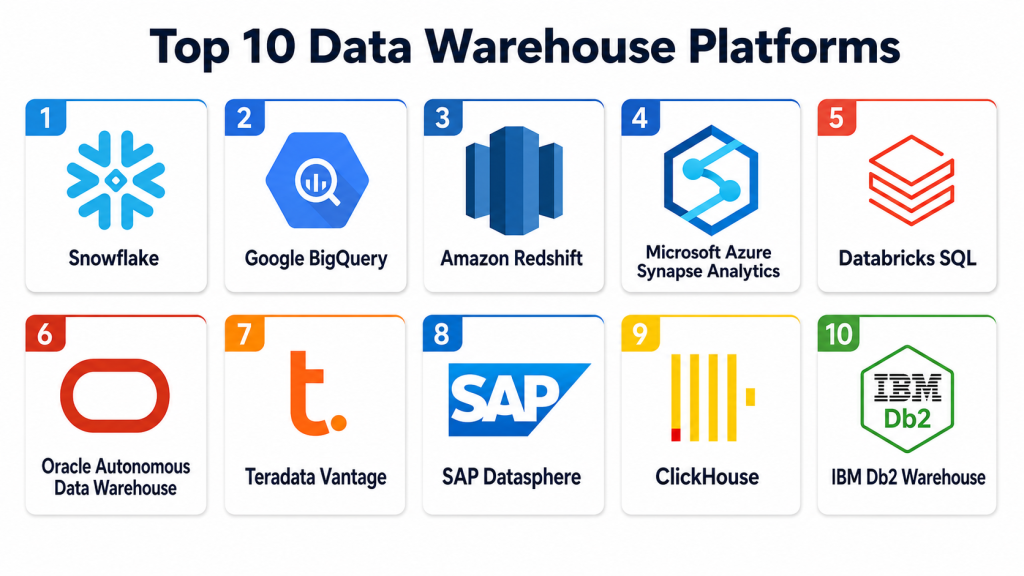
Top 10 Data Warehouse Platforms
1- Snowflake
Short description: Snowflake is a cloud-native data warehouse platform known for scalability, performance, and multi-cloud analytics capabilities.
Key Features
- Fully managed cloud architecture
- Separation of storage and compute
- Multi-cloud deployment support
- Real-time data sharing
- AI and machine learning integrations
- Semi-structured data support
- Elastic scalability
Pros
- Excellent scalability and performance
- Strong multi-cloud flexibility
- Simplified infrastructure management
Cons
- Costs can increase rapidly with heavy workloads
- Query optimization may require monitoring
- Premium enterprise pricing
Platforms / Deployment
- Cloud
Security & Compliance
- RBAC
- Encryption
- SSO/SAML
- MFA
- SOC 2
- HIPAA
- GDPR support
Integrations & Ecosystem
Snowflake integrates broadly with modern analytics and AI ecosystems.
- Tableau
- Power BI
- AWS
- Azure
- Google Cloud
- dbt
Support & Community
Large enterprise ecosystem with strong documentation and partner network.
2- Google BigQuery
Short description: BigQuery is Google Cloud’s serverless data warehouse platform optimized for high-speed analytics and AI-driven workloads.
Key Features
- Serverless analytics engine
- Real-time SQL querying
- Integrated machine learning
- Multi-cloud analytics support
- AI-assisted query generation
- Built-in BI acceleration
- Elastic scalability
Pros
- Minimal operational overhead
- Excellent scalability
- Strong AI and ML integration
Cons
- Pricing can be unpredictable at scale
- Google Cloud dependency
- Advanced governance may require additional tooling
Platforms / Deployment
- Cloud
Security & Compliance
- Encryption
- IAM integration
- Audit logging
- SOC certifications
- GDPR support
Integrations & Ecosystem
BigQuery integrates strongly with Google Cloud analytics ecosystems.
- Looker
- Vertex AI
- Dataflow
- Kubernetes
- TensorFlow
Support & Community
Strong enterprise support with broad developer adoption.
3- Amazon Redshift
Short description: Amazon Redshift is AWS’s cloud data warehouse platform designed for scalable analytics and enterprise reporting.
Key Features
- Massively parallel processing
- Managed cloud infrastructure
- Data lake integration
- Machine learning support
- Columnar storage
- Real-time analytics
- Federated query support
Pros
- Strong AWS ecosystem integration
- Mature enterprise platform
- Scalable analytics capabilities
Cons
- AWS-centric ecosystem
- Performance tuning may require expertise
- Cost management complexity
Platforms / Deployment
- Cloud
Security & Compliance
- Encryption
- IAM integration
- Audit logging
- Compliance support through AWS
Integrations & Ecosystem
Redshift integrates deeply with AWS analytics and AI services.
- S3
- SageMaker
- QuickSight
- Glue
- Lambda
Support & Community
Large enterprise user base with mature cloud support resources.
4- Microsoft Azure Synapse Analytics
Short description: Azure Synapse Analytics combines enterprise data warehousing, big data analytics, and AI integration in Microsoft’s cloud ecosystem.
Key Features
- Unified analytics platform
- SQL and Spark support
- Real-time analytics
- Data lake integration
- AI and machine learning tooling
- Power BI integration
- Enterprise governance features
Pros
- Strong Microsoft ecosystem alignment
- Unified analytics experience
- Enterprise-grade governance
Cons
- Azure-focused architecture
- Complex pricing structure
- Learning curve for advanced features
Platforms / Deployment
- Cloud
Security & Compliance
- RBAC
- Encryption
- Azure Active Directory integration
- Audit logging
- Compliance certifications
Integrations & Ecosystem
Synapse integrates tightly with Microsoft analytics and AI platforms.
- Power BI
- Azure ML
- Data Factory
- Microsoft Fabric
- SQL Server
Support & Community
Strong enterprise documentation and Microsoft partner ecosystem.
5- Databricks SQL
Short description: Databricks SQL brings lakehouse analytics and AI-ready querying capabilities to enterprise data environments.
Key Features
- Lakehouse architecture
- Unified analytics and AI platform
- Delta Lake support
- Real-time data processing
- AI-assisted analytics
- Open data formats
- Multi-cloud deployment support
Pros
- Excellent AI and analytics convergence
- Strong scalability
- Open ecosystem flexibility
Cons
- Can require engineering expertise
- Premium enterprise pricing
- Advanced optimization complexity
Platforms / Deployment
- Cloud / Hybrid
Security & Compliance
- RBAC
- Encryption
- SSO/SAML
- Audit logging
Integrations & Ecosystem
Databricks supports modern AI and analytics ecosystems.
- Apache Spark
- MLflow
- Power BI
- Tableau
- Kubernetes
Support & Community
Large data engineering and AI community with strong enterprise adoption.
6- Oracle Autonomous Data Warehouse
Short description: Oracle Autonomous Data Warehouse is a self-managing cloud warehouse platform focused on enterprise automation and analytics.
Key Features
- Autonomous infrastructure management
- AI-driven optimization
- Automated scaling
- Integrated analytics
- Oracle ecosystem integration
- High availability
- Self-patching capabilities
Pros
- Reduced administrative overhead
- Strong enterprise automation
- Mature Oracle ecosystem
Cons
- Oracle-centric environment
- Licensing complexity
- Premium pricing
Platforms / Deployment
- Cloud
Security & Compliance
- Encryption
- RBAC
- Audit logging
- Compliance certifications
Integrations & Ecosystem
Oracle integrates deeply with enterprise ERP and analytics systems.
- Oracle Cloud
- Oracle Analytics
- Java ecosystems
- Kubernetes
Support & Community
Strong enterprise support with mature Oracle customer ecosystem.
7- Teradata Vantage
Short description: Teradata Vantage is an enterprise analytics platform designed for high-performance large-scale data warehousing.
Key Features
- Hybrid multi-cloud deployment
- AI and analytics integration
- Massive scalability
- Parallel processing
- Data lake integration
- Real-time analytics
- Workload management
Pros
- Strong enterprise analytics capabilities
- Excellent scalability
- Mature governance tooling
Cons
- Higher implementation complexity
- Enterprise-focused pricing
- Requires experienced administrators
Platforms / Deployment
- Cloud / Self-hosted / Hybrid
Security & Compliance
- RBAC
- Encryption
- Audit logging
- Compliance tooling
Integrations & Ecosystem
Teradata integrates with enterprise analytics ecosystems.
- Tableau
- Power BI
- Spark
- Hadoop
- AWS
Support & Community
Long-standing enterprise analytics reputation with strong support services.
8- SAP Datasphere
Short description: SAP Datasphere is SAP’s cloud-native data warehouse and semantic analytics platform for enterprise business data.
Key Features
- Business semantic modeling
- SAP ecosystem integration
- Cloud-native analytics
- Real-time reporting
- Governance tooling
- Data federation
- AI-ready analytics
Pros
- Excellent SAP integration
- Strong business semantics support
- Enterprise governance capabilities
Cons
- Best suited for SAP-centric organizations
- Complex licensing
- Smaller ecosystem outside SAP environments
Platforms / Deployment
- Cloud
Security & Compliance
- RBAC
- Encryption
- SSO support
- Compliance certifications
Integrations & Ecosystem
Datasphere integrates strongly with SAP business applications.
- SAP S/4HANA
- SAP Analytics Cloud
- Power BI
- Data Intelligence
Support & Community
Strong enterprise support for SAP customers.
9- ClickHouse
Short description: ClickHouse is a high-performance columnar analytics database increasingly used for real-time warehousing and analytical workloads.
Key Features
- Columnar storage architecture
- High-speed analytics
- Real-time ingestion
- Compression optimization
- Distributed querying
- SQL support
- Massive scalability
Pros
- Extremely fast analytical performance
- Strong cost-performance balance
- Open-source flexibility
Cons
- Advanced tuning complexity
- Less traditional enterprise tooling
- Operational expertise may be required
Platforms / Deployment
- Cloud / Self-hosted / Hybrid
Security & Compliance
- RBAC
- Encryption
- Authentication support
Integrations & Ecosystem
ClickHouse integrates with modern analytics and observability ecosystems.
- Kafka
- Grafana
- Kubernetes
- Tableau
- Python
Support & Community
Rapidly growing analytics community with increasing enterprise adoption.
10- IBM Db2 Warehouse
Short description: IBM Db2 Warehouse is an enterprise-grade analytics database platform optimized for AI, reporting, and hybrid cloud deployments.
Key Features
- In-memory analytics
- Hybrid cloud support
- AI-assisted optimization
- High-performance SQL engine
- Data virtualization
- Enterprise governance
- Workload management
Pros
- Strong enterprise reliability
- Mature governance capabilities
- Hybrid deployment flexibility
Cons
- Enterprise-focused complexity
- Smaller modern developer ecosystem
- Licensing costs may be high
Platforms / Deployment
- Cloud / Self-hosted / Hybrid
Security & Compliance
- RBAC
- Encryption
- Audit logging
- Compliance certifications
Integrations & Ecosystem
Db2 Warehouse integrates with enterprise analytics environments.
- IBM Cloud
- Cognos Analytics
- Kubernetes
- Spark
- Watson AI
Support & Community
Strong enterprise support and mature IBM ecosystem presence.
Comparison Table
| Tool Name | Best For | Platform(s) Supported | Deployment | Standout Feature | Public Rating |
|---|---|---|---|---|---|
| Snowflake | Multi-cloud analytics | Web | Cloud | Separation of compute and storage | N/A |
| Google BigQuery | Serverless analytics | Web | Cloud | AI-powered serverless querying | N/A |
| Amazon Redshift | AWS analytics environments | Web | Cloud | AWS-native warehousing | N/A |
| Azure Synapse Analytics | Microsoft ecosystems | Web | Cloud | Unified analytics platform | N/A |
| Databricks SQL | AI-driven analytics | Web | Cloud/Hybrid | Lakehouse architecture | N/A |
| Oracle Autonomous Data Warehouse | Enterprise automation | Web | Cloud | Autonomous optimization | N/A |
| Teradata Vantage | Large enterprise analytics | Web/Linux | Cloud/Self-hosted/Hybrid | Massive scalability | N/A |
| SAP Datasphere | SAP business analytics | Web | Cloud | Business semantic modeling | N/A |
| ClickHouse | Real-time analytics | Web/Linux | Cloud/Self-hosted/Hybrid | High-speed columnar analytics | N/A |
| IBM Db2 Warehouse | Hybrid enterprise analytics | Web/Linux | Cloud/Self-hosted/Hybrid | Enterprise governance | N/A |
Evaluation & Scoring of Data Warehouse Platforms
| Tool Name | Core 25% | Ease 15% | Integrations 15% | Security 10% | Performance 10% | Support 10% | Value 15% | Weighted Total |
|---|---|---|---|---|---|---|---|---|
| Snowflake | 9 | 9 | 9 | 9 | 9 | 9 | 7 | 8.8 |
| Google BigQuery | 9 | 9 | 8 | 8 | 9 | 8 | 8 | 8.5 |
| Amazon Redshift | 8 | 7 | 9 | 9 | 8 | 8 | 7 | 8.0 |
| Azure Synapse Analytics | 8 | 7 | 9 | 9 | 8 | 8 | 7 | 8.0 |
| Databricks SQL | 9 | 7 | 9 | 8 | 9 | 8 | 7 | 8.3 |
| Oracle Autonomous Data Warehouse | 8 | 8 | 7 | 9 | 8 | 8 | 6 | 7.8 |
| Teradata Vantage | 9 | 6 | 8 | 9 | 10 | 9 | 6 | 8.2 |
| SAP Datasphere | 8 | 7 | 8 | 8 | 7 | 8 | 6 | 7.5 |
| ClickHouse | 9 | 6 | 8 | 7 | 10 | 7 | 9 | 8.2 |
| IBM Db2 Warehouse | 8 | 6 | 7 | 9 | 8 | 8 | 6 | 7.5 |
These scores are comparative and intended to help buyers understand relative strengths across enterprise analytics scenarios. Cloud-native platforms often score highly for ease of use and scalability, while traditional enterprise systems typically excel in governance and workload management. Buyers should prioritize platforms aligned with their cloud strategy, analytics maturity, AI goals, and operational expertise.
Which Data Warehouse Tool Is Right for You?
Solo / Freelancer
ClickHouse and BigQuery are strong choices for lightweight analytics and flexible experimentation without major infrastructure management.
SMB
Snowflake and BigQuery offer strong usability, scalability, and simplified administration for growing analytics environments.
Mid-Market
Databricks SQL and Azure Synapse Analytics provide balanced AI, analytics, and governance capabilities for expanding organizations.
Enterprise
Teradata Vantage, Snowflake, and Oracle Autonomous Data Warehouse are strong enterprise choices for massive-scale analytics and governance-heavy environments.
Budget vs Premium
Open and flexible analytics platforms like ClickHouse can reduce infrastructure costs, while premium managed services simplify operations but may increase recurring spend.
Feature Depth vs Ease of Use
Snowflake and BigQuery prioritize simplicity and scalability, while Databricks and Teradata offer deeper engineering and analytics flexibility.
Integrations & Scalability
Organizations deeply invested in cloud ecosystems may prefer Redshift, BigQuery, or Synapse, while multi-cloud enterprises often favor Snowflake.
Security & Compliance Needs
Highly regulated industries should prioritize vendors with advanced governance, encryption, RBAC, audit logging, and compliance capabilities.
Frequently Asked Questions FAQs
1. What is a data warehouse platform?
A data warehouse platform stores and analyzes large volumes of business data optimized for reporting, analytics, and business intelligence workloads.
2. How is a data warehouse different from a regular database?
Traditional databases handle operational transactions, while data warehouses are optimized for large-scale analytics and reporting queries.
3. What industries commonly use data warehouses?
Financial services, healthcare, retail, manufacturing, telecommunications, SaaS, and government organizations widely use data warehouse platforms.
4. What is a cloud-native data warehouse?
Cloud-native data warehouses are designed specifically for cloud scalability, elasticity, and managed infrastructure operations.
5. What is a lakehouse architecture?
A lakehouse combines the flexibility of data lakes with the governance and performance of data warehouses.
6. Are data warehouses important for AI?
Yes. AI and machine learning pipelines rely heavily on centralized analytical data infrastructure for training and inference workflows.
7. Which data warehouse is best for multi-cloud deployments?
Snowflake is widely recognized for strong multi-cloud support across AWS, Azure, and Google Cloud.
8. Are data warehouse platforms expensive?
Costs vary significantly based on storage, compute usage, concurrency, and cloud provider pricing models.
9. What security features should enterprises prioritize?
RBAC, encryption, audit logging, SSO integration, governance tooling, and compliance certifications are critical for enterprise environments.
10. Can data warehouses support real-time analytics?
Modern platforms increasingly support streaming ingestion and near real-time analytical querying for operational intelligence workloads.
Conclusion
Data Warehouse Platforms continue evolving into intelligent, cloud-native analytical ecosystems that power modern business intelligence, AI, machine learning, and real-time analytics initiatives. Organizations today require scalable platforms capable of handling structured and semi-structured data while supporting governance, security, multi-cloud operations, and advanced analytical workloads. Snowflake and BigQuery remain leaders for scalability and operational simplicity, while Databricks SQL pushes deeper into AI and lakehouse analytics. Enterprise-focused organizations may prefer Teradata, Oracle, or IBM Db2 Warehouse for governance-heavy deployments, while ClickHouse offers exceptional analytical performance and cost efficiency. The ideal platform depends heavily on cloud strategy, workload complexity, AI ambitions, operational maturity, and budget priorities. The best next step is to shortlist a few platforms, benchmark them against realistic analytics workloads, validate integration and governance requirements, and run a pilot deployment before committing to long-term production adoption.

Find Trusted Cardiac Hospitals
Compare heart hospitals by city and services — all in one place.
Explore Hospitals
Nice article. It explains data warehouse platforms in a simple way and helps understand their use.