Introduction
Route Optimization Tools are software platforms designed to calculate the most efficient travel routes for deliveries, field services, and logistics operations. These tools use algorithms, AI, traffic data, and operational constraints to minimize travel time, fuel consumption, and operational costs while improving delivery accuracy and customer satisfaction. route optimization has become a critical part of modern logistics and field operations. Rising fuel prices, sustainability goals, last-mile delivery pressure, and customer expectations for same-day delivery have made intelligent routing systems essential for businesses of all sizes. These platforms are no longer simple mapping tools—they are advanced AI-driven decision engines.
Common Real-world use cases include:
- Last-mile delivery optimization for eCommerce and retail
- Field service technician scheduling and routing
- Multi-stop delivery route planning for logistics fleets
- Dynamic rerouting based on traffic or delays
- Food delivery and on-demand logistics optimization
What buyers should Evaluate:
- Accuracy of routing algorithms and AI optimization
- Real-time traffic and dynamic rerouting capabilities
- Multi-stop and multi-vehicle optimization support
- Integration with logistics, ERP, and dispatch systems
- Scalability for enterprise fleet operations
- Mobile driver experience and usability
- API flexibility and extensibility
- Cost efficiency and licensing model
- Reporting, analytics, and optimization insights
- Offline routing capabilities for field teams
Best for:
Logistics companies, courier services, eCommerce delivery operations, field service organizations, transportation providers, and enterprises managing distributed delivery fleets.
Not ideal for:
Very small businesses with minimal delivery volume, companies relying on single-point shipments, or organizations that do not require dynamic route optimization.
Key Trends in Route Optimization Tools
- AI-powered dynamic routing adjusting in real time based on traffic and weather
- Predictive route planning using historical delivery performance data
- Sustainability-focused routing to reduce carbon emissions
- Deep integration with TMS, WMS, and ERP ecosystems
- Increased adoption of last-mile delivery optimization engines
- Real-time driver tracking combined with automated dispatching
- Multi-modal route optimization (road, rail, hybrid logistics)
- API-first architecture enabling custom logistics applications
- Edge computing for offline-first routing in remote areas
- Autonomous and semi-autonomous fleet routing readiness
How We Selected These Tools (Methodology)
- Evaluated global adoption across logistics and delivery ecosystems
- Prioritized tools with strong route optimization algorithms
- Assessed AI and automation capabilities in routing decisions
- Reviewed integration strength with logistics platforms and APIs
- Considered scalability for enterprise and mid-market fleets
- Included platforms supporting real-time dynamic routing
- Analyzed reliability and operational performance maturity
- Focused on usability for dispatchers and field operators
- Ensured mix of enterprise, SMB, and developer-friendly tools
- Avoided overly niche or single-purpose mapping utilities
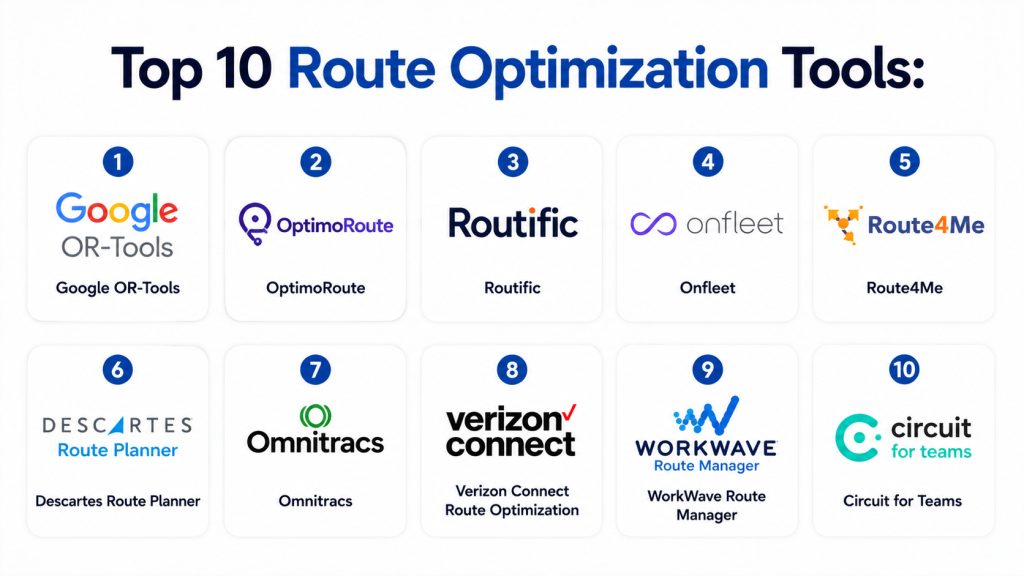
Top 10 Route Optimization Tools
1 — Google OR-Tools
Google OR-Tools is an open-source optimization library widely used for solving complex routing, scheduling, and logistics problems. It is highly flexible and used by developers and enterprises building custom routing engines.
Key Features
- Advanced vehicle routing problem (VRP) solver
- Constraint-based optimization engine
- Multi-stop route optimization
- Customizable scheduling logic
- Integration with Python, Java, C++, and more
- Supports large-scale optimization problems
- Open-source extensibility
Pros
- Extremely powerful and flexible
- Free and open-source
- Highly customizable for developers
Cons
- Requires strong technical expertise
- No built-in UI or SaaS interface
Platforms / Deployment
- Web / Linux / Windows / macOS
- Self-hosted
Security & Compliance
- Not publicly stated (depends on implementation)
Integrations & Ecosystem
Used as a backend optimization engine integrated into logistics systems:
- Custom logistics platforms
- TMS and dispatch systems
- API-based routing engines
Support & Community
Strong developer community with extensive documentation and open-source contributions.
2— OptimoRoute
OptimoRoute is a cloud-based route planning and scheduling platform designed for delivery and field service businesses.
Key Features
- Automated route optimization
- Real-time GPS tracking
- Driver mobile app
- Multi-stop scheduling
- Delivery time window management
- Live route adjustments
- Performance analytics
Pros
- Easy to use and fast setup
- Strong last-mile optimization
- Good mobile experience
Cons
- Limited deep customization
- Less suitable for very large enterprises
Platforms / Deployment
- Web / iOS / Android
- Cloud
Security & Compliance
- Not publicly stated
Integrations & Ecosystem
- E-commerce platforms
- ERP systems
- API integrations
- CRM systems
Support & Community
Good onboarding support and documentation for SMB and mid-market users.
3 — Routific
Routific is a delivery optimization platform focused on small to mid-sized businesses.
Key Features
- Smart multi-stop route optimization
- Driver dispatch management
- Real-time tracking
- Delivery time window planning
- CSV and API imports
- Route simulation tools
- Proof of delivery tracking
Pros
- Very simple interface
- Fast route generation
- Strong SMB focus
Cons
- Limited enterprise scalability
- Basic advanced analytics
Platforms / Deployment
- Web / Mobile
- Cloud
Security & Compliance
- Not publicly stated
Integrations & Ecosystem
- Shopify and eCommerce platforms
- API integrations
- Delivery management tools
Support & Community
Strong SMB support with easy onboarding.
4 — Onfleet
Onfleet is a last-mile delivery management platform with strong routing and dispatch capabilities.
Key Features
- Real-time route optimization
- Driver mobile app with navigation
- Live delivery tracking
- Automated dispatching
- Customer notifications
- Proof of delivery capture
- Analytics dashboards
Pros
- Excellent last-mile delivery focus
- Strong user experience
- Real-time visibility
Cons
- Premium pricing model
- Limited deep customization
Platforms / Deployment
- Web / iOS / Android
- Cloud
Security & Compliance
- Encryption and access controls
- RBAC features
Integrations & Ecosystem
- API-first architecture
- CRM systems
- Logistics platforms
- E-commerce integrations
Support & Community
Strong support with enterprise onboarding options.
5 — Route4Me
Route4Me is a widely used route optimization platform for delivery and field service businesses.
Key Features
- Multi-stop route optimization
- Route sequencing and scheduling
- Real-time GPS tracking
- Driver mobile application
- Route analytics and reporting
- API-based integrations
- Fleet management tools
Pros
- Strong scalability
- Flexible routing options
- Good analytics capabilities
Cons
- UI complexity for beginners
- Advanced features require higher plans
Platforms / Deployment
- Web / Mobile
- Cloud
Security & Compliance
- Not publicly stated
Integrations & Ecosystem
- ERP systems
- CRM platforms
- Logistics software
- API integrations
Support & Community
Good enterprise and SMB support coverage.
6 — Descartes Route Planner
Descartes provides enterprise-grade logistics and route optimization solutions for complex supply chain operations.
Key Features
- Advanced route optimization engine
- Multi-vehicle scheduling
- Real-time tracking
- Logistics planning tools
- Delivery constraint management
- Fleet optimization analytics
- Geospatial intelligence tools
Pros
- Strong enterprise logistics capabilities
- Highly scalable system
- Deep optimization engine
Cons
- Complex implementation
- Less intuitive UI
Platforms / Deployment
- Web / Cloud / Hybrid
Security & Compliance
- Enterprise-grade security controls
- Audit logs and RBAC
Integrations & Ecosystem
- TMS platforms
- ERP systems
- Logistics networks
- Carrier systems
Support & Community
Strong enterprise support structure.
7— Omnitracs
Omnitracs is a fleet and route optimization platform widely used in transportation and trucking industries.
Key Features
- Route optimization for fleets
- Driver safety monitoring
- Fleet tracking and telematics
- Compliance management
- Predictive analytics
- Dispatch optimization
- Mobile driver tools
Pros
- Strong trucking industry focus
- Reliable fleet tracking
- Advanced telematics integration
Cons
- Less suitable for SMBs
- Complex setup process
Platforms / Deployment
- Web / Mobile
- Cloud
Security & Compliance
- Enterprise security controls
- Compliance reporting tools
Integrations & Ecosystem
- Telematics systems
- ERP systems
- Fleet management tools
Support & Community
Strong enterprise support for transportation companies.
8 — Verizon Connect Route Optimization
Verizon Connect provides fleet management and route optimization for large-scale logistics operations.
Key Features
- Dynamic route optimization
- Real-time vehicle tracking
- Driver behavior analytics
- Dispatch management tools
- Fuel efficiency optimization
- Mobile workforce tools
- Reporting dashboards
Pros
- Strong enterprise reliability
- Excellent fleet visibility
- Scalable infrastructure
Cons
- Higher pricing tiers
- Complex onboarding
Platforms / Deployment
- Web / Mobile
- Cloud
Security & Compliance
- Enterprise-grade encryption
- Role-based access control
Integrations & Ecosystem
- ERP systems
- Fleet tracking tools
- Logistics platforms
Support & Community
Strong enterprise-level support network.
9 — WorkWave Route Manager
WorkWave is a route optimization and field service management platform for SMB and mid-market logistics companies.
Key Features
- Route planning and optimization
- Driver scheduling tools
- Real-time tracking
- Customer notifications
- Field service dispatch
- Mobile driver apps
- Reporting dashboards
Pros
- Strong SMB usability
- Easy to deploy
- Good route planning tools
Cons
- Limited enterprise scalability
- Fewer advanced AI features
Platforms / Deployment
- Web / Mobile
- Cloud
Security & Compliance
- Not publicly stated
Integrations & Ecosystem
- CRM systems
- ERP tools
- API integrations
Support & Community
Good SMB-focused support.
10 — Circuit for Teams
Circuit is a simple yet effective route optimization tool focused on delivery drivers and small logistics teams.
Key Features
- Fast route optimization
- Multi-stop route planning
- Mobile driver app
- Delivery scheduling
- Real-time updates
- Route editing tools
- GPS navigation integration
Pros
- Very easy to use
- Fast route generation
- Ideal for small teams
Cons
- Not enterprise-grade
- Limited advanced analytics
Platforms / Deployment
- Web / iOS / Android
- Cloud
Security & Compliance
- Not publicly stated
Integrations & Ecosystem
- Google Maps-based integrations
- API support
- Delivery tools
Support & Community
Basic support with user-friendly documentation.
Comparison Table (Top 10)
| Tool Name | Best For | Platform(s) Supported | Deployment | Standout Feature | Public Rating |
|---|---|---|---|---|---|
| Google OR-Tools | Developers | Web | Self-hosted | Optimization engine | N/A |
| OptimoRoute | SMB delivery | Web/Mobile | Cloud | Easy routing | N/A |
| Routific | Small businesses | Web/Mobile | Cloud | Simplicity | N/A |
| Onfleet | Last-mile delivery | Web/Mobile | Cloud | Real-time tracking | N/A |
| Route4Me | Fleet routing | Web/Mobile | Cloud | Scalability | N/A |
| Descartes | Enterprise logistics | Web | Hybrid | Advanced optimization | N/A |
| Omnitracs | Trucking fleets | Web/Mobile | Cloud | Telematics integration | N/A |
| Verizon Connect | Large fleets | Web/Mobile | Cloud | Fleet intelligence | N/A |
| WorkWave | SMB field service | Web/Mobile | Cloud | Dispatch tools | N/A |
| Circuit | Small teams | Web/Mobile | Cloud | Simple routing | N/A |
Evaluation & Scoring of Route Optimization Tools
| Tool Name | Core (25%) | Ease (15%) | Integrations (15%) | Security (10%) | Performance (10%) | Support (10%) | Value (15%) | Weighted Total |
|---|---|---|---|---|---|---|---|---|
| Google OR-Tools | 10 | 5 | 9 | 7 | 10 | 9 | 10 | 8.6 |
| OptimoRoute | 9 | 9 | 8 | 8 | 9 | 8 | 9 | 8.7 |
| Routific | 8 | 9 | 7 | 8 | 8 | 8 | 9 | 8.3 |
| Onfleet | 9 | 9 | 9 | 9 | 9 | 9 | 7 | 8.8 |
| Route4Me | 9 | 8 | 9 | 8 | 9 | 8 | 8 | 8.5 |
| Descartes | 10 | 6 | 9 | 10 | 10 | 9 | 7 | 8.7 |
| Omnitracs | 9 | 7 | 9 | 9 | 9 | 8 | 7 | 8.3 |
| Verizon Connect | 9 | 7 | 9 | 9 | 9 | 8 | 7 | 8.3 |
| WorkWave | 8 | 9 | 8 | 8 | 8 | 8 | 9 | 8.4 |
| Circuit | 7 | 10 | 7 | 7 | 7 | 7 | 10 | 8.1 |
Interpretation:
Scores reflect comparative capability across routing intelligence, scalability, and usability. Higher scores indicate stronger optimization engines and enterprise readiness, while mid-range tools emphasize ease of use and speed of deployment. Open-source tools score higher in flexibility but lower in usability due to technical complexity.
Which Route Optimization Tool Is Right for You?
Solo / Freelancer
Circuit or OptimoRoute are best due to simplicity and fast setup.
SMB
Routific, WorkWave, and OptimoRoute offer strong balance of usability and cost efficiency.
Mid-Market
Onfleet, Route4Me, and Omnitracs provide scalability with advanced routing capabilities.
Enterprise
Descartes, Verizon Connect, and Google OR-Tools (custom builds) are ideal for large-scale optimization.
Budget vs Premium
- Budget-friendly: Circuit, Routific
- Premium: Descartes, Verizon Connect, Onfleet
Feature Depth vs Ease of Use
- Advanced: Descartes, OR-Tools
- Easy to use: Circuit, OptimoRoute
Integrations & Scalability
Route4Me, Onfleet, and Verizon Connect offer strong ecosystem integration.
Security & Compliance Needs
Enterprise tools like Descartes and Verizon Connect offer stronger compliance readiness.
Frequently Asked Questions (FAQs)
1. What are Route Optimization Tools?
Route Optimization Tools are software systems that calculate the most efficient routes for deliveries, logistics, or field services. They help reduce travel time, fuel cost, and improve operational efficiency. These tools use algorithms, AI, and real-time traffic data to improve routing decisions.
2. Who uses Route Optimization Tools?
These tools are widely used by logistics companies, eCommerce businesses, delivery services, field service teams, and transportation providers. Any business managing multiple stops or vehicles benefits from route optimization.
3. How do Route Optimization Tools work?
They analyze multiple inputs such as locations, traffic conditions, delivery time windows, and vehicle capacity. Then they generate the most efficient route plan using optimization algorithms.
4. What are the benefits of using Route Optimization Tools?
They reduce fuel consumption, improve delivery speed, increase driver productivity, and enhance customer satisfaction. They also help businesses scale operations efficiently.
5. Are Route Optimization Tools suitable for small businesses?
Yes, many tools are designed for SMBs with simple interfaces and affordable pricing. However, very small operations may not need advanced optimization features.
6. Do these tools support real-time tracking?
Yes, most modern platforms include real-time GPS tracking. This allows businesses to monitor deliveries and adjust routes dynamically when needed.
7. Can Route Optimization Tools integrate with other systems?
Yes, they often integrate with ERP, CRM, TMS, and fleet management systems. This helps create a fully connected logistics ecosystem.
8. What is dynamic routing?
Dynamic routing is the ability to adjust delivery routes in real time based on traffic, delays, or new orders. It improves efficiency and responsiveness.
9. Is cloud-based deployment common for these tools?
Yes, most modern Route Optimization Tools are cloud-based. This allows remote access, scalability, and real-time updates for teams.
10. What challenges do companies face when using these tools?
Common challenges include integration complexity, data accuracy, driver adoption, and initial setup effort. Proper training and planning can reduce these issues significantly.
Conclusion
Route Optimization Tools have become essential for modern logistics and delivery operations. They are no longer simple mapping systems but intelligent platforms that use AI, real-time data, and advanced algorithms to optimize every movement in a supply chain. The right solution depends on business scale and complexity. SMBs may prefer simple tools like Circuit or OptimoRoute, while mid-market organizations benefit from Onfleet or Route4Me. Enterprises require powerful systems like Descartes or Verizon Connect, and highly technical teams may leverage Google OR-Tools for custom optimization. Ultimately, organizations should shortlist a few tools, test them using real delivery scenarios, and evaluate how well they integrate with existing logistics systems before making a final decision.

Find Trusted Cardiac Hospitals
Compare heart hospitals by city and services — all in one place.
Explore Hospitals
Route optimization tools are very helpful for saving time, reducing fuel costs, and making deliveries more efficient with smarter planning.