Introduction
Fleet Management Tools are software platforms designed to help organizations monitor, manage, and optimize their vehicle fleets. These systems provide visibility into vehicle location, driver behavior, fuel consumption, maintenance schedules, and route efficiency. In simple terms, fleet management software ensures that every vehicle in a business is operating efficiently, safely, and cost-effectively. fleet operations are becoming increasingly data-driven and automated. Rising fuel costs, stricter compliance regulations, sustainability goals, and customer demand for faster deliveries are pushing organizations to adopt advanced fleet intelligence platforms. Modern fleet systems now integrate AI, IoT sensors, and predictive analytics to reduce downtime and improve operational efficiency.
Common real-world use cases include:
- Real-time vehicle tracking and GPS monitoring
- Route optimization for delivery efficiency
- Predictive maintenance to reduce breakdowns
- Fuel usage monitoring and cost reduction
- Driver safety and behavior analytics
- Compliance management for logistics regulations
What buyers should evaluate:
- Real-time tracking accuracy and visibility depth
- AI-driven route optimization capabilities
- Maintenance scheduling and predictive alerts
- Integration with logistics, ERP, and TMS systems
- Scalability for large and distributed fleets
- Security controls, access management, and audit logs
- Mobile accessibility for drivers and managers
- Reporting and analytics capabilities
- Hardware compatibility (IoT, sensors, GPS devices)
- Total cost of ownership and ROI potential
Best for:
Logistics companies, transportation providers, delivery services, construction firms, eCommerce fleets, utility service providers, and enterprises managing medium to large vehicle fleets.
Not ideal for:
Very small businesses with only a few vehicles, companies without delivery or logistics operations, or organizations that rely solely on outsourced transportation providers.
Key Trends in Fleet Management Tools
- AI-powered predictive maintenance to prevent vehicle breakdowns
- Real-time GPS tracking with high-frequency telemetry updates
- Integration of IoT sensors for fuel, engine health, and driver behavior
- Electric vehicle (EV) fleet monitoring and battery optimization
- Cloud-native fleet platforms replacing legacy on-premise systems
- Advanced route optimization using machine learning models
- Sustainability tracking including carbon emission reporting
- Automated compliance monitoring for driving regulations
- Integration with TMS, ERP, and supply chain platforms
- Driver safety scoring using AI-based behavioral analysis
How We Selected These Tools (Methodology)
- Evaluated global adoption across logistics and transportation industries
- Considered depth of fleet tracking and telematics capabilities
- Assessed AI-driven optimization and automation features
- Reviewed integration ecosystems with ERP, TMS, and IoT platforms
- Focused on scalability for enterprise and mid-market fleets
- Included tools supporting real-time tracking and predictive analytics
- Analyzed reliability, uptime, and operational maturity signals
- Considered mobile usability for drivers and fleet managers
- Included platforms with strong industry recognition and adoption
- Ensured a balanced mix of enterprise and mid-market solutions
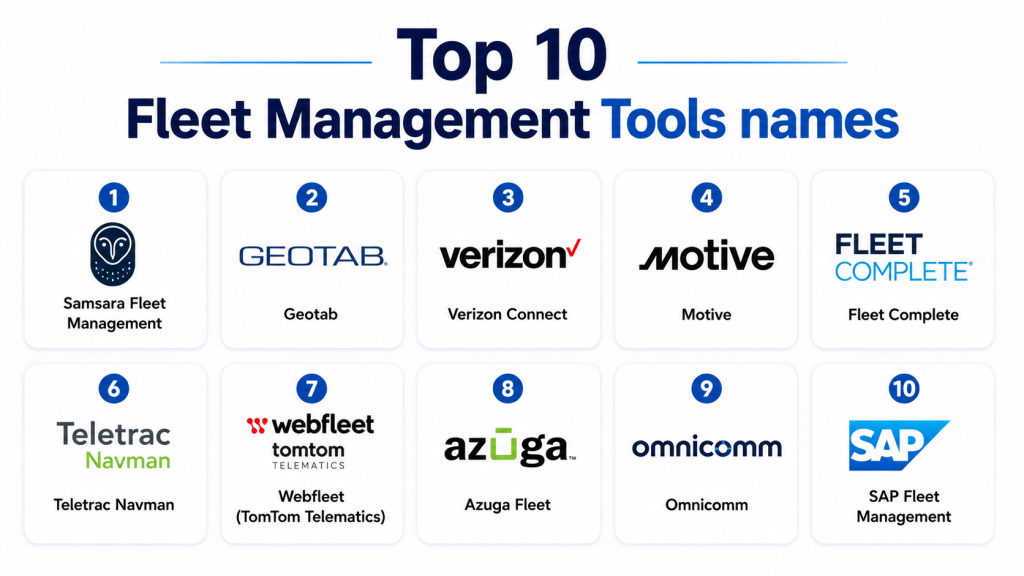
Top 10 Fleet Management Tools
1 — Samsara Fleet Management
Samsara is a cloud-based fleet intelligence platform widely used for real-time tracking, safety monitoring, and operational efficiency. It is designed for logistics-heavy organizations needing end-to-end fleet visibility.
Key Features
- Real-time GPS fleet tracking
- AI-powered dashcam safety monitoring
- Driver behavior analytics and scoring
- Route optimization and dispatch tools
- Fuel usage and idle time monitoring
- Maintenance scheduling and alerts
- Mobile fleet management dashboard
Pros
- Strong real-time visibility capabilities
- Excellent AI-based safety features
- Highly scalable cloud platform
Cons
- Higher pricing for small fleets
- Requires hardware installation
Platforms / Deployment
- Web / iOS / Android
- Cloud
Security & Compliance
- Role-based access control
- Encryption in transit and at rest
- Audit logging capabilities
Integrations & Ecosystem
Samsara integrates with logistics, ERP, and telematics ecosystems.
- API-first architecture
- TMS integrations
- Maintenance systems
- Fuel tracking tools
Support & Community
Strong enterprise support with onboarding assistance and documentation resources.
2— Geotab Fleet Management
Geotab is one of the most widely adopted telematics platforms offering deep data analytics for fleet optimization.
Key Features
- Advanced GPS tracking
- Vehicle diagnostics and engine monitoring
- Driver safety insights
- Fuel consumption analytics
- Custom reporting dashboards
- IoT device integrations
- EV fleet tracking
Pros
- Strong analytics capabilities
- Highly customizable reporting
- Large global adoption
Cons
- Interface may feel technical
- Requires configuration effort
Platforms / Deployment
- Web / Mobile
- Cloud
Security & Compliance
- MFA and SSO support
- Encryption standards applied
- Compliance features vary by region
Integrations & Ecosystem
- ERP systems
- Fleet sensors and IoT devices
- Fuel management systems
- Maintenance platforms
Support & Community
Large global partner ecosystem with strong documentation.
3 — Verizon Connect
Verizon Connect provides comprehensive fleet tracking and management solutions for mid-to-large enterprises.
Key Features
- Real-time vehicle tracking
- Route optimization
- Driver behavior monitoring
- Work order management
- Fuel usage tracking
- Compliance reporting
- Mobile workforce management
Pros
- Strong enterprise reliability
- Wide telematics coverage
- Good mobile support
Cons
- Pricing not flexible for small fleets
- Setup can be complex
Platforms / Deployment
- Web / Mobile
- Cloud
Security & Compliance
- Enterprise-grade security controls
- Role-based access
Integrations & Ecosystem
- Logistics platforms
- ERP systems
- Dispatch systems
- Fuel monitoring tools
Support & Community
Enterprise support with structured onboarding processes.
4 — Motive Fleet Management
Motive (formerly KeepTruckin) focuses on AI-powered fleet safety and compliance solutions.
Key Features
- AI dashcams for safety monitoring
- GPS tracking and dispatch
- Electronic logging device (ELD) compliance
- Fuel management tools
- Driver safety scoring
- Route optimization
- Maintenance tracking
Pros
- Strong safety and compliance focus
- Easy-to-use interface
- Fast deployment
Cons
- Advanced features require higher tiers
- Limited customization in some modules
Platforms / Deployment
- Web / iOS / Android
- Cloud
Security & Compliance
- ELD compliance support
- Secure data encryption
- Access control features
Integrations & Ecosystem
- Logistics software
- Payroll systems
- ERP tools
- Fuel tracking systems
Support & Community
Strong support with onboarding and training resources.
5 — Fleet Complete
Fleet Complete is a global fleet and asset management platform supporting multiple industries.
Key Features
- Real-time fleet tracking
- Asset and equipment tracking
- Mobile workforce management
- Driver safety monitoring
- Route planning tools
- Reporting dashboards
- Maintenance scheduling
Pros
- Strong multi-asset tracking
- Flexible industry use cases
- Global presence
Cons
- UI can feel outdated
- Advanced analytics limited
Platforms / Deployment
- Web / Mobile
- Cloud
Security & Compliance
- Standard encryption protocols
- Role-based access controls
Integrations & Ecosystem
- ERP systems
- Telematics devices
- Logistics tools
- APIs for extensions
Support & Community
Moderate support with regional availability.
6 — Teletrac Navman
Teletrac Navman offers fleet tracking and operational intelligence tools for transportation companies.
Key Features
- Live GPS tracking
- Fleet performance analytics
- Driver safety monitoring
- Compliance reporting
- Route optimization
- Maintenance tracking
- Fuel usage analysis
Pros
- Strong reporting capabilities
- Reliable tracking system
- Good enterprise adoption
Cons
- Interface complexity for beginners
- Limited modern UI experience
Platforms / Deployment
- Web / Mobile
- Cloud
Security & Compliance
- Standard enterprise security features
- Audit logging
Integrations & Ecosystem
- ERP systems
- Fleet sensors
- Logistics software
Support & Community
Enterprise support with documentation resources.
7 — Webfleet (TomTom Telematics)
Webfleet is a widely used European fleet management solution known for GPS accuracy and routing intelligence.
Key Features
- Real-time GPS tracking
- Route optimization
- Driver behavior monitoring
- Fleet performance dashboards
- Fuel efficiency tracking
- Maintenance alerts
- Compliance tools
Pros
- High GPS accuracy
- Strong European market adoption
- Reliable routing intelligence
Cons
- Limited global expansion vs competitors
- Feature depth varies by package
Platforms / Deployment
- Web / Mobile
- Cloud
Security & Compliance
- GDPR-aligned data handling
- Standard encryption practices
Integrations & Ecosystem
- Logistics platforms
- ERP systems
- Navigation systems
Support & Community
Strong regional support in Europe.
8 — Azuga Fleet
Azuga provides fleet tracking and safety-focused telematics solutions for SMBs and mid-market companies.
Key Features
- GPS fleet tracking
- Driver scoring system
- Safety alerts and monitoring
- Fuel tracking tools
- Maintenance reminders
- Route planning
- Mobile fleet management
Pros
- Easy to deploy
- Good for SMB fleets
- Strong safety features
Cons
- Limited enterprise scalability
- Basic analytics compared to competitors
Platforms / Deployment
- Web / Mobile
- Cloud
Security & Compliance
- Encryption and access control
- Standard security framework
Integrations & Ecosystem
- Fuel systems
- ERP tools
- Fleet hardware integrations
Support & Community
Good SMB-focused support.
9 — Omnicomm Fleet Management
Omnicomm specializes in fuel monitoring and telematics solutions for fleet optimization.
Key Features
- Fuel consumption monitoring
- GPS fleet tracking
- Driver behavior analytics
- Sensor-based vehicle diagnostics
- Route optimization
- Maintenance tracking
- Reporting dashboards
Pros
- Strong fuel analytics
- Accurate sensor integration
- Cost-efficient tracking
Cons
- Limited UI sophistication
- Smaller global ecosystem
Platforms / Deployment
- Web / Cloud
Security & Compliance
- Standard encryption protocols
- Role-based access
Integrations & Ecosystem
- IoT sensors
- Fleet tracking devices
- ERP systems
Support & Community
Moderate support with regional availability.
10 — SAP Fleet Management
SAP Fleet Management is part of SAP’s enterprise ecosystem designed for large-scale logistics and asset-heavy operations.
Key Features
- Enterprise fleet tracking
- Maintenance and service scheduling
- Integration with SAP ERP
- Fuel and cost optimization
- Compliance management
- Asset lifecycle tracking
- Reporting and analytics
Pros
- Deep ERP integration
- Highly scalable enterprise solution
- Strong process automation
Cons
- Complex implementation
- High cost structure
Platforms / Deployment
- Cloud / Hybrid
Security & Compliance
- SAP enterprise security standards
- RBAC and audit logging
- Compliance controls vary by deployment
Integrations & Ecosystem
- SAP ERP suite
- Supply chain systems
- Logistics platforms
- Financial systems
Support & Community
Strong enterprise-level SAP support ecosystem.
Comparison Table (Top 10)
| Tool Name | Best For | Platform(s) Supported | Deployment | Standout Feature | Public Rating |
|---|---|---|---|---|---|
| Samsara | Enterprise fleets | Web/Mobile | Cloud | AI safety analytics | N/A |
| Geotab | Data-driven fleets | Web/Mobile | Cloud | Advanced analytics | N/A |
| Verizon Connect | Large enterprises | Web/Mobile | Cloud | Route optimization | N/A |
| Motive | Compliance fleets | Web/Mobile | Cloud | AI dashcams | N/A |
| Fleet Complete | Multi-asset fleets | Web/Mobile | Cloud | Asset tracking | N/A |
| Teletrac Navman | Transport fleets | Web/Mobile | Cloud | Reporting tools | N/A |
| Webfleet | EU fleets | Web/Mobile | Cloud | GPS accuracy | N/A |
| Azuga | SMB fleets | Web/Mobile | Cloud | Ease of use | N/A |
| Omnicomm | Fuel-focused fleets | Web | Cloud | Fuel monitoring | N/A |
| SAP Fleet | Enterprise ERP fleets | Web | Cloud/Hybrid | ERP integration | N/A |
Evaluation & Scoring of Fleet Management Tools
| Tool Name | Core (25%) | Ease (15%) | Integrations (15%) | Security (10%) | Performance (10%) | Support (10%) | Value (15%) | Weighted Total |
|---|---|---|---|---|---|---|---|---|
| Samsara | 10 | 8 | 9 | 9 | 9 | 9 | 8 | 8.9 |
| Geotab | 9 | 7 | 9 | 9 | 9 | 8 | 8 | 8.5 |
| Verizon Connect | 9 | 7 | 9 | 9 | 9 | 8 | 7 | 8.3 |
| Motive | 9 | 8 | 8 | 9 | 9 | 8 | 8 | 8.4 |
| Fleet Complete | 8 | 7 | 8 | 8 | 8 | 8 | 8 | 7.9 |
| Teletrac Navman | 8 | 7 | 8 | 8 | 8 | 8 | 7 | 7.8 |
| Webfleet | 8 | 8 | 8 | 8 | 8 | 8 | 8 | 8.0 |
| Azuga | 7 | 9 | 7 | 8 | 7 | 8 | 9 | 7.8 |
| Omnicomm | 7 | 7 | 8 | 8 | 8 | 7 | 8 | 7.6 |
| SAP Fleet | 10 | 6 | 10 | 10 | 9 | 9 | 7 | 8.8 |
Interpretation:
Higher scores indicate stronger enterprise capability, deeper integrations, and advanced optimization features. Mid-range tools often provide better usability and cost efficiency. Lower scores reflect niche focus or limited global scalability rather than poor quality.
Which Fleet Management Tool Is Right for You?
Solo / Freelancer
Fleet management platforms are generally unnecessary unless managing delivery vehicles. Lightweight GPS tracking tools are more suitable.
SMB
Azuga, Webfleet, and Fleet Complete offer balanced usability, affordability, and core tracking capabilities.
Mid-Market
Motive, Geotab, and Teletrac Navman provide strong analytics, safety monitoring, and scalability.
Enterprise
Samsara, SAP Fleet, and Verizon Connect are ideal for large-scale logistics and global fleet operations.
Budget vs Premium
- Budget-friendly: Azuga, Webfleet
- Premium: Samsara, SAP Fleet, Verizon Connect
Feature Depth vs Ease of Use
- Advanced: SAP Fleet, Geotab
- Easy to use: Azuga, Motive
Integrations & Scalability
SAP Fleet and Samsara lead in ecosystem depth and enterprise scalability.
Security & Compliance Needs
SAP Fleet, Samsara, and Verizon Connect provide strong enterprise-grade security frameworks.
Frequently Asked Questions (FAQs)
1. What is fleet management software?
Fleet management software helps businesses track, monitor, and optimize vehicle operations. It improves efficiency, reduces costs, and enhances safety across fleets.
2. Who uses fleet management tools?
Logistics companies, delivery services, transportation providers, construction firms, and utility companies use fleet management systems.
3. What problems do fleet systems solve?
They solve inefficiencies in routing, fuel wastage, vehicle downtime, safety issues, and lack of real-time visibility.
4. Is fleet management only for large companies?
No, SMBs can also use fleet tools. Many platforms offer scalable solutions for small and mid-sized fleets.
5. How does GPS tracking work in fleet systems?
GPS devices installed in vehicles transmit real-time location data to cloud platforms for monitoring and analytics.
6. Can fleet tools reduce fuel costs?
Yes, by optimizing routes, reducing idle time, and monitoring driving behavior, fuel consumption can be significantly reduced.
7. What is predictive maintenance in fleet management?
It uses vehicle data to predict potential breakdowns and schedule maintenance before failures occur.
8. Are fleet systems cloud-based?
Most modern fleet management platforms are cloud-based, offering real-time updates and remote accessibility.
9. How long does implementation take?
Implementation can take from a few days to several weeks depending on fleet size and system complexity.
10. What are common challenges in fleet management adoption?
Challenges include hardware installation, driver adoption, integration with existing systems, and data accuracy management.
Conclusion
Fleet Management Tools have become essential for organizations that rely on transportation and logistics operations. These platforms go beyond simple tracking and now offer AI-driven insights, predictive maintenance, and real-time optimization that significantly improve operational efficiency. The right solution depends on business size and operational complexity. Enterprise organizations may prefer SAP Fleet, Samsara, or Verizon Connect for their scalability and deep integrations, while mid-market and SMBs may find better flexibility with Motive, Azuga, or Webfleet. Ultimately, the best approach is to evaluate fleet requirements, test shortlisted tools in real operational environments, and ensure strong integration with existing logistics and ERP systems. This ensures long-term efficiency, safety, and cost optimization across fleet operations.

Find Trusted Cardiac Hospitals
Compare heart hospitals by city and services — all in one place.
Explore Hospitals
Fleet management tools make it much easier to track vehicles, improve efficiency, and manage operations more smoothly.