Introduction
Proposal and RFP management tools help businesses create, manage, review, approve, submit, and track proposals, RFP responses, RFIs, security questionnaires, bids, and sales documents. Instead of using scattered documents, repeated copy-paste work, outdated answer libraries, email approvals, and manual formatting, these platforms centralize proposal content, automate response workflows, and improve collaboration across sales, marketing, legal, finance, product, security, and subject matter expert teams. These tools matter because buyers now expect faster, more accurate, and more personalized responses. Sales teams need to answer complex questionnaires, produce polished proposals, reuse approved content, and track buyer engagement without slowing down deal cycles.
Real World Use Cases
- Responding to RFPs, RFIs, DDQs, and security questionnaires
- Creating sales proposals, quotes, and business documents
- Managing approved answer libraries and reusable content
- Coordinating reviews across sales, legal, finance, product, and security teams
- Tracking proposal engagement, approvals, deadlines, and win-loss signals
Evaluation Criteria for Buyers
- RFP response automation
- Proposal creation and formatting quality
- Content library and answer management
- AI-assisted drafting and search
- Review, approval, and collaboration workflows
- CRM and document integration support
- Buyer engagement analytics
- Security, permissions, and audit controls
- Ease of use for sales and subject matter experts
- Pricing fit for proposal volume and team size
Best for: Proposal and RFP management tools are best for sales teams, proposal managers, bid teams, revenue operations teams, marketing teams, security teams, procurement response teams, agencies, SaaS companies, IT service providers, consulting firms, government contractors, and enterprises that handle frequent proposals or formal RFP responses.
Not ideal for: Very small teams that create only a few simple proposals per year may not need a dedicated proposal or RFP platform. A document editor, CRM template, shared folder, or lightweight proposal builder may be enough until response volume, review complexity, or content governance needs increase.
Key Trends in Proposal & RFP Management Tools for Modern Businesses
- AI-assisted response drafting is becoming mainstream: Proposal teams increasingly use AI to suggest answers, summarize requirements, search content libraries, and draft first versions of RFP responses.
- Answer libraries are becoming smarter: Modern tools do more than store old responses; they help recommend approved answers, flag outdated content, and improve content reuse.
- Security questionnaires are driving automation needs: SaaS and technology companies face more security, privacy, and compliance questionnaires, making reusable approved responses essential.
- Proposal teams want workflow governance: Companies need role-based review, legal approval, SME assignments, deadline tracking, and audit history to prevent rushed or inconsistent submissions.
- Buyer engagement tracking is more important: Sales teams want to see when prospects open proposals, which sections they view, and where buyer interest is strongest.
- CRM-connected proposal workflows are expected: Sales reps want to generate proposals from opportunity data, account details, pricing information, and approved templates without duplicate entry.
- Brand consistency is a major priority: Marketing and proposal teams need approved templates, messaging, visuals, and formatting so documents look professional and consistent.
- Hybrid proposal and sales document tools are growing: Many companies want one platform for proposals, RFPs, quotes, contracts, sales decks, and customer-facing documents.
- Collaboration with subject matter experts is improving: Tools now support assignments, comments, version control, answer ownership, and expert review workflows.
- Analytics are moving beyond submission tracking: Teams want insights into content performance, response speed, win rates, bottlenecks, and which answers help move deals forward.
How We Selected These Tools
The tools below were selected using practical evaluation logic for proposal creation, RFP response management, content governance, collaboration, automation, buyer engagement, and scalability.
- Market adoption and recognition: Preference was given to tools commonly recognized by proposal teams, revenue teams, sales operations, marketing, bid management, and RFP response teams.
- Feature completeness: Platforms were evaluated for RFP automation, proposal building, content libraries, workflow management, approvals, analytics, and collaboration.
- Content management depth: Strong tools should support reusable answers, content ownership, version control, search, tagging, and content expiration.
- AI and automation capabilities: Tools with AI-assisted drafting, answer recommendations, document automation, and workflow triggers were prioritized.
- Sales workflow fit: Platforms that connect well with CRM, sales documents, pricing, and buyer engagement workflows were considered stronger.
- Collaboration support: Tools were evaluated for SME assignments, review comments, approval routing, deadlines, and team accountability.
- Security posture signals: Role-based access, admin controls, audit logs, secure sharing, and data governance were considered where confidently known.
- Scalability: The list includes platforms for SMBs, mid-market companies, enterprises, proposal teams, agencies, consulting teams, and RFP-heavy organizations.
- Ease of adoption: A good platform must be usable by sales reps, proposal managers, and occasional subject matter experts.
- No invented ratings: Public ratings are not guessed. Where rating confidence is not strong, “N/A” is used.
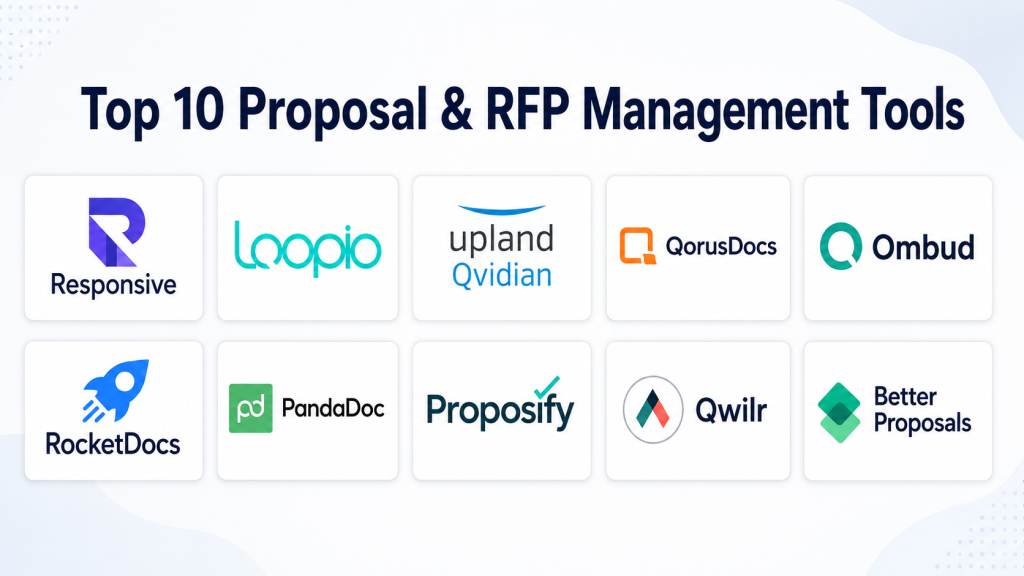
Top 10 Proposal & RFP Management Tools
1- Responsive
Short description: Responsive is a proposal and response management platform designed for RFPs, RFIs, security questionnaires, DDQs, and complex response workflows. It is best for teams that need reusable answer libraries, AI-assisted responses, collaboration, and governance across high-volume proposal work.
Key Features
- RFP and questionnaire response automation
- Centralized answer and content library
- AI-assisted answer recommendations
- SME assignment and collaboration workflows
- Review and approval management
- Analytics for response performance and content usage
- CRM and business system integration support
Pros
- Strong fit for RFP-heavy organizations
- Useful for managing reusable approved responses
- Helps reduce manual copy-paste work and response bottlenecks
Cons
- Requires content library cleanup for best results
- Implementation can take planning for large teams
- May be more than needed for very simple proposal workflows
Platforms / Deployment
Web
Cloud
Security & Compliance
Responsive provides business-grade administrative controls, user permissions, and response workflow governance. Specific certifications, SSO, MFA, RBAC, audit logs, and compliance documentation should be verified directly during vendor review.
Integrations & Ecosystem
Responsive connects proposal and RFP workflows with sales, knowledge, security, and business systems so teams can reuse approved content and manage response tasks more efficiently.
- CRM integrations
- Document storage integrations
- Collaboration tool connections
- Security questionnaire workflows
- Knowledge library workflows
- Reporting and analytics exports
Support & Community
Responsive provides onboarding resources, customer support, implementation guidance, documentation, and response management best practices. Support depth may vary by plan, team size, and deployment complexity.
2- Loopio
Short description: Loopio is an RFP response and proposal management platform that helps teams build answer libraries, automate responses, assign work, collaborate with experts, and improve response quality. It is best for proposal teams that need strong content reuse and workflow control.
Key Features
- RFP, RFI, and questionnaire response management
- Centralized answer library
- Content review and freshness workflows
- SME assignments and collaboration
- AI-assisted response support depending on configuration
- Project tracking and deadline management
- Reporting on content and response activity
Pros
- Strong answer library and content governance experience
- Helpful for proposal teams managing frequent RFPs
- Good collaboration workflows for SMEs and reviewers
Cons
- Requires disciplined content ownership
- Best value depends on consistent team adoption
- Advanced customization needs should be validated
Platforms / Deployment
Web
Cloud
Security & Compliance
Loopio provides administrative controls, permissions, and content governance workflows. Specific certifications, SSO, MFA, audit logs, RBAC, and compliance details should be verified directly.
Integrations & Ecosystem
Loopio connects RFP response workflows with sales, content, and collaboration systems, helping teams manage complex proposal work without losing track of ownership.
- CRM integrations
- Content storage integrations
- Collaboration tools
- Document import and export workflows
- Knowledge library workflows
- Reporting exports
Support & Community
Loopio provides documentation, onboarding, customer support, implementation guidance, and proposal management resources. Support depth varies by package and customer needs.
3- Upland Qvidian
Short description: Upland Qvidian is a proposal automation and RFP response platform for creating, managing, and delivering proposals, sales documents, and complex responses. It is best for enterprise and mid-market teams that need proposal automation, content governance, and repeatable document generation.
Key Features
- Proposal automation
- RFP response management
- Reusable content library
- Document assembly workflows
- Approval and review processes
- Template and brand governance
- CRM and business system integration support
Pros
- Strong fit for formal proposal teams
- Useful for standardizing complex proposal documents
- Supports repeatable response and document generation workflows
Cons
- May require setup and configuration planning
- User adoption depends on content organization and templates
- Smaller teams may find it more complex than needed
Platforms / Deployment
Web
Cloud
Security & Compliance
Upland Qvidian provides enterprise-oriented workflow and access control capabilities. Specific certifications, SSO, MFA, RBAC, audit logs, and compliance documentation should be verified directly.
Integrations & Ecosystem
Upland Qvidian supports proposal and RFP workflows that need to connect with sales systems, content sources, document generation, and business processes.
- CRM integrations
- Content library workflows
- Document generation workflows
- Approval and review connections
- Sales operations data flows
- Reporting exports
Support & Community
Upland provides documentation, customer support, onboarding resources, implementation assistance, and enterprise service options. Support depth depends on agreement and implementation scope.
4- QorusDocs
Short description: QorusDocs is a proposal management and document automation platform designed for teams that create proposals, pitches, RFP responses, and sales documents using familiar office productivity workflows. It is useful for proposal teams that want content automation with document collaboration.
Key Features
- Proposal and pitch automation
- RFP response support
- Content library and reusable sections
- Document assembly workflows
- Collaboration and review tools
- CRM and productivity integrations
- Proposal analytics and tracking
Pros
- Strong fit for teams that work heavily in office documents
- Helps standardize proposal content and formatting
- Useful for professional services, legal, consulting, and B2B sales teams
Cons
- Best value depends on structured content templates
- Advanced RFP automation requirements should be validated
- Content governance needs clear ownership
Platforms / Deployment
Web / Windows capabilities may vary
Cloud
Security & Compliance
QorusDocs provides user permissions, document workflow controls, and administrative features. Specific certifications, SSO, MFA, RBAC, audit logs, and compliance details should be verified directly.
Integrations & Ecosystem
QorusDocs works well when proposal workflows are closely connected with office productivity tools, CRM data, and reusable content.
- CRM integrations
- Office document workflows
- Content library connections
- Collaboration workflows
- Document automation
- Analytics exports
Support & Community
QorusDocs provides onboarding, documentation, customer support, and implementation guidance. Support depth may vary by package and customer requirements.
5- Ombud
Short description: Ombud is a revenue content and response management platform used for RFPs, security questionnaires, sales content, and knowledge reuse. It is best for teams that need accurate response content, collaboration, and governance across sales and technical workflows.
Key Features
- RFP and questionnaire response workflows
- Centralized knowledge and answer library
- Content governance and review support
- Collaboration with SMEs
- Sales content and response reuse
- Analytics and reporting
- CRM and productivity integration support
Pros
- Useful for complex technical and security responses
- Helps teams reuse accurate approved content
- Supports collaboration across sales, security, and product teams
Cons
- Requires ongoing content maintenance
- May be too specialized for simple proposal-only workflows
- Integration and workflow depth should be validated for enterprise use
Platforms / Deployment
Web
Cloud
Security & Compliance
Ombud provides administrative controls and content governance workflows. Specific certifications, SSO, MFA, RBAC, audit logs, and compliance documentation should be verified directly.
Integrations & Ecosystem
Ombud supports response workflows that depend on approved knowledge, CRM data, and cross-functional collaboration.
- CRM integrations
- Security questionnaire workflows
- Knowledge library workflows
- Collaboration tool connections
- Document workflows
- Reporting exports
Support & Community
Ombud provides documentation, onboarding resources, customer support, and response management guidance. Support depth depends on customer agreement and rollout size.
6- RocketDocs
Short description: RocketDocs is a proposal, RFP, and content automation platform that helps teams manage response content, automate documents, and collaborate on submissions. It is suitable for organizations that want structured content reuse and faster proposal creation.
Key Features
- RFP response automation
- Proposal document automation
- Reusable content library
- Content search and answer recommendations
- Collaboration workflows
- Review and approval support
- Reporting on content and proposal activity
Pros
- Useful for teams replacing manual response work
- Helps centralize proposal and RFP content
- Supports repeatable document creation workflows
Cons
- Content library setup takes planning
- Advanced enterprise workflows should be validated
- Best results require regular content review and maintenance
Platforms / Deployment
Web
Cloud
Security & Compliance
RocketDocs provides platform access controls and content workflow administration. Specific certifications, SSO, MFA, RBAC, audit logs, and compliance documentation should be verified directly.
Integrations & Ecosystem
RocketDocs connects proposal response work with content libraries, document workflows, and business systems.
- CRM workflows
- Document generation
- Content library integrations
- Collaboration workflows
- Reporting exports
- Sales and proposal process support
Support & Community
RocketDocs provides documentation, onboarding assistance, customer support, and implementation guidance. Support depth may vary by customer size and package.
7- PandaDoc
Short description: PandaDoc is a proposal and document workflow platform for creating, sending, tracking, approving, and signing proposals, quotes, contracts, and sales documents. It is best for sales teams that need polished proposal creation and buyer engagement tracking.
Key Features
- Proposal and document creation
- Template and content library
- E-signature workflows
- Quote and pricing table support
- Approval workflows
- Buyer engagement tracking
- CRM and payment integration support
Pros
- Strong for sales proposals and customer-facing documents
- Easy to use for SMB and mid-market sales teams
- Combines proposal creation, tracking, and signing workflows
Cons
- Not as RFP-response-focused as dedicated RFP platforms
- Complex questionnaire workflows may require another tool
- Content governance depth should be validated for larger teams
Platforms / Deployment
Web / iOS / Android
Cloud
Security & Compliance
PandaDoc provides document access controls, user permissions, and e-signature-related workflows. Specific certifications, SSO, MFA, audit logs, RBAC, and compliance documentation should be verified directly.
Integrations & Ecosystem
PandaDoc connects proposal workflows with CRM, payments, sales documents, and customer approval processes.
- CRM integrations
- Payment workflows
- E-signature workflows
- Template and content library
- Document analytics
- Sales proposal automation
Support & Community
PandaDoc provides documentation, onboarding resources, customer support, templates, and sales document guidance. Support availability varies by plan and business requirements.
8- Proposify
Short description: Proposify is a proposal software platform for creating, managing, sending, and tracking sales proposals. It is best for agencies, service businesses, and sales teams that need branded proposals, templates, approvals, and client engagement tracking.
Key Features
- Proposal builder
- Reusable templates and content sections
- Client engagement tracking
- Approval workflows
- E-signature support
- Pricing and fee tables
- Sales document analytics
Pros
- Good fit for agencies and service businesses
- Helps create polished branded proposals
- Useful for tracking client engagement with proposals
Cons
- Not designed as a full enterprise RFP response platform
- Complex answer-library workflows may be limited
- Best fit depends on proposal style and sales process
Platforms / Deployment
Web
Cloud
Security & Compliance
Proposify provides document access controls and account administration features. Specific certifications, SSO, MFA, RBAC, audit logs, and compliance documentation should be verified directly.
Integrations & Ecosystem
Proposify connects proposal creation with sales workflows, CRM data, signatures, and customer-facing document tracking.
- CRM integrations
- E-signature workflows
- Payment or sales workflow connections
- Proposal templates
- Content library workflows
- Engagement analytics
Support & Community
Proposify provides documentation, templates, customer support, onboarding resources, and proposal best practice guidance. Support depth depends on plan and customer needs.
9- Qwilr
Short description: Qwilr is a proposal and sales document platform that helps teams create interactive web-based proposals, quotes, business cases, and client-facing pages. It is best for teams that want polished digital proposals with buyer engagement analytics.
Key Features
- Web-based proposal pages
- Interactive quotes and pricing blocks
- Proposal templates
- Buyer engagement tracking
- E-signature and acceptance workflows
- CRM integration support
- Brand and design controls
Pros
- Strong for modern, interactive proposals
- Useful for buyer-facing digital experiences
- Good fit for agencies, SaaS, consulting, and services teams
Cons
- Not built mainly for complex RFP response automation
- Traditional document-heavy teams may need workflow adjustment
- Advanced compliance questionnaires may require a dedicated RFP tool
Platforms / Deployment
Web
Cloud
Security & Compliance
Qwilr provides document sharing controls and account administration features. Specific certifications, SSO, MFA, RBAC, audit logs, and compliance details should be verified directly.
Integrations & Ecosystem
Qwilr connects web-based proposal experiences with CRM, sales tools, and customer acceptance workflows.
- CRM integrations
- E-signature workflows
- Proposal page analytics
- Payment or quote workflows
- Template and content workflows
- Sales document sharing
Support & Community
Qwilr provides documentation, templates, customer support, and proposal design guidance. Support depth varies by plan and customer requirements.
10- Better Proposals
Short description: Better Proposals is a proposal software platform for creating, sending, tracking, and signing client proposals. It is best for small businesses, agencies, consultants, and service providers that need professional proposals without complex RFP automation.
Key Features
- Proposal creation and templates
- Client-facing proposal pages
- E-signature workflows
- Proposal tracking and analytics
- Payment collection support depending on setup
- Branding and design controls
- CRM and sales workflow integrations
Pros
- Easy to use for small businesses and agencies
- Helps create polished client proposals quickly
- Useful for tracking views, approvals, and signatures
Cons
- Not suited for complex RFP response management
- Limited fit for enterprise bid teams
- Advanced content governance should be validated
Platforms / Deployment
Web
Cloud
Security & Compliance
Better Proposals provides account controls and proposal sharing workflows. Specific certifications, SSO, MFA, audit logs, RBAC, and compliance documentation should be verified directly.
Integrations & Ecosystem
Better Proposals works well for sales and service teams that need proposal creation, tracking, signing, and customer approval workflows.
- CRM integrations
- E-signature workflows
- Payment-related workflows
- Proposal templates
- Client engagement tracking
- Sales workflow connections
Support & Community
Better Proposals provides documentation, templates, customer support, and proposal creation resources. Support depth varies by plan and customer needs.
Comparison Table
| Tool Name | Best For | Platform Supported | Deployment | Standout Feature | Public Rating |
|---|---|---|---|---|---|
| Responsive | High-volume RFP and questionnaire response teams | Web | Cloud | AI-assisted response and answer library workflows | N/A |
| Loopio | Proposal teams needing strong content reuse | Web | Cloud | Answer library and SME collaboration | N/A |
| Upland Qvidian | Enterprise proposal automation | Web | Cloud | Structured document automation and proposal governance | N/A |
| QorusDocs | Office-based proposal and pitch workflows | Web, Windows varies | Cloud | Proposal automation inside familiar document workflows | N/A |
| Ombud | Technical RFPs and security questionnaires | Web | Cloud | Knowledge reuse and response governance | N/A |
| RocketDocs | RFP and proposal content automation | Web | Cloud | Reusable content and automated response workflows | N/A |
| PandaDoc | Sales proposals and document signing | Web, iOS, Android | Cloud | Proposal creation, tracking, and e-signature | N/A |
| Proposify | Agencies and service proposals | Web | Cloud | Branded proposal creation and engagement tracking | N/A |
| Qwilr | Interactive digital proposals | Web | Cloud | Web-based proposal pages and buyer analytics | N/A |
| Better Proposals | Small business proposal creation | Web | Cloud | Simple proposal builder with signing workflows | N/A |
Evaluation & Scoring of Proposal & RFP Management Tools
| Tool Name | Core 25% | Ease 15% | Integrations 15% | Security 10% | Performance 10% | Support 10% | Value 15% | Weighted Total |
|---|---|---|---|---|---|---|---|---|
| Responsive | 9.4 | 8.1 | 8.8 | 8.7 | 8.8 | 8.5 | 8.0 | 8.66 |
| Loopio | 9.2 | 8.4 | 8.6 | 8.5 | 8.7 | 8.5 | 8.1 | 8.62 |
| Upland Qvidian | 8.9 | 7.8 | 8.5 | 8.5 | 8.5 | 8.3 | 7.8 | 8.35 |
| QorusDocs | 8.5 | 8.2 | 8.4 | 8.3 | 8.4 | 8.2 | 8.1 | 8.31 |
| Ombud | 8.6 | 8.0 | 8.3 | 8.4 | 8.4 | 8.2 | 8.0 | 8.30 |
| RocketDocs | 8.4 | 8.1 | 8.1 | 8.2 | 8.3 | 8.1 | 8.1 | 8.21 |
| PandaDoc | 8.2 | 9.0 | 8.5 | 8.2 | 8.5 | 8.2 | 8.6 | 8.47 |
| Proposify | 7.9 | 8.8 | 8.0 | 8.0 | 8.2 | 8.0 | 8.5 | 8.21 |
| Qwilr | 8.0 | 8.8 | 8.1 | 8.1 | 8.3 | 8.0 | 8.4 | 8.25 |
| Better Proposals | 7.6 | 8.7 | 7.7 | 7.9 | 8.0 | 7.8 | 8.5 | 7.99 |
Which Proposal & RFP Management Tool Is Right for You?
Solo / Freelancer
Solo professionals usually need simple proposal creation, clean templates, client approval, and e-signature more than enterprise RFP automation. Better Proposals, Qwilr, Proposify, or PandaDoc can be practical options.
A solo consultant should avoid complex RFP response platforms unless they regularly answer formal questionnaires or government-style bids.
SMB
SMBs need proposal templates, reusable content, CRM integrations, approval workflows, and buyer engagement tracking. PandaDoc, Proposify, Qwilr, Better Proposals, RocketDocs, and Loopio may be relevant depending on proposal complexity.
SMBs should focus on ease of use, template quality, signature workflow, sales adoption, and pricing fit before selecting a platform.
Mid-Market
Mid-market companies often need stronger content governance, RFP response workflows, proposal collaboration, SME assignments, security questionnaire handling, and CRM integration. Responsive, Loopio, QorusDocs, Ombud, RocketDocs, and PandaDoc may be strong options.
Mid-market buyers should validate answer library quality, review workflows, deadline tracking, integration depth, and reporting before rollout.
Enterprise
Enterprises need scalable RFP automation, advanced permissions, content governance, audit trails, global collaboration, CRM integration, legal review, and security controls. Responsive, Loopio, Upland Qvidian, QorusDocs, Ombud, and RocketDocs are strong candidates.
Enterprise buyers should involve proposal management, sales operations, marketing, legal, finance, security, IT, and executive stakeholders before selecting a platform.
Budget vs Premium
Budget-focused teams should consider tools that solve their immediate proposal need without unnecessary complexity. Better Proposals, Proposify, Qwilr, and PandaDoc can be practical for client-facing proposals.
Premium buyers should evaluate Responsive, Loopio, Upland Qvidian, QorusDocs, Ombud, or RocketDocs when they need RFP response automation, answer libraries, SME collaboration, governance, and enterprise scale.
Feature Depth vs Ease of Use
Better Proposals, Qwilr, Proposify, and PandaDoc are generally easier for sales teams creating customer-facing proposals. Responsive, Loopio, Upland Qvidian, Ombud, RocketDocs, and QorusDocs offer deeper RFP response and governance capabilities but require more content planning.
The right choice depends on whether your biggest challenge is proposal design, RFP automation, content reuse, review governance, or buyer engagement analytics.
Integrations & Scalability
Proposal and RFP platforms should connect with CRM, document storage, e-signature, collaboration tools, content repositories, security tools, and reporting systems. Buyers should test whether opportunity data, account data, pricing, templates, and content fields move correctly.
Scalability depends on proposal volume, RFP complexity, number of SMEs, content library size, approval layers, sales regions, product lines, and security requirements.
Security & Compliance Needs
Proposal tools often store sensitive pricing, customer data, legal terms, security responses, product details, competitive positioning, and internal strategy. Buyers should review SSO, MFA, role-based access, encryption, audit logs, content permissions, and vendor security documentation.
Regulated industries should also validate approval workflows, controlled sharing, document access logs, retention policies, and content expiration rules.
Frequently Asked Questions
1. What is proposal and RFP management software?
Proposal and RFP management software helps teams create proposals, respond to RFPs, manage reusable content, assign reviewers, track deadlines, and submit accurate responses faster.
2. Who needs proposal and RFP management tools?
Sales teams, proposal managers, bid teams, RevOps teams, marketing teams, security teams, and consulting firms can benefit. These tools are especially useful when proposal volume or response complexity increases.
3. What is the difference between proposal software and RFP response software?
Proposal software focuses on creating and sending sales proposals. RFP response software focuses on answering structured questionnaires, managing answer libraries, collaborating with SMEs, and tracking response projects.
4. Can these tools help with security questionnaires?
Yes, many RFP response platforms help teams reuse approved answers for security, privacy, compliance, and vendor questionnaires. Responsive, Loopio, Ombud, and RocketDocs are especially relevant for this use case.
5. How much do proposal and RFP tools cost?
Pricing varies by vendor, user count, proposal volume, response volume, modules, integrations, and support level. Buyers should request pricing based on real usage and workflow requirements.
6. Can proposal tools integrate with CRM systems?
Yes, many platforms integrate with CRM tools to pull opportunity data, account details, contacts, pricing, and deal context. Buyers should test CRM field mapping and workflow triggers before rollout.
7. What are common mistakes when choosing proposal software?
Common mistakes include ignoring content cleanup, choosing a tool without SME workflows, skipping CRM integration testing, failing to define approval rules, and not training sales reps properly.
8. Are proposal and RFP tools secure?
Business-grade platforms usually provide access controls and secure sharing features. Buyers should verify SSO, MFA, encryption, audit logs, role-based access, and document permission controls.
9. How long does implementation take?
Implementation depends on content library size, templates, workflows, integrations, approval rules, and team training. Simple proposal tools can launch faster, while enterprise RFP platforms need phased setup.
10. Can these tools improve win rates?
They can support better win rates by improving response speed, consistency, personalization, content quality, and buyer engagement visibility. However, results depend on sales strategy, messaging, pricing, and execution.
Conclusion
Proposal and RFP management tools help teams reduce repetitive writing, improve response accuracy, manage approved content, collaborate with experts, and deliver polished buyer-facing documents faster. The best platform depends on your proposal volume, RFP complexity, sales process, approval structure, content library maturity, CRM environment, and security requirements. Responsive and Loopio are strong for RFP response automation and answer libraries, while Upland Qvidian, QorusDocs, Ombud, and RocketDocs support structured proposal and response workflows. PandaDoc, Proposify, Qwilr, and Better Proposals are strong options for sales proposals, client-facing documents, and buyer engagement. The right next step is to shortlist two or three tools, run a pilot with real proposals or RFPs, validate integrations and security controls, and confirm that sales reps, proposal managers, and subject matter experts can use the platform consistently before scaling it across the business.

Find Trusted Cardiac Hospitals
Compare heart hospitals by city and services — all in one place.
Explore Hospitals
Proposal and RFP management tools are most valuable when they help organizations create, manage, coordinate, and respond to proposals and requests for proposals through a centralized platform. By providing RFP tracking, proposal templates, content libraries, response collaboration, task assignment, approval workflows, deadline reminders, document management, version control, reporting, analytics, and integration with CRM and sales systems, these platforms enable teams to streamline proposal processes, improve response quality, reduce administrative effort, meet submission deadlines, and increase the efficiency of business development and procurement activities.