Introduction
Airport Operations Management Software helps airports coordinate flight operations, gates, stands, baggage areas, passenger flow, resources, turnaround activities, service teams, airside operations, and real-time operational decisions from one connected platform. These systems often include Airport Operational Database functionality, resource management, operational dashboards, billing support, alerts, and integration with airlines, ground handlers, air traffic control, security, and terminal systems. This category matters because airports now face higher passenger expectations, tighter turnaround windows, disruption-heavy operations, workforce pressure, sustainability goals, and stronger digital transformation demands. A modern airport operations platform helps teams improve visibility, reduce delays, allocate resources better, and coordinate many stakeholders in real time.
Real World Use Cases:
- Managing flight schedules, gates, stands, counters, belts, and aircraft stands
- Coordinating airline, ground handler, security, and terminal operations
- Monitoring passenger flow, queues, baggage areas, and terminal capacity
- Supporting disruption management during delays, weather, or operational changes
- Using airport data for billing, reporting, forecasting, and performance improvement
Evaluation Criteria for Buyers:
- Airport Operational Database and real-time data depth
- Gate, stand, counter, belt, and resource allocation
- Integration with FIDS, BHS, DCS, A-CDM, ATC, airline systems, and ground handlers
- Passenger flow monitoring and capacity planning
- Disruption management and operational alerts
- Reporting, billing, and performance analytics
- Multi-airport and multi-terminal scalability
- Mobile access and operations control usability
- Security, audit logs, user roles, and data governance
- Vendor aviation expertise, implementation support, and long-term roadmap
Best for: Airport operators, aviation authorities, airport IT teams, operations control centers, terminal managers, airside teams, ground handling coordinators, resource planners, airport commercial teams, and multi-airport groups that need real-time operational visibility and better coordination across airport stakeholders.
Not ideal for: Very small airfields or low-traffic airports with simple schedules and limited operational complexity may not need a full enterprise airport operations platform. A lightweight scheduling tool, manual resource board, basic AODB module, or standard airport reporting system may be enough until passenger volume, airline complexity, or resource pressure increases.
Key Trends in Airport Operations Management Software
- Airport Operational Database modernization is accelerating: Airports increasingly want modern AODB platforms that can process real-time flight, resource, gate, stand, terminal, and partner data faster and more reliably.
- AI-assisted operational decision-making is growing: AI and predictive analytics are being used for resource forecasting, passenger flow prediction, gate planning, delay impact analysis, queue risk, and proactive disruption management.
- A-CDM and stakeholder collaboration are becoming more important: Airports need shared situational awareness across airlines, ground handlers, airport control, air traffic stakeholders, security, and terminal operations.
- Cloud-based airport platforms are gaining adoption: Cloud and hybrid deployment models help airports modernize legacy systems, support remote teams, improve scalability, and reduce infrastructure maintenance.
- Passenger flow visibility is now operationally critical: Airports are using sensors, camera analytics, Wi-Fi signals, queue data, and operational dashboards to monitor terminal crowding and improve service levels.
- Resource optimization is becoming more dynamic: Gate, stand, counter, baggage belt, bus, staff, equipment, and turnaround resources need faster reallocation during changing flight conditions.
- Airport billing and commercial operations are becoming more data-driven: Flight movement data, resource usage, passenger numbers, and service consumption can support faster billing and improved revenue control.
- Cybersecurity is a major buying factor: Airport systems connect with many critical systems, so buyers must evaluate access control, identity management, encryption, audit logs, API security, and operational resilience.
- Sustainability and emissions visibility are increasing: Airports are looking at turnaround efficiency, taxi time, ground support equipment usage, energy operations, and capacity planning to support sustainability goals.
- Integration-first architecture is now expected: Modern platforms must connect with airline systems, baggage systems, FIDS, RMS, DCS, weather feeds, A-CDM platforms, BI tools, and airport data lakes.
How We Selected These Tools
The tools below were selected using practical airport operations and aviation IT evaluation logic:
- Market recognition among airport operators, aviation authorities, and airport IT teams
- Strength of Airport Operational Database, resource management, and operational control workflows
- Support for gates, stands, counters, baggage belts, flight information, and real-time operational data
- Fit across small airports, regional airports, international hubs, and multi-airport operators
- Integration potential with FIDS, BHS, DCS, A-CDM, airline systems, ATC, ground handlers, and data platforms
- Ability to support disruption management, operational dashboards, reporting, alerts, and decision support
- Passenger flow, capacity planning, and terminal operations visibility
- Security posture signals such as user roles, auditability, data access controls, and deployment flexibility
- Vendor aviation domain expertise, implementation maturity, documentation, and support capacity
- Practical value for improving on-time performance, resource utilization, stakeholder coordination, and passenger experience
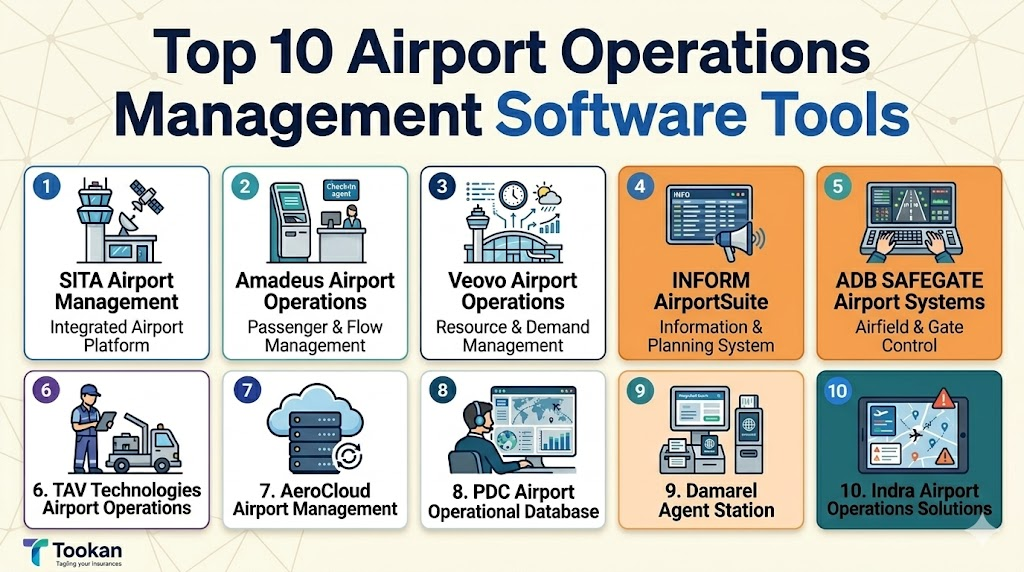
Top 10 Airport Operations Management Software Tools
1- SITA Airport Management
Short description: SITA Airport Management is an airport operations platform designed to help airports manage flight operations, resource allocation, real-time operational data, and stakeholder collaboration. It is suitable for airports and multi-airport groups that need strong coordination across airlines, handlers, airport control, and terminal teams.
Key Features
- Airport operational data management
- Flight operations monitoring and control
- Gate, stand, counter, and resource allocation
- Multi-airport operations support
- Real-time operational dashboards
- Collaborative decision-making workflows
- Integration with airport and airline systems
Pros
- Strong fit for airport-wide operational coordination
- Useful for complex airport environments with many stakeholders
- Mature aviation technology ecosystem and global airport focus
Cons
- Implementation can require significant integration planning
- Smaller airports may not need the full platform depth
- Commercial model and modules should be reviewed carefully
Platforms / Deployment
Web / Operational interfaces vary
Cloud / Hosted / Hybrid options vary
Security & Compliance
Varies / N/A. Buyers should validate SSO, MFA, RBAC, encryption, audit logs, API security, operational resilience, and aviation-specific compliance requirements directly.
Integrations & Ecosystem
SITA Airport Management works well when airport operations must connect with airline, terminal, resource, and stakeholder systems.
- Airport Operational Database workflows
- Flight Information Display Systems
- Baggage and terminal systems
- Airline and handler systems
- A-CDM and operational coordination tools
- Reporting and analytics platforms
Support & Community
SITA provides airport-focused implementation, documentation, support resources, and global aviation domain expertise. Support depth may vary by airport size, contract scope, modules, and deployment region.
2- Amadeus Airport Operations
Short description: Amadeus Airport Operations provides airport systems for operational data, schedule planning, resource allocation, flight updates, billing, and operational control. It is useful for airports that need integrated operational visibility and aviation data connectivity.
Key Features
- Airport Operational Database support
- Flight schedule and operational data management
- Resource allocation and planning workflows
- Flight updates and real-time operational visibility
- Airport billing and contract processing support
- Integration with airline and airport systems
- Operational reporting and analytics
Pros
- Strong airport operations and airline data ecosystem
- Useful for schedule visibility and resource planning
- Good fit for airports needing integrated operational workflows
Cons
- Configuration and migration require careful planning
- Buyers should validate module fit for their airport size
- Integration complexity depends on existing airport infrastructure
Platforms / Deployment
Web / Operational interfaces vary
Cloud / Hosted / Hybrid options vary
Security & Compliance
Varies / N/A. Buyers should validate identity controls, encryption, audit logs, data retention, access governance, payment or billing data security, and airport compliance needs directly.
Integrations & Ecosystem
Amadeus Airport Operations is strong when airports need operations data connected with schedules, resources, contracts, billing, and stakeholder workflows.
- AODB workflows
- Airline schedule data
- Resource management systems
- Flight updates
- Airport billing workflows
- Reporting and analytics tools
Support & Community
Amadeus provides aviation implementation resources, enterprise support, product documentation, and account management. Support depth depends on airport complexity, selected modules, and integration scope.
3- Veovo Airport Operations
Short description: Veovo Airport Operations helps airports connect flight operations, passenger flow, resource planning, and predictive decision-making using real-time airport data. It is useful for airports seeking modern AODB, passenger analytics, and operational optimization capabilities.
Key Features
- Modern Airport Operational Database capabilities
- Flight operations visibility
- Passenger flow and queue monitoring
- Predictive analytics and AI-supported forecasting
- Resource planning and capacity optimization
- Operational dashboards and alerts
- Integration with airport systems and data sources
Pros
- Strong focus on real-time data and predictive airport decisions
- Useful for passenger flow and capacity optimization
- Good fit for airports modernizing legacy operational systems
Cons
- Buyers should validate exact module coverage
- Integration with sensors and operational systems may require planning
- Advanced analytics value depends on data quality
Platforms / Deployment
Web / Operational interfaces vary
Cloud / Hosted / Hybrid options vary
Security & Compliance
Varies / N/A. Buyers should validate access controls, encryption, audit logs, passenger data privacy, operational data governance, and integration security directly.
Integrations & Ecosystem
Veovo works well when airports need operational data, passenger flow, and predictive analytics connected in one decision environment.
- AODB and operational data systems
- Passenger flow sensors
- Queue analytics tools
- Resource planning workflows
- Airport dashboards
- Data platforms and analytics systems
Support & Community
Veovo provides airport implementation support, documentation, customer success resources, and aviation operations expertise. Support depth may vary by modules, deployment model, and data integration scope.
4- INFORM AirportSuite
Short description: INFORM AirportSuite supports airport resource management, operations planning, ground handling coordination, and optimization workflows. It is suitable for airports and ground service environments that need advanced planning and decision-support tools.
Key Features
- Resource management and allocation
- Ground operations planning support
- Airport and handler optimization workflows
- Operational decision support
- Scenario planning and forecasting
- Staff and equipment planning support
- Reporting and performance visibility
Pros
- Strong optimization and decision-support focus
- Useful for resource-heavy airport and ground handling environments
- Good fit for airports needing planning discipline and operational efficiency
Cons
- Buyers should validate AODB depth and required integrations
- Implementation may require process redesign
- Smaller airports may not need advanced optimization depth
Platforms / Deployment
Web / Operational interfaces vary
Cloud / Hosted / Hybrid options vary
Security & Compliance
Varies / N/A. Buyers should validate user roles, audit trails, encryption, operational data security, system availability, and compliance needs directly.
Integrations & Ecosystem
INFORM AirportSuite is useful when resource planning and operational optimization must connect with broader airport systems.
- Airport resource management systems
- Ground handling systems
- Flight operations data
- Staff and equipment planning tools
- Performance dashboards
- Scenario planning workflows
Support & Community
INFORM provides implementation consulting, airport operations support, product documentation, and optimization expertise. Support experience may vary by project scope and operational complexity.
5- ADB SAFEGATE Airport Systems
Short description: ADB SAFEGATE provides airport systems across airfield, gate, apron, and operational workflows, supporting airports that need better control over aircraft movement, turnaround, docking, and operational coordination. It is useful for airports focused on airside efficiency and connected airport operations.
Key Features
- Airside and apron operations support
- Gate and aircraft docking workflows
- Turnaround and surface movement visibility
- Integration with airport operational systems
- Airport performance and safety support
- Operational coordination tools
- Support for connected airport infrastructure
Pros
- Strong airside and gate operations expertise
- Useful for airports focused on turnaround and apron efficiency
- Good fit for connected infrastructure and operational visibility
Cons
- Not always a full standalone AODB replacement
- Buyers should validate scope across landside and terminal operations
- Integration requirements can be significant
Platforms / Deployment
Web / Operational interfaces vary
Cloud / Hosted / Hybrid / Varies
Security & Compliance
Varies / N/A. Buyers should validate access controls, operational system security, audit logs, encryption, airside safety controls, and integration governance directly.
Integrations & Ecosystem
ADB SAFEGATE fits airports that need operational systems connected with airside infrastructure and gate performance.
- Gate and docking systems
- Airfield systems
- Airport operations platforms
- Turnaround systems
- Surface movement workflows
- Reporting and operational dashboards
Support & Community
ADB SAFEGATE provides aviation-focused support, implementation services, system integration expertise, and operational resources. Support scope depends on installed systems and project requirements.
6- TAV Technologies Airport Operations
Short description: TAV Technologies Airport Operations provides airport management systems including AODB, flight information, resource planning, billing, and operational modules. It is useful for airports that need configurable airport operations software across different airport sizes and operational needs.
Key Features
- Airport Operational Database
- Seasonal and real-time flight data management
- Resource and operational data workflows
- Billing and financial data support
- Multi-system airport data integration
- Operational dashboards and reporting
- Configurable airport modules
Pros
- Strong AODB and airport operations module coverage
- Useful for small, medium, and large airports
- Supports operational and financial data workflows
Cons
- Buyers should validate implementation support by region
- Integration scope depends on airport system landscape
- Advanced analytics depth should be reviewed directly
Platforms / Deployment
Web / Cross-browser operational interfaces vary
Cloud / Hosted / Hybrid / Varies
Security & Compliance
Varies / N/A. Buyers should validate user permissions, audit logs, encryption, data retention, billing data controls, API security, and airport compliance requirements directly.
Integrations & Ecosystem
TAV Technologies Airport Operations works well when airports need AODB-centered operational data and connected airport workflows.
- AODB systems
- Flight information systems
- Resource planning tools
- Airport billing systems
- Airport stakeholder systems
- Reporting and dashboard tools
Support & Community
TAV Technologies provides airport implementation, support, and product expertise. Support depth may vary by geography, airport size, and selected modules.
7- AeroCloud Airport Management
Short description: AeroCloud is a cloud-based airport management platform designed to help airport teams manage operations, data, assets, and stakeholder workflows through a modern interface. It is suitable for airports looking for cloud-native operations management and easier collaboration.
Key Features
- Cloud-based airport operations platform
- Flight and operations data visibility
- Resource and airport workflow support
- Asset and operational management options
- Real-time dashboards and alerts
- Modern user interface for airport teams
- Collaboration across airport stakeholders
Pros
- Strong cloud-native airport operations approach
- Useful for airports modernizing away from legacy tools
- Good fit for teams wanting easier user experience and faster deployment
Cons
- Buyers should validate fit for very large hub complexity
- Exact module coverage should be confirmed before rollout
- Integration depth depends on existing airport systems
Platforms / Deployment
Web / Mobile access varies
Cloud
Security & Compliance
Varies / N/A. Buyers should validate SSO, MFA, user roles, encryption, audit logs, operational data privacy, API security, and cloud governance directly.
Integrations & Ecosystem
AeroCloud works well for airports that want a modern cloud platform connected with operations, airport data, and team collaboration workflows.
- Airport operational data
- Resource workflows
- Asset management
- Operational dashboards
- Airport stakeholder systems
- Reporting and analytics tools
Support & Community
AeroCloud provides onboarding, product resources, implementation support, and airport-focused customer assistance. Support scope may vary by airport size and selected modules.
8- PDC Airport Operational Database
Short description: PDC Airport Operational Database supports airport operations through centralized flight and operational data management, including multi-airport mode for airport groups. It is useful for airports that need AODB-centered operational coordination and resource planning support.
Key Features
- Airport Operational Database
- Multi-airport operations support
- Real-time operational data management
- Resource planning support
- Flight data distribution
- Airport stakeholder data sharing
- Reporting and operational visibility
Pros
- Strong fit for AODB-centered airport operations
- Useful for airport groups and multi-airport operators
- Supports centralized operational data workflows
Cons**
- Buyers should validate full operations module coverage
- Advanced passenger analytics may require other tools
- Integration and migration planning remain important
Platforms / Deployment
Web / Operational interfaces vary
Cloud / Hosted / Varies
Security & Compliance
Varies / N/A. Buyers should validate user roles, audit logs, data access controls, encryption, operational continuity, and airport compliance needs directly.
Integrations & Ecosystem
PDC AODB works well when airports need centralized data for operational coordination and planning.
- Airport operational systems
- Resource planning workflows
- Flight information systems
- Multi-airport management
- Stakeholder data distribution
- Reporting dashboards
Support & Community
PDC provides airport system support, implementation guidance, and operational product resources. Support experience may vary by airport size, country, and deployment model.
9- Damarel Airport Systems
Short description: Damarel Airport Systems provides airport operational and passenger processing systems, including tools related to flight information, airport operations, and stakeholder coordination. It is useful for airports needing focused operational modules and aviation system support.
Key Features
- Airport operational workflows
- Flight information and operational data support
- Passenger processing-related modules
- Airport stakeholder coordination
- Reporting and information distribution
- Integration with airport systems
- Configurable airport modules
Pros
- Airport-focused operational technology background
- Useful for airports needing focused modules
- Can support practical airport information and operations workflows
Cons
- Buyers should validate current product coverage
- May require additional platforms for full airport-wide optimization
- Integration and support availability should be reviewed
Platforms / Deployment
Web / Operational interfaces vary
Cloud / Hosted / Varies
Security & Compliance
Varies / N/A. Buyers should validate access controls, encryption, audit logs, passenger data privacy, operational security, and local compliance requirements directly.
Integrations & Ecosystem
Damarel Airport Systems fits airports that need operational modules connected with flight information and passenger processing workflows.
- Flight information systems
- Airport operational systems
- Passenger processing workflows
- Reporting tools
- Airport stakeholder interfaces
- Data integration workflows
Support & Community
Damarel provides airport technology support and product resources. Buyers should validate implementation approach, training, support coverage, and long-term roadmap.
10- Indra Airport Operations Solutions
Short description: Indra Airport Operations Solutions support airport operational systems, AODB, air traffic and airport technology workflows, and airport-wide operational coordination. It is suitable for airports seeking technology from a vendor with broad aviation and air traffic management expertise.
Key Features
- Airport Operational Database support
- Airport operations management workflows
- Integration with airside and airport systems
- Operational dashboards and reporting
- Flight data and stakeholder coordination
- Support for airport and ATM-related environments
- Configurable aviation technology modules
Pros
- Strong aviation and ATM technology background
- Useful for airports needing operational data and coordination
- Good fit where airport and air traffic technology alignment matters
Cons
- Buyers should validate exact airport module scope
- Implementation complexity can vary by airport environment
- Smaller airports may prefer lighter cloud-native tools
Platforms / Deployment
Web / Operational interfaces vary
Cloud / Hosted / Hybrid / Varies
Security & Compliance
Varies / N/A. Buyers should validate user permissions, encryption, audit logs, aviation data controls, operational resilience, and regional compliance needs directly.
Integrations & Ecosystem
Indra Airport Operations Solutions work well when airport operations need to connect with aviation, airside, and operational control systems.
- AODB systems
- Airside operational workflows
- ATM-related data systems
- Flight information systems
- Reporting and analytics
- Airport stakeholder integrations
Support & Community
Indra provides aviation technology implementation, support resources, and domain expertise. Support depth may vary by contract, region, and airport technology environment.
Comparison Table
| Tool Name | Best For | Platform Supported | Deployment | Standout Feature | Public Rating |
|---|---|---|---|---|---|
| SITA Airport Management | Large airports and multi-airport operations | Web, operational interfaces vary | Cloud / Hosted / Hybrid varies | Real-time flight operations and stakeholder collaboration | N/A |
| Amadeus Airport Operations | Integrated airport data and resource planning | Web, operational interfaces vary | Cloud / Hosted / Hybrid varies | AODB, schedule visibility, resources, and billing workflows | N/A |
| Veovo Airport Operations | Passenger flow and predictive airport decisions | Web, operational interfaces vary | Cloud / Hosted / Hybrid varies | Modern AODB with passenger flow and analytics | N/A |
| INFORM AirportSuite | Resource optimization and airport planning | Web, operational interfaces vary | Cloud / Hosted / Hybrid varies | Advanced operational optimization and scenario planning | N/A |
| ADB SAFEGATE Airport Systems | Airside, apron, and gate operations | Web, operational interfaces vary | Cloud / Hosted / Hybrid / Varies | Airside and gate performance workflows | N/A |
| TAV Technologies Airport Operations | AODB and airport operations modules | Web, operational interfaces vary | Cloud / Hosted / Hybrid / Varies | Configurable AODB and airport operational modules | N/A |
| AeroCloud Airport Management | Cloud-native airport operations | Web, mobile varies | Cloud | Modern cloud airport management platform | N/A |
| PDC Airport Operational Database | Multi-airport AODB operations | Web, operational interfaces vary | Cloud / Hosted / Varies | Centralized multi-airport operational database | N/A |
| Damarel Airport Systems | Focused airport operational modules | Web, operational interfaces vary | Cloud / Hosted / Varies | Flight information and airport operations workflows | N/A |
| Indra Airport Operations Solutions | Airport and aviation technology alignment | Web, operational interfaces vary | Cloud / Hosted / Hybrid / Varies | AODB and airport operations with ATM expertise | N/A |
Evaluation & Scoring of Airport Operations Management Software
| Tool Name | Core 25% | Ease 15% | Integrations 15% | Security 10% | Performance 10% | Support 10% | Value 15% | Weighted Total |
|---|---|---|---|---|---|---|---|---|
| SITA Airport Management | 9.4 | 7.8 | 9.3 | 8.5 | 9.0 | 8.8 | 7.7 | 8.7 |
| Amadeus Airport Operations | 9.2 | 7.9 | 9.1 | 8.4 | 8.9 | 8.7 | 7.8 | 8.6 |
| Veovo Airport Operations | 8.9 | 8.4 | 8.8 | 8.2 | 8.8 | 8.4 | 8.0 | 8.6 |
| INFORM AirportSuite | 8.8 | 7.9 | 8.7 | 8.1 | 8.8 | 8.4 | 7.8 | 8.4 |
| ADB SAFEGATE Airport Systems | 8.6 | 7.8 | 8.6 | 8.1 | 8.7 | 8.5 | 7.7 | 8.3 |
| TAV Technologies Airport Operations | 8.7 | 8.1 | 8.5 | 8.0 | 8.5 | 8.2 | 8.1 | 8.4 |
| AeroCloud Airport Management | 8.3 | 8.8 | 8.2 | 8.0 | 8.4 | 8.2 | 8.4 | 8.4 |
| PDC Airport Operational Database | 8.2 | 8.0 | 8.2 | 7.9 | 8.3 | 8.0 | 8.1 | 8.1 |
| Damarel Airport Systems | 7.9 | 8.0 | 7.9 | 7.7 | 8.0 | 7.9 | 8.0 | 7.9 |
| Indra Airport Operations Solutions | 8.2 | 7.8 | 8.3 | 8.0 | 8.3 | 8.1 | 7.8 | 8.1 |
Which Airport Operations Management Software Tool Is Right for You?
Solo / Freelancer
Solo aviation consultants, independent planners, or small airport advisors usually do not need a full airport operations management platform. They may use planning models, reporting tools, dashboards, spreadsheets, or airport simulation tools for advisory work.
A full airport operations platform becomes relevant when an organization directly manages airport resources, flights, stakeholders, passenger flow, and real-time operational decisions.
SMB
Small airports and regional airports should focus on practical AODB functionality, flight information, resource allocation, reporting, and ease of deployment. AeroCloud, PDC Airport Operational Database, TAV Technologies Airport Operations, Damarel Airport Systems, and selected Indra or Amadeus configurations may be practical options.
SMBs should avoid overbuying complex enterprise systems unless traffic growth, regulatory needs, or multi-airport operations justify the investment.
Mid-Market
Mid-sized airports often need stronger AODB, stand and gate planning, counter and belt allocation, passenger flow visibility, operational dashboards, billing support, and better stakeholder coordination. SITA, Amadeus, Veovo, TAV Technologies, INFORM, ADB SAFEGATE, and AeroCloud can fit different mid-market needs.
This segment should validate integrations with FIDS, baggage systems, airline feeds, ground handlers, and airport commercial systems.
Enterprise
Large hub airports, airport groups, and multi-terminal operators need enterprise-grade AODB, resource optimization, A-CDM, passenger flow analytics, airside coordination, billing, multi-airport reporting, and high availability. SITA Airport Management, Amadeus Airport Operations, Veovo Airport Operations, INFORM AirportSuite, ADB SAFEGATE, TAV Technologies, and Indra are strong enterprise candidates.
Enterprise buyers should involve operations control, airside, terminal operations, IT, cybersecurity, finance, commercial, airlines, ground handlers, and executive leadership before selecting a platform.
Budget vs Premium
Budget-conscious airports should evaluate cloud-native or focused systems such as AeroCloud, PDC AODB, Damarel, and selected TAV Technologies or Indra modules. These may offer practical airport operations control without full enterprise complexity.
Premium buyers should evaluate SITA, Amadeus, Veovo, INFORM, ADB SAFEGATE, and Indra when integration depth, large-scale optimization, passenger analytics, A-CDM, and long-term airport transformation matter more.
Feature Depth vs Ease of Use
If ease of use and faster adoption matter most, AeroCloud, PDC, TAV Technologies, and Damarel may be practical starting points depending on airport size and module fit. If feature depth matters more, SITA, Amadeus, Veovo, INFORM, ADB SAFEGATE, and Indra should be reviewed closely.
The best platform should match operational complexity instead of forcing airport staff to manage unnecessary workflows.
Integrations & Scalability
Airport operations software should integrate with AODB, FIDS, BHS, RMS, DCS, A-CDM, ATC feeds, airline systems, ground handler systems, weather feeds, security systems, building systems, billing systems, and airport data platforms. SITA, Amadeus, Veovo, INFORM, TAV Technologies, ADB SAFEGATE, and Indra are strong candidates for integration-heavy environments.
For scaling, test multi-terminal operations, multi-airport control, stakeholder data sharing, high-volume flight updates, and disaster recovery.
Security & Compliance Needs
Airport operations systems may process operational flight data, passenger flow data, user activity, resource assignments, commercial billing data, stakeholder access, security-sensitive workflows, and integration data from multiple airport systems. Buyers should review SSO, MFA, RBAC, encryption, audit logs, API security, disaster recovery, network segmentation, and operational continuity.
Airports should also validate cybersecurity requirements, aviation regulatory expectations, data retention policies, vendor access controls, and incident response workflows before deployment.
Frequently Asked Questions
1. What is Airport Operations Management Software?
Airport Operations Management Software helps airports coordinate flights, gates, stands, counters, baggage belts, resources, alerts, and operational decisions.
It often includes an Airport Operational Database that stores and distributes real-time flight and operational data.
Airport teams use it to improve coordination across airlines, handlers, terminals, and control centers.
It is important because airport delays and resource conflicts can affect many stakeholders quickly.
2. Who needs Airport Operations Management Software?
Airport operators, aviation authorities, terminal managers, operations control centers, airside teams, and multi-airport groups need these platforms.
They are especially useful for airports with multiple airlines, gates, stands, counters, terminals, and handlers.
Regional airports may need lighter systems, while hubs need enterprise-grade platforms.
The right tool depends on traffic volume and operational complexity.
3. How much does Airport Operations Management Software cost?
Pricing varies by vendor, airport size, passenger volume, modules, integrations, deployment model, support level, and implementation scope.
Large airport projects may include custom configuration, data migration, system integration, training, and long-term support.
Smaller cloud platforms may offer simpler commercial models.
Buyers should compare total cost over several years, not only license fees.
4. What features should buyers look for?
Buyers should look for AODB, resource allocation, flight updates, gate and stand planning, passenger flow monitoring, alerts, reporting, and billing support.
Integration with FIDS, BHS, airline systems, ground handlers, ATC, and A-CDM tools is also important.
Large airports should check high availability, scalability, and auditability.
Usability for operations control teams matters strongly.
5. What is an Airport Operational Database?
An Airport Operational Database is the central system that stores, updates, and distributes airport operational data.
It usually manages flight schedules, arrivals, departures, gates, stands, counters, belts, and related operational events.
Many airport systems depend on AODB data to stay synchronized.
A strong AODB improves situational awareness and stakeholder coordination.
6. Which tool is best for large airports?
SITA Airport Management, Amadeus Airport Operations, Veovo Airport Operations, INFORM AirportSuite, ADB SAFEGATE, TAV Technologies, and Indra are strong candidates for large airports.
They support complex integrations, resource planning, operational dashboards, and airport-wide coordination.
Large airports should test real-time data flows and disruption scenarios before selection.
A structured proof of concept is recommended.
7. Which tool is best for smaller airports?
AeroCloud, PDC Airport Operational Database, TAV Technologies Airport Operations, Damarel Airport Systems, and selected Indra or Amadeus modules may fit smaller airports.
Small airports should prioritize ease of deployment, basic AODB workflows, resource allocation, and reporting.
They may not need advanced optimization or large-hub complexity.
The best choice depends on budget, traffic volume, and future growth.
8. What are common mistakes when choosing airport operations software?
Common mistakes include underestimating integration effort, ignoring user adoption, and not cleaning operational data before migration.
Airports also forget to test disruption workflows, billing logic, and stakeholder permissions.
Another mistake is buying a broad platform without mapping daily operations first.
A pilot with real airport data helps reveal gaps early.
9. Can airport operations software improve passenger experience?
Yes, airport operations software can improve passenger experience by reducing gate confusion, improving resource allocation, supporting better flight information, and helping manage queues.
Passenger flow tools can also help airports identify congestion and adjust resources faster.
The benefits depend on integration quality and operational processes.
Software works best when teams act on the insights quickly.
10. What are alternatives to Airport Operations Management Software?
Alternatives include spreadsheets, manual resource boards, standalone FIDS tools, basic scheduling systems, and separate reporting dashboards.
These may work for small airports with low operational complexity.
As traffic grows, manual methods become risky, slow, and hard to coordinate.
Dedicated airport operations platforms are better for real-time control, integration, reporting, and resource planning.
Conclusion
Airport Operations Management Software helps airports coordinate complex real-time activities across flights, gates, stands, counters, baggage areas, terminals, airside teams, airlines, handlers, and control centers. The best platform depends on airport size, operational complexity, integration needs, passenger volume, resource constraints, airside workflows, and digital transformation goals. SITA, Amadeus, Veovo, INFORM, ADB SAFEGATE, TAV Technologies, AeroCloud, PDC, Damarel, and Indra each fit different airport maturity levels and operational priorities. Large hubs should prioritize integration depth, high availability, A-CDM, passenger flow analytics, and enterprise support, while smaller airports should prioritize ease of deployment, core AODB workflows, and practical resource visibility. The smartest next step is to shortlist two or three tools, map current airport workflows, test live operational data scenarios, validate integrations and security controls, and run a pilot before full deployment.

Find Trusted Cardiac Hospitals
Compare heart hospitals by city and services — all in one place.
Explore Hospitals
Airport operations management software is most valuable when it helps airports coordinate and optimize daily airside and landside operations from a centralized platform. By providing flight scheduling, gate and stand allocation, resource management, baggage handling coordination, ground operations monitoring, real-time operational dashboards, incident management, regulatory compliance, passenger information integration, and performance analytics, these platforms enable airport operators to improve operational efficiency, reduce delays, enhance safety, optimize resource utilization, and deliver a smoother travel experience for passengers and airlines.