Introduction
Algorithmic trading platforms help traders, hedge funds, financial institutions, and quantitative analysts automate trading decisions using predefined rules, mathematical models, and real-time market data. These platforms allow users to execute trades at high speed while reducing emotional decision-making and manual intervention. As financial markets become more data-driven and volatile, algorithmic trading has become increasingly important for both institutional and retail participants. Modern platforms now support AI-assisted strategies, machine learning models, advanced backtesting, low-latency execution, and multi-asset trading across stocks, forex, crypto, futures, and options markets.
Real-world use cases include:
- High-frequency trading strategies
- Quantitative hedge fund operations
- Automated forex and crypto trading
- Portfolio rebalancing and risk management
- Arbitrage and market-making strategies
What buyers should evaluate:
- Strategy development flexibility
- Backtesting quality and historical data support
- Broker and exchange integrations
- Execution speed and latency
- AI and machine learning capabilities
- Risk management controls
- Ease of deployment and automation
- Community and marketplace ecosystem
- Pricing and scalability
- Security and compliance features
Best for: quantitative traders, hedge funds, institutional investors, prop trading firms, retail algo traders, crypto traders, and developers building automated trading systems.
Not ideal for: casual investors who prefer manual long-term investing or users without technical or trading knowledge.
Key Trends in Algorithmic Trading Platforms
- AI-powered strategy generation is becoming increasingly common.
- Multi-asset trading support now includes stocks, crypto, commodities, forex, and derivatives.
- Cloud-native trading infrastructure is reducing hardware dependency.
- Retail traders are gaining access to institutional-grade tools.
- Low-code and no-code strategy builders are growing rapidly.
- Machine learning and predictive analytics integration is expanding.
- Real-time risk management and compliance monitoring are becoming standard.
- API-first ecosystems are improving interoperability with brokers and exchanges.
- Alternative data integration is becoming more important for strategy optimization.
- Copy trading and marketplace-based strategy monetization are increasing in popularity.
How We Selected These Tools (Methodology)
The platforms in this list were selected based on the following evaluation criteria:
- Market popularity and long-term industry adoption
- Reliability in live trading environments
- Strategy customization flexibility
- Broker and exchange integration support
- Backtesting and simulation quality
- Support for modern AI and automation workflows
- Accessibility for both beginners and professionals
- Community ecosystem and developer support
- Cross-platform deployment capabilities
- Security posture and operational maturity
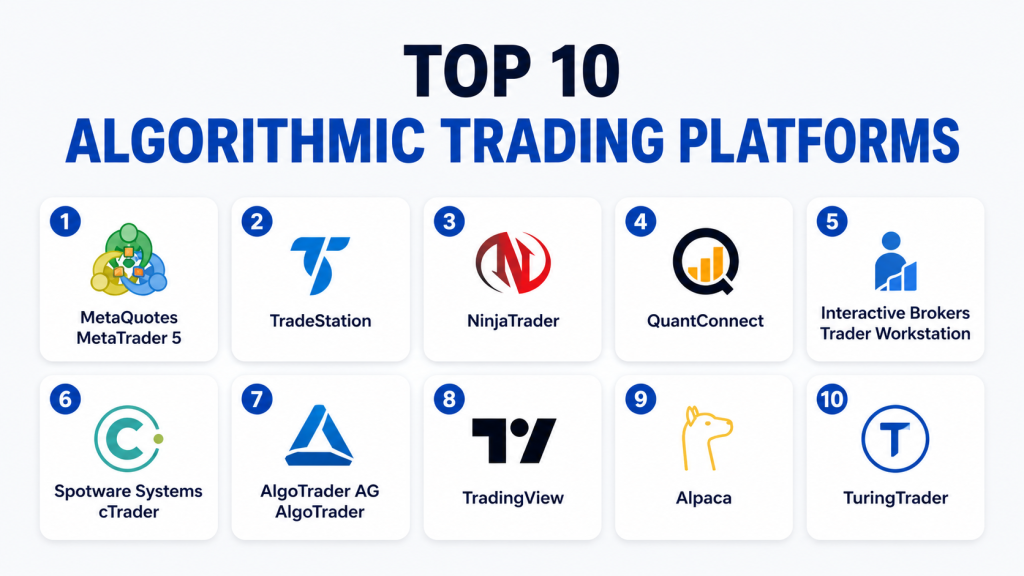
Top 10 Algorithmic Trading Platforms
1- MetaTrader 5
Short description: MetaTrader 5 is one of the most widely used trading platforms globally for forex, stocks, and futures trading. It supports automated trading through Expert Advisors and is popular among retail and professional traders.
Key Features
- Automated trading using Expert Advisors
- Advanced charting and technical indicators
- Multi-asset trading support
- Built-in strategy tester
- Algorithmic scripting using MQL5
- VPS hosting support
- Large marketplace for trading bots
Pros
- Massive global trading community
- Strong broker compatibility
- Extensive automation ecosystem
Cons
- User interface feels dated
- Limited institutional-grade analytics
- Advanced customization requires coding knowledge
Platforms / Deployment
Windows / macOS / iOS / Android / Web
Security & Compliance
Supports MFA, encryption, and secure broker authentication. Compliance varies by broker.
Integrations & Ecosystem
MetaTrader integrates with hundreds of brokers and liquidity providers worldwide. The ecosystem includes indicators, automated bots, VPS providers, and copy-trading services.
- Broker APIs
- Trading bot marketplace
- VPS services
- Third-party analytics tools
- Copy trading integrations
Support & Community
Extremely large global community with strong documentation, tutorials, and third-party developer support.
2- TradeStation
Short description: TradeStation is a professional trading platform known for advanced analytics, automated trading strategies, and institutional-quality market access.
Key Features
- EasyLanguage scripting
- Advanced charting tools
- Strategy automation
- Backtesting engine
- Real-time market scanning
- Options trading analytics
- API access
Pros
- Strong analytics capabilities
- Reliable execution infrastructure
- Excellent for active traders
Cons
- Learning curve for beginners
- Premium features can become expensive
- Limited crypto support compared to competitors
Platforms / Deployment
Web / Windows / macOS / Mobile
Security & Compliance
MFA, encryption, account monitoring, and regulatory compliance features supported.
Integrations & Ecosystem
TradeStation supports APIs and integrations with data providers and custom analytics environments.
- API integrations
- Market data feeds
- Third-party analytics
- Trading automation systems
Support & Community
Strong institutional reputation with reliable customer support and educational resources.
3- NinjaTrader
Short description: NinjaTrader is a popular futures and forex trading platform focused on advanced charting, automation, and customizable trading systems.
Key Features
- Strategy automation
- Advanced futures trading tools
- Market replay functionality
- Backtesting engine
- Custom indicator development
- Third-party app ecosystem
- Real-time analytics
Pros
- Excellent futures trading environment
- Powerful customization
- Large addon ecosystem
Cons
- Complex interface for beginners
- Some advanced features require paid licenses
- Primarily focused on active traders
Platforms / Deployment
Windows / Cloud-connected deployment
Security & Compliance
Encryption and secure authentication supported. Compliance features vary by brokerage integration.
Integrations & Ecosystem
NinjaTrader supports extensive third-party plugin integrations and broker connectivity.
- Brokerage integrations
- Strategy marketplaces
- Data providers
- Custom indicator ecosystem
Support & Community
Very active community with extensive educational material and developer support.
4- QuantConnect
Short description: QuantConnect is a cloud-based quantitative trading platform designed for developers, quantitative researchers, and hedge funds.
Key Features
- Cloud algorithm deployment
- Multi-asset support
- Python and C# programming
- Massive historical datasets
- AI and machine learning workflows
- Live trading integrations
- Institutional-grade backtesting
Pros
- Strong developer flexibility
- Excellent research environment
- Cloud-native architecture
Cons
- Requires programming expertise
- Less beginner-friendly
- Advanced deployments can become costly
Platforms / Deployment
Cloud / Web
Security & Compliance
RBAC, encryption, audit capabilities, and secure API access supported.
Integrations & Ecosystem
QuantConnect supports broker APIs, cloud infrastructure, and research libraries.
- Interactive Brokers
- Binance integrations
- Python ML libraries
- Alternative datasets
- Quant research tools
Support & Community
Strong quantitative finance community with active forums and documentation.
5- Interactive Brokers Trader Workstation
Short description: Trader Workstation from Interactive Brokers provides professional-grade trading tools and API-driven algorithmic trading capabilities.
Key Features
- Global market access
- Advanced order routing
- API automation
- Risk management tools
- Multi-asset trading
- Institutional execution quality
- Portfolio analytics
Pros
- Extremely broad market access
- Competitive execution quality
- Strong API ecosystem
Cons
- Complex user experience
- Steeper learning curve
- Interface can feel overwhelming
Platforms / Deployment
Windows / macOS / Linux / Mobile / Web
Security & Compliance
MFA, encryption, audit trails, and strong regulatory compliance support.
Integrations & Ecosystem
Interactive Brokers integrates with many third-party algorithmic trading systems and analytics platforms.
- FIX API
- Python APIs
- TradingView integrations
- Quant platforms
- Portfolio management systems
Support & Community
Large professional trading community with enterprise-grade documentation.
6- cTrader
Short description: cTrader is a modern trading platform focused on forex and CFD algorithmic trading with strong user experience and advanced automation support.
Key Features
- Algorithmic trading automation
- Advanced charting
- Cloud profiles
- API access
- Copy trading support
- Fast order execution
- Custom indicators
Pros
- Modern and intuitive interface
- Strong execution speed
- Good mobile experience
Cons
- Smaller ecosystem than MetaTrader
- Limited institutional features
- Broker availability varies
Platforms / Deployment
Windows / Web / Mobile / Cloud
Security & Compliance
Encryption, secure authentication, and broker-level compliance support.
Integrations & Ecosystem
cTrader supports APIs and third-party trading automation tools.
- Open API
- Broker integrations
- Trading bots
- Copy trading networks
Support & Community
Growing global community with good documentation and broker-backed support.
7- AlgoTrader
Short description: AlgoTrader is an institutional algorithmic trading platform built for quantitative trading firms, hedge funds, and banks.
Key Features
- Multi-asset algorithmic trading
- Institutional execution
- Risk management tools
- Automated strategy deployment
- FIX connectivity
- Portfolio management
- Real-time analytics
Pros
- Enterprise-grade architecture
- Strong institutional focus
- Advanced automation capabilities
Cons
- Expensive for smaller firms
- Requires technical expertise
- Less suitable for beginners
Platforms / Deployment
Cloud / Self-hosted / Hybrid
Security & Compliance
Supports RBAC, encryption, audit logs, and enterprise-grade security controls.
Integrations & Ecosystem
AlgoTrader integrates with institutional brokers, exchanges, and FIX infrastructure.
- FIX APIs
- Institutional exchanges
- Market data providers
- Risk systems
- Quant libraries
Support & Community
Enterprise-focused onboarding and professional support services.
8- TradingView
Short description: TradingView combines social trading, charting, and automated strategy scripting with a highly user-friendly interface.
Key Features
- Pine Script automation
- Social trading features
- Advanced charting
- Multi-device synchronization
- Market screening
- Broker integrations
- Strategy backtesting
Pros
- Very easy to use
- Excellent charting interface
- Strong social trading ecosystem
Cons
- Limited institutional-grade automation
- Some advanced tools require premium plans
- Execution depends on connected brokers
Platforms / Deployment
Web / Windows / macOS / Android / iOS
Security & Compliance
MFA and encryption supported.
Integrations & Ecosystem
TradingView connects with brokers, market data providers, and automation tools.
- Broker integrations
- Pine Script marketplace
- Alert automation tools
- Market analytics
Support & Community
Massive retail trading community with extensive educational content.
9- Alpaca
Short description: Alpaca is an API-first trading platform designed for developers building automated stock and crypto trading applications.
Key Features
- Commission-free API trading
- Stock and crypto support
- Real-time market data
- Python SDK support
- Cloud deployment
- Paper trading environment
- Developer-friendly APIs
Pros
- Excellent for developers
- Modern API-first design
- Easy cloud integration
Cons
- Limited advanced charting
- Smaller ecosystem than legacy platforms
- Institutional features are limited
Platforms / Deployment
Cloud / API-based
Security & Compliance
Encryption, API authentication, and account security features supported.
Integrations & Ecosystem
Alpaca integrates with cloud-native development environments and algorithmic trading systems.
- Python SDKs
- Trading bots
- Cloud infrastructure
- Data APIs
- Quant frameworks
Support & Community
Strong developer-focused documentation and active startup community.
10- TuringTrader
Short description: TuringTrader is an open-source quantitative trading framework designed for advanced algorithmic strategy research and backtesting.
Key Features
- Open-source framework
- Historical backtesting
- Portfolio simulation
- Strategy optimization
- Data analysis support
- Developer extensibility
- Quantitative analytics
Pros
- Open-source flexibility
- Strong customization capabilities
- Cost-effective for developers
Cons
- Requires technical expertise
- Smaller community
- Limited commercial support
Platforms / Deployment
Windows / Linux / Self-hosted
Security & Compliance
Varies / Not publicly stated.
Integrations & Ecosystem
TuringTrader supports custom integrations and developer-driven workflows.
- Quant libraries
- Data providers
- Custom APIs
- Research environments
Support & Community
Smaller open-source community with developer-focused documentation.
Comparison Table
| Tool Name | Best For | Platform(s) Supported | Deployment | Standout Feature | Public Rating |
|---|---|---|---|---|---|
| MetaTrader 5 | Retail forex traders | Windows, Web, Mobile | Hybrid | Expert Advisors | N/A |
| TradeStation | Active traders | Web, Desktop, Mobile | Cloud | EasyLanguage scripting | N/A |
| NinjaTrader | Futures traders | Windows | Hybrid | Market replay engine | N/A |
| QuantConnect | Quant developers | Cloud, Web | Cloud | Institutional backtesting | N/A |
| Interactive Brokers TWS | Professional traders | Windows, macOS, Linux | Hybrid | Global market access | N/A |
| cTrader | Forex automation | Web, Desktop, Mobile | Cloud | Modern UI | N/A |
| AlgoTrader | Hedge funds | Cloud, Self-hosted | Hybrid | Institutional automation | N/A |
| TradingView | Retail traders | Web, Mobile, Desktop | Cloud | Social charting | N/A |
| Alpaca | API developers | Cloud | Cloud | Developer-first APIs | N/A |
| TuringTrader | Quant researchers | Windows, Linux | Self-hosted | Open-source analytics | N/A |
Evaluation & Scoring of Algorithmic Trading Platforms
| Tool Name | Core | Ease | Integrations | Security | Performance | Support | Value | Weighted Total |
|---|---|---|---|---|---|---|---|---|
| MetaTrader 5 | 9 | 8 | 9 | 7 | 8 | 9 | 9 | 8.5 |
| TradeStation | 8 | 7 | 8 | 8 | 9 | 8 | 7 | 7.9 |
| NinjaTrader | 8 | 7 | 8 | 7 | 8 | 8 | 8 | 7.8 |
| QuantConnect | 9 | 6 | 9 | 8 | 9 | 8 | 7 | 8.2 |
| Interactive Brokers TWS | 9 | 6 | 9 | 9 | 9 | 8 | 8 | 8.5 |
| cTrader | 8 | 9 | 7 | 7 | 8 | 7 | 8 | 7.9 |
| AlgoTrader | 9 | 5 | 9 | 9 | 9 | 8 | 6 | 8.0 |
| TradingView | 7 | 10 | 8 | 7 | 7 | 9 | 9 | 8.1 |
| Alpaca | 8 | 8 | 8 | 7 | 8 | 7 | 9 | 8.0 |
| TuringTrader | 7 | 5 | 7 | 6 | 7 | 6 | 9 | 6.9 |
Which Algorithmic Trading Tool Is Right for You?
Solo / Freelancer
Retail traders and solo quantitative developers often benefit from platforms like TradingView, MetaTrader 5, and Alpaca. These platforms provide accessible pricing, strong community support, and easier onboarding.
SMB
Small trading firms and growing quantitative teams may prefer NinjaTrader, cTrader, or TradeStation because they balance advanced functionality with manageable operational complexity.
Mid-Market
Mid-sized proprietary trading firms and research teams often choose QuantConnect or Interactive Brokers due to stronger API ecosystems and broader market access.
Enterprise
Institutional hedge funds and banks generally require enterprise-grade infrastructure like AlgoTrader combined with custom execution systems and advanced compliance workflows.
Budget vs Premium
Open-source and developer-first platforms like TuringTrader and Alpaca can reduce costs significantly. Enterprise solutions provide stronger automation and infrastructure but often involve higher licensing expenses.
Feature Depth vs Ease of Use
TradingView and cTrader prioritize user experience and simplicity. QuantConnect and AlgoTrader provide deeper customization but require more technical expertise.
Integrations & Scalability
Interactive Brokers and QuantConnect provide some of the strongest integration ecosystems for scaling sophisticated algorithmic strategies.
Security & Compliance Needs
Institutional firms should prioritize platforms with strong audit capabilities, encryption, RBAC, and enterprise-grade deployment models.
Frequently Asked Questions
What is an algorithmic trading platform?
An algorithmic trading platform allows users to automate trading decisions using predefined rules and computer-driven execution. These platforms help traders improve speed, consistency, and scalability.
Are algorithmic trading platforms only for hedge funds?
No. Many modern platforms support retail traders and independent developers. Platforms like TradingView and MetaTrader are widely used by individuals.
Do I need coding skills for algorithmic trading?
Not always. Some platforms provide low-code strategy builders, but advanced automation and AI-driven trading generally require programming knowledge.
Which programming languages are commonly used?
Python, C++, Java, C#, and proprietary scripting languages like Pine Script and MQL5 are commonly used in algorithmic trading.
Can algorithmic trading platforms trade crypto?
Yes. Many platforms now support crypto trading alongside stocks, forex, and futures markets.
What is backtesting?
Backtesting evaluates trading strategies using historical market data to estimate how a strategy might have performed in past market conditions.
Are cloud-based trading platforms reliable?
Cloud-native platforms have improved significantly and can provide strong scalability and uptime. However, execution latency and infrastructure quality still matter.
What are the biggest risks in algorithmic trading?
Common risks include overfitting strategies, insufficient risk management, software bugs, connectivity failures, and unexpected market volatility.
How important are broker integrations?
Broker integrations are critical because they determine execution quality, market access, and automation reliability.
Can beginners start with algorithmic trading?
Yes, but beginners should start gradually with simple strategies, paper trading environments, and strong educational resources before risking real capital.
Conclusion
Algorithmic trading platforms have evolved from niche institutional systems into widely accessible ecosystems supporting retail traders, quantitative researchers, fintech startups, and global hedge funds. The best platform depends heavily on your goals, technical skills, preferred asset classes, infrastructure requirements, and budget. Retail traders may prioritize usability and community support, while institutional firms often focus on execution quality, scalability, and risk management capabilities. Platforms like MetaTrader 5 and TradingView remain highly popular for accessibility and community strength, while QuantConnect and AlgoTrader provide more advanced institutional-grade capabilities. Developer-first platforms such as Alpaca continue to simplify automated trading application development, and enterprise platforms increasingly integrate AI, machine learning, and cloud-native infrastructure. Before committing to any platform, shortlist two or three options, evaluate broker integrations carefully, test strategy performance using paper trading or backtesting environments, and validate operational security requirements. A pilot deployment with realistic market conditions can help ensure the platform aligns with your long-term trading objectives.

Find Trusted Cardiac Hospitals
Compare heart hospitals by city and services — all in one place.
Explore Hospitals
Algorithmic trading platforms are most valuable when they enable traders and financial institutions to design, test, automate, and execute trading strategies with speed and precision. By offering strategy development, backtesting, real-time market data, low-latency execution, risk management, portfolio optimization, and broker connectivity, these platforms help improve trading efficiency, reduce human error, optimize execution quality, and support data-driven investment decisions across multiple asset classes.