Introduction
Reputation Management Tools are software platforms designed to help businesses monitor, manage, and enhance their brand image across digital and offline channels. In today’s connected world, a single negative review, social media post, or news mention can impact customer trust and revenue. Modern tools provide real-time monitoring, AI-powered sentiment analysis, automated alerts, and actionable insights to protect and improve reputation. They also allow companies to measure the effectiveness of marketing campaigns, identify emerging risks, and respond quickly to PR crises. Selecting the right platform ensures your organization can proactively manage its public perception and maintain credibility with customers, partners, and stakeholders.
Real-world use cases include:
- Online review management: Track, aggregate, and respond to reviews on platforms like Google, Yelp, and niche review sites.
- Social media monitoring: Identify trending conversations, customer complaints, and positive mentions on Twitter, LinkedIn, Instagram, and Facebook.
- Press and media monitoring: Track news coverage, articles, and press releases to maintain public visibility and prepare for potential crises.
- Competitor benchmarking: Compare brand sentiment, ratings, and online presence against competitors to guide strategy.
- Crisis detection and mitigation: Detect reputational risks early and enable rapid response to prevent escalation.
- Campaign performance insights: Analyze sentiment and engagement from marketing campaigns or product launches.
- Influencer and advocacy management: Identify brand advocates and influencers to amplify positive messaging.
- Customer experience improvement: Gather insights from online conversations to enhance products, services, and support.
What buyers should evaluate:
- Real-time monitoring: Alerts and notifications for mentions across social media, news, and review platforms.
- Sentiment analysis accuracy: Correctly interpret positive, negative, and neutral mentions, including nuances and sarcasm.
- Multi-channel coverage: Comprehensive visibility across social networks, blogs, forums, and review sites.
- AI-powered insights: Automation for prioritizing mentions, detecting trends, and predicting reputational risks.
- Custom reporting & dashboards: Ability to create tailored reports for executives, marketing, and PR teams.
- Integrations: Seamless connections with CRM, helpdesk, marketing automation, and analytics tools.
- Security & compliance: SSO, MFA, encryption, audit logs, GDPR, SOC 2, or ISO compliance where applicable.
- Ease of use & onboarding: Intuitive interface, training resources, and minimal learning curve.
- Support & community: Reliable customer support, knowledge base, and active user community.
- Pricing & scalability: Flexible subscription models, volume-based plans, and ability to scale with business growth.
Best for: Marketing teams, PR agencies, SMBs, enterprises, and customer experience managers who want proactive reputational insights.
Not ideal for: Businesses with minimal online presence or those relying solely on offline reputation channels, where manual monitoring may suffice.
Key Trends in Reputation Management Tools
- AI-Powered Sentiment Analysis: Advanced NLP models can now detect subtle sentiment nuances, sarcasm, and context across multiple languages.
- Unified Brand Intelligence: Platforms increasingly offer dashboards combining social, review, and news data for holistic insights.
- Automated Response and Escalation: AI bots help flag high-priority mentions for immediate human intervention.
- Integration with CRM and Helpdesk: Deeper integrations allow for actionable insights directly into workflows.
- Data Privacy and Compliance: GDPR, CCPA, and ISO-aligned processes are now standard expectations.
- Predictive Analytics: Predict potential reputational risks based on emerging trends and historical patterns.
- Cloud-First Deployment Models: Scalable cloud solutions reduce infrastructure overhead for enterprises and SMBs.
- Subscription & Flexible Pricing Models: SaaS platforms increasingly offer modular plans for small businesses and agencies.
- Cross-Platform Coverage: Broader monitoring across niche social channels, forums, and review sites.
- Customizable Reporting: Businesses can generate tailored insights for executives, PR teams, and board reporting.
How We Selected These Tools (Methodology)
- Evaluated market adoption and mindshare across enterprises and SMBs.
- Assessed feature completeness, including monitoring, analytics, and automation capabilities.
- Considered performance and reliability signals based on uptime and responsiveness.
- Reviewed security posture, including SSO, encryption, and audit logs where available.
- Verified integration capabilities with common business systems like CRM, helpdesk, and marketing tools.
- Ensured customer fit across solo users, SMBs, mid-market, and enterprise segments.
- Checked for AI-driven insights and predictive analytics features.
- Balanced ease of use and learning curve considerations.
- Considered pricing flexibility and total cost of ownership.
- Ensured industry compliance features for regulated sectors when applicable.
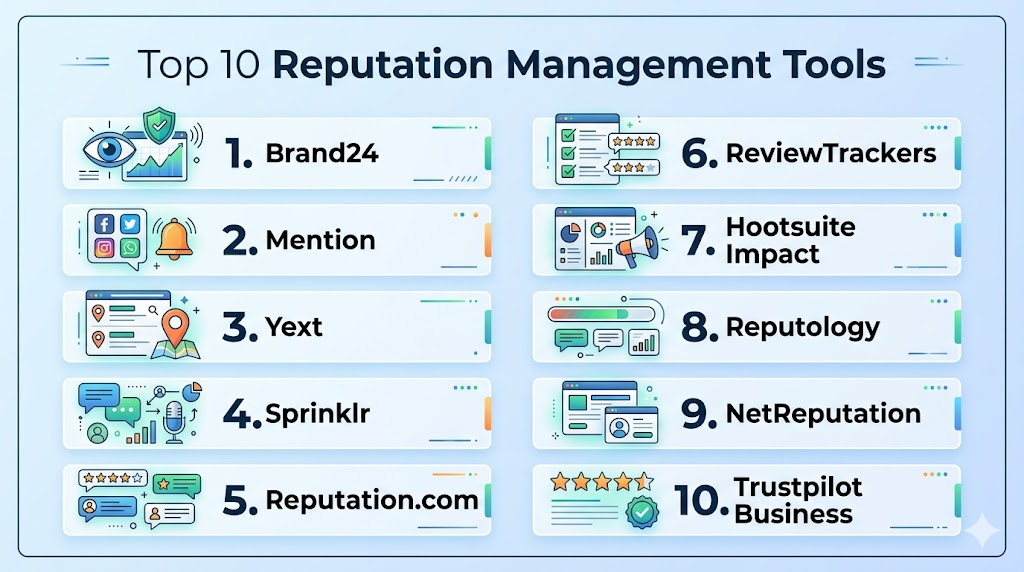
Top 10 Reputation Management Tools
1- Brand24
Short description: Brand24 is a social listening and reputation monitoring platform for SMBs and marketing teams, helping track brand mentions in real time.
Key Features
- Real-time social media and web monitoring
- Sentiment analysis and influencer scoring
- Automated alerts for brand mentions
- Analytics dashboards with trend visualization
- Hashtag and keyword tracking
- Integration with Slack, Zapier, and CRM systems
Pros
- Quick setup and intuitive interface
- Affordable pricing for SMBs
- Strong social media coverage
Cons
- Limited AI-powered predictive analytics
- Some integrations require additional setup
- Custom reporting can be basic
Platforms / Deployment
- Web, iOS, Android
- Cloud
Security & Compliance
- Not publicly stated
Integrations & Ecosystem
Brand24 supports integrations to streamline workflows and automate alerts.
- Slack
- Zapier
- CRM connectors
- Google Analytics
- Email notifications
Support & Community
Varies / Not publicly stated
2- Mention
Short description: Mention helps brands monitor online conversations and social media mentions, ideal for agencies and mid-market companies.
Key Features
- Multi-language social media monitoring
- Real-time alerts and reporting
- AI-driven sentiment detection
- Competitive benchmarking
- Content scheduling for response
- Collaboration tools for team workflows
Pros
- Extensive global coverage
- Strong real-time notifications
- Collaboration features for teams
Cons
- Higher pricing for full-featured plans
- Analytics dashboard can be complex for beginners
- Limited historical data for lower tiers
Platforms / Deployment
- Web, iOS, Android
- Cloud
Security & Compliance
- Not publicly stated
Integrations & Ecosystem
Mention connects with marketing and workflow tools for seamless brand management.
- Slack
- Zapier
- Google Data Studio
- Social scheduling platforms
Support & Community
Varies / Not publicly stated
3- Yext
Short description: Yext is a comprehensive digital knowledge and reputation management tool for enterprises, focusing on reviews, listings, and structured data.
Key Features
- Review monitoring and response automation
- Local listings management
- AI-generated knowledge graphs
- Analytics and reporting dashboards
- Multi-channel reputation tracking
- Workflow automation
Pros
- Enterprise-grade scalability
- Strong local SEO integration
- AI-driven knowledge management
Cons
- Higher cost for smaller businesses
- Setup complexity for new users
- Some features require additional modules
Platforms / Deployment
- Web
- Cloud
Security & Compliance
- SOC 2
- ISO 27001
- GDPR
Integrations & Ecosystem
Yext integrates with key enterprise systems for unified reputation management.
- Salesforce
- HubSpot
- Slack
- Zapier
- Google My Business
Support & Community
Comprehensive documentation, onboarding programs, enterprise support tiers
4- Sprinklr
Short description: Sprinklr is an enterprise social media and reputation management platform with strong AI insights for customer experience teams.
Key Features
- Social listening and sentiment analysis
- Competitive benchmarking
- Crisis detection alerts
- Workflow automation for response
- AI-powered insights
- Unified reporting dashboards
Pros
- Scalable for enterprise deployment
- Advanced AI analytics
- Multi-channel monitoring
Cons
- High learning curve
- Expensive for smaller teams
- Customization can be complex
Platforms / Deployment
- Web
- Cloud
Security & Compliance
- SOC 2
- GDPR
- ISO 27001
Integrations & Ecosystem
- Salesforce
- ServiceNow
- Marketing automation tools
- Slack
Support & Community
Strong enterprise support and dedicated onboarding
5- Reputation.com
Short description: Reputation.com provides review management, survey insights, and reputation analytics for multi-location businesses and enterprises.
Key Features
- Review monitoring across multiple platforms
- Customer experience surveys
- Analytics dashboards and reporting
- Response automation and templates
- Competitive analysis
- AI-driven sentiment insights
Pros
- Designed for multi-location organizations
- Strong review and survey capabilities
- Actionable analytics
Cons
- Premium pricing model
- Less ideal for single-location SMBs
- Limited social media listening outside reviews
Platforms / Deployment
- Web
- Cloud
Security & Compliance
- Not publicly stated
Integrations & Ecosystem
- Salesforce
- HubSpot
- CRM connectors
- Marketing automation systems
Support & Community
Varies / Not publicly stated
6- ReviewTrackers
Short description: ReviewTrackers focuses on monitoring and responding to online reviews to improve customer satisfaction and brand perception.
Key Features
- Centralized review management
- Response automation
- Sentiment analysis
- Analytics dashboards
- Location-based monitoring
- Notifications and alerts
Pros
- Easy-to-use interface
- Effective review aggregation
- Strong alert system
Cons
- Limited social media coverage
- Basic reporting on lower tiers
- Integration options can be limited
Platforms / Deployment
- Web, iOS, Android
- Cloud
Security & Compliance
- Not publicly stated
Integrations & Ecosystem
- Salesforce
- HubSpot
- Zapier
- Google My Business
Support & Community
Varies / Not publicly stated
7- Hootsuite Impact
Short description: Hootsuite Impact enables social media management, analytics, and brand sentiment tracking for marketing teams.
Key Features
- Social listening across platforms
- Campaign ROI analytics
- Influencer tracking
- Sentiment analysis
- Automated reporting
- Integration with Hootsuite ecosystem
Pros
- Strong social media focus
- Integrates with Hootsuite workflow tools
- Useful for influencer campaigns
Cons
- Limited non-social monitoring
- Advanced analytics require higher tiers
- Learning curve for new users
Platforms / Deployment
- Web, iOS, Android
- Cloud
Security & Compliance
- Not publicly stated
Integrations & Ecosystem
- Salesforce
- HubSpot
- Slack
- Social publishing tools
Support & Community
- Documentation, online tutorials, active user community
8- Reputology
Short description: Reputology specializes in online review monitoring and response for businesses in industries like healthcare, hospitality, and local services.
Key Features
- Real-time review alerts
- Centralized review dashboard
- Sentiment analysis
- Competitor monitoring
- Analytics and reporting
- Team collaboration tools
Pros
- Industry-specific focus
- Quick response capabilities
- Simple onboarding
Cons
- Narrower feature set compared to enterprise tools
- Limited AI insights
- Less suited for large multi-location enterprises
Platforms / Deployment
- Web
- Cloud
Security & Compliance
- Not publicly stated
Integrations & Ecosystem
- Slack
- CRM connectors
- Email alerts
Support & Community
Varies / Not publicly stated
9- NetReputation
Short description: NetReputation offers reputation repair, review monitoring, and proactive brand management for individuals and SMBs.
Key Features
- Reputation repair services
- Review management and monitoring
- Social media monitoring
- Online presence optimization
- Reporting dashboards
- Customer alerts
Pros
- Combines proactive and reactive reputation services
- Good for SMBs and professionals
- Focused repair strategies
Cons
- Limited AI-powered analytics
- Higher cost for personalized services
- Less enterprise-grade automation
Platforms / Deployment
- Web
- Cloud
Security & Compliance
- Not publicly stated
Integrations & Ecosystem
- Varies / N/A
- Email alerts and notifications
Support & Community
Varies / Not publicly stated
10- Trustpilot Business
Short description: Trustpilot Business is primarily a review platform with monitoring, analytics, and reputation insights for brands and ecommerce businesses.
Key Features
- Review collection and monitoring
- Sentiment analysis
- Analytics dashboards
- Automated response templates
- Competitor benchmarking
- Integration with ecommerce platforms
Pros
- Large consumer review ecosystem
- Strong analytics for online reputation
- Trusted by ecommerce brands
Cons
- Limited social media listening
- Premium plans required for full insights
- Focused on review-based reputation
Platforms / Deployment
- Web
- Cloud
Security & Compliance
- Not publicly stated
Integrations & Ecosystem
- Shopify
- WooCommerce
- Salesforce
- HubSpot
Support & Community
- Documentation, email support, community forums
Comparison Table (Top 10)
| Tool Name | Best For | Platform(s) Supported | Deployment | Standout Feature | Public Rating |
|---|---|---|---|---|---|
| Brand24 | SMBs, marketing teams | Web, iOS, Android | Cloud | Real-time social media alerts | N/A |
| Mention | Agencies, mid-market brands | Web, iOS, Android | Cloud | Multi-language monitoring | N/A |
| Yext | Enterprises, multi-location | Web | Cloud | Knowledge graph + listings mgmt | N/A |
| Sprinklr | Enterprises, CX teams | Web | Cloud | AI-powered sentiment insights | N/A |
| Reputation.com | Multi-location businesses | Web | Cloud | Review + survey analytics | N/A |
| ReviewTrackers | SMBs, franchises | Web, iOS, Android | Cloud | Centralized review management | N/A |
| Hootsuite Impact | Marketing teams | Web, iOS, Android | Cloud | Social media ROI analytics | N/A |
| Reputology | Healthcare, hospitality | Web | Cloud | Industry-specific review focus | N/A |
| NetReputation | SMBs, professionals | Web | Cloud | Reputation repair + monitoring | N/A |
| Trustpilot Business | Ecommerce brands | Web | Cloud | Consumer review ecosystem | N/A |
Evaluation & Scoring of Reputation Management Tools
| Tool Name | Core (25%) | Ease (15%) | Integrations (15%) | Security (10%) | Performance (10%) | Support (10%) | Value (15%) | Weighted Total (0–10) |
|---|---|---|---|---|---|---|---|---|
| Brand24 | 8 | 9 | 7 | 6 | 8 | 7 | 8 | 7.85 |
| Mention | 8 | 7 | 8 | 6 | 8 | 7 | 7 | 7.55 |
| Yext | 9 | 7 | 8 | 8 | 9 | 8 | 7 | 8.3 |
| Sprinklr | 9 | 6 | 9 | 8 | 9 | 8 | 7 | 8.25 |
| Reputation.com | 8 | 7 | 7 | 6 | 8 | 7 | 7 | 7.45 |
| ReviewTrackers | 7 | 9 | 7 | 6 | 7 | 7 | 8 | 7.5 |
| Hootsuite Impact | 8 | 7 | 8 | 6 | 8 | 7 | 7 | 7.55 |
| Reputology | 7 | 8 | 6 | 6 | 7 | 6 | 7 | 7.05 |
| NetReputation | 7 | 8 | 6 | 6 | 7 | 6 | 7 | 7.05 |
| Trustpilot Business | 8 | 7 | 7 | 6 | 8 | 7 | 7 | 7.35 |
Which Reputation Management Tool Is Right for You?
Solo / Freelancer
Tools like Brand24 or ReviewTrackers offer affordable, easy-to-use solutions for individual professionals seeking basic social monitoring and review management.
SMB
Mention and Reputation.com provide strong multi-channel monitoring, team collaboration, and dashboards suitable for small-to-medium businesses managing brand presence across platforms.
Mid-Market
Sprinklr or Yext deliver enterprise-grade insights, AI-powered sentiment analytics, and multi-location management, ideal for mid-market brands with growing online footprints.
Enterprise
Sprinklr, Yext, and Reputation.com scale effectively for large organizations with multiple teams, complex integrations, and rigorous compliance requirements.
Budget vs Premium
Budget-conscious businesses may prioritize Brand24 or ReviewTrackers for core monitoring and analytics, while premium users can leverage Sprinklr or Yext for AI insights and multi-location capabilities.
Feature Depth vs Ease of Use
Simpler tools like Reputology balance usability with core monitoring, whereas enterprise platforms like Sprinklr provide deep analytics but require training.
Integrations & Scalability
Companies needing seamless integrations with CRM, helpdesk, or marketing systems should prefer Yext or Sprinklr for robust ecosystem support.
Security & Compliance Needs
Enterprises in regulated industries must verify SOC 2, ISO 27001, GDPR compliance, and SSO/MFA support, favoring tools like Yext and Sprinklr.
Frequently Asked Questions (FAQs)
- Are there alternatives for small businesses with minimal online presence?
Yes, small businesses can use free or low-cost tools like Google Alerts, basic review aggregators, or manual monitoring. These solutions cover core monitoring needs but lack advanced AI, multi-channel integration, and analytics offered by full-service platforms. - What is the typical pricing model for reputation management tools?
Most tools follow a subscription-based SaaS model, often tiered by features, number of users, or monitored locations. Enterprise pricing is usually customized. SMBs can start with entry-level plans, while large organizations may require premium tiers to access advanced analytics, AI sentiment detection, and multi-location monitoring. - How long does onboarding usually take?
Onboarding varies by tool complexity. For SMB-focused platforms, setup can take a few hours, while enterprise-grade solutions may require several days to weeks. This includes configuring monitoring channels, connecting integrations, training teams, and establishing reporting dashboards for executives and marketing staff. - Do these tools handle multi-language monitoring?
Yes, many modern tools, such as Mention and Brand24, support multi-language monitoring. They use AI-powered sentiment analysis to detect positive, negative, or neutral mentions across languages. However, nuance and cultural context may still require human review to ensure accurate interpretation. - How accurate is sentiment analysis?
Sentiment analysis accuracy depends on AI sophistication. Advanced tools can detect nuances, sarcasm, and context, but no system is perfect. Combining automated insights with human review ensures reliability, particularly for high-stakes mentions, press coverage, or social media crises. - Can reputation management tools prevent PR crises?
While they cannot prevent all issues, these tools provide early alerts for negative mentions or spikes in attention. By detecting trends quickly, teams can respond proactively, address concerns, and minimize reputational damage before it escalates. - Do these tools integrate with CRM and helpdesk systems?
Yes, most top tools offer integrations with popular CRMs like Salesforce, HubSpot, and marketing platforms. This allows teams to convert insights into actionable tasks, follow up on customer complaints, and streamline workflows for reputation management and customer engagement. - What are common mistakes when implementing these tools?
Typical errors include defining too broad or too narrow monitoring scopes, ignoring alerts, underutilizing analytics dashboards, failing to assign team responsibilities, and neglecting integration with existing workflows. Planning and clear internal policies are essential. - How scalable are these tools for growing businesses?
SaaS platforms generally scale from solo users to enterprise deployments. Features, user seats, and data limits often vary by pricing tier. Buyers should verify monitoring capacity, integrations, and analytics capabilities before scaling. - Can businesses switch between reputation tools easily?
Switching depends on API access, historical data export capabilities, and integration complexity. Some tools allow seamless migration, while others require manual effort to transfer data and retrain teams. Evaluating migration support before purchase is recommended.
Conclusion
Reputation management tools are essential for protecting brand credibility and improving customer trust across digital channels. Selection should be guided by company size, online presence, integration requirements, and compliance needs. SMBs may prioritize usability and affordability, while enterprises benefit from AI-driven insights, predictive analytics, and multi-location support. A practical approach is to shortlist 2–3 tools, run a pilot to evaluate features, workflows, and integration capabilities, and validate security and compliance before full deployment. Choosing the right solution ensures a proactive stance toward reputation management, leading to sustained brand credibility and business growth.

Find Trusted Cardiac Hospitals
Compare heart hospitals by city and services — all in one place.
Explore Hospitals
Reputation management tools are most effective when they help businesses monitor, manage, and improve their online presence across review sites, search engines, social media, and other digital channels. By combining review monitoring, sentiment analysis, response management, and performance reporting, these platforms help strengthen brand credibility, build customer trust, and support long-term business growth.