Introduction
Threat Hunting Platforms are advanced cybersecurity tools designed to proactively search for hidden threats, suspicious behaviors, and advanced persistent threats (APTs) inside enterprise environments. Unlike traditional security tools that wait for alerts, these platforms enable security teams to actively “hunt” for attackers already inside systems. threat hunting has become essential due to increasingly sophisticated cyberattacks, AI-powered malware, cloud-native infrastructures, and remote workforce expansion. Organizations now require proactive defense mechanisms instead of reactive incident response alone.
Real-world use cases include:
- Identifying stealthy attackers moving laterally across networks
- Detecting ransomware behavior before full encryption occurs
- Investigating insider threats in enterprise environments
- Hunting for compromised credentials in cloud systems
- Correlating security signals across multi-cloud infrastructures
What buyers should evaluate:
- Depth of behavioral analytics and anomaly detection
- AI/ML-powered threat identification capabilities
- Integration with SIEM, SOAR, and EDR tools
- Speed of query execution across large datasets
- Endpoint, network, and cloud visibility coverage
- Scalability for enterprise-wide telemetry
- Ease of threat investigation workflows
- Automation and response capabilities
- Security controls like RBAC, encryption, audit logs
- Usability for SOC and threat hunting teams
Best for:
SOC teams, cybersecurity analysts, threat intelligence units, enterprise security operations centers, and managed security service providers (MSSPs).
Not ideal for:
Small businesses without dedicated security teams, basic antivirus users, or organizations with minimal security infrastructure.
Key Trends in Threat Hunting Platforms
- AI-driven autonomous threat hunting and anomaly detection
- Integration of large language models for natural-language threat queries
- Shift toward unified XDR + threat hunting ecosystems
- Real-time behavioral analytics across endpoints and cloud workloads
- Expansion of OpenTelemetry-based security data pipelines
- Automated threat prioritization using machine learning scoring
- Cloud-native threat hunting replacing on-prem-only solutions
- Increased adoption of zero-trust security models
- Threat intelligence sharing across global ecosystems
- Automated attack path visualization and simulation
How We Selected These Tools (Methodology)
- Market adoption in enterprise cybersecurity environments
- Depth of threat detection and hunting capabilities
- AI/ML-driven analytics maturity
- Integration with SIEM, SOAR, and EDR ecosystems
- Coverage across endpoint, network, and cloud environments
- Performance at scale in large telemetry systems
- Security architecture including RBAC and encryption
- Workflow efficiency for SOC analysts
- Automation and response orchestration capabilities
- Vendor maturity and support ecosystem strength
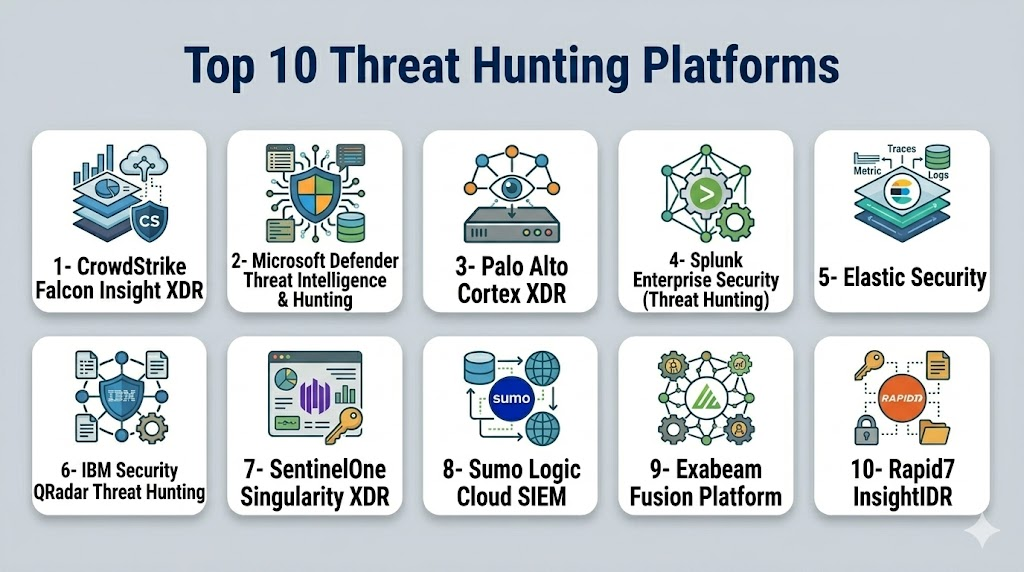
Top 10 Threat Hunting Platforms
1- CrowdStrike Falcon Insight XDR
Short description: A leading cloud-native threat hunting and XDR platform providing real-time detection, behavioral analysis, and proactive threat investigation across endpoints and cloud workloads.
Key Features
- Real-time endpoint telemetry analysis
- Behavioral AI-based threat detection
- Cross-domain correlation (endpoint, cloud, identity)
- Threat hunting query language
- Automated incident response workflows
- Threat intelligence integration
- Attack path reconstruction
Pros
- Extremely fast detection capabilities
- Strong cloud-native architecture
- High scalability for enterprises
Cons
- Premium pricing model
- Requires mature SOC operations
Platforms / Deployment
Cloud
Security & Compliance
- RBAC and SSO support
- Encryption in transit and at rest
- Not publicly stated certifications
Integrations & Ecosystem
Deep integration with SIEM, SOAR, and cloud security ecosystems.
- API-first architecture
- Threat intelligence feeds
- Security orchestration tools
Support & Community
Strong enterprise support and global cybersecurity community.
2- Microsoft Defender Threat Intelligence & Hunting
Short description: Integrated threat hunting platform within Microsoft Defender ecosystem, enabling cloud-scale hunting and investigation across enterprise environments.
Key Features
- Advanced hunting query language
- Cross-platform threat detection
- Identity and endpoint correlation
- Automated investigation workflows
- Cloud-native telemetry processing
- AI-assisted insights
- Incident timeline reconstruction
Pros
- Strong Microsoft ecosystem integration
- Easy deployment in Azure environments
- AI-powered investigation support
Cons
- Best suited for Microsoft-heavy environments
- Advanced tuning required for full capability
Platforms / Deployment
Cloud
Security & Compliance
- Azure AD-based RBAC
- Encryption and audit logging
- Compliance varies by tenant
Integrations & Ecosystem
- Microsoft Sentinel
- Defender suite
- API-based integrations
Support & Community
Strong enterprise support via Microsoft ecosystem.
3- Palo Alto Cortex XDR
Short description: AI-driven threat detection and hunting platform that provides deep behavioral analytics across endpoints, networks, and cloud environments.
Key Features
- Behavioral anomaly detection engine
- Cross-data correlation engine
- Threat hunting dashboards
- Attack chain reconstruction
- Endpoint and network telemetry ingestion
- Automated incident response
- Advanced query builder
Pros
- Strong AI-based detection
- Deep cross-layer visibility
- Excellent investigation workflows
Cons
- Complex setup for beginners
- Higher cost at scale
Platforms / Deployment
Cloud / Hybrid
Security & Compliance
- RBAC and SSO support
- Encryption standards
- Not publicly stated certifications
Integrations & Ecosystem
- Palo Alto ecosystem tools
- SIEM and SOAR integrations
- API-driven extensibility
Support & Community
Strong enterprise cybersecurity support ecosystem.
4- Splunk Enterprise Security (Threat Hunting)
Short description: Advanced analytics and threat hunting platform built on Splunk’s powerful data indexing and correlation engine.
Key Features
- Powerful log-based search and analytics
- Threat hunting dashboards
- Behavioral anomaly detection
- Custom correlation searches
- Security incident investigation
- Machine learning toolkit
- Threat intelligence integration
Pros
- Extremely powerful data search engine
- Highly customizable hunting workflows
- Strong enterprise adoption
Cons
- High operational complexity
- Expensive at scale
Platforms / Deployment
Cloud / Hybrid / Self-hosted
Security & Compliance
- RBAC and audit logging
- Encryption support
- Compliance varies
Integrations & Ecosystem
- SIEM ecosystem integrations
- Security orchestration tools
- API extensibility
Support & Community
Large global cybersecurity community and enterprise support.
5- Elastic Security (Threat Hunting Module)
Short description: Open and flexible threat hunting platform built on Elastic Stack, enabling deep search-driven security analytics.
Key Features
- Real-time threat hunting queries
- Log and event correlation
- Machine learning anomaly detection
- Endpoint security integration
- Security dashboards
- Timeline reconstruction
- OpenTelemetry support
Pros
- Highly flexible architecture
- Strong open-source foundation
- Powerful search capabilities
Cons
- Requires tuning and expertise
- Resource-heavy at scale
Platforms / Deployment
Cloud / Self-hosted / Hybrid
Security & Compliance
- RBAC support
- Encryption capabilities
- Compliance varies
Integrations & Ecosystem
- Elastic Stack ecosystem
- Cloud integrations
- Security APIs
Support & Community
Strong open-source and enterprise support ecosystem.
6- IBM Security QRadar Threat Hunting
Short description: Enterprise SIEM and threat hunting platform offering deep correlation and forensic investigation capabilities.
Key Features
- Security event correlation engine
- Threat hunting dashboards
- Behavioral anomaly detection
- Log and flow analysis
- Incident investigation workflows
- Threat intelligence integration
- Compliance reporting
Pros
- Strong enterprise analytics
- Deep correlation capabilities
- Reliable for large-scale environments
Cons
- Complex deployment
- Requires skilled analysts
Platforms / Deployment
Cloud / Hybrid
Security & Compliance
- RBAC and audit logs
- Encryption support
- Enterprise compliance frameworks
Integrations & Ecosystem
- IBM security ecosystem
- SIEM/SOAR tools
- API integrations
Support & Community
Strong IBM enterprise support ecosystem.
7- SentinelOne Singularity XDR
Short description: Autonomous threat hunting platform focused on endpoint protection, behavioral AI, and automated response.
Key Features
- AI-based behavioral detection
- Autonomous threat hunting
- Endpoint and cloud telemetry
- Storyline attack reconstruction
- Automated remediation actions
- Threat intelligence integration
- Real-time monitoring
Pros
- Strong autonomous detection
- Fast incident response
- Excellent endpoint visibility
Cons
- Less flexible than SIEM-based tools
- Requires agent deployment
Platforms / Deployment
Cloud
Security & Compliance
- RBAC and encryption
- Audit logging
- Not publicly stated certifications
Integrations & Ecosystem
- SIEM integrations
- Cloud security tools
- API-based extensibility
Support & Community
Strong enterprise security support.
8- Sumo Logic Cloud SIEM
Short description: Cloud-native SIEM and threat hunting platform designed for real-time analytics and investigation.
Key Features
- Real-time log analytics
- Threat detection rules engine
- Behavioral anomaly detection
- Cloud-native architecture
- Threat hunting dashboards
- Machine learning insights
- Incident investigation tools
Pros
- Fully cloud-native
- Easy scalability
- Strong log analytics
Cons
- Requires tuning for accuracy
- Limited deep forensic features
Platforms / Deployment
Cloud
Security & Compliance
- RBAC and encryption
- Audit logs
- Compliance varies
Integrations & Ecosystem
- Cloud platforms
- DevOps tools
- API integrations
Support & Community
Strong enterprise support and documentation.
9- Exabeam Fusion Platform
Short description: AI-powered security analytics and threat hunting platform focused on user behavior analytics and automated investigation.
Key Features
- User behavior analytics (UBA)
- Automated threat hunting
- Security incident timelines
- AI-driven anomaly detection
- Case management tools
- Threat intelligence integration
- Investigation automation
Pros
- Strong behavioral analytics
- Automated investigation workflows
- Good SOC usability
Cons
- Requires tuning for accuracy
- Complex deployment for large environments
Platforms / Deployment
Cloud / Hybrid
Security & Compliance
- RBAC and encryption
- Audit logging
- Compliance varies
Integrations & Ecosystem
- SIEM integrations
- Security orchestration tools
- API support
Support & Community
Strong enterprise SOC-focused support.
10- Rapid7 InsightIDR
Short description: Cloud-based threat hunting and detection platform combining log analytics, endpoint visibility, and behavioral detection.
Key Features
- User and entity behavior analytics
- Log search and correlation
- Endpoint detection integration
- Threat hunting dashboards
- Automated alerting
- Incident investigation workflows
- Attack detection rules
Pros
- Easy to deploy and use
- Strong SOC workflows
- Good visibility across systems
Cons
- Less advanced than high-end SIEMs
- Limited deep customization
Platforms / Deployment
Cloud
Security & Compliance
- RBAC support
- Encryption capabilities
- Not publicly stated certifications
Integrations & Ecosystem
- Cloud platforms
- SIEM and SOAR tools
- API integrations
Support & Community
Strong SMB and mid-market support ecosystem.
Comparison Table (Top 10)
| Tool | Best For | Platforms | Deployment | Standout Feature | Public Rating |
|---|---|---|---|---|---|
| CrowdStrike Falcon | Enterprise threat hunting | Web | Cloud | AI detection engine | N/A |
| Microsoft Defender | Microsoft ecosystems | Web | Cloud | Native integration | N/A |
| Cortex XDR | AI security analytics | Web | Cloud/Hybrid | Cross-data correlation | N/A |
| Splunk ES | SIEM hunting | Web | Hybrid | Powerful search engine | N/A |
| Elastic Security | Open search hunting | Web | Hybrid | Log analytics engine | N/A |
| IBM QRadar | Enterprise SIEM | Web | Hybrid | Event correlation | N/A |
| SentinelOne | Autonomous security | Web | Cloud | Storyline AI tracking | N/A |
| Sumo Logic | Cloud SIEM | Web | Cloud | Real-time analytics | N/A |
| Exabeam | Behavioral analytics | Web | Hybrid | User behavior insights | N/A |
| Rapid7 InsightIDR | Mid-market SOC | Web | Cloud | Easy deployment | N/A |
Evaluation & Scoring of Threat Hunting Platforms
| Tool | Core (25%) | Ease (15%) | Integrations (15%) | Security (10%) | Performance (10%) | Support (10%) | Value (15%) | Total |
|---|---|---|---|---|---|---|---|---|
| CrowdStrike | 9 | 8 | 9 | 9 | 9 | 9 | 7 | 8.6 |
| Microsoft Defender | 8 | 9 | 8 | 9 | 8 | 8 | 8 | 8.3 |
| Cortex XDR | 9 | 7 | 8 | 9 | 9 | 8 | 7 | 8.4 |
| Splunk | 9 | 7 | 9 | 9 | 9 | 8 | 6 | 8.3 |
| Elastic | 8 | 7 | 9 | 8 | 8 | 8 | 8 | 8.1 |
| IBM QRadar | 9 | 6 | 8 | 9 | 8 | 9 | 6 | 8.0 |
| SentinelOne | 8 | 8 | 8 | 9 | 9 | 8 | 7 | 8.3 |
| Sumo Logic | 8 | 8 | 8 | 8 | 8 | 8 | 8 | 8.0 |
| Exabeam | 8 | 7 | 8 | 8 | 8 | 8 | 7 | 8.0 |
| Rapid7 | 7 | 9 | 8 | 8 | 8 | 8 | 8 | 8.1 |
Which Threat Hunting Platform Is Right for You?
Solo / Freelancer
Elastic Security, Rapid7 InsightIDR
Best for learning, small-scale hunting, and lightweight investigations.
SMB
Rapid7 InsightIDR, Sumo Logic, Microsoft Defender
Balanced visibility and ease of use.
Mid-Market
Exabeam, Cortex XDR, SentinelOne
Strong behavioral analytics and automation.
Enterprise
CrowdStrike, Splunk, IBM QRadar, Cortex XDR
Deep analytics and large-scale threat hunting.
Budget vs Premium
- Budget: Elastic, Rapid7
- Premium: CrowdStrike, Splunk, IBM QRadar
Feature Depth vs Ease of Use
- Easy: Microsoft Defender, Rapid7
- Advanced: Splunk, Cortex XDR, IBM QRadar
Integrations & Scalability
- Strong ecosystems: Splunk, CrowdStrike, Elastic
Security & Compliance Needs
- Enterprise leaders: IBM QRadar, Microsoft Defender, CrowdStrike
Frequently Asked Questions (FAQs)
1. What is threat hunting?
It is the proactive process of searching for hidden cyber threats inside systems.
2. How is it different from SIEM?
SIEM collects and alerts; threat hunting actively searches for unknown threats.
3. Do these platforms use AI?
Yes, most modern tools use AI for anomaly detection and behavior analysis.
4. Are they cloud-based?
Most modern platforms are cloud or hybrid.
5. Who uses threat hunting tools?
SOC analysts, security engineers, and cybersecurity investigators.
6. What data do they analyze?
Logs, endpoints, network traffic, identity data, and cloud telemetry.
7. Are they expensive?
Enterprise solutions can be costly, especially at scale.
8. Can they prevent attacks?
They help detect early signs but work alongside prevention tools.
9. Do they integrate with SIEM?
Yes, most are tightly integrated with SIEM and SOAR systems.
10. What is the biggest challenge?
Handling large-scale telemetry and reducing false positives.
Conclusion
Threat Hunting Platforms are essential for modern cybersecurity operations, enabling organizations to proactively identify and eliminate hidden threats before they cause damage. With AI-driven analytics, behavioral detection, and deep integration with security ecosystems, they form the backbone of advanced SOC operations. However, the best platform depends on your environment, team maturity, and security requirements. A practical approach is to shortlist a few tools, run pilot hunts, and validate integration with your existing security stack before full deployment.

Find Trusted Cardiac Hospitals
Compare heart hospitals by city and services — all in one place.
Explore Hospitals
Threat hunting platforms are only as strong as the quality of hypotheses they enable analysts to build. If the tooling doesn’t make it easy to pivot across telemetry sources and correlate subtle patterns over time, even skilled hunters can miss low-and-slow attack behaviors hiding in normal activity.