Introduction
Evidence Chain-of-Custody Tools are specialized platforms designed to track, document, and verify the lifecycle of digital or physical evidence from collection to final disposition. They ensure that every action taken on evidence such as access, transfer, modification, or storage is securely recorded and legally defensible. these tools are becoming critical as organizations face increasing regulatory scrutiny, cybercrime investigations, legal disputes, and digital forensics requirements. With hybrid environments, cloud storage, and distributed teams, maintaining tamper-proof evidence integrity is more challenging than ever.
Real-world use cases include:
- Cybersecurity incident investigation and breach analysis
- Law enforcement digital evidence tracking and courtroom validation
- Legal discovery (eDiscovery) and litigation support
- Fraud investigation in banking and fintech systems
- Internal compliance audits and HR investigations
What buyers should evaluate:
- Evidence integrity and tamper-proof logging
- Chain-of-custody tracking accuracy and audit trails
- Role-based access control (RBAC) and permissions
- Integration with DFIR, SIEM, and case management systems
- Encryption standards for data at rest and in transit
- Compliance readiness for legal and regulatory standards
- Workflow automation for evidence handling
- Scalability for enterprise-grade investigations
- Searchability and evidence retrieval speed
- Reporting and courtroom-ready documentation
Best for:
Cybersecurity teams, digital forensic investigators, law enforcement agencies, legal teams, compliance officers, and enterprise risk management departments handling sensitive investigations.
Not ideal for:
Small teams with minimal compliance needs, organizations without structured investigation workflows, or businesses that do not handle sensitive or legally regulated data.
Key Trends in Evidence Chain-of-Custody Tools
- AI-assisted evidence classification and tagging for faster investigations
- Blockchain-based tamper-proof evidence logs for enhanced integrity
- Cloud-native chain-of-custody systems replacing on-prem legacy tools
- Real-time evidence tracking across distributed hybrid environments
- Integration with DFIR, SIEM, and SOAR platforms
- Automated audit trail generation for legal compliance
- Zero Trust architecture for evidence access control
- Natural language search across evidence repositories
- Increased regulatory pressure for digital evidence transparency
- Automated courtroom-ready reporting and documentation
How We Selected These Tools (Methodology)
- Market adoption in legal, cybersecurity, and compliance sectors
- Depth of chain-of-custody tracking capabilities
- Security architecture strength (RBAC, encryption, audit logs)
- Integration with DFIR, SIEM, and legal systems
- Evidence integrity and tamper-proof logging features
- Scalability for enterprise and government workloads
- Workflow automation and case management capabilities
- Usability for investigators and legal professionals
- Compliance readiness for regulatory environments
- Support maturity and enterprise adoption
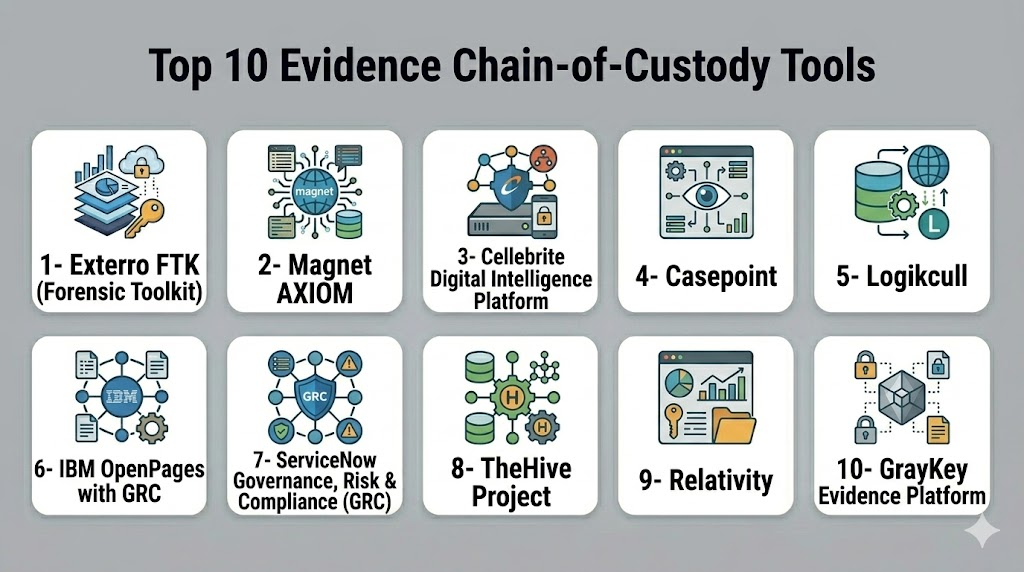
Top 10 Evidence Chain-of-Custody Tools
1- Exterro FTK (Forensic Toolkit)
Short description: A leading digital forensic platform providing robust evidence acquisition, analysis, and chain-of-custody tracking for legal and cybersecurity investigations.
Key Features
- Digital evidence acquisition and imaging
- Chain-of-custody tracking logs
- File system and disk-level analysis
- Email and artifact recovery
- Timeline reconstruction tools
- Evidence indexing and search
- Case management capabilities
Pros
- Strong forensic investigation capabilities
- Widely used in legal environments
- Reliable evidence handling workflows
Cons
- Requires technical expertise
- Not fully cloud-native
Platforms / Deployment
Windows / Self-hosted
Security & Compliance
- Chain-of-custody tracking support
- Evidence integrity verification
- Not publicly stated certifications
Integrations & Ecosystem
Integrates with forensic and legal systems for evidence export and reporting.
- Case management tools
- Legal discovery platforms
- Evidence export APIs
Support & Community
Strong forensic investigator community and enterprise support.
2- Magnet AXIOM
Short description: Advanced digital forensics platform designed for extracting, analyzing, and tracking evidence across devices and cloud environments.
Key Features
- Endpoint and mobile forensic acquisition
- Cloud evidence extraction
- Timeline and artifact analysis
- Chain-of-custody logging
- Case management tools
- Evidence visualization dashboards
- Automated reporting
Pros
- Strong mobile and cloud forensics
- User-friendly interface
- Comprehensive evidence handling
Cons
- High licensing cost
- Resource-intensive processing
Platforms / Deployment
Windows / Hybrid
Security & Compliance
- Evidence integrity tracking
- Audit logs and access control
- Not publicly stated compliance certifications
Integrations & Ecosystem
- Cloud storage platforms
- Legal case management systems
- Forensic export tools
Support & Community
Strong enterprise forensic support and investigator community.
3- Cellebrite Digital Intelligence Platform
Short description: Specialized evidence acquisition and mobile forensics platform widely used in law enforcement and investigative agencies.
Key Features
- Mobile device data extraction
- Cloud evidence collection
- Chain-of-custody tracking
- Cross-device correlation
- Evidence decoding and analysis
- Investigation dashboards
- Reporting and documentation
Pros
- Industry leader in mobile forensics
- Highly trusted in legal investigations
- Strong evidence extraction accuracy
Cons
- Narrow focus on mobile ecosystems
- Requires specialized training
Platforms / Deployment
Cloud / Hybrid
Security & Compliance
- Secure evidence handling
- Chain-of-custody logging
- Not publicly stated certifications
Integrations & Ecosystem
- Law enforcement systems
- Digital investigation tools
- Evidence management platforms
Support & Community
Strong government and enterprise support structure.
4- Casepoint
Short description: Cloud-based legal discovery and evidence management platform with strong chain-of-custody and compliance features.
Key Features
- Legal evidence lifecycle tracking
- Secure document storage
- Chain-of-custody audit trails
- Advanced search and filtering
- Collaboration workspace
- Evidence tagging and classification
- Compliance reporting
Pros
- Strong legal and compliance focus
- Secure enterprise environment
- Scalable cloud architecture
Cons
- Limited cybersecurity DFIR use cases
- Enterprise pricing model
Platforms / Deployment
Cloud
Security & Compliance
- Encryption and RBAC
- Audit logging and monitoring
- Compliance varies by deployment
Integrations & Ecosystem
- Legal systems
- eDiscovery platforms
- API integrations
Support & Community
Strong enterprise legal support ecosystem.
5- Logikcull
Short description: Cloud-based eDiscovery and evidence management platform designed for fast ingestion and structured investigation workflows.
Key Features
- Evidence ingestion and indexing
- Chain-of-custody tracking
- Case organization tools
- Advanced search capabilities
- Secure evidence storage
- Collaboration tools
- Export and reporting features
Pros
- Fast and simple interface
- Easy evidence ingestion
- Strong legal workflows
Cons
- Limited forensic depth
- Not suited for technical DFIR investigations
Platforms / Deployment
Cloud
Security & Compliance
- Encryption at rest and in transit
- RBAC support
- Not publicly stated compliance certifications
Integrations & Ecosystem
- Legal software systems
- Cloud storage platforms
- API integrations
Support & Community
Good enterprise support for legal teams.
6- IBM OpenPages with GRC
Short description: Governance and risk management platform with integrated evidence tracking and compliance-focused chain-of-custody capabilities.
Key Features
- Risk and compliance case tracking
- Evidence documentation workflows
- Audit trail generation
- Policy compliance monitoring
- Workflow automation
- Reporting dashboards
- AI-assisted risk insights
Pros
- Strong governance capabilities
- Enterprise compliance readiness
- Scalable architecture
Cons
- Complex implementation
- High cost structure
Platforms / Deployment
Cloud / Hybrid
Security & Compliance
- RBAC and encryption
- Audit logging
- Compliance frameworks supported
Integrations & Ecosystem
- IBM GRC ecosystem
- Enterprise IT systems
- API integrations
Support & Community
Strong IBM enterprise support ecosystem.
7- ServiceNow Governance, Risk & Compliance (GRC)
Short description: Enterprise platform for managing compliance, investigations, and evidence tracking with structured workflows and audit capabilities.
Key Features
- Evidence lifecycle tracking
- Risk and compliance workflows
- Automated audit trails
- Case-based investigation management
- Policy enforcement tools
- Reporting dashboards
- Integration with ITSM systems
Pros
- Strong enterprise workflow automation
- Excellent compliance tracking
- Deep integration with IT operations
Cons
- Complex deployment
- High licensing cost
Platforms / Deployment
Cloud / Hybrid
Security & Compliance
- RBAC and SSO
- Encryption support
- Compliance varies
Integrations & Ecosystem
- ServiceNow ecosystem
- Enterprise IT systems
- API integrations
Support & Community
Strong enterprise support and consulting ecosystem.
8- TheHive Project
Short description: Open-source security incident and evidence tracking platform widely used for DFIR and cybersecurity investigations.
Key Features
- Case and evidence tracking
- Chain-of-custody logging
- Incident collaboration tools
- Integration with MISP threat intelligence
- Workflow automation
- Evidence tagging system
- API-based extensibility
Pros
- Open-source flexibility
- Strong cybersecurity community
- Highly customizable
Cons
- Requires technical setup
- Limited enterprise support out-of-box
Platforms / Deployment
Self-hosted / Cloud / Hybrid
Security & Compliance
- RBAC support
- Encryption depends on configuration
- Not enterprise-certified
Integrations & Ecosystem
- MISP threat intelligence
- SIEM and SOAR tools
- Security automation platforms
Support & Community
Strong open-source cybersecurity community.
9- Relativity
Short description: Enterprise eDiscovery platform designed for managing large-scale legal evidence and chain-of-custody workflows.
Key Features
- Legal evidence lifecycle management
- Chain-of-custody tracking
- Advanced document review
- Search and filtering tools
- Collaboration workflows
- Data classification tools
- Reporting and audit logs
Pros
- Excellent legal evidence handling
- Highly scalable platform
- Strong compliance alignment
Cons
- Expensive enterprise solution
- Not designed for DFIR use cases
Platforms / Deployment
Cloud / Hybrid
Security & Compliance
- Encryption and RBAC
- Audit logging
- Compliance varies
Integrations & Ecosystem
- Legal systems
- Cloud storage integrations
- API support
Support & Community
Strong enterprise legal industry support.
10- GrayKey Evidence Platform
Short description: Specialized forensic evidence extraction and chain-of-custody tool primarily used for mobile and device investigations.
Key Features
- Secure mobile device extraction
- Evidence integrity tracking
- Chain-of-custody documentation
- Device-level forensic analysis
- Encrypted data handling
- Investigation reporting
- Case tracking tools
Pros
- Highly specialized forensic capability
- Strong evidence extraction accuracy
- Trusted in investigative environments
Cons
- Narrow focus on device forensics
- Not a general-purpose platform
Platforms / Deployment
Hybrid
Security & Compliance
- Evidence encryption
- Chain-of-custody logging
- Not publicly stated certifications
Integrations & Ecosystem
- Law enforcement systems
- Forensic analysis tools
- Evidence management platforms
Support & Community
Specialized support for investigative agencies.
Comparison Table (Top 10)
| Tool | Best For | Platforms | Deployment | Standout Feature | Public Rating |
|---|---|---|---|---|---|
| FTK | Digital forensics | Windows | Self-hosted | Disk imaging | N/A |
| Magnet AXIOM | Device forensics | Windows | Hybrid | Mobile + cloud analysis | N/A |
| Cellebrite | Mobile forensics | Web | Hybrid | Device extraction | N/A |
| Casepoint | Legal evidence | Web | Cloud | Legal compliance | N/A |
| Logikcull | eDiscovery | Web | Cloud | Fast ingestion | N/A |
| IBM OpenPages | GRC | Web | Hybrid | Risk governance | N/A |
| ServiceNow GRC | Enterprise compliance | Web | Cloud/Hybrid | Workflow automation | N/A |
| TheHive | DFIR cases | Web | Self-hosted | Open-source tracking | N/A |
| Relativity | Legal discovery | Web | Cloud/Hybrid | Scalable eDiscovery | N/A |
| GrayKey | Device forensics | Hybrid | Hybrid | Mobile extraction | N/A |
Evaluation & Scoring of Evidence Chain-of-Custody Tools
| Tool | Core (25%) | Ease (15%) | Integrations (15%) | Security (10%) | Performance (10%) | Support (10%) | Value (15%) | Total |
|---|---|---|---|---|---|---|---|---|
| FTK | 9 | 6 | 7 | 9 | 8 | 8 | 7 | 7.9 |
| Magnet AXIOM | 9 | 7 | 7 | 9 | 8 | 8 | 6 | 8.0 |
| Cellebrite | 8 | 7 | 7 | 9 | 8 | 8 | 6 | 7.9 |
| Casepoint | 8 | 7 | 7 | 9 | 8 | 8 | 7 | 8.0 |
| Logikcull | 8 | 8 | 7 | 9 | 8 | 8 | 8 | 8.1 |
| IBM OpenPages | 8 | 6 | 8 | 9 | 8 | 9 | 6 | 7.9 |
| ServiceNow GRC | 9 | 6 | 9 | 9 | 8 | 9 | 6 | 8.0 |
| TheHive | 8 | 7 | 8 | 8 | 8 | 8 | 10 | 8.3 |
| Relativity | 8 | 7 | 7 | 9 | 8 | 8 | 6 | 7.8 |
| GrayKey | 8 | 6 | 7 | 9 | 8 | 8 | 6 | 7.8 |
Which Evidence Chain-of-Custody Tool Is Right for You?
Solo / Freelancer
TheHive, Logikcull
Best for lightweight investigation tracking and open-source flexibility.
SMB
Casepoint, Logikcull, TheHive
Balanced compliance and usability for smaller teams.
Mid-Market
ServiceNow GRC, Magnet AXIOM
Stronger workflow automation and investigation capabilities.
Enterprise
Relativity, IBM OpenPages, ServiceNow GRC
Best for governance-heavy, large-scale compliance environments.
Budget vs Premium
- Budget: TheHive, Logikcull
- Premium: Relativity, ServiceNow, IBM OpenPages
Feature Depth vs Ease of Use
- Easy: Logikcull, Casepoint
- Deep enterprise capability: ServiceNow, IBM OpenPages, FTK
Integrations & Scalability
- Strongest ecosystems: ServiceNow, Relativity, IBM
Security & Compliance Needs
- Enterprise governance leaders: IBM OpenPages, ServiceNow GRC, Relativity
Frequently Asked Questions (FAQs)
1. What is chain-of-custody in evidence management?
It is the documented tracking of evidence from collection to final use, ensuring integrity and legal validity.
2. Why is it important?
It ensures evidence is admissible in legal, compliance, and forensic investigations.
3. Are these tools only for law enforcement?
No, they are also used in cybersecurity, legal teams, and enterprise compliance.
4. Do they support cloud environments?
Yes, most modern tools are cloud or hybrid.
5. What data do they track?
Files, logs, digital artifacts, mobile data, and forensic evidence.
6. Are these tools AI-powered?
Many include AI for classification, tagging, and summarization.
7. Are they expensive?
Enterprise-grade tools can be costly, while open-source options are free.
8. Do they integrate with SIEM tools?
Yes, many integrate with SIEM, SOAR, and DFIR platforms.
9. What is chain-of-custody logging?
It is a secure record of every action performed on evidence.
10. What is the biggest challenge?
Ensuring integrity and consistency of evidence across distributed systems.
Conclusion
Evidence Chain-of-Custody Tools are essential for maintaining trust, integrity, and compliance in investigations across cybersecurity, legal, and enterprise environments. They ensure that digital evidence remains traceable, secure, and legally defensible throughout its lifecycle. However, the best tool depends on your industry, scale, and regulatory needs. A practical approach is to shortlist 2–3 tools, test them with real investigative workflows, and validate integration with your compliance and security ecosystem before full adoption.

Find Trusted Cardiac Hospitals
Compare heart hospitals by city and services — all in one place.
Explore Hospitals
Chain of custody tools become truly critical when evidence has to pass through multiple teams and systems during an investigation. The biggest risk is often not data loss, but subtle integrity gaps caused by improper timestamping, access logging, or transfer validation, which can weaken evidence credibility later in audits or legal reviews.