Introduction
Telecom OSS/BSS (Operations Support Systems / Business Support Systems) platforms are the backbone of modern telecom and digital service provider ecosystems. OSS handles network operations, provisioning, fault management, and service assurance, while BSS manages billing, customer lifecycle, revenue management, and product catalogs. Together, they enable telecom operators to deliver seamless connectivity and monetize services efficiently. OSS/BSS systems are evolving rapidly due to 5G expansion, network virtualization, cloud-native architectures, and AI-driven automation. Telecom operators are under pressure to launch services faster, reduce operational costs, and improve customer experience across highly complex hybrid networks.
Real-world use cases include:
- Automating 5G service provisioning and network slicing
- Managing real-time billing for usage-based digital services
- Enabling customer onboarding and digital self-service portals
- Monitoring network performance and predictive fault resolution
- Supporting multi-cloud telecom infrastructure orchestration
What buyers should evaluate:
- Cloud-native readiness and scalability
- Integration with 5G, IoT, and virtualized networks
- Billing accuracy and real-time rating capabilities
- AI-driven automation for network and customer operations
- API extensibility and ecosystem support
- Multi-tenant and multi-service support
- Fault management and observability depth
- Security, compliance, and access controls
- Deployment flexibility (cloud, hybrid, on-prem)
- Vendor roadmap alignment with telecom evolution
Best for: Telecom operators, MVNOs, CSPs, and digital service providers managing complex networks and monetized digital services at scale.
Not ideal for: Small businesses or non-telecom organizations without large-scale network operations or billing complexity.
Key Trends in Telecom OSS/BSS Systems
- Shift toward fully cloud-native OSS/BSS architectures
- AI-driven network assurance and autonomous operations
- Real-time billing and event-based monetization models
- 5G standalone network slicing integration into OSS systems
- Convergence of OSS, BSS, and CRM into unified platforms
- Increased adoption of microservices and API-first architectures
- Expansion of IoT billing and device lifecycle management
- Low-code/no-code product catalog and service design tools
- Edge computing integration with network orchestration systems
- Strong focus on cybersecurity, zero-trust, and compliance automation
How We Selected These Tools (Methodology)
- Evaluated global telecom OSS/BSS market leaders and innovators
- Prioritized platforms supporting 5G and cloud-native transformation
- Considered scalability for large telecom operator environments
- Assessed integration capabilities with network infrastructure systems
- Reviewed support for real-time billing and charging systems
- Focused on vendors with strong ecosystem and API maturity
- Included both traditional telecom vendors and modern SaaS entrants
- Analyzed automation capabilities for OSS and BSS convergence
- Ensured representation of enterprise-grade telecom solutions
- Selected tools supporting hybrid and multi-cloud deployments
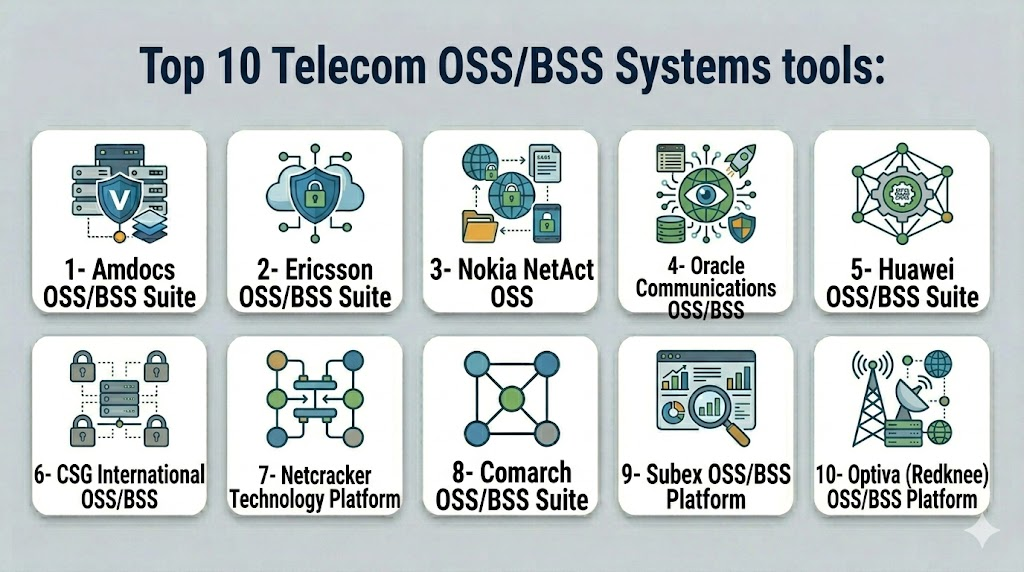
Top 10 Telecom OSS/BSS Systems
1 — Amdocs OSS/BSS Suite
Short description:
Amdocs provides one of the most widely deployed OSS/BSS suites globally, serving Tier-1 telecom operators with advanced billing, CRM, and service orchestration capabilities.
Key Features
- End-to-end OSS/BSS lifecycle management
- Real-time charging and billing engine
- Customer experience and CRM integration
- Network service orchestration for 5G environments
- Product catalog and revenue management system
- AI-driven customer engagement analytics
- Multi-cloud deployment capabilities
Pros
- Extremely strong telecom industry adoption
- Highly scalable for global operators
- Deep billing and revenue management capabilities
Cons
- Complex implementation cycles
- High operational and licensing costs
Platforms / Deployment
- Cloud / Hybrid / On-prem
Security & Compliance
- RBAC, MFA, encryption supported
- SOC 2: Not publicly stated
- ISO 27001: Not publicly stated
Integrations & Ecosystem
Amdocs integrates with telecom infrastructure, CRM, and billing systems across large ecosystems.
- Network function virtualization platforms
- CRM systems
- Cloud providers
- Billing and payment gateways
Support & Community
Strong enterprise-grade global support with telecom-focused consulting services.
2 — Ericsson OSS/BSS Suite
Short description:
Ericsson provides telecom-grade OSS/BSS solutions focused on network automation, service assurance, and digital monetization for operators transitioning to 5G.
Key Features
- Network service orchestration and assurance
- 5G core integration capabilities
- Dynamic service provisioning
- Real-time charging and billing support
- AI-based network optimization
- Multi-domain service management
- Cloud-native OSS components
Pros
- Strong 5G and network integration capabilities
- Deep telecom engineering expertise
- Highly reliable for large-scale operators
Cons
- Enterprise-heavy complexity
- Limited flexibility for smaller providers
Platforms / Deployment
- Cloud / Hybrid
Security & Compliance
- Encryption, RBAC, audit logging supported
- SOC 2: Not publicly stated
- ISO 27001: Not publicly stated
Integrations & Ecosystem
Strong integration with telecom infrastructure and NFV ecosystems.
- 5G core networks
- OSS orchestration tools
- Cloud infrastructure providers
- Network monitoring systems
Support & Community
Enterprise-grade telecom support with global carrier partnerships.
3 — Nokia NetAct OSS
Short description:
Nokia NetAct is a widely used OSS platform focused on network management, automation, and service assurance for telecom operators.
Key Features
- Network monitoring and fault management
- Performance analytics dashboards
- Multi-vendor network support
- Service quality assurance tools
- Automated network configuration management
- AI-driven anomaly detection
- 5G network integration support
Pros
- Strong network operations capabilities
- Proven telecom reliability
- Good multi-vendor support
Cons
- Limited BSS capabilities
- Traditional OSS architecture complexity
Platforms / Deployment
- Cloud / On-prem / Hybrid
Security & Compliance
- RBAC, encryption supported
- SOC 2: Not publicly stated
- ISO 27001: Not publicly stated
Integrations & Ecosystem
- Telecom network equipment
- Cloud monitoring systems
- Analytics platforms
- 5G core systems
Support & Community
Strong telecom operator support with global deployment experience.
4 — Oracle Communications OSS/BSS
Short description:
Oracle offers a comprehensive OSS/BSS suite focused on billing, revenue management, and telecom service orchestration.
Key Features
- Real-time billing and charging systems
- Revenue management and pricing engines
- Customer lifecycle management
- Service orchestration and activation
- Product catalog management
- Network service assurance tools
- Cloud-native telecom architecture support
Pros
- Strong enterprise billing capabilities
- Broad telecom service coverage
- Good scalability for large operators
Cons
- Complex system configuration
- High enterprise cost structure
Platforms / Deployment
- Cloud / Hybrid / On-prem
Security & Compliance
- RBAC, encryption, MFA supported
- SOC 2: Not publicly stated
- ISO 27001: Not publicly stated
Integrations & Ecosystem
- Oracle cloud ecosystem
- ERP and CRM systems
- Telecom infrastructure tools
- Billing and payment systems
Support & Community
Strong enterprise support and telecom consulting ecosystem.
5 — Huawei BSS/OSS Suite
Short description:
Huawei provides telecom OSS/BSS solutions widely used in large-scale telecom deployments, particularly in Asia and emerging markets.
Key Features
- Network resource management
- Service provisioning automation
- Billing and revenue management
- 5G and IoT service support
- AI-driven network optimization
- Fault and performance monitoring
- Digital service catalog management
Pros
- Strong telecom infrastructure integration
- High scalability for large networks
- Competitive performance efficiency
Cons
- Limited transparency in documentation
- Region-specific availability constraints
Platforms / Deployment
- Cloud / On-prem / Hybrid
Security & Compliance
- Encryption, RBAC supported
- SOC 2: Not publicly stated
- ISO 27001: Not publicly stated
Integrations & Ecosystem
- Huawei telecom infrastructure
- Network virtualization systems
- Cloud platforms
- Billing systems
Support & Community
Strong regional telecom operator support network.
6 — CSG International OSS/BSS
Short description:
CSG provides cloud-based OSS/BSS solutions focused on customer engagement, billing, and digital monetization.
Key Features
- Digital billing and charging engine
- Customer engagement platform
- Product catalog and order management
- Revenue assurance tools
- Real-time analytics dashboards
- Cloud-native architecture
- API-first integration model
Pros
- Strong customer experience focus
- Flexible cloud deployment
- Good monetization capabilities
Cons
- Less network-level depth than OEM vendors
- Moderate ecosystem size
Platforms / Deployment
- Cloud
Security & Compliance
- RBAC, encryption, MFA supported
- SOC 2: Not publicly stated
- ISO 27001: Not publicly stated
Integrations & Ecosystem
- CRM systems
- Payment gateways
- Cloud platforms
- Analytics tools
Support & Community
Strong enterprise SaaS support model with telecom focus.
7 — Netcracker Technology Platform
Short description:
Netcracker offers a full-stack OSS/BSS platform designed for digital transformation in telecom environments.
Key Features
- Digital service orchestration
- End-to-end billing systems
- Network inventory and management
- AI-powered analytics engine
- Customer experience management
- 5G service lifecycle support
- Cloud-native deployment options
Pros
- Strong end-to-end telecom coverage
- Good digital transformation support
- Flexible architecture
Cons
- Complex implementation lifecycle
- Enterprise-heavy pricing model
Platforms / Deployment
- Cloud / Hybrid / On-prem
Security & Compliance
- RBAC, MFA, encryption supported
- SOC 2: Not publicly stated
- ISO 27001: Not publicly stated
Integrations & Ecosystem
- Telecom infrastructure systems
- CRM and ERP tools
- Cloud platforms
- Analytics systems
Support & Community
Strong global telecom enterprise support.
8 — Comarch OSS/BSS Suite
Short description:
Comarch provides modular OSS/BSS solutions for telecom operators focused on billing, service management, and network automation.
Key Features
- Billing and revenue management systems
- Service catalog management
- Network monitoring and OSS tools
- Customer lifecycle management
- IoT billing support
- AI-driven analytics
- Modular architecture design
Pros
- Modular and flexible architecture
- Strong billing capabilities
- Suitable for mid-to-large operators
Cons
- Limited global adoption compared to top-tier vendors
- Requires customization effort
Platforms / Deployment
- Cloud / Hybrid / On-prem
Security & Compliance
- Encryption, RBAC supported
- SOC 2: Not publicly stated
- ISO 27001: Not publicly stated
Integrations & Ecosystem
- Telecom infrastructure systems
- CRM platforms
- Billing engines
- Cloud services
Support & Community
Strong European telecom customer base and support structure.
9 — Subex OSS/BSS Platform
Short description:
Subex focuses on telecom analytics, fraud management, and OSS/BSS optimization solutions.
Key Features
- Telecom fraud detection systems
- Revenue assurance analytics
- Network data intelligence
- Service assurance tools
- AI-driven anomaly detection
- Billing integrity monitoring
- Real-time analytics dashboards
Pros
- Strong analytics and fraud detection focus
- Good telecom revenue protection tools
- Lightweight compared to large suites
Cons
- Limited full-stack OSS/BSS coverage
- Requires integration with other platforms
Platforms / Deployment
- Cloud / Hybrid
Security & Compliance
- Encryption, RBAC supported
- SOC 2: Not publicly stated
- ISO 27001: Not publicly stated
Integrations & Ecosystem
- Telecom billing systems
- Network monitoring tools
- Data analytics platforms
- CRM systems
Support & Community
Strong telecom analytics-focused enterprise support.
10 — Redknee OSS/BSS (Optiva Platform)
Short description:
Optiva (formerly Redknee) provides cloud-native billing and monetization solutions for telecom operators.
Key Features
- Real-time charging and billing engine
- Cloud-native monetization platform
- Subscription and usage-based billing
- Product catalog management
- Digital service enablement
- 5G monetization support
- API-first architecture
Pros
- Strong monetization capabilities
- Good cloud-native design
- Flexible billing models
Cons
- Smaller ecosystem compared to Tier-1 vendors
- Limited OSS depth
Platforms / Deployment
- Cloud / Hybrid
Security & Compliance
- RBAC, MFA, encryption supported
- SOC 2: Not publicly stated
- ISO 27001: Not publicly stated
Integrations & Ecosystem
- Cloud platforms
- Telecom billing systems
- CRM tools
- Payment systems
Support & Community
Moderate enterprise support with telecom monetization focus.
Comparison Table (Top 10)
| Tool Name | Best For | Platform(s) Supported | Deployment | Standout Feature | Public Rating |
|---|---|---|---|---|---|
| Amdocs | Tier-1 operators | Web | Hybrid | End-to-end OSS/BSS | N/A |
| Ericsson | 5G networks | Web | Hybrid | Network orchestration | N/A |
| Nokia NetAct | Network ops | Web | On-prem | Network monitoring | N/A |
| Oracle Communications | Billing systems | Web | Hybrid | Revenue management | N/A |
| Huawei OSS/BSS | Large carriers | Web | Hybrid | Network integration | N/A |
| CSG | Digital telecom | Web | Cloud | Customer engagement | N/A |
| Netcracker | Digital transformation | Web | Hybrid | End-to-end stack | N/A |
| Comarch | Mid-large operators | Web | Hybrid | Modular OSS/BSS | N/A |
| Subex | Analytics & fraud | Web | Cloud | Revenue assurance | N/A |
| Optiva | Monetization | Web | Cloud | Real-time billing | N/A |
Evaluation & Scoring of Telecom OSS/BSS Systems
| Tool Name | Core (25%) | Ease (15%) | Integrations (15%) | Security (10%) | Performance (10%) | Support (10%) | Value (15%) | Weighted Total |
|---|---|---|---|---|---|---|---|---|
| Amdocs | 10 | 6 | 9 | 9 | 10 | 10 | 7 | 8.8 |
| Ericsson | 9 | 7 | 9 | 9 | 10 | 9 | 7 | 8.6 |
| Nokia NetAct | 8 | 7 | 8 | 9 | 9 | 8 | 8 | 8.2 |
| Oracle | 9 | 6 | 9 | 9 | 9 | 9 | 7 | 8.3 |
| Huawei | 9 | 7 | 8 | 8 | 9 | 8 | 8 | 8.2 |
| CSG | 8 | 8 | 8 | 8 | 8 | 8 | 8 | 8.0 |
| Netcracker | 9 | 7 | 8 | 9 | 9 | 9 | 7 | 8.3 |
| Comarch | 8 | 7 | 8 | 8 | 8 | 8 | 8 | 7.9 |
| Subex | 7 | 8 | 7 | 8 | 8 | 8 | 8 | 7.6 |
| Optiva | 7 | 8 | 8 | 8 | 8 | 7 | 8 | 7.7 |
Which Telecom OSS/BSS Tool Is Right for You?
Solo / Freelancer
- Not applicable for OSS/BSS systems due to enterprise scale
SMB / Regional Operators
- CSG, Comarch, Optiva
- Focus on billing flexibility and faster deployment
Mid-Market
- Netcracker, Comarch, Subex
- Balanced OSS + BSS capabilities with analytics
Enterprise
- Amdocs, Ericsson, Oracle, Nokia, Huawei
- Full-scale OSS/BSS transformation platforms
Budget vs Premium
- Budget: Comarch, Subex, Optiva
- Premium: Amdocs, Oracle, Ericsson
Feature Depth vs Ease of Use
- Deep enterprise depth: Amdocs, Ericsson, Oracle
- Easier adoption: CSG, Optiva
Integrations & Scalability
- Strongest: Amdocs, Netcracker, Ericsson
- Flexible: CSG, Comarch
Security & Compliance Needs
- Strong enterprise governance: Oracle, Ericsson, Amdocs
- Balanced security: CSG, Optiva
Frequently Asked Questions
1. What are OSS/BSS systems used for?
They manage telecom network operations (OSS) and business functions like billing and customer management (BSS).
2. Why are OSS/BSS platforms important in 5G?
They enable real-time service provisioning, network slicing, and dynamic monetization for 5G services.
3. Are OSS/BSS systems cloud-based?
Modern systems increasingly support cloud-native and hybrid deployments.
4. What is the difference between OSS and BSS?
OSS handles network operations, while BSS handles billing, revenue, and customer services.
5. Which companies use OSS/BSS?
Telecom operators, MVNOs, ISPs, and digital service providers.
6. Do OSS/BSS systems support IoT billing?
Yes, many modern platforms support IoT usage-based billing models.
7. Are OSS/BSS systems expensive?
Enterprise-grade systems can be expensive due to scale and complexity.
8. How long does implementation take?
It can range from months to years depending on telecom complexity.
9. Do OSS/BSS platforms support AI?
Yes, newer platforms include AI for automation, fault detection, and analytics.
10. Can OSS/BSS be integrated with CRM?
Yes, integration with CRM systems is a standard requirement.
Conclusion
Telecom OSS/BSS systems are critical infrastructure for managing modern communication networks and monetizing digital services. As 5G, IoT, and cloud-native architectures expand, these platforms are evolving into highly automated, AI-driven ecosystems that unify network operations and business processes. Choosing the right platform depends on operator scale, digital maturity, and transformation goals. Tier-1 operators typically rely on enterprise suites like Amdocs or Ericsson, while mid-market and emerging operators benefit from more modular and cloud-native platforms. The best approach is to shortlist 2–3 vendors, validate integration with existing network infrastructure, and run phased transformation pilots before full-scale deployment.

Find Trusted Cardiac Hospitals
Compare heart hospitals by city and services — all in one place.
Explore Hospitals
In many telecom environments, the real difficulty with OSS/BSS platforms is not the feature set itself, but how smoothly they support real-time coordination between network operations and customer-facing billing systems. Even small mismatches in event processing or data synchronization can lead to billing errors and customer trust issues at scale.