Introduction
Discovering that your child may need heart care is an overwhelming experience for any parent. However, understanding the specialized nature of pediatric cardiology is the first step toward securing the best possible health outcomes for your little one. Children are not simply small adults; their hearts are unique, often affected by congenital conditions that require highly specific, expert medical intervention.Choosing the right facility is paramount. Pediatric cardiology hospitals offer multidisciplinary teams of specialists, dedicated pediatric ICUs, and cutting-edge surgical suites designed specifically for young patients. Early diagnosis and intervention provided by these centers can significantly improve long-term quality of life. For parents seeking guidance on navigating these critical decisions, MyHospitalNow provides resources to help you compare hospitals and understand the care landscape.
Understanding Pediatric Cardiology
Pediatric cardiology is the branch of medicine focused on diagnosing and treating heart problems in infants, children, and adolescents. Unlike adult cardiology, which often focuses on lifestyle-related conditions like coronary artery disease, pediatric cardiology primarily addresses structural heart defects present from birth—known as congenital heart diseases (CHD)—as well as acquired heart conditions that develop during childhood.
The difference lies in the complexity of the anatomy. A pediatric cardiologist and a pediatric cardiac surgeon are trained to operate on hearts that are still developing, requiring a delicate balance of medical expertise and specialized technology.
PEDIATRIC CARDIOLOGY OVERVIEW TABLE
| Aspect | Description |
| Medical Specialty | Pediatric Cardiology & Cardiovascular Surgery |
| Age Group | Newborns, infants, children, and adolescents |
| Conditions Treated | Congenital defects, rhythm disorders, cardiomyopathies |
| Specialists Involved | Pediatric cardiologists, cardiac surgeons, intensivists, nurses |
| Common Procedures | Echocardiography, catheter interventions, open-heart surgery |
Common Pediatric Heart Conditions
Heart conditions in children vary from minor issues that require only observation to complex defects that necessitate surgery.
Congenital Heart Defects (CHD)
These are structural abnormalities present at birth. They can affect the heart walls, valves, or blood vessels.
Atrial Septal Defect (ASD)
A hole in the wall between the two upper chambers of the heart.
Ventricular Septal Defect (VSD)
A hole in the wall between the two lower chambers of the heart.
Patent Ductus Arteriosus (PDA)
A persistent opening between the two major blood vessels leading from the heart.
Tetralogy of Fallot (TOF)
A complex combination of four heart defects that reduces oxygen flow to the body.
Heart Valve Disorders
Conditions where valves do not open or close properly, affecting blood flow.
Pediatric Arrhythmias
Irregular heartbeats caused by problems with the heart’s electrical system.
Cardiomyopathy
Diseases of the heart muscle that make it harder for the heart to pump blood.
COMMON PEDIATRIC HEART CONDITIONS TABLE
| Condition | Description | Common Symptoms |
| ASD/VSD | Hole in heart chambers | Heart murmur, fatigue, poor weight gain |
| PDA | Persistent vessel opening | Rapid breathing, poor feeding, sweating |
| TOF | Complex structural defects | Cyanosis (bluish skin), fainting, clubbing |
| Arrhythmia | Electrical rhythm issue | Palpitations, dizziness, fainting spells |
| Cardiomyopathy | Weakened heart muscle | Swelling, shortness of breath, fatigue |
Why Specialized Pediatric Cardiology Hospitals Matter
General hospitals may not have the infrastructure required to manage the unique needs of a child with heart disease. Specialized pediatric heart hospitals offer:
- Dedicated Pediatric Cardiac ICUs (PICU): Environments staffed by professionals trained exclusively in post-operative pediatric care.
- Child-Friendly Facilities: Specialized surgical equipment designed for small bodies and environments that minimize stress for children.
- Neonatal Cardiac Care: Specialized units to treat critically ill newborns with complex defects.
- Multidisciplinary Teams: Cooperation between cardiologists, surgeons, geneticists, and child life specialists.
Top Pediatric Cardiology Hospitals (Selected Examples)
1. The Children’s Heart Center of Excellence
- Overview: A globally recognized leader in pediatric cardiac surgery and research.
- Strengths: Pioneers in complex neonatal reconstruction and robotic-assisted surgeries.
- Diagnostic Technology: Full suite of 3D-echocardiography and advanced cardiac MRI.
- Why Parents Choose This Hospital: Exceptional surgical outcomes for complex congenital cases and a dedicated family support program.
2. The Pediatric Cardiovascular Institute
- Overview: Focuses on comprehensive, long-term patient-centered care from birth to young adulthood.
- Strengths: Renowned for its focus on pediatric heart rhythm management (electrophysiology).
- Neonatal Care: State-of-the-art Level IV NICU dedicated to cardiac patients.
- Why Parents Choose This Hospital: A highly personalized approach that focuses on the long-term developmental milestones of the child.
HOSPITAL COMPARISON TABLE
| Hospital Name | Location | Pediatric Cardiology | Pediatric Heart Surgery | NICU/PICU | Int’l Support |
| Center of Excellence | Major Metro | Advanced | Advanced | Yes | Yes |
| Cardiovascular Inst. | Major Metro | Advanced | Specialized | Yes | Yes |
Advanced Diagnostic Technologies
Modern diagnostics allow doctors to visualize the heart in unprecedented detail.
DIAGNOSTIC TECHNOLOGY TABLE
| Technology | Purpose | Benefit |
| Echocardiogram | Sound waves to map heart | Non-invasive, no radiation |
| ECG | Measure electrical activity | Quickly identify arrhythmias |
| Holter Monitor | Continuous rhythm tracking | Detects intermittent problems |
| Cardiac MRI | Detailed structural imaging | High precision for complex anatomy |
| Catheterization | Insert thin tube to heart | Minimally invasive repair/mapping |
Treatment Options
TREATMENT OPTIONS TABLE
| Treatment | Purpose | Best For |
| Medication | Regulate rhythm/blood pressure | Mild defects or post-op support |
| Catheter Procedure | Repair holes/open valves | Less invasive, faster recovery |
| Heart Surgery | Correct complex structural defects | Severe or multi-part defects |
| Pacemaker | Regulate electrical heart signals | Persistent arrhythmias |
| Follow-up Care | Monitor growth and heart health | Life-long cardiac health |
How to Choose the Right Pediatric Cardiology Hospital
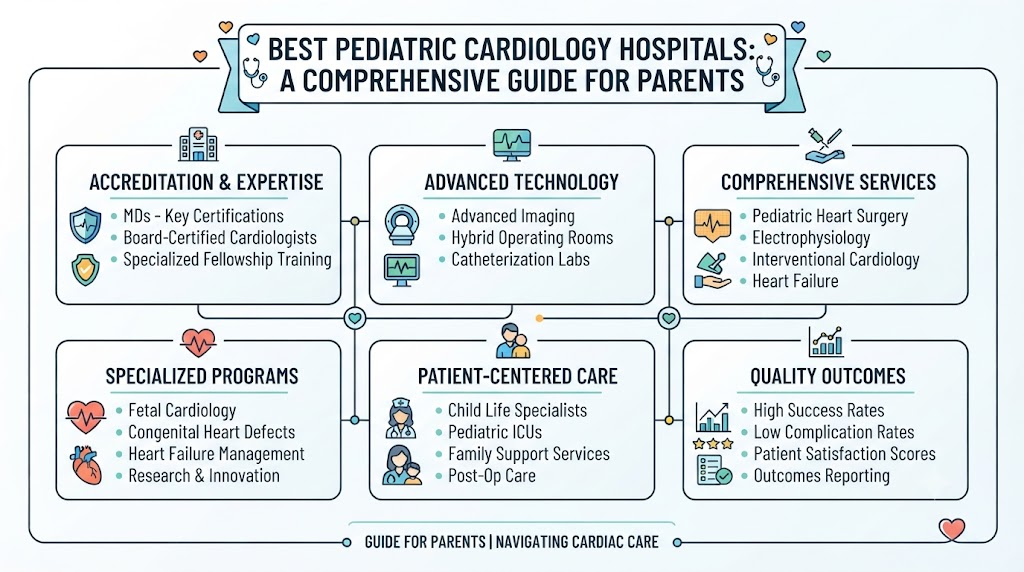
When evaluating options, focus on:
- Volume and Experience: Hospitals that perform high volumes of specific surgeries often have better outcomes.
- Multidisciplinary Support: Does the hospital have pediatric anesthesiologists, perfusionists, and geneticists?
- Infrastructure: Is there a dedicated PICU?
- Family Support: Look for hospitals that offer child-life services and parent accommodation.
Future of Pediatric Cardiology
The field is evolving rapidly with the integration of new technologies that make procedures safer and less invasive.
FUTURE OF PEDIATRIC CARDIOLOGY TABLE
| Innovation | Potential Benefit |
| AI Diagnostics | Earlier detection of subtle defects |
| Robotic Surgery | Smaller incisions, faster recovery |
| 3D Heart Models | Precise surgical planning |
| Wearable Monitoring | Better tracking of rhythm issues at home |
| Precision Medicine | Personalized genetic heart treatments |
Frequently Asked Questions (FAQs)
- What is pediatric cardiology?
A subspecialty focusing on the heart health of children from the fetal stage through adolescence. - What are congenital heart defects?
Structural heart problems present from birth. - When should my child see a cardiologist?
If a pediatrician hears a murmur or if there are symptoms like blue skin or fainting. - What symptoms indicate heart problems?
Cyanosis, poor feeding, excessive sweating, or rapid fatigue. - Is surgery safe?
While any surgery carries risk, modern pediatric cardiac surgery has high success rates. - How are defects diagnosed?
Primarily via echocardiograms and physical exams. - Can children recover completely?
Many children lead full, active lives after correction. - How often are follow-ups?
Based on the condition, ranging from months to years. - What lifestyle changes are needed?
Often none, though some children may have activity restrictions. - How do I choose a hospital?
By looking at expertise, ICU capability, and patient resources. - Do I need a referral?
Yes, usually from your pediatrician. - What is a PICU?
Pediatric Intensive Care Unit for specialized recovery. - Is fetal echocardiography standard?
It is common for high-risk pregnancies to detect issues early. - How long is the recovery?
It varies greatly depending on the procedure. - Are there support groups?
Yes, many hospitals provide links to parent networks.
Final Thoughts
Your child’s heart health is a journey, and having the right team by your side is crucial. By choosing a top-tier pediatric cardiology hospital, you ensure your child has access to the best technology and expert care available. Remember that early diagnosis and regular follow-ups are the pillars of long-term cardiac wellness.For more information, resources, and tools to compare facilities, explore MyHospitalNow to find the best care for your child.

Find Trusted Cardiac Hospitals
Compare heart hospitals by city and services — all in one place.
Explore Hospitals