Introduction
Liver health is foundational to your overall well-being. This vital organ performs hundreds of essential functions, from filtering toxins and processing nutrients to regulating blood clotting and supporting metabolism. When the liver faces severe, irreversible damage, its ability to function drops, which can profoundly impact every system in your body.At MYHOSPITALNOW, we aim to empower you with the knowledge needed to navigate this process. In this guide, we will explore the nuances of liver transplantation, the services provided by leading centers, and the factors you should consider when making healthcare decisions. Always remember that transplant eligibility and treatment plans are highly individual, depending on your unique medical history and current health status. Please consult with qualified hepatologists and transplant specialists to discuss your personal circumstances.
What Is Liver Transplant?
A liver transplant is a surgical procedure performed to replace a failing or damaged liver with a healthy organ. Your liver is a complex, regenerative organ; however, once it reaches a state of end-stage failure—where it can no longer perform its vital duties—it cannot heal on its own.
Types of Donation
- Living Donor Transplant: A healthy individual (often a family member or compatible volunteer) donates a portion of their liver. Because the liver has the unique ability to regenerate, both the donor’s portion and the recipient’s new segment can grow to normal size.
- Deceased Donor Transplant: The liver is sourced from a donor who has recently passed away. This organ is carefully preserved and allocated through national or regional waiting list systems based on medical urgency and compatibility.
Conditions That May Require Liver Transplant
A transplant is typically reserved for cases where medical management, lifestyle adjustments, and other surgical interventions are no longer sufficient to maintain life. Common conditions include:
- Liver Cirrhosis: Extensive scarring of the liver tissue that prevents normal function.
- End-Stage Liver Disease: The final, most severe stage of chronic liver damage.
- Acute Liver Failure: A rapid loss of liver function that occurs suddenly, often due to toxins, medications, or infections.
- Chronic Viral Hepatitis: Long-term inflammation from Hepatitis B or C leading to severe scarring.
- Alcohol-Related Liver Disease: Damage caused by long-term heavy alcohol consumption.
- Non-Alcoholic Fatty Liver Disease (NAFLD/MASH): Severe damage resulting from metabolic factors rather than alcohol.
- Genetic Liver Disorders: Conditions such as Wilson’s disease or hemochromatosis.
- Primary Liver Cancers: Certain cancers that are confined to the liver and meet specific criteria.
Types of Liver Transplant Procedures
| Transplant Type | Description | Key Consideration |
| Living Donor Transplant | A healthy donor provides part of the liver | Requires thorough donor evaluation |
| Deceased Donor Transplant | Liver comes from an organ donor | Depends on availability and allocation |
| Pediatric Liver Transplant | Transplant designed for children | Requires specialized pediatric teams |
| Split Liver Transplant | One donor liver may support two recipients | Requires advanced surgical expertise |
Services Offered by Leading Liver Transplant Hospitals
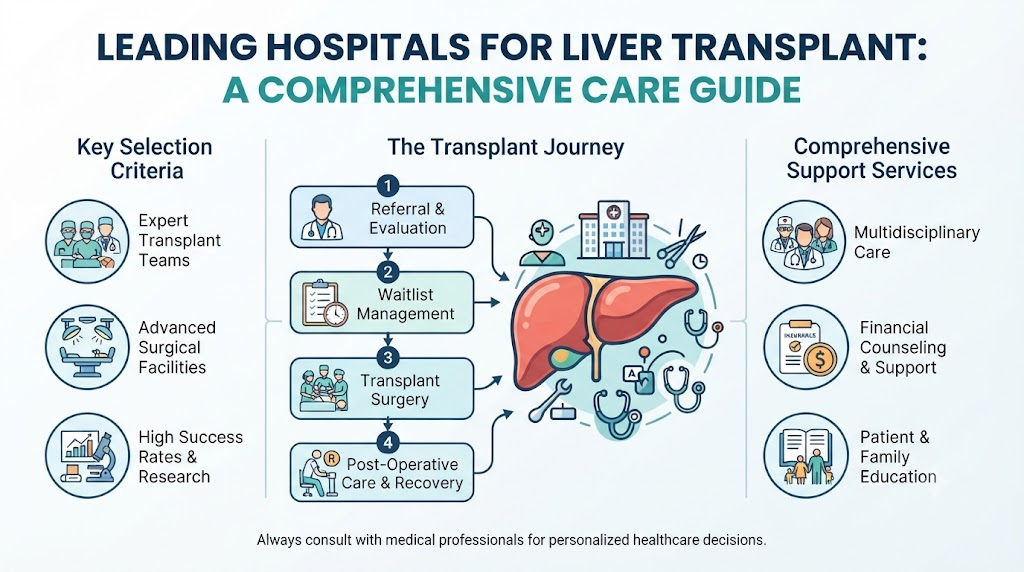
Leading transplant centers function as comprehensive hubs of care. Their services usually include:
- Hepatology Consultation: Specialized evaluation by liver disease experts.
- Transplant Eligibility Assessment: A thorough review by a multidisciplinary team to determine if a transplant is the safest path forward.
- Advanced Imaging: State-of-the-art scans like MRI, CT, and specialized ultrasound to monitor liver health.
- Intensive Care Support: Dedicated surgical and post-surgical ICUs staffed by nurses trained specifically in transplant care.
- Rehabilitation Services: Physical therapy to regain strength before and after surgery.
- Post-Transplant Monitoring: Long-term surveillance of graft function and immune system health.
Importance of Multidisciplinary Liver Transplant Teams
A transplant is not just a surgery; it is a clinical process that requires a village. A high-functioning team typically consists of:
- Transplant Surgeons: Experts in complex organ replacement.
- Hepatologists: Liver specialists who manage disease progression.
- Anesthesiologists: Specialists in complex surgical sedation.
- Transplant Coordinators: Your primary point of contact for administrative and logistical needs.
- Nutritionists: Helping you optimize your diet for liver health.
- Mental Health Professionals: Providing support for the emotional aspects of living with chronic illness and transplantation.
How to Choose the Right Liver Transplant Hospital
Choosing a hospital is a significant decision. Focus on programs that prioritize transparency, patient education, and long-term support.
Hospital Selection Checklist
| Feature | Importance |
| Experienced Transplant Team | Ensures specialized patient care |
| Advanced Surgical Facilities | Supports complex procedures |
| Dedicated Transplant ICU | Critical post-surgery monitoring |
| Multidisciplinary Care | Complete treatment planning |
| Long-Term Follow-Up | Supports ongoing health management |
Recovery and Lifestyle After Transplant
The journey does not end with surgery. Post-transplant care is a lifelong commitment. Patients must take immunosuppressive medications to prevent the body from rejecting the new organ.
Lifestyle pillars for success include:
- Strict Medication Adherence: Never missing a dose of anti-rejection medicine.
- Healthy Diet: Focusing on balanced nutrition to maintain a healthy weight.
- Alcohol Abstinence: Protecting the new liver from further stress.
- Regular Monitoring: Frequent blood tests to check medication levels and liver function.
- Infection Prevention: Being cautious about exposure to illnesses while on immune-suppressing drugs.
Common Myths vs. Facts
| Myth | Fact |
| Liver transplant is only for older patients | People of all ages may require one based on their health |
| A transplant ends the need for medical care | Long-term monitoring is vital |
| Donor livers are always available | Availability depends on medical and matching systems |
| Recovery is the same for everyone | Recovery varies based on health and complexity |
Common Mistakes Patients Make
- Delaying Consultations: Waiting too long to see a specialist can make the transplant process more difficult. If you have symptoms of liver disease, seek expert input early.
- Missing Follow-ups: Regular visits allow doctors to catch minor issues before they become major complications.
- Ignoring Mental Health: The transplant journey is stressful. Acknowledging and seeking support for the emotional toll is a sign of strength.
Real-Life Educational Scenarios
- Scenario A: A patient with cirrhosis undergoes an extensive evaluation. After meeting with surgeons, nutritionists, and hepatologists, they feel confident in their personalized care plan.
- Scenario B: A patient in need of a transplant finds a willing living donor. The hospital coordinates the surgeries simultaneously, ensuring both donor and recipient receive dedicated support.
- Scenario C: A patient learns the importance of medication management. By using a reminder system and regular follow-ups, they maintain perfect liver function for years after surgery.
FAQs
- What is a liver transplant?
A procedure to replace a damaged liver with a healthy one. - When is it recommended?
When the liver can no longer function adequately to sustain life. - What conditions require it?
Cirrhosis, acute failure, and certain cancers are common reasons. - Living vs. Deceased donor?
Living involves a donor segment; deceased involves a full organ from a donor. - How is evaluation done?
Through blood tests, imaging, and physical exams by a team of experts. - How long is recovery?
Recovery is a multi-month process, with lifetime monitoring. - What happens after surgery?
You stay in the hospital for monitoring and start lifelong medication. - Are medicines lifelong?
Yes, anti-rejection meds are required to protect the new liver. - How are candidates chosen?
Based on medical urgency, physical health, and support systems. - How do I choose a hospital?
Look for multidisciplinary teams and comprehensive support. - Can children get transplants?
Yes, specialized pediatric programs handle these cases. - What lifestyle changes are needed?
Healthy diet, no alcohol, and strict medication adherence. - Who is on the team?
Surgeons, hepatologists, nutritionists, and coordinators. - Is follow-up important?
Essential for preventing complications. - When should I see a specialist?
As soon as your primary doctor suggests liver concerns.
Final Thoughts
Liver transplantation is a sophisticated medical achievement that offers a new beginning for many patients with advanced liver disease. By choosing a center that offers a multidisciplinary approach, advanced surgical technology, and compassionate post-operative care, you are taking a crucial step in your health journey.Remember, each person’s medical journey is unique. Early evaluation and consistent communication with your care team are the most effective ways to manage your health. For more guidance on evaluating transplant centers and understanding your options, explore the resources available at MYHOSPITALNOW. Your health is your most valuable asset—stay informed, stay proactive, and always consult with your medical team.

Find Trusted Cardiac Hospitals
Compare heart hospitals by city and services — all in one place.
Explore Hospitals