Introduction
Back or neck pain that affects daily mobility and comfort can be a challenging experience. When conservative treatments do not provide sufficient relief, exploring surgical options often becomes an important consideration. Choosing the right care center is one of the most significant decisions a patient and their family can make. Finding a facility equipped to handle complex spinal procedures requires careful research, understanding medical capabilities, and evaluating overall hospital standards.Evaluating hospitals goes beyond looking at marketing claims or general prestige. Patients need to examine specialist expertise, advanced diagnostic equipment, operating room standards, safety protocols, and postoperative rehabilitation services. Understanding what makes a facility well-suited for spinal procedures helps patients make informed decisions aligned with their unique health needs. Through comprehensive resources like MyHospitalNow, individuals can explore structured information to help guide their healthcare journey.
Understanding Spine Surgery
What Is Spine Surgery?
Spine surgery encompasses a range of procedures performed on the vertebral column, spinal cord, and associated nerves. The primary goal of these procedures is typically to relieve pressure on compressed neural structures, stabilize spinal instability, correct structural deformities, or repair damage caused by trauma or disease.
When Is Spine Surgery Considered?
Surgery is generally considered only after non-surgical treatments—such as physical therapy, medications, injections, and lifestyle modifications—have failed to provide adequate relief. Situations where surgery may be evaluated include:
- Persistent nerve compression causing weakness or numbness
- Specific spinal injuries or fractures
- Spinal instability affecting movement and posture
- Selected degenerative conditions that impair function
- Progressive spinal deformities
- Certain tumors or structural abnormalities
It is important to understand that not every patient with back or neck pain requires surgery. Most spinal conditions improve with conservative care.
Common Spine Conditions Treated at Specialized Hospitals
Hospitals equipped for comprehensive spine care frequently evaluate and treat a wide variety of conditions, including:
- Herniated Discs: Occurs when the soft inner gel of a spinal disc pushes through a tear in the outer ring, potentially pressing on nearby nerves.
- Spinal Stenosis: The narrowing of the spinal canal, which can put pressure on the spinal cord and nerves, leading to pain or cramping in the limbs.
- Spondylolisthesis: A condition where one vertebra slips forward over the one below it, causing instability and nerve compression.
- Degenerative Disc Disease: Age-related wear and tear on the spinal discs, which can lead to chronic pain or structural weakness.
- Spinal Fractures: Breaks in the vertebrae resulting from trauma, accident, or conditions like osteoporosis.
- Spinal Deformities: Abnormal curvatures of the spine, such as scoliosis or kyphosis, that may require surgical correction.
- Spinal Tumors: Abnormal growths within or adjacent to the spinal cord and vertebrae that may require surgical intervention.
- Nerve Compression: General impingement of nerve roots causing radiating pain, tingling, or muscular weakness.
Common Spine Surgery Procedures
Medical centers performing spinal procedures offer various techniques tailored to specific diagnoses. Common procedures include:
- Discectomy: The removal of all or part of a damaged disc to relieve pressure on a nerve root or the spinal cord.
- Laminectomy: The removal of the lamina (part of the vertebra) to widen the spinal canal and reduce pressure on neural elements.
- Spinal Fusion: A procedure to join two or more vertebrae together using bone grafts and hardware to eliminate painful motion between them.
- Spinal Decompression: A broad term for procedures designed to relieve pressure on the spinal cord or nerves.
- Minimally Invasive Spine Surgery: Procedures performed using smaller incisions, specialized instruments, and advanced imaging to minimize muscle disruption.
- Deformity Correction: Complex procedures designed to realign the spine in patients with severe structural curvatures.
What Makes a Hospital One of the Top Hospitals for Spine Surgery?
Evaluating a medical facility involves looking at several core components that contribute to patient safety and quality of care.
Experienced Spine Specialists
The quality of a spine care center depends heavily on its multidisciplinary clinical team. This includes orthopedic spine surgeons, neurosurgeons, specialized anesthesiologists, pain management physicians, physical therapists, and dedicated nursing staff.
Advanced Diagnostic Facilities
Accurate diagnosis is the foundation of effective treatment. Top facilities maintain advanced imaging capabilities such as high-field MRI, high-resolution CT scans, digital X-rays, and specialized electrophysiological testing.
Modern Surgical Facilities
Operating rooms must be equipped with advanced surgical lighting, specialized operating tables, high-magnification microscopes, and sterile airflow systems to support complex interventions.
Minimally Invasive Capabilities
Hospitals featuring specialized tubular retractors, endoscopic systems, and advanced imaging integration can offer less invasive surgical options where clinically appropriate.
Rehabilitation Services
Recovery does not end in the operating room. Comprehensive facilities provide structured physical therapy and rehabilitation programs to help patients regain strength and mobility.
Emergency and Critical Care
Complex spinal procedures require robust intensive care unit (ICU) support and emergency preparedness to manage unexpected medical complications effectively.
Spine Surgery Hospital Evaluation Criteria
Patients evaluating potential hospitals should look at the entire care pathway rather than focusing on a single feature. Key criteria include specialist credentials, infection control rates, anesthesia safety, and patient communication standards.
MANDATORY HOSPITAL COMPARISON TABLE
| Hospital Evaluation Factor | What Patients Should Check | Why It Matters |
| Spine Specialist Expertise | Board certifications, fellowship training, and team experience | Ensures surgeons and clinicians possess deep expertise in treating complex spinal pathologies. |
| Diagnostic Facilities | Availability of high-resolution MRI, CT, and neuro-diagnostic tools | Accurate imaging is essential for precise surgical planning and correct diagnosis. |
| Surgical Infrastructure | Advanced operating rooms, microscopes, and neuromonitoring | Supports surgical precision and real-time monitoring of nerve function during procedures. |
| Minimally Invasive Options | Availability of specialized instruments and trained surgical teams | May reduce tissue disruption and support recovery for eligible patients. |
| Anesthesia Support | Presence of dedicated neuro-anesthesiologists | Specialized anesthesia management is critical during prolonged or complex spine procedures. |
| Emergency & Critical Care | Availability of fully equipped ICUs and emergency response teams | Provides safety net capabilities for managing unexpected postoperative complications. |
| Rehabilitation Services | Inpatient and outpatient physical therapy programs | Guided rehabilitation is vital for restoring mobility and long-term functional recovery. |
| Infection-Control Standards | Hospital hygiene protocols, cleanroom standards, and tracking | Low infection rates are essential for successful surgical outcomes and patient safety. |
| Postoperative Monitoring | Dedicated recovery units and attentive nursing care | Early detection of post-surgical issues prevents complications and ensures comfort. |
| Follow-Up Care | Structured long-term monitoring and wound check protocols | Ensures continuity of care and helps track recovery progress over time. |
Patients can use these evaluation criteria as a practical checklist when researching hospitals. Comparing facilities side-by-side helps clarify which medical centers offer comprehensive support systems from initial diagnosis through postoperative rehabilitation. Gathering this information helps ensure that the chosen facility aligns with individual health needs.
Technology Used in Modern Spine Surgery
Modern spine care utilizes advanced technology to enhance precision and safety. Key technologies include:
- Advanced Imaging: High-resolution scans provide detailed anatomical maps of the spine.
- Computer-Assisted Surgical Planning: Software programs that allow surgeons to map out procedures事前に.
- Image-Guided Surgery and Navigation Systems: Real-time tracking systems that help surgeons navigate complex spinal anatomy with high precision.
- Robotic Assistance: Robotic arms that assist surgeons in executing precise hardware placement during fusion procedures.
- Minimally Invasive Instruments: Specialized tools designed to work through smaller portals.
- Digital Patient Monitoring: Systems that track vital signs and recovery metrics during the hospital stay.
Technology serves as a supportive tool and does not replace the clinical judgment, experience, and expertise of qualified medical professionals.
Multidisciplinary Spine Care
Complex spinal conditions often benefit from a collaborative approach involving multiple specialists. A multidisciplinary team may include:
- Orthopedic Spine Surgeon: Focuses on the surgical management of spinal disorders, skeletal alignment, and bone integrity.
- Neurosurgeon: Specializes in surgical interventions involving the brain, spinal cord, and peripheral nerves.
- Neurologist: Evaluates and manages non-surgical neurological conditions and nerve function.
- Radiologist: Interprets complex diagnostic imaging studies.
- Anesthesiologist: Manages pain and sedation during surgical procedures.
- Physiotherapist: Designs and guides post-operative physical rehabilitation programs.
- Pain Specialist: Manages acute and chronic pain conditions through targeted interventions.
- Nursing Team: Provides continuous bedside monitoring, wound care, and patient education.
Coordinated teamwork ensures that all aspects of a patient’s physical and neurological health are considered throughout the care journey.
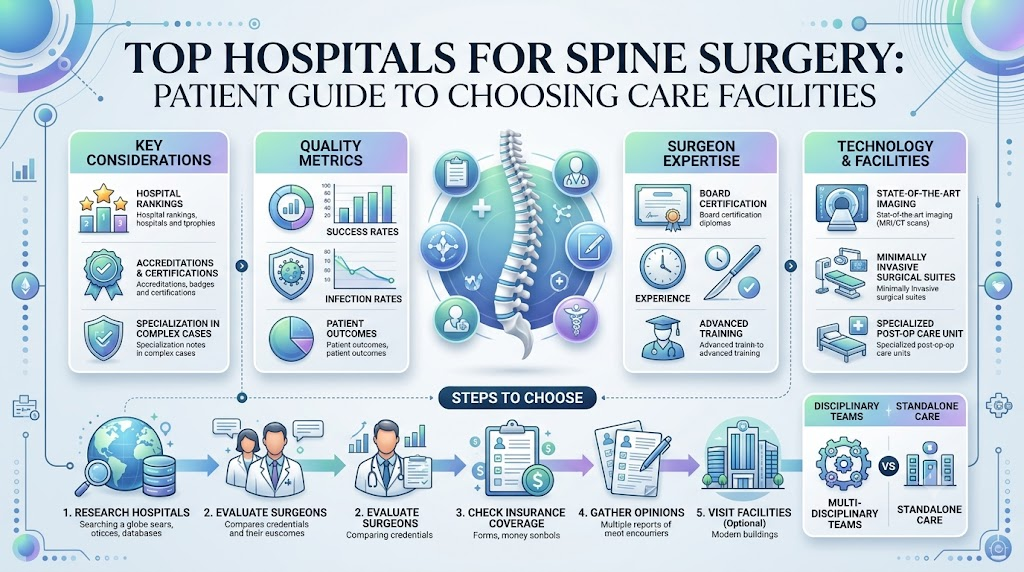
How to Compare Top Spine Surgery Hospitals
Navigating the hospital selection process can be simplified by following a structured decision framework:
- Step 1 – Understand Your Diagnosis: Obtain a clear explanation of your spinal condition from your treating physician.
- Step 2 – Confirm the Recommended Treatment: Discuss why surgery is recommended over non-surgical alternatives.
- Step 3 – Research Specialist Expertise: Review the qualifications, fellowship training, and experience of the surgical team.
- Step 4 – Compare Hospital Facilities: Evaluate operating room technology, diagnostic capabilities, and safety ratings.
- Step 5 – Review Rehabilitation Services: Check if the hospital offers comprehensive physical therapy and recovery support.
- Step 6 – Understand Costs and Insurance: Request itemized estimates and verify insurance coverage specifics.
- Step 7 – Ask About Follow-Up Care: Clarify how postoperative monitoring and long-term checkups will be managed.
- Step 8 – Consider Accessibility: Assess the travel distance, lodging options, and ease of access for family members.
- Step 9 – Seek a Second Opinion When Appropriate: Consult an independent specialist to confirm treatment recommendations before proceeding.
Cost and Insurance Considerations
Financial planning is an essential aspect of preparing for spine surgery. Expenses can involve consultations, diagnostic imaging, surgeon fees, hospital room charges, anesthesia services, operating room utilization, physical therapy, follow-up appointments, and prescribed medications.
Patients should request a detailed, itemized cost estimate from the hospital billing department and contact their insurance provider directly to verify coverage policies, pre-authorization requirements, and out-of-pocket deductibles. International patients should also factor in travel expenses, visa arrangements, and extended accommodation costs.
International Patients Seeking Spine Surgery
Traveling abroad for medical care requires careful coordination between the patient, home physicians, and the destination hospital. Key considerations include:
- Medical Records: Gathering comprehensive imaging files, diagnostic reports, and medical histories.
- Remote Consultation: Utilizing telehealth options to discuss cases with international coordinators before traveling.
- Travel Planning: Timing travel according to medical clearance and physical stability.
- Hospital Coordination: Working with international patient desks to handle administrative paperwork.
- Language Support: Ensuring translation services are available during consultations and hospital stays.
- Accommodation: Securing comfortable lodging near the hospital for recovery stages.
- Local Transportation: Arranging accessible transport for clinic visits.
- Follow-Up Arrangements: Coordinating care continuity with physicians back home.
- Returning Home Safely: Obtaining medical clearance for air travel and post-flight care instructions.
Preparing for Spine Surgery
Preparation involves physical, mental, and logistical readiness. Patients should complete all required medical evaluations, review their medication lists with their care team, follow specific preoperative fasting instructions, arrange reliable transportation, prepare their home environment with necessary safety aids, organize caregiver assistance, plan for rehabilitation schedules, and understand all postoperative follow-up requirements.
Recovery and Rehabilitation
Recovery timelines vary based on the specific procedure performed, overall health status, age, presence of any complications, and individual healing rates.
Immediate postoperative monitoring focuses on vital sign stability, pain control, and neurological checks. As patients regain mobility, structured physical therapy begins under the guidance of trained therapists. Gradual return to daily activities occurs in phases, emphasizing long-term spine health through proper ergonomics, core strengthening, and lifestyle adjustments.
Real-Life Patient Scenarios
Scenario 1: Patient With a Herniated Disc
Hypothetical Patient Scenario: A patient experiencing persistent lower back pain and radiating leg numbness consults a spine specialist. Following an MRI confirming a herniated disc, the patient reviews non-surgical options. When physical therapy fails to resolve the nerve compression, the patient evaluates hospitals offering minimally invasive discectomy, comparing specialist credentials, surgical infrastructure, and outpatient physical therapy support.
Scenario 2: Patient With Spinal Stenosis
Hypothetical Patient Scenario: An older adult diagnosed with spinal stenosis experiences cramping and difficulty walking short distances. The patient consults a multidisciplinary spine team to discuss options. After reviewing diagnostic imaging, the team outlines both conservative management and surgical decompression options, allowing the patient and family to make an informed decision based on hospital rehabilitation facilities and safety records.
Scenario 3: Patient With a Spinal Injury
Hypothetical Patient Scenario: Following an accidental fall, a patient sustains a spinal fracture requiring urgent evaluation. Transferred to a medical center with advanced emergency and critical care infrastructure, the patient undergoes immediate stabilization and surgical repair, benefiting from coordinated neurosurgical oversight and dedicated ICU monitoring.
Scenario 4: International Patient
Hypothetical Patient Scenario: An international patient diagnosed with a complex degenerative spinal condition uses remote consultation tools to share medical records with a specialized spine center abroad. The hospital’s international patient desk assists with travel coordination, translation services, and lodging arrangements, ensuring seamless care from arrival through postoperative rehabilitation and safe return home.
Common Mistakes When Choosing a Spine Surgery Hospital
- Choosing a Hospital Only Because of Advertising: Relying on promotional media rather than clinical credentials, safety records, and facilities.
- Focusing Only on Price: Selecting a facility solely based on lower cost while overlooking quality standards, infection control, and comprehensive care.
- Ignoring Specialist Expertise: Failing to verify whether surgeons have specific fellowship training and extensive experience in treating particular spinal conditions.
- Not Reviewing Diagnostic Capabilities: Choosing a facility lacking advanced imaging tools necessary for precise surgical planning.
- Ignoring Rehabilitation Services: Overlooking the importance of in-house or affiliated physical therapy programs essential for recovery.
- Not Asking About Follow-Up Care: Neglecting to clarify how long-term monitoring and postoperative checkups will be coordinated.
- Assuming Minimally Invasive Means Risk-Free: Believing that modern techniques carry no potential complications or recovery challenges.
- Relying Only on Online Reviews: Making major medical decisions based solely on anecdotal online feedback rather than professional guidance.
- Not Asking About Potential Risks: Failing to discuss potential surgical complications and risk mitigation strategies with the clinical team.
- Skipping a Second Opinion When Appropriate: Failing to consult an independent specialist to confirm treatment recommendations before scheduling major surgery.
Benefits of Choosing Specialized Spine Care
- Focused Specialist Expertise: Access to surgeons and clinicians with deep, dedicated experience in spinal pathology.
- Coordinated Care: Multidisciplinary collaboration ensuring seamless transitions from diagnosis to rehabilitation.
- Advanced Diagnostic Capabilities: Access to high-resolution imaging and testing tools for precise evaluations.
- Access to Appropriate Surgical Technologies: Utilization of advanced operating room equipment and navigation aids.
- Rehabilitation Support: Structured physical therapy programs designed to restore mobility and function.
- Better Continuity of Care: Integrated health records and follow-up protocols tracking long-term recovery.
- Patient Education: Comprehensive guidance helping patients understand their condition and care plan.
- Multidisciplinary Evaluation: Comprehensive assessment of neurological, skeletal, and general health factors.
How MyHospitalNow Can Explore Hospital Options
MyHospitalNow serves as an informational platform designed to help individuals research healthcare facilities, explore hospital options, and understand medical care categories. By organizing educational guides and structured healthcare information, the platform assists patients and caregivers in navigating complex medical decisions. The focus remains on empowering users with objective knowledge to facilitate informed discussions with qualified healthcare providers.
MANDATORY SPINE CARE SERVICES TABLE
| Service or Facility | Main Purpose | Patient Consideration |
| Spine Specialist Consultation | Evaluating symptoms, diagnosis, and treatment pathways | Verify board certification, fellowship training, and relevant surgical experience. |
| MRI and Diagnostic Imaging | Providing detailed anatomical views of vertebrae and nerves | Ensure availability of high-field MRI and advanced CT imaging equipment. |
| Spine Surgery | Performing therapeutic interventions for spinal decompression and fusion | Review hospital operating room standards, surgical technology, and safety protocols. |
| Minimally Invasive Procedures | Executing targeted interventions through smaller tissue incisions | Check if the surgical team regularly performs minimally invasive approaches. |
| Neurosurgical Support | Managing complex conditions involving the spinal cord and nerves | Confirm the presence of dedicated neurosurgical and orthopedic spine specialists. |
| Anesthesia Services | Managing sedation, vital signs, and pain during procedures | Look for experienced neuro-anesthesiologists supporting the surgical team. |
| Emergency Care | Managing acute medical emergencies and complications | Check for fully equipped ICUs and 24/7 emergency response readiness. |
| Rehabilitation & Physiotherapy | Guiding physical recovery, strength building, and mobility restoration | Evaluate the availability of dedicated inpatient and outpatient physical therapists. |
| Postoperative Monitoring | Observing patients closely immediately following surgery | Ensure attentive nursing care and dedicated recovery units are in place. |
| Follow-Up Care | Tracking long-term healing and functional recovery progress | Clarify postoperative scheduling, wound check protocols, and communication channels. |
Evaluating these services helps patients understand what comprehensive spine care involves. The availability of these facilities should be reviewed in the context of the patient’s specific medical diagnosis, recommended treatment plan, and individual recovery requirements.
Future of Spine Surgery
The field of spine care continues to evolve with ongoing technological and clinical advancements. Emerging developments include:
- Robotic-Assisted Surgery: Refining the precision of screw and hardware placement during spinal fusion procedures.
- Artificial Intelligence in Imaging: Assisting radiologists and surgeons in analyzing complex diagnostic scans with greater accuracy.
- Personalized Surgical Planning: Utilizing patient-specific 3D models to tailor surgical approaches.
- Advanced Navigation Systems: Improving real-time intraoperative visualization of spinal anatomy.
- Minimally Invasive Techniques: Continual refinement of instruments to further reduce tissue trauma.
- Digital Rehabilitation: Integrating app-based physical therapy tracking and virtual physical therapy consultations.
- Remote Follow-Up: Utilizing telehealth to monitor patient recovery milestones without requiring frequent in-person travel.
- Wearable Health Monitoring: Tracking patient mobility, posture, and activity levels during recovery.
These innovations complement traditional surgical expertise and patient-centered care principles.
Frequently Asked Questions
1.What should I look for in a spine surgery hospital?
Patients should look for experienced spine specialists, advanced diagnostic equipment, modern operating room infrastructure, robust infection control protocols, and comprehensive rehabilitation services. Evaluating the entire care pathway from initial consultation through postoperative physical therapy ensures that the chosen medical center can support all aspects of recovery.
2.What makes a hospital suitable for spine surgery?
A suitable hospital features a multidisciplinary team of orthopedic spine surgeons and neurosurgeons, dedicated neuro-anesthesiologists, advanced imaging capabilities, and fully equipped intensive care units. These elements work together to handle complex spinal procedures safely and effectively.
3.Which specialists perform spine surgery?
Spine surgery is primarily performed by orthopedic spine surgeons and neurosurgeons who have completed specialized fellowship training in disorders of the spinal column and nervous system. They work alongside anesthesiologists, radiologists, and rehabilitation specialists.
4.What conditions may require spine surgery?
Conditions that may require surgical intervention include herniated discs, severe spinal stenosis, spondylolisthesis, degenerative disc disease, spinal fractures, spinal deformities, and certain spinal tumors. Surgery is typically considered when non-surgical treatments fail to relieve nerve compression or instability.
5.Is spine surgery always necessary for back pain?
No. The vast majority of back and neck pain cases improve with conservative, non-surgical treatments such as physical therapy, medications, and lifestyle modifications. Surgery is generally reserved for specific structural problems, progressive neurological deficits, or persistent pain unresponsive to conservative care.
6.What diagnostic tests are used before spine surgery?
Common diagnostic tests include high-resolution MRI scans to evaluate soft tissues and discs, CT scans to assess bony structures, digital X-rays to check spinal alignment, and electrophysiological tests to evaluate nerve function. These tests help surgeons plan procedures accurately.
7.What is minimally invasive spine surgery?
Minimally invasive spine surgery involves performing procedures through smaller incisions using specialized tubular retractors and microscopic visualization tools. The goal is to minimize muscle disruption and reduce recovery times for eligible patients, though it is not appropriate for every condition.
8.How do I choose a spine surgeon?
When choosing a spine surgeon, evaluate their board certification, fellowship training in spine surgery, years of experience, hospital affiliations, and complication rates. A good surgeon takes time to explain diagnoses, discuss treatment alternatives, and answer patient questions thoroughly.
9.Should I get a second opinion before spine surgery?
Yes. Seeking a second opinion from an independent spine specialist is a standard and recommended practice, especially for major surgeries. It helps confirm diagnoses, explore alternative treatment options, and provide reassurance before proceeding with a surgical plan.
10.What facilities should a spine hospital have?
A comprehensive spine hospital should have advanced diagnostic imaging suites, sterile operating rooms equipped with neuromonitoring tools, dedicated intensive care units, pain management services, and in-house physical therapy and rehabilitation departments.
11.Is rehabilitation available after spine surgery?
Yes. Rehabilitation is a critical component of recovery. Specialized spine hospitals offer structured physical therapy programs designed to help patients regain strength, improve flexibility, and safely return to normal daily activities under professional guidance.
12How much does spine surgery cost?
The cost of spine surgery varies widely depending on the procedure type, hospital location, surgeon fees, anesthesia charges, and the length of hospital stay. Patients should request detailed, itemized cost estimates directly from hospital billing departments.
13.Does insurance cover spine surgery?
Many health insurance policies cover spine surgery when it is deemed medically necessary and recommended by qualified specialists. Patients must contact their insurance providers directly to verify pre-authorization requirements, copays, and coverage limits.
14.Can international patients receive spine surgery at specialized hospitals?
Yes. Many specialized hospitals feature international patient departments that assist with medical record reviews, remote telehealth consultations, travel planning, visa documentation, language interpretation services, and accommodation coordination.
15.How can MyHospitalNow help patients explore hospital options?
MyHospitalNow provides structured educational resources and informative guides to help patients research hospitals, understand medical care categories, and evaluate healthcare options. The platform aims to empower individuals with objective knowledge to support informed discussions with their physicians.
Final Thoughts
Choosing a hospital and medical team for spine surgery is a significant milestone that requires careful consideration, research, and open communication with healthcare professionals. Understanding your diagnosis, exploring treatment alternatives, and evaluating hospital capabilities help ensure you receive safe, high-quality care tailored to your specific needs.Specialist expertise, advanced diagnostic and surgical facilities, infection-control standards, and comprehensive rehabilitation support form the pillars of effective spine care. Maintaining realistic expectations and prioritizing structured postoperative follow-up are equally vital for achieving the best possible functional recovery.

Find Trusted Cardiac Hospitals
Compare heart hospitals by city and services — all in one place.
Explore Hospitals