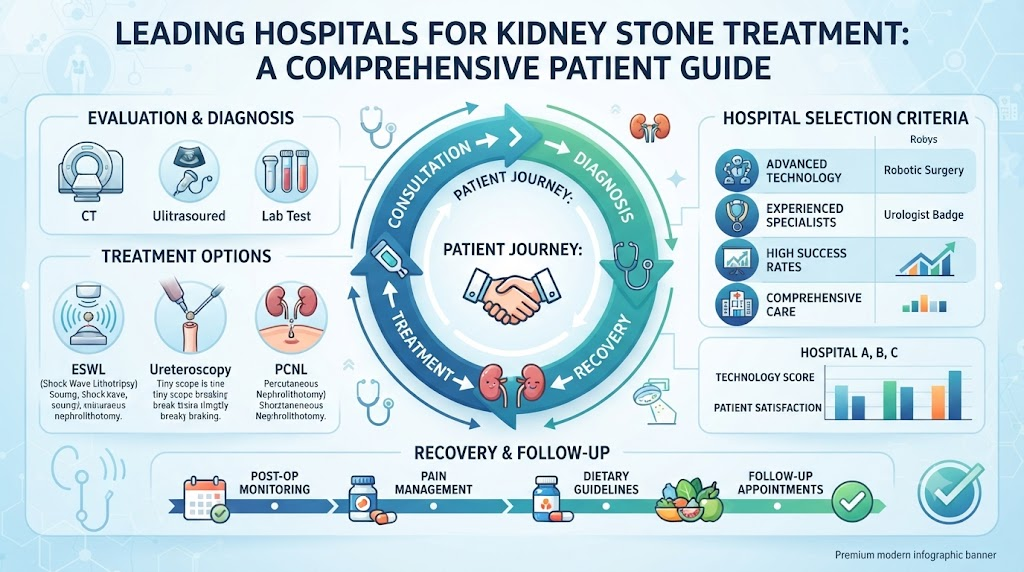
Introduction
Kidney stones are hard mineral and salt deposits that form inside the kidneys and can cause significant pain, discomfort, and urinary problems when they move through the urinary tract. Experiencing a kidney stone can be an intense physical challenge, often marked by sudden flank pain, urinary urgency, and distress. Because urinary health is closely tied to overall bodily function and comfort, proper diagnosis is critically important to identify the exact size, location, and composition of the stone.Patients considering their options should evaluate specialist expertise, advanced medical technology, robust emergency support, and comprehensive follow-up care. Comprehensive educational resources and hospital insights can be explored through platforms like MyHospitalNow, which helps patients navigate complex medical landscapes. In this complete guide, readers will learn about kidney stone causes, symptoms, diagnostic techniques, treatment modalities, hospital selection criteria, and effective prevention strategies.
Understanding Kidney Stones
What Are Kidney Stones?
Kidney stones, medically referred to as renal calculi, are solid masses formed from dietary minerals and dissolved salts in urine. They vary greatly in physical appearance, ranging from tiny, smooth grains resembling sand to larger, jagged formations. While small stones may pass through the urinary system unnoticed, larger stones can become lodged in the renal pelvis, ureters, or bladder, causing severe blockage and pain.
How Do Kidney Stones Form?
Stone formation typically occurs when urine becomes supersaturated with substances that form crystals, such as calcium, oxalate, urate, cystine, xanthine, or phosphate. Under normal circumstances, urine contains chemical inhibitors that prevent these crystals from sticking together. However, when fluid intake is low or when specific metabolic imbalances occur, these inhibitors become overwhelmed, allowing microscopic crystals to nucleate, grow, and aggregate into solid stones over weeks or months.
Common Types of Kidney Stones
Urologists classify kidney stones based on their chemical composition, which directly influences treatment and prevention planning:
- Calcium Stones: The most frequent type, usually composed of calcium oxalate or calcium phosphate, often linked to dietary factors, metabolic conditions, and fluid balance.
- Uric Acid Stones: Formed when urine is persistently acidic, frequently occurring in individuals with low fluid intake, high-purine diets, or certain metabolic disorders.
- Struvite Stones: Associated with chronic urinary tract infections; these stones can grow very rapidly and become large, branching structures known as staghorn calculi.
- Cystine Stones: Caused by a rare inherited genetic disorder called cystinuria, leading to excessive excretion of specific amino acids in the urine.
Kidney Stones vs. Bladder Stones
While both conditions involve mineral concretions in the urinary tract, kidney stones originate within the renal parenchyma or collecting system and travel down toward the ureters. Bladder stones, by contrast, typically form inside the urinary bladder itself, often resulting from incomplete bladder emptying, urinary stasis, or bladder outlet obstruction associated with prostate enlargement or neurological conditions.
Can Kidney Stones Affect Kidney Function?
When stones obstruct the normal flow of urine, backpressure can develop within the renal collecting system, potentially placing stress on delicate kidney tissues. If obstruction is prolonged or complicated by urinary tract infections, it can impair renal function and lead to serious medical complications. Professional medical evaluation is vital to ensure timely intervention and protect long-term kidney health.
Common Symptoms of Kidney Stones
Kidney stone symptoms can vary significantly depending on stone size, exact location within the urinary tract, degree of obstruction, presence of infection, and individual physiological differences.
- Severe Flank or Back Pain: Often intense, sharp, or cramping discomfort experienced in the back or side below the ribs.
- Pain Moving Toward the Lower Abdomen or Groin: As a stone shifts down the ureter, pain frequently radiates to the lower abdomen and groin region.
- Pain During Urination: A burning or stinging sensation experienced when passing urine, particularly if the stone is near the bladder junction.
- Blood in the Urine: Hematuria resulting from physical irritation of the urinary tract lining by the moving stone.
- Frequent Urination: Persistent urgency and the need to urinate frequently in small volumes.
- Nausea and Vomiting: Autonomic nervous system responses triggered by severe, acute visceral pain.
- Cloudy or Unusual-Smelling Urine: Changes in urine appearance or odor that may indicate infection or altered chemical composition.
- Difficulty Passing Urine: Partial or complete obstruction preventing normal urine flow.
- Fever or Chills With Urinary Symptoms: Potential signs of an associated urinary infection requiring immediate clinical attention.
MANDATORY KIDNEY STONE SYMPTOMS TABLE
| Possible Symptom | How It May Present | Why Medical Evaluation May Be Important |
| Flank or Back Pain | Sudden, sharp, or cramping pain in the back and side below the ribs. | Indicates potential renal colic and movement of a stone within the upper urinary tract. |
| Pain Radiating Toward Groin | Discomfort shifting from the back toward the lower abdomen and groin. | Suggests the stone is progressing down the ureter toward the bladder. |
| Blood in Urine (Hematuria) | Pink, red, or brownish discoloration of urine. | Reflects mucosal irritation and trauma within the delicate urinary tract lining. |
| Painful Urination (Dysuria) | Burning or stinging sensation during micturition. | May indicate ureteral irritation near the bladder entry or concurrent infection. |
| Frequent Urination | Persistent urge to urinate with minimal output. | Shows bladder irritation caused by distal stone positioning. |
| Nausea or Vomiting | Gastrointestinal upset accompanying acute pain episodes. | Highlights severe visceral pain pathways affecting digestive system reflexes. |
| Cloudy or Foul-Smelling Urine | Discolored urine with unusual odor. | Often points toward urinary tract infection or elevated crystal concentration. |
| Difficulty Passing Urine | Inability to void normally or interrupted stream. | Signals significant urinary tract obstruction requiring careful assessment. |
| Fever or Chills | Elevated body temperature accompanied by shivering. | Indicates a possible infected obstructed system, representing a critical emergency. |
Kidney stone symptoms can easily overlap with other clinical conditions, such as musculoskeletal back pain, lower gastrointestinal disorders, or primary urinary tract infections. Because self-diagnosis can be misleading, appropriate medical assessment involving physical examination and diagnostic imaging is essential to confirm the underlying cause and determine the safest course of management.
Causes and Risk Factors for Kidney Stones
Developing kidney stones is rarely attributed to a single cause; rather, it typically results from a combination of hereditary, environmental, dietary, and physiological risk factors.
- Dehydration: Inadequate daily fluid intake leads to concentrated urine, allowing mineral crystals to precipitate more easily.
- Dietary Factors: Diets high in sodium, animal proteins, and oxalate-rich foods can increase stone risk in susceptible individuals.
- High Intake of Certain Minerals: Excessive supplementation without professional medical guidance can alter urinary chemistry.
- Family History: Individuals with a genetic predisposition or family history of kidney stones face an increased statistical likelihood of developing them.
- Previous Kidney Stones: Having experienced a kidney stone previously significantly raises the probability of recurrence.
- Certain Medical Conditions: Hyperparathyroidism, renal tubular acidosis, and inflammatory bowel diseases can modify metabolic profiles.
- Obesity and Metabolic Factors: Excess body weight and insulin resistance are closely correlated with changes in urine composition.
- Some Medications: Certain diuretics and calcium-based antacids can influence stone formation pathways.
- Urinary Tract Infections: Chronic or recurrent infections promote the formation of struvite stones.
- Genetic Conditions: Rare inherited disorders like cystinuria directly alter amino acid excretion.
It is important to understand that risk factors differ widely among individuals. Not every person with a known risk factor will develop kidney stones, just as some individuals without apparent risk factors may occasionally form them.
Diagnosing Kidney Stones
Accurate diagnosis is the cornerstone of effective kidney stone management. Physicians employ a structured diagnostic protocol to evaluate patients presenting with urinary discomfort.
- Medical History: Detailed review of symptoms, past stone episodes, dietary habits, and family medical background.
- Physical Examination: Careful abdominal and flank examination to assess tenderness and pain distribution.
- Urine Testing: Urinalysis to detect microscopic hematuria, urinary tract infections, pH levels, and crystal presence.
- Blood Testing: Assessment of kidney function parameters, serum calcium, uric acid, and electrolyte levels.
- Ultrasound: Non-invasive imaging providing visualization of the kidneys and detecting hydronephrosis without radiation exposure.
- CT Imaging: Non-contrast computed tomography scanning serving as the gold standard for precise stone localization, size measurement, and density evaluation.
- X-Ray in Selected Situations: Plain abdominal radiography used to monitor radiopaque stones during follow-up.
- Stone Analysis: Laboratory examination of passed or surgically retrieved stone fragments to determine exact chemical composition.
- Additional Testing for Recurrent Stones: Comprehensive 24-hour urine collection studies for patients with recurrent stone formation to identify underlying metabolic abnormalities.
The choice of diagnostic test is determined by the patient’s specific symptoms, medical history, age, and clinical presentation, ensuring safety and diagnostic accuracy.
Why Specialized Kidney Stone Hospitals Matter
When kidney stones are large, complicated, infected, or recurrent, managing them requires advanced institutional capabilities. Specialized urology centers provide a comprehensive environment designed to handle complex cases safely:
- Experienced Urologists: Specialists trained in advanced endoscopic, laser, and percutaneous stone management.
- Availability of modern high-resolution diagnostic imaging and low-radiation protocols.
- Comprehensive minimally invasive treatment options reducing recovery times.
- Robust emergency urology support available around the clock.
- Advanced anesthesia services tailored for delicate endoscopic and surgical interventions.
- Real-time imaging-guided equipment ensuring precision during procedures.
- Continuous kidney function monitoring and specialized nephrology backup.
- Rigorous infection management and sterile operating environments.
- Structured post-treatment follow-up programs ensuring long-term health.
A multidisciplinary hospital setting is particularly valuable for patients with solitary kidneys, anatomical abnormalities, bleeding disorders, or severe comorbidities.
Kidney Stone Treatment Options
Conservative Management
Many small kidney stones, particularly those under specific size thresholds located in favorable positions, can pass naturally with time and conservative management. This approach involves adequate hydration, pain relief support under medical supervision, and periodic clinical monitoring to ensure the stone progresses without causing severe obstruction or infection.
Medication Under Medical Supervision
Medical expulsive therapy may be utilized in selected cases to relax the ureter and facilitate natural stone passage. Other medications may be prescribed to alter urine pH and help dissolve specific stone types, such as uric acid stones. Professional guidance ensures proper monitoring and safety.
Extracorporeal Shock Wave Lithotripsy (ESWL)
Lithotripsy utilizes high-energy shock waves generated outside the body to target and break kidney stones into smaller, sand-like fragments that can pass naturally through the urinary tract. It is a non-invasive procedure typically reserved for specific stone sizes and locations.
Ureteroscopy
Ureteroscopy involves passing a specialized thin, lighted viewing instrument through the urethra and bladder up into the ureter or kidney. This allows the urologist to visualize the stone directly and utilize specialized micro-instruments or laser fibers to fragment and remove it.
Laser Stone Treatment
Advanced laser technology is frequently integrated into endoscopic procedures, allowing urologists to deliver precise energy that vaporizes or breaks hard stones into minute dust or tiny fragments, facilitating effortless extraction or natural clearance.
Percutaneous Nephrolithotomy (PCNL)
PCNL is a minimally invasive surgical procedure designed for large, complex, or staghorn kidney stones that cannot be effectively managed with lithotripsy or ureteroscopy. It involves creating a small tract directly through the back into the kidney to remove the stone.
Surgical Treatment in Selected Cases
Open or laparoscopic surgery is rarely required today but may be considered in highly complex anatomical scenarios. Treatment selection depends on stone size, chemical composition, anatomical location, obstruction severity, infection status, and patient health.
Comparing Major Kidney Stone Treatment Approaches
Understanding the distinctions between various treatment modalities helps patients appreciate why physicians recommend specific interventions:
- Observation and Medical Management:
- General Purpose: Allows natural passage of small stones with supportive care.
- Typical Clinical Situations: Small, asymptomatic, or mildly symptomatic stones with no obstruction or infection.
- Minimally Invasive Nature: Entirely non-surgical and non-invasive.
- Recovery Considerations: Normal daily activities maintained with intermittent medical check-ins.
- Importance of Specialist Evaluation: Ensures stones do not cause silent renal damage.
- Shock Wave Lithotripsy:
- General Purpose: Fragments stones externally using focused acoustic waves.
- Typical Clinical Situations: Small to medium kidney or upper ureteral stones.
- Minimally Invasive Nature: Non-invasive procedure without surgical incisions.
- Recovery Considerations: Rapid recovery with minor bruising or hematuria.
- Importance of Specialist Evaluation: Proper patient selection based on stone hardness and location.
- Ureteroscopy and Laser Treatment:
- General Purpose: Direct visualization, fragmentation, and extraction via natural urinary passages.
- Typical Clinical Situations: Mid and lower ureteral stones as well as moderate kidney stones.
- Minimally Invasive Nature: Endoscopic approach with no external incisions.
- Recovery Considerations: Short recovery period, temporary stent discomfort possible.
- Importance of Specialist Evaluation: Requires skilled urologists and specialized endoscopic equipment.
- Percutaneous Nephrolithotomy:
- General Purpose: Direct surgical extraction of large or complex stone burdens.
- Typical Clinical Situations: Large staghorn calculi or extensive renal stone burdens.
- Minimally Invasive Nature: Keyhole surgical access via the flank.
- Recovery Considerations: Moderate hospital stay and structured postoperative recovery.
- Importance of Specialist Evaluation: Demands advanced hospital facilities and experienced surgical teams.
When Kidney Stones Become an Emergency
While many kidney stones cause manageable discomfort, certain situations demand immediate medical evaluation. An obstructed urinary system combined with an active infection can rapidly evolve into a serious medical emergency, such as urosepsis.
- Severe, uncontrolled pain unresponsive to prescribed or over-the-counter measures.
- Complete urinary obstruction preventing any urine output.
- Fever or chills occurring alongside urinary symptoms, indicating potential infection.
- Repeated, persistent vomiting preventing fluid retention.
- Symptoms arising in individuals with a solitary kidney or pre-existing renal impairment.
- Rapidly worsening systemic symptoms.
Patients experiencing these warning signs should seek urgent professional medical care at an emergency facility immediately.
The Role of a Urologist
Urologists are surgical specialists dedicated to the diagnosis, medical management, and surgical treatment of urinary tract disorders. Their expertise encompasses accurate diagnostic interpretation, personalized treatment planning, precise procedure selection, complication management, and comprehensive metabolic evaluations. For recurrent stone formers, urologists collaborate with patients to develop customized preventive strategies that significantly reduce future stone formation.
How to Choose Leading Hospitals for Kidney Stone Treatment
Evaluating healthcare institutions requires looking beyond marketing claims to focus on clinical excellence, infrastructure, and patient safety standards.
- Specialist Experience: Presence of dedicated, board-certified urologists with extensive stone management experience.
- Advanced diagnostic imaging infrastructure providing clear visualization.
- Comprehensive availability of lithotripsy, ureteroscopy, laser technology, and PCNL.
- Robust emergency urology services operating around the clock.
- Skilled anesthesiology teams and well-equipped surgical suites.
- Strict infection control protocols and sterile hospital environments.
- Continuous renal function monitoring and critical care support.
- Experienced nursing staff specializing in urological patient care.
- Structured postoperative care and long-term follow-up programs.
- Dedicated support services for local and international patients.
MANDATORY KIDNEY STONE HOSPITAL COMPARISON TABLE
| Hospital Selection Factor | What to Look For | Why It Matters |
| Urology Expertise | Board-certified urologists with specialized sub-specialty stone training. | Ensures accurate diagnosis and expert management of complex stone cases. |
| Diagnostic Imaging | Low-radiation CT scanners, high-resolution ultrasound, and fluoroscopy. | Provides precise stone sizing, density analysis, and anatomical mapping. |
| Laser Stone Technology | High-power holmium or thulium fiber lasers. | Enables efficient, delicate stone fragmentation with minimal surrounding tissue impact. |
| Ureteroscopy Capabilities | Flexible digital ureteroscopes and specialized basket instruments. | Allows safe access to difficult intra-renal locations without external incisions. |
| Lithotripsy Equipment | Modern extracorporeal shock wave lithotripters with dual guidance systems. | Facilitates effective non-invasive stone breaking for appropriate candidates. |
| Advanced Stone Surgery (PCNL) | Mini-PCNL and standard percutaneous nephrolithotomy instruments. | Provides safe management options for large, complex, or staghorn stones. |
| Emergency Urology Services | 24/7 dedicated urological emergency and operating room access. | Critical for managing acute obstruction, severe colic, and infected stones safely. |
| Infection Management | Advanced sterilization protocols and infectious disease consultation. | Prevents severe systemic complications like urosepsis during interventions. |
| Kidney Function Monitoring | Real-time laboratory and nephrology support. | Protects delicate renal function throughout diagnostic and therapeutic procedures. |
| Follow-Up Care Programs | Structured metabolic workups and dietary counseling services. | Reduces recurrence rates and ensures long-term urinary wellness. |
Hospital capabilities vary significantly across institutions. Patients are encouraged to discuss their unique clinical condition and available treatment alternatives thoroughly with qualified healthcare professionals to select the most appropriate facility.
Kidney Stone Treatment for Different Patient Situations
Treatment protocols must be tailored to the unique clinical profile of each patient:
- First-Time Kidney Stone: Focuses on confirming diagnosis, pain control, assessing passage potential, and patient education.
- Recurrent Kidney Stones: Requires comprehensive metabolic evaluation, 24-hour urine studies, and targeted prevention planning.
- Large Kidney Stones: Often necessitates advanced endoscopic or percutaneous procedures rather than observation or lithotripsy.
- Multiple Kidney Stones: May involve staged procedures or combined techniques to clear stone burdens safely.
- Kidney Stones Causing Obstruction: Requires urgent evaluation and prompt decompression if renal function is threatened.
- Kidney Stones With Infection: Demands immediate antibiotic therapy and urgent urological drainage to prevent sepsis.
- Kidney Stones During Pregnancy: Requires specialized multidisciplinary management prioritizing maternal and fetal safety with minimal radiation.
- Kidney Stones in Older Adults: Involves careful consideration of cardiovascular status, medication profiles, and renal reserve.
Recovery After Kidney Stone Treatment
Recovery experiences vary widely depending on the chosen treatment modality, stone size, and individual health factors. Non-invasive management generally allows an immediate return to normal routines with mild supportive care. Endoscopic procedures like ureteroscopy may involve temporary urinary urgency or stent discomfort that resolves quickly. More complex interventions like percutaneous nephrolithotomy require a brief hospital stay and a structured resting period before resuming heavy physical activities. Follow-up imaging and urine testing are routinely scheduled to confirm stone clearance and assess metabolic health.
Preventing Future Kidney Stones
Preventative strategies play a pivotal role in reducing the likelihood of future stone episodes:
- Staying Adequately Hydrated: Maintaining high daily fluid intake to ensure dilute urine production.
- Understanding Personal Stone Type: Utilizing stone analysis results to tailor dietary and lifestyle adjustments.
- Dietary Changes Based on Professional Advice: Moderating sodium, animal protein, and oxalate intake under expert guidance.
- Managing Underlying Medical Conditions: Controlling metabolic disorders contributing to crystal formation.
- Following Recommended Testing: Completing periodic blood and urine evaluations as advised.
- Maintaining a Healthy Weight: Supporting metabolic health through balanced nutrition.
- Physical Activity: Engaging in regular, moderate exercise appropriate for individual fitness levels.
- Regular Follow-Up: Maintaining consistent contact with your healthcare team.
Common Mistakes Patients Make
Navigating kidney stone care can be challenging, and avoiding common pitfalls supports safer outcomes:
- Ignoring severe or persistent flank pain hoping it will resolve spontaneously.
- Delaying medical attention when fever, chills, or urinary symptoms appear.
- Assuming every stone will pass naturally without professional confirmation.
- Drinking excessive fluids without medical guidance during an acute, complete obstruction.
- Self-medicating with unverified herbal remedies or over-the-counter pain relievers inappropriately.
- Skipping recommended postoperative follow-up appointments.
- Failing to save and analyze passed stone fragments for recurrence prevention.
- Ignoring underlying metabolic or dietary risk factors after successful stone removal.
Real-Life Patient Scenarios
Scenario 1: First-Time Kidney Stone
Hypothetical Patient Example: A 38-year-old individual experiences sudden, sharp flank pain radiating to the groin. Seeking prompt medical evaluation, they undergo non-contrast CT imaging, which identifies a small ureteral stone. Following specialist consultation, conservative management with hydration and medical expulsive therapy is recommended, resulting in successful natural stone passage under clinical observation.
Scenario 2: Large Kidney Stone
Hypothetical Patient Example: A 52-year-old patient presents with dull, persistent back discomfort and occasional hematuria. Diagnostic evaluation reveals a large renal stone unlikely to pass spontaneously. The patient is referred to a specialized urology center offering advanced laser ureteroscopy, leading to successful fragmentation and complete stone clearance during a brief outpatient procedure.
Scenario 3: Recurrent Kidney Stones
Hypothetical Patient Example: A 45-year-old individual experiences their third kidney stone in four years. Concerned by the recurrence, their urologist conducts a comprehensive metabolic workup, including 24-hour urine collection and stone analysis. Based on the findings, personalized dietary modifications and targeted medical therapy are established to significantly minimize future stone formation.
Scenario 4: Kidney Stone With Possible Infection
Hypothetical Patient Example: A 60-year-old patient develops acute flank pain accompanied by shaking chills and a high fever. Recognizing the warning signs of an infected obstructed urinary system, they visit an emergency urology department immediately. Urgent intervention involving temporary drainage and targeted antibiotic therapy successfully resolves the acute crisis safely.
The Future of Kidney Stone Treatment
The field of urology continues to evolve with technological advancements designed to enhance patient comfort and treatment precision. Emerging developments include improved low-radiation imaging modalities, artificial intelligence-assisted stone detection and composition analysis, high-power thulium fiber lasers, robotic and computer-assisted endoscopic procedures, personalized metabolic prevention protocols, digital patient monitoring tools, and advanced biochemical testing. While many of these innovations are expanding rapidly, established surgical and minimally invasive techniques remain the bedrock of safe, effective clinical care.
Frequently Asked Questions (FAQ)
1. What is a kidney stone?
A kidney stone is a hard mineral and salt deposit that forms inside the kidneys when minerals in urine become supersaturated and crystallize. These formations can vary widely in size and composition, ranging from tiny, smooth grains to larger masses that can obstruct the normal flow of urine through the urinary tract, causing significant discomfort and clinical symptoms.
2. What are the most common symptoms of kidney stones?
The most common symptoms include intense flank or back pain that often radiates toward the lower abdomen and groin. Patients may also experience painful urination, blood in the urine, urinary urgency, frequency, nausea, vomiting, and cloudy or foul-smelling urine. Symptoms vary depending on the stone’s size, exact location, and whether it causes urinary obstruction.
3. Can a kidney stone pass naturally?
Yes, many smaller kidney stones can pass naturally through the urinary system without surgical intervention. The likelihood of natural passage depends largely on the stone’s size, shape, and location within the ureter. Adequate hydration, pain management, and professional medical monitoring are essential during this process to ensure complications do not arise.
4. When does a kidney stone require treatment?
Treatment is typically required when a kidney stone is too large to pass on its own, causes persistent severe pain, blocks urine flow, leads to recurrent bleeding, or is associated with an active urinary tract infection. Urologists evaluate each patient’s individual clinical situation to determine the most appropriate and timely therapeutic intervention.
5. What is lithotripsy?
Extracorporeal shock wave lithotripsy is a non-invasive medical procedure that uses focused high-energy acoustic shock waves generated outside the body to target and break kidney stones into smaller, sand-like fragments. These tiny particles can then pass more easily through the urinary tract during urination, reducing the need for surgical incisions.
6. What is ureteroscopy?
Ureteroscopy is a minimally invasive procedure where a thin, specialized viewing instrument is passed through the urethra and bladder up into the ureter or kidney. This allows urologists to visualize stones directly and utilize specialized micro-instruments or laser fibers to fragment and remove them without making any external surgical incisions.
7. What is laser kidney stone treatment?
Laser kidney stone treatment involves using advanced laser technology—typically delivered through a flexible ureteroscope—to target and vaporize or break hard stones into minute dust or tiny fragments. This precise energy delivery minimizes trauma to surrounding tissues and allows for efficient stone clearance during minimally invasive procedures.
8. When is surgery needed for kidney stones?
Surgical intervention, such as percutaneous nephrolithotomy or advanced laparoscopic procedures, is generally needed when kidney stones are exceptionally large, complex, branching, or located in areas inaccessible to lithotripsy or standard ureteroscopy. Urologists carefully assess anatomical factors and stone burden before recommending surgical approaches.
9. Can kidney stones cause urinary infections?
Yes, kidney stones can harbor bacteria and obstruct normal urine flow, creating an environment favorable for urinary tract infections. An obstructed and infected urinary system represents a serious medical emergency requiring urgent professional drainage and targeted antibiotic therapy to prevent severe systemic complications.
10. What type of doctor treats kidney stones?
Urologists are the primary medical specialists who diagnose, manage, and surgically treat kidney stones and other disorders of the urinary tract and male reproductive system. They possess specialized training in advanced medical therapies, endoscopic procedures, and surgical stone management.
11. How are kidney stones diagnosed?
Kidney stones are diagnosed through a combination of detailed medical history, physical examination, urinalysis, blood tests, and medical imaging. Diagnostic imaging tools such as non-contrast CT scans, ultrasounds, and X-rays help physicians determine the exact size, number, and location of stones within the urinary system.
12. How long does recovery after kidney stone treatment take?
Recovery duration varies widely depending on the chosen treatment method, stone complexity, and individual patient health. Non-invasive management allows immediate return to normal routines, while endoscopic procedures involve short recovery periods. More complex surgical interventions require structured resting times and follow-up evaluations.
13. Can kidney stones come back after treatment?
Yes, individuals who have had a kidney stone face an increased risk of developing new stones in the future. Identifying the specific chemical composition of the stone through analysis and addressing underlying metabolic or dietary risk factors with a urologist can significantly help reduce recurrence rates.
14. How can kidney stones be prevented?
Kidney stone prevention primarily involves maintaining adequate daily hydration, adopting personalized dietary modifications based on stone analysis, managing underlying metabolic health conditions, and attending regular follow-up appointments with healthcare professionals to monitor urinary wellness.
15. What should I look for when choosing a kidney stone treatment hospital?
When choosing a hospital, patients should evaluate specialist urology expertise, advanced diagnostic imaging, comprehensive availability of minimally invasive and laser treatments, 24/7 emergency support, strict infection control standards, and robust postoperative follow-up care programs designed to support long-term recovery.
Final Thoughts
Kidney stones are a common yet potentially debilitating medical condition that warrants appropriate professional attention and careful clinical evaluation. Because stones vary significantly in size, chemical composition, and location, obtaining an accurate diagnosis from qualified healthcare specialists is vital. Modern urology hospitals provide a diverse spectrum of advanced treatment options, ranging from conservative observation and lithotripsy to sophisticated laser ureteroscopy and percutaneous surgery, ensuring that care can be tailored to each individual’s unique needs.Effective management extends beyond immediate stone removal; understanding underlying risk factors and committing to structured follow-up care and preventive strategies are essential for long-term urinary health.

Find Trusted Cardiac Hospitals
Compare heart hospitals by city and services — all in one place.
Explore Hospitals