Introduction
Webhook Management Tools are software platforms that allow organizations to create, monitor, secure, and manage webhooks efficiently. Webhooks are HTTP callbacks triggered by events in one system that notify or update another system in real time. These tools help teams centralize webhook endpoints, monitor delivery success, retry failed calls, and analyze event performance.
Organizations rely on webhooks for real-time notifications, workflow automation, and integrating disparate systems. Efficient management is essential to prevent missed notifications, ensure secure data transfer, and maintain system reliability.
Real-world use cases include:
- Real-time e-commerce order updates between platforms
- Notification delivery for SaaS applications
- Triggering workflows across marketing, CRM, or ERP systems
- Monitoring and logging failed webhook events for troubleshooting
- Integrating internal systems with external APIs and services
Key evaluation criteria for buyers:
- Webhook delivery reliability and retry mechanisms
- Security protocols (HMAC, SSL, OAuth, authentication)
- Event filtering and transformation
- Monitoring, logging, and alerting
- Integration with applications and cloud platforms
- Analytics for event success/failure rates
- User interface and usability
- Scalability for high-volume event streams
- Deployment flexibility (cloud, on-premises, hybrid)
- Pricing and support options
Best for: IT teams, developers, SaaS operators, and enterprises managing large-scale webhook-driven integrations.
Not ideal for: Organizations with minimal webhook usage, single-system applications, or those that only require basic notifications.
Key Trends in Webhook Management Tools
- AI-assisted monitoring and anomaly detection for webhook failures
- Real-time event filtering and transformation
- Secure delivery with HMAC signatures, OAuth, and SSL encryption
- Cloud-native and hybrid deployment models
- Integration with popular SaaS platforms, CRMs, and developer tools
- Webhook replay and event auditing for compliance
- Low-code/no-code workflow integration
- Subscription-based and consumption-based pricing
- Centralized dashboards for analytics and debugging
- Support for high-volume, multi-tenant event delivery
How We Selected These Tools (Methodology)
- Market adoption and mindshare among developers and enterprises
- Feature completeness, including retry logic, security, and analytics
- Reliability and performance in live environments
- Security posture including authentication, encryption, and access control
- Integrations with cloud, SaaS, and internal systems
- Customer fit across solo developers, SMBs, mid-market, and enterprise
- Ease of use, learning curve, and user interface design
- Community support, documentation, and onboarding resources
- Deployment flexibility and scalability
- Pricing and total cost of ownership
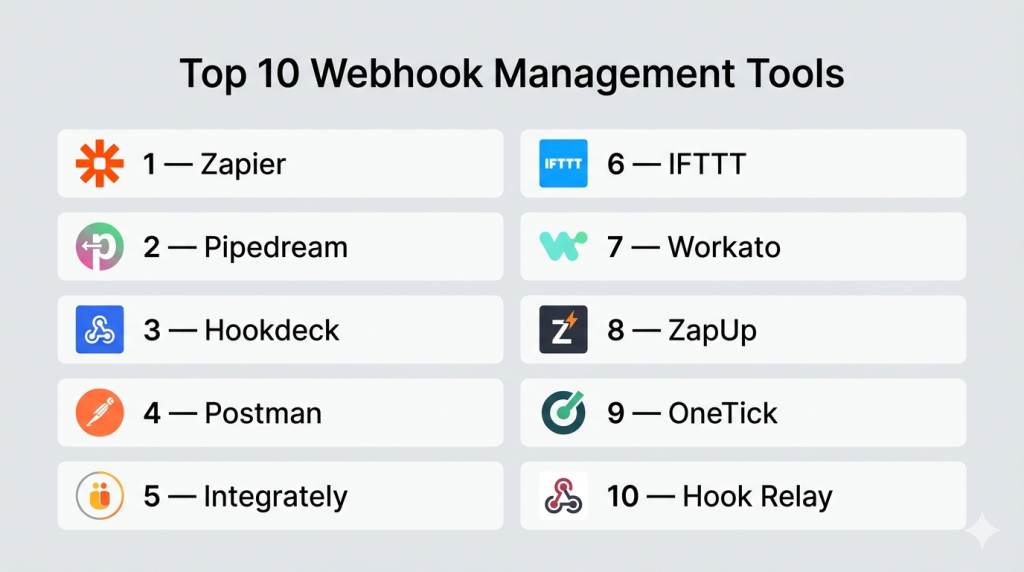
Top 10 Webhook Management Tools
#1 — Zapier
Short description: Zapier automates workflows by connecting webhooks with thousands of apps, making event-driven automation accessible to SMBs and enterprises.
Key Features
- Webhook triggers for app integrations
- Workflow automation (multi-step Zaps)
- Event filtering and transformation
- Retry mechanisms and error handling
- Cloud-based monitoring dashboards
- Extensive app ecosystem
Pros
- Easy to use for non-developers
- Large integration ecosystem
Cons
- Limited for complex enterprise workflows
- Cloud-only deployment
Platforms / Deployment
- Web / Cloud
Security & Compliance
- SSL encryption
- SOC 2, GDPR
Integrations & Ecosystem
- 5,000+ SaaS apps
- REST APIs
- CI/CD and workflow tools
Support & Community
- Documentation, tutorials, and active support forum
#2 — Pipedream
Short description: Pipedream provides developer-focused webhook management with event-driven workflows, real-time debugging, and cloud-native execution.
Key Features
- Real-time webhook triggers
- Node.js-based event workflows
- Event replay and debugging
- Integration with databases and SaaS platforms
- Analytics and monitoring dashboards
- Multi-cloud deployment
Pros
- High flexibility for developers
- Real-time event monitoring
Cons
- Requires coding knowledge
- Enterprise features limited without subscription
Platforms / Deployment
- Web / Cloud
Security & Compliance
- OAuth, SSL
- Not publicly stated
Integrations & Ecosystem
- REST APIs, cloud platforms
- CI/CD integration
- SaaS apps
Support & Community
- Documentation, developer community, tutorials
#3 — Hookdeck
Short description: Hookdeck ensures reliable webhook delivery with observability, replay, and filtering, designed for high-volume SaaS and enterprise integrations.
Key Features
- Webhook event queuing and retries
- Delivery guarantees and dead-letter queues
- Event filtering and transformation
- Real-time observability dashboards
- Team collaboration features
- Multi-region cloud deployment
Pros
- Reliable delivery for high-volume webhooks
- Easy monitoring and debugging
Cons
- Limited on-premises deployment
- Subscription required for advanced features
Platforms / Deployment
- Web / Cloud
Security & Compliance
- HMAC verification, SSL
- SOC 2, GDPR
Integrations & Ecosystem
- SaaS apps, cloud platforms
- REST and GraphQL endpoints
- CI/CD pipelines
Support & Community
- Enterprise support, documentation, and tutorials
#4 — Postman
Short description: Postman is widely known for API testing but also provides webhook management, monitoring, and integration features for developers.
Key Features
- Webhook testing and simulation
- Automated retries and error logging
- Event monitoring dashboards
- API workflow integration
- Collaboration and team workspaces
- Analytics for request/response trends
Pros
- Developer-friendly interface
- Strong API testing capabilities
Cons
- Not specialized only for webhooks
- Limited automation without subscriptions
Platforms / Deployment
- Web / Windows / macOS / Linux / Cloud
Security & Compliance
- OAuth, SSL
- SOC 2
Integrations & Ecosystem
- API endpoints, CI/CD
- SaaS apps
- Collaboration tools
Support & Community
- Documentation, tutorials, enterprise support
#5 — Integrately
Short description: Integrately simplifies webhook-based automation with pre-built triggers and actions for SMBs and small teams.
Key Features
- Pre-built webhook triggers
- Multi-step workflow automation
- Event filtering
- Error handling and retries
- Cloud-based dashboard
- SaaS app integrations
Pros
- Easy for non-developers
- Quick setup with pre-built templates
Cons
- Limited advanced features
- Cloud-only
Platforms / Deployment
- Web / Cloud
Security & Compliance
- SSL
- GDPR
Integrations & Ecosystem
- Popular SaaS apps
- REST API endpoints
- Workflow automation tools
Support & Community
- Documentation and tutorials
#6 — IFTTT
Short description: IFTTT allows creating webhook-based automations between apps and devices, ideal for small teams and personal projects.
Key Features
- Webhook triggers for apps and devices
- Event filtering and actions
- Pre-built applets for quick setup
- Retry and error logging
- Monitoring dashboards
- Cloud execution
Pros
- Very user-friendly
- Supports multiple devices
Cons
- Limited enterprise functionality
- Less suitable for high-volume webhooks
Platforms / Deployment
- Web / iOS / Android / Cloud
Security & Compliance
- SSL
- Not publicly stated
Integrations & Ecosystem
- SaaS apps, IoT devices
- REST API endpoints
- Cloud platforms
Support & Community
- Documentation, active community
#7 — Workato
Short description: Workato offers enterprise-grade webhook automation with real-time monitoring, security, and analytics for complex workflows.
Key Features
- Webhook automation across apps
- Security policies and encryption
- Retry mechanisms and dead-letter queues
- Real-time analytics
- Multi-step workflow orchestration
- Multi-cloud support
Pros
- Enterprise-ready
- Scalable for complex workflows
Cons
- Pricing can be high for small teams
- Learning curve for advanced automation
Platforms / Deployment
- Web / Cloud
Security & Compliance
- OAuth, SSL, RBAC
- SOC 2, GDPR
Integrations & Ecosystem
- SaaS apps, cloud platforms
- REST and GraphQL APIs
- CI/CD pipelines
Support & Community
- Enterprise support, documentation, community forums
#8 — ZapUp
Short description: ZapUp provides webhook automation for SMBs with easy workflow creation, monitoring, and event filtering.
Key Features
- Webhook triggers and actions
- Event filtering and transformations
- Retry mechanisms
- Analytics and reporting
- Cloud deployment
- Integration with SaaS apps
Pros
- User-friendly for SMBs
- Quick setup and automation
Cons
- Limited enterprise features
- Cloud-only
Platforms / Deployment
- Web / Cloud
Security & Compliance
- SSL
- Not publicly stated
Integrations & Ecosystem
- Popular SaaS applications
- REST API endpoints
- Workflow automations
Support & Community
- Documentation and tutorials
#9 — OneTick
Short description: OneTick focuses on reliable webhook delivery for high-volume events, with observability and monitoring tools for enterprises.
Key Features
- Webhook queuing and retry
- Event analytics
- Dead-letter queues for failures
- Multi-cloud support
- Event transformation
- Team collaboration
Pros
- High reliability and performance
- Suitable for enterprise-scale workloads
Cons
- Requires technical expertise
- Licensing required
Platforms / Deployment
- Web / Cloud / Hybrid
Security & Compliance
- SSL, OAuth
- Not publicly stated
Integrations & Ecosystem
- SaaS apps, internal APIs
- REST endpoints
Support & Community
- Enterprise support, documentation
#10 — Hook Relay
Short description: Hook Relay provides real-time webhook management with observability, replay, and developer-friendly dashboards.
Key Features
- Webhook delivery and monitoring
- Event replay and logging
- Retry mechanism for failed events
- Analytics and dashboards
- Integration with SaaS and cloud apps
- Multi-cloud support
Pros
- Reliable delivery and monitoring
- Developer-friendly
Cons
- Enterprise features require subscription
- Cloud-only
Platforms / Deployment
- Web / Cloud
Security & Compliance
- SSL, OAuth
- Not publicly stated
Integrations & Ecosystem
- SaaS apps, cloud platforms
- REST API endpoints
Support & Community
- Documentation, community forums
Comparison Table (Top 10)
| Tool Name | Best For | Platform(s) Supported | Deployment | Standout Feature | Public Rating |
|---|---|---|---|---|---|
| Zapier | SMB workflow automation | Web / Cloud | Cloud | Multi-app integration | N/A |
| Pipedream | Developer-focused webhooks | Web / Cloud | Cloud | Real-time debugging | N/A |
| Hookdeck | Enterprise webhook delivery | Web / Cloud | Cloud | Reliable event delivery | N/A |
| Postman | API and webhook testing | Web / Windows / macOS / Linux | Cloud | Testing & monitoring | N/A |
| Integrately | SMB workflow automation | Web / Cloud | Cloud | Pre-built triggers | N/A |
| IFTTT | Consumer & SMB automation | Web / iOS / Android / Cloud | Cloud | Multi-device integration | N/A |
| Workato | Enterprise automation | Web / Cloud | Cloud | Multi-step enterprise workflows | N/A |
| ZapUp | SMB automation | Web / Cloud | Cloud | Simple automation | N/A |
| OneTick | Enterprise high-volume webhooks | Web / Cloud / Hybrid | Cloud/Hybrid | High reliability | N/A |
| Hook Relay | Developer-friendly webhooks | Web / Cloud | Cloud | Event replay & observability | N/A |
Evaluation & Scoring of Webhook Management Tools
| Tool Name | Core (25%) | Ease (15%) | Integrations (15%) | Security (10%) | Performance (10%) | Support (10%) | Value (15%) | Weighted Total (0–10) |
|---|---|---|---|---|---|---|---|---|
| Zapier | 8 | 9 | 9 | 7 | 8 | 8 | 8 | 8.25 |
| Pipedream | 8 | 7 | 8 | 7 | 8 | 7 | 8 | 7.85 |
| Hookdeck | 9 | 7 | 8 | 8 | 9 | 8 | 7 | 8.45 |
| Postman | 8 | 8 | 7 | 7 | 8 | 7 | 7 | 7.65 |
| Integrately | 7 | 8 | 7 | 7 | 7 | 7 | 7 | 7.25 |
| IFTTT | 6 | 9 | 6 | 6 | 7 | 6 | 6 | 6.7 |
| Workato | 9 | 7 | 8 | 8 | 9 | 8 | 7 | 8.45 |
| ZapUp | 7 | 8 | 7 | 7 | 7 | 7 | 7 | 7.25 |
| OneTick | 9 | 7 | 8 | 8 | 9 | 8 | 7 | 8.45 |
| Hook Relay | 8 | 8 | 8 | 7 | 8 | 7 | 7 | 7.85 |
Interpretation: Weighted totals reflect overall capabilities, ease of use, integrations, and performance. Higher scores indicate suitability for enterprise-scale webhook management; lower scores are ideal for SMBs or simpler integrations.
Which Webhook Management Tools Tool Is Right for You?
Solo / Freelancer
- IFTTT, Postman, Integrately for simple automation
SMB
- Zapier, ZapUp, Pipedream for workflow automation and app integrations
Mid-Market
- Hookdeck, Workato, Zapier for reliable event delivery and monitoring
Enterprise
- OneTick, Workato, Hookdeck for high-volume, secure webhook management
Budget vs Premium
- Budget: IFTTT, ZapUp, Integrately
- Premium: Hookdeck, OneTick, Workato
Feature Depth vs Ease of Use
- Easy and quick: IFTTT, ZapUp
- Advanced: Hookdeck, Workato, OneTick
Integrations & Scalability
- Enterprise-ready: Hookdeck, OneTick, Workato
- Moderate: Zapier, Pipedream
Security & Compliance Needs
- Enterprise-grade: Hookdeck, Workato, OneTick
- Standard compliance: IFTTT, Integrately
Frequently Asked Questions (FAQs)
1. What pricing models do webhook management tools use?
Most platforms offer subscription-based or usage-based pricing, depending on volume of webhooks and advanced features.
2. Are these tools secure for sensitive data?
Yes. Security measures include SSL, HMAC, OAuth, and optional RBAC depending on the platform.
3. Can these tools handle high-volume webhooks?
Enterprise platforms like Hookdeck, OneTick, and Workato support high-volume webhook delivery with retries and monitoring.
4. Do these tools offer analytics?
Yes. Most include dashboards for success/failure rates, latency, and debugging events.
5. Can webhooks be replayed if delivery fails?
Yes. Enterprise-grade tools provide event replay and dead-letter queues for failed deliveries.
6. Are integrations available with cloud and SaaS apps?
Yes. Tools like Zapier, Workato, and Pipedream support thousands of apps and services.
7. Do these tools support multi-step workflows?
Yes. Platforms like Zapier, Workato, and Integrately allow multi-step automation.
8. Can non-developers use these tools?
Yes. IFTTT, Integrately, and Zapier are user-friendly for non-developers.
9. What common mistakes should teams avoid?
- Misconfiguring endpoints
- Ignoring failed delivery logs
- Overlooking retries and monitoring
10. Are there alternatives?
Direct webhook implementation in applications, custom server-side handlers, or lightweight API integration platforms can serve as alternatives for simple setups.
Conclusion
Webhook Management Tools enable real-time event-driven integrations, ensuring reliable delivery, security, and monitoring for modern applications. Platform choice depends on scale, team size, and complexity of integrations. Small teams benefit from IFTTT, Postman, or Integrately for simple automation, while enterprises should consider Hookdeck, OneTick, or Workato for secure, high-volume, and enterprise-ready webhook management. Conducting pilot tests, monitoring performance, and validating integrations ensures the selected tool meets organizational objectives effectively.

Find Trusted Cardiac Hospitals
Compare heart hospitals by city and services — all in one place.
Explore Hospitals
This explains how webhook tools help systems send real-time updates and keep different apps connected smoothly.