Introduction
eProcurement platforms are digital solutions that streamline an organization’s procurement process, from sourcing and purchasing to invoicing and payment. They automate workflows, improve transparency, reduce manual errors, and help businesses maintain compliance with internal policies and external regulations.In the current business landscape, organizations are under pressure to optimize procurement costs, ensure supplier reliability, and leverage technology for strategic sourcing. Modern eProcurement platforms integrate AI-driven analytics, automated approvals, and seamless supplier collaboration to improve efficiency and reduce procurement cycle times.
Real-world use cases include:
- Large enterprises consolidating multiple supplier contracts into a unified system.
- SMBs automating purchase requests and approval workflows.
- Public sector organizations ensuring compliance with audit and regulatory requirements.
- Companies implementing sustainable procurement practices and supplier diversity tracking.
- Organizations seeking better visibility into spend analytics and cost-saving opportunities.
Buyers should evaluate:
- Core procurement features (purchase orders, RFQs, e-invoicing)
- Ease of use and intuitive interface
- Integration capabilities with ERP, finance, and supply chain systems
- Security and compliance standards
- Supplier network reach
- Automation and AI-powered insights
- Reporting and analytics capabilities
- Mobile and remote accessibility
- Deployment flexibility (Cloud/On-prem/Hybrid)
- Support and onboarding services
Best for: Procurement managers, finance teams, supply chain officers, and companies of all sizes seeking automation, cost control, and transparency in procurement processes.
Not ideal for: Organizations with very low procurement volume or highly informal purchase processes may not need full-featured eProcurement platforms; simple spreadsheets or lightweight purchasing tools may suffice.
Key Trends in eProcurement Platforms
- AI-driven spend analytics and predictive sourcing recommendations
- Robotic Process Automation (RPA) for invoice processing and approvals
- Enhanced supplier collaboration portals with real-time communication
- Compliance-focused modules for ESG, diversity, and audit reporting
- Mobile-first and cloud-native deployment models
- Integration with ERP, accounting, and inventory systems
- Subscription-based and usage-based pricing models
- Marketplace expansion for pre-vetted suppliers
- Real-time risk management dashboards and alerts
- Low-code/no-code workflow customization
How We Selected These Tools (Methodology)
- Evaluated market adoption and global mindshare
- Assessed feature completeness against core procurement needs
- Reviewed reliability and system performance signals
- Analyzed security posture and compliance certifications
- Examined integrations and ecosystem support
- Considered suitability across SMB, mid-market, and enterprise segments
- Reviewed customer feedback and case studies
- Factored in innovation in automation and AI capabilities
- Considered deployment flexibility and mobile support
- Evaluated support, training, and community presence
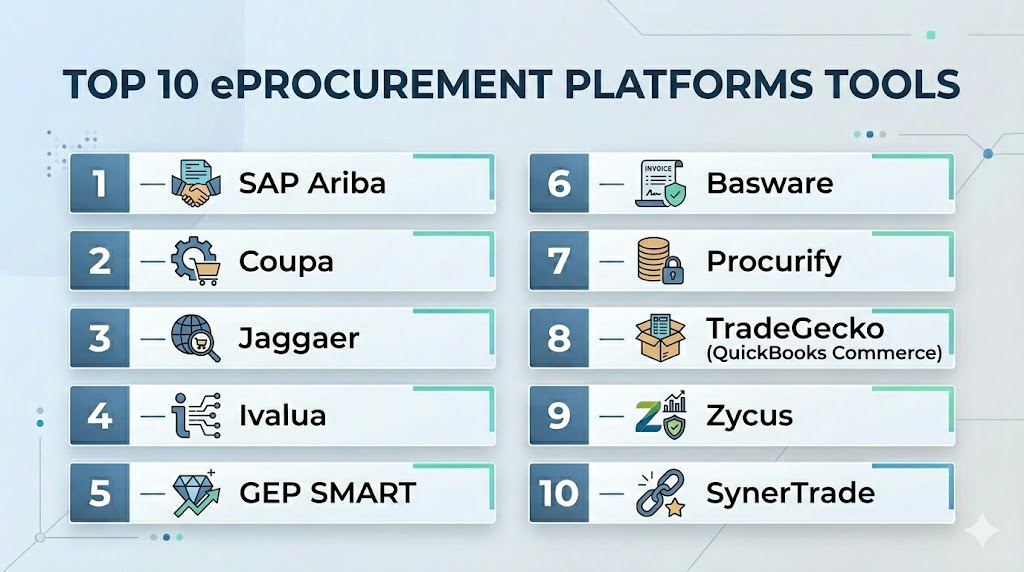
Top 10 eProcurement Platforms Tools
#1 — SAP Ariba
Short description : SAP Ariba is an enterprise-grade eProcurement platform connecting buyers and suppliers in a single network. It is best suited for large organizations requiring comprehensive spend management, sourcing, and supplier collaboration.
Key Features
- Supplier discovery and onboarding
- Sourcing and contract management
- Purchase requisition and order automation
- Invoice management and compliance tracking
- Spend analytics and reporting
- Supplier risk management
- Mobile-friendly procurement approvals
Pros
- Extensive supplier network and marketplace
- Deep integration with SAP ERP and other systems
- Scalable for global enterprises
Cons
- High cost for SMBs
- Implementation can be complex
- Learning curve for new users
Platforms / Deployment
- Web / iOS / Android
- Cloud
Security & Compliance
- SSO/SAML, MFA, encryption, audit logs
- SOC 2, ISO 27001, GDPR
Integrations & Ecosystem
SAP Ariba integrates with major ERP and finance systems, enabling end-to-end procurement automation.
- SAP ERP, SAP S/4HANA
- Oracle, Microsoft Dynamics
- API for custom integrations
- Supplier network marketplace
Support & Community
Strong global support network with dedicated onboarding and training programs. Active user community and forums.
#2 — Coupa
Short description : Coupa provides a cloud-based procurement platform emphasizing spend management, supplier collaboration, and cost savings. Ideal for mid-market and enterprise users seeking visibility into procurement spend.
Key Features
- Procurement and invoicing automation
- Supplier risk and compliance management
- Spend analytics with AI insights
- Budget tracking and approval workflows
- Contract lifecycle management
- Mobile access and alerts
Pros
- Easy-to-use interface
- AI-driven spend optimization
- Strong analytics dashboards
Cons
- Premium pricing may not suit SMBs
- Some advanced features require add-ons
- Integration setup can be complex
Platforms / Deployment
- Web / iOS / Android
- Cloud
Security & Compliance
- SSO, MFA, encryption
- SOC 2, GDPR
Integrations & Ecosystem
Coupa integrates with ERP and financial platforms and provides APIs for automation.
- NetSuite, Oracle, SAP
- Accounting and HR systems
- Supplier portal integration
Support & Community
Robust support channels, training materials, and active community forums.
#3 — Jaggaer
Short description : Jaggaer offers comprehensive procurement and spend management for global enterprises. It emphasizes sourcing, supplier management, and contract automation.
Key Features
- Strategic sourcing and supplier management
- Contract lifecycle management
- Procurement automation workflows
- Spend analysis and reporting
- Supplier risk monitoring
- Customizable dashboards
Pros
- Strong global compliance and sourcing capabilities
- Extensive reporting and analytics
- Configurable for enterprise needs
Cons
- Complex setup for smaller teams
- Interface may feel dated
- Premium pricing
Platforms / Deployment
- Web / iOS / Android
- Cloud
Security & Compliance
- Encryption, audit logs
- SOC 2, GDPR, ISO 27001
Integrations & Ecosystem
Integrates with ERP, finance, and supplier networks.
- SAP, Oracle, Microsoft Dynamics
- API access for custom integrations
- Supplier portal ecosystem
Support & Community
Professional services and support teams. Community resources available.
#4 — Ivalua
Short description : Ivalua provides a flexible procurement platform for sourcing, supplier management, and spend analytics, supporting enterprise and mid-market businesses.
Key Features
- Supplier onboarding and management
- Strategic sourcing and RFx automation
- Contract management
- Spend visibility and analytics
- Invoice and payment automation
- Risk and compliance tracking
Pros
- Highly configurable workflows
- Strong analytics and reporting
- Global supplier network support
Cons
- Can be complex to configure
- Enterprise pricing model
- Requires training for advanced features
Platforms / Deployment
- Web / iOS / Android
- Cloud
Security & Compliance
- Encryption, SSO, audit logs
- GDPR, SOC 2
Integrations & Ecosystem
- ERP and finance systems integration
- Supplier portal connections
- API access for custom workflows
Support & Community
Comprehensive documentation and dedicated support. Moderate community presence.
#5 — GEP SMART
Short description : GEP SMART is a unified procurement platform offering sourcing, procurement, and spend analytics, ideal for mid-to-large enterprises.
Key Features
- Sourcing and supplier management
- Procurement and invoicing
- Spend analytics
- Contract lifecycle management
- Risk management
- Mobile procurement approvals
Pros
- Unified procurement suite
- Cloud-native and scalable
- Advanced analytics
Cons
- Premium cost
- Learning curve for smaller teams
- Limited marketplace compared to peers
Platforms / Deployment
- Web / iOS / Android
- Cloud
Security & Compliance
- Encryption, SSO, audit logs
- Not publicly stated
Integrations & Ecosystem
- ERP, finance, and SCM systems
- API integration capabilities
- Supplier portal support
Support & Community
Professional support services and documentation available.
#6 — Basware
Short description : Basware focuses on e-invoicing, procurement automation, and spend analytics for global organizations, helping optimize supplier payments and visibility.
Key Features
- E-procurement and e-invoicing
- Supplier network connectivity
- Spend analytics and reporting
- Workflow automation
- Risk and compliance monitoring
- Mobile procurement approvals
Pros
- Strong e-invoicing capabilities
- Extensive supplier network
- Scalable for global enterprises
Cons
- Interface may feel less intuitive
- Integration setup can be complex
- Premium pricing
Platforms / Deployment
- Web / iOS / Android
- Cloud
Security & Compliance
- Encryption, SSO
- SOC 2, GDPR
Integrations & Ecosystem
- ERP and accounting system integration
- Supplier network connections
- APIs for workflow automation
Support & Community
Robust documentation, training, and support options.
#7 — Procurify
Short description : Procurify is a procurement management platform targeting SMBs and mid-market companies, simplifying purchase requests, approvals, and spend tracking.
Key Features
- Purchase order management
- Approval workflows
- Spend visibility dashboards
- Budget tracking
- Supplier management
- Mobile-friendly interface
Pros
- Intuitive and easy-to-use
- Affordable for SMBs
- Mobile apps for approvals
Cons
- Limited advanced analytics
- Smaller supplier network
- Not ideal for global enterprises
Platforms / Deployment
- Web / iOS / Android
- Cloud
Security & Compliance
- Encryption, SSO
- Not publicly stated
Integrations & Ecosystem
- Integrates with accounting and ERP systems
- API access for custom workflows
- Moderate ecosystem for SMBs
Support & Community
Responsive support and user documentation; moderate community.
#8 — TradeGecko (QuickBooks Commerce)
Short description : TradeGecko provides SMBs with inventory-driven procurement workflows, integrating procurement with sales and inventory management.
Key Features
- Purchase order management
- Supplier management
- Inventory-linked procurement
- Reporting and analytics
- Multi-channel order visibility
- Mobile access
Pros
- Strong inventory integration
- SMB-friendly pricing
- Intuitive dashboard
Cons
- Limited enterprise features
- Smaller supplier marketplace
- Less advanced analytics
Platforms / Deployment
- Web / iOS / Android
- Cloud
Security & Compliance
- Encryption and SSO
- Not publicly stated
Integrations & Ecosystem
- QuickBooks integration
- Shopify and other e-commerce connectors
- API for custom integrations
Support & Community
Documentation, chat support, and community forums available.
#9 — Zycus
Short description : Zycus provides AI-driven procurement solutions including sourcing, supplier management, and spend analytics, targeting mid-to-large enterprises.
Key Features
- Sourcing and supplier management
- Contract lifecycle management
- Spend analysis and predictive analytics
- Procurement workflow automation
- Supplier risk monitoring
- AI-driven recommendations
Pros
- AI-enhanced analytics
- Comprehensive procurement modules
- Scalable for global operations
Cons
- Complex for SMBs
- Premium pricing
- Implementation can be lengthy
Platforms / Deployment
- Web / iOS / Android
- Cloud
Security & Compliance
- Encryption, SSO, audit logs
- SOC 2, GDPR
Integrations & Ecosystem
- ERP and finance system integration
- Supplier portals and APIs
- Extensive ecosystem for enterprises
Support & Community
Professional support, training, and documentation; moderate community presence.
#10 — SynerTrade
Short description : SynerTrade delivers digital procurement solutions for global enterprises, focusing on sourcing, procurement, and supplier collaboration.
Key Features
- Strategic sourcing and RFx management
- Supplier management and onboarding
- Contract lifecycle management
- Spend visibility dashboards
- Mobile procurement approvals
- Supplier collaboration portal
Pros
- Strong sourcing and collaboration tools
- Configurable for enterprise needs
- Supports multi-country operations
Cons
- Premium pricing
- Complex setup for smaller teams
- Learning curve for new users
Platforms / Deployment
- Web / iOS / Android
- Cloud
Security & Compliance
- Encryption, SSO, MFA
- Not publicly stated
Integrations & Ecosystem
- ERP integration (SAP, Oracle, Microsoft)
- Supplier portal connections
- APIs for automation and reporting
Support & Community
Professional support and onboarding programs; documentation available.
Comparison Table (Top 10)
| Tool Name | Best For | Platform(s) Supported | Deployment | Standout Feature | Public Rating |
|---|---|---|---|---|---|
| SAP Ariba | Large Enterprises | Web, iOS, Android | Cloud | Supplier network marketplace | N/A |
| Coupa | Mid-Market & Enterprise | Web, iOS, Android | Cloud | AI-driven spend analytics | N/A |
| Jaggaer | Global Enterprises | Web, iOS, Android | Cloud | Sourcing & contract mgmt | N/A |
| Ivalua | Enterprise & Mid-Market | Web, iOS, Android | Cloud | Configurable workflows | N/A |
| GEP SMART | Mid-to-Large Enterprises | Web, iOS, Android | Cloud | Unified procurement suite | N/A |
| Basware | Global Enterprises | Web, iOS, Android | Cloud | E-invoicing capabilities | N/A |
| Procurify | SMB & Mid-Market | Web, iOS, Android | Cloud | Intuitive procurement | N/A |
| TradeGecko | SMBs | Web, iOS, Android | Cloud | Inventory-driven procurement | N/A |
| Zycus | Mid-to-Large Enterprises | Web, iOS, Android | Cloud | AI-powered insights | N/A |
| SynerTrade | Global Enterprises | Web, iOS, Android | Cloud | Supplier collaboration portal | N/A |
Evaluation & Scoring of eProcurement Platforms
| Tool Name | Core (25%) | Ease (15%) | Integrations (15%) | Security (10%) | Performance (10%) | Support (10%) | Value (15%) | Weighted Total |
|---|---|---|---|---|---|---|---|---|
| SAP Ariba | 9 | 7 | 9 | 9 | 8 | 8 | 7 | 8.35 |
| Coupa | 8 | 8 | 8 | 8 | 8 | 8 | 7 | 7.9 |
| Jaggaer | 9 | 6 | 8 | 8 | 8 | 7 | 7 | 8.05 |
| Ivalua | 8 | 7 | 8 | 8 | 7 | 7 | 7 | 7.55 |
| GEP SMART | 8 | 7 | 7 | 7 | 8 | 7 | 7 | 7.45 |
| Basware | 8 | 6 | 7 | 7 | 7 | 7 | 7 | 7.1 |
| Procurify | 7 | 9 | 6 | 6 | 6 | 6 | 8 | 7.2 |
| TradeGecko | 7 | 8 | 6 | 6 | 6 | 6 | 8 | 7.0 |
| Zycus | 8 | 7 | 7 | 8 | 7 | 7 | 7 | 7.5 |
| SynerTrade | 8 | 6 | 7 | 7 | 7 | 7 | 7 | 7.25 |
Scores are comparative and reflect relative strengths; weighted total indicates overall suitability based on combined feature, ease, integration, security, performance, support, and value.
Which eProcurement Platforms Tool Is Right for You?
Solo / Freelancer
Lightweight tools like Procurify or TradeGecko can simplify purchase approvals and tracking without the overhead of enterprise suites.
SMB
Platforms like Coupa and Procurify balance ease of use with automation, supporting moderate procurement volumes and supplier networks.
Mid-Market
Ivalua, GEP SMART, and Coupa provide advanced analytics, workflow automation, and supplier collaboration for growing businesses.
Enterprise
SAP Ariba, Jaggaer, Zycus, and SynerTrade excel in global compliance, multi-subsidiary management, and deep ERP integration.
Budget vs Premium
SMBs can achieve efficiency with mid-tier platforms like Procurify; larger organizations may justify premium solutions like SAP Ariba for scalability and ecosystem breadth.
Feature Depth vs Ease of Use
Highly configurable tools like Ivalua and Jaggaer provide deep functionality but require training, whereas Coupa and Procurify offer simpler adoption.
Integrations & Scalability
Enterprise tools integrate with global ERP and accounting systems; SMB tools may limit connectors but provide API flexibility.
Security & Compliance Needs
Organizations in regulated industries should prioritize SOC 2, GDPR, and ISO 27001 certified platforms like SAP Ariba, Coupa, and Zycus.
Frequently Asked Questions (FAQs)
1. What pricing models do eProcurement platforms use?
Most platforms use subscription-based pricing, often tiered by users, features, or transaction volume. Some offer per-use or enterprise licensing models.
2. How long does implementation take?
Implementation varies from a few weeks for SMB-focused tools to several months for large enterprise solutions requiring ERP integration and custom workflows.
3. Can I switch eProcurement platforms easily?
Migration is feasible but requires careful data mapping and supplier onboarding planning to avoid workflow disruptions.
4. Do these platforms support mobile procurement?
Yes, most modern eProcurement tools offer iOS and Android apps for approvals, order tracking, and supplier communication.
5. What are common mistakes during adoption?
Organizations often overlook supplier onboarding, underestimate training needs, or fail to align workflows with system capabilities.
6. How secure are eProcurement platforms?
Leading platforms provide SSO, MFA, encryption, audit logs, and comply with standards like SOC 2, ISO 27001, and GDPR.
7. How do I evaluate supplier network coverage?
Check the platform’s marketplace, supplier directory, and connectivity capabilities to ensure sufficient supplier choice and responsiveness.
8. Are AI features useful in procurement?
Yes, AI can predict spend patterns, optimize sourcing, flag anomalies, and automate approvals, enhancing efficiency and decision-making.
9. What integrations are critical?
ERP, finance, inventory, and contract management system integrations are critical to ensure seamless workflows and data consistency.
10. Which tool is best for small businesses vs enterprises?
Small businesses benefit from intuitive, lightweight tools like Procurify or TradeGecko, while enterprises benefit from robust solutions like SAP Ariba, Jaggaer, or Zycus for global scale and compliance.
Conclusion
Choosing the right eProcurement platform requires balancing business size, procurement complexity, integration needs, and budget. SMBs may prioritize ease of use and affordability, while enterprises focus on global compliance, supplier networks, and advanced analytics. Tools like SAP Ariba, Coupa, Jaggaer, and Zycus excel in comprehensive features and scalability, whereas Procurify and TradeGecko offer agility for smaller teams. Buyers should assess workflows, security requirements, and vendor support before implementation. The optimal approach is to shortlist platforms, run pilots, and validate integrations, automation capabilities, and supplier onboarding efficiency to ensure a sustainable procurement solution.

Find Trusted Cardiac Hospitals
Compare heart hospitals by city and services — all in one place.
Explore Hospitals
Even if the eProcurement platform works well, suppliers may still use emails or send documents in different formats. This can create extra manual work for the procurement team. Simple onboarding, clear supplier training, and easy workflows can help more suppliers use the system properly and make the automation more effective.