Introduction
Carbon Accounting Platforms are specialized software solutions that help organizations measure, track, and manage their greenhouse gas (GHG) emissions. They consolidate data from energy usage, supply chains, travel, and operational activities to provide a clear picture of carbon footprints. increased regulatory pressure, investor scrutiny, and stakeholder demand for sustainability, accurate carbon accounting has become a business imperative.
Why it matters now: Companies are under pressure to meet net-zero commitments, comply with regional regulations, and provide transparent sustainability reporting. Carbon accounting platforms facilitate real-time monitoring, scenario modeling, and strategic decision-making, helping organizations reduce risk and achieve ESG goals efficiently.
Real-world use cases include:
- Tracking corporate Scope 1, 2, and 3 emissions across global operations.
- Monitoring energy consumption in manufacturing, logistics, and office facilities.
- Quantifying carbon impact of supply chains for sustainable sourcing.
- Supporting ESG and sustainability reporting to regulators and investors.
- Modeling future emissions scenarios to plan decarbonization strategies.
Evaluation Criteria for Buyers:
- Coverage of Scope 1, 2, 3 emissions.
- Integration with existing ERP, IoT, and financial systems.
- Accuracy and compliance with GHG Protocol, ISO 14064, and regional regulations.
- User-friendly dashboards and analytics.
- Automation and AI-based insights.
- Security and data privacy compliance.
- Cost transparency and scalability.
- Support for multi-entity or multi-country operations.
- Scenario modeling and forecasting.
- Custom reporting for internal and external stakeholders.
Best for: Sustainability officers, ESG teams, operations managers, mid-to-large enterprises, industries with complex supply chains, and organizations aiming for verified carbon neutrality.
Not ideal for: Very small businesses with minimal emissions or limited data collection needs, where simpler spreadsheets or lightweight tools may suffice.
Key Trends in Carbon Accounting Platforms
- AI-driven predictive analytics for emission reduction opportunities.
- Integration with IoT and smart meters for real-time carbon data.
- Automated Scope 3 emissions tracking across supply chains.
- Cloud-native platforms enabling multi-entity consolidation.
- ESG reporting compliance with evolving regulations globally.
- Scenario modeling for decarbonization and net-zero planning.
- Cross-platform interoperability with ERP, financial, and procurement systems.
- Blockchain-based verification of emission offsets and credits.
- Pay-per-use pricing models and subscription-based SaaS adoption.
- Enhanced user experience with data visualization and interactive dashboards.
How We Selected These Tools (Methodology)
- Market adoption and enterprise mindshare across industries.
- Completeness of carbon accounting features (Scope 1–3 coverage).
- Reliability and performance indicators from enterprise deployments.
- Security posture, including compliance certifications and encryption standards.
- Integration capabilities with ERPs, IoT systems, and analytics platforms.
- Customer fit across small, medium, and large enterprises.
- Innovation in AI analytics, scenario modeling, and sustainability insights.
- Vendor support quality, training, and documentation.
- Global compliance alignment (GHG Protocol, ISO 14064, CSRD, SEC ESG).
- Scalability and flexibility for multi-site, multi-region operations.
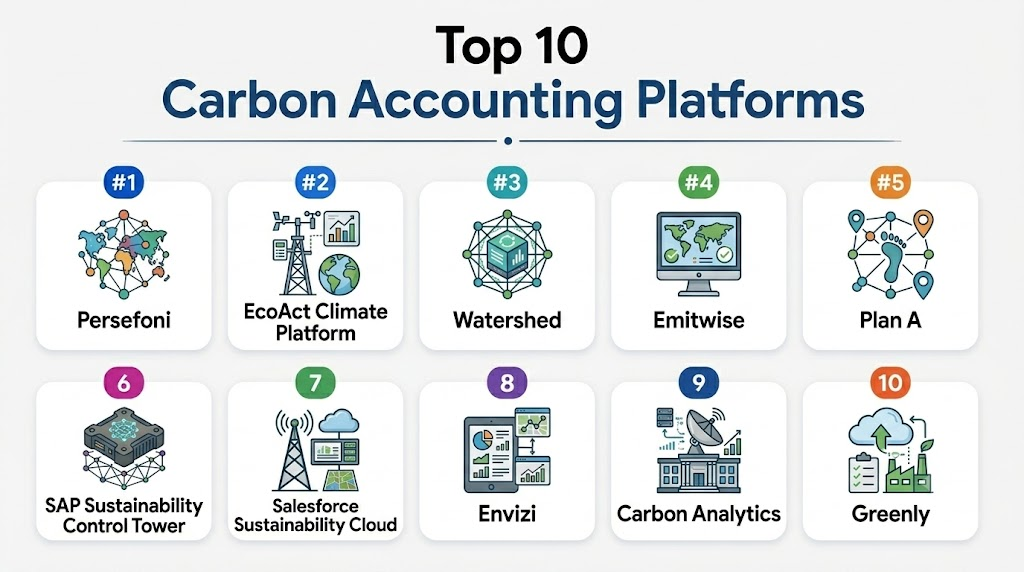
Top 10 Carbon Accounting Platforms
1- Persefoni Carbon Platform
Short description: Persefoni is an enterprise carbon accounting platform for tracking, reporting, and analyzing emissions across Scope 1, 2, and 3 for global operations.
Key Features
- Full Scope 1, 2, 3 emissions tracking.
- AI-based scenario modeling for decarbonization.
- Automated ESG reporting dashboards.
- Multi-entity consolidation and real-time monitoring.
- Integration with ERP, procurement, and finance systems.
- Data verification and audit-ready compliance.
- Customizable KPI tracking and alerts.
Pros
- Real-time carbon intelligence for complex organizations.
- Supports regulatory reporting frameworks globally.
- Strong AI-driven forecasting and benchmarking.
Cons
- Higher pricing for smaller organizations.
- Advanced features may require onboarding support.
- Learning curve for first-time users.
Platforms / Deployment
- Web, Cloud
Security & Compliance
- SOC 2, ISO 27001, SSO/SAML, MFA
Integrations & Ecosystem
Persefoni integrates with ERP and finance systems to consolidate carbon data.
- SAP, Oracle, NetSuite
- Procurement and supply chain systems
- IoT energy meters
- API for custom integrations
Support & Community
- Tiered support plans
- Online documentation and community forums
- Dedicated onboarding and training sessions
2- EcoAct Climate Platform
Short description: EcoAct offers carbon accounting and climate strategy tools for enterprises seeking verified emissions reporting and actionable reduction strategies.
Key Features
- Automated carbon footprint calculation.
- Supplier Scope 3 emissions tracking.
- Scenario modeling for net-zero pathways.
- ESG reporting templates.
- Energy and travel emissions tracking.
- Audit-ready compliance dashboards.
Pros
- Strong emphasis on sustainability consulting integration.
- Comprehensive Scope 3 coverage.
- Customizable reporting for stakeholders.
Cons
- Limited AI analytics compared to competitors.
- May require manual data uploads for some sources.
- Smaller user base than large SaaS alternatives.
Platforms / Deployment
- Web, Cloud
Security & Compliance
- Not publicly stated
Integrations & Ecosystem
- ERP and CRM connectors
- Excel/CSV data import
- APIs for energy management systems
Support & Community
- Consulting support available
- Knowledge base and documentation
- Limited online community
3- Watershed
Short description: Watershed is designed for large organizations to measure, reduce, and report emissions with real-time insights and automation.
Key Features
- Automated emissions data collection.
- Supplier and product-level carbon tracking.
- AI-powered reduction scenario modeling.
- Regulatory reporting dashboards.
- Integration with finance and procurement platforms.
- Customizable ESG KPIs.
Pros
- Real-time monitoring and alerts.
- Strong Scope 3 supplier insights.
- Scalable for multi-country operations.
Cons
- Premium pricing structure.
- Some integrations require technical setup.
- Advanced analytics may need training.
Platforms / Deployment
- Web, Cloud
Security & Compliance
- SOC 2, Not publicly stated
Integrations & Ecosystem
- ERP connectors (SAP, Oracle)
- API access
- Travel and logistics data integration
Support & Community
- Onboarding and account management
- Documentation and webinars
- Community forums limited
4- Emitwise
Short description: Emitwise provides automated carbon data collection and analytics for enterprises, focusing on emissions transparency and reduction.
Key Features
- Automated Scope 1, 2, 3 data ingestion.
- AI-based emissions forecasting.
- Carbon reduction opportunity insights.
- Supplier engagement modules.
- Customizable dashboards and KPIs.
Pros
- High automation reduces manual data entry.
- Actionable insights for decarbonization.
- Suitable for complex supply chains.
Cons
- Smaller ecosystem compared to larger platforms.
- Limited regulatory reporting templates.
- May require API integration effort.
Platforms / Deployment
- Web, Cloud
Security & Compliance
- Not publicly stated
Integrations & Ecosystem
- ERP and finance systems
- IoT energy meters
- API and CSV imports
Support & Community
- Documentation and support tickets
- Account onboarding assistance
5- Plan A
Short description: Plan A focuses on sustainability management and carbon accounting with integrated ESG reporting for medium to large enterprises.
Key Features
- Full carbon footprint tracking.
- Real-time reporting dashboards.
- Supplier and product emissions management.
- Decarbonization scenario modeling.
- Automated ESG reports.
Pros
- User-friendly interface.
- Automated supplier engagement.
- Strong visualization and dashboards.
Cons
- Limited multi-region compliance reporting.
- Smaller integration library.
- Advanced analytics may require support.
Platforms / Deployment
- Web, Cloud
Security & Compliance
- Not publicly stated
Integrations & Ecosystem
- API for ERP, HR, and procurement systems
- Excel and CSV import
- Limited third-party connectors
Support & Community
- Online knowledge base
- Email and ticket support
- Optional onboarding guidance
6- SAP Sustainability Control Tower
Short description: SAP’s platform integrates carbon accounting within the broader enterprise resource planning ecosystem for large organizations.
Key Features
- Embedded carbon tracking within SAP ERP.
- Real-time emissions insights.
- Scope 1, 2, 3 data analytics.
- Automated reporting for ESG compliance.
- Scenario planning and forecasting.
- Supply chain emissions management.
Pros
- Tight integration with existing SAP infrastructure.
- Scalable for global operations.
- Strong support from SAP ecosystem.
Cons
- High implementation complexity.
- Cost-prohibitive for smaller enterprises.
- Limited non-SAP integration flexibility.
Platforms / Deployment
- Web, Cloud, On-premise
Security & Compliance
- SAP standard compliance (ISO 27001, SOC 2), SSO
Integrations & Ecosystem
- SAP ERP modules
- Procurement and logistics connectors
- API access
Support & Community
- Extensive SAP support network
- Community forums and documentation
- Enterprise-level training
7- Salesforce Sustainability Cloud
Short description: Salesforce Sustainability Cloud enables organizations to track, report, and reduce emissions integrated with CRM data.
Key Features
- Carbon accounting within CRM data.
- Scope 1, 2, and 3 tracking.
- Emissions forecasting and scenario planning.
- Automated ESG reporting.
- Multi-entity consolidation.
Pros
- Easy adoption for Salesforce customers.
- Integrated dashboards and analytics.
- Scalable and cloud-native.
Cons
- Dependent on Salesforce ecosystem.
- Some advanced reporting requires configuration.
- Limited non-Salesforce integration.
Platforms / Deployment
- Web, Cloud
Security & Compliance
- Not publicly stated
Integrations & Ecosystem
- Salesforce CRM
- API and third-party connectors
- IoT data integration
Support & Community
- Salesforce support channels
- Knowledge base and Trailhead modules
8- Envizi
Short description: Envizi is a sustainability management platform offering detailed carbon accounting, analytics, and reporting for enterprises.
Key Features
- Automated data collection for Scope 1–3.
- Emissions scenario modeling.
- Supplier and asset-level tracking.
- Regulatory ESG reporting support.
- Dashboard visualizations.
Pros
- Actionable insights for corporate sustainability.
- Supports multi-site and multi-country operations.
- Strong reporting and visualization.
Cons
- Premium pricing.
- Onboarding may require technical support.
- Integration options vary.
Platforms / Deployment
- Web, Cloud
Security & Compliance
- Not publicly stated
Integrations & Ecosystem
- ERP systems
- API access for IoT and energy meters
- CSV/Excel import
Support & Community
- Onboarding and documentation
- Email support and consulting services
9- Carbon Analytics
Short description: Carbon Analytics is focused on SMEs for carbon footprint measurement and ESG reporting without requiring complex integrations.
Key Features
- Automated carbon footprint calculation.
- Reporting dashboards for ESG compliance.
- Scope 1 and 2 tracking primarily.
- Simple supply chain data import.
- Customizable KPIs.
Pros
- Affordable and lightweight.
- Easy onboarding for small businesses.
- Quick reporting capabilities.
Cons
- Limited Scope 3 tracking.
- Fewer integrations for enterprise systems.
- Analytics depth is moderate.
Platforms / Deployment
- Web, Cloud
Security & Compliance
- Not publicly stated
Integrations & Ecosystem
- Excel/CSV import
- API for select tools
- Simple dashboard connectivity
Support & Community
- Email support
- Knowledge base
- Small user community
10- Greenly
Short description: Greenly provides automated carbon tracking and reporting for small to mid-sized companies with emphasis on simplicity and transparency.
Key Features
- Full carbon accounting dashboards.
- Emissions tracking for energy, travel, and procurement.
- Scenario analysis for carbon reduction.
- Automated ESG reporting.
- Supplier emissions monitoring.
Pros
- User-friendly and accessible.
- Good for SMBs with minimal IT resources.
- Affordable subscription model.
Cons
- Limited enterprise-level analytics.
- Scope 3 coverage may require manual entry.
- Smaller integration ecosystem.
Platforms / Deployment
- Web, Cloud
Security & Compliance
- Not publicly stated
Integrations & Ecosystem
- ERP and accounting system connectors
- CSV import/export
- API available for custom integration
Support & Community
- Email and chat support
- Knowledge base
- Limited online community
Comparison Table (Top 10)
| Tool Name | Best For | Platform(s) Supported | Deployment | Standout Feature | Public Rating |
|---|---|---|---|---|---|
| Persefoni | Enterprise ESG teams | Web | Cloud | AI-driven decarbonization insights | N/A |
| EcoAct | Verified emissions reporting | Web | Cloud | Scope 3 supplier tracking | N/A |
| Watershed | Multi-national enterprises | Web | Cloud | Real-time emissions monitoring | N/A |
| Emitwise | Supply chain transparency | Web | Cloud | Automated Scope 1–3 data collection | N/A |
| Plan A | Medium to large enterprises | Web | Cloud | User-friendly dashboards | N/A |
| SAP Sustainability Control Tower | SAP ecosystem enterprises | Web | Cloud/On-prem | Embedded carbon tracking in ERP | N/A |
| Salesforce Sustainability Cloud | Salesforce users | Web | Cloud | CRM-integrated carbon accounting | N/A |
| Envizi | Multi-site enterprise operations | Web | Cloud | Supplier and asset-level tracking | N/A |
| Carbon Analytics | SMEs | Web | Cloud | Simple carbon footprint reporting | N/A |
| Greenly | SMBs | Web | Cloud | Easy carbon tracking and ESG reporting | N/A |
Evaluation & Scoring of Carbon Accounting Platforms
| Tool Name | Core (25%) | Ease (15%) | Integrations (15%) | Security (10%) | Performance (10%) | Support (10%) | Value (15%) | Weighted Total |
|---|---|---|---|---|---|---|---|---|
| Persefoni | 9 | 8 | 8 | 9 | 8 | 8 | 7 | 8.5 |
| EcoAct | 8 | 7 | 7 | 8 | 8 | 7 | 8 | 7.8 |
| Watershed | 9 | 8 | 8 | 8 | 9 | 8 | 7 | 8.5 |
| Emitwise | 8 | 8 | 7 | 7 | 8 | 7 | 8 | 7.7 |
| Plan A | 7 | 9 | 6 | 7 | 7 | 7 | 8 | 7.5 |
| SAP Sustainability Control Tower | 9 | 6 | 9 | 9 | 9 | 8 | 6 | 8.2 |
| Salesforce Sustainability Cloud | 8 | 8 | 7 | 7 | 8 | 8 | 7 | 7.7 |
| Envizi | 8 | 8 | 8 | 7 | 8 | 8 | 7 | 7.9 |
| Carbon Analytics | 6 | 9 | 5 | 6 | 6 | 7 | 8 | 6.8 |
| Greenly | 6 | 9 | 6 | 6 | 6 | 7 | 8 | 7.0 |
Which Carbon Accounting Platform Is Right for You?
Solo / Freelancer
- Tools like Greenly or Carbon Analytics are lightweight, affordable, and easy to use for small-scale carbon tracking.
SMB
- Plan A, Emitwise, and Greenly offer automation with dashboards suitable for small to medium enterprises with moderate data complexity.
Mid-Market
- Watershed, Envizi, and EcoAct provide advanced scenario modeling, multi-site tracking, and ESG reporting for growing companies.
Enterprise
- Persefoni, SAP Sustainability Control Tower, and Salesforce Sustainability Cloud deliver full-scale global reporting, integration with ERP systems, and advanced AI analytics.
Budget vs Premium
- SMBs may favor Greenly or Plan A for cost-effectiveness.
- Enterprises benefit from premium solutions like Persefoni or SAP for extensive analytics and compliance.
Feature Depth vs Ease of Use
- Tools like SAP Sustainability Control Tower and Persefoni offer feature depth but require onboarding.
- Greenly and Plan A are easy to adopt with moderate capabilities.
Integrations & Scalability
- Enterprise-grade platforms integrate deeply with ERP, CRM, IoT, and procurement systems for scaling across regions.
- SMB tools focus on core APIs and CSV imports.
Security & Compliance Needs
- SOC 2, ISO 27001, MFA, and encryption are essential for enterprise deployments.
- Smaller organizations may rely on basic cloud security standards.
Frequently Asked Questions (FAQs)
Certainly! Here’s the completed 10 FAQs section for the Carbon Accounting Platforms blog, each with 2–4 lines, aligned with your format:
Frequently Asked Questions (FAQs)
1- What pricing models are common for carbon accounting platforms?
Most platforms operate on SaaS subscription models, often tiered by organization size, number of data sources, or volume of emissions tracked. Some offer pay-per-use or enterprise licensing for global deployments.
2- How long does implementation take?
Implementation depends on platform complexity and integrations. SMB-focused tools can be set up in days, while enterprise platforms with ERP or IoT connections may take several weeks to months.
3- Do these platforms track Scope 3 emissions?
Enterprise-grade platforms like Watershed and Persefoni provide comprehensive Scope 3 tracking. SMB-focused platforms may require manual data entry or have partial supplier tracking capabilities.
4- Are these platforms compliant with ESG reporting standards?
Most top platforms follow GHG Protocol and ISO 14064, and support CSRD or SEC ESG reporting. Compliance requires correct configuration and accurate organizational data inputs.
5- Can carbon data integrate with existing ERPs and finance systems?
Yes, many platforms offer native connectors or APIs for SAP, Oracle, NetSuite, and procurement systems. Integration ensures consolidated reporting and automation of carbon calculations.
6- Is AI used in carbon forecasting and analytics?
Yes, AI and machine learning are increasingly used to predict emissions trends, model reduction scenarios, identify hotspots, and generate actionable insights for sustainability strategies.
7- How scalable are these platforms?
Enterprise platforms are designed to scale across multiple locations, business units, and countries. SMB tools are generally suitable for smaller datasets and simpler reporting requirements.
8- How secure is the data stored in these platforms?
Enterprise solutions provide encryption, SSO/SAML, MFA, and audit logs. SMB-focused platforms rely on standard cloud security measures and data isolation best practices.
9- Can these tools help with net-zero planning?
Yes, most platforms offer scenario modeling, reduction pathways, and forecasting to support corporate net-zero goals, providing insights for investment decisions and carbon offset strategies.
10- What are common mistakes when using carbon accounting platforms?
Common errors include incomplete data collection, neglecting Scope 3 emissions, misconfigured integrations, inconsistent reporting periods, and over-reliance on manual updates instead of automated data pipelines.
Conclusion
Carbon accounting platforms have evolved into essential tools for organizations striving to understand and reduce their environmental impact. these platforms go beyond basic emissions tracking, offering AI-driven analytics, automated Scope 3 data collection, scenario modeling, and seamless integration with ERP, finance, and procurement systems. Choosing the right platform depends heavily on organizational size, complexity of operations, regulatory requirements, and sustainability goals. SMBs may prioritize ease of use and cost-effectiveness, while large enterprises often require deep analytics, scalability, and global compliance support. Security, data integrity, and integration capabilities are critical factors for successful adoption, alongside vendor support and community resources. The comparative scoring and evaluation tables provided offer a practical framework to assess which platforms align best with your strategic ESG and decarbonization objectives.

Find Trusted Cardiac Hospitals
Compare heart hospitals by city and services — all in one place.
Explore Hospitals
Carbon accounting platforms deliver the greatest value when they can accurately measure and standardize emissions across Scope 1, 2, and 3 activities. Reliable emissions tracking helps organizations identify reduction opportunities, meet regulatory requirements, and demonstrate credible progress toward net-zero commitments.