Introduction
ESG Reporting Platforms are specialized software solutions that enable organizations to measure, track, and report on environmental, social, and governance performance. These platforms consolidate data across operations, supply chains, finance, HR, and other departments to provide a comprehensive view of ESG metrics. increasing regulatory oversight, investor pressure, and consumer demand for transparency, ESG reporting is a strategic imperative for organizations across all industries.
Why it matters now: Accurate ESG reporting allows organizations to demonstrate compliance, benchmark performance against peers, and identify actionable sustainability opportunities. Modern ESG platforms incorporate AI for predictive insights, automated data collection, and scenario planning, making reporting more accurate, efficient, and decision-oriented.
Real-world use cases include:
- Automating ESG reporting for compliance with CSRD, SEC ESG, TCFD, and GRI frameworks.
- Tracking carbon emissions, water usage, energy consumption, and waste metrics.
- Monitoring diversity, equity, and inclusion KPIs within HR processes.
- Consolidating governance data for board-level reporting and risk management.
- Scenario modeling to plan sustainability strategies and decarbonization initiatives.
Evaluation Criteria for Buyers:
- Comprehensive coverage of environmental, social, and governance metrics.
- Compliance support with global ESG reporting standards.
- Integration capabilities with ERP, HR, finance, procurement, and IoT systems.
- Automation of data collection, validation, and workflows.
- Dashboards, analytics, and visualization for decision-making.
- Security, auditability, and data privacy features.
- User experience, onboarding, and support quality.
- Scalability across geographies and business units.
- Scenario modeling, forecasting, and benchmarking.
- Pricing, deployment flexibility, and vendor reliability.
Best for: ESG teams, sustainability managers, compliance officers, mid-to-large enterprises, and organizations operating across multiple regions or highly regulated industries.
Not ideal for: Very small businesses or startups with minimal ESG reporting requirements, where spreadsheets or lightweight tools may suffice.
Key Trends in ESG Reporting Platforms
- AI and machine learning for predictive ESG analytics and risk forecasting.
- Automated data collection from ERP, HR, procurement, and IoT systems.
- Integration of Scope 3 supplier emissions and social metrics for full-chain reporting.
- Cloud-native platforms with multi-entity and multi-region consolidation.
- Enhanced regulatory compliance including CSRD, SEC ESG, and TCFD reporting.
- Interactive dashboards and scenario modeling for strategic sustainability planning.
- Blockchain-based verification for carbon offsets and ESG claims.
- Subscription-based and usage-based SaaS pricing models.
- Increased interoperability with ESG rating agencies and benchmarking platforms.
- Emphasis on audit-ready reporting, transparency, and stakeholder communication.
How We Selected These Tools (Methodology)
- Market adoption and enterprise mindshare across industries.
- Feature completeness covering E, S, and G metrics, reporting, and scenario modeling.
- Reliability and performance indicators from enterprise deployments.
- Security posture including encryption, SSO/SAML, MFA, and audit logging.
- Integration capabilities with ERP, HR, finance, procurement, and IoT platforms.
- Customer fit across SMB, mid-market, and enterprise segments.
- AI and automation support for ESG analytics.
- Vendor support quality, documentation, and community engagement.
- Global regulatory compliance alignment.
- Scalability and flexibility across geographies and organizational structures.
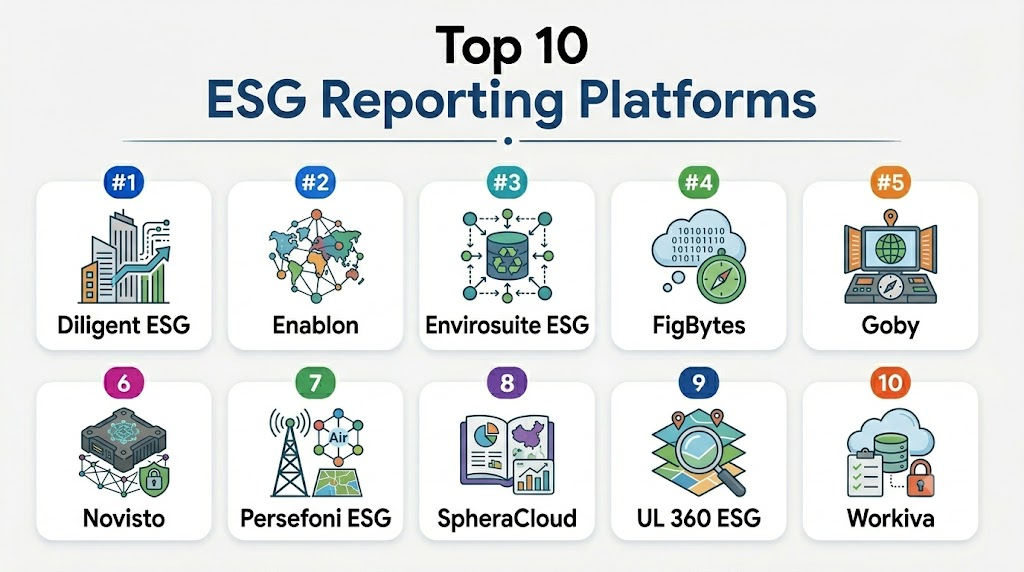
Top 10 ESG Reporting Platforms
1- Workiva
Short description: Workiva provides a cloud-based ESG reporting platform for enterprises, consolidating financial and non-financial data for integrated reporting.
Key Features
- ESG and financial data integration
- Automated regulatory reporting templates
- Collaboration and workflow tools
- Custom dashboards and KPIs
- Audit-ready reporting
- Multi-entity consolidation
- Scenario modeling and benchmarking
Pros
- Strong integration with finance and risk systems
- Scalable for global operations
- Real-time collaboration and data validation
Cons
- Premium pricing for smaller organizations
- Onboarding complexity
- Limited pre-built integrations outside Workiva ecosystem
Platforms / Deployment
- Web, Cloud
Security & Compliance
- SOC 2, ISO 27001, SSO, MFA
Integrations & Ecosystem
- ERP and finance platforms (SAP, Oracle, NetSuite)
- Excel and CSV import/export
- API for custom integrations
Support & Community
- Dedicated onboarding and support
- Knowledge base and documentation
- Customer community for best practices
2- Enablon
Short description: Enablon offers an enterprise ESG and sustainability platform for managing compliance, environmental impact, and risk across industries.
Key Features
- ESG and sustainability reporting
- Risk and incident management
- Compliance tracking and regulatory reporting
- Supplier and Scope 3 data management
- KPI dashboards and analytics
- Workflow automation
- Audit-ready reporting
Pros
- Comprehensive ESG and risk management coverage
- Suitable for large multi-site enterprises
- Flexible reporting and dashboard configuration
Cons
- Complex configuration may require consulting support
- Premium cost structure
- Learning curve for new users
Platforms / Deployment
- Web, Cloud, Hybrid
Security & Compliance
- ISO 27001, SOC 2, SSO, MFA
Integrations & Ecosystem
- ERP and HR systems
- Procurement and supply chain platforms
- APIs for custom integrations
- IoT sensor and energy data
Support & Community
- Consulting and implementation services
- Online documentation and forums
- Training and workshops
3- Diligent ESG
Short description: Diligent ESG is designed for board-level reporting and corporate sustainability management, providing robust dashboards and regulatory compliance tracking.
Key Features
- ESG data aggregation and reporting
- Governance and risk metrics
- Board-ready dashboards
- Automated regulatory reporting
- Collaboration and workflow tools
- KPI benchmarking
- Scenario modeling
Pros
- Strong governance and board reporting focus
- Intuitive dashboards
- Scalable for multi-entity organizations
Cons
- Integration work required for non-Diligent systems
- Advanced reporting may need additional modules
- Focused on governance-heavy organizations
Platforms / Deployment
- Web, Cloud
Security & Compliance
- SOC 2, ISO 27001, SSO, MFA
Integrations & Ecosystem
- ERP, finance, and HR connectors
- APIs for dashboards
- CSV import/export
Support & Community
- Onboarding and consulting
- Knowledge base and webinars
- Limited public community forums
4- FigBytes
Short description: FigBytes offers ESG, sustainability, and carbon management with strong analytics and visual dashboards for mid-market and enterprise clients.
Key Features
- ESG metric tracking
- Carbon accounting and footprinting
- KPI dashboards and visual reporting
- Scenario modeling
- Supplier ESG management
- Automated data import
- Regulatory compliance support
Pros
- Engaging, intuitive dashboards
- Combines ESG and carbon reporting
- Scalable for multiple locations
Cons
- Smaller integration ecosystem
- Advanced features may require training
- Some configuration is manual
Platforms / Deployment
- Web, Cloud
Security & Compliance
- Not publicly stated
Integrations & Ecosystem
- ERP and accounting connectors
- API access
- CSV/Excel import
Support & Community
- Email and chat support
- Knowledge base
- Training sessions
5- SpheraCloud
Short description: SpheraCloud provides enterprise ESG, sustainability, and risk management reporting for large organizations with compliance and operational integration.
Key Features
- ESG and sustainability reporting
- Risk and compliance modules
- KPI dashboards
- Carbon and environmental tracking
- Automated regulatory reporting
- Supplier and Scope 3 tracking
- Scenario analysis
Pros
- Enterprise-grade scalability
- Strong ESG and risk integration
- Audit-ready reporting
Cons
- High implementation effort
- Costly for small companies
- Complex onboarding
Platforms / Deployment
- Web, Cloud, Hybrid
Security & Compliance
- ISO 27001, SOC 2, MFA
Integrations & Ecosystem
- ERP and HR systems
- IoT sensors
- APIs for data exchange
- Supplier management platforms
Support & Community
- Consulting services
- Documentation and knowledge base
- Customer support tiers
6- Novisto
Short description: Novisto is a cloud-based ESG platform with automated data collection and regulatory reporting for mid-market and enterprise clients.
Key Features
- ESG reporting
- Automated data aggregation
- Scenario planning and KPI dashboards
- Regulatory compliance support
- Supplier ESG tracking
- Custom reporting
- Audit trail
Pros
- Strong automation
- Scalable for growing enterprises
- Easy-to-use dashboards
Cons
- Limited enterprise integrations
- Learning curve for complex reporting
- Smaller ecosystem
Platforms / Deployment
- Web, Cloud
Security & Compliance
- Not publicly stated
Integrations & Ecosystem
- ERP and finance connectors
- API access
- CSV/Excel import
Support & Community
- Email support
- Knowledge base
- Onboarding assistance
7- UL 360 ESG
Short description: UL 360 ESG focuses on corporate sustainability management and ESG reporting, combining compliance with risk and impact tracking.
Key Features
- ESG and sustainability reporting
- KPI dashboards and benchmarking
- Supplier and Scope 3 data integration
- Regulatory reporting templates
- Risk and governance modules
- Scenario modeling
- Collaboration tools
Pros
- Strong ESG and regulatory compliance focus
- Supplier and Scope 3 tracking
- User-friendly dashboards
Cons
- Limited non-UL integration options
- Premium pricing
- Advanced analytics require training
Platforms / Deployment
- Web, Cloud
Security & Compliance
- Not publicly stated
Integrations & Ecosystem
- API for ERP and finance systems
- CSV import/export
- Supplier data connectors
Support & Community
- Onboarding and training
- Documentation and webinars
- Consulting support
8- Goby
Short description: Goby is an ESG, sustainability, and energy management platform for mid-sized enterprises, offering automated reporting and real-time insights.
Key Features
- ESG and energy management dashboards
- Automated compliance reporting
- KPI visualization
- Supplier and operational data tracking
- Scenario planning and reduction modeling
- Regulatory reporting support
- Custom reporting
Pros
- Affordable for mid-sized organizations
- Strong automation and real-time insights
- Easy-to-use interface
Cons
- Limited enterprise integrations
- Smaller feature depth
- Manual work required for Scope 3
Platforms / Deployment
- Web, Cloud
Security & Compliance
- Not publicly stated
Integrations & Ecosystem
- ERP and accounting connectors
- API access
- CSV/Excel import
Support & Community
- Email and chat support
- Knowledge base
- Onboarding resources
9- Persefoni ESG
Short description: Persefoni ESG combines sustainability and carbon accounting, enabling enterprises to manage ESG and carbon reporting on a unified platform.
Key Features
- ESG and carbon reporting
- Automated KPI dashboards
- Scenario modeling and forecasting
- Supplier and Scope 3 integration
- Regulatory compliance templates
- Collaboration and workflow tools
- Audit-ready reporting
Pros
- Unified ESG and carbon data
- Scalable for global organizations
- AI-driven sustainability insights
Cons
- Premium pricing
- Onboarding required for complex data
- Smaller community than older platforms
Platforms / Deployment
- Web, Cloud
Security & Compliance
- SOC 2, ISO 27001, SSO, MFA
Integrations & Ecosystem
- ERP, finance, and procurement systems
- API for dashboards
- IoT energy data connectors
Support & Community
- Onboarding support
- Documentation and knowledge base
- Consulting services
10- Envirosuite ESG
Short description: Envirosuite ESG platform focuses on sustainability and ESG reporting for mid-market enterprises with environmental data analytics.
Key Features
- ESG reporting and dashboards
- Environmental monitoring and tracking
- Regulatory compliance support
- KPI benchmarking
- Supplier ESG tracking
- Scenario planning and forecasts
- Collaboration tools
Pros
- Focused on environmental metrics
- Visual dashboards and insights
- Suitable for mid-sized organizations
Cons
- Limited enterprise integration options
- Smaller ecosystem
- Some manual data entry required
Platforms / Deployment
- Web, Cloud
Security & Compliance
- Not publicly stated
Integrations & Ecosystem
- ERP connectors
- API for environmental sensors
- CSV import/export
Support & Community
- Email support
- Knowledge base
- Training webinars
Comparison Table (Top 10)
| Tool Name | Best For | Platform(s) Supported | Deployment | Standout Feature | Public Rating |
|---|---|---|---|---|---|
| Workiva | Large enterprises | Web | Cloud | Integrated ESG and financial data | N/A |
| Enablon | Multi-site corporations | Web | Cloud/Hybrid | ESG + risk management | N/A |
| Diligent ESG | Board-level reporting | Web | Cloud | Governance-focused dashboards | N/A |
| FigBytes | Mid-market & enterprise | Web | Cloud | Visual dashboards and analytics | N/A |
| SpheraCloud | Large enterprise compliance | Web | Cloud/Hybrid | ESG + risk integration | N/A |
| Novisto | Mid-market automation | Web | Cloud | Automated ESG data aggregation | N/A |
| UL 360 ESG | Compliance-heavy orgs | Web | Cloud | Supplier and Scope 3 tracking | N/A |
| Goby | Mid-sized enterprises | Web | Cloud | Automated reporting | N/A |
| Persefoni ESG | Enterprise ESG & carbon | Web | Cloud | Unified ESG and carbon insights | N/A |
| Envirosuite ESG | Mid-market sustainability | Web | Cloud | Environmental data analytics | N/A |
Evaluation & Scoring of ESG Reporting Platforms
| Tool Name | Core (25%) | Ease (15%) | Integrations (15%) | Security (10%) | Performance (10%) | Support (10%) | Value (15%) | Weighted Total |
|---|---|---|---|---|---|---|---|---|
| Workiva | 9 | 8 | 8 | 9 | 9 | 8 | 7 | 8.5 |
| Enablon | 9 | 7 | 8 | 8 | 8 | 7 | 7 | 8.0 |
| Diligent ESG | 8 | 8 | 7 | 8 | 8 | 7 | 8 | 7.9 |
| FigBytes | 8 | 9 | 7 | 7 | 8 | 7 | 8 | 7.8 |
| SpheraCloud | 9 | 7 | 8 | 8 | 8 | 7 | 7 | 8.0 |
| Novisto | 8 | 8 | 7 | 7 | 7 | 7 | 8 | 7.6 |
| UL 360 ESG | 8 | 7 | 7 | 7 | 7 | 7 | 7 | 7.2 |
| Goby | 7 | 9 | 6 | 6 | 7 | 7 | 8 | 7.2 |
| Persefoni ESG | 9 | 8 | 8 | 9 | 8 | 8 | 7 | 8.4 |
| Envirosuite ESG | 7 | 8 | 6 | 6 | 7 | 7 | 7 | 7.0 |
Which ESG Reporting Platform Is Right for You?
Solo / Freelancer
- Lightweight tools like Goby or FigBytes are easy to implement and cost-effective for small-scale ESG tracking.
SMB
- FigBytes, Novisto, and Goby offer automation and dashboards suitable for small to mid-sized companies with moderate ESG data.
Mid-Market
- Workiva, Persefoni ESG, and UL 360 ESG provide multi-site tracking, advanced analytics, and regulatory reporting features.
Enterprise
- Enablon, SpheraCloud, Diligent ESG, and Workiva serve large global organizations requiring full ESG compliance, AI-driven insights, and deep integration.
Budget vs Premium
- SMBs: Goby or Novisto for affordability
- Enterprises: Workiva or Enablon for feature depth and compliance coverage
Feature Depth vs Ease of Use
- Workiva, Enablon, and SpheraCloud offer deep functionality but require onboarding
- Goby, FigBytes, Novisto are easy to adopt with moderate features
Integrations & Scalability
- Enterprise platforms support ERP, HR, finance, procurement, and IoT integrations
- SMB solutions rely on core APIs and CSV imports
Security & Compliance Needs
- SOC 2, ISO 27001, MFA, and encryption are essential for enterprise deployments
- SMB solutions often rely on cloud provider security standards
Frequently Asked Questions (FAQs)
1- What pricing models do ESG platforms use?
SaaS subscription is most common, often tiered by company size and complexity. Some platforms offer usage-based pricing for flexible adoption.
2- How long does implementation take?
Small to mid-sized companies may deploy in days or weeks; enterprise implementations with integrations may take months.
3- Can platforms track Scope 3 emissions?
Yes, enterprise platforms like Enablon, Persefoni ESG, and Workiva support Scope 3 supplier data. SMB tools may have limited coverage.
4- Are platforms compliant with ESG regulations?
Most follow GHG Protocol, ISO 14064, CSRD, SEC ESG, and TCFD frameworks, provided data is accurate
and templates configured correctly.
5- Can ESG data integrate with ERP and HR systems?
Yes, through native connectors or APIs. Integration ensures automated, consolidated reporting.
6- Is AI used for ESG insights?
Yes, AI predicts trends, identifies risks, and provides scenario modeling for sustainability strategies.
7- How scalable are these platforms?
Enterprise platforms scale across geographies, business units, and multi-entity operations. SMB tools are suited for simpler datasets.
8- How secure is ESG data?
Enterprise solutions offer encryption, SSO/SAML, MFA, and audit logs. SMB platforms rely on cloud provider security best practices.
9- Can these platforms help plan net-zero initiatives?
Yes, scenario modeling and benchmarking features support corporate decarbonization and sustainability planning.
10- What are common mistakes when using ESG platforms?
Incomplete data collection, ignoring Scope 3 metrics, misconfigured integrations, inconsistent reporting periods, and over-reliance on manual data updates.
Conclusion
ESG reporting platforms are critical for organizations aiming to track, manage, and communicate their sustainability and governance performance. they offer AI-driven analytics, automated data collection, scenario modeling, and seamless integration with enterprise systems. Selecting the right platform depends on company size, ESG complexity, compliance obligations, and operational scale. SMBs may prioritize ease of use and cost-efficiency, while large enterprises require deep analytics, global scalability, and comprehensive regulatory support. Security, integration, and vendor support remain central to successful adoption.

Find Trusted Cardiac Hospitals
Compare heart hospitals by city and services — all in one place.
Explore Hospitals
ESG reporting platforms are most valuable when they turn fragmented sustainability data into structured, audit-ready disclosures. By automating data collection and aligning reporting with global frameworks, these tools help organizations improve transparency, reduce compliance effort, and build stronger trust with investors and stakeholders.