Introduction
Container image scanners are security tools designed to analyze container images (such as Docker or OCI images) for vulnerabilities, malware, misconfigurations, and outdated dependencies before they are deployed into production environments. As organizations increasingly adopt Kubernetes, microservices, and cloud-native architectures, container security has become a critical part of the DevSecOps lifecycle. Container images often include multiple layers of base operating systems, application dependencies, and third-party libraries. If any of these layers contain known vulnerabilities, attackers can exploit them in production environments. Container image scanners help mitigate this risk by detecting security issues early in the CI/CD pipeline.
Real-world use cases include:
- Scanning Docker images for known CVEs before deployment
- Securing Kubernetes workloads during CI/CD pipelines
- Detecting malware or suspicious binaries inside container layers
- Enforcing compliance policies for enterprise container registries
- Preventing vulnerable images from reaching production environments
What buyers should evaluate:
- Vulnerability database coverage and accuracy
- CI/CD pipeline integration depth
- Kubernetes and container registry support
- False positive reduction capabilities
- Policy enforcement and blocking mechanisms
- SBOM (Software Bill of Materials) support
- Performance and scanning speed
- Cloud-native and multi-cloud compatibility
- Ease of developer adoption
- Reporting and compliance features
Best for: DevSecOps engineers, cloud security teams, Kubernetes platform teams, enterprise application security teams, and organizations running containerized workloads at scale.
Not ideal for: Traditional monolithic applications without containerization, small static deployments, or environments without CI/CD automation.
Key Trends in Container Image Scanners
- AI-driven vulnerability prioritization and risk scoring
- SBOM generation becoming mandatory for container builds
- Shift-left container security integrated into developer workflows
- Real-time scanning during image build and deployment stages
- Kubernetes-native security enforcement becoming standard
- Automated patch recommendations for container base images
- Continuous runtime container scanning in production environments
- Increased focus on supply chain security and provenance verification
- Integration with GitOps pipelines for secure deployments
- Cloud-native security platforms replacing standalone scanners
How We Selected These Tools (Methodology)
- Market adoption across DevSecOps and cloud-native ecosystems
- Depth and accuracy of vulnerability detection engines
- Support for Docker, OCI, and Kubernetes environments
- Integration capabilities with CI/CD and registry systems
- Security posture and enterprise readiness
- Performance and scalability in large environments
- Community maturity and ecosystem support
- Policy enforcement and remediation capabilities
- SBOM and compliance reporting support
- Ease of integration into developer workflows
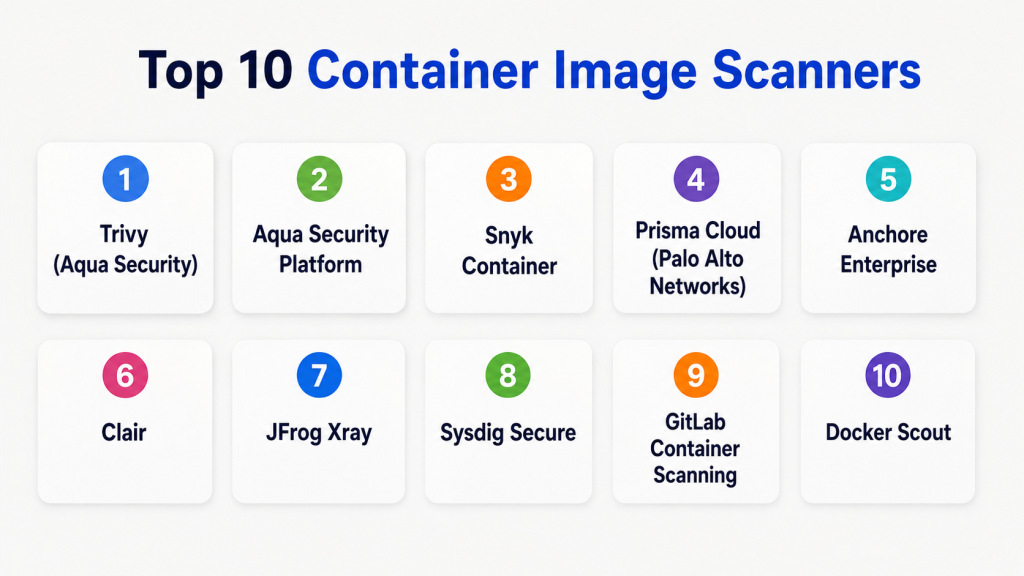
Top 10 Container Image Scanners
1- Trivy (Aqua Security)
Short description:
Trivy is one of the most widely used open-source container image scanners. It detects vulnerabilities in container images, file systems, and infrastructure-as-code configurations.
Key Features
- Container image vulnerability scanning
- SBOM generation support
- Kubernetes integration
- IaC scanning capabilities
- Fast and lightweight scanning engine
- CI/CD pipeline integration
- Multiple format support (Docker, OCI)
Pros
- Extremely fast scanning performance
- Easy to integrate into pipelines
- Strong open-source adoption
Cons
- Limited enterprise governance features
- Requires tuning for large-scale environments
- Advanced reporting requires extensions
Platforms / Deployment
Cloud / Self-hosted
Security & Compliance
- Local scanning support
- Vulnerability database updates
- RBAC: Not publicly stated
- Compliance certifications: Not publicly stated
Integrations & Ecosystem
Trivy integrates well into DevSecOps and Kubernetes workflows.
- Kubernetes
- Docker
- GitHub Actions
- GitLab CI
- Jenkins
- CI/CD pipelines
Support & Community
Strong open-source community with enterprise support through vendor ecosystem.
2- Aqua Security Platform
Short description:
Aqua Security provides a comprehensive container security platform that includes image scanning, runtime protection, and policy enforcement for cloud-native applications.
Key Features
- Container image vulnerability scanning
- Runtime security monitoring
- Policy enforcement for workloads
- Kubernetes security controls
- Malware detection in images
- SBOM generation
- Admission controller support
Pros
- End-to-end container security
- Strong Kubernetes integration
- Enterprise-grade capabilities
Cons
- Complex setup for beginners
- Premium pricing
- Requires operational maturity
Platforms / Deployment
Cloud / Self-hosted / Hybrid
Security & Compliance
- SSO/SAML support
- MFA authentication
- RBAC controls
- Audit logging
- Compliance: Not publicly stated
Integrations & Ecosystem
- Kubernetes
- Docker
- CI/CD pipelines
- Cloud providers
- Git repositories
Support & Community
Strong enterprise support and extensive documentation.
3- Snyk Container
Short description:
Snyk Container extends Snyk’s developer-first security platform to container images, identifying vulnerabilities in base images and dependencies.
Key Features
- Container image scanning
- Base image vulnerability detection
- CI/CD integration
- Automated fix recommendations
- Registry scanning support
- Kubernetes integration
- Developer IDE plugins
Pros
- Developer-friendly interface
- Fast remediation suggestions
- Strong ecosystem integration
Cons
- Requires paid tiers for advanced features
- Can produce alert noise in large environments
- Dependency on Snyk ecosystem
Platforms / Deployment
Cloud / Hybrid
Security & Compliance
- SSO/SAML support
- MFA authentication
- Audit logging
- Compliance frameworks: Not publicly stated
Integrations & Ecosystem
- Docker Hub
- GitHub
- GitLab
- Kubernetes
- Jenkins
- CI/CD pipelines
Support & Community
Strong documentation and enterprise support availability.
4- Prisma Cloud (Palo Alto Networks)
Short description:
Prisma Cloud provides a full cloud-native security platform including advanced container image scanning and runtime protection.
Key Features
- Container image vulnerability scanning
- Cloud workload protection
- Runtime security monitoring
- Compliance enforcement
- SBOM generation
- Policy-based controls
- Multi-cloud security coverage
Pros
- Very strong enterprise security coverage
- Broad cloud-native visibility
- Advanced compliance tools
Cons
- High complexity
- Enterprise-focused pricing
- Requires onboarding effort
Platforms / Deployment
Cloud / Hybrid
Security & Compliance
- RBAC support
- SSO/SAML integration
- Audit logging
- Compliance: Not publicly stated
Integrations & Ecosystem
- Kubernetes
- AWS
- Azure
- Google Cloud
- CI/CD pipelines
Support & Community
Enterprise-grade vendor support.
5- Anchore Enterprise
Short description:
Anchore Enterprise provides container image scanning with a strong focus on compliance, SBOM generation, and policy enforcement.
Key Features
- Deep image inspection
- SBOM generation
- Policy-based security enforcement
- CI/CD integration
- Registry scanning
- Compliance reporting
- Vulnerability tracking
Pros
- Strong compliance capabilities
- Excellent SBOM support
- Enterprise-grade policy engine
Cons
- Requires setup complexity
- Enterprise licensing cost
- Steeper learning curve
Platforms / Deployment
Cloud / Self-hosted
Security & Compliance
- SSO/SAML support
- RBAC controls
- Audit logs
- Compliance frameworks: Not publicly stated
Integrations & Ecosystem
- Kubernetes
- Docker
- GitHub
- GitLab
- Jenkins
Support & Community
Strong enterprise support and documentation.
6- Clair
Short description:
Clair is an open-source container vulnerability scanner that analyzes container images for known security issues using vulnerability databases.
Key Features
- Static container image analysis
- CVE database matching
- API-based scanning
- Registry integration support
- Kubernetes compatibility
- Lightweight architecture
- Open-source extensibility
Pros
- Free and open-source
- Lightweight scanning engine
- Strong Kubernetes usage
Cons
- Limited UI and dashboards
- Requires external integrations
- No advanced remediation features
Platforms / Deployment
Self-hosted
Security & Compliance
- Local scanning capability
- No external dependency requirement
- RBAC: Not publicly stated
Integrations & Ecosystem
- Docker
- Kubernetes
- Container registries
- CI/CD pipelines
Support & Community
Open-source community-driven support.
7- JFrog Xray
Short description:
JFrog Xray provides deep container and artifact scanning integrated with JFrog Artifactory for complete software supply chain security.
Key Features
- Container image scanning
- Binary analysis
- Vulnerability detection
- License compliance checks
- SBOM generation
- CI/CD integration
- Policy enforcement
Pros
- Strong artifact ecosystem integration
- High scalability
- Enterprise-grade visibility
Cons
- Best suited for JFrog ecosystem users
- Enterprise pricing
- Setup complexity
Platforms / Deployment
Cloud / Self-hosted / Hybrid
Security & Compliance
- SSO/SAML
- MFA
- RBAC
- Audit logs
Integrations & Ecosystem
- JFrog Artifactory
- Kubernetes
- Jenkins
- GitHub
- GitLab
Support & Community
Strong enterprise support and mature ecosystem.
8- Sysdig Secure
Short description:
Sysdig Secure provides container image scanning combined with runtime security and Kubernetes threat detection.
Key Features
- Container image scanning
- Runtime threat detection
- Kubernetes security posture management
- Policy enforcement
- SBOM generation
- Compliance reporting
- Vulnerability prioritization
Pros
- Strong runtime + build-time security
- Deep Kubernetes visibility
- Enterprise-ready platform
Cons
- Complex platform
- Premium pricing
- Requires operational maturity
Platforms / Deployment
Cloud / Hybrid
Security & Compliance
- RBAC support
- SSO/SAML integration
- Audit logging
- Compliance: Not publicly stated
Integrations & Ecosystem
- Kubernetes
- Docker
- CI/CD tools
- Cloud providers
Support & Community
Enterprise support with strong documentation.
9- GitLab Container Scanning
Short description:
GitLab provides built-in container image scanning as part of its DevSecOps platform for identifying vulnerabilities in containerized applications.
Key Features
- Container image vulnerability scanning
- CI/CD pipeline integration
- Security dashboards
- Auto remediation suggestions
- Registry scanning support
- Kubernetes integration
- Compliance reporting
Pros
- Fully integrated DevSecOps platform
- Easy CI/CD adoption
- Strong workflow integration
Cons
- Best within GitLab ecosystem
- Advanced features require paid tiers
- Limited standalone usage
Platforms / Deployment
Cloud / Self-hosted
Security & Compliance
- SSO/SAML support
- RBAC controls
- Audit logs
- Compliance: Not publicly stated
Integrations & Ecosystem
- GitLab CI/CD
- Docker
- Kubernetes
- Container registries
Support & Community
Strong enterprise support and active community.
10- Docker Scout
Short description:
Docker Scout is Docker’s native security tool that analyzes container images for vulnerabilities and recommends improvements.
Key Features
- Image vulnerability scanning
- Base image recommendations
- SBOM generation
- Docker Hub integration
- CI/CD pipeline support
- Policy enforcement
- Developer insights
Pros
- Native Docker integration
- Easy developer adoption
- Lightweight workflow integration
Cons
- Docker ecosystem dependency
- Limited enterprise governance features
- Evolving feature set
Platforms / Deployment
Cloud
Security & Compliance
- Docker account-based access control
- Audit logging: Not publicly stated
- Compliance: Not publicly stated
Integrations & Ecosystem
- Docker Desktop
- Docker Hub
- CI/CD pipelines
- GitHub Actions
Support & Community
Strong Docker ecosystem support.
Comparison Table (Top 10)
| Tool Name | Best For | Platform Supported | Deployment | Standout Feature | Public Rating |
|---|---|---|---|---|---|
| Trivy | DevSecOps teams | Multi-platform | Cloud/Self-hosted | Lightweight scanning | N/A |
| Aqua Security | Enterprise container security | Multi-platform | Hybrid | Full security platform | N/A |
| Snyk Container | Developers | Multi-platform | Cloud/Hybrid | Fix recommendations | N/A |
| Prisma Cloud | Enterprise cloud security | Multi-platform | Hybrid | Cloud-native protection | N/A |
| Anchore | Compliance-driven orgs | Multi-platform | Self-hosted | SBOM enforcement | N/A |
| Clair | Open-source users | Multi-platform | Self-hosted | Lightweight scanning engine | N/A |
| JFrog Xray | Artifact security | Multi-platform | Hybrid | Repo-level analysis | N/A |
| Sysdig Secure | Kubernetes security | Multi-platform | Hybrid | Runtime + image security | N/A |
| GitLab Container Scanning | GitLab users | Multi-platform | Cloud/Self-hosted | CI/CD integration | N/A |
| Docker Scout | Docker users | Multi-platform | Cloud | Native Docker insights | N/A |
Evaluation & Scoring of Container Image Scanners
| Tool | Core | Ease | Integrations | Security | Performance | Support | Value | Weighted Total |
|---|---|---|---|---|---|---|---|---|
| Trivy | 9 | 9 | 9 | 9 | 10 | 8 | 10 | 9.10 |
| Aqua Security | 10 | 8 | 10 | 10 | 9 | 9 | 8 | 9.30 |
| Snyk | 9 | 9 | 10 | 9 | 9 | 9 | 8 | 9.05 |
| Prisma Cloud | 10 | 8 | 10 | 10 | 9 | 9 | 7 | 9.10 |
| Anchore | 9 | 8 | 9 | 9 | 9 | 9 | 8 | 8.85 |
| Clair | 8 | 9 | 8 | 8 | 10 | 8 | 10 | 8.50 |
| JFrog Xray | 9 | 8 | 9 | 10 | 9 | 9 | 7 | 8.80 |
| Sysdig Secure | 10 | 8 | 9 | 10 | 9 | 9 | 7 | 9.05 |
| GitLab Scanning | 9 | 9 | 9 | 9 | 9 | 9 | 8 | 8.95 |
| Docker Scout | 8 | 10 | 8 | 8 | 9 | 8 | 9 | 8.45 |
Which Container Image Scanner Is Right for You?
Solo / Freelancer
- Trivy
- Docker Scout
- Clair
SMB
- Snyk Container
- GitLab Container Scanning
- Trivy
Mid-Market
- Anchore
- Sysdig Secure
- JFrog Xray
Enterprise
- Prisma Cloud
- Aqua Security
- Sysdig Secure
- JFrog Xray
Budget vs Premium
- Budget-friendly: Trivy, Clair, Docker Scout
- Premium enterprise: Prisma Cloud, Aqua Security, Sysdig Secure
Feature Depth vs Ease of Use
- Deep enterprise security: Prisma Cloud, Aqua Security
- Easy adoption: Docker Scout, Snyk, Trivy
Integrations & Scalability
- Best integrations: Snyk, GitLab, JFrog
- Best scalability: Prisma Cloud, Sysdig, Aqua Security
Security & Compliance Needs
- Strong compliance focus: Anchore, Prisma Cloud, JFrog Xray
- Developer-first security: Snyk, Docker Scout
Frequently Asked Questions
1- What is a container image scanner?
It is a tool that analyzes container images for vulnerabilities, malware, and misconfigurations before deployment.
2- Why are container image scanners important?
They prevent vulnerable images from reaching production environments and reduce security risks.
3- Do container scanners work with Kubernetes?
Yes, most modern tools integrate with Kubernetes for workload security.
4- What is SBOM in container scanning?
SBOM lists all components inside a container image for security and compliance tracking.
5- Are open-source scanners reliable?
Yes, but they may require configuration and lack enterprise governance features.
6- Do these tools scan runtime containers?
Some tools also provide runtime security monitoring in addition to image scanning.
7- Can container scanners detect malware?
Yes, many advanced tools detect suspicious binaries and malicious content.
8- Do they support CI/CD pipelines?
Yes, most tools integrate directly into CI/CD workflows.
9- What is the biggest challenge in container scanning?
Managing false positives and scaling scans across large environments.
10- Are these tools cloud-specific?
No, most support multi-cloud and hybrid environments.
Conclusion
Container image scanners are essential for securing modern cloud-native applications. As organizations adopt Kubernetes and microservices architectures, ensuring container security before deployment is critical to preventing vulnerabilities in production. While tools like Trivy, Snyk, and Docker Scout offer developer-friendly experiences, enterprise solutions like Prisma Cloud, Aqua Security, and Sysdig Secure provide deep runtime protection and governance capabilities. The best choice depends on your infrastructure complexity, security maturity, and DevOps workflows.The recommended approach is to shortlist 2–3 tools, integrate them into your CI/CD pipeline, evaluate scan accuracy, and validate performance under real workloads before scaling across the organization.

Find Trusted Cardiac Hospitals
Compare heart hospitals by city and services — all in one place.
Explore Hospitals
Container image scanning is only part of the security equation, since many vulnerabilities originate from outdated base images and unused dependencies that accumulate over time. Organizations often gain better results by combining scanning with automated image lifecycle management and regular rebuild strategies.