Introduction
Cross-browser Testing Platforms are specialized tools that enable developers and QA teams to ensure web applications function consistently across multiple browsers, versions, and operating systems. In plain English, these platforms allow teams to verify that a website or web app looks and behaves as intended regardless of the user’s browser choice. as web traffic becomes increasingly diverse and hybrid work pushes multi-platform usage, cross-browser testing is critical for maintaining high-quality user experiences and reducing post-release bugs.
Real-world use cases include:
- Functional validation: Ensuring web applications work consistently across Chrome, Firefox, Safari, Edge, and other browsers.
- UI/UX verification: Detecting layout inconsistencies, rendering issues, or responsive design problems.
- Regression testing: Automating repeated test scripts across browser versions for each deployment.
- Accessibility checks: Validating compliance with accessibility standards across browsers.
- Integration testing: Ensuring web apps interact correctly with third-party scripts, APIs, or plugins in diverse browser environments.
What buyers should evaluate:
- Browser and OS coverage
- Automation support and CI/CD integration
- Parallel test execution for faster results
- Visual testing and screenshot comparison
- Performance and load testing capabilities
- Security and compliance
- Analytics and reporting
- Ease of onboarding and usability
- Scalability for enterprise deployments
- Pricing models and licensing flexibility
Best for: Web developers, QA engineers, UX designers, and enterprises that rely on consistent web performance across browsers and platforms.
Not ideal for: Small websites with limited audience diversity, or organizations whose web apps target a single browser environment.
Key Trends in Cross-browser Testing Platforms
- AI-driven test generation to automatically create and maintain test scripts.
- Cloud-based device and browser farms for scalable parallel testing.
- Integration with CI/CD pipelines for continuous testing during development.
- Enhanced visual testing for UI/UX validation.
- Accessibility testing built-in for compliance with WCAG standards.
- Performance monitoring integrated with functional tests.
- Cross-platform support for desktop, mobile, and hybrid browsers.
- Advanced reporting and analytics dashboards for actionable insights.
- Security and compliance certifications including SOC 2, ISO 27001, GDPR.
- Flexible subscription and usage-based pricing for SMBs and enterprises.
How We Selected These Tools (Methodology)
- Evaluated market adoption and enterprise mindshare.
- Reviewed feature completeness for automated and manual testing.
- Assessed reliability, uptime, and performance consistency.
- Checked security features and compliance certifications.
- Analyzed integration capabilities with CI/CD, automation frameworks, and analytics.
- Considered suitability across company sizes: SMB to enterprise.
- Reviewed parallel testing and scalability options.
- Examined usability and onboarding experience.
- Considered vendor support, documentation, and community engagement.
- Evaluated pricing models for enterprise and small teams.
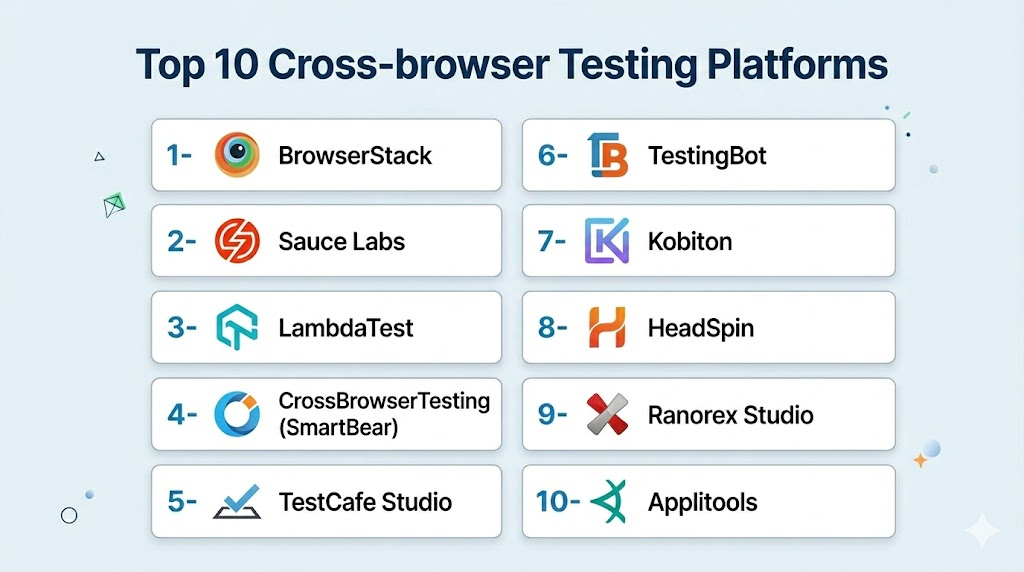
Top 10 Cross-browser Testing Platforms
1- BrowserStack
Short description: BrowserStack provides instant access to real browsers and devices for web and mobile testing. It is ideal for developers and QA teams needing automated and manual cross-browser testing at scale.
Key Features
- Real browser cloud on Windows, macOS, iOS, Android
- Automated Selenium and Appium test execution
- Live interactive testing and debugging
- Parallel testing for faster results
- Visual regression and screenshot comparison
- CI/CD integration with Jenkins, GitHub Actions
Pros
- Extensive browser and OS coverage
- Easy integration with testing frameworks
Cons
- Premium pricing for enterprise plans
- Limited offline network simulation
Platforms / Deployment
- Windows / macOS / Linux / iOS / Android
- Cloud
Security & Compliance
- SSO, encryption, RBAC
- SOC 2, GDPR
Integrations & Ecosystem
Integrates with CI/CD tools and popular issue trackers.
- Jenkins / GitHub Actions
- Jira / Slack
- Selenium / Appium
Support & Community
Responsive enterprise support and active user forums.
2- Sauce Labs
Short description: Sauce Labs provides automated and live testing across browsers and mobile devices. It suits enterprises and QA teams requiring scalable cross-browser test automation.
Key Features
- Real and virtual browser/cloud device testing
- Automated Selenium, Appium, and Cypress tests
- Parallel execution for speed
- Visual testing with screenshot comparison
- CI/CD pipeline support
Pros
- Large device and browser coverage
- Enterprise-grade scalability
Cons
- Complexity for small teams
- Higher cost for large-scale usage
Platforms / Deployment
- Windows / macOS / Linux / iOS / Android
- Cloud
Security & Compliance
- Not publicly stated
Integrations & Ecosystem
- CI/CD pipelines
- Test automation frameworks
- Slack / Jira
Support & Community
Enterprise support and knowledge base available.
3- LambdaTest
Short description: LambdaTest is a cloud-based platform for automated and manual cross-browser testing. It is ideal for teams looking for scalable browser coverage with CI/CD integration.
Key Features
- Real-time and automated browser testing
- Selenium, Cypress, and Playwright support
- Visual regression testing
- Parallel test execution
- CI/CD integration
Pros
- Extensive browser coverage
- Affordable enterprise plans
Cons
- Advanced analytics features require higher plans
- Learning curve for new users
Platforms / Deployment
- Windows / macOS / Linux / iOS / Android
- Cloud
Security & Compliance
- Not publicly stated
Integrations & Ecosystem
- CI/CD pipelines
- Slack / Jira / GitHub
Support & Community
Responsive support; growing community.
4- CrossBrowserTesting (SmartBear)
Short description: CrossBrowserTesting enables live and automated testing across multiple browsers and devices. Suitable for QA teams seeking both manual and automated browser tests.
Key Features
- Live testing on real browsers
- Automated Selenium and Appium tests
- Screenshot and visual regression testing
- Parallel execution
- CI/CD integration
Pros
- Large browser/device coverage
- Strong visual regression tools
Cons
- UI can be overwhelming for beginners
- Enterprise features require premium plans
Platforms / Deployment
- Windows / macOS / Linux / iOS / Android
- Cloud
Security & Compliance
- Not publicly stated
Integrations & Ecosystem
- CI/CD tools
- Slack / Jira / Test management tools
Support & Community
Official support and knowledge base; active forums.
5- TestCafe Studio
Short description: TestCafe Studio is an automation-focused cross-browser testing platform for web apps. Best suited for teams wanting easy scriptless automation with CI/CD integration.
Key Features
- Automated browser testing
- Scriptless test creation
- Parallel test execution
- CI/CD integration
- Visual testing
Pros
- Developer-friendly and easy to use
- Supports multiple browsers without setup
Cons
- Limited device testing for mobile browsers
- Advanced features require licensing
Platforms / Deployment
- Windows / macOS / Linux
- Cloud / Self-hosted
Security & Compliance
- Not publicly stated
Integrations & Ecosystem
- CI/CD tools
- GitHub / Jira
- Slack notifications
Support & Community
Active support and documentation; developer forums available.
6- TestingBot
Short description: TestingBot offers real browser cloud testing and automation for web apps. Ideal for teams requiring both browser and device coverage in automated workflows.
Key Features
- Real device and browser cloud
- Automated Selenium, Appium testing
- Parallel test execution
- Visual regression testing
- CI/CD integration
Pros
- Supports multiple platforms
- Affordable for SMBs
Cons
- Device pool smaller than competitors
- Limited advanced enterprise analytics
Platforms / Deployment
- Windows / macOS / Linux / iOS / Android
- Cloud
Security & Compliance
- Not publicly stated
Integrations & Ecosystem
- CI/CD pipelines
- Jira / Slack
- Automation frameworks
Support & Community
Documentation available; responsive support team.
7- Kobiton
Short description: Kobiton is a device and browser cloud offering manual and automated cross-browser testing. Best for teams needing real device access alongside browser testing.
Key Features
- Manual and automated testing
- Selenium and Appium support
- Parallel execution
- Test analytics
- CI/CD integration
Pros
- Live device debugging
- Affordable enterprise options
Cons
- Device inventory smaller than larger platforms
- Limited advanced analytics
Platforms / Deployment
- iOS / Android / Web
- Cloud
Security & Compliance
- Not publicly stated
Integrations & Ecosystem
- CI/CD pipelines
- Slack / Jira
- Test automation frameworks
Support & Community
Responsive support; growing user community.
8- HeadSpin
Short description: HeadSpin provides a global cloud for cross-browser and device testing with performance monitoring. Ideal for enterprises testing apps across geographies and network conditions.
Key Features
- Real device and browser testing
- Performance and network testing
- Automated test execution
- Parallel testing
- Analytics dashboards
Pros
- Excellent for performance testing
- Global device and browser access
Cons
- Higher pricing for SMBs
- Setup learning curve
Platforms / Deployment
- Windows / macOS / Linux / iOS / Android
- Cloud
Security & Compliance
- Not publicly stated
Integrations & Ecosystem
- CI/CD pipelines
- Test automation frameworks
- Analytics tools
Support & Community
Enterprise support; documentation comprehensive.
9- Ranorex Studio
Short description: Ranorex Studio offers automated cross-browser testing with cloud execution. Suited for teams already using Ranorex for functional testing seeking scalable browser coverage.
Key Features
- Automated browser testing
- Cloud execution support
- CI/CD integration
- Parallel testing
- Reporting and analytics
Pros
- Integrates with Ranorex functional testing
- Cloud scalability
Cons
- Requires Ranorex license
- Manual testing limited
Platforms / Deployment
- Windows / macOS / Linux / iOS / Android
- Cloud
Security & Compliance
- Not publicly stated
Integrations & Ecosystem
- CI/CD pipelines
- Jira / Slack
- Test automation frameworks
Support & Community
Enterprise support; documentation available.
10- Applitools
Short description: Applitools provides visual testing and AI-powered cross-browser validation. Best suited for teams focusing on UI/UX consistency across browsers and devices.
Key Features
- Visual regression testing
- AI-powered anomaly detection
- Cross-browser and responsive testing
- CI/CD integration
- Parallel test execution
Pros
- Strong visual validation capabilities
- AI reduces manual checking
Cons
- Limited functional test automation
- Enterprise pricing
Platforms / Deployment
- Windows / macOS / Linux / iOS / Android
- Cloud
Security & Compliance
- Not publicly stated
Integrations & Ecosystem
- CI/CD pipelines
- Selenium / Appium
- Slack / Jira
Support & Community
Enterprise support; active documentation and forums.
Comparison Table (Top 10)
| Tool Name | Best For | Platform(s) Supported | Deployment | Standout Feature | Public Rating |
|---|---|---|---|---|---|
| BrowserStack | Cross-browser testing | Windows / macOS / Linux / iOS / Android | Cloud | Real device & browser cloud | N/A |
| Sauce Labs | Automation + live testing | Windows / macOS / Linux / iOS / Android | Cloud | Parallel execution | N/A |
| LambdaTest | CI/CD integrated testing | Windows / macOS / Linux / iOS / Android | Cloud | Automated & visual testing | N/A |
| CrossBrowserTesting | Manual + automated testing | Windows / macOS / Linux / iOS / Android | Cloud | Visual regression | N/A |
| TestCafe Studio | Scriptless automation | Windows / macOS / Linux | Cloud / Self-hosted | Scriptless test creation | N/A |
| TestingBot | SMB & enterprise testing | Windows / macOS / Linux / iOS / Android | Cloud | Combined browser/device cloud | N/A |
| Kobiton | Manual + automated testing | iOS / Android / Web | Cloud | Live device debugging | N/A |
| HeadSpin | Performance + geo testing | Windows / macOS / Linux / iOS / Android | Cloud | Global device/browser access | N/A |
| Ranorex Studio | Functional + cloud testing | Windows / macOS / Linux / iOS / Android | Cloud | Ranorex integration | N/A |
| Applitools | Visual validation | Windows / macOS / Linux / iOS / Android | Cloud | AI-powered visual testing | N/A |
Evaluation & Scoring of Cross-browser Testing Platforms
| Tool Name | Core (25%) | Ease (15%) | Integrations (15%) | Security (10%) | Performance (10%) | Support (10%) | Value (15%) | Weighted Total (0–10) |
|---|---|---|---|---|---|---|---|---|
| BrowserStack | 9 | 8 | 9 | 8 | 9 | 8 | 8 | 8.5 |
| Sauce Labs | 9 | 7 | 8 | 8 | 9 | 8 | 7 | 8.2 |
| LambdaTest | 8 | 8 | 8 | 7 | 8 | 7 | 8 | 7.9 |
| CrossBrowserTesting | 8 | 7 | 7 | 7 | 8 | 7 | 7 | 7.5 |
| TestCafe Studio | 7 | 8 | 7 | 7 | 7 | 7 | 7 | 7.2 |
| TestingBot | 7 | 8 | 7 | 7 | 7 | 7 | 7 | 7.1 |
| Kobiton | 7 | 8 | 7 | 7 | 7 | 7 | 7 | 7.1 |
| HeadSpin | 8 | 7 | 7 | 7 | 8 | 7 | 7 | 7.5 |
| Ranorex Studio | 7 | 7 | 7 | 7 | 7 | 7 | 7 | 7.0 |
| Applitools | 8 | 7 | 7 | 7 | 8 | 7 | 7 | 7.4 |
Which Cross-browser Testing Platform Tool Is Right for You?
Solo / Freelancer
- LambdaTest, TestCafe Studio, or Kobiton provide cost-effective options for small teams or independent developers.
SMB
- BrowserStack, TestingBot, and Sauce Labs balance affordability, automation, and device/browser coverage.
Mid-Market
- HeadSpin, Kobiton, and CrossBrowserTesting offer enterprise-grade parallel execution and CI/CD integration.
Enterprise
- BrowserStack, Sauce Labs, and HeadSpin provide full scalability, extensive browser/device access, and advanced analytics.
Budget vs Premium
- Budget-friendly: Kobiton, TestCafe Studio, TestingBot
- Premium: BrowserStack, Sauce Labs, HeadSpin, Applitools
Feature Depth vs Ease of Use
- Developer-friendly: LambdaTest, TestCafe Studio, Kobiton
- Enterprise-grade: BrowserStack, Sauce Labs, HeadSpin, Applitools
Integrations & Scalability
- Choose tools that integrate with CI/CD pipelines, test frameworks, and analytics platforms for scalable testing.
Security & Compliance Needs
- Enterprise-focused platforms with SSO, encryption, and audit logs provide better compliance assurance.
Frequently Asked Questions (FAQs)
- Which browsers are supported?
Most platforms support Chrome, Firefox, Safari, Edge, and multiple versions. Many also offer mobile browser testing for iOS and Android. - Can I automate tests?
Yes, major tools support Selenium, Appium, Cypress, and Playwright for automated regression and functional testing. - Is manual testing possible?
Yes, platforms like BrowserStack, CrossBrowserTesting, and Kobiton allow live manual testing on real browsers and devices. - Do these platforms integrate with CI/CD pipelines?
Yes, they integrate with Jenkins, GitHub Actions, GitLab CI, and other automation tools to run tests during deployments
. - Can I perform visual testing?
Yes, tools like Applitools, BrowserStack, and LambdaTest offer visual regression and screenshot comparison for UI validation. - Are security features available?
Enterprise platforms include SSO, RBAC, encryption, and some offer SOC 2 or GDPR compliance. - Can I run parallel tests?
Yes, most platforms support parallel execution across multiple browsers/devices to speed up testing cycles. - What is the typical pricing model?
Pricing ranges from subscription-based to usage-based, with enterprise plans for large parallel test execution. - Do these platforms provide analytics and reporting?
Yes, dashboards report test success rates, screenshots, error logs, and visual diffs to improve QA workflows. - How to choose the right platform?
Consider browser/device coverage, automation support, CI/CD integration, scalability, budget, and team size.
Conclusion
Cross-browser testing platforms are essential for delivering consistent web experiences across browsers and devices. Small teams can leverage LambdaTest, TestCafe Studio, or Kobiton for cost-effective automation and manual testing. Mid-market organizations benefit from BrowserStack, TestingBot, or HeadSpin for parallel execution and CI/CD integration. Enterprise teams should prioritize BrowserStack, Sauce Labs, or HeadSpin for scalability, analytics, and extensive browser/device coverage. Teams should shortlist 2–3 platforms, run pilots, and validate usability and security before full-scale adoption. The right platform ensures faster releases, fewer defects, and improved end-user satisfaction.

Find Trusted Cardiac Hospitals
Compare heart hospitals by city and services — all in one place.
Explore Hospitals
I am learning about cross-browser testing, and this comparison helped me understand how different platforms can ensure websites work smoothly across multiple browsers and devices.