Introduction
Drug discovery platforms help pharmaceutical companies, biotechnology firms, research institutions, and computational biology teams accelerate the identification, validation, and optimization of potential drug candidates. These platforms combine artificial intelligence, molecular modeling, cheminformatics, laboratory automation, biological analytics, and cloud computing to streamline modern drug development workflows. drug discovery is becoming increasingly data-driven and AI-assisted. Rising R&D costs, growing biological complexity, pressure to reduce clinical failure rates, and the need for faster therapeutic innovation are pushing organizations toward integrated drug discovery ecosystems. Modern platforms now support predictive analytics, generative AI modeling, automated compound screening, multi-omics analysis, and collaborative cloud-based research environments. As pharmaceutical pipelines become more sophisticated, organizations require scalable platforms capable of managing large biological datasets while improving decision-making and accelerating scientific workflows.
Real-World Use Cases Include:
- AI-assisted molecule discovery and optimization
- Target identification and validation
- Virtual screening and molecular docking
- Biomarker discovery and omics analysis
- Collaborative pharmaceutical research workflows
Evaluation Criteria for Buyers:
- AI and machine learning capabilities
- Molecular modeling accuracy
- Scalability for large datasets
- Integration with laboratory systems
- Cloud-native collaboration support
- Workflow automation depth
- Security and governance controls
- Computational performance
- Regulatory and compliance readiness
- Ease of use for scientific teams
Best for: pharmaceutical companies, biotechnology firms, academic research institutions, computational biology teams, CROs, and enterprise life sciences organizations.
Not ideal for: organizations with minimal computational research requirements or teams needing only lightweight laboratory management tools.
Key Trends in Drug Discovery Platforms
- Generative AI is accelerating molecule design workflows.
- AI-assisted target prediction is improving research efficiency.
- Multi-omics integration is becoming increasingly important.
- Cloud-native scientific collaboration is expanding rapidly.
- Quantum computing experimentation is emerging in advanced research.
- Laboratory automation integration is becoming more sophisticated.
- Predictive toxicology and safety analytics are improving.
- Real-time research collaboration environments are growing.
- Open scientific data ecosystems are expanding globally.
- GPU-accelerated computing is improving simulation performance.
How We Selected These Tools
The following drug discovery platforms were selected using practical scientific and enterprise evaluation criteria.
- Market adoption across life sciences organizations
- Breadth of computational biology capabilities
- AI and machine learning innovation
- Molecular modeling and simulation quality
- Workflow automation support
- Integration ecosystem maturity
- Scalability across research environments
- Cloud deployment flexibility
- Reliability and computational performance
- Long-term innovation and scientific relevance
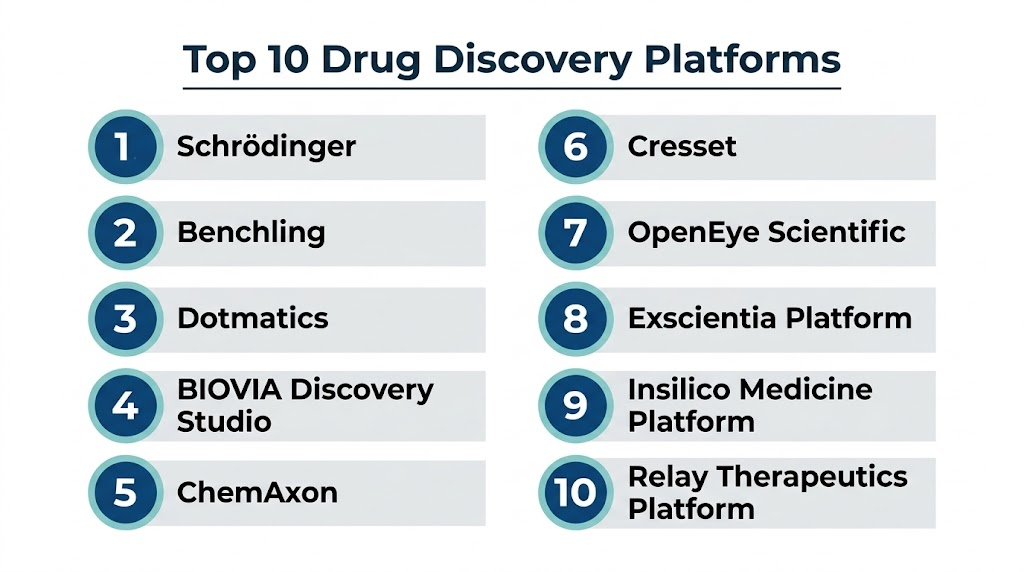
Top 10 Drug Discovery Platforms
1- Schrödinger
Short description: Schrödinger is one of the most widely recognized computational drug discovery platforms for molecular modeling, simulation, and AI-assisted drug design.
Key Features
- Molecular docking and simulation
- AI-assisted drug design
- Predictive analytics
- Protein structure modeling
- Virtual screening workflows
- Cloud computing support
- Scientific collaboration tools
Pros
- Industry-leading molecular modeling
- Strong computational performance
- Broad pharmaceutical adoption
Cons
- Premium enterprise pricing
- Complex onboarding for beginners
- High-performance infrastructure requirements
Platforms / Deployment
Web / Windows / Linux / Cloud / Hybrid
Security & Compliance
Access controls, audit workflows, encryption, and governance capabilities supported.
Integrations & Ecosystem
Schrödinger integrates broadly with scientific research ecosystems and laboratory workflows.
- APIs
- Laboratory systems
- HPC environments
- Scientific databases
- Analytics tools
Support & Community
Strong enterprise and academic research ecosystem with extensive scientific documentation.
2- Benchling
Short description: Benchling provides cloud-native R&D collaboration, biological data management, and scientific workflow automation for biotechnology and pharmaceutical teams.
Key Features
- Scientific data management
- Research collaboration tools
- Workflow automation
- Biological sequence analysis
- Cloud-native platform
- Laboratory integrations
- AI-assisted analytics
Pros
- Excellent collaboration workflows
- Strong usability
- Modern cloud-native architecture
Cons
- Enterprise pricing can scale quickly
- Advanced customization requires planning
- Smaller organizations may not require full feature depth
Platforms / Deployment
Web / Cloud
Security & Compliance
SSO, RBAC, audit trails, and governance controls supported.
Integrations & Ecosystem
Benchling integrates extensively with laboratory and research environments.
- APIs
- ELN systems
- LIMS platforms
- Scientific databases
- Automation systems
Support & Community
Large biotechnology and life sciences customer ecosystem.
3- Dotmatics
Short description: Dotmatics delivers integrated scientific R&D software for pharmaceutical and life sciences organizations focused on collaborative drug discovery.
Key Features
- Scientific data analytics
- AI-assisted research workflows
- Molecular modeling
- Laboratory workflow management
- Cloud collaboration
- Data visualization
- Workflow orchestration
Pros
- Strong research workflow integration
- Good scalability
- Flexible deployment capabilities
Cons
- Enterprise implementation complexity
- Advanced onboarding requirements
- Pricing transparency limited
Platforms / Deployment
Web / Cloud / Hybrid
Security & Compliance
Governance workflows, RBAC, and audit capabilities supported.
Integrations & Ecosystem
Dotmatics supports broad interoperability across scientific environments.
- APIs
- ELN platforms
- Analytics tools
- Research databases
- Automation systems
Support & Community
Growing pharmaceutical and biotech adoption globally.
4- BIOVIA Discovery Studio
Short description: BIOVIA Discovery Studio supports molecular modeling, simulation, and computational biology research workflows for advanced scientific environments.
Key Features
- Molecular dynamics simulation
- Protein modeling
- Drug target analysis
- Virtual screening
- Predictive analytics
- Research visualization
- Scientific collaboration
Pros
- Advanced scientific modeling depth
- Strong simulation capabilities
- Enterprise scientific scalability
Cons
- Steeper learning curve
- High computational requirements
- Premium licensing model
Platforms / Deployment
Windows / Linux / Cloud / Hybrid
Security & Compliance
Governance and enterprise access management supported.
Integrations & Ecosystem
BIOVIA integrates across enterprise scientific ecosystems and research infrastructure.
- APIs
- HPC systems
- Scientific databases
- Visualization tools
- Laboratory systems
Support & Community
Well-established scientific and pharmaceutical user community.
5- ChemAxon
Short description: ChemAxon provides cheminformatics tools, molecular analytics, and chemical data management capabilities for drug discovery teams.
Key Features
- Chemical structure analysis
- Molecular property prediction
- Cheminformatics workflows
- Data visualization
- AI-assisted modeling
- Scientific APIs
- Compound database support
Pros
- Strong cheminformatics capabilities
- Flexible APIs
- Good scalability for scientific datasets
Cons
- Advanced scientific expertise required
- Enterprise licensing complexity
- Visualization workflows may vary
Platforms / Deployment
Web / Windows / Linux / Cloud
Security & Compliance
Role-based access and governance workflows available.
Integrations & Ecosystem
ChemAxon integrates with laboratory, cheminformatics, and computational research systems.
- APIs
- Scientific databases
- Research workflows
- Data analytics platforms
- Laboratory tools
Support & Community
Strong global scientific research ecosystem.
6- Cresset
Short description: Cresset focuses on molecular field technology and computational chemistry tools for predictive drug discovery research.
Key Features
- Molecular field analysis
- Predictive chemistry modeling
- Virtual screening
- Structure optimization
- Scientific visualization
- Computational chemistry workflows
- AI-assisted analytics
Pros
- Strong computational chemistry focus
- Good predictive modeling tools
- Flexible scientific workflows
Cons
- Specialized research orientation
- Smaller enterprise ecosystem
- Limited general-purpose laboratory functionality
Platforms / Deployment
Windows / Linux / Cloud
Security & Compliance
Access management and governance workflows supported.
Integrations & Ecosystem
Cresset integrates with computational chemistry and molecular research environments.
- APIs
- Scientific databases
- Modeling systems
- Visualization tools
- Research workflows
Support & Community
Established computational chemistry user base.
7- OpenEye Scientific
Short description: OpenEye Scientific provides molecular modeling and cheminformatics software for pharmaceutical and computational biology research teams.
Key Features
- Molecular docking
- Virtual screening
- Cheminformatics analytics
- GPU acceleration
- Scientific APIs
- Molecular visualization
- Data analytics
Pros
- Strong scientific performance
- High-quality molecular modeling
- GPU optimization support
Cons
- Technical expertise required
- Enterprise adoption varies
- Advanced onboarding needed
Platforms / Deployment
Linux / Cloud / Hybrid
Security & Compliance
Governance and access controls supported.
Integrations & Ecosystem
OpenEye integrates across advanced computational biology environments.
- APIs
- HPC systems
- Research databases
- Scientific workflows
- Visualization systems
Support & Community
Strong scientific and academic research presence.
8- Exscientia Platform
Short description: Exscientia combines AI-driven drug design and computational biology workflows to accelerate pharmaceutical research programs.
Key Features
- AI-assisted molecule generation
- Predictive analytics
- Drug optimization workflows
- Data-driven target analysis
- Scientific automation
- Collaborative research tools
- Cloud-native workflows
Pros
- Strong AI innovation
- Modern computational workflows
- Advanced predictive analytics
Cons
- Enterprise-focused approach
- Limited transparency for smaller buyers
- Specialized deployment models
Platforms / Deployment
Web / Cloud
Security & Compliance
Governance workflows and enterprise security controls supported.
Integrations & Ecosystem
Exscientia integrates AI-driven research workflows with scientific ecosystems.
- APIs
- Analytics tools
- Research databases
- Laboratory systems
- Cloud environments
Support & Community
Growing AI-driven pharmaceutical ecosystem.
9- Insilico Medicine Platform
Short description: Insilico Medicine focuses on generative AI, biological modeling, and predictive analytics for next-generation drug discovery.
Key Features
- Generative AI modeling
- Biomarker analysis
- Predictive toxicology
- Target discovery
- Multi-omics analytics
- Scientific data modeling
- AI-assisted workflows
Pros
- Advanced AI innovation
- Strong predictive analytics
- Modern scientific workflows
Cons
- Emerging platform maturity
- Specialized research orientation
- Enterprise scalability evolving
Platforms / Deployment
Web / Cloud
Security & Compliance
Enterprise governance and access management workflows supported.
Integrations & Ecosystem
Insilico Medicine supports AI-focused research integrations and scientific analytics.
- APIs
- Research databases
- Omics platforms
- Analytics tools
- Scientific workflows
Support & Community
Rapidly growing AI-driven life sciences ecosystem.
10- Relay Therapeutics Platform
Short description: Relay Therapeutics combines computational modeling and dynamic protein analysis to support precision drug discovery workflows.
Key Features
- Protein motion modeling
- AI-assisted analytics
- Computational chemistry workflows
- Predictive drug design
- Molecular simulation
- Data analytics
- Scientific collaboration tools
Pros
- Innovative protein modeling
- Strong scientific depth
- Modern computational workflows
Cons
- Specialized platform focus
- Smaller deployment ecosystem
- Advanced scientific expertise required
Platforms / Deployment
Web / Cloud / Hybrid
Security & Compliance
Governance workflows and enterprise controls available.
Integrations & Ecosystem
Relay Therapeutics integrates computational biology workflows with scientific research systems.
- APIs
- Modeling environments
- Analytics tools
- Research systems
- Cloud platforms
Support & Community
Emerging computational biology ecosystem with growing pharmaceutical interest.
Comparison Table
| Tool Name | Best For | Platform(s) Supported | Deployment | Standout Feature | Public Rating |
|---|---|---|---|---|---|
| Schrödinger | Enterprise molecular modeling | Web, Windows, Linux | Cloud / Hybrid | Advanced simulation engine | N/A |
| Benchling | Collaborative biotech R&D | Web | Cloud | Scientific collaboration workflows | N/A |
| Dotmatics | Integrated scientific R&D | Web | Cloud / Hybrid | Unified scientific ecosystem | N/A |
| BIOVIA Discovery Studio | Computational biology research | Windows, Linux | Hybrid | Molecular simulation depth | N/A |
| ChemAxon | Cheminformatics workflows | Web, Windows, Linux | Cloud | Chemical data analytics | N/A |
| Cresset | Predictive computational chemistry | Windows, Linux | Cloud | Molecular field technology | N/A |
| OpenEye Scientific | GPU-accelerated modeling | Linux | Hybrid | High-performance docking | N/A |
| Exscientia Platform | AI-driven drug design | Web | Cloud | AI-assisted molecule generation | N/A |
| Insilico Medicine Platform | Generative AI discovery | Web | Cloud | AI-based biomarker analysis | N/A |
| Relay Therapeutics Platform | Protein dynamics modeling | Web | Hybrid | Dynamic protein simulation | N/A |
Evaluation & Scoring of Drug Discovery Platforms
| Tool Name | Core 25% | Ease 15% | Integrations 15% | Security 10% | Performance 10% | Support 10% | Value 15% | Weighted Total |
|---|---|---|---|---|---|---|---|---|
| Schrödinger | 10 | 7 | 9 | 8 | 10 | 9 | 6 | 8.55 |
| Benchling | 8 | 9 | 9 | 8 | 8 | 8 | 7 | 8.10 |
| Dotmatics | 8 | 8 | 8 | 8 | 8 | 8 | 7 | 7.85 |
| BIOVIA Discovery Studio | 9 | 6 | 8 | 8 | 9 | 8 | 6 | 7.80 |
| ChemAxon | 8 | 7 | 8 | 7 | 8 | 7 | 8 | 7.65 |
| Cresset | 7 | 7 | 7 | 7 | 8 | 7 | 8 | 7.30 |
| OpenEye Scientific | 8 | 6 | 7 | 7 | 9 | 7 | 7 | 7.40 |
| Exscientia Platform | 8 | 8 | 7 | 7 | 8 | 7 | 7 | 7.50 |
| Insilico Medicine Platform | 8 | 8 | 7 | 7 | 8 | 7 | 7 | 7.50 |
| Relay Therapeutics Platform | 7 | 7 | 7 | 7 | 8 | 7 | 7 | 7.20 |
Which Drug Discovery Platform Is Right for You?
Solo / Freelancer
Independent scientific researchers and smaller research teams often benefit from lightweight cloud-native platforms with flexible collaboration and easier onboarding workflows.
SMB
Small biotechnology companies usually prioritize scalability, AI-assisted workflows, operational flexibility, and manageable deployment complexity.
Mid-Market
Mid-sized pharmaceutical organizations often require balanced computational performance, interoperability, laboratory integrations, and scientific collaboration support.
Enterprise
Large pharmaceutical companies typically prioritize advanced molecular modeling, global scalability, AI-assisted analytics, governance controls, and HPC integration support.
Budget vs Premium
Premium platforms deliver deeper scientific modeling, broader integrations, and advanced AI capabilities, while smaller organizations may focus more on usability and operational efficiency.
Feature Depth vs Ease of Use
Highly advanced molecular modeling platforms provide exceptional scientific depth but often require specialized expertise and onboarding investment.
Integrations & Scalability
Drug discovery workflows increasingly depend on interoperability with ELN systems, LIMS platforms, omics databases, analytics tools, and HPC environments.
Security & Compliance Needs
Scientific organizations should carefully evaluate governance controls, research data security, access management, audit capabilities, and cloud deployment standards.
Frequently Asked Questions FAQs
1. What is a drug discovery platform?
Drug discovery platforms help researchers identify, analyze, optimize, and validate potential therapeutic compounds using computational biology, AI, molecular modeling, and scientific data analytics. These systems accelerate pharmaceutical R&D workflows significantly. Modern platforms also improve collaboration across distributed scientific teams.
2. Who uses drug discovery platforms?
Pharmaceutical companies, biotechnology firms, CROs, academic research institutions, and computational biology teams commonly use drug discovery platforms. Researchers, medicinal chemists, bioinformaticians, and laboratory scientists rely on these systems daily. Enterprise life sciences adoption continues expanding globally.
3. Why are AI capabilities becoming important in drug discovery?
AI helps researchers analyze biological data faster, predict molecular interactions, optimize compounds, and identify therapeutic targets more efficiently. AI-assisted workflows can reduce research timelines and improve experimental decision-making significantly. Generative AI is becoming increasingly influential in pharmaceutical R&D.
4. What features matter most in a drug discovery platform?
Important capabilities include molecular modeling, AI-assisted analytics, cheminformatics support, workflow automation, cloud collaboration, predictive toxicology, omics integration, scalability, scientific visualization, and interoperability with laboratory systems. Computational performance also matters heavily. Research usability should not be overlooked.
5. Are cloud-native drug discovery platforms replacing on-premises systems?
Cloud-native platforms are growing rapidly because they support collaboration, scalability, distributed computing, and faster deployment. However, many enterprise pharmaceutical organizations still use hybrid and HPC environments for sensitive or computationally intensive workflows. Hybrid infrastructure remains common across large research operations.
6. How important are integrations in scientific research platforms?
Integrations are critical because scientific organizations often depend on ELN systems, LIMS platforms, omics databases, HPC environments, and laboratory automation tools simultaneously. Poor interoperability can create workflow bottlenecks and fragmented research environments. Strong integration ecosystems improve operational efficiency considerably.
7. What are common implementation challenges?
Common challenges include complex data migration, scientific workflow customization, computational infrastructure planning, integration management, onboarding requirements, and governance controls. Organizations also frequently underestimate long-term scalability and scientific collaboration requirements. Pilot implementations help reduce deployment risks significantly.
8. How long does deployment usually take?
Deployment timelines vary depending on scientific complexity, computational infrastructure, workflow customization, integrations, and organizational scale. Enterprise pharmaceutical deployments often require phased rollouts and extensive governance planning. Smaller research teams may deploy cloud-native systems more quickly.
9. Can smaller biotechnology companies benefit from advanced drug discovery platforms?
Yes, many modern cloud-native platforms are becoming more accessible for smaller biotechnology firms and emerging research organizations. AI-assisted workflows and scalable cloud infrastructure are lowering barriers to advanced computational drug discovery capabilities. Cost management remains an important evaluation factor.
10. How should organizations choose the right drug discovery platform?
Organizations should evaluate scientific workflows, AI capabilities, molecular modeling depth, integrations, scalability, usability, governance requirements, and computational infrastructure carefully. No single platform fits every research environment equally well. Pilot testing and scientific validation are strongly recommended before enterprise deployment.
Conclusion
Drug discovery platforms are transforming how pharmaceutical companies, biotechnology firms, and scientific research organizations identify and develop next-generation therapeutics. As AI-assisted analytics, molecular modeling, cloud-native collaboration, and computational biology continue evolving rapidly, organizations increasingly depend on integrated scientific ecosystems to accelerate innovation while managing rising research complexity. The best platform ultimately depends on research goals, computational requirements, scientific expertise, operational scale, and long-term collaboration needs. Enterprise pharmaceutical organizations may prioritize Schrödinger, BIOVIA Discovery Studio, or Benchling for scalability and scientific depth, while AI-focused research teams may gravitate toward Exscientia or Insilico Medicine. Before selecting a platform, organizations should shortlist multiple vendors, validate integrations carefully, assess computational infrastructure needs, conduct pilot testing, and evaluate long-term scientific scalability and governance readiness before full deployment.

Find Trusted Cardiac Hospitals
Compare heart hospitals by city and services — all in one place.
Explore Hospitals
Nice comparison! I learned how different drug discovery platforms support various stages of research, from target identification to candidate selection.