Introduction
Pharmacovigilance software helps pharmaceutical companies, biotechnology firms, healthcare organizations, and regulatory teams monitor, detect, assess, and report adverse drug reactions and medication safety events. These platforms streamline drug safety workflows, automate case processing, improve regulatory compliance, and support post-market surveillance across global healthcare environments. As healthcare ecosystems become increasingly digital, connected, and data-intensive, pharmacovigilance platforms are evolving rapidly.organizations require AI-assisted signal detection, automated case intake, cloud-native collaboration, real-time analytics, and stronger integration across clinical, regulatory, and healthcare systems. Global regulatory pressure, rising pharmacovigilance workloads, and the growing complexity of drug safety reporting are making modern pharmacovigilance software essential operational infrastructure for life sciences organizations. Advanced automation and analytics are also helping safety teams reduce manual workloads while improving compliance readiness and patient safety outcomes.
Real-World Use Cases Include:
- Managing adverse event reporting workflows
- Monitoring post-market drug safety signals
- Automating case intake and triage
- Supporting global regulatory submissions
- Improving pharmacovigilance analytics and reporting
Evaluation Criteria for Buyers:
- Signal detection capabilities
- Workflow automation depth
- Regulatory compliance support
- AI-assisted analytics
- Integration ecosystem maturity
- Scalability across global operations
- Reporting and dashboard quality
- Security and governance controls
- Cloud deployment flexibility
- Ease of onboarding and usability
Best for: pharmaceutical companies, biotechnology firms, CROs, healthcare safety teams, regulatory affairs departments, and enterprise drug safety operations.
Not ideal for: organizations with minimal pharmacovigilance requirements or teams managing very small-scale research workflows without regulatory reporting obligations.
Key Trends in Pharmacovigilance Software
- AI-assisted signal detection is improving safety event analysis.
- Automated case intake and triage are reducing manual workloads.
- Cloud-native pharmacovigilance platforms are becoming the industry standard.
- Real-time global safety monitoring is expanding rapidly.
- Interoperability between regulatory and clinical systems is improving.
- Natural language processing NLP is accelerating adverse event extraction.
- Regulatory compliance automation is becoming increasingly sophisticated.
- Mobile and decentralized reporting workflows are growing.
- Advanced analytics and predictive risk monitoring are improving visibility.
- Cybersecurity and governance requirements are strengthening globally.
How We Selected These Tools
The following pharmacovigilance platforms were selected using practical enterprise and clinical operations criteria.
- Market adoption and industry reputation
- Breadth of pharmacovigilance capabilities
- Signal detection and analytics functionality
- Regulatory compliance readiness
- Integration ecosystem maturity
- Cloud scalability and deployment flexibility
- Workflow automation support
- Operational reliability and performance
- Customer fit across organization sizes
- Long-term innovation and AI capabilities
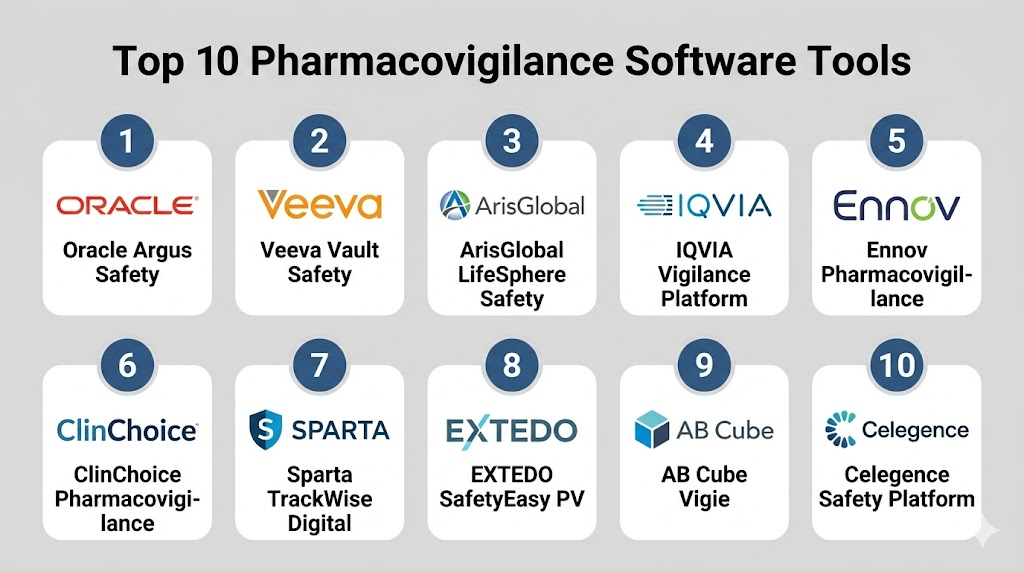
Top 10 Pharmacovigilance Software Tools
1- Oracle Argus Safety
Short description: Oracle Argus Safety is one of the most widely used enterprise pharmacovigilance platforms for global adverse event reporting and drug safety management.
Key Features
- Adverse event case management
- Signal detection workflows
- Regulatory reporting automation
- AI-assisted analytics
- Workflow orchestration
- Global compliance support
- Reporting dashboards
Pros
- Strong enterprise scalability
- Mature global compliance support
- Broad industry adoption
Cons
- Complex enterprise implementation
- Premium pricing structure
- Advanced customization requires planning
Platforms / Deployment
Web / Cloud / Hybrid
Security & Compliance
SSO, audit logging, RBAC, governance controls, and compliance workflows supported.
Integrations & Ecosystem
Oracle Argus Safety integrates broadly across healthcare and regulatory ecosystems.
- CTMS systems
- Clinical databases
- APIs
- Regulatory platforms
- Analytics tools
Support & Community
Large enterprise support ecosystem with global pharmaceutical adoption.
2- Veeva Vault Safety
Short description: Veeva Vault Safety provides cloud-native pharmacovigilance workflows and integrated safety management for life sciences organizations.
Key Features
- Adverse event management
- AI-assisted workflows
- Signal detection
- Regulatory reporting
- Workflow automation
- Analytics dashboards
- Integrated cloud ecosystem
Pros
- Modern cloud-native usability
- Strong life sciences integrations
- Good operational visibility
Cons
- Enterprise-focused pricing
- Smaller organizations may not need full feature depth
- Advanced workflows require planning
Platforms / Deployment
Web / Cloud
Security & Compliance
Audit trails, RBAC, governance workflows, and compliance controls supported.
Integrations & Ecosystem
Veeva integrates deeply across life sciences operational environments.
- CTMS systems
- Regulatory workflows
- APIs
- Analytics platforms
- Clinical systems
Support & Community
Strong pharmaceutical and biotech customer ecosystem.
3- ArisGlobal LifeSphere Safety
Short description: ArisGlobal LifeSphere Safety delivers AI-driven pharmacovigilance workflows for global life sciences organizations.
Key Features
- AI-assisted case processing
- Signal detection analytics
- Workflow automation
- Regulatory reporting
- Compliance dashboards
- Data management
- Cloud-native collaboration
Pros
- Strong AI automation
- Good scalability
- Modern user experience
Cons
- Enterprise deployment complexity
- Premium pricing model
- Advanced integrations may require expertise
Platforms / Deployment
Web / Cloud
Security & Compliance
Governance workflows, access controls, and audit logging available.
Integrations & Ecosystem
ArisGlobal supports broad interoperability across safety and clinical systems.
- APIs
- Regulatory platforms
- Clinical systems
- Reporting tools
- Analytics environments
Support & Community
Growing enterprise pharmacovigilance ecosystem.
4- IQVIA Vigilance Platform
Short description: IQVIA Vigilance Platform supports global drug safety operations with analytics, reporting, and regulatory workflow automation.
Key Features
- Safety case management
- Regulatory reporting
- AI-assisted analytics
- Signal management
- Workflow automation
- Operational dashboards
- Global compliance support
Pros
- Strong global reach
- Mature analytics capabilities
- Enterprise operational scalability
Cons
- Complex onboarding
- Enterprise pricing
- Customization planning required
Platforms / Deployment
Web / Cloud
Security & Compliance
Audit trails, governance controls, and RBAC supported.
Integrations & Ecosystem
IQVIA integrates healthcare, clinical, and regulatory ecosystems effectively.
- APIs
- Analytics tools
- Regulatory systems
- Clinical platforms
- Reporting environments
Support & Community
Strong global healthcare and pharmaceutical support network.
5- Ennov Pharmacovigilance
Short description: Ennov provides integrated pharmacovigilance and compliance workflows for regulated healthcare environments.
Key Features
- Adverse event tracking
- Workflow orchestration
- Compliance automation
- Regulatory reporting
- Analytics dashboards
- Governance workflows
- Audit readiness
Pros
- Strong compliance support
- Integrated governance capabilities
- Reliable operational workflows
Cons
- Enterprise-focused complexity
- Smaller ecosystem visibility
- Public pricing transparency limited
Platforms / Deployment
Web / Cloud / Hybrid
Security & Compliance
RBAC, audit logs, governance workflows, and compliance controls supported.
Integrations & Ecosystem
Ennov integrates regulated healthcare and pharmacovigilance workflows.
- APIs
- Reporting systems
- Regulatory platforms
- Authentication systems
- Analytics tools
Support & Community
Reliable enterprise support ecosystem for healthcare organizations.
6- ClinChoice Pharmacovigilance
Short description: ClinChoice provides pharmacovigilance and regulatory operations support for life sciences organizations and CROs.
Key Features
- Case intake workflows
- Regulatory reporting
- Signal detection
- Analytics dashboards
- Workflow automation
- Compliance tracking
- Data management
Pros
- Good operational flexibility
- Reliable compliance support
- Strong CRO alignment
Cons
- Smaller enterprise ecosystem
- Advanced AI features evolving
- Scalability varies by deployment
Platforms / Deployment
Web / Cloud
Security & Compliance
Access controls and governance workflows supported.
Integrations & Ecosystem
ClinChoice supports integrations across pharmacovigilance operations.
- APIs
- Reporting platforms
- Clinical systems
- Regulatory workflows
- Analytics environments
Support & Community
Growing support ecosystem for regulated clinical operations.
7- Sparta TrackWise Digital
Short description: Sparta TrackWise Digital supports quality and pharmacovigilance operations through integrated workflow management and compliance automation.
Key Features
- Safety workflow management
- Compliance automation
- Reporting dashboards
- Governance controls
- Audit management
- Workflow orchestration
- Data visibility tools
Pros
- Strong governance support
- Good quality integration
- Enterprise scalability
Cons
- Complex deployment planning
- Advanced customization may require expertise
- Premium enterprise costs
Platforms / Deployment
Web / Cloud
Security & Compliance
Governance workflows, audit trails, and RBAC available.
Integrations & Ecosystem
TrackWise integrates quality, compliance, and operational healthcare systems.
- APIs
- Quality systems
- Analytics tools
- Reporting platforms
- Authentication systems
Support & Community
Strong enterprise support for regulated industries.
8- EXTEDO SafetyEasy PV
Short description: EXTEDO SafetyEasy PV provides pharmacovigilance workflow management and regulatory reporting support for healthcare organizations.
Key Features
- Case management
- Regulatory reporting
- Workflow automation
- Compliance support
- Analytics dashboards
- Operational visibility
- Audit readiness
Pros
- Good regulatory workflow support
- Reliable operational management
- Flexible deployment capabilities
Cons
- Smaller global footprint
- Advanced AI workflows limited
- Enterprise customization evolving
Platforms / Deployment
Web / Cloud
Security & Compliance
Audit logging and governance workflows available.
Integrations & Ecosystem
EXTEDO supports integrations across regulatory and safety ecosystems.
- APIs
- Regulatory systems
- Reporting tools
- Analytics platforms
- Clinical workflows
Support & Community
Reliable support for pharmacovigilance operations teams.
9- AB Cube Vigie
Short description: AB Cube Vigie offers pharmacovigilance case processing and signal detection support for life sciences organizations.
Key Features
- Case management
- Signal detection
- Reporting workflows
- Compliance dashboards
- Workflow automation
- Operational analytics
- Audit support
Pros
- Good pharmacovigilance specialization
- Flexible operational workflows
- Cloud deployment support
Cons
- Smaller enterprise ecosystem
- Advanced integrations developing
- Long-term scalability varies
Platforms / Deployment
Web / Cloud
Security & Compliance
Governance workflows and access management supported.
Integrations & Ecosystem
AB Cube integrates safety operations and reporting workflows.
- APIs
- Analytics systems
- Reporting tools
- Clinical systems
- Authentication platforms
Support & Community
Growing pharmacovigilance customer ecosystem.
10- Celegence Safety Platform
Short description: Celegence Safety Platform supports modern pharmacovigilance workflows with cloud-native reporting and compliance management.
Key Features
- Adverse event workflows
- Reporting automation
- Compliance tracking
- Workflow orchestration
- Analytics dashboards
- Signal management
- Audit support
Pros
- Modern cloud-native workflows
- Good usability
- Flexible operational support
Cons
- Smaller market footprint
- Enterprise ecosystem developing
- Advanced analytics evolving
Platforms / Deployment
Web / Cloud
Security & Compliance
Governance controls and audit workflows available.
Integrations & Ecosystem
Celegence integrates operational safety and reporting workflows.
- APIs
- Reporting systems
- Analytics tools
- Clinical systems
- Regulatory platforms
Support & Community
Emerging pharmacovigilance support ecosystem.
Comparison Table
| Tool Name | Best For | Platform(s) Supported | Deployment | Standout Feature | Public Rating |
|---|---|---|---|---|---|
| Oracle Argus Safety | Global enterprises | Web | Cloud / Hybrid | Enterprise adverse event management | N/A |
| Veeva Vault Safety | Life sciences cloud operations | Web | Cloud | Integrated cloud ecosystem | N/A |
| ArisGlobal LifeSphere Safety | AI-assisted workflows | Web | Cloud | AI-driven automation | N/A |
| IQVIA Vigilance Platform | Global healthcare operations | Web | Cloud | Enterprise analytics | N/A |
| Ennov Pharmacovigilance | Compliance-heavy workflows | Web | Cloud / Hybrid | Governance integration | N/A |
| ClinChoice Pharmacovigilance | CRO operations | Web | Cloud | Flexible operational workflows | N/A |
| Sparta TrackWise Digital | Quality-driven environments | Web | Cloud | Compliance automation | N/A |
| EXTEDO SafetyEasy PV | Regulatory workflows | Web | Cloud | Reporting automation | N/A |
| AB Cube Vigie | Specialized PV workflows | Web | Cloud | Signal detection support | N/A |
| Celegence Safety Platform | Modern cloud workflows | Web | Cloud | Cloud-native usability | N/A |
Evaluation & Scoring of Pharmacovigilance Software
| Tool Name | Core 25% | Ease 15% | Integrations 15% | Security 10% | Performance 10% | Support 10% | Value 15% | Weighted Total |
|---|---|---|---|---|---|---|---|---|
| Oracle Argus Safety | 9 | 7 | 9 | 9 | 9 | 8 | 6 | 8.20 |
| Veeva Vault Safety | 9 | 8 | 9 | 9 | 8 | 8 | 7 | 8.40 |
| ArisGlobal LifeSphere Safety | 8 | 8 | 8 | 8 | 8 | 7 | 7 | 7.80 |
| IQVIA Vigilance Platform | 9 | 7 | 8 | 8 | 9 | 8 | 6 | 7.95 |
| Ennov Pharmacovigilance | 8 | 7 | 7 | 9 | 8 | 7 | 6 | 7.35 |
| ClinChoice Pharmacovigilance | 7 | 8 | 7 | 7 | 7 | 7 | 8 | 7.30 |
| Sparta TrackWise Digital | 8 | 7 | 8 | 9 | 8 | 8 | 6 | 7.70 |
| EXTEDO SafetyEasy PV | 7 | 7 | 7 | 8 | 7 | 7 | 7 | 7.10 |
| AB Cube Vigie | 7 | 8 | 7 | 7 | 7 | 7 | 8 | 7.30 |
| Celegence Safety Platform | 7 | 8 | 7 | 7 | 7 | 7 | 8 | 7.30 |
Which Pharmacovigilance Software Tool Is Right for You?
Solo / Freelancer
Independent consultants and small healthcare safety teams often benefit from lightweight cloud-native platforms with simpler workflows and lower operational complexity.
SMB
Smaller CROs and biotechnology firms usually prioritize usability, operational flexibility, reporting capabilities, and faster onboarding timelines.
Mid-Market
Mid-sized life sciences organizations often require balanced governance, integrations, analytics, workflow automation, and compliance support.
Enterprise
Large pharmaceutical companies and global healthcare organizations typically prioritize AI-assisted automation, regulatory compliance, interoperability, and global operational scalability.
Budget vs Premium
Premium pharmacovigilance platforms deliver broader integrations, advanced analytics, AI-assisted workflows, and enterprise governance support. Smaller organizations may benefit more from operational simplicity.
Feature Depth vs Ease of Use
Enterprise systems offer deeper compliance workflows and operational customization but often require more extensive onboarding and governance planning.
Integrations & Scalability
Modern pharmacovigilance operations increasingly depend on interoperability with CTMS, CDMS, regulatory systems, reporting platforms, and analytics environments.
Security & Compliance Needs
Healthcare organizations should prioritize audit logging, governance controls, compliance automation, access management, and regulatory reporting readiness carefully.
Frequently Asked Questions FAQs
1. What is pharmacovigilance software?
Pharmacovigilance software helps organizations monitor, manage, analyze, and report adverse drug reactions and medication safety events. These systems streamline safety workflows, improve regulatory compliance, and support post-market surveillance operations. Modern platforms also provide AI-assisted analytics and automation capabilities.
2. Who uses pharmacovigilance platforms?
Pharmaceutical companies, biotechnology firms, CROs, healthcare organizations, and regulatory affairs teams commonly use pharmacovigilance platforms. Drug safety specialists, compliance managers, clinical operations teams, and healthcare researchers rely heavily on these systems daily. Enterprise adoption continues expanding globally.
3. Why is pharmacovigilance software important today?
Drug safety operations are becoming increasingly complex due to stricter regulations, decentralized trials, and rising adverse event reporting volumes. Pharmacovigilance software improves operational efficiency, reduces manual workloads, strengthens compliance, and supports faster signal detection. Automation also improves reporting accuracy significantly.
4. What features matter most in pharmacovigilance software?
Important capabilities include adverse event management, AI-assisted analytics, signal detection, workflow automation, compliance support, reporting dashboards, integrations, cloud scalability, governance workflows, and audit readiness. Buyers should also evaluate usability carefully. Integration maturity strongly affects operational efficiency.
5. Can pharmacovigilance platforms support global regulatory reporting?
Yes, many modern pharmacovigilance platforms support global regulatory reporting workflows across multiple regions and healthcare authorities. These systems help automate submissions, improve compliance readiness, and reduce operational risks significantly. Global interoperability continues improving rapidly across modern platforms.
6. How do pharmacovigilance systems integrate with healthcare ecosystems?
Most enterprise pharmacovigilance platforms integrate with CTMS systems, clinical databases, reporting tools, analytics environments, regulatory platforms, and healthcare workflows through APIs and interoperability frameworks. Integration planning is extremely important during implementation. Strong interoperability improves operational visibility considerably.
7. What implementation mistakes should organizations avoid?
Common mistakes include insufficient governance planning, unrealistic timelines, weak workflow mapping, poor integration strategies, and inadequate user training. Some organizations also underestimate regulatory reporting complexity and operational scaling requirements. Pilot implementations help reduce deployment risks significantly.
8. How long does pharmacovigilance software implementation take?
Implementation timelines vary depending on organizational size, compliance requirements, integrations, workflow complexity, and customization needs. Enterprise healthcare environments often require phased rollouts and governance planning. Smaller organizations may deploy more quickly using cloud-native operational models.
9. What industries benefit most from pharmacovigilance software?
Industries managing regulated healthcare products benefit most from pharmacovigilance platforms. This includes pharmaceutical companies, biotechnology firms, medical device organizations, CROs, healthcare institutions, and life sciences research organizations. Regulatory oversight continues driving broader global adoption rapidly.
10. How should organizations choose the right pharmacovigilance platform?
Organizations should evaluate workflow complexity, interoperability needs, compliance obligations, analytics capabilities, deployment flexibility, scalability, governance requirements, and operational maturity carefully. No single platform fits every healthcare organization equally well. Pilot testing and integration validation remain highly recommended.
Conclusion
Pharmacovigilance software has become essential operational infrastructure for modern pharmaceutical companies, biotechnology firms, healthcare organizations, and regulatory affairs teams operating in increasingly regulated and data-intensive environments. As healthcare ecosystems continue adopting AI-assisted analytics, automated case processing, cloud-native collaboration, and advanced compliance workflows, pharmacovigilance platforms will remain critical for improving patient safety, operational efficiency, and regulatory readiness. The ideal pharmacovigilance solution ultimately depends on organizational size, compliance complexity, operational maturity, integration needs, and long-term scalability goals. Enterprise healthcare organizations may prioritize Oracle Argus Safety, Veeva Vault Safety, or ArisGlobal LifeSphere Safety for global scalability and governance depth, while mid-sized organizations may benefit more from flexible platforms such as ClinChoice, Celegence, or AB Cube Vigie. Before selecting a platform, organizations should shortlist multiple vendors, validate integrations carefully, conduct pilot deployments, assess governance readiness, and evaluate long-term operational scalability and compliance support before full implementation.

Find Trusted Cardiac Hospitals
Compare heart hospitals by city and services — all in one place.
Explore Hospitals
Interesting insights! I got a better understanding of how pharmacovigilance tools help track and manage drug safety throughout the product lifecycle.