Introduction
Employee Scheduling Software helps organizations plan, assign, and manage shifts, availability, and workforce schedules efficiently. These platforms are essential for businesses with hourly employees, multiple shifts, or distributed teams, ensuring coverage, reducing conflicts, and improving operational efficiency. automated scheduling, AI-assisted forecasting, mobile accessibility, and integration with payroll and workforce management systems have become key differentiators.
Real-world use cases include:
- Retail and hospitality shift management
- Healthcare staff scheduling across multiple units
- Employee availability and leave coordination
- Labor compliance and overtime management
- Integration with payroll and workforce analytics
Evaluation Criteria for Buyers:
- Shift scheduling and automation
- Employee availability and conflict resolution
- Mobile accessibility and self-service
- Payroll and HRIS integration
- Reporting and analytics dashboards
- AI-assisted forecasting and optimization
- Security and compliance standards
- Ease of onboarding and training
- Flexibility for SMBs vs enterprises
- Cost-effectiveness and value
Best for: Retailers, healthcare facilities, hospitality businesses, call centers, and organizations with hourly or shift-based employees.
Not ideal for: Very small teams without complex scheduling needs or businesses that can manage schedules manually.
Key Trends in Employee Scheduling Software
- AI-driven shift optimization and forecasting
- Mobile-first scheduling and self-service for employees
- Integration with payroll and HR systems
- Compliance monitoring for labor laws and overtime
- Predictive analytics for staffing and operational efficiency
- Cloud-based scheduling platforms with real-time updates
- Employee communication and shift swapping capabilities
- Gamification and engagement features to improve schedule adherence
- Flexible subscription and SaaS pricing models
- Remote and hybrid workforce scheduling support
How We Selected These Tools (Methodology)
- Evaluated market adoption and credibility
- Assessed feature completeness for scheduling, forecasting, and reporting
- Considered ease of use and user interface quality
- Checked integration capabilities with payroll, HRIS, and PM systems
- Evaluated security and compliance standards
- Reviewed customer support and training ecosystem
- Considered scalability for SMBs and enterprise needs
- Assessed mobile accessibility and self-service functionality
- Compared pricing models and operational value
- Considered AI and automation capabilities
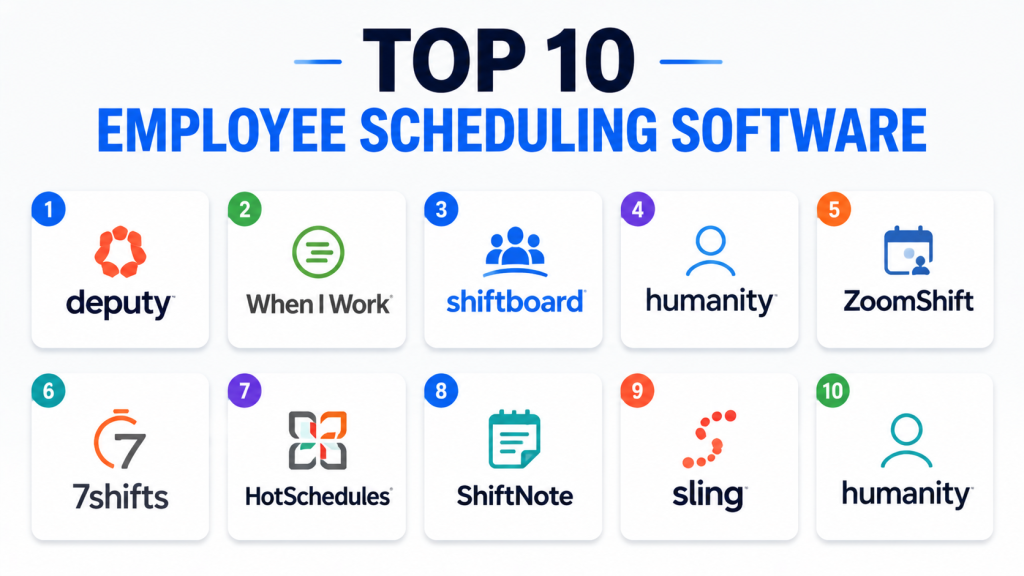
Top 10 Employee Scheduling Software Tools
1 — Homebase
Short description: Homebase is an all-in-one team management platform designed specifically for small businesses to handle employee scheduling, time tracking, payroll, and HR in one unified app.
Key Features
- Automated team scheduling based on availability and labor costs
- GPS-enabled mobile time clock and digital timesheets
- Full-service payroll with automated tax filing and payments
- Hiring and onboarding with integrated job board posting
- Real-time team messaging and employee communication tools
- HR compliance alerts and access to certified HR experts
Pros
- Intuitive and easy-to-use interface for both managers and staff
- Generous free plan for basic scheduling and time tracking
- Consolidates multiple business operations into a single subscription
Cons
- Payroll and advanced HR features require paid monthly plans
- Costs can scale quickly as more employees and features are added
- More suited for SMBs than complex, multi-national enterprise workflows
Platforms / Deployment
- Web, iOS, Android
- Cloud
Security & Compliance
- Secure data encryption and payroll tax compliance
- Labor law violation alerts and shift documentation
Integrations & Ecosystem
Syncs seamlessly with leading POS and accounting systems.
- QuickBooks
- Square
- Clover
- Toast
Support & Community
Comprehensive help center, webinars, and dedicated support for small business growth.
2 — When I Work
Short description: When I Work focuses on employee scheduling, shift management, and attendance tracking for small to mid-sized businesses.
Key Features
- Shift scheduling and notifications
- Attendance tracking and clock-in/out
- Employee self-service
- Payroll integration
- Mobile apps for schedule updates
- Reporting dashboards
- Shift swapping
Pros
- Easy setup and user-friendly
- Real-time schedule updates
- Affordable for SMBs
Cons
- Limited enterprise reporting
- Fewer advanced analytics
- Payroll features require integrations
Platforms / Deployment
- Web, iOS, Android
- Cloud
Security & Compliance
- Encryption, SSO
- GDPR support
Integrations & Ecosystem
Supports common payroll and productivity tools.
- QuickBooks
- ADP
- Slack
- APIs
Support & Community
Responsive onboarding and tutorials for SMBs.
3 — Shiftboard
Short description: Shiftboard is an enterprise-focused employee scheduling platform for complex shift-based operations.
Key Features
- Advanced shift scheduling
- Compliance tracking for labor laws
- Workforce forecasting and analytics
- Employee self-service
- Attendance management
- Payroll integration
- Mobile access
Pros
- Strong compliance and governance
- AI-assisted scheduling
- Scalable for large enterprises
Cons
- Premium pricing
- Learning curve for administrators
- Mobile features less flexible than competitors
Platforms / Deployment
- Web, iOS, Android
- Cloud
Security & Compliance
- SSO, encryption, audit logs
- SOC 2, GDPR
Integrations & Ecosystem
Integrates with enterprise HR and payroll systems.
- ADP
- Workday
- Oracle
- APIs
Support & Community
Enterprise onboarding, consulting, and support resources.
4 — Humanity
Short description: Humanity provides employee scheduling, time tracking, and attendance tools for SMBs and mid-market organizations.
Key Features
- Drag-and-drop schedule creation
- Shift swapping and notifications
- Attendance and PTO tracking
- Payroll integration
- Reporting and analytics
- Mobile scheduling apps
- Workforce forecasting
Pros
- Intuitive interface
- Good for mid-sized teams
- Strong mobile support
Cons
- Limited enterprise compliance reporting
- Advanced analytics require premium
- Some payroll integrations are extra
Platforms / Deployment
- Web, iOS, Android
- Cloud
Security & Compliance
- SSO, encryption
- GDPR support
Integrations & Ecosystem
Integrates with payroll, HR, and PM systems.
- QuickBooks
- Xero
- ADP
- APIs
Support & Community
Good SMB onboarding, documentation, and responsive support.
5 — ZoomShift
Short description: ZoomShift focuses on shift scheduling, time tracking, and attendance for small businesses and retail teams.
Key Features
- Shift scheduling and notifications
- Clock-in/out and attendance tracking
- PTO and leave management
- Reporting dashboards
- Employee self-service
- Payroll export
- Mobile app
Pros
- Affordable and simple to use
- Good for SMBs and retail
- Quick setup and onboarding
Cons
- Limited analytics and forecasting
- Enterprise features are minimal
- Payroll integration may require exports
Platforms / Deployment
- Web, iOS, Android
- Cloud
Security & Compliance
- Encryption, SSO
- GDPR
Integrations & Ecosystem
Supports basic payroll and productivity integrations.
- QuickBooks
- ADP
- APIs
Support & Community
Responsive support for SMBs, tutorials, and guides.
6 — 7shifts
Short description: 7shifts provides scheduling, attendance, and labor compliance management for restaurants and hospitality businesses.
Key Features
- Employee scheduling and notifications
- Time clock and attendance tracking
- Labor cost management
- PTO and leave management
- Mobile employee access
- Reporting and analytics
- Payroll integration
Pros
- Tailored for hospitality
- Mobile-friendly for employees
- Easy schedule adjustments
Cons
- Less suitable for non-hospitality businesses
- Limited enterprise governance
- Advanced analytics require premium
Platforms / Deployment
- Web, iOS, Android
- Cloud
Security & Compliance
- Encryption, SSO
- GDPR
Integrations & Ecosystem
Integrates with POS and payroll systems.
- QuickBooks
- ADP
- POS systems
- APIs
Support & Community
Strong hospitality-focused support and tutorials.
7 — HotSchedules
Short description: HotSchedules is a restaurant and retail employee scheduling solution with shift planning, labor tracking, and reporting.
Key Features
- Shift scheduling and management
- Attendance and clock-in/out
- Labor compliance tracking
- PTO and leave management
- Mobile app for employees
- Reporting dashboards
- Payroll integration
Pros
- Designed for restaurant workflows
- Strong mobile functionality
- Easy shift swapping
Cons
- Limited non-hospitality features
- Enterprise scalability is moderate
- Premium plans required for analytics
Platforms / Deployment
- Web, iOS, Android
- Cloud
Security & Compliance
- Encryption, SSO
- GDPR
Integrations & Ecosystem
POS and payroll integrations.
- ADP
- QuickBooks
- POS systems
- APIs
Support & Community
Onboarding and hospitality-focused customer support.
8 — ShiftNote
Short description: ShiftNote provides workforce scheduling, attendance tracking, and communication for restaurants and retail teams.
Key Features
- Employee scheduling
- Shift swapping and notifications
- Time tracking and attendance
- Payroll integration
- Mobile app access
- Labor cost management
- Reporting dashboards
Pros
- Simple to use
- Mobile access for employees
- Good for restaurants and retail
Cons
- Limited enterprise features
- Advanced analytics are minimal
- Payroll integrations require premium
Platforms / Deployment
- Web, iOS, Android
- Cloud
Security & Compliance
- Encryption, SSO
- GDPR
Integrations & Ecosystem
Supports POS, payroll, and HR integrations.
- QuickBooks
- ADP
- APIs
Support & Community
Good SMB onboarding and documentation.
9 — Sling
Short description: Sling combines employee scheduling, time tracking, and internal communication for SMBs.
Key Features
- Shift scheduling and notifications
- Attendance tracking
- Messaging and communication tools
- PTO and leave management
- Mobile access
- Payroll export
- Reporting and analytics
Pros
- Simple and intuitive
- Affordable for SMBs
- Strong communication features
Cons
- Limited enterprise analytics
- Payroll integration may require manual steps
- Advanced compliance tracking limited
Platforms / Deployment
- Web, iOS, Android
- Cloud
Security & Compliance
- Encryption, SSO
- GDPR
Integrations & Ecosystem
Payroll and productivity tool integrations.
- QuickBooks
- ADP
- APIs
Support & Community
Responsive SMB support and guides.
10 — Humanity
Short description: Humanity provides scheduling, attendance, and workforce management for SMBs and mid-market businesses.
Key Features
- Employee scheduling and approvals
- Time tracking and attendance
- Leave management
- Mobile apps for employees
- Payroll integration
- Reporting and analytics
- Shift swapping
Pros
- Intuitive scheduling interface
- Mobile-friendly
- Good SMB support
Cons
- Enterprise-level compliance limited
- Advanced analytics require premium
- Payroll integrations need setup
Platforms / Deployment
- Web, iOS, Android
- Cloud
Security & Compliance
- Encryption, SSO
- GDPR
Integrations & Ecosystem
Integrates with payroll, HR, and PM tools.
- QuickBooks
- ADP
- APIs
Support & Community
Good documentation, onboarding, and support for SMBs.
Comparison Table
| Tool Name | Best For | Platforms Supported | Deployment | Standout Feature | Public Rating |
|---|---|---|---|---|---|
| Homebase | SMB, hourly teams | Web, iOS, Android | Cloud | All-in-one team management | N/A |
| When I Work | SMB | Web, iOS, Android | Cloud | Simple shift scheduling | N/A |
| Shiftboard | Enterprise | Web, iOS, Android | Cloud | AI-assisted scheduling | N/A |
| Humanity | SMB, mid-market | Web, iOS, Android | Cloud | Intuitive scheduling | N/A |
| ZoomShift | SMB, retail | Web, iOS, Android | Cloud | Affordable shift management | N/A |
| 7shifts | Restaurants, hospitality | Web, iOS, Android | Cloud | Labor cost tracking | N/A |
| HotSchedules | Restaurants, retail | Web, iOS, Android | Cloud | Shift management | N/A |
| ShiftNote | Restaurants, retail | Web, iOS, Android | Cloud | Communication & scheduling | N/A |
| Sling | SMB | Web, iOS, Android | Cloud | Scheduling + messaging | N/A |
| Humanity | SMB, mid-market | Web, iOS, Android | Cloud | Scheduling + attendance | N/A |
Evaluation & Scoring of Employee Scheduling Software
| Tool Name | Core (25%) | Ease (15%) | Integrations (15%) | Security (10%) | Performance (10%) | Support (10%) | Value (15%) | Weighted Total |
|---|---|---|---|---|---|---|---|---|
| Deputy | 9 | 9 | 8 | 7 | 8 | 8 | 8 | 8.35 |
| When I Work | 8 | 9 | 7 | 7 | 8 | 8 | 8 | 8.05 |
| Shiftboard | 9 | 7 | 9 | 8 | 8 | 8 | 7 | 8.05 |
| Humanity | 8 | 8 | 8 | 7 | 8 | 8 | 7 | 7.85 |
| ZoomShift | 8 | 9 | 7 | 7 | 7 | 8 | 8 | 7.85 |
| 7shifts | 8 | 8 | 7 | 7 | 8 | 8 | 7 | 7.75 |
| HotSchedules | 8 | 8 | 7 | 7 | 8 | 7 | 7 | 7.65 |
| ShiftNote | 8 | 8 | 6 | 7 | 7 | 7 | 7 | 7.45 |
| Sling | 8 | 9 | 6 | 7 | 7 | 7 | 7 | 7.50 |
| Humanity | 8 | 8 | 8 | 7 | 8 | 8 | 7 | 7.85 |
Which Employee Scheduling Tool Is Right for You?
Solo / Freelancer
Deputy, When I Work, and Sling are ideal for freelancers or small teams needing simple shift scheduling and mobile access.
SMB
ZoomShift, Humanity, and Deputy provide good usability, attendance tracking, and shift management for small and medium businesses.
Mid-Market
Shiftboard, 7shifts, and Humanity support advanced scheduling, labor analytics, and compliance for mid-market organizations.
Enterprise
Shiftboard and HotSchedules are better suited for enterprises or global operations needing AI-assisted scheduling, compliance, and labor optimization.
Budget vs Premium
Budget-friendly: Deputy, When I Work, Sling
Premium/Enterprise: Shiftboard, HotSchedules
Feature Depth vs Ease of Use
Shiftboard and 7shifts provide deeper enterprise functionality, while Deputy and Sling focus on simplicity and speed.
Integrations & Scalability
Enterprise deployments: Shiftboard, HotSchedules
SMB and mid-market: Deputy, ZoomShift, Humanity
Security & Compliance Needs
Enterprise compliance: Shiftboard, HotSchedules
SMB compliance: Deputy, When I Work
Frequently Asked Questions (FAQs)
- What is Employee Scheduling Software?
Software that manages employee shifts, attendance, PTO, and workforce schedules efficiently across teams and departments. - Which industries benefit most?
Retail, healthcare, hospitality, restaurants, call centers, and SMBs with hourly or shift-based employees. - Are these tools mobile-friendly?
Yes, most platforms offer mobile apps for schedule viewing, shift swaps, clock-in/out, and notifications. - Can these platforms integrate with payroll?
Yes, integrations with payroll systems like ADP, QuickBooks, or Xero streamline compensation calculations. - Do they help with compliance?
Enterprise platforms track labor law adherence, overtime, and attendance compliance. - Are there AI features?
Some platforms, like Shiftboard, offer AI-assisted shift optimization and predictive labor forecasting. - Which is best for small teams?
Deputy, When I Work, and Sling provide simple scheduling and easy onboarding for SMBs and small teams. - Can employees swap shifts themselves?
Most tools include employee self-service shift swapping with manager approvals. - How important is reporting?
Reporting dashboards help monitor attendance, labor costs, shift coverage, and schedule efficiency. - What should buyers evaluate before choosing a platform?
Consider ease of use, integrations, mobile accessibility, reporting, scalability, security, and operational value.
Conclusion
Employee Scheduling Software is critical for managing complex workforce schedules, tracking attendance, ensuring labor compliance, and improving operational efficiency. Modern platforms offer AI-assisted scheduling, mobile access, payroll integrations, and workforce analytics. Small teams may benefit from Deputy, When I Work, or Sling for simplicity, while mid-market and enterprise operations may prefer Shiftboard, HotSchedules, or Humanity for advanced compliance and workforce optimization. Organizations should shortlist 2–3 tools, pilot scheduling workflows, validate integrations, and review mobile and reporting capabilities before scaling.

Find Trusted Cardiac Hospitals
Compare heart hospitals by city and services — all in one place.
Explore Hospitals
I now understand how employee scheduling software helps businesses manage shifts, improve planning, and reduce confusion in daily operations. I’d like to explore more about which tools are best for small teams vs large organizations.
I now understand how time tracking software helps accurately monitor work hours and improve productivity, payroll accuracy, and accountability in teams. I’d like to explore more about how these tools support remote and hybrid work environments in real time.