Introduction
Exposure Management Platforms are specialized solutions designed to help organizations identify, monitor, and mitigate risks related to their digital, financial, and operational exposures. They provide a centralized view of vulnerabilities, open risks, third-party dependencies, and potential threats across IT infrastructure, applications, cloud services, and business processes. By continuously assessing exposure points, these platforms empower teams to proactively reduce risk, prevent data breaches, and ensure regulatory compliance.
In , businesses operate in increasingly complex and interconnected ecosystems, making exposure management a critical component of enterprise risk management. These platforms are vital for organizations looking to strengthen cybersecurity, maintain operational continuity, and improve risk visibility across digital and physical assets.
Real-world use cases include:
- Monitoring and managing third-party and supply chain risks.
- Identifying misconfigured cloud assets or exposed services.
- Tracking cybersecurity vulnerabilities across IT and operational technology.
- Supporting internal audits and regulatory compliance.
- Prioritizing remediation efforts based on potential impact and likelihood.
Evaluation criteria for buyers often include:
- Risk detection and assessment capabilities
- Continuous monitoring of assets and third-party connections
- Integration with SIEM, SOAR, and GRC platforms
- Automation and workflow support for remediation
- Cloud, on-prem, and hybrid environment coverage
- Reporting, analytics, and visualization tools
- Scalability for enterprise deployments
- Security and compliance certifications
- Ease of deployment and usability
- Cost-effectiveness and licensing flexibility
Best for: Security teams, risk management professionals, IT leaders, and enterprises requiring proactive visibility into cyber, operational, and financial exposures.
Not ideal for: Very small organizations with minimal risk complexity or single-environment operations where manual monitoring may suffice.
Key Trends in Exposure Management Platforms
- AI-driven identification of risks and exposures across complex IT ecosystems.
- Integration with threat intelligence and vulnerability management platforms.
- Real-time monitoring of cloud, SaaS, and hybrid infrastructures.
- Automated remediation workflows and alerting for critical exposures.
- Risk scoring based on business impact and likelihood.
- Self-service dashboards for security and operational teams.
- Continuous compliance checks for GDPR, HIPAA, ISO 27001, and industry regulations.
- Multi-cloud and hybrid support for diverse IT environments.
- API-first design enabling integration with SIEM, SOAR, and GRC tools.
- Subscription and usage-based pricing models for flexibility.
How We Selected These Tools (Methodology)
- Assessed market adoption and enterprise mindshare across industries.
- Evaluated feature completeness, including detection, monitoring, and remediation.
- Reviewed performance and reliability in complex, multi-environment deployments.
- Verified security posture and compliance support (encryption, RBAC, GDPR/HIPAA).
- Considered integration capabilities with SIEM, SOAR, GRC, and automation tools.
- Examined customer fit across SMB, mid-market, and enterprise segments.
- Balanced commercial and emerging solutions for diversity.
- Reviewed ease of use, onboarding, and reporting features.
- Checked vendor support, documentation, and community engagement.
- Assessed licensing flexibility, cost, and total value delivered.
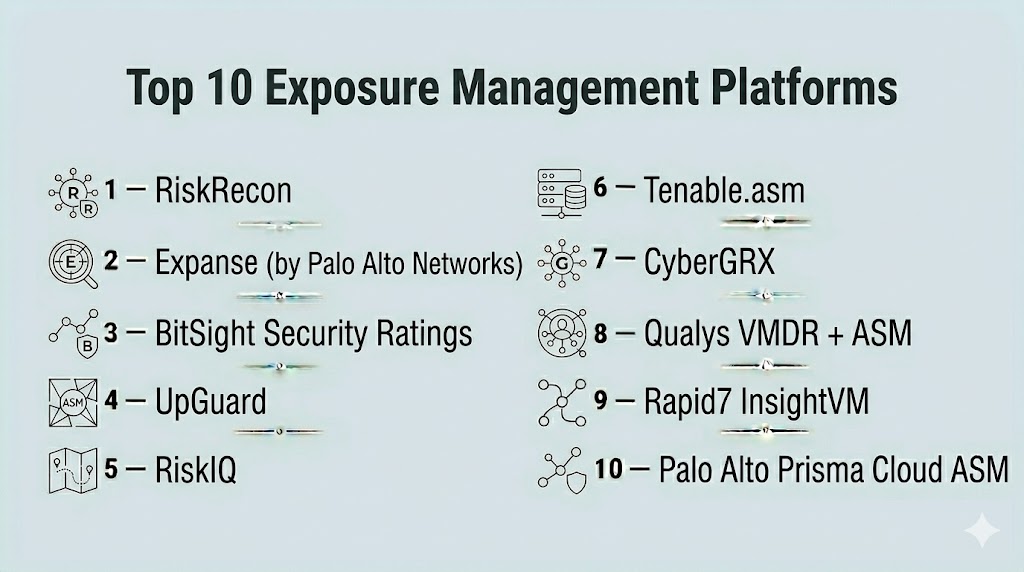
Top 10 Exposure Management Platforms
#1 — RiskRecon
Short description : RiskRecon provides continuous monitoring of external attack surfaces, third-party risks, and operational exposures. It’s ideal for enterprise security and risk teams seeking proactive visibility.
Key Features
- External risk scoring for vendors and partners
- Continuous monitoring of web, cloud, and network assets
- Integration with SIEM and GRC platforms
- Risk dashboards and analytics
- Automated alerts and remediation workflows
- API access for automation
Pros
- Real-time visibility of external exposures
- Risk-based prioritization
- Strong vendor integration
Cons
- Premium pricing for full features
- Learning curve for configuration
Platforms / Deployment
- Web
- Cloud
Security & Compliance
- Encryption, RBAC
- Not publicly stated
Integrations & Ecosystem
Supports SIEM, GRC, and vulnerability management.
- Splunk, ServiceNow, Jira
- API access for custom workflows
- Cloud connectors
Support & Community
- Enterprise support tiers
- Documentation and training
#2 — Expanse (by Palo Alto Networks)
Short description : Expanse continuously discovers and monitors an organization’s digital footprint, helping teams identify unmanaged assets, misconfigurations, and vulnerabilities across IT and cloud services.
Key Features
- Continuous digital asset discovery
- Exposure mapping and analytics
- Integration with SIEM and ITSM tools
- Automated alerts for critical risks
- Cloud, SaaS, and on-premises coverage
Pros
- Comprehensive visibility into unmanaged assets
- Enterprise-scale scalability
- Automation-ready for security workflows
Cons
- Complexity requires training
- Higher licensing costs
Platforms / Deployment
- Web
- Cloud
Security & Compliance
- Encryption, SSO
- Not publicly stated
Integrations & Ecosystem
- SIEM, Jira, ServiceNow
- API-driven automation
- Cloud connectors
Support & Community
- Vendor support
- Documentation and enterprise forums
#3 — BitSight Security Ratings
Short description : BitSight provides security ratings to quantify and benchmark cyber risk across organizations and third parties, helping prioritize exposure management and remediation efforts.
Key Features
- Cyber risk scoring and benchmarking
- Third-party risk management
- Continuous monitoring of external exposures
- Integration with GRC and SIEM systems
- Reporting dashboards
Pros
- Easy to understand risk scoring
- Focused on third-party exposure
- Scales for large enterprises
Cons
- Ratings may lack context without supplemental analysis
- Premium subscription required for advanced features
Platforms / Deployment
- Web
- Cloud
Security & Compliance
- Not publicly stated
Integrations & Ecosystem
- SIEM, Jira, ServiceNow
- API support
- GRC platform connectors
Support & Community
- Vendor support
- Documentation and user community
#4 — UpGuard
Short description : UpGuard enables continuous monitoring of IT and third-party exposures, providing actionable insights to manage cyber risk and reduce potential vulnerabilities across digital assets.
Key Features
- Continuous risk monitoring
- Vendor and third-party assessment
- Cloud and on-premises exposure tracking
- Automated alerts and notifications
- Dashboard and reporting tools
Pros
- Strong focus on vendor risk
- Intuitive dashboards
- Automation-friendly
Cons
- May require configuration for complex environments
- Premium pricing
Platforms / Deployment
- Web
- Cloud
Security & Compliance
- Encryption, RBAC
- Not publicly stated
Integrations & Ecosystem
- SIEM, Jira, ServiceNow
- API access
- Cloud connectors
Support & Community
- Vendor support
- Documentation
#5 — RiskIQ
Short description : RiskIQ provides exposure management and threat intelligence, allowing teams to identify external risks, shadow IT, and potential security gaps across internet-facing assets.
Key Features
- External exposure mapping
- Threat intelligence integration
- Cloud, SaaS, and web monitoring
- API-driven automation
- Risk dashboards and analytics
Pros
- Strong external threat visibility
- Scalable for enterprises
- Integration-friendly
Cons
- Complexity for SMB teams
- Licensing costs
Platforms / Deployment
- Web
- Cloud
Security & Compliance
- Not publicly stated
Integrations & Ecosystem
- SIEM, Jira, ServiceNow
- API for automation
- CI/CD connectors
Support & Community
- Vendor support
- Documentation
#6 — Tenable.asm
Short description : Tenable.asm identifies external attack surfaces, monitors exposures, and helps organizations prioritize vulnerabilities and remediation efforts based on risk.
Key Features
- Internet-exposed asset discovery
- Risk-based vulnerability prioritization
- Continuous monitoring and alerts
- Integration with SIEM and ticketing systems
- Reporting dashboards
Pros
- Easy risk prioritization
- Supports mid-size to large enterprises
- Automated notifications
Cons
- Advanced analytics require additional modules
- Cost may be high for SMBs
Platforms / Deployment
- Web
- Cloud
Security & Compliance
- Not publicly stated
Integrations & Ecosystem
- SIEM, Jira, ServiceNow
- API integration
Support & Community
- Vendor support
- Documentation
#7 — CyberGRX
Short description : CyberGRX specializes in third-party risk management and exposure assessment, helping organizations reduce vendor-related vulnerabilities and maintain compliance.
Key Features
- Third-party risk assessment
- Exposure monitoring and analytics
- Risk scoring and prioritization
- Automated notifications
- Integration with GRC platforms
Pros
- Focused on vendor exposure
- Streamlines third-party risk management
- Compliance reporting support
Cons
- Less focus on internal asset exposure
- Licensing costs
Platforms / Deployment
- Web
- Cloud
Security & Compliance
- Not publicly stated
Integrations & Ecosystem
- SIEM, GRC, Jira
- API-driven workflows
Support & Community
- Vendor support
- Documentation
#8 — Qualys VMDR + ASM
Short description : Qualys combines vulnerability management with ASM capabilities to monitor exposures, prioritize risks, and integrate security workflows across cloud and on-prem environments.
Key Features
- Continuous attack surface monitoring
- Vulnerability detection and prioritization
- Cloud and on-prem coverage
- Automated remediation guidance
- Integration with SIEM and ITSM
Pros
- Unified vulnerability and exposure management
- Real-time monitoring
- Cloud-native scalability
Cons
- Complexity for small teams
- Premium pricing
Platforms / Deployment
- Web
- Cloud / On-prem
Security & Compliance
- Encryption, RBAC
- Not publicly stated
Integrations & Ecosystem
- SIEM, Jira, ServiceNow
- API access for automation
Support & Community
- Vendor support
- Documentation
#9 — Rapid7 InsightVM
Short description : InsightVM integrates vulnerability management with exposure monitoring, providing risk scoring and dashboards for enterprises to understand and mitigate potential threats.
Key Features
- Continuous asset monitoring
- Exposure mapping and risk scoring
- Integration with SIEM, SOAR, and ticketing
- Automated alerting and workflows
- Reporting dashboards
Pros
- Unified view of vulnerabilities and exposures
- Supports large-scale environments
- Integration-ready
Cons
- Setup complexity for mid-size teams
- Premium licensing
Platforms / Deployment
- Web
- Cloud / On-prem
Security & Compliance
- Encryption, RBAC
- Not publicly stated
Integrations & Ecosystem
- SIEM, Jira, ServiceNow
- API-driven automation
Support & Community
- Vendor support
- Documentation
#10 — Palo Alto Prisma Cloud ASM
Short description : Prisma Cloud ASM focuses on cloud-native exposure monitoring, helping teams identify misconfigurations, exposed assets, and risk across multi-cloud and hybrid environments.
Key Features
- Cloud asset discovery and exposure mapping
- Continuous monitoring and alerts
- Risk scoring for exposures
- Integration with DevSecOps pipelines
- Dashboard reporting
Pros
- Cloud-native and scalable
- Real-time monitoring
- Strong analytics
Cons
- Complexity for multi-cloud enterprises
- Premium pricing
Platforms / Deployment
- Web
- Cloud
Security & Compliance
- Encryption, RBAC
- Not publicly stated
Integrations & Ecosystem
- CI/CD pipelines, SIEM, Jira
- API access
Support & Community
- Vendor support
- Documentation
Comparison Table (Top 10)
| Tool Name | Best For | Platform(s) Supported | Deployment | Standout Feature | Public Rating |
|---|---|---|---|---|---|
| Cortex Xpanse | Enterprise IT teams | Web | Cloud | Real-time asset discovery | N/A |
| Expanse | Enterprise DevOps | Web | Cloud | Comprehensive attack surface mapping | N/A |
| RiskIQ | Large enterprises | Web | Cloud | Threat intelligence-driven ASM | N/A |
| UpGuard | Security and IT teams | Web | Cloud | Vendor risk monitoring | N/A |
| Tenable.asm | Mid-size & enterprise | Web | Cloud | Risk-based prioritization | N/A |
| InsightVM | Vulnerability & risk teams | Web | Cloud / On-prem | Unified ASM + vulnerability | N/A |
| Bit Discovery | SMB & mid-market | Web | Cloud | Shadow IT detection | N/A |
| CyberGRX | Third-party risk focus | Web | Cloud | Vendor exposure scoring | N/A |
| Qualys VMDR + ASM | Enterprise security | Web | Cloud / On-prem | Unified vulnerability & exposure | N/A |
| Prisma Cloud ASM | Cloud-focused enterprises | Web | Cloud | Continuous cloud exposure monitoring | N/A |
Evaluation & Scoring of Exposure Management Platforms
| Tool Name | Core (25%) | Ease (15%) | Integrations (15%) | Security (10%) | Performance (10%) | Support (10%) | Value (15%) | Weighted Total |
|---|---|---|---|---|---|---|---|---|
| Cortex Xpanse | 9 | 8 | 9 | 8 | 9 | 8 | 7 | 8.4 |
| Expanse | 9 | 7 | 8 | 8 | 8 | 7 | 7 | 8.0 |
| RiskIQ | 9 | 7 | 8 | 8 | 8 | 7 | 7 | 8.0 |
| UpGuard | 8 | 8 | 8 | 8 | 8 | 7 | 7 | 7.8 |
| Tenable.asm | 8 | 8 | 7 | 8 | 7 | 7 | 7 | 7.6 |
| InsightVM | 8 | 7 | 8 | 8 | 8 | 7 | 7 | 7.7 |
| Bit Discovery | 7 | 8 | 7 | 7 | 7 | 7 | 7 | 7.2 |
| CyberGRX | 8 | 7 | 8 | 8 | 8 | 7 | 7 | 7.7 |
| Qualys VMDR + ASM | 8 | 7 | 8 | 8 | 8 | 7 | 7 | 7.7 |
| Prisma Cloud ASM | 8 | 7 | 8 | 8 | 8 | 7 | 7 | 7.7 |
Interpretation: Weighted totals provide a comparative overview of the platforms’ capabilities across core features, usability, integrations, security, performance, support, and value. Scores are comparative and should be interpreted in the context of organizational needs.
Which Exposure Management Platform Is Right for You?
Solo / Freelancer
Tools like Bit Discovery or UpGuard provide quick insights and manageable complexity.
SMB
Tenable.asm, CyberGRX, or Prisma Cloud ASM balance coverage with usability and cost.
Mid-Market
InsightVM, Qualys VMDR + ASM, and RiskIQ provide comprehensive exposure and vulnerability coverage with automation support.
Enterprise
Cortex Xpanse, Expanse, and RiskIQ scale across large IT environments with real-time visibility, advanced analytics, and integrations.
Budget vs Premium
Lightweight SaaS options suit SMBs; premium enterprise tools justify investment with scale, analytics, and compliance reporting.
Feature Depth vs Ease of Use
Small teams prioritize usability; enterprises require deep analytics, multi-cloud coverage, and workflow integration.
Integrations & Scalability
Enterprises need tools like Cortex Xpanse and RiskIQ for integration with SIEM, SOAR, GRC, and cloud services.
Security & Compliance Needs
Regulated organizations should ensure encryption, RBAC, audit logs, and compliance reporting are supported.
Frequently Asked Questions (FAQs)
1. What pricing models exist for exposure management platforms?
Subscription-based SaaS or enterprise licenses are common, with some usage-based tiers for cloud monitoring.
2. How long does onboarding take?
Small teams can onboard in days; large enterprises may need weeks for asset mapping, workflow setup, and integrations.
3. Can these platforms integrate with CI/CD or SIEM tools?
Yes, integration with SIEM, SOAR, ITSM, and DevSecOps pipelines is widely supported.
4. Do these platforms cover cloud and SaaS assets?
Yes, leading tools continuously monitor cloud, SaaS, and hybrid IT environments.
5. How often do tools update exposure data?
Most provide continuous or near real-time monitoring for dynamic assets.
6. Are exposure management platforms suitable for regulated industries?
Yes, many support GDPR, HIPAA, and ISO compliance with audit and reporting capabilities.
7. Can small organizations benefit from these tools?
Yes, lightweight SaaS-first platforms provide actionable insights without enterprise overhead.
8. Do they prioritize risk for remediation?
Yes, risk scoring and prioritization help focus resources on high-impact exposures.
9. Can exposure management include third-party and supply chain monitoring?
Enterprise tools like RiskIQ and CyberGRX provide comprehensive third-party monitoring.
10. How do I choose the best platform?
Evaluate organizational size, complexity of digital assets, cloud adoption, regulatory needs, integrations, and budget before shortlisting.
Conclusion
Exposure Management Platforms are essential for organizations aiming to understand and mitigate digital, operational, and third-party risks. SMBs and developers can leverage solutions like Bit Discovery or UpGuard for immediate insights, while enterprises gain maximum value from Cortex Xpanse, Expanse, and RiskIQ, which provide continuous monitoring, advanced analytics, and integration with SIEM and DevSecOps workflows. Organizations should evaluate their environment, compliance requirements, and operational scale, pilot appropriate solutions, and integrate them into their risk management programs to strengthen overall security posture.

Find Trusted Cardiac Hospitals
Compare heart hospitals by city and services — all in one place.
Explore Hospitals
Exposure management becomes more useful when teams can connect security findings with real business impact. Not every exposed asset carries the same level of risk, so focusing on critical systems first can make remediation more practical. Keeping asset information updated is also important because cloud environments can change very quickly.