Introduction
Restaurant Reservation & Table Management software helps restaurants manage online bookings, walk-ins, waitlists, floor plans, table turns, guest profiles, deposits, no-shows, and front-of-house coordination from one digital system. Instead of relying on phone calls, notebooks, spreadsheets, or disconnected booking channels, restaurants can control availability, optimize seating, and improve the guest experience in real time. This category matters more in a modern restaurant environment because dining demand is unpredictable, labor is tight, guest expectations are higher, and restaurants need better control over revenue per table. A good reservation and table management platform can help reduce no-shows, improve host stand efficiency, personalize guest service, and connect booking data with POS, CRM, marketing, and loyalty tools.
Real World Use Cases
- Managing online reservations across website, search, marketplace, and social channels.
- Optimizing table turns by matching party size, timing, and floor capacity.
- Reducing no-shows using deposits, reminders, confirmations, and cancellation policies.
- Handling walk-ins and waitlists with SMS updates and host-facing queue visibility.
- Building guest profiles with preferences, visit history, tags, allergies, and VIP notes.
Evaluation Criteria for Buyers
- Reservation and availability controls
- Floor plan and table assignment flexibility
- Waitlist and walk-in management
- Guest CRM and personalization
- POS, website, loyalty, and marketing integrations
- Mobile and host stand usability
- Reporting and revenue optimization
- Security, permissions, and data controls
- Multi-location support
- Pricing model and marketplace dependency
Best for: Restaurants, cafes, bars, hotels, hospitality groups, fine dining venues, casual dining chains, and high-demand operators that need better booking control, guest management, and front-of-house efficiency.
Not ideal for: Very small restaurants with low reservation volume, pop-up food stalls, quick-service outlets without table service, or operators that only need a simple calendar or basic phone booking process.
Key Trends in Restaurant Reservation & Table Management
- AI-assisted seating and table optimization: More platforms are using automation to suggest better table assignments, reduce gaps, and increase covers without overloading staff.
- Guest data as a revenue asset: Reservation systems are becoming guest intelligence platforms, helping restaurants track preferences, visit frequency, spend behavior, and special occasions.
- Deposits, prepayments, and cancellation controls: High-demand restaurants are adopting deposits, prepaid experiences, and stricter policies to reduce no-shows and protect revenue.
- Integrated waitlist and walk-in workflows: Restaurants want one view for reservations, walk-ins, waitlists, bar seating, patio seating, and private dining requests.
- Marketplace versus direct booking balance: Some tools bring diners through large consumer networks, while others focus on owned guest relationships and direct reservations.
- Multi-location hospitality operations: Restaurant groups increasingly need centralized guest profiles, brand-level analytics, location-level controls, and cross-location reporting.
- POS and CRM connectivity: Reservation platforms are expected to integrate with POS systems, email marketing tools, loyalty platforms, payments, websites, and guest messaging.
- Mobile-first host stand operations: Hosts and managers expect iPad, mobile, and browser-based tools that work quickly during peak service.
- More focus on privacy and access control: Restaurants are paying closer attention to guest data, staff permissions, audit visibility, and responsible use of guest notes.
- Revenue-focused booking rules: Tools are moving beyond simple booking calendars into pacing, turn-time logic, minimum spend rules, event bookings, and demand-based availability controls.
How We Selected These Tools
The tools below were selected using practical SaaS and hospitality software evaluation logic. The goal is not to declare one universal winner, but to compare widely recognized platforms across different restaurant types and operating models.
- Market adoption and mindshare: Priority was given to tools commonly recognized in restaurant reservation, guest management, and table management workflows.
- Feature completeness: Tools were evaluated for reservations, waitlists, table plans, guest profiles, messaging, reporting, and multi-location capability.
- Restaurant fit: The list includes options for fine dining, casual dining, hospitality groups, hotel restaurants, independent restaurants, and SMB operators.
- Operational reliability: Preference was given to platforms designed for real-time front-of-house usage during busy service periods.
- Guest experience depth: Stronger platforms include reminders, guest profiles, special occasion tracking, preference notes, and CRM functionality.
- Integration ecosystem: Tools with POS, website, marketing, payments, loyalty, and API integration options were prioritized.
- Revenue management capability: Deposits, ticketed events, prepayments, pacing, and table optimization were considered important.
- Security posture signals: Platforms with business-grade permissions, account controls, and data management practices were evaluated more favorably.
- Scalability: Multi-location support and hospitality group workflows were considered for larger operators.
- Value by segment: Tools were compared based on usefulness for small restaurants, growing brands, and enterprise hospitality groups.
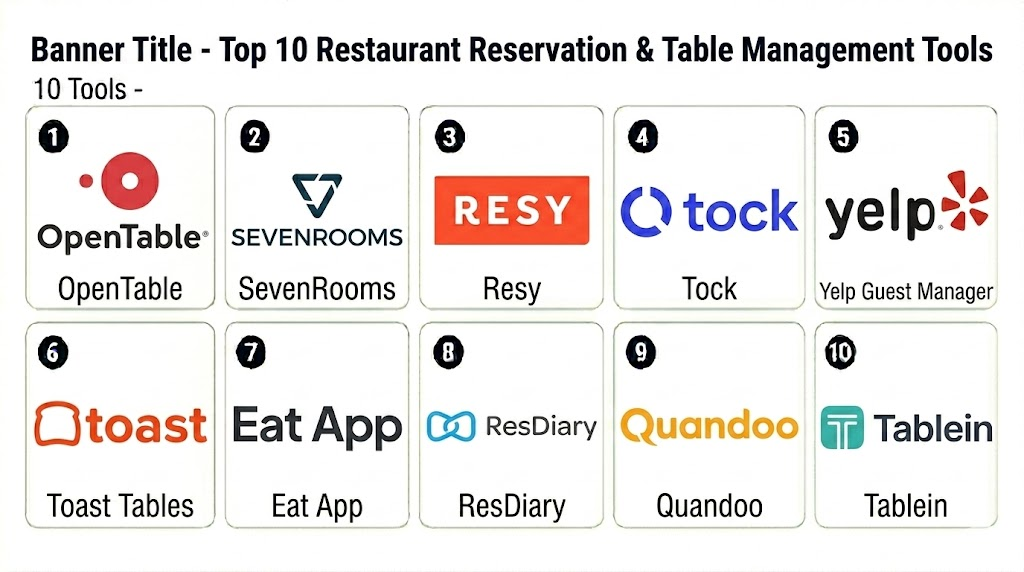
Top 10 Restaurant Reservation & Table Management Tools
1 — OpenTable
Short description: OpenTable is one of the most recognized restaurant reservation and table management platforms, combining a large diner marketplace with restaurant-facing reservation, seating, and guest management tools. It is well suited for restaurants that want strong consumer discovery plus operational reservation control.
Key Features
- Online reservation management across web and mobile channels
- Table and floor plan management for host teams
- Waitlist and availability controls
- Guest profiles, notes, tags, and visit history
- Marketing and diner discovery through a large marketplace
- Reporting for covers, bookings, guest behavior, and performance
- Integrations with restaurant technology tools and POS ecosystems
Pros
- Strong brand recognition among diners and restaurants
- Useful for restaurants that want marketplace visibility
- Broad feature set for reservations, seating, and guest management
Cons
- Marketplace dependency may not fit every restaurant strategy
- Pricing and coverage can vary by region and restaurant type
- Some operators may prefer more direct guest ownership workflows
Platforms / Deployment
Web / iOS / Android
Cloud
Security & Compliance
Business-grade account controls, user access management, and data protection are expected for this category. Specific certifications should be verified during vendor review.
SOC 2, ISO 27001, HIPAA: Not publicly stated.
Integrations & Ecosystem
OpenTable fits well into restaurants that want reservation visibility, guest management, and broader restaurant technology connectivity. It is often used alongside POS, website, review, marketing, and guest engagement systems.
- POS integrations
- Website booking widgets
- Guest messaging workflows
- Marketing and diner discovery channels
- Reporting and analytics tools
- Multi-location restaurant operations
Support & Community
OpenTable has a mature support ecosystem, onboarding resources, help documentation, and broad market familiarity. Restaurants should confirm support availability, training options, and account management based on plan and region.
2 — SevenRooms
Short description: SevenRooms is a guest experience, reservation, CRM, and marketing platform built for restaurants, hospitality groups, hotels, and venues that want deeper guest data ownership. It is especially strong for operators focused on personalization, direct relationships, and revenue optimization.
Key Features
- Reservation and table management
- Guest CRM with profiles, preferences, and visit history
- Automated marketing and guest engagement workflows
- Waitlist and direct booking tools
- Multi-location guest data and reporting
- Segmentation for VIPs, regulars, and high-value guests
- Revenue and operational analytics
Pros
- Strong guest CRM and personalization capabilities
- Good fit for hospitality groups and upscale operators
- Helps reduce dependency on third-party marketplace channels
Cons
- May be more advanced than small restaurants need
- Implementation can require process alignment across teams
- Pricing may be better suited to growth-focused operators
Platforms / Deployment
Web / iOS / Android
Cloud
Security & Compliance
Supports business-oriented data controls and role-based workflows. Specific certifications and compliance coverage should be verified directly with the vendor.
SOC 2, ISO 27001, HIPAA: Not publicly stated.
Integrations & Ecosystem
SevenRooms is built around guest data, marketing, and restaurant operations, so integrations are important for turning reservation data into repeat visits and personalized experiences.
- POS integrations
- Email and SMS marketing tools
- Website reservation widgets
- Guest CRM workflows
- Payment and deposit workflows
- Hospitality group reporting
Support & Community
SevenRooms provides onboarding, customer support, documentation, and account guidance for restaurant and hospitality teams. Larger operators should evaluate implementation support, data migration, and multi-location training.
3 — Resy
Short description: Resy is a reservation and restaurant management platform popular with modern restaurants, independent dining brands, and high-demand venues. It focuses on reservations, waitlists, guest notifications, and diner-facing discovery.
Key Features
- Online reservations and availability management
- Table and service pacing controls
- Waitlist and notification workflows
- Guest profile and visit history management
- Booking widgets for restaurant websites
- Mobile-friendly diner experience
- Tools for high-demand restaurant booking flows
Pros
- Strong fit for popular urban restaurants and independent brands
- Clean diner experience and recognizable consumer platform
- Useful for managing demand, waitlists, and booking flow
Cons
- Marketplace and regional strength may vary
- Some advanced CRM workflows may require complementary tools
- May not fit restaurants wanting highly customized enterprise operations
Platforms / Deployment
Web / iOS / Android
Cloud
Security & Compliance
Security details should be reviewed with the vendor during procurement. General expectations include account controls, secure guest data handling, and permission management.
SOC 2, ISO 27001, HIPAA: Not publicly stated.
Integrations & Ecosystem
Resy works well for restaurants that want a consumer-friendly reservation experience supported by operational tools for the host stand and dining room.
- Website reservation widgets
- Guest notification workflows
- POS connectivity where available
- Waitlist tools
- Diner marketplace visibility
- Reporting dashboards
Support & Community
Resy has strong visibility in restaurant markets and offers support resources for restaurant partners. Operators should verify onboarding, training, and support level based on location and business size.
4 — Tock
Short description: Tock is a reservation, table management, and prepaid experience platform known for restaurants, tasting menus, wineries, events, and experiences that need deposits, tickets, or advance payment workflows. It is a strong option for restaurants that want to protect revenue and manage special dining experiences.
Key Features
- Reservations and table management
- Prepaid reservations, deposits, and ticketed experiences
- Event and special experience booking
- Guest profiles and communication tools
- Waitlist and availability controls
- Support for tasting menus and limited-capacity experiences
- Reporting for bookings, revenue, and guest activity
Pros
- Strong for prepaid dining, events, and special experiences
- Helps reduce no-shows with deposits and ticketing
- Good fit for fine dining, wineries, and experience-led venues
Cons
- May be too specialized for simple casual restaurants
- Prepaid models may not fit every guest experience
- Operational setup can require careful policy planning
Platforms / Deployment
Web / iOS / Android
Cloud
Security & Compliance
Payment and guest data workflows should be reviewed carefully during vendor evaluation. Specific certifications should be confirmed directly.
SOC 2, ISO 27001, HIPAA: Not publicly stated.
Integrations & Ecosystem
Tock is especially useful where reservations connect with payments, events, and premium hospitality experiences.
- Payment and deposit workflows
- Website booking widgets
- Event booking pages
- Guest communication tools
- Restaurant and winery operations
- Reporting and booking analytics
Support & Community
Tock provides support and onboarding resources for restaurants and experience-based businesses. Operators should evaluate implementation support for deposits, refunds, cancellation policies, and event setup.
5 — Yelp Guest Manager
Short description: Yelp Guest Manager combines reservation, waitlist, table management, and guest communication tools with Yelp’s consumer discovery ecosystem. It is well suited for restaurants that want booking and waitlist tools connected to a strong local discovery platform.
Key Features
- Reservation and waitlist management
- Table management and host stand workflows
- Guest messaging and SMS notifications
- Yelp marketplace visibility
- Walk-in and queue management
- Guest notes and basic profile information
- Reporting for bookings and waitlist activity
Pros
- Useful for restaurants that rely on local discovery
- Strong waitlist and walk-in management capabilities
- Familiar platform for many diners
Cons
- Restaurants not focused on Yelp discovery may prefer other options
- Advanced CRM depth may be limited compared with dedicated guest data platforms
- Feature availability may vary by market
Platforms / Deployment
Web / iOS / Android
Cloud
Security & Compliance
Basic platform security, account controls, and data handling practices are expected. Specific certifications should be verified directly.
SOC 2, ISO 27001, HIPAA: Not publicly stated.
Integrations & Ecosystem
Yelp Guest Manager works best for restaurants that want to connect bookings and waitlist activity with local diner discovery and review-driven traffic.
- Yelp business profile visibility
- Website reservation options
- Guest messaging
- Waitlist management
- Host stand tools
- Reporting dashboards
Support & Community
Yelp offers restaurant business support resources and documentation. Restaurants should verify onboarding, response times, and support tiers based on plan and region.
6 — Toast Tables
Short description: Toast Tables is a reservation, waitlist, and table management solution designed to work well within the Toast restaurant technology ecosystem. It is a practical choice for restaurants already using Toast POS and looking to connect front-of-house workflows with broader restaurant operations.
Key Features
- Reservation management
- Waitlist and guest queue tools
- Table and floor plan management
- Guest profiles and visit notes
- SMS guest communication
- Integration with Toast restaurant ecosystem
- Reporting connected to restaurant operations
Pros
- Strong fit for restaurants already using Toast
- Helps connect table management with POS workflows
- Practical for casual dining, full-service restaurants, and growing operators
Cons
- Best value may be within the Toast ecosystem
- May not be ideal for restaurants using unrelated POS stacks
- Advanced hospitality CRM needs may require additional tools
Platforms / Deployment
Web / iOS / Android
Cloud
Security & Compliance
Toast generally supports business-grade restaurant technology controls, but specific reservation-related compliance details should be verified directly.
SOC 2, ISO 27001, HIPAA: Not publicly stated.
Integrations & Ecosystem
Toast Tables is most compelling when used as part of a connected restaurant operating stack.
- Toast POS ecosystem
- Guest communication tools
- Restaurant reporting
- Waitlist and host stand workflows
- Payment and order operations
- Multi-location restaurant management
Support & Community
Toast has a strong restaurant technology support ecosystem, including documentation, onboarding, and customer support. Restaurants should confirm support scope for reservations and table management specifically.
7 — Eat App
Short description: Eat App is a restaurant reservation, table management, and guest CRM platform used by independent restaurants, hospitality groups, and venues that want flexible booking and guest management workflows. It is suitable for both small and larger restaurant operations.
Key Features
- Online reservation management
- Table and floor plan controls
- Guest CRM and visit history
- Waitlist management
- Automated guest messaging
- Analytics and reporting
- Multi-location support options
Pros
- Balanced feature set for reservations, CRM, and operations
- Flexible enough for small restaurants and larger venues
- Good fit for restaurants wanting direct booking control
Cons
- Marketplace demand generation may be lower than larger consumer platforms
- Feature depth can vary by plan
- Some integrations may require verification before purchase
Platforms / Deployment
Web / iOS / Android
Cloud
Security & Compliance
Security controls should be verified during vendor review. Expected areas include permissions, data protection, and secure account access.
SOC 2, ISO 27001, HIPAA: Not publicly stated.
Integrations & Ecosystem
Eat App is designed to support reservations, guest communication, and CRM-oriented restaurant operations.
- Website booking widgets
- POS integrations
- Guest messaging
- CRM and marketing workflows
- Analytics dashboards
- Multi-location reporting
Support & Community
Eat App provides customer support, onboarding resources, and product guidance. Restaurants should validate support coverage, training, and implementation options based on geography and plan.
8 — ResDiary
Short description: ResDiary is a restaurant reservation and table management platform used by restaurants, hotels, pubs, and hospitality venues. It is a practical option for operators that need bookings, table plans, guest communication, and yield-focused controls.
Key Features
- Online reservation management
- Table planning and floor management
- Waitlist and availability controls
- Guest database and visit records
- Booking rules and channel controls
- Reporting and performance insights
- Multi-venue support options
Pros
- Good fit for hospitality venues beyond standalone restaurants
- Useful booking rules and table management controls
- Suitable for restaurants wanting direct reservation management
Cons
- Regional availability and ecosystem strength may vary
- Interface preferences should be evaluated during demo
- Advanced CRM automation may not match deeper guest engagement platforms
Platforms / Deployment
Web / iOS / Android
Cloud
Security & Compliance
Security and compliance details should be confirmed directly with the vendor.
SOC 2, ISO 27001, HIPAA: Not publicly stated.
Integrations & Ecosystem
ResDiary supports restaurant reservation operations with a focus on table control, online bookings, and guest management.
- Website booking tools
- POS integrations where available
- Guest communication
- Channel and booking rule controls
- Reporting dashboards
- Multi-venue management
Support & Community
ResDiary provides support and onboarding resources for hospitality customers. Buyers should confirm implementation support, regional coverage, and integration assistance.
9 — Quandoo
Short description: Quandoo is a restaurant reservation platform with diner discovery, online booking, and restaurant management features. It is useful for restaurants that want to increase booking visibility while managing reservations digitally.
Key Features
- Online restaurant reservations
- Diner marketplace visibility
- Booking management dashboard
- Table availability controls
- Guest communication
- Restaurant profile and discovery tools
- Reporting for reservations and guest activity
Pros
- Useful for restaurants seeking consumer discovery
- Simple online booking experience for diners
- Suitable for small and mid-sized restaurants in supported markets
Cons
- Market strength varies by region
- Advanced table management and CRM depth may be limited compared with premium platforms
- Less suitable for complex enterprise hospitality groups
Platforms / Deployment
Web / iOS / Android
Cloud
Security & Compliance
Security details should be reviewed directly with the vendor.
SOC 2, ISO 27001, HIPAA: Not publicly stated.
Integrations & Ecosystem
Quandoo works best where restaurants value marketplace visibility and simple reservation workflows.
- Restaurant profile pages
- Online booking tools
- Guest communication
- Reservation reporting
- Web-based management dashboard
- Consumer discovery channels
Support & Community
Support availability can vary by region. Restaurants should evaluate onboarding, customer service responsiveness, and local market coverage before committing.
10 — Tablein
Short description: Tablein is a restaurant reservation system focused on online bookings, table management, guest communication, and simple operational control. It is a good fit for small and mid-sized restaurants that want a practical reservation system without unnecessary complexity.
Key Features
- Online reservation booking
- Table and availability management
- Booking widgets for websites
- Guest notifications and reminders
- Reservation rules and limits
- Guest database and booking history
- Reporting for reservation activity
Pros
- Simple and approachable for smaller restaurants
- Useful for direct website reservations
- Less complex than enterprise-heavy platforms
Cons
- May lack advanced CRM and enterprise-grade workflow depth
- Marketplace discovery is not the primary strength
- Integration ecosystem should be verified before purchase
Platforms / Deployment
Web
Cloud
Security & Compliance
Security and compliance details should be confirmed with the vendor.
SOC 2, ISO 27001, HIPAA: Not publicly stated.
Integrations & Ecosystem
Tablein is strongest for restaurants that need clean direct booking workflows and simple table controls.
- Website booking widget
- Guest notifications
- Reservation dashboard
- Basic reporting
- Guest booking history
- Calendar-style reservation workflows
Support & Community
Tablein provides support resources for restaurant users. Buyers should confirm onboarding options, help documentation, and support response expectations before purchase.
Comparison Table
| Tool Name | Best For | Platform(s) Supported | Deployment | Standout Feature | Public Rating |
|---|---|---|---|---|---|
| OpenTable | Restaurants needing marketplace visibility and reservation operations | Web, iOS, Android | Cloud | Large diner marketplace plus table management | N/A |
| SevenRooms | Hospitality groups and guest data-driven restaurants | Web, iOS, Android | Cloud | Guest CRM and direct relationship management | N/A |
| Resy | High-demand independent and urban restaurants | Web, iOS, Android | Cloud | Modern booking and waitlist experience | N/A |
| Tock | Fine dining, events, wineries, and prepaid experiences | Web, iOS, Android | Cloud | Deposits, tickets, and prepaid reservations | N/A |
| Yelp Guest Manager | Local restaurants using discovery and waitlists | Web, iOS, Android | Cloud | Yelp discovery plus waitlist management | N/A |
| Toast Tables | Restaurants using Toast ecosystem | Web, iOS, Android | Cloud | Connected table management within Toast stack | N/A |
| Eat App | SMBs and hospitality groups needing reservation CRM | Web, iOS, Android | Cloud | Flexible reservation, CRM, and analytics tools | N/A |
| ResDiary | Restaurants, pubs, hotels, and hospitality venues | Web, iOS, Android | Cloud | Booking rules and table plan controls | N/A |
| Quandoo | Restaurants seeking regional booking visibility | Web, iOS, Android | Cloud | Consumer discovery and online reservations | N/A |
| Tablein | Small and mid-sized restaurants needing simple bookings | Web | Cloud | Simple direct website reservation system | N/A |
Evaluation & Scoring of Restaurant Reservation & Table Management
| Tool Name | Core 25% | Ease 15% | Integrations 15% | Security 10% | Performance 10% | Support 10% | Value 15% | Weighted Total 0–10 |
|---|---|---|---|---|---|---|---|---|
| OpenTable | 9.3 | 8.8 | 9.0 | 8.2 | 9.0 | 8.7 | 8.0 | 8.78 |
| SevenRooms | 9.4 | 8.3 | 9.0 | 8.5 | 8.8 | 8.6 | 8.1 | 8.76 |
| Resy | 8.7 | 8.8 | 8.2 | 8.0 | 8.6 | 8.3 | 8.2 | 8.45 |
| Tock | 8.8 | 8.2 | 8.0 | 8.2 | 8.6 | 8.3 | 8.0 | 8.35 |
| Yelp Guest Manager | 8.1 | 8.7 | 7.7 | 7.8 | 8.2 | 8.0 | 8.4 | 8.16 |
| Toast Tables | 8.3 | 8.5 | 8.8 | 8.0 | 8.4 | 8.2 | 8.3 | 8.40 |
| Eat App | 8.5 | 8.4 | 8.1 | 7.8 | 8.3 | 8.1 | 8.5 | 8.27 |
| ResDiary | 8.2 | 8.2 | 7.8 | 7.8 | 8.2 | 8.0 | 8.3 | 8.10 |
| Quandoo | 7.7 | 8.4 | 7.2 | 7.5 | 8.0 | 7.8 | 8.2 | 7.86 |
| Tablein | 7.5 | 8.8 | 6.8 | 7.3 | 7.8 | 7.7 | 8.6 | 7.73 |
Which Restaurant Reservation & Table Management Tool Is Right for You?
Solo / Freelancer
For solo restaurant consultants, pop-up operators, private chefs, and very small venues, simplicity matters more than enterprise features. Tools like Tablein, Quandoo, or Eat App may be easier to manage because they focus on straightforward online reservations, guest reminders, and basic table controls.
If your business does not need complex seating logic, CRM automation, or multi-location reporting, avoid overbuying. A simple booking widget, cancellation rules, and guest communication may be enough.
SMB
Small and mid-sized restaurants should look for a balance of ease, affordability, and reliable service operations. Eat App, ResDiary, Yelp Guest Manager, Toast Tables, and Tablein are practical options depending on your region, POS stack, and booking strategy.
SMBs should prioritize:
- Easy host stand adoption
- Website booking widget
- Waitlist and walk-in management
- Guest reminders
- Simple reporting
- POS compatibility
- Fair pricing
If your restaurant gets many walk-ins, waitlist management may be more valuable than advanced CRM. If repeat guests drive revenue, guest profiles and tags become more important.
Mid-Market
Mid-market restaurant groups need stronger reporting, multi-location workflows, guest history, permissions, and integrations. SevenRooms, OpenTable, Toast Tables, Eat App, and ResDiary are strong candidates for this segment.
Mid-market buyers should evaluate:
- Multi-location dashboards
- Centralized guest profiles
- Brand-level reporting
- POS and marketing integrations
- Staff permissions
- Data export options
- Support quality
At this stage, the reservation platform becomes more than a booking calendar. It becomes part of guest retention, revenue optimization, and service consistency.
Enterprise
Enterprise hospitality groups, hotel restaurants, fine dining groups, and multi-brand operators should focus on scalability, permissions, CRM depth, integrations, and data governance. SevenRooms, OpenTable, Tock, and Toast Tables are often strong options depending on operating model.
Enterprise teams should ask deeper procurement questions:
- Can the platform support multiple brands and locations?
- Does it offer role-based access and audit visibility?
- How does guest data move between systems?
- Can it integrate with POS, loyalty, marketing, and data platforms?
- What migration support is available?
- Can teams standardize booking rules while allowing local flexibility?
For experience-based hospitality, Tock may be especially valuable. For guest data ownership and personalization, SevenRooms is often compelling. For marketplace demand and reservation scale, OpenTable remains a strong contender.
Budget vs Premium
Budget-conscious restaurants should avoid paying for features they will not use. If your main requirement is online booking, guest reminders, and basic availability, Tablein, Quandoo, or simple plans from broader platforms may be enough.
Premium platforms make more sense when restaurants need:
- High booking volume control
- Advanced guest CRM
- Deposits and prepaid experiences
- Multi-location operations
- Marketing automation
- Deep reporting
- Strong integrations
Premium does not always mean better. It means better fit when your restaurant can actually use the advanced capabilities.
Feature Depth vs Ease of Use
Restaurants with lean teams should prioritize ease of use. Hosts need a system that works quickly during peak service. If a tool is too complex, staff may create workarounds, ignore features, or make mistakes during rush periods.
Feature-rich tools like SevenRooms, OpenTable, and Tock are valuable when implemented properly. Simpler tools like Tablein or Quandoo can be better when speed and low training effort matter most.
The best approach is to test the host stand workflow during a realistic service scenario before making a final decision.
Integrations & Scalability
Integrations are critical if reservations connect to POS, marketing, loyalty, payments, guest messaging, or business intelligence. Restaurants should verify integrations before signing a contract, not after implementation.
Important integration questions include:
- Does it integrate with your POS?
- Can it embed reservations on your website?
- Does it support guest messaging?
- Can you export guest data?
- Does it support marketing segmentation?
- Can it handle multiple locations?
- Are APIs available if needed?
If your restaurant group is growing, choose a platform that can scale with new locations, new brands, and more complex reporting needs.
Security & Compliance Needs
Restaurant reservation platforms store guest names, phone numbers, email addresses, visit history, preferences, notes, and sometimes payment-related data. Buyers should treat this as sensitive guest information.
Security evaluation should include:
- MFA support
- Role-based permissions
- Staff access controls
- Secure guest data handling
- Data export and deletion policies
- Vendor security documentation
- Payment handling process
- Privacy compliance expectations
If your restaurant serves corporate clients, VIP guests, hotels, or regulated environments, security review becomes more important. Do not assume compliance claims unless the vendor confirms them.
Frequently Asked Questions
1. What is restaurant reservation and table management software?
Restaurant reservation and table management software helps restaurants manage bookings, seating, table availability, waitlists, walk-ins, guest profiles, and front-of-house workflows. It replaces manual notebooks and disconnected calendars with a real-time digital system.
2. How much does restaurant reservation software cost?
Pricing varies by vendor, region, plan, booking volume, marketplace participation, and feature set. Some platforms use monthly subscriptions, some charge per cover, and others may combine fixed fees with usage-based pricing.
3. What is the difference between reservation software and table management software?
Reservation software focuses on booking requests and availability, while table management software focuses on seating, floor plans, table turns, waitlists, and host stand operations. Many modern platforms combine both capabilities.
4. Which tool is best for small restaurants?
Small restaurants should consider tools that are easy to set up, affordable, and simple for staff to use. Tablein, Eat App, Yelp Guest Manager, Quandoo, and ResDiary can be practical options depending on the restaurant’s location and needs.
5. Which tool is best for fine dining restaurants?
Fine dining restaurants often need guest profiles, VIP notes, deposits, pacing, cancellation policies, and personalized service workflows. SevenRooms, Tock, OpenTable, and Resy are strong options depending on the restaurant’s guest strategy.
6. Can reservation tools reduce no-shows?
Yes, many platforms help reduce no-shows through confirmation messages, automated reminders, deposits, cancellation windows, credit card holds, and waitlist replacement workflows. The best approach depends on guest expectations and restaurant style.
7. Do these tools integrate with POS systems?
Many restaurant reservation platforms integrate with POS systems, but support varies by vendor and POS provider. Buyers should verify the exact integration, data flow, setup process, and cost before choosing a platform.
8. Is guest data safe in restaurant reservation platforms?
Most reputable platforms use standard security practices, but buyers should still review access controls, privacy policies, payment handling, staff permissions, and vendor security documentation. Do not assume certifications unless clearly confirmed.
9. How long does implementation usually take?
Implementation can range from a quick setup for a single small restaurant to a longer rollout for multi-location groups. Setup usually includes floor plans, booking rules, staff training, website widgets, integrations, and data migration.
10. What are common mistakes when choosing a reservation platform?
Common mistakes include choosing only by brand name, ignoring POS integration, overlooking staff usability, failing to test the host stand workflow, and not checking guest data ownership. Restaurants should run a pilot before full rollout.
Conclusion
Restaurant Reservation & Table Management software has become a core part of modern restaurant operations because it directly affects guest experience, table utilization, staff efficiency, and revenue control. The best tool depends on how your restaurant operates: a small neighborhood restaurant may need simple direct bookings and reminders, while a fine dining venue may need deposits, pacing, VIP notes, and prepaid experiences. Hospitality groups should prioritize CRM depth, multi-location reporting, integrations, and security controls, while restaurants already using a specific POS ecosystem may benefit from choosing a reservation tool that connects naturally with that stack. There is no single universal winner in this category. The right next step is to shortlist 2–3 tools, run a realistic pilot during service conditions, validate POS and website integrations, review security and data controls, and then choose the platform that best fits your restaurant’s service model, guest strategy, and growth plans.

Find Trusted Cardiac Hospitals
Compare heart hospitals by city and services — all in one place.
Explore Hospitals
Reservation and table management tools help restaurants handle bookings more smoothly and improve the overall dining experience for customers.