Introduction
Web Analytics Tools help organizations measure, track, and optimize user behavior on websites and digital platforms. These tools provide insights into visitor traffic, engagement, conversions, and performance metrics, enabling data-driven decision-making. businesses rely on web analytics not only to understand website usage but also to personalize experiences, optimize marketing campaigns, and improve overall digital ROI.
Real-world use cases include:
- E-commerce websites tracking product page visits, cart abandonment, and conversion rates.
- SaaS platforms monitoring user engagement and feature adoption.
- Marketing teams optimizing campaigns through traffic analysis and A/B testing.
- Media companies analyzing content consumption and audience behavior.
- Enterprises monitoring internal and external web assets for operational insights.
Evaluation criteria for buyers:
- Real-time analytics and dashboards
- Event tracking and user behavior insights
- Conversion tracking and funnel analysis
- Integration with marketing, CRM, and CMS platforms
- AI-powered analytics and predictive insights
- Multi-channel and multi-device tracking
- Data privacy, security, and compliance
- Ease of use and reporting capabilities
- Customization and scalability
- Pricing and total cost of ownership
Best for: marketing teams, product managers, digital agencies, and enterprises seeking detailed insights into website performance.
Not ideal for: very small sites or personal blogs with minimal traffic and limited analytics needs.
Key Trends in Web Analytics Tools
- AI-driven predictive analytics for user behavior and conversions.
- Real-time dashboards for instant insights and anomaly detection.
- Privacy-first tracking with consent management for GDPR and CCPA compliance.
- Integration with CDPs, CRM, and marketing automation platforms.
- Multi-device and cross-channel attribution tracking.
- Automated insights, anomaly detection, and recommendations.
- Enhanced visualization tools for non-technical stakeholders.
- Event-driven tracking with granular behavior analysis.
- Low-code/no-code integration options for business users.
- Cloud-native, scalable solutions with global data infrastructure.
How We Selected These Tools (Methodology)
- Market adoption and brand recognition.
- Comprehensive feature set covering reporting, tracking, AI analytics, and integrations.
- Reliability, uptime, and performance signals.
- Security posture including data encryption, access control, and compliance certifications.
- Integration ecosystem with marketing, CRM, CMS, and BI platforms.
- Fit for SMB, mid-market, and enterprise segments.
- AI/ML capabilities for predictive analytics.
- Ease of deployment and user interface quality.
- Vendor support, documentation, and training resources.
- Pricing model, value delivered, and scalability for growing businesses.
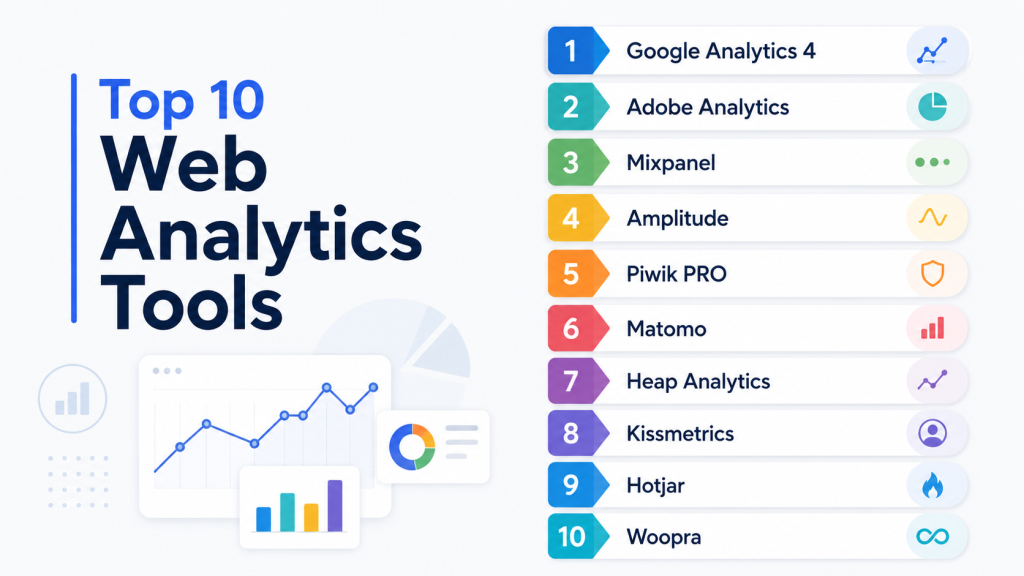
Top 10 Web Analytics Tools
1 — Google Analytics 4
Short description: Cloud-based analytics platform offering user behavior insights, real-time reporting, and event-driven tracking for websites and apps.
Key Features
- Event-based tracking and user engagement analysis
- AI-powered predictive metrics and insights
- Real-time reporting and dashboards
- Integration with Google Ads and BigQuery
- Funnel analysis and conversion tracking
Pros
- Free to use with scalable options
- Strong integration ecosystem
- Real-time data insights
Cons
- Learning curve for GA4 migration
- Limited advanced segmentation for free plan
- Privacy compliance requires configuration
Platforms / Deployment
Web, Cloud
Security & Compliance
GDPR, SOC 2, SSO support via Google Workspace
Integrations & Ecosystem
- Google Ads, Tag Manager, BigQuery
- API access for custom dashboards
- CRM and marketing automation connectors
Support & Community
Extensive documentation, community forums, Google support tiers
2 — Adobe Analytics
Short description: Enterprise-grade analytics solution for tracking user behavior, segmentation, and multi-channel marketing performance.
Key Features
- Advanced segmentation and cohort analysis
- Real-time dashboards and reporting
- AI-driven insights via Adobe Sensei
- Attribution modeling and conversion tracking
- Integration with Adobe Marketing Cloud
Pros
- Enterprise-grade scalability
- Strong AI and predictive analytics
- Flexible reporting and visualization
Cons
- High cost, suitable for large enterprises
- Complex setup and configuration
- Steep learning curve
Platforms / Deployment
Web, Cloud
Security & Compliance
SOC 2, ISO 27001, GDPR
Integrations & Ecosystem
- Adobe Marketing Cloud, CRM platforms
- APIs for custom reporting
- BI and dashboard connectors
Support & Community
Enterprise support, professional services, active partner ecosystem
3 — Mixpanel
Short description: Product and behavior analytics tool for websites and mobile apps, focusing on events and retention tracking.
Key Features
- Event-based user tracking
- Funnel and cohort analysis
- Retention tracking and notifications
- A/B testing and experimentation
- Mobile and web analytics
Pros
- Deep insights into product usage
- User-level tracking and behavior analysis
- Flexible reporting dashboards
Cons
- Limited free tier
- Requires event configuration expertise
- Not ideal for traditional pageview-focused tracking
Platforms / Deployment
Web, Cloud, iOS, Android
Security & Compliance
SOC 2, GDPR
Integrations & Ecosystem
- CRM, email marketing, BI tools
- APIs for integration
- Webhooks and SDKs
Support & Community
Documentation, chat support, online community
4 — Amplitude
Short description: Product analytics platform offering behavioral insights, user journeys, and retention analysis for SaaS and mobile apps.
Key Features
- Event-based tracking
- Retention and churn analysis
- Behavioral cohort segmentation
- Funnel and conversion tracking
- Predictive analytics
Pros
- Strong focus on user behavior
- Clear dashboards for non-technical teams
- Integration with marketing and CRM platforms
Cons
- Advanced features require enterprise plan
- Limited pageview-based analytics
- Setup requires planning
Platforms / Deployment
Web, Cloud, iOS, Android
Security & Compliance
SOC 2, GDPR
Integrations & Ecosystem
- Slack, Salesforce, Zapier
- API and SDK support
- BI tool integrations
Support & Community
Documentation, enterprise support, online forums
5 — Piwik PRO
Short description: Privacy-focused analytics platform offering data governance, web, and app tracking, compliant with GDPR and HIPAA.
Key Features
- Privacy-compliant analytics
- Event tracking and funnel analysis
- User segmentation
- Data retention and access controls
- Tag management system
Pros
- Strong data privacy features
- On-premises deployment option
- Compliance with strict regulations
Cons
- Smaller community than GA or Adobe
- Limited advanced AI analytics
- Enterprise plan required for full feature set
Platforms / Deployment
Web, Cloud, Self-hosted
Security & Compliance
SOC 2, GDPR, HIPAA
Integrations & Ecosystem
- CMS and marketing platforms
- API access
- Tag manager and BI tools
Support & Community
Documentation, enterprise support, professional services
6 — Matomo
Short description: Open-source web analytics platform for tracking website visitors while ensuring data privacy and ownership.
Key Features
- Event and pageview tracking
- Real-time dashboards
- Funnel and goal analysis
- Heatmaps and session recordings
- Multi-channel analytics
Pros
- Full data ownership
- Privacy-compliant tracking
- Customizable reports
Cons
- Self-hosted setup requires technical expertise
- Limited SaaS features in free plan
- Smaller integration ecosystem
Platforms / Deployment
Web, Cloud, Self-hosted
Security & Compliance
GDPR, SOC 2, encryption
Integrations & Ecosystem
- CMS and e-commerce platforms
- API access for custom reporting
- BI and dashboard integrations
Support & Community
Documentation, email support, active open-source community
7 — Heap Analytics
Short description: Automatic event tracking platform that captures user behavior without manual tagging.
Key Features
- Automatic event capture
- Conversion funnels and retention analysis
- User segmentation
- Real-time dashboards
- A/B testing support
Pros
- Quick setup with auto-tracking
- Granular user behavior insights
- Useful for SaaS and web apps
Cons
- Less control over data collection
- Advanced analytics require paid plans
- Not ideal for traditional pageview reporting
Platforms / Deployment
Web, Cloud, iOS, Android
Security & Compliance
SOC 2, GDPR
Integrations & Ecosystem
- CRM, marketing tools
- API and SDK support
- Webhooks
Support & Community
Documentation, enterprise support, community forums
8 — Kissmetrics
Short description: Customer analytics platform focused on tracking revenue, conversions, and retention for SaaS and e-commerce.
Key Features
- Funnel and retention analysis
- Revenue tracking per user
- Behavioral segmentation
- Cohort analysis
- Campaign tracking
Pros
- Strong focus on customer lifecycle
- Clear metrics for conversions
- Easy integration with SaaS apps
Cons
- Limited free tier
- Advanced reporting requires paid plan
- Setup may be complex for large datasets
Platforms / Deployment
Web, Cloud
Security & Compliance
SOC 2, GDPR
Integrations & Ecosystem
- CRM, email marketing
- API access
- Marketing platforms
Support & Community
Documentation, email support, online community
9 — Hotjar
Short description: Analytics platform combining heatmaps, session recordings, and feedback polls to understand user behavior.
Key Features
- Heatmaps and click tracking
- Session recordings
- Conversion funnels
- Surveys and polls
- Real-time analytics
Pros
- Visual insights for UX optimization
- Easy to implement
- Supports marketing and product teams
Cons
- Limited quantitative analytics
- Not a replacement for GA-level data
- Premium required for advanced features
Platforms / Deployment
Web, Cloud
Security & Compliance
SOC 2, GDPR
Integrations & Ecosystem
- CMS and website platforms
- API access
- Marketing tools
Support & Community
Documentation, email support, online community
10 — Woopra
Short description: Customer journey analytics platform tracking web, mobile, and product interactions for retention and engagement analysis.
Key Features
- Real-time visitor tracking
- Funnel and retention analysis
- User segmentation and profiles
- Multi-channel analytics
- Alerts and reporting
Pros
- Unified customer journey view
- Real-time analytics
- Flexible segmentation
Cons
- Setup complexity for large apps
- Limited free plan features
- Enterprise pricing can be high
Platforms / Deployment
Web, Cloud, iOS, Android
Security & Compliance
SOC 2, GDPR
Integrations & Ecosystem
- CRM, marketing automation, SaaS apps
- API and SDK support
- BI and dashboard integrations
Support & Community
Documentation, enterprise support, community forum
Comparison Table (Top 10)
| Tool Name | Best For | Platform(s) Supported | Deployment | Standout Feature | Public Rating |
|---|---|---|---|---|---|
| Google Analytics 4 | Website & app tracking | Web | Cloud | AI-powered insights | N/A |
| Adobe Analytics | Enterprise analytics | Web | Cloud | AI & segmentation | N/A |
| Mixpanel | Product & behavior analytics | Web, iOS, Android | Cloud | Event-based tracking | N/A |
| Amplitude | Product analytics | Web, iOS, Android | Cloud | User journey insights | N/A |
| Piwik PRO | Privacy-focused analytics | Web | Cloud / Self-hosted | GDPR & HIPAA compliant | N/A |
| Matomo | Open-source analytics | Web | Cloud / Self-hosted | Data ownership | N/A |
| Heap Analytics | Auto-event tracking | Web, iOS, Android | Cloud | Automatic event capture | N/A |
| Kissmetrics | SaaS & e-commerce | Web | Cloud | Revenue & retention tracking | N/A |
| Hotjar | UX analytics | Web | Cloud | Heatmaps & session recordings | N/A |
| Woopra | Customer journey analytics | Web, iOS, Android | Cloud | Multi-channel tracking | N/A |
Evaluation & Scoring of Web Analytics Tools
| Tool Name | Core (25%) | Ease (15%) | Integrations (15%) | Security (10%) | Performance (10%) | Support (10%) | Value (15%) | Weighted Total (0–10) |
|---|---|---|---|---|---|---|---|---|
| Google Analytics 4 | 10 | 9 | 9 | 9 | 9 | 8 | 10 | 9.0 |
| Adobe Analytics | 10 | 7 | 9 | 9 | 9 | 8 | 7 | 8.4 |
| Mixpanel | 9 | 8 | 8 | 8 | 9 | 8 | 8 | 8.2 |
| Amplitude | 9 | 8 | 8 | 8 | 9 | 8 | 8 | 8.2 |
| Piwik PRO | 8 | 7 | 7 | 9 | 8 | 8 | 8 | 7.9 |
| Matomo | 8 | 7 | 7 | 9 | 8 | 7 | 8 | 7.8 |
| Heap Analytics | 8 | 8 | 7 | 8 | 8 | 7 | 8 | 7.9 |
| Kissmetrics | 8 | 7 | 7 | 8 | 8 | 7 | 8 | 7.8 |
| Hotjar | 7 | 9 | 7 | 8 | 7 | 7 | 7 | 7.6 |
| Woopra | 8 | 8 | 8 | 8 | 8 | 8 | 8 | 8.0 |
Interpretation: Weighted totals indicate comparative strengths across core features, ease of use, integrations, security, performance, support, and value. Higher scores suggest more complete analytics solutions for enterprise needs.
Which Web Analytics Tool Is Right for You?
Solo / Freelancer
Google Analytics 4 or Hotjar for simple setup, basic tracking, and cost-effectiveness.
SMB
Mixpanel or Heap Analytics for user behavior insights and funnel tracking.
Mid-Market
Amplitude or Piwik PRO for product analytics, privacy compliance, and multi-channel tracking.
Enterprise
Adobe Analytics or Woopra for deep segmentation, AI-driven insights, and large-scale integration.
Budget vs Premium
Free or low-cost tools like Google Analytics 4 and Hotjar are suitable for SMBs; premium platforms deliver advanced AI analytics and enterprise support.
Feature Depth vs Ease of Use
Google Analytics and Heap are easier to implement; Adobe Analytics and Amplitude provide deeper segmentation and insights.
Integrations & Scalability
Enterprises should prioritize tools that integrate with CRM, CMS, e-commerce, and BI platforms.
Security & Compliance Needs
SOC 2, GDPR, HIPAA, and enterprise-level access controls are critical for regulated industries and privacy-focused businesses.
Frequently Asked Questions (FAQs)
- What is a web analytics tool?
A platform to track, measure, and analyze website and app performance, user behavior, and conversions. - Do web analytics tools support AI insights?
Yes, many tools provide predictive analytics, anomaly detection, and AI-driven recommendations. - Are web analytics tools suitable for small businesses?
Yes, tools like Google Analytics 4 or Hotjar provide essential metrics without high cost. - Can these tools integrate with other platforms?
Most provide APIs or connectors for CMS, CRM, e-commerce, and marketing platforms. - Do they support multi-channel tracking?
Yes, enterprise tools like Amplitude, Woopra, and Piwik PRO track web, mobile, and app interactions. - Are these tools secure and privacy-compliant?
Many are SOC 2, GDPR, HIPAA compliant, with encryption and role-based access. - What is the difference between event-based and pageview-based tracking?
Event-based tracking monitors user actions (clicks, form submissions), while pageview tracking counts page loads. - Can web analytics tools help improve conversions?
Yes, by analyzing user behavior, optimizing funnels, and personalizing experiences. - Do these tools provide real-time data?
Many offer real-time dashboards, alerts, and metrics to track ongoing user activity. - What should I consider when selecting a web analytics tool?
Consider dataset size, tracking granularity, AI capabilities, integrations, scalability, and compliance.
Conclusion
Web Analytics Tools are critical for understanding user behavior, optimizing digital experiences, and driving business decisions. SMBs can start with Google Analytics 4 or Hotjar, while mid-market and enterprise organizations benefit from Mixpanel, Amplitude, or Adobe Analytics for deeper insights. Evaluating integration, security, scalability, and AI capabilities ensures a platform fits business needs. Organizations should shortlist 2–3 tools, run pilot tracking, and validate reporting and analytics. Continuous monitoring allows data-driven decisions and improved user engagement. The right analytics solution improves marketing efficiency, conversion rates, and digital strategy effectiveness.

Find Trusted Cardiac Hospitals
Compare heart hospitals by city and services — all in one place.
Explore Hospitals
Web analytics tools are explained clearly, and the comparison helps in understanding how traffic tracking, user behavior insights, and data analysis support better business decisions.