Introduction
Food Supply Chain Traceability Tools are software solutions designed to track, monitor, and document the journey of food products from farm to fork. These platforms provide visibility into sourcing, processing, distribution, and retail stages, helping companies ensure quality, compliance, and consumer trust. with increasing regulatory requirements, consumer demand for transparency, and global supply chain complexities, traceability has become essential for food businesses of all sizes.
Real-world use cases include:
- Farm-to-Table Transparency: Tracking ingredients from origin to processing for quality assurance.
- Regulatory Compliance: Meeting FDA, EU, or local food safety standards.
- Recall Management: Quickly identifying and isolating contaminated batches.
- Supplier Verification: Ensuring suppliers adhere to safety and sustainability standards.
- Consumer Transparency: Providing end-users with product information and origin data.
Buyers should evaluate criteria such as:
- End-to-end traceability coverage
- Integration with ERP, WMS, and logistics systems
- Real-time monitoring and alerting
- Compliance with food safety standards (FSMA, HACCP, ISO)
- Analytics and reporting capabilities
- Ease of use and onboarding
- Vendor support and training
- Deployment flexibility (cloud, hybrid)
- Cost and scalability
Best for: Food manufacturers, distributors, retailers, quality assurance teams, and large-scale supply chain operators.
Not ideal for: Small businesses or local producers with limited supply chain complexity, where manual traceability may suffice.
Key Trends in Food Supply Chain Traceability Tools
- AI-powered predictive analytics for contamination risk
- Blockchain-enabled immutable traceability for high-value products
- IoT-enabled sensors for real-time condition monitoring
- Cloud-native deployment for global visibility
- Mobile and handheld applications for field-level tracking
- Integration with ERP, WMS, and TMS systems
- Sustainability and ESG metrics tracking for food sourcing
- Modular subscription pricing with tiered analytics options
- Automated recall and alert management
- Enhanced cybersecurity and compliance features
How We Selected These Tools (Methodology)
- Market adoption and industry recognition
- Comprehensive features across tracking, compliance, and analytics
- Reliability and performance signals from global deployments
- Security posture, including encryption and access control
- Integration capabilities with ERP, WMS, MES, and logistics platforms
- Fit across SMB, mid-market, and enterprise segments
- Regulatory compliance readiness (FDA, EU, ISO)
- Ease of use and onboarding experience
- Analytics and AI capabilities
- Vendor support and ecosystem strength
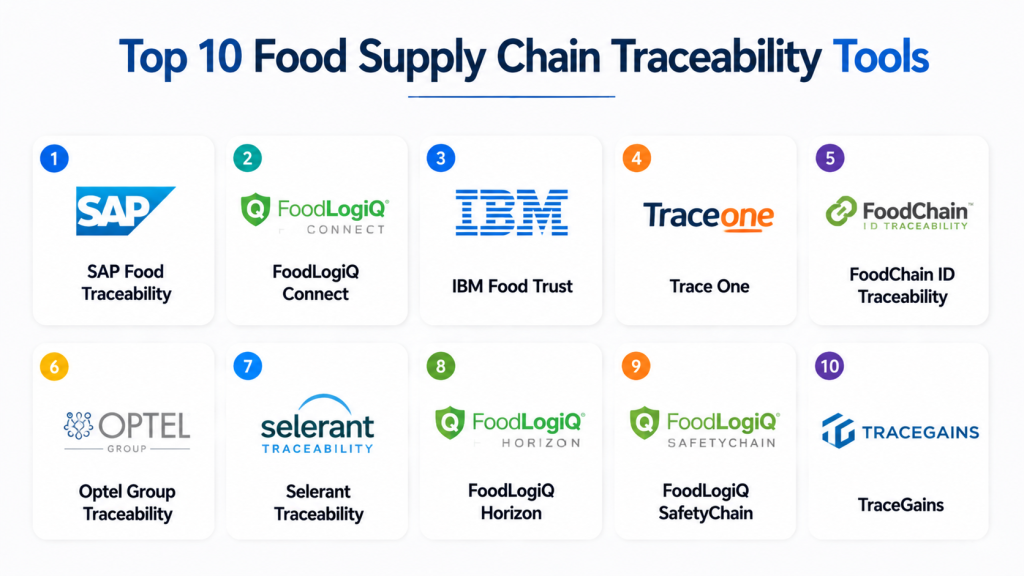
Top 10 Food Supply Chain Traceability Tools
1- SAP Food Traceability
Short description: Enterprise-grade solution for tracking food products across global supply chains with integrated analytics and compliance monitoring.
Key Features
- End-to-end farm-to-fork traceability
- Regulatory compliance dashboards
- Batch and lot tracking
- Recall management workflows
- Integration with SAP ERP and TMS
- Analytics and reporting
- AI-based anomaly detection
Pros
- Comprehensive enterprise coverage
- Strong integration with SAP ecosystem
- Advanced reporting and analytics
Cons
- High cost for small businesses
- Complex setup and training requirements
Platforms / Deployment
- Web
- Cloud / On-premises
Security & Compliance
Not publicly stated
Integrations & Ecosystem
- ERP, WMS, TMS integrations
- API connectivity for custom applications
- IoT sensor integration
Support & Community
Enterprise support, professional services, and documentation.
2- FoodLogiQ Connect
Short description: Cloud-native platform enabling real-time traceability, supplier management, and recall management for food manufacturers and distributors.
Key Features
- Batch and lot tracking
- Supplier onboarding and verification
- Recall management and alerting
- Analytics dashboards
- Mobile field applications
Pros
- User-friendly and fast deployment
- Designed for food industry use
- Strong mobile support
Cons
- Limited advanced analytics
- Primarily suited for mid-market and above
Platforms / Deployment
- Web, iOS, Android
- Cloud
Security & Compliance
Not publicly stated
Integrations & Ecosystem
- ERP and TMS integrations
- API access for data export
- Supplier network integration
Support & Community
Documentation, online support, and customer training.
3- IBM Food Trust
Short description: Blockchain-enabled traceability platform for enhanced transparency, product authenticity, and regulatory compliance in food supply chains.
Key Features
- Immutable blockchain records
- Supplier verification
- Real-time tracking from farm to retail
- Recall and audit management
- IoT sensor integration
Pros
- High trust and transparency
- Strong for global and high-value supply chains
- Supports multi-party collaboration
Cons
- Blockchain setup can be complex
- Premium pricing for smaller operations
Platforms / Deployment
- Web
- Cloud
Security & Compliance
Not publicly stated
Integrations & Ecosystem
- ERP and WMS integration
- API access
- IoT-enabled devices
Support & Community
Enterprise-level support and knowledge resources.
4- Trace One
Short description: Collaborative platform for product data, quality, and traceability management across the food supply chain.
Key Features
- Supplier compliance tracking
- Product and batch data management
- Recall workflows
- Regulatory reporting
- Analytics dashboards
Pros
- Collaborative supplier management
- SaaS-based cloud deployment
- Intuitive interface
Cons
- Limited IoT sensor integration
- Advanced analytics require higher tiers
Platforms / Deployment
- Web
- Cloud
Security & Compliance
Not publicly stated
Integrations & Ecosystem
- ERP and WMS integration
- Supplier data APIs
- Reporting integrations
Support & Community
Documentation and customer support portal.
5- FoodChain ID Traceability
Short description: Cloud-based traceability platform designed for food manufacturers, processors, and distributors to monitor compliance and product safety.
Key Features
- Lot and batch tracking
- Recall management
- Supplier verification
- Mobile and web dashboards
- Regulatory compliance modules
Pros
- Easy to deploy and use
- Designed for food industry requirements
- Supports small to medium enterprises
Cons
- Limited advanced analytics
- Less suited for large global supply chains
Platforms / Deployment
- Web, iOS, Android
- Cloud
Security & Compliance
Not publicly stated
Integrations & Ecosystem
- ERP, WMS, and logistics integrations
- API access for supplier data
- Mobile application integration
Support & Community
Standard support with online documentation.
6- Optel Group Traceability
Short description: End-to-end traceability platform for food, beverage, and pharmaceutical supply chains with serialization and compliance monitoring.
Key Features
- Product serialization
- Regulatory compliance support
- Batch and lot tracking
- Recall management
- Analytics dashboards
Pros
- Strong regulatory compliance
- Global supply chain support
- Advanced reporting
Cons
- Implementation complexity
- Premium pricing
Platforms / Deployment
- Web
- Cloud
Security & Compliance
Not publicly stated
Integrations & Ecosystem
- ERP and WMS
- API for data exchange
- IoT device support
Support & Community
Enterprise support and knowledge resources.
7- Selerant Traceability
Short description: Food and beverage supply chain traceability solution offering real-time visibility, compliance, and analytics.
Key Features
- Batch tracking and monitoring
- Supplier compliance tracking
- Recall management
- Analytics and dashboards
- Mobile support
Pros
- End-to-end visibility
- Strong regulatory coverage
- Mobile-enabled
Cons
- Advanced features require enterprise package
- Limited smaller business options
Platforms / Deployment
- Web, iOS, Android
- Cloud
Security & Compliance
Not publicly stated
Integrations & Ecosystem
- ERP and WMS connectors
- API access
- Supplier network integration
Support & Community
Documentation, online support, and training.
8- FoodLogiQ Horizon
Short description: SaaS platform for food traceability and quality management, enabling recall readiness and supplier compliance.
Key Features
- Batch and lot tracking
- Recall workflows
- Supplier verification
- Dashboard analytics
- Mobile access
Pros
- SaaS deployment with rapid onboarding
- User-friendly
- Strong food industry focus
Cons
- Limited analytics for enterprise needs
- Less customization
Platforms / Deployment
- Web, iOS, Android
- Cloud
Security & Compliance
Not publicly stated
Integrations & Ecosystem
- ERP/WMS integration
- API support
- Mobile application integration
Support & Community
Documentation, online help, and customer support.
9- FoodLogiQ SafetyChain
Short description: End-to-end food safety and traceability platform enabling compliance, analytics, and supplier management.
Key Features
- Food traceability from supplier to retail
- Compliance management
- Batch tracking
- Analytics and reporting dashboards
- Mobile access
Pros
- Designed for food safety regulations
- Strong reporting features
- Cloud-based deployment
Cons
- Advanced analytics require premium tier
- Integration setup may need assistance
Platforms / Deployment
- Web, iOS, Android
- Cloud
Security & Compliance
Not publicly stated
Integrations & Ecosystem
- ERP, WMS, TMS connectors
- Supplier network APIs
- Mobile application
Support & Community
Documentation, online support, and training resources.
10- TraceGains
Short description: Supplier compliance and food traceability platform for tracking ingredients, batches, and regulatory documentation.
Key Features
- Supplier verification
- Product batch and lot tracking
- Regulatory documentation
- Recall management
- Analytics dashboards
Pros
- Strong supplier management
- End-to-end traceability
- Cloud-native SaaS
Cons
- Learning curve for complex workflows
- Enterprise pricing
Platforms / Deployment
- Web
- Cloud
Security & Compliance
Not publicly stated
Integrations & Ecosystem
- ERP and WMS integrations
- API support
- Supplier network integration
Support & Community
Customer support and documentation.
Comparison Table (Top 10)
| Tool Name | Best For | Platform(s) Supported | Deployment | Standout Feature | Public Rating |
|---|---|---|---|---|---|
| SAP Food Traceability | Enterprise food companies | Web | Cloud/On-prem | End-to-end tracking | N/A |
| FoodLogiQ Connect | Food manufacturers | Web, Mobile | Cloud | Supplier and recall management | N/A |
| IBM Food Trust | Global supply chains | Web | Cloud | Blockchain-based traceability | N/A |
| Trace One | Consumer goods | Web | Cloud | Collaborative supplier management | N/A |
| FoodChain ID Traceability | Food and beverage | Web, Mobile | Cloud | Compliance and traceability | N/A |
| Optel Group Traceability | Pharma & food | Web | Cloud | Serialization and compliance | N/A |
| Selerant Traceability | Food & beverage | Web, Mobile | Cloud | Real-time visibility | N/A |
| FoodLogiQ Horizon | Food manufacturers | Web, Mobile | Cloud | Recall readiness | N/A |
| FoodLogiQ SafetyChain | Food safety | Web, Mobile | Cloud | Compliance and reporting | N/A |
| TraceGains | Supplier compliance | Web | Cloud | Supplier and batch traceability | N/A |
Evaluation & Scoring of Food Supply Chain Traceability Tools
| Tool Name | Core (25%) | Ease (15%) | Integrations (15%) | Security (10%) | Performance (10%) | Support (10%) | Value (15%) | Weighted Total |
|---|---|---|---|---|---|---|---|---|
| SAP Food Traceability | 10 | 6 | 9 | 7 | 9 | 8 | 5 | 7.9 |
| FoodLogiQ Connect | 8 | 8 | 7 | 7 | 8 | 7 | 7 | 7.6 |
| IBM Food Trust | 9 | 7 | 8 | 8 | 8 | 7 | 6 | 7.7 |
| Trace One | 7 | 8 | 7 | 6 | 7 | 7 | 7 | 7.0 |
| FoodChain ID Traceability | 7 | 8 | 6 | 6 | 7 | 7 | 8 | 7.1 |
| Optel Group Traceability | 9 | 6 | 8 | 7 | 8 | 7 | 6 | 7.5 |
| Selerant Traceability | 8 | 7 | 7 | 7 | 7 | 7 | 6 | 7.1 |
| FoodLogiQ Horizon | 7 | 8 | 6 | 6 | 6 | 7 | 7 | 6.9 |
| FoodLogiQ SafetyChain | 8 | 7 | 7 | 7 | 7 | 7 | 6 | 7.0 |
| TraceGains | 8 | 7 | 7 | 7 | 7 | 7 | 6 | 7.0 |
Which Food Supply Chain Traceability Tool Is Right for You?
Solo / Freelancer
- Smaller operations benefit from cloud-based solutions like FoodChain ID or FoodLogiQ Horizon for ease of use.
SMB
- Mid-sized manufacturers should consider Trace One or FoodLogiQ Connect for supplier and recall management.
Mid-Market
- Companies with complex supply chains can leverage Optel Group or IBM Food Trust for end-to-end tracking and blockchain verification.
Enterprise
- Large food corporations may require SAP Food Traceability for global visibility and integrated analytics.
Budget vs Premium
- SMBs: choose cloud solutions with tiered pricing
- Enterprises: invest in premium platforms with full analytics and compliance modules
Feature Depth vs Ease of Use
- Smaller teams prioritize intuitive dashboards, while large enterprises need deep analytics and multi-site visibility.
Integrations & Scalability
- Ensure integration with ERP, WMS, TMS, and supplier platforms for seamless data flow.
Security & Compliance Needs
- Verify encryption, audit trails, and regulatory compliance modules specific to your region and industry.
Frequently Asked Questions (FAQs)
1- What pricing models are used?
Most platforms use subscription-based SaaS, often tiered by features, users, or volume of tracked batches.
2- How long does deployment take?
Small to mid-market deployments can take weeks; enterprise deployments may take months due to integrations.
3- Are IoT sensors required?
Yes, most real-time tracking requires hardware sensors; some platforms also support mobile data logging.
4- Can these platforms integrate with existing systems?
Yes — most offer APIs and pre-built connectors for ERP, WMS, TMS, and other supply chain systems.
5- Are blockchain-based features common?
Some platforms like IBM Food Trust provide blockchain-enabled immutable traceability.
6- Is mobile access supported?
Yes — many platforms provide apps for field operations and alerts.
7- How do these tools support recalls?
They enable batch tracking, notifications, and audit reporting for quick isolation and compliance.
8- Are these platforms suitable for small suppliers?
Yes — cloud-native tools with simplified dashboards are suitable for SMBs and small producers.
9- Do they handle global supply chains?
Platforms vary; enterprise solutions like SAP Food Traceability support multi-region and multi-supplier environments.
10- What are common implementation mistakes?
Neglecting workflow mapping, insufficient staff training, and ignoring integration requirements.
Conclusion
Food Supply Chain Traceability Tools are essential for ensuring quality, compliance, and transparency across complex supply chains. The best tool depends on company size, supply chain complexity, and regulatory requirements. Enterprises benefit from robust platforms like SAP Food Traceability or IBM Food Trust, while SMBs can leverage Trace One or FoodLogiQ Connect for streamlined traceability. Evaluate real-time tracking, analytics, and integration capabilities carefully, shortlist 2–3 platforms, run pilots, and validate compliance and scalability before full deployment. This ensures product safety, regulatory adherence, and operational efficiency.

Find Trusted Cardiac Hospitals
Compare heart hospitals by city and services — all in one place.
Explore Hospitals
Food traceability systems provide the greatest value when they can pinpoint affected products within minutes rather than broad production batches. Faster, more precise tracking not only improves recall efficiency but also helps reduce waste, protect consumers, and preserve brand reputation.